"fb5ea1e7d1b41445"{"id":"1002407","slug":"g2-monk","title":"G2: Monk","category":"Humans","engine":"4.25+,5.0+","assetVersion":"","engineVersion":"Engine Version: 4.25+,5.0+","tag":"Humans","accent":"blue","visual":"mech","summary":"An in-depth look at G2: Monk, covering modular rigging, UE4 Mannequin bone extensions, Lyra and ALS v4 compatibility, and ARKit facial setup.","platform":"Unreal Engine","indexPolicy":"index","publishedAt":"2026-11-10T12:03:25.219Z","updatedAt":"2026-11-10T12:03:25.219Z","sourceNotes":[],"fileContents":[],"compatibility":["Unreal Engine","Engine Version: 4.25+,5.0+"],"featuredImage":{"alt":"G2: Monk","src":"/wp-content/uploads/published/2026/11/7acada11205f-afc4393b-3309-4c37-9325-3ed8ac4f72e5-1dc60b76a7.webp"},"hasDownloadLink":true,"downloads":0,"terms":[{"taxonomy":"category","slug":"humans","name":"Humans"}],"galleryImages":[{"src":"/wp-content/uploads/published/2026/11/7d26c54e3fa4-7cf7997c-ce26-4acd-af3a-bbccf2062379-31ca6b6e86.webp","alt":"G2: Monk"},{"src":"/wp-content/uploads/published/2026/11/1c9f83f35cd2-c09bcd4b-bc3f-4ce0-a53f-16bfeccf1b93-d3c13e853e.webp","alt":"G2: Monk"},{"src":"/wp-content/uploads/published/2026/11/88f85e8a0888-fdf546d7-d02d-4394-974d-554e477841ca-b2f0b446fa.webp","alt":"G2: Monk"},{"src":"/wp-content/uploads/published/2026/11/261efe4e5f5e-f5126de6-abdf-479e-b594-ddc8ce93d46b-4498f35e9f.webp","alt":"G2: Monk"},{"src":"/wp-content/uploads/published/2026/11/c1c7d0ad30f1-2e5f9bd9-f3ef-4d1e-8adc-44194929a345-836fc5464b.webp","alt":"G2: Monk"},{"src":"/wp-content/uploads/published/2026/11/786db7e393dd-d2e6d086-564a-4933-a250-495955ada92a-3e570e06ad.webp","alt":"G2: Monk"},{"src":"/wp-content/uploads/published/2026/11/f5e52c4a7342-ce002b3e-82e5-4a24-b9c7-96776d9902f3-6f3a8d9418.webp","alt":"G2: Monk"},{"src":"/wp-content/uploads/published/2026/11/778ed07d6226-64ab107b-34b0-4df3-8ce9-6d78bf4e2a5f-3d03a7c21f.webp","alt":"G2: Monk"},{"src":"/wp-content/uploads/published/2026/11/812d5aa15b3e-ab28e69d-9ebc-4152-9d8f-f1fd544b69cb-27ffc6c723.webp","alt":"G2: Monk"},{"src":"/wp-content/uploads/published/2026/11/1428de1043a2-8f182c9b-7941-49f8-a9f4-e768a865d86d-7f7a3e3736.webp","alt":"G2: Monk"}],"accessPanel":{"kind":"resource","title":"Get this resource","eyebrow":"Free resource","message":"Download this resource in your browser.","fileName":"Content.7z","safetyNote":"Resources are manually reviewed before listing to improve quality and reduce obvious risks.","actionLabel":"Get this resource","resourceType":"Resource archive","versions":[]},"contentHtml":"\u003ch2\u003eStaging Martial Arts and Spiritual Combat with G2: Monk\u003c/h2\u003e\n\u003cp\u003eMartial arts characters demand visual agility and a sense of disciplined speed. The G2: Monk package builds directly around this archetype, framing the character as a disciplined martial artist monk who relies on hand-to-foot strikes, physical velocity, and spiritual cultivation during encounters. The lore and thematic presentation emphasize a balance between devastating close-quarters offense and internal fortitude, including the ability to focus through meditation, restore health rapidly, and resist debilitating curses or negative status conditions in combat.\u003c/p\u003e\n\u003cp\u003eVisually, the character bridges Chinese fantasy martial traditions and realistic survival aesthetics. The inclusion of staff weapons, low-poly modular assemblies, and realistic PBR surfacing establishes a foundation suitable for high-intensity action environments. Because martial artists rely on free movement rather than heavy plate armor, the clothing and accessories are designed to shift, twist, and flow with swift combat animations, demanding specialized underlying skeletal considerations to maintain believable movement during high-velocity kicks and sweeping strikes.\u003c/p\u003e \u003ch2\u003eSkeletal Structure and Dynamic Physics in G2: Monk\u003c/h2\u003e\n\u003cp\u003eAt its core, G2: Monk is rigged against the standard UE4 Mannequin Skeleton, allowing it to interface directly with existing animation libraries developed for the Epic skeleton. To account for flexible martial attire and anatomical movement, the rig incorporates seven extra bones that extend beyond the baseline mannequin layout. These additions include two upper torso bones—labeled pectoral_l and pectoral_r—alongside five dedicated pelvis accessory bones designated as PAR, PAR1, PAL, PAL1, and PAL2.\u003c/p\u003e\n\u003cp\u003eThe PAL and PAR chains exist specifically to handle dynamic swinging motion for sash, belt, and lower tunic accessories attached around the pelvis. Setting up these dynamic items requires a specific pipeline within Unreal Engine's animation blueprint graph. Developers utilizing the character in custom actor setups must ensure the accessory physics resolve correctly by inserting a RigidBody node connected immediately in front of the final Output Pose inside the AnimGraph.\u003c/p\u003e\n\u003cp\u003eWhen mixing modular parts from this package with other Genesis 2 figures inside a combined character blueprint, activating pelvis physics relies on proper mesh inheritance. A body piece from the G2: Monk package must be designated as the Parent Mesh (Mesh Inherited). This inheritance allows the AnimGraph to recognize the extended bone hierarchy and properly calculate physics simulation through the RigidBody node without clipping or detachment during active locomotion.\u003c/p\u003e \u003ch2\u003eCross-Pack Modularity Across Genesis 2 Characters\u003c/h2\u003e\n\u003cp\u003eModularity serves as one of the central pillars of the Genesis 2 framework. G2: Monk is built to exchange clothing, gear, hair, and weapons freely with other G2 modular releases of the same gender, offering immediate cross-compatibility across character classes. The character also aligns with the N5: Human Base standard, facilitating asset coordination across related development lines.\u003c/p\u003e\n\u003cp\u003eThe pack supplies options for both male and female configurations, supported by two shared hairstyles engineered to fit both masculine and feminine base meshes cleanly. Visual customization extends beyond clothing swaps; master materials allow real-time control over surface colors and texture blending, enabling production teams to tint robes, alter fabric patterns, and unify color palettes across distinct adventuring parties or enemy monk factions without authoring external texture variants.\u003c/p\u003e\n\u003cp\u003eAnatomical customization also includes facial morph targets. Alongside core facial sculpting, the mesh incorporates two distinct Elf ear morphs, letting developers shift the character from a grounded historical or low-fantasy human monk into an elven mystic or spiritual hybrid. These anatomical adjustments work in tandem with the modular wardrobe, expanding the visual range across different fantasy subgenres.\u003c/p\u003e \u003ch2\u003eFacial Expression, ARKit, and Locomotion Frameworks\u003c/h2\u003e\n\u003cp\u003eModern interactive storytelling and dialogue sequences require nuanced face control. G2: Monk incorporates 85 morph targets and blendshapes specifically tuned for facial lip sync, emotional expression, and real-time capture. The head morph configuration aligns directly with Apple's ARKit Face Live Link standards, allowing animators and developers to stream facial performances directly from compatible tracking devices into the engine.\u003c/p\u003e\n\u003cp\u003eMovement integration matches this focus on standard industry tools. While the package is delivered strictly as a game-ready character collection—excluding gameplay systems, custom particle effects, or proprietary core blueprints—it adapts cleanly into popular locomotion templates. The asset is verified to function in the Advanced Locomotion System v4 (ALS v4) and Epic's modular Lyra Project framework.\u003c/p\u003e\n\u003cp\u003eFor Unreal Engine 5 users, retargeting is handled through native IK Rig files and retargeting assets, facilitating asset translation from legacy UE4 motion databases into modern motion systems. An update organized the package folder layout to streamline pipeline navigation, grouping skeletal meshes, textures, and retargeting files systematically.\u003c/p\u003e\n\u003cp\u003eBecause the release is categorized as an Asset Pack rather than a standalone project template, it omits local project input mapping bindings. When opening the included character overview map in Unreal Engine 4, movement inputs such as walking, running, and turning will not fire automatically if project-level controls are unassigned. Setting up control in the overview scene simply requires copying the provided UE4 configuration files directly into the active project's Config folder, which overwrites input maps and restores interactive movement controls across the demonstration level.\u003c/p\u003e \u003ch2\u003eProject Fit and Implementation Scope\u003c/h2\u003e\n\u003cp\u003eG2: Monk targets game productions that require ready-to-animate martial artist characters without requiring teams to build custom cloth simulations or facial capture rigs from scratch. The reliance on the standard UE4 mannequin layout ensures compatibility with extensive marketplace combat libraries, while the specific pectoral and pelvis bones afford dynamic secondary animation that standard mannequins cannot replicate.\u003c/p\u003e\n\u003cp\u003eTeams building role-playing games, survival action titles, or combat sandboxes will benefit most from its clean integration into Lyra and ALS v4, alongside the modular interchangeability shared with the broader Genesis 2 ecosystem. By combining modular swapping, ARKit blendshape support, and physics-ready bone chains, the asset functions as a flexible foundation for both player-controlled martial artists and specialized combatant NPCs.\u003c/p\u003e\n\n\u003ch2\u003eMore From The Same Workflow\u003c/h2\u003e\n\u003cul\u003e\n\u003cli\u003e\u003ca href=\"https://3dcghub.com/g2-mercenaries/\" rel=\"noopener noreferrer\"\u003eG2: Mercenaries\u003c/a\u003e\u003c/li\u003e\n\u003cli\u003e\u003ca href=\"https://3dcghub.com/g2-wulin-swordman-01/\" rel=\"noopener noreferrer\"\u003eG2: Wulin Swordman 01\u003c/a\u003e\u003c/li\u003e\n\u003cli\u003e\u003ca href=\"https://3dcghub.com/gangster-3/\" rel=\"noopener noreferrer\"\u003eGangster 3\u003c/a\u003e\u003c/li\u003e\n\u003cli\u003e\u003ca href=\"https://3dcghub.com/cyberpunk-street-girl/\" rel=\"noopener noreferrer\"\u003eCyberpunk Street Girl\u003c/a\u003e\u003c/li\u003e\n\u003cli\u003e\u003ca href=\"https://3dcghub.com/mechanic-girl/\" rel=\"noopener noreferrer\"\u003eMechanic Girl\u003c/a\u003e\u003c/li\u003e\n\u003c/ul\u003e","contentTextLength":6904,"navigation":{"current":12,"total":4340,"previous":{"id":"1002408","slug":"g2-survival-characters","title":"G2: Survival Characters","category":"Humans","platform":"Unreal Engine","updatedAt":"2026-11-10T12:05:08.477Z"},"next":{"id":"1002406","slug":"death-archer-girl-morgana","title":"Death Archer Girl Morgana","category":"Humans","platform":"Unreal Engine","updatedAt":"2026-11-10T12:02:23.586Z"}},"relatedResources":[{"id":"1002408","slug":"g2-survival-characters","title":"G2: Survival Characters","category":"Humans","engine":"4.20+,5.0+","assetVersion":"","engineVersion":"Engine Version: 4.20+,5.0+","tag":"Humans","accent":"blue","visual":"character","summary":"G2: Survival Characters delivers modular male and female survivor models featuring 83 facial blendshapes, UE4 Mannequin rigging, and Lyra compatibility.","platform":"Unreal Engine","indexPolicy":"index","publishedAt":"2026-11-10T12:05:08.477Z","updatedAt":"2026-11-10T12:05:08.477Z","sourceNotes":[],"fileContents":[],"compatibility":["Unreal Engine","Engine Version: 4.20+,5.0+"],"featuredImage":{"alt":"G2: Survival Characters","src":"/wp-content/uploads/published/2026/11/ffe935c30732-a46822b3-cc4e-4745-93cb-c808e8c3dd11-32f9f8982c.webp"},"hasDownloadLink":true,"downloads":0},{"id":"1002402","slug":"g2-mercenaries","title":"G2: Mercenaries","category":"Humans","engine":"4.20+,5.0+","assetVersion":"","engineVersion":"Engine Version: 4.20+,5.0+","tag":"Humans","accent":"blue","visual":"mech","summary":"Explore G2: Mercenaries, featuring modular male and female realistic characters, UE4 mannequin rigging with pectoral bones, and ARKit facial morphs.","platform":"Unreal Engine","indexPolicy":"index","publishedAt":"2026-11-10T04:54:18.684Z","updatedAt":"2026-11-10T04:54:18.684Z","sourceNotes":[],"fileContents":[],"compatibility":["Unreal Engine","Engine Version: 4.20+,5.0+"],"featuredImage":{"alt":"G2: Mercenaries","src":"/wp-content/uploads/published/2026/11/2874a2c8252c-0430aa00-38fd-4b0e-8751-782250d440f3-92add7fd0d.webp"},"hasDownloadLink":true,"downloads":0},{"id":"1000612","slug":"g2-wulin-swordman-01","title":"G2: Wulin Swordman 01","category":"Humans","engine":"4.26+,5.0+","assetVersion":"","engineVersion":"Engine Version: 4.26+,5.0+","tag":"Humans","accent":"blue","visual":"mech","summary":"A Genesis 2 modular martial arts character rigged to the UE4 Mannequin Skeleton, with 85 face blendshapes, cross-pack wardrobe mixing, and ARKit Live Link suppo","platform":"Unreal Engine","indexPolicy":"index","publishedAt":"2026-07-20T20:27:46.766Z","updatedAt":"2026-07-20T20:27:46.766Z","sourceNotes":[],"fileContents":[],"compatibility":["Unreal Engine","Engine Version: 4.26+,5.0+"],"featuredImage":{"alt":"G2: Wulin Swordman 01","src":"/wp-content/uploads/published/2026/07/7049d4f3bbeb-b25ffb55-5eba-4cbe-b281-a1628fb5d5ce-563c8b33b9.webp"},"hasDownloadLink":true,"downloads":1}]}
Humans
G2: Monk
An in-depth look at G2: Monk, covering modular rigging, UE4 Mannequin bone extensions, Lyra and ALS v4 compatibility, and ARKit facial setup.
Category:Unreal Engine,HumansPlatform: Unreal EngineEngine Version: 4.25+,5.0+Published: Nov 10, 2026
Humans
Resource overview
Staging Martial Arts and Spiritual Combat with G2: Monk
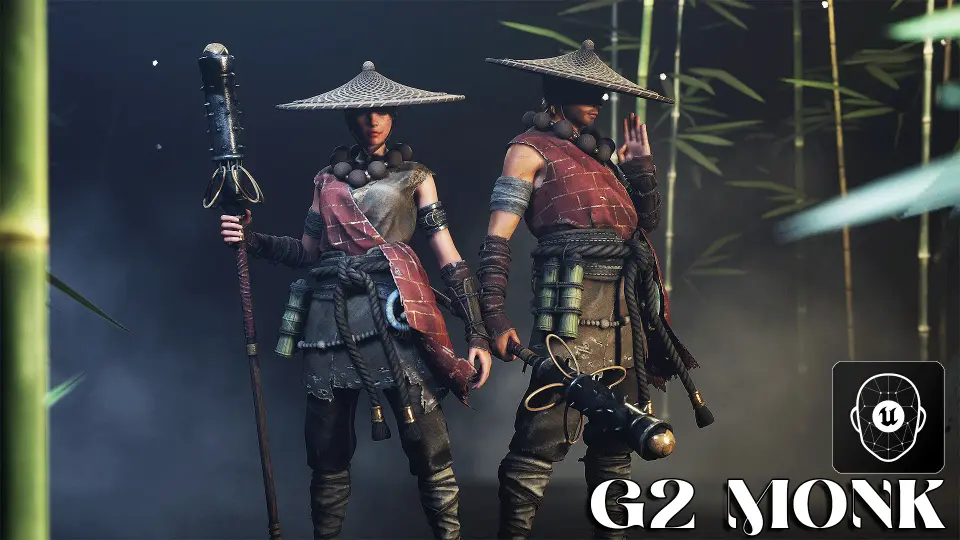
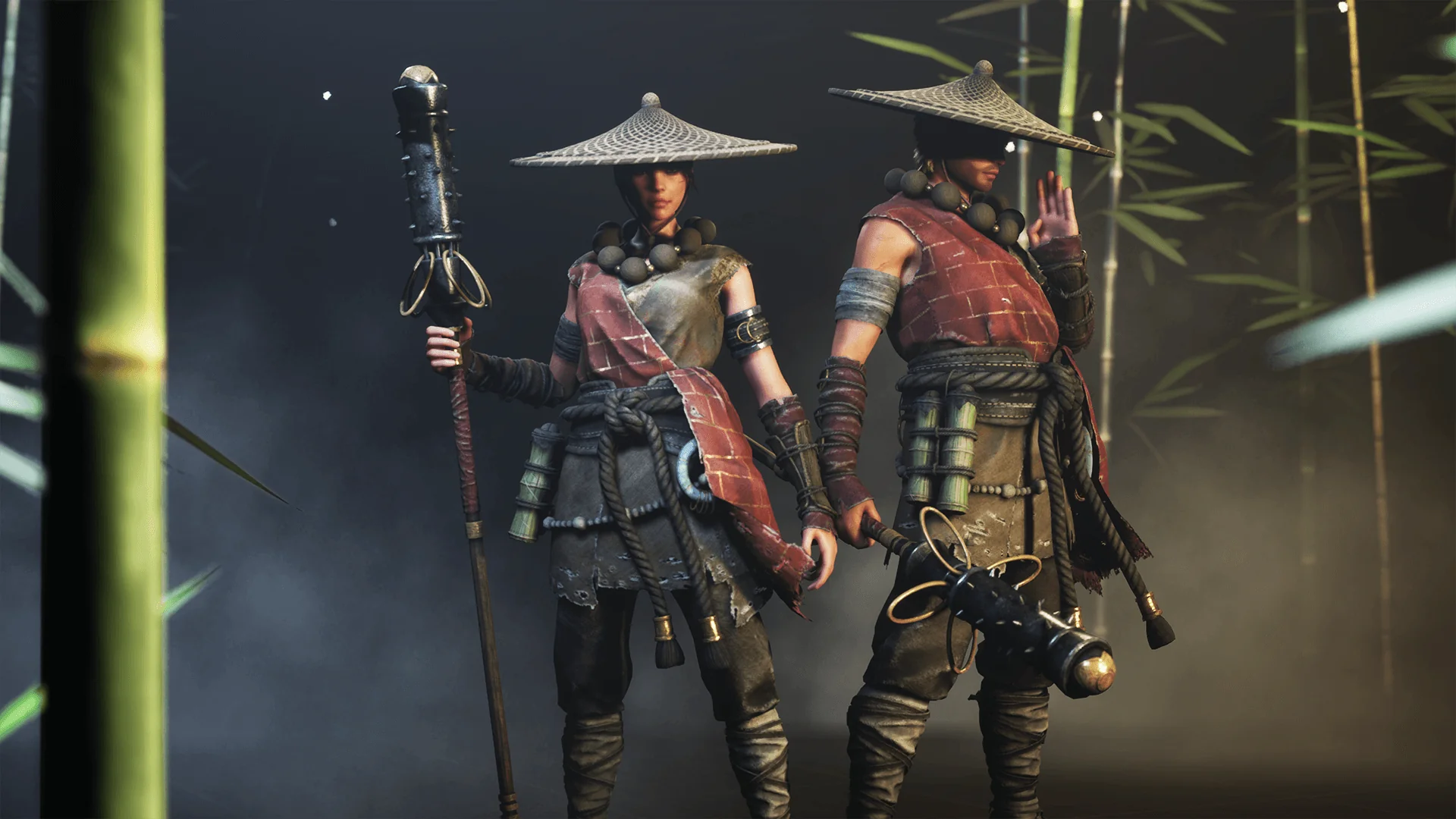
Martial arts characters demand visual agility and a sense of disciplined speed. The G2: Monk package builds directly around this archetype, framing the character as a disciplined martial artist monk who relies on hand-to-foot strikes, physical velocity, and spiritual cultivation during encounters. The lore and thematic presentation emphasize a balance between devastating close-quarters offense and internal fortitude, including the ability to focus through meditation, restore health rapidly, and resist debilitating curses or negative status conditions in combat.
Visually, the character bridges Chinese fantasy martial traditions and realistic survival aesthetics. The inclusion of staff weapons, low-poly modular assemblies, and realistic PBR surfacing establishes a foundation suitable for high-intensity action environments. Because martial artists rely on free movement rather than heavy plate armor, the clothing and accessories are designed to shift, twist, and flow with swift combat animations, demanding specialized underlying skeletal considerations to maintain believable movement during high-velocity kicks and sweeping strikes.
Skeletal Structure and Dynamic Physics in G2: Monk
At its core, G2: Monk is rigged against the standard UE4 Mannequin Skeleton, allowing it to interface directly with existing animation libraries developed for the Epic skeleton. To account for flexible martial attire and anatomical movement, the rig incorporates seven extra bones that extend beyond the baseline mannequin layout. These additions include two upper torso bones—labeled pectoral_l and pectoral_r—alongside five dedicated pelvis accessory bones designated as PAR, PAR1, PAL, PAL1, and PAL2.
The PAL and PAR chains exist specifically to handle dynamic swinging motion for sash, belt, and lower tunic accessories attached around the pelvis. Setting up these dynamic items requires a specific pipeline within Unreal Engine's animation blueprint graph. Developers utilizing the character in custom actor setups must ensure the accessory physics resolve correctly by inserting a RigidBody node connected immediately in front of the final Output Pose inside the AnimGraph.
When mixing modular parts from this package with other Genesis 2 figures inside a combined character blueprint, activating pelvis physics relies on proper mesh inheritance. A body piece from the G2: Monk package must be designated as the Parent Mesh (Mesh Inherited). This inheritance allows the AnimGraph to recognize the extended bone hierarchy and properly calculate physics simulation through the RigidBody node without clipping or detachment during active locomotion.
Cross-Pack Modularity Across Genesis 2 Characters
Modularity serves as one of the central pillars of the Genesis 2 framework. G2: Monk is built to exchange clothing, gear, hair, and weapons freely with other G2 modular releases of the same gender, offering immediate cross-compatibility across character classes. The character also aligns with the N5: Human Base standard, facilitating asset coordination across related development lines.
The pack supplies options for both male and female configurations, supported by two shared hairstyles engineered to fit both masculine and feminine base meshes cleanly. Visual customization extends beyond clothing swaps; master materials allow real-time control over surface colors and texture blending, enabling production teams to tint robes, alter fabric patterns, and unify color palettes across distinct adventuring parties or enemy monk factions without authoring external texture variants.
Anatomical customization also includes facial morph targets. Alongside core facial sculpting, the mesh incorporates two distinct Elf ear morphs, letting developers shift the character from a grounded historical or low-fantasy human monk into an elven mystic or spiritual hybrid. These anatomical adjustments work in tandem with the modular wardrobe, expanding the visual range across different fantasy subgenres.
Facial Expression, ARKit, and Locomotion Frameworks
Modern interactive storytelling and dialogue sequences require nuanced face control. G2: Monk incorporates 85 morph targets and blendshapes specifically tuned for facial lip sync, emotional expression, and real-time capture. The head morph configuration aligns directly with Apple's ARKit Face Live Link standards, allowing animators and developers to stream facial performances directly from compatible tracking devices into the engine.
Movement integration matches this focus on standard industry tools. While the package is delivered strictly as a game-ready character collection—excluding gameplay systems, custom particle effects, or proprietary core blueprints—it adapts cleanly into popular locomotion templates. The asset is verified to function in the Advanced Locomotion System v4 (ALS v4) and Epic's modular Lyra Project framework.
For Unreal Engine 5 users, retargeting is handled through native IK Rig files and retargeting assets, facilitating asset translation from legacy UE4 motion databases into modern motion systems. An update organized the package folder layout to streamline pipeline navigation, grouping skeletal meshes, textures, and retargeting files systematically.
Because the release is categorized as an Asset Pack rather than a standalone project template, it omits local project input mapping bindings. When opening the included character overview map in Unreal Engine 4, movement inputs such as walking, running, and turning will not fire automatically if project-level controls are unassigned. Setting up control in the overview scene simply requires copying the provided UE4 configuration files directly into the active project's Config folder, which overwrites input maps and restores interactive movement controls across the demonstration level.
Project Fit and Implementation Scope
G2: Monk targets game productions that require ready-to-animate martial artist characters without requiring teams to build custom cloth simulations or facial capture rigs from scratch. The reliance on the standard UE4 mannequin layout ensures compatibility with extensive marketplace combat libraries, while the specific pectoral and pelvis bones afford dynamic secondary animation that standard mannequins cannot replicate.
Teams building role-playing games, survival action titles, or combat sandboxes will benefit most from its clean integration into Lyra and ALS v4, alongside the modular interchangeability shared with the broader Genesis 2 ecosystem. By combining modular swapping, ARKit blendshape support, and physics-ready bone chains, the asset functions as a flexible foundation for both player-controlled martial artists and specialized combatant NPCs.
 Humans
 Humans
 Humans
 Humans