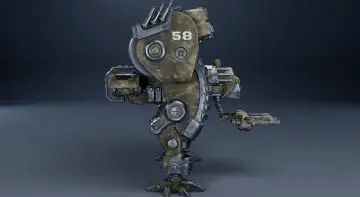
"fb5ea1e7d1b41445"{"id":"1002414","slug":"g2-cyborg-characters","title":"G2: Cyborg Characters","category":"Mechanical \u0026 Robots","engine":"4.26+,5.0+","assetVersion":"","engineVersion":"Engine Version: 4.26+,5.0+","tag":"Mechanical","accent":"blue","visual":"character","summary":"Explore G2: Cyborg Characters, featuring UE4 Mannequin compatibility with 02 extra bones, 83 facial blendshapes, modular gear, and master materials.","platform":"Unreal Engine","indexPolicy":"index","publishedAt":"2026-11-10T12:14:19.479Z","updatedAt":"2026-11-10T12:14:19.479Z","sourceNotes":[],"fileContents":[],"compatibility":["Unreal Engine","Engine Version: 4.26+,5.0+"],"featuredImage":{"alt":"G2: Cyborg Characters","src":"/wp-content/uploads/published/2026/11/82b8c3f18c83-a04d3ee7-6751-42b7-9c76-c7f85a0819a5-849f086bef.webp"},"hasDownloadLink":true,"downloads":0,"terms":[{"taxonomy":"category","slug":"mechanical-and-robots","name":"Mechanical \u0026 Robots"}],"galleryImages":[{"src":"/wp-content/uploads/published/2026/11/e900e64c7a56-9aa37e4c-6753-4fbd-aee8-e830798cf02c-1e82a7bfaa.webp","alt":"G2: Cyborg Characters"},{"src":"/wp-content/uploads/published/2026/11/e5d87268703e-4a509837-3c4a-41df-ad1e-e8e0fdd3b6c5-14bf54e00b.webp","alt":"G2: Cyborg Characters"},{"src":"/wp-content/uploads/published/2026/11/08c5f5438be4-49e16abb-2b47-4389-a260-8dec4808ad0f-432f5ce5e7.webp","alt":"G2: Cyborg Characters"},{"src":"/wp-content/uploads/published/2026/11/51c2f6e313bb-58ca85d9-9932-4970-97de-28f44554392b-3a36a1acd6.webp","alt":"G2: Cyborg Characters"},{"src":"/wp-content/uploads/published/2026/11/f5683e6187c4-66bf715c-33fa-4bc6-945c-02181c783820-98107dbc54.webp","alt":"G2: Cyborg Characters"},{"src":"/wp-content/uploads/published/2026/11/6eb98a47f722-a6d17d99-5485-4091-afb1-be6b01ae5546-2f4db252ce.webp","alt":"G2: Cyborg Characters"},{"src":"/wp-content/uploads/published/2026/11/565c24127668-43e15778-46d5-44c1-a432-e329056cd8d4-4246061e1b.webp","alt":"G2: Cyborg Characters"},{"src":"/wp-content/uploads/published/2026/11/b3fc36c41099-e5133bdd-8d50-4909-be83-ebee517039ec-bb092d5197.webp","alt":"G2: Cyborg Characters"},{"src":"/wp-content/uploads/published/2026/11/50d62d6e4beb-df3a46eb-bdf6-447f-80c7-dd74c830c14c-813acf1909.webp","alt":"G2: Cyborg Characters"},{"src":"/wp-content/uploads/published/2026/11/bb0fe34f59da-33676b9e-6533-4fbd-a02f-99d9995d3a46-f1a1d30a07.webp","alt":"G2: Cyborg Characters"}],"accessPanel":{"kind":"resource","title":"Get this resource","eyebrow":"Free resource","message":"Download this resource in your browser.","fileName":"Content.7z","safetyNote":"Resources are manually reviewed before listing to improve quality and reduce obvious risks.","actionLabel":"Get this resource","resourceType":"Resource archive","versions":[]},"contentHtml":"\u003ch2\u003eIntegrating G2: Cyborg Characters into ALS v4 and Lyra\u003c/h2\u003e\u003cp\u003eBringing stylized or realistic sci-fi combatants into real-time gameplay projects requires tight conformity with modern locomotion frameworks. G2: Cyborg Characters is constructed specifically to operate within established Unreal Engine movement pipelines, offering direct compatibility with Advanced Locomotion System v4 (ALS v4) as well as Epic Games' Lyra Project. Because the character geometry aligns with standard movement systems, technical artists can bind the meshes to existing animation controllers without overhauling complex state machines or re-authoring transition logic.\u003c/p\u003e\u003cp\u003eUsing the models inside Lyra or ALS v4 allows developers to take advantage of complex locomotion blending, aim offsets, stance changes, and traversal mechanics right out of the box. The skeletal proportions match standard locomotion inputs, ensuring feet plant accurately on uneven terrain and upper-body orientation remains stable during dynamic combat maneuvers. By adhering to these standardized frameworks, the character meshes integrate cleanly into active prototyping sandboxes and complete game templates alike.\u003c/p\u003e\u003ch2\u003eSkeletal Structure and the UE4 Mannequin Framework\u003c/h2\u003e\u003cp\u003eThe skeletal hierarchy powering the character models is built directly upon the standard UE4 Mannequin skeleton, augmented with two additional bones. Relying on this core hierarchy ensures native interoperability with a vast range of existing Epic Skeleton animation libraries, retargeting profiles, and Animation Blueprints. The presence of the two extra bones allows specialized motion handling without disrupting the standard parent-child relationships governing the limbs, spine, and root.\u003c/p\u003e\u003cp\u003eWhen retargeting motion capture data or commercial animation sequences, the bone mappings align cleanly to the standard reference poses. Technical animators do not need to construct custom remap trees for basic locomotion, combat hits, or weapon holding states. The supplementary bones sit within the hierarchy to accommodate localized adjustments, secondary animation requirements, or specific weapon attachments while keeping the core skeleton fully predictable across production pipelines.\u003c/p\u003e\u003ch2\u003eFacial Animation via 83 Morph Targets\u003c/h2\u003e\u003cp\u003eDetailed storytelling and real-time dialogue demand responsive facial performance, which is addressed through an integrated library of 83 blendshapes and morph targets. These facial shapes cover the full phonetic spectrum needed for speech lipsync alongside a wide selection of expressive emotional states. The morph targets are baked directly into the head geometry, accommodating automated lipsync plugins, audio-driven curves, or manual timeline keyframing in Sequencer.\u003c/p\u003e\u003cp\u003eThe extensive morph set permits subtle micro-expressions, asymmetric eyebrow movement, eye darts, and jaw articulation. Whether rendering close-up cinematic interactions or triggering reactive facial states during combat gameplay, the mesh deforms smoothly without texture pinching or seam separation. Developers can drive these targets through standard float curves within the character's animation blueprint, ensuring facial states dynamically reflect gameplay health, exhaustion, or conversational intent.\u003c/p\u003e\u003ch2\u003eModular Assembly across the G2: Cyborg Characters Ecosystem\u003c/h2\u003e\u003cp\u003eA central feature of the asset is its adherence to the broader Genesis 2 (G2) modular standards. Outfits, armor parts, hair, accessories, and weapons can be swapped freely among all other Genesis 2 modular character packages of the same gender. This interchangeable architecture makes it possible to build extensive rosters of male and female cyborg soldiers, cybernetic mercenaries, and futuristic warriors without running into clipping issues or mismatched attachment sockets.\u003c/p\u003e\u003cp\u003eCross-compatibility extends beyond the immediate line, linking directly with the N5: Human Base standard for broader customization pipelines. Included within the asset are two distinct hairstyles designed to sit properly on both male and female character heads. This unisex hair implementation streamlines asset management, letting teams share hair styles across different character archetypes while relying on the modular clothing and weapon slots to define individual unit silhouettes.\u003c/p\u003e\u003ch2\u003eMaster Material Shading and Customization\u003c/h2\u003e\u003cp\u003eVisual variety across the cyborg units is handled through an adaptable master material setup. The included materials utilize clean physically based rendering (PBR) workflows that enable developers to blend colors and textures dynamically. Rather than baking rigid color schemes into static diffuse maps, the material parameters allow precise control over color tints, surface roughness, and metallic distribution across armor panels, mechanical joints, and synthetic skin.\u003c/p\u003e\u003cp\u003eThis material architecture makes it straightforward to establish visual hierarchies, differentiate enemy factions, or indicate squad roles without creating multiple sets of heavy texture maps. Adjustments to base tones and mask layers are handled inside lightweight material instances, keeping runtime memory usage contained while offering artists the freedom to adapt the cyborg look to match specific level palettes and lighting conditions.\u003c/p\u003e\u003ch2\u003ePackage Scope and Structural Organization\u003c/h2\u003e\u003cp\u003eThe package is organized cleanly following folder restructuring updates, ensuring that skeletal meshes, modular accessories, master materials, and textures are indexed intuitively within project directories. The focus of the package is strictly on game-ready character art. It delivers the fully rigged skeletal meshes, modular attachments, and shading assets necessary for immediate visual deployment, while intentionally omitting external gameplay logic systems, particle effects, or specialized blueprints.\u003c/p\u003e\u003cp\u003eBy maintaining a dedicated focus on character art, the package avoids cluttering project databases with non-essential mechanics or conflicting scripts. Developers retain complete freedom to drop these modular cyborg warriors into their own game-specific damage systems, inventory frameworks, and custom interaction setups, maintaining a lightweight and orderly production repository.\u003c/p\u003e\n\n\u003ch2\u003eRelated Resources Worth Checking\u003c/h2\u003e\n\u003cul\u003e\n\u003cli\u003e\u003ca href=\"https://3dcghub.com/g2-cyborg-characters-02/\" rel=\"noopener noreferrer\"\u003eG2: Cyborg Characters 02\u003c/a\u003e\u003c/li\u003e\n\u003cli\u003e\u003ca href=\"https://3dcghub.com/cyborg-soldier-v2/\" rel=\"noopener noreferrer\"\u003eCyborg Soldier V2\u003c/a\u003e\u003c/li\u003e\n\u003cli\u003e\u003ca href=\"https://3dcghub.com/etasphera58/\" rel=\"noopener noreferrer\"\u003eEtasphera58\u003c/a\u003e\u003c/li\u003e\n\u003cli\u003e\u003ca href=\"https://3dcghub.com/etasphera45/\" rel=\"noopener noreferrer\"\u003eEtasphera45\u003c/a\u003e\u003c/li\u003e\n\u003cli\u003e\u003ca href=\"https://3dcghub.com/sci-fi-cyber-robot-01/\" rel=\"noopener noreferrer\"\u003eSci-FI Cyber Robot 01\u003c/a\u003e\u003c/li\u003e\n\u003c/ul\u003e","contentTextLength":6262,"navigation":{"current":5,"total":4340,"previous":{"id":"1002415","slug":"teacher","title":"Teacher","category":"Characters \u0026 Creatures","platform":"Unreal Engine","updatedAt":"2026-11-10T13:09:54.962Z"},"next":{"id":"1002413","slug":"yui-specops-cat","title":"Yui - SpecOps Cat","category":"Humans","platform":"Unreal Engine","updatedAt":"2026-11-10T12:11:16.963Z"}},"relatedResources":[{"id":"1000188","slug":"g2-cyborg-characters-02","title":"G2: Cyborg Characters 02","category":"Mechanical \u0026 Robots","engine":"4.26+,5.0+","assetVersion":"","engineVersion":"Engine Version: 4.26+,5.0+","tag":"Mechanical","accent":"blue","visual":"character","summary":"A game-ready Genesis 2 cyborg character package for Unreal workflows, with modular parts, UE4 Mannequin rigging, ARKit-ready face morphs, and retargeting suppor","platform":"Unreal Engine","indexPolicy":"index","publishedAt":"2026-06-22T15:22:32.404Z","updatedAt":"2026-06-22T15:22:32.404Z","sourceNotes":[],"fileContents":[],"compatibility":["Unreal Engine","Engine Version: 4.26+,5.0+"],"featuredImage":{"alt":"G2: Cyborg Characters 02","src":"/wp-content/uploads/published/2026/06/13a4c5658e1c-c8367cb5-1ce9-4c8c-aa91-53a95745cc9f-39251ef00d.webp"},"hasDownloadLink":true,"downloads":1},{"id":"2954","slug":"cyborg-soldier-v2","title":"Cyborg Soldier V2","category":"Mechanical \u0026 Robots","engine":"4.26+,5.0+","assetVersion":"Engine version: 4.26+,5.0+","engineVersion":"4.16","tag":"Mechanical","accent":"blue","visual":"character","summary":"Discover the Cyborg Soldier V2, a high-quality low-poly character for game development. Features include Epic skeleton rigging and multiple material variants.","platform":"Unreal Engine","indexPolicy":"noindex","publishedAt":"2026-02-07T16:11:32.000Z","updatedAt":"2026-04-19T15:57:44.000Z","sourceNotes":[],"fileContents":[],"compatibility":["Unreal Engine","Engine version: 4.26+,5.0+"],"featuredImage":{"alt":"Cyborg Soldier V2","src":"https://3dcghub.com/wp-content/uploads/2026/02/ab9e8636-7b0c-4a9d-89dc-ec02f6e7c906.webp"},"hasDownloadLink":true,"downloads":0},{"id":"1002013","slug":"etasphera58","title":"Etasphera58","category":"Mechanical \u0026 Robots","engine":"4.26+,5.0+","assetVersion":"","engineVersion":"Engine Version: 4.26+,5.0+","tag":"Mechanical","accent":"blue","visual":"mech","summary":"Explore the low poly Etasphera58 mechanical character, featuring 4096x4096 texture sets, ID masks, Epic Skeleton rigging, and multi-genre game support.","platform":"Unreal Engine","indexPolicy":"index","publishedAt":"2026-10-26T12:51:36.872Z","updatedAt":"2026-10-26T12:51:36.872Z","sourceNotes":[],"fileContents":[],"compatibility":["Unreal Engine","Engine Version: 4.26+,5.0+"],"featuredImage":{"alt":"Etasphera58","src":"/wp-content/uploads/published/2026/10/b7b5030ead38-150f6462-eff5-44bc-846d-aa2dc3bbb9ad-c230a90d6c.webp"},"hasDownloadLink":true,"downloads":0}]}
Mechanical
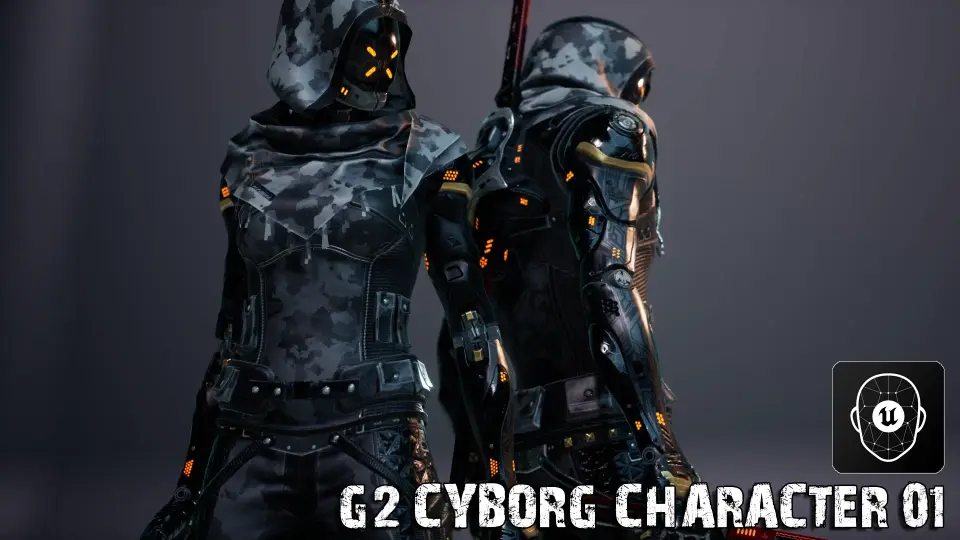
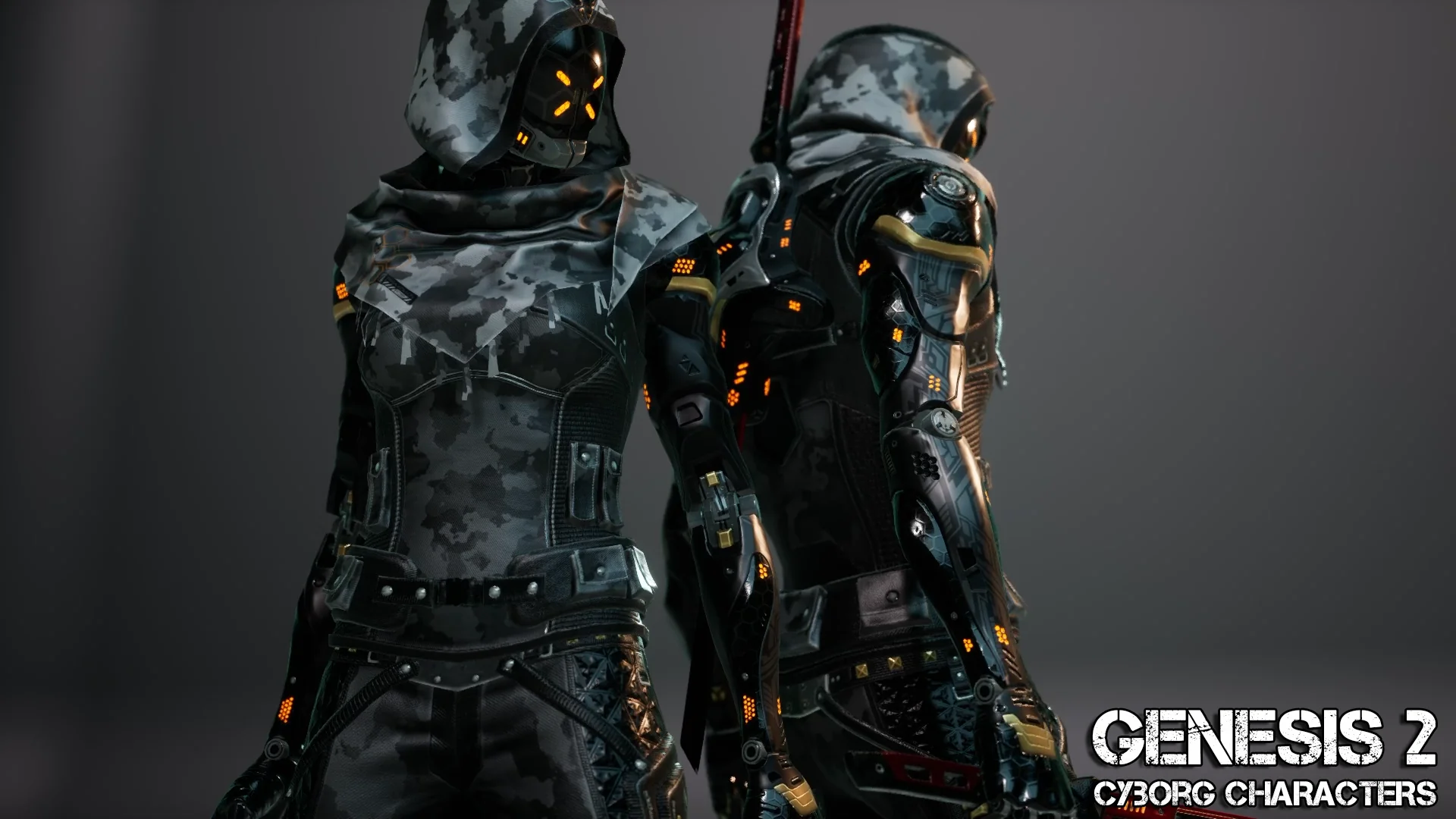
G2: Cyborg Characters
Explore G2: Cyborg Characters, featuring UE4 Mannequin compatibility with 02 extra bones, 83 facial blendshapes, modular gear, and master materials.
Integrating G2: Cyborg Characters into ALS v4 and Lyra
Bringing stylized or realistic sci-fi combatants into real-time gameplay projects requires tight conformity with modern locomotion frameworks. G2: Cyborg Characters is constructed specifically to operate within established Unreal Engine movement pipelines, offering direct compatibility with Advanced Locomotion System v4 (ALS v4) as well as Epic Games' Lyra Project. Because the character geometry aligns with standard movement systems, technical artists can bind the meshes to existing animation controllers without overhauling complex state machines or re-authoring transition logic.
Using the models inside Lyra or ALS v4 allows developers to take advantage of complex locomotion blending, aim offsets, stance changes, and traversal mechanics right out of the box. The skeletal proportions match standard locomotion inputs, ensuring feet plant accurately on uneven terrain and upper-body orientation remains stable during dynamic combat maneuvers. By adhering to these standardized frameworks, the character meshes integrate cleanly into active prototyping sandboxes and complete game templates alike.
Skeletal Structure and the UE4 Mannequin Framework
The skeletal hierarchy powering the character models is built directly upon the standard UE4 Mannequin skeleton, augmented with two additional bones. Relying on this core hierarchy ensures native interoperability with a vast range of existing Epic Skeleton animation libraries, retargeting profiles, and Animation Blueprints. The presence of the two extra bones allows specialized motion handling without disrupting the standard parent-child relationships governing the limbs, spine, and root.
When retargeting motion capture data or commercial animation sequences, the bone mappings align cleanly to the standard reference poses. Technical animators do not need to construct custom remap trees for basic locomotion, combat hits, or weapon holding states. The supplementary bones sit within the hierarchy to accommodate localized adjustments, secondary animation requirements, or specific weapon attachments while keeping the core skeleton fully predictable across production pipelines.
Facial Animation via 83 Morph Targets
Detailed storytelling and real-time dialogue demand responsive facial performance, which is addressed through an integrated library of 83 blendshapes and morph targets. These facial shapes cover the full phonetic spectrum needed for speech lipsync alongside a wide selection of expressive emotional states. The morph targets are baked directly into the head geometry, accommodating automated lipsync plugins, audio-driven curves, or manual timeline keyframing in Sequencer.
The extensive morph set permits subtle micro-expressions, asymmetric eyebrow movement, eye darts, and jaw articulation. Whether rendering close-up cinematic interactions or triggering reactive facial states during combat gameplay, the mesh deforms smoothly without texture pinching or seam separation. Developers can drive these targets through standard float curves within the character's animation blueprint, ensuring facial states dynamically reflect gameplay health, exhaustion, or conversational intent.
Modular Assembly across the G2: Cyborg Characters Ecosystem
A central feature of the asset is its adherence to the broader Genesis 2 (G2) modular standards. Outfits, armor parts, hair, accessories, and weapons can be swapped freely among all other Genesis 2 modular character packages of the same gender. This interchangeable architecture makes it possible to build extensive rosters of male and female cyborg soldiers, cybernetic mercenaries, and futuristic warriors without running into clipping issues or mismatched attachment sockets.
Cross-compatibility extends beyond the immediate line, linking directly with the N5: Human Base standard for broader customization pipelines. Included within the asset are two distinct hairstyles designed to sit properly on both male and female character heads. This unisex hair implementation streamlines asset management, letting teams share hair styles across different character archetypes while relying on the modular clothing and weapon slots to define individual unit silhouettes.
Master Material Shading and Customization
Visual variety across the cyborg units is handled through an adaptable master material setup. The included materials utilize clean physically based rendering (PBR) workflows that enable developers to blend colors and textures dynamically. Rather than baking rigid color schemes into static diffuse maps, the material parameters allow precise control over color tints, surface roughness, and metallic distribution across armor panels, mechanical joints, and synthetic skin.
This material architecture makes it straightforward to establish visual hierarchies, differentiate enemy factions, or indicate squad roles without creating multiple sets of heavy texture maps. Adjustments to base tones and mask layers are handled inside lightweight material instances, keeping runtime memory usage contained while offering artists the freedom to adapt the cyborg look to match specific level palettes and lighting conditions.
Package Scope and Structural Organization
The package is organized cleanly following folder restructuring updates, ensuring that skeletal meshes, modular accessories, master materials, and textures are indexed intuitively within project directories. The focus of the package is strictly on game-ready character art. It delivers the fully rigged skeletal meshes, modular attachments, and shading assets necessary for immediate visual deployment, while intentionally omitting external gameplay logic systems, particle effects, or specialized blueprints.
By maintaining a dedicated focus on character art, the package avoids cluttering project databases with non-essential mechanics or conflicting scripts. Developers retain complete freedom to drop these modular cyborg warriors into their own game-specific damage systems, inventory frameworks, and custom interaction setups, maintaining a lightweight and orderly production repository.
 Mechanical
 Mechanical
 Mechanical
 Mechanical