"397ec071d384d181"{"id":"1000188","slug":"g2-cyborg-characters-02","title":"G2: Cyborg Characters 02","category":"Mechanical \u0026 Robots","engine":"4.26+,5.0+","assetVersion":"","engineVersion":"Engine Version: 4.26+,5.0+","tag":"Mechanical","accent":"blue","visual":"character","summary":"A game-ready Genesis 2 cyborg character package for Unreal workflows, with modular parts, UE4 Mannequin rigging, ARKit-ready face morphs, and retargeting suppor","platform":"Unreal Engine","publishedAt":"2026-06-22T15:22:32.404Z","updatedAt":"2026-06-22T15:22:32.404Z","sourceNotes":[],"fileContents":[],"compatibility":["Unreal Engine","Engine Version: 4.26+,5.0+"],"featuredImage":{"alt":"G2: Cyborg Characters 02","src":"/wp-content/uploads/published/2026/06/13a4c5658e1c-c8367cb5-1ce9-4c8c-aa91-53a95745cc9f-39251ef00d.webp"},"hasDownloadLink":true,"downloads":0,"terms":[{"taxonomy":"category","slug":"mechanical-and-robots","name":"Mechanical \u0026 Robots"}],"galleryImages":[{"src":"/wp-content/uploads/published/2026/06/48ea67f59b02-8e61d95e-2244-4105-8d11-6387770b3a97-b3a60a34a3.webp","alt":"G2: Cyborg Characters 02"},{"src":"/wp-content/uploads/published/2026/06/b04501d52f57-2e5407b9-91db-407f-82c3-615b63290cff-02047961da.webp","alt":"G2: Cyborg Characters 02"},{"src":"/wp-content/uploads/published/2026/06/1d6fd61dd360-c61b682f-70dc-4f5e-8458-187a02521eea-9add850014.webp","alt":"G2: Cyborg Characters 02"},{"src":"/wp-content/uploads/published/2026/06/9440f206a2a3-04093003-44e1-4b11-8b2a-5646740ea630-b83371ca25.webp","alt":"G2: Cyborg Characters 02"},{"src":"/wp-content/uploads/published/2026/06/765e33eba85e-f561efac-e15e-4463-aa84-d89a82f4f6c6-1933444d47.webp","alt":"G2: Cyborg Characters 02"},{"src":"/wp-content/uploads/published/2026/06/0769b756f8c9-9b21c5f0-e5ce-4278-a206-23e39cad2441-b329745956.webp","alt":"G2: Cyborg Characters 02"},{"src":"/wp-content/uploads/published/2026/06/2110bdfd9de4-20a406a4-e529-4559-8db8-5d16d5ec8a7d-27175b75f2.webp","alt":"G2: Cyborg Characters 02"},{"src":"/wp-content/uploads/published/2026/06/1d21770c6124-e89f16c0-60cb-4103-a339-e585df4f537e-50c764ed86.webp","alt":"G2: Cyborg Characters 02"},{"src":"/wp-content/uploads/published/2026/06/8f7135be22f1-c44541c4-90f9-4fca-853d-6f0a82784726-af1163402f.webp","alt":"G2: Cyborg Characters 02"},{"src":"/wp-content/uploads/published/2026/06/ba7fd1cae5e8-452a0a09-80cf-47b9-a955-d5a6fa571c67-c764c8a94b.webp","alt":"G2: Cyborg Characters 02"}],"accessPanel":{"kind":"resource","title":"Download this resource","eyebrow":"Free Download","message":"Log in or create a free account to start your download.","fileName":"Content.7z","safetyNote":"Resources are manually reviewed before listing to improve quality and reduce obvious risks.","actionLabel":"Download Free","resourceType":"Resource archive"},"contentHtml":"\u003cp\u003eThe first thing to understand about \u003cstrong\u003eG2: Cyborg Characters 02\u003c/strong\u003e Is not the visual theme but the implementation path. This package is submitted as an Asset Pack, and that affects how it behaves when dropped into a project. It does not include an input file, so if the character cannot be controlled for moving, walking, or running on the overview map, the project needs the appropriate config files placed into the project Config folder. Separate config files are referenced for UE5 and UE4, which makes this less about drag-and-drop use and more about fitting the character correctly into an existing Unreal setup.\u003c/p\u003e\u003cp\u003eThat makes the package relevant for developers who already understand their project structure and need a character that can be folded into a real production pipeline. It also helps to understand the difference between Genesis 2 characters and non-G2 characters before integrating it, because this package clearly belongs to a larger Genesis 2 modular character line rather than standing as an isolated one-off character.\u003c/p\u003e\u003ch2\u003eGetting G2: Cyborg Characters 02 moving inside Unreal\u003c/h2\u003e\u003cp\u003eThe package is intended for Unreal workflows where character control, retargeting, and project configuration are already part of the process. In UE5, it uses IK Rig files and retargeting, which places it squarely in a workflow where animation reuse matters. Instead of requiring a completely separate skeleton logic, it is prepared to sit inside a retarget-based pipeline.\u003c/p\u003e\u003cp\u003eThat carries through to the projects it is said to work with. Genesis 2 characters are used with \u003cstrong\u003eALS v4\u003c/strong\u003e And with the \u003cstrong\u003eLYRA Project\u003c/strong\u003e, two references that immediately place this character in a practical production context. The asset is not presented as a self-contained gameplay system. It is a character package that expects to be integrated into larger movement and animation frameworks already present in the project.\u003c/p\u003e\u003cp\u003eThis distinction is important. The package includes characters ready for game use, but it does not include systems, particles, or blueprints. In other words, the character content is the focus. Teams looking for a finished gameplay framework will need to provide that separately, while teams that already have locomotion, combat, or interaction layers can treat this package as a visual and rigged character component that fits into established Unreal character workflows.\u003c/p\u003e\u003ch2\u003eWhy the Genesis 2 modular character structure matters\u003c/h2\u003e\u003cp\u003eG2: Cyborg Characters 02 is part of the \u003cstrong\u003eGenesis 2 modular character\u003c/strong\u003e Setup, and the modular side is one of its most practical features. Clothes can be mixed and matched, and hair, accessories, and weapons can be equipped together with other Genesis 2 modular character packages of the same gender. That gives the package a broader production role than a single locked character mesh. It can function as a configurable character entry inside a shared library of interchangeable parts.\u003c/p\u003e\u003cp\u003eFor teams building a roster, a faction, or several visual variants without remaking an entire character from scratch, this kind of shared part compatibility can save time in assembly and iteration. The cyberpunk and cyborg theme gives the package a clear visual lane, but the workflow advantage comes from how it can exchange modular pieces with other Genesis 2 character packages rather than from the theme alone.\u003c/p\u003e\u003cp\u003eThe source description frames cyborg warriors as a fusion of humans and technology, with enhanced musculature, biological enhancements, extraordinary strength, and the ability to connect and interact with machinery. Those details establish the kind of role this character fills in a game or real-time scene: a technologically advanced combatant built for dangerous and complex missions. In production terms, that makes the character suitable for settings where cyberpunk, military science fiction, or machine-integrated warrior designs need to read clearly on screen.\u003c/p\u003e\u003cp\u003eThe package also includes master materials that allow color and texture blending. That does not turn it into a full material system, but it does add a useful layer of art direction flexibility. A team can push visual variation through material adjustments while staying inside the same character foundation, which pairs naturally with the modular clothing and accessory approach.\u003c/p\u003e\u003ch2\u003eUE4 Mannequin Skeleton, extra pectoral bones, and shared animation logic\u003c/h2\u003e\u003cp\u003eRigging is one of the strongest practical anchors here. The character uses the same UE4 Mannequin Skeleton, with two extra pectoral bones. That immediately makes the package easier to place in projects that already rely on Unreal’s established mannequin-based animation workflows. Shared skeleton logic reduces the friction of connecting a new character to existing animation sets, animation blueprints, or retargeted motion pipelines.\u003c/p\u003e\u003cp\u003eThe added pectoral bones suggest an extension rather than a replacement of the familiar mannequin structure. For animation and rigging workflows, that is often preferable to a fully custom skeleton because it preserves compatibility where possible while still allowing additional deformation or character-specific control.\u003c/p\u003e\u003cp\u003eThis also helps explain why the package is linked with IK Rig retargeting in UE5 and mentioned alongside ALS v4 and Lyra usage. The asset sits comfortably in a production chain where the skeleton standard matters. It is not just a static cyborg model. It is a character package expected to move through the same animation systems that many Unreal teams already use.\u003c/p\u003e\u003cp\u003eOne limitation is stated clearly: \u003cstrong\u003eKatana animations are not included\u003c/strong\u003e. The tags place the character in a cyberpunk warrior space and mention a katana theme, but teams should not expect weapon-specific animation content for that part of the look. If a project needs sword actions, those would need to come from another animation source within the existing pipeline.\u003c/p\u003e\u003ch2\u003eARKit Face Live Link, 85 morphs, and where the mask stops\u003c/h2\u003e\u003cp\u003eFacial support is another area where G2: Cyborg Characters 02 is geared toward active character production rather than simple presentation. Genesis 2 characters are stated to work well with \u003cstrong\u003eARKit Face Live Link\u003c/strong\u003e, and the package includes face morphs and blendshapes under head morphs. For teams working on dialogue, facial performance, or real-time capture workflows, this is a direct production-use detail rather than a decorative extra.\u003c/p\u003e\u003cp\u003eThe package includes \u003cstrong\u003e85 blendshapes or morphs\u003c/strong\u003e For face lipsync and expression. That gives the facial setup a clear role in speech and emotive performance. Two elf ear morphs are also included, which adds a smaller but still useful variation point inside the head customization options.\u003c/p\u003e\u003cp\u003eThere are also \u003cstrong\u003eTwo hairstyles\u003c/strong\u003e, and those hairstyles can be used for both male and female characters. That matters in a modular system because it extends reuse across character variations instead of locking those hair assets to one narrow setup.\u003c/p\u003e\u003cp\u003eThere is one facial caveat to keep in mind: the \u003cstrong\u003eMask mesh does not have morphs for Live Link ARKit\u003c/strong\u003e. In practice, that means the package’s facial animation strengths apply to the head morph and blendshape setup, but not to the masked mesh in the same way. For production planning, this is exactly the sort of detail that affects shot choices, character presentation, and customization decisions. A team using facial capture or lipsync should factor in whether the character will appear masked and how that changes the use of facial performance data.\u003c/p\u003e\u003ch2\u003eWhere Cyborg Characters 02 fits in an actual production workflow\u003c/h2\u003e\u003cp\u003eThis package fits best where a project already has core character systems in place and needs a game-ready cyborg character that can plug into them. It belongs in a pipeline that values skeleton compatibility, retargeting, modular character assembly, and facial animation support. It is less suited to a scenario where a team expects a complete gameplay character framework with movement logic, input handling, particle systems, and blueprints bundled together.\u003c/p\u003e\u003cp\u003eThe thematic role is equally clear. The character is positioned as a cyborg warrior: a human and machine hybrid with superior abilities, advanced technological integration, and the strength to handle dangerous missions. That gives it a natural place in cyberpunk settings, realistic stylized action scenes, or military science fiction environments where technology-enhanced soldiers are central to the world.\u003c/p\u003e\u003cp\u003eBecause the package is ready for game use and works within the Genesis 2 ecosystem, it can serve as a primary hero character, an alternate modular variant, or one part of a broader cast assembled from same-gender Genesis 2 packages. The material blending, interchangeable clothing and accessories, mannequin-based rigging, and facial morph support all point toward repeated use across production beyond one static showcase appearance.\u003c/p\u003e\u003cp\u003eThe short practical takeaway is simple: this package is strongest when treated as a configurable Unreal character component. If the project already uses mannequin-based animation logic, retargeting, Live Link facial work, or other Genesis 2 modular characters, G2: Cyborg Characters 02 fits naturally into that structure. The main preparation points are the config setup, the absence of bundled gameplay systems, and the fact that the mask mesh does not carry ARKit morph support.\u003c/p\u003e\n\n\u003ch2\u003eMore From The Same Workflow\u003c/h2\u003e\n\u003cul\u003e\n\u003cli\u003e\u003ca href=\"https://3dcghub.com/cyborg-soldier-v2/\" title=\"Cyborg Soldier V2\"\u003eCyborg Soldier V2\u003c/a\u003e\u003c/li\u003e\n\u003cli\u003e\u003ca href=\"https://3dcghub.com/sci-fi-cyber-robot-01/\" title=\"Sci-FI Cyber Robot 01\"\u003eSci-FI Cyber Robot 01\u003c/a\u003e\u003c/li\u003e\n\u003cli\u003e\u003ca href=\"https://3dcghub.com/etasphera46/\" title=\"Etasphera46\"\u003eEtasphera46\u003c/a\u003e\u003c/li\u003e\n\u003cli\u003e\u003ca href=\"https://3dcghub.com/robot-14/\" title=\"Robot 14\"\u003eRobot 14\u003c/a\u003e\u003c/li\u003e\n\u003cli\u003e\u003ca href=\"https://3dcghub.com/cyborg/\" title=\"Cyborg\"\u003eCyborg\u003c/a\u003e\u003c/li\u003e\n\u003c/ul\u003e","contentTextLength":9339,"navigation":{"current":1102,"total":3188,"previous":{"id":"1000189","slug":"gui-mono-round-2","title":"GUI - Mono Round","category":"UI Kits / HUDs","platform":"Unreal Engine","updatedAt":"2026-06-22T15:39:25.216Z"},"next":{"id":"1000187","slug":"unreal-engine-5-cinematics-for-beginners-your-first-scene","title":"Unreal Engine 5: Cinematics for Beginners – Your First Scene","category":"Unreal Engine","platform":"Unreal Engine","updatedAt":"2026-06-22T05:42:46.521Z"}},"relatedResources":[{"id":"2954","slug":"cyborg-soldier-v2","title":"Cyborg Soldier V2","category":"Mechanical \u0026 Robots","engine":"4.26+,5.0+","assetVersion":"Engine version: 4.26+,5.0+","engineVersion":"4.16","tag":"Mechanical","accent":"blue","visual":"character","summary":"Discover the Cyborg Soldier V2, a high-quality low-poly character for game development. Features include Epic skeleton rigging and multiple material variants.","platform":"Unreal Engine","publishedAt":"2026-02-07T16:11:32.000Z","updatedAt":"2026-04-19T15:57:44.000Z","sourceNotes":[],"fileContents":[],"compatibility":["Unreal Engine","Engine version: 4.26+,5.0+"],"featuredImage":{"alt":"Cyborg Soldier V2","src":"https://3dcghub.com/wp-content/uploads/2026/02/ab9e8636-7b0c-4a9d-89dc-ec02f6e7c906.webp"},"hasDownloadLink":true,"downloads":0},{"id":"1000774","slug":"robot-3","title":"Robot 3","category":"Mechanical \u0026 Robots","engine":"4.26+,5.0+","assetVersion":"","engineVersion":"Engine Version: 4.26+,5.0+","tag":"Mechanical","accent":"blue","visual":"mech","summary":"Robot 3 is a fully rigged, modular UE5 character with interchangeable parts, color and dirt customization, FBX and Maya files, and a weapon model.","platform":"Unreal Engine","publishedAt":"2026-07-28T18:00:55.715Z","updatedAt":"2026-07-28T18:00:55.715Z","sourceNotes":[],"fileContents":[],"compatibility":["Unreal Engine","Engine Version: 4.26+,5.0+"],"featuredImage":{"alt":"Robot 3","src":"/wp-content/uploads/published/2026/07/58577daaf244-b537246c-8a6e-4f68-b663-d1ccdb66a651-bac20b5e1d.webp"},"hasDownloadLink":true,"downloads":0},{"id":"2998","slug":"sci-fi-cyber-robot-01","title":"Sci-FI Cyber Robot 01","category":"Mechanical \u0026 Robots","engine":"4.26+,5.0+","assetVersion":"Engine version: 4.26+,5.0+","engineVersion":"4.21","tag":"Mechanical","accent":"blue","visual":"character","summary":"Enhance your game with the Sci-Fi Cyber Robot 01. A low-poly, UE4/UE5 compatible character with advanced material customization for unique futuristic designs.","platform":"Unreal Engine","publishedAt":"2026-02-07T16:20:57.000Z","updatedAt":"2026-04-19T15:57:43.000Z","sourceNotes":[],"fileContents":[],"compatibility":["Unreal Engine","Engine version: 4.26+,5.0+"],"featuredImage":{"alt":"Sci-FI Cyber Robot 01","src":"https://3dcghub.com/wp-content/uploads/2026/02/df9493f3-803e-4630-b18c-aae34f08b429.webp"},"hasDownloadLink":true,"downloads":2}]}
Mechanical
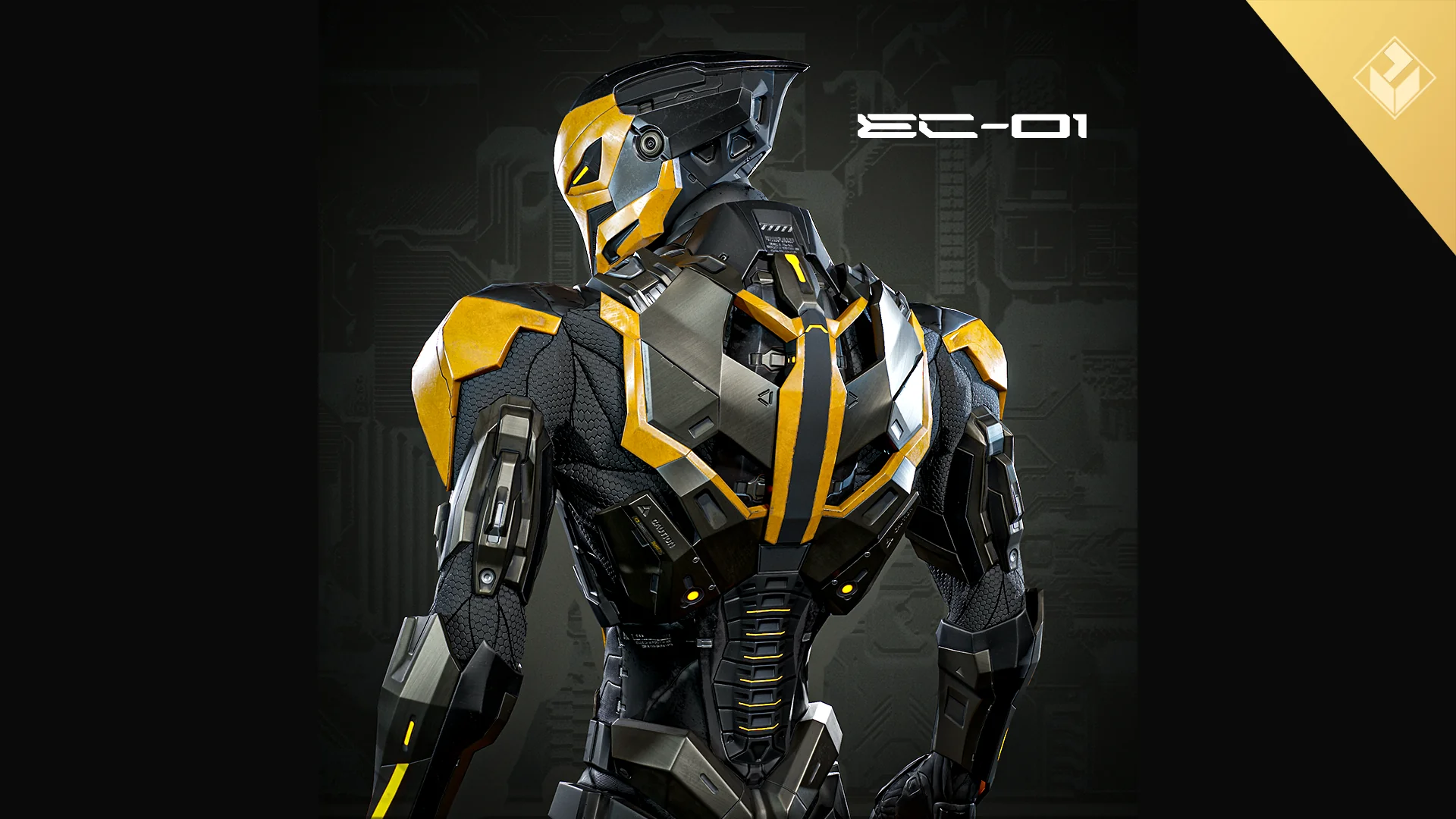
G2: Cyborg Characters 02
A game-ready Genesis 2 cyborg character package for Unreal workflows, with modular parts, UE4 Mannequin rigging, ARKit-ready face morphs, and retargeting suppor
The first thing to understand about G2: Cyborg Characters 02 Is not the visual theme but the implementation path. This package is submitted as an Asset Pack, and that affects how it behaves when dropped into a project. It does not include an input file, so if the character cannot be controlled for moving, walking, or running on the overview map, the project needs the appropriate config files placed into the project Config folder. Separate config files are referenced for UE5 and UE4, which makes this less about drag-and-drop use and more about fitting the character correctly into an existing Unreal setup.
That makes the package relevant for developers who already understand their project structure and need a character that can be folded into a real production pipeline. It also helps to understand the difference between Genesis 2 characters and non-G2 characters before integrating it, because this package clearly belongs to a larger Genesis 2 modular character line rather than standing as an isolated one-off character.
The package is intended for Unreal workflows where character control, retargeting, and project configuration are already part of the process. In UE5, it uses IK Rig files and retargeting, which places it squarely in a workflow where animation reuse matters. Instead of requiring a completely separate skeleton logic, it is prepared to sit inside a retarget-based pipeline.
That carries through to the projects it is said to work with. Genesis 2 characters are used with ALS v4 And with the LYRA Project, two references that immediately place this character in a practical production context. The asset is not presented as a self-contained gameplay system. It is a character package that expects to be integrated into larger movement and animation frameworks already present in the project.
This distinction is important. The package includes characters ready for game use, but it does not include systems, particles, or blueprints. In other words, the character content is the focus. Teams looking for a finished gameplay framework will need to provide that separately, while teams that already have locomotion, combat, or interaction layers can treat this package as a visual and rigged character component that fits into established Unreal character workflows.
Why the Genesis 2 modular character structure matters
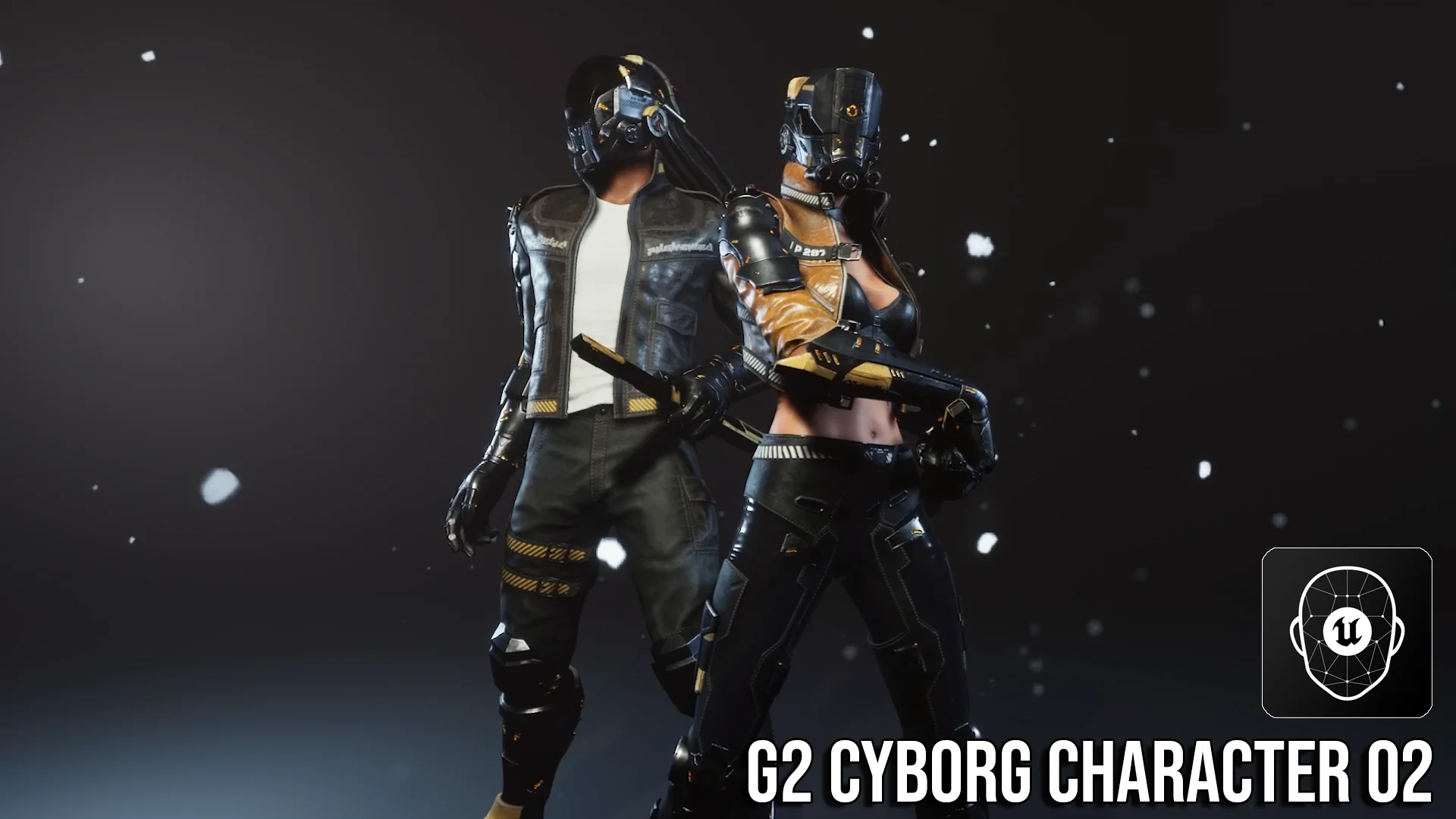
G2: Cyborg Characters 02 is part of the Genesis 2 modular character Setup, and the modular side is one of its most practical features. Clothes can be mixed and matched, and hair, accessories, and weapons can be equipped together with other Genesis 2 modular character packages of the same gender. That gives the package a broader production role than a single locked character mesh. It can function as a configurable character entry inside a shared library of interchangeable parts.
For teams building a roster, a faction, or several visual variants without remaking an entire character from scratch, this kind of shared part compatibility can save time in assembly and iteration. The cyberpunk and cyborg theme gives the package a clear visual lane, but the workflow advantage comes from how it can exchange modular pieces with other Genesis 2 character packages rather than from the theme alone.
The source description frames cyborg warriors as a fusion of humans and technology, with enhanced musculature, biological enhancements, extraordinary strength, and the ability to connect and interact with machinery. Those details establish the kind of role this character fills in a game or real-time scene: a technologically advanced combatant built for dangerous and complex missions. In production terms, that makes the character suitable for settings where cyberpunk, military science fiction, or machine-integrated warrior designs need to read clearly on screen.
The package also includes master materials that allow color and texture blending. That does not turn it into a full material system, but it does add a useful layer of art direction flexibility. A team can push visual variation through material adjustments while staying inside the same character foundation, which pairs naturally with the modular clothing and accessory approach.
UE4 Mannequin Skeleton, extra pectoral bones, and shared animation logic
Rigging is one of the strongest practical anchors here. The character uses the same UE4 Mannequin Skeleton, with two extra pectoral bones. That immediately makes the package easier to place in projects that already rely on Unreal’s established mannequin-based animation workflows. Shared skeleton logic reduces the friction of connecting a new character to existing animation sets, animation blueprints, or retargeted motion pipelines.
The added pectoral bones suggest an extension rather than a replacement of the familiar mannequin structure. For animation and rigging workflows, that is often preferable to a fully custom skeleton because it preserves compatibility where possible while still allowing additional deformation or character-specific control.
This also helps explain why the package is linked with IK Rig retargeting in UE5 and mentioned alongside ALS v4 and Lyra usage. The asset sits comfortably in a production chain where the skeleton standard matters. It is not just a static cyborg model. It is a character package expected to move through the same animation systems that many Unreal teams already use.
One limitation is stated clearly: Katana animations are not included. The tags place the character in a cyberpunk warrior space and mention a katana theme, but teams should not expect weapon-specific animation content for that part of the look. If a project needs sword actions, those would need to come from another animation source within the existing pipeline.
ARKit Face Live Link, 85 morphs, and where the mask stops
Facial support is another area where G2: Cyborg Characters 02 is geared toward active character production rather than simple presentation. Genesis 2 characters are stated to work well with ARKit Face Live Link, and the package includes face morphs and blendshapes under head morphs. For teams working on dialogue, facial performance, or real-time capture workflows, this is a direct production-use detail rather than a decorative extra.
The package includes 85 blendshapes or morphs For face lipsync and expression. That gives the facial setup a clear role in speech and emotive performance. Two elf ear morphs are also included, which adds a smaller but still useful variation point inside the head customization options.
There are also Two hairstyles, and those hairstyles can be used for both male and female characters. That matters in a modular system because it extends reuse across character variations instead of locking those hair assets to one narrow setup.
There is one facial caveat to keep in mind: the Mask mesh does not have morphs for Live Link ARKit. In practice, that means the package’s facial animation strengths apply to the head morph and blendshape setup, but not to the masked mesh in the same way. For production planning, this is exactly the sort of detail that affects shot choices, character presentation, and customization decisions. A team using facial capture or lipsync should factor in whether the character will appear masked and how that changes the use of facial performance data.
Where Cyborg Characters 02 fits in an actual production workflow
This package fits best where a project already has core character systems in place and needs a game-ready cyborg character that can plug into them. It belongs in a pipeline that values skeleton compatibility, retargeting, modular character assembly, and facial animation support. It is less suited to a scenario where a team expects a complete gameplay character framework with movement logic, input handling, particle systems, and blueprints bundled together.
The thematic role is equally clear. The character is positioned as a cyborg warrior: a human and machine hybrid with superior abilities, advanced technological integration, and the strength to handle dangerous missions. That gives it a natural place in cyberpunk settings, realistic stylized action scenes, or military science fiction environments where technology-enhanced soldiers are central to the world.
Because the package is ready for game use and works within the Genesis 2 ecosystem, it can serve as a primary hero character, an alternate modular variant, or one part of a broader cast assembled from same-gender Genesis 2 packages. The material blending, interchangeable clothing and accessories, mannequin-based rigging, and facial morph support all point toward repeated use across production beyond one static showcase appearance.
The short practical takeaway is simple: this package is strongest when treated as a configurable Unreal character component. If the project already uses mannequin-based animation logic, retargeting, Live Link facial work, or other Genesis 2 modular characters, G2: Cyborg Characters 02 fits naturally into that structure. The main preparation points are the config setup, the absence of bundled gameplay systems, and the fact that the mask mesh does not carry ARKit morph support.
 Mechanical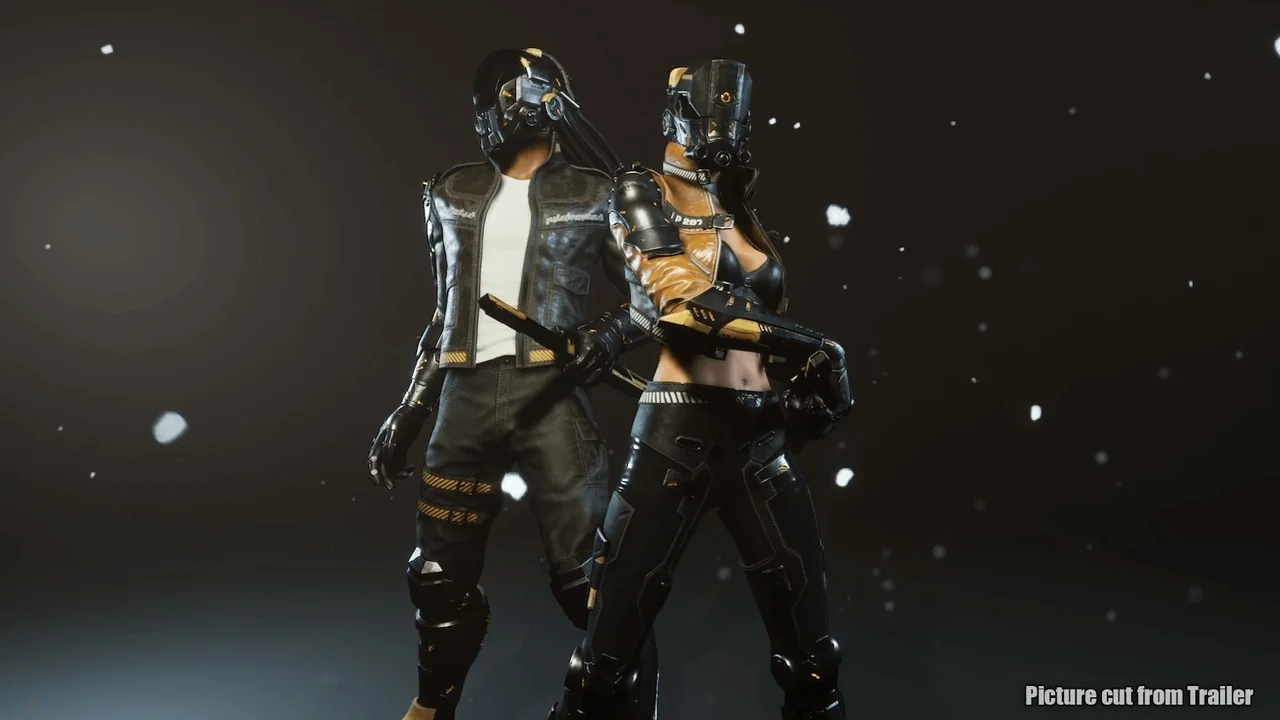
 Mechanical
 Mechanical
 Mechanical