"7cee950366b2d3dd"{"id":"1002305","slug":"floating-animations","title":"Floating Animations","category":"Variety","engine":"4.17+,5.0+","assetVersion":"","engineVersion":"Engine Version: 4.17+,5.0+","tag":"Variety","accent":"blue","visual":"animation","summary":"Hand-made floating animations: 25 clips used across Polygonmaker packs, with idle, ghost, attack, run, and horror tags for a Monsters - Wraith setup.","platform":"Unreal Engine","indexPolicy":"index","publishedAt":"2026-11-05T10:05:43.874Z","updatedAt":"2026-11-05T10:05:43.874Z","sourceNotes":[],"fileContents":[],"compatibility":["Unreal Engine","Engine Version: 4.17+,5.0+"],"featuredImage":{"alt":"Floating Animations","src":"/wp-content/uploads/published/2026/11/5f4ccc3735bc-6b99c85c-33d6-4eb0-93b4-f7fdefc766a5-ab73206a82.webp"},"hasDownloadLink":true,"downloads":0,"terms":[{"taxonomy":"category","slug":"variety-animations","name":"Variety"}],"galleryImages":[{"src":"/wp-content/uploads/published/2026/11/2879de012da4-73e9421e-c653-41d8-9588-6aa827aa0e2c-bc92bb9cc1.webp","alt":"Floating Animations"},{"src":"/wp-content/uploads/published/2026/11/509098fddf95-b2c9f04b-6180-4668-9d58-bcbf842778f7-d909d1fe64.webp","alt":"Floating Animations"}],"accessPanel":{"kind":"resource","title":"Get this resource","eyebrow":"Free resource","message":"3DCGHUB is a discovery service. EduQuill provides the file, account, quotas and delivery.","fileName":"Content.7z","safetyNote":"Resources are manually reviewed before listing to improve quality and reduce obvious risks.","actionLabel":"Get from EduQuill","resourceType":"Resource archive","versions":[]},"contentHtml":"\u003cp\u003eA character that needs to hold a floating pose, settle into an idle, break into an attack, and move through a run depends on clips that feel like they belong to one body. Floating Animations is a 25-animation set made by hand and used on the Polygonmaker packs. The tag list runs through floating, idle, ghost, attack, run, horror, polygon, and maker, which gives a clear starting vocabulary for what the collection covers.\u003c/p\u003e \u003cp\u003eThe set sits in animation work, with floating and ghost as its strongest identity tags and attack and run extending the range into action and locomotion. For a Monsters - Wraith character, the compatibility note makes that combination the relevant review frame.\u003c/p\u003e \u003ch2\u003eA 25-animation inventory for a Monsters - Wraith character\u003c/h2\u003e \u003cp\u003eTwenty-five is the number to plan around. That is the full scope named for the set, and it is the practical inventory when reviewing how many states the collection can support. The compatibility line points to Monsters - Wraith, so the most concrete character context for the animations is that monster type. The review becomes less abstract: the question is not whether the clips look good in isolation, but whether the floating, idle, ghost, attack, and run states hold together on the Wraith.\u003c/p\u003e \u003cp\u003eThe hand-made description is important for how the set should be read. These are authored animation clips, not a single base pose or a procedural motion treatment. Each clip represents a decision about how the character moves, holds, or strikes. With 25 animations in the set, that authored quality is the main thing to inspect across the full inventory rather than from one or two standout motions.\u003c/p\u003e \u003ch2\u003eFloating and idle as the holding states\u003c/h2\u003e \u003cp\u003eIn the tag set, floating and idle sit alongside attack and run. That grouping points to a character that can remain in a non-combat state as well as move and strike. Floating is the behavior named in the set title, and idle gives the collection a settled state to pair with it. A team reviewing the pack can use those two tags as the first check: does the character read clearly while hovering or holding position, and does the idle transition cleanly into the more active categories?\u003c/p\u003e \u003cp\u003eGhost and horror are the tone tags that sit around those states. They do not describe a technical feature, but they do define how the motion should be judged. A Wraith setup using this set needs the floating and idle clips to carry the ghostly, horror-facing character of the monster, not just the correct pose. The tag list gives reviewers the vocabulary to make that call before the clips go into a scene.\u003c/p\u003e \u003ch2\u003eAttack and run tags extend the set beyond a single ghost pose\u003c/h2\u003e \u003cp\u003eThe presence of attack and run tags separates Floating Animations from a one-note hovering loop. The collection is indexed for combat motion and locomotion as well as floating and idle. For a horror monster, those tags are the action-side bookends: the character can hold a ghostly floating state, then move into attack or run behavior without leaving the set.\u003c/p\u003e \u003cp\u003eThat does not mean the tags prescribe exact clip timing or a fixed state machine. It does mean the set's coverage can be reviewed against four practical categories: floating, idle, attack, and run, with ghost and horror supplying the character tone. A Wraith that needs to alternate between a held scary presence and a sudden aggressive move is the kind of setup where those categories are easiest to test.\u003c/p\u003e \u003ch2\u003eThe Polygonmaker usage as a production reference\u003c/h2\u003e \u003cp\u003eThe animations were used on the Polygonmaker packs, and they are hand made. That connection is the closest production reference for the motion style. It links the set to the way characters move in those packs, which is more useful than judging the clips as isolated animation samples. When the same floating, idle, attack, and run language appears across a pack, continuity becomes part of the review.\u003c/p\u003e \u003cp\u003eThe Polygonmaker link also explains why the set is described as a selection rather than a complete animation system. It is a curated group of 25 animations used in production, not an open-ended library with every possible state. For a Monsters - Wraith character, that makes the set best approached as a focused motion collection: check what the 25 clips cover, then decide whether the floating, idle, ghost, attack, and run categories line up with the Wraith's needs.\u003c/p\u003e \u003ch2\u003eChecking the horror and ghost tags against the Wraith\u003c/h2\u003e \u003cp\u003eThe tag list includes horror alongside ghost, attack, run, idle, and floating. For a Wraith setup, horror and ghost are the tone tags to test first. If the floating and idle clips read as ghostly and horrific on the Wraith, the attack and run clips have a coherent base to sit against. If the tone does not carry across those states, the set will feel like separate motions rather than one character.\u003c/p\u003e \u003cp\u003eThe compatibility note for Monsters - Wraith is the anchor for that check. It is the only character reference in the resource details, so it should be the first character tested against the 25 clips. The rest of the evaluation follows from the tag set: floating for the held behavior, idle for the resting state, ghost and horror for the character read, and attack and run for the action and locomotion range.\u003c/p\u003e \u003cp\u003eThe concrete takeaway is simple. Floating Animations brings 25 hand-made clips, a Polygonmaker production connection, and a tag set shaped by floating, idle, ghost, attack, run, and horror. For a Monsters - Wraith character, those are the categories to map before the animation set goes into a scene.\u003c/p\u003e\n\n\u003ch2\u003eMore From The Same Workflow\u003c/h2\u003e\n\u003cul\u003e\n\u003cli\u003e\u003ca href=\"https://3dcghub.com/resource-gathering-animation-pack/\" rel=\"noopener noreferrer\"\u003eResource Gathering Animation Pack\u003c/a\u003e\u003c/li\u003e\n\u003cli\u003e\u003ca href=\"https://3dcghub.com/item-and-consumable-animations/\" rel=\"noopener noreferrer\"\u003eItem \u0026amp; Consumable Animations\u003c/a\u003e\u003c/li\u003e\n\u003cli\u003e\u003ca href=\"https://3dcghub.com/dialog-animations/\" rel=\"noopener noreferrer\"\u003eDialog Animations\u003c/a\u003e\u003c/li\u003e\n\u003cli\u003e\u003ca href=\"https://3dcghub.com/advance-cover-animations/\" rel=\"noopener noreferrer\"\u003eAdvance Cover Animations\u003c/a\u003e\u003c/li\u003e\n\u003cli\u003e\u003ca href=\"https://3dcghub.com/car-interact-animations-vol-1/\" rel=\"noopener noreferrer\"\u003eCar Interact Animations VOL. 1\u003c/a\u003e\u003c/li\u003e\n\u003c/ul\u003e","contentTextLength":5658,"navigation":{"current":3,"total":4230,"previous":{"id":"1002306","slug":"floors-and-walls-vol-1-photoscanned-textures","title":"Floors and Walls Vol.1 Photoscanned textures","category":"Nature \u0026 Plants","platform":"Unreal Engine","updatedAt":"2026-11-05T10:06:31.464Z"},"next":{"id":"1002304","slug":"fight-game-select-character","title":"Fight Game Select Character","category":"Gameplay Features","platform":"Unreal Engine","updatedAt":"2026-11-05T10:04:37.850Z"}},"relatedResources":[{"id":"1002167","slug":"resource-gathering-animation-pack","title":"Resource Gathering Animation Pack","category":"Variety","engine":"4.16+,5.0+","assetVersion":"","engineVersion":"Engine Version: 4.16+,5.0+","tag":"Variety","accent":"blue","visual":"animation","summary":"Resource Gathering Animation Pack delivers 21 animations for bugnets, wood axes, and pickaxes, complete with both Root Motion and In-Place compatibility.","platform":"Unreal Engine","indexPolicy":"index","publishedAt":"2026-10-29T10:09:47.922Z","updatedAt":"2026-10-29T10:09:47.922Z","sourceNotes":[],"fileContents":[],"compatibility":["Unreal Engine","Engine Version: 4.16+,5.0+"],"featuredImage":{"alt":"Resource Gathering Animation Pack","src":"/wp-content/uploads/published/2026/10/2336428cc270-ca5ac387-6504-4d9b-b496-9ddd3050e8bc-799cd1dcfb.webp"},"hasDownloadLink":true,"downloads":3},{"id":"1002066","slug":"item-and-consumable-animations","title":"Item \u0026 Consumable Animations","category":"Variety","engine":"4.20+,5.0+","assetVersion":"","engineVersion":"Engine Version: 4.20+,5.0+","tag":"Variety","accent":"blue","visual":"animation","summary":"Examine Item \u0026 Consumable Animations, covering medical bandaging, potion drinking, quest acceptance, electronic devices, and bomb defusal for games.","platform":"Unreal Engine","indexPolicy":"index","publishedAt":"2026-10-26T15:25:52.277Z","updatedAt":"2026-10-26T15:25:52.277Z","sourceNotes":[],"fileContents":[],"compatibility":["Unreal Engine","Engine Version: 4.20+,5.0+"],"featuredImage":{"alt":"Item \u0026 Consumable Animations","src":"/wp-content/uploads/published/2026/10/2053ca5f24a1-9ff5b41f-b9e3-4a29-a50f-e9915144811d-d2ff5f6527.webp"},"hasDownloadLink":true,"downloads":2},{"id":"1001999","slug":"dialog-animations","title":"Dialog Animations","category":"Variety","engine":"4.26+,5.0+","assetVersion":"","engineVersion":"Engine Version: 4.26+,5.0+","tag":"Variety","accent":"blue","visual":"animation","summary":"A collection of 27 realistic dialog animations totaling 2:42 in duration, spanning calm to intense delivery and varying from 3 to 13 seconds.","platform":"Unreal Engine","indexPolicy":"index","publishedAt":"2026-10-26T12:17:30.647Z","updatedAt":"2026-10-26T12:17:30.647Z","sourceNotes":[],"fileContents":[],"compatibility":["Unreal Engine","Engine Version: 4.26+,5.0+"],"featuredImage":{"alt":"Dialog Animations","src":"/wp-content/uploads/published/2026/10/730964911daf-8f5bbec2-e368-4c9d-88cf-73e8e59108e0-4a73239553.webp"},"hasDownloadLink":true,"downloads":0}]}
Variety
Floating Animations
Hand-made floating animations: 25 clips used across Polygonmaker packs, with idle, ghost, attack, run, and horror tags for a Monsters - Wraith setup.
Category:Unreal Engine,VarietyPlatform: Unreal EngineEngine Version: 4.17+,5.0+Published: Nov 5, 2026
Variety
Resource overview
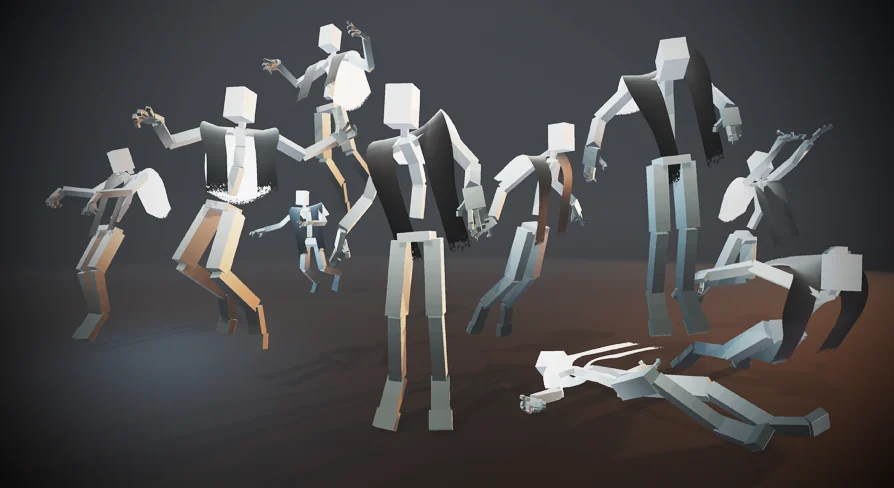
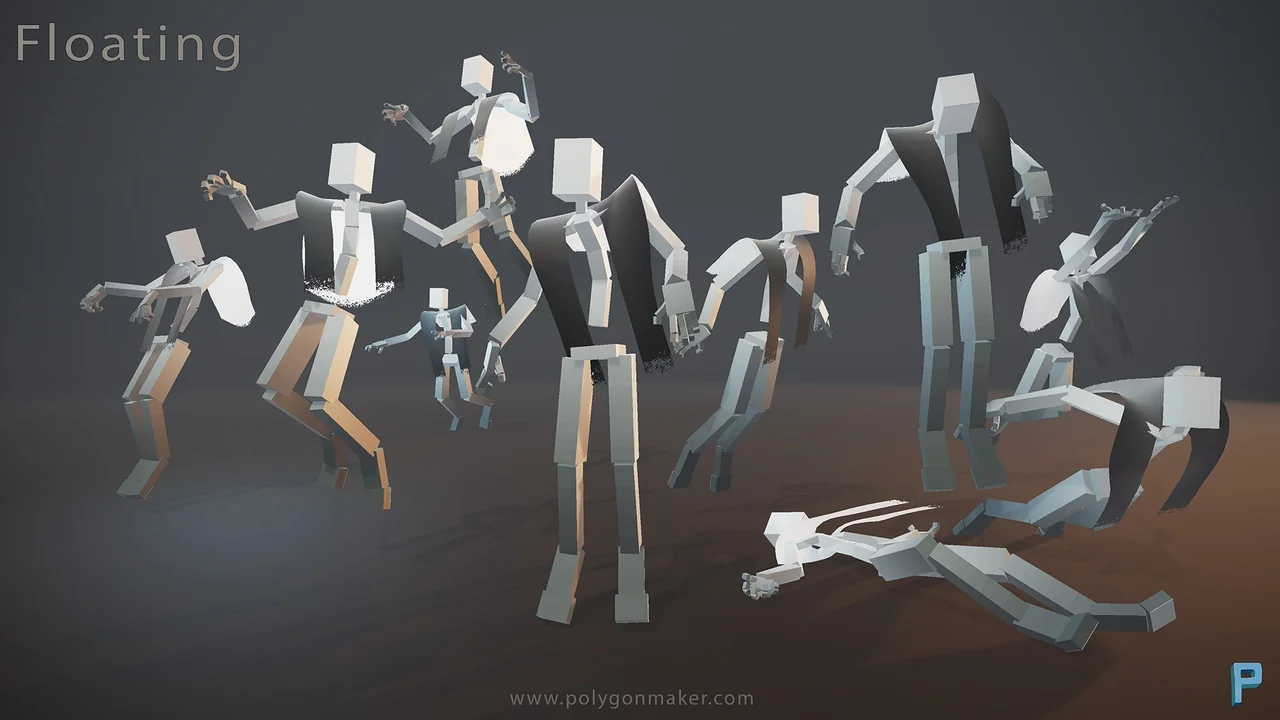
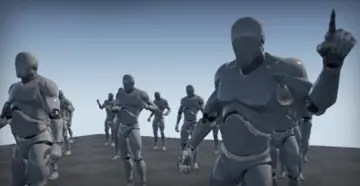
A character that needs to hold a floating pose, settle into an idle, break into an attack, and move through a run depends on clips that feel like they belong to one body. Floating Animations is a 25-animation set made by hand and used on the Polygonmaker packs. The tag list runs through floating, idle, ghost, attack, run, horror, polygon, and maker, which gives a clear starting vocabulary for what the collection covers.
The set sits in animation work, with floating and ghost as its strongest identity tags and attack and run extending the range into action and locomotion. For a Monsters - Wraith character, the compatibility note makes that combination the relevant review frame.
A 25-animation inventory for a Monsters - Wraith character
Twenty-five is the number to plan around. That is the full scope named for the set, and it is the practical inventory when reviewing how many states the collection can support. The compatibility line points to Monsters - Wraith, so the most concrete character context for the animations is that monster type. The review becomes less abstract: the question is not whether the clips look good in isolation, but whether the floating, idle, ghost, attack, and run states hold together on the Wraith.
The hand-made description is important for how the set should be read. These are authored animation clips, not a single base pose or a procedural motion treatment. Each clip represents a decision about how the character moves, holds, or strikes. With 25 animations in the set, that authored quality is the main thing to inspect across the full inventory rather than from one or two standout motions.
Floating and idle as the holding states
In the tag set, floating and idle sit alongside attack and run. That grouping points to a character that can remain in a non-combat state as well as move and strike. Floating is the behavior named in the set title, and idle gives the collection a settled state to pair with it. A team reviewing the pack can use those two tags as the first check: does the character read clearly while hovering or holding position, and does the idle transition cleanly into the more active categories?
Ghost and horror are the tone tags that sit around those states. They do not describe a technical feature, but they do define how the motion should be judged. A Wraith setup using this set needs the floating and idle clips to carry the ghostly, horror-facing character of the monster, not just the correct pose. The tag list gives reviewers the vocabulary to make that call before the clips go into a scene.
Attack and run tags extend the set beyond a single ghost pose
The presence of attack and run tags separates Floating Animations from a one-note hovering loop. The collection is indexed for combat motion and locomotion as well as floating and idle. For a horror monster, those tags are the action-side bookends: the character can hold a ghostly floating state, then move into attack or run behavior without leaving the set.
That does not mean the tags prescribe exact clip timing or a fixed state machine. It does mean the set's coverage can be reviewed against four practical categories: floating, idle, attack, and run, with ghost and horror supplying the character tone. A Wraith that needs to alternate between a held scary presence and a sudden aggressive move is the kind of setup where those categories are easiest to test.
The Polygonmaker usage as a production reference
The animations were used on the Polygonmaker packs, and they are hand made. That connection is the closest production reference for the motion style. It links the set to the way characters move in those packs, which is more useful than judging the clips as isolated animation samples. When the same floating, idle, attack, and run language appears across a pack, continuity becomes part of the review.
The Polygonmaker link also explains why the set is described as a selection rather than a complete animation system. It is a curated group of 25 animations used in production, not an open-ended library with every possible state. For a Monsters - Wraith character, that makes the set best approached as a focused motion collection: check what the 25 clips cover, then decide whether the floating, idle, ghost, attack, and run categories line up with the Wraith's needs.
Checking the horror and ghost tags against the Wraith
The tag list includes horror alongside ghost, attack, run, idle, and floating. For a Wraith setup, horror and ghost are the tone tags to test first. If the floating and idle clips read as ghostly and horrific on the Wraith, the attack and run clips have a coherent base to sit against. If the tone does not carry across those states, the set will feel like separate motions rather than one character.
The compatibility note for Monsters - Wraith is the anchor for that check. It is the only character reference in the resource details, so it should be the first character tested against the 25 clips. The rest of the evaluation follows from the tag set: floating for the held behavior, idle for the resting state, ghost and horror for the character read, and attack and run for the action and locomotion range.
The concrete takeaway is simple. Floating Animations brings 25 hand-made clips, a Polygonmaker production connection, and a tag set shaped by floating, idle, ghost, attack, run, and horror. For a Monsters - Wraith character, those are the categories to map before the animation set goes into a scene.
 Variety
 Variety
 Variety
 Variety