"6c6413bef81af556"{"id":"1000824","slug":"fences-and-gates-vol-2","title":"Fences and Gates - VOL.2","category":"Walls","engine":"4.26+,5.0+","assetVersion":"","engineVersion":"Engine Version: 4.26+,5.0+","tag":"Walls","accent":"blue","visual":"mech","summary":"Unreal Engine modular fence and gate asset pack with AAA textures, custom master materials, and full per-side geometry for medieval, fantasy, and horror scenes.","platform":"Unreal Engine","publishedAt":"2026-08-01T13:22:40.513Z","updatedAt":"2026-08-01T13:22:40.513Z","sourceNotes":[],"fileContents":[],"compatibility":["Unreal Engine","Engine Version: 4.26+,5.0+"],"featuredImage":{"alt":"Fences and Gates - VOL.2","src":"/wp-content/uploads/published/2026/08/d67614113098-269b6947-447c-45e5-b838-a46f7ca7d765-04b9349c62.webp"},"hasDownloadLink":true,"downloads":0,"terms":[{"taxonomy":"category","slug":"walls","name":"Walls"}],"galleryImages":[{"src":"/wp-content/uploads/published/2026/08/b39a36a0e2e0-4f4e9cff-3eed-46f4-a113-9ff98cf52ddb-71a18ff107.webp","alt":"Fences and Gates - VOL.2"},{"src":"/wp-content/uploads/published/2026/08/feeacde7d60a-6dda18a7-fd5d-41c4-9ed9-88e37fa5028e-42c2ad9f53.webp","alt":"Fences and Gates - VOL.2"},{"src":"/wp-content/uploads/published/2026/08/37acf0294b9d-0457a467-517c-403c-8c2a-143830737471-5af4f0526a.webp","alt":"Fences and Gates - VOL.2"},{"src":"/wp-content/uploads/published/2026/08/7a325e3dc1f3-91c5b10e-dea0-4358-bf52-db29043ed478-c9f1826ce1.webp","alt":"Fences and Gates - VOL.2"},{"src":"/wp-content/uploads/published/2026/08/06226263b846-376f37d9-610b-4e05-ba72-0156a3f5d785-232c27bea6.webp","alt":"Fences and Gates - VOL.2"},{"src":"/wp-content/uploads/published/2026/08/c6085aadb283-3d16338b-9720-47f3-9732-4e1410b8ea67-f026b97512.webp","alt":"Fences and Gates - VOL.2"},{"src":"/wp-content/uploads/published/2026/08/977eea889413-2d08242a-7bed-4cd5-a228-51cbbc3d9ec2-a7d2c5b1c0.webp","alt":"Fences and Gates - VOL.2"},{"src":"/wp-content/uploads/published/2026/08/c25ed40475d8-c8a4c1fd-7817-4786-ab07-89f8765dee61-ae92b16c7d.webp","alt":"Fences and Gates - VOL.2"},{"src":"/wp-content/uploads/published/2026/08/21172adf6528-878d965d-4413-42bd-a104-3ec51ed1653c-b58763d920.webp","alt":"Fences and Gates - VOL.2"},{"src":"/wp-content/uploads/published/2026/08/b641285ea704-4d943302-66be-494f-afe8-4fb85164ed9c-ab4eb3462b.webp","alt":"Fences and Gates - VOL.2"}],"accessPanel":{"kind":"resource","title":"Download this resource","eyebrow":"Free Download","message":"Log in or create a free account to start your download.","fileName":"Content.7z","safetyNote":"Resources are manually reviewed before listing to improve quality and reduce obvious risks.","actionLabel":"Download Free","resourceType":"Resource archive"},"contentHtml":"\u003cp\u003eBuilding perimeter walls, cemetery enclosures, and defensive barriers inside Unreal Engine demands props that hold up under close inspection and varied lighting. \u003cem\u003eFences and Gates - VOL.2\u003c/em\u003e addresses that with modular components engineered for realistic AAA visuals while respecting performance budgets. Scene assembly becomes a matter of snapping matching sections together rather than sculpting bespoke geometry for every enclosure.\u003c/p\u003e\n\n\u003ch2\u003ePerimeter Construction Across Themes\u003c/h2\u003e\n\u003cp\u003eThe tag set attached to this project opens a clear window into suitable applications: \u003cem\u003eGate\u003c/em\u003e, \u003cem\u003eStone\u003c/em\u003e, \u003cem\u003eModular\u003c/em\u003e, \u003cem\u003eLowpoly\u003c/em\u003e, \u003cem\u003eMetal\u003c/em\u003e, \u003cem\u003eDefense\u003c/em\u003e, \u003cem\u003eFantasy\u003c/em\u003e, \u003cem\u003eBarrier\u003c/em\u003e, \u003cem\u003eMedieval\u003c/em\u003e, \u003cem\u003eRealistic\u003c/em\u003e, \u003cem\u003eCemetery\u003c/em\u003e, \u003cem\u003eWall\u003c/em\u003e, \u003cem\u003eFence\u003c/em\u003e, \u003cem\u003eHorror\u003c/em\u003e, and \u003cem\u003eStonewall\u003c/em\u003e define the territory these props occupy. A production can lean historical with medieval stonewalls and iron gates, shift toward atmospheric horror with cemetery fences under dynamic lighting, or deploy the same modular pieces for fantasy fortifications. Defense and barrier tags point toward functional enclosures meant to read as protective or restrictive structures rather than decorative trim.\u003c/p\u003e\n\n\u003cp\u003eModular design sits at the center of the workflow. Instead of single monolithic walls, individual fence panels, gate units, and stonewall sections can be combined, repeated, and oriented to match layout requirements. That approach keeps iteration fast when blocking out a compound, adjusting a cemetery boundary, or extending a castle perimeter. The low-poly tag indicates the geometry stays economical even though the visual target is realistic fidelity.\u003c/p\u003e\n\n\u003ch2\u003eMaster Material Controls and Channel Packing\u003c/h2\u003e\n\u003cp\u003eA single Master Material setup governs the majority of props and models included in the pack. Rather than authoring independent materials for each mesh, the setup centralizes control so artists can adjust properties uniformly across an entire fence system or differentiate sections as needed.\u003c/p\u003e\n\n\u003cp\u003eThe Material exposes additional controls for Roughness, Albedo, Normals, and more. Fine-tuning surface response—whether dulling a weathered metal gate, adjusting stone color variation, or tightening normal detail on a stonewall—can happen at the Instance level without creating new textures. This keeps Material count low and iteration quick.\u003c/p\u003e\n\n\u003cp\u003eTexture efficiency extends to the Channel Packing approach. Roughness, Metallic, and Ambient Occlusion (AO) share a single map across packed channels, reducing the number of textures sampled per Material. For game pipelines where texture memory and draw calls matter, that consolidation helps keep performance in check while preserving the full PBR response needed for convincing metalwork and weathered stone.\u003c/p\u003e\n\n\u003ch3\u003eFull Geometry and Lighting Verification\u003c/h3\u003e\n\u003cp\u003eEvery model is fully detailed from all sides. Fences and gate props frequently appear in contexts where players or cameras can view them from either face—a perimeter wall bordering both an interior courtyard and exterior terrain, for instance. Two-sided geometry quality means the same asset works double duty without requiring mirrored duplicates or hidden face workaround art.\u003c/p\u003e\n\n\u003cp\u003eThe pack also includes a test dynamic lighting scene. Establishing how stonewalls, metal gates, and fences respond to moving light sources is essential for scenes set at dusk, night, or within torchlit environments. Having a ready-made dynamic lighting setup lets artists validate shadow behavior, surface Roughness response, and Ambient Occlusion depth before committing to final scene lighting.\u003c/p\u003e\n\n\u003ch2\u003eTexture Distribution and Detail Tiers\u003c/h2\u003e\n\u003cp\u003eTexture allocation follows a practical distribution. 20 textures at 2048×2048 resolution handle the majority of surface detail for fences, gates, walls, and associated props—this is where close-up fidelity matters most. 3 textures at 128×128 resolution serve smaller elements where lower resolution is sufficient, while a single 256×256 texture covers intermediate needs. Reserving high-resolution maps for hero surfaces and stepping down for secondary pieces keeps the texture budget aligned with visual priority.\u003c/p\u003e\n\n\u003cp\u003eAll texture sets target high quality and fidelity, with most at 2048×2048 resolution or above. That baseline ensures metal gates read with believable weathering, stone surfaces carry appropriate granularity, and painted or branded elements maintain sharpness under scrutiny.\u003c/p\u003e\n\n\u003ch2\u003eCustom Branding and Legal Clearance\u003c/h2\u003e\n\u003cp\u003eEvery branding element and label visible on the props was custom made by the studio. For production teams, that removes a common obstruction: intellectual property concerns tied to real-world signage, manufacturer names, or trademarked logos. Props can be used across commercial, educational, and personal projects without legal complications arising from third-party branding.\u003c/p\u003e\n\n\u003cp\u003eThe art was created by Dekogon Kollab Artists, a collaborative studio effort rather than a compilation of externally sourced content. This means the visual language stays consistent across the full set—metal weathering, stone color palettes, and surface treatments follow a unified authorship from the first fence post to the final gate latch.\u003c/p\u003e\n\n\u003ch2\u003eProject Fit and Scene Integration\u003c/h2\u003e\n\u003cp\u003eWhen planning a scene around \u003cem\u003eFences and Gates - VOL.2\u003c/em\u003e, the modular workflow pairs naturally with environment builds that require repeatable perimeter logic. A cemetery layout can combine stonewall sections with iron fence lines and gated entrances, all governed by the same Master Material. A medieval fortification can extend defensive walls and barrier props using the same channel-packed PBR pipeline. Horror environments benefit from the dynamic lighting test scene as a reference for isolating how fence silhouettes and gate shadows play under unstable light.\u003c/p\u003e\n\n\u003cp\u003eThe resource also carries compatibility with \u003cem\u003eMeridian 1988: Cedar Point School - Modular Environment (VOL 57)\u003c/em\u003e. For teams already building within that environment framework, \u003cem\u003eFences and Gates - VOL.2\u003c/em\u003e slots into an established modular pipeline without requiring material or scale reconfiguration. The same Master Material controls, channel-packed textures, and fully detailed geometry standards apply across both sets.\u003c/p\u003e\n\n\u003cp\u003eBecause the props are optimized for games, they can populate large outdoor areas without overwhelming performance targets. The combination of low-poly geometry, consolidated texture sampling, and a unified Master Material keeps overhead minimal while preserving the AAA visual standard the pack targets.\u003c/p\u003e\n\n\u003ch2\u003eMore From The Same Workflow\u003c/h2\u003e\n\u003cul\u003e\n\u003cli\u003e\u003ca href=\"https://3dcghub.com/industrial-vol-2-security-fences-and-barriers/\" title=\"Industrial VOL.2 - Security Fences and Barriers\"\u003eIndustrial VOL.2 - Security Fences and Barriers\u003c/a\u003e\u003c/li\u003e\n\u003cli\u003e\u003ca href=\"https://3dcghub.com/big-gates-pack/\" title=\"Big gates pack\"\u003eBig gates pack\u003c/a\u003e\u003c/li\u003e\n\u003cli\u003e\u003ca href=\"https://3dcghub.com/ghost-town-vol-3-modular-fences/\" title=\"Ghost Town VOL.3 - Modular Fences\"\u003eGhost Town VOL.3 - Modular Fences\u003c/a\u003e\u003c/li\u003e\n\u003cli\u003e\u003ca href=\"https://3dcghub.com/military-supplies-vol-2-clothing-and-bags/\" title=\"Military Supplies - VOL.2 - Clothing and Bags\"\u003eMilitary Supplies - VOL.2 - Clothing and Bags\u003c/a\u003e\u003c/li\u003e\n\u003cli\u003e\u003ca href=\"https://3dcghub.com/post-apocalyptic-melee-weapons-vol-2-post-apocalyptic-melee-weapons-weapon-old/\" title=\"Post Apocalyptic Melee Weapons VOL.2 (Post Apocalyptic Melee Weapons Weapon Old)\"\u003ePost Apocalyptic Melee Weapons VOL.2 (Post Apocalyptic Melee Weapons Weapon Old)\u003c/a\u003e\u003c/li\u003e\n\u003c/ul\u003e","contentTextLength":6619,"navigation":{"current":400,"total":3140,"previous":{"id":"1000825","slug":"fences-vol-4-old-fences-modular-nanite-and-low-poly","title":"Fences VOL.4 - Old Fences Modular (Nanite and Low Poly)","category":"Railings \u0026 Fences","platform":"Unreal Engine","updatedAt":"2026-08-01T13:32:42.101Z"},"next":{"id":"1000823","slug":"female-movement-pistol","title":"Female Movement Pistol","category":"Locomotion / Gaits","platform":"Unreal Engine","updatedAt":"2026-08-01T13:14:36.733Z"}},"relatedResources":[{"id":"1169","slug":"industrial-vol-2-security-fences-and-barriers","title":"Industrial VOL.2 - Security Fences and Barriers","category":"Industrial Buildings","engine":"4.26+,5.0+","assetVersion":"Engine version:4.26+,5.0+","engineVersion":"4.26","tag":"Industrial Buildin","accent":"blue","visual":"audio","summary":"Create realistic industrial zones with AAA-quality security fences and modular barriers. Optimized for Unreal Engine with 2K textures and master materials.","platform":"Unreal Engine","publishedAt":"2026-02-06T16:50:22.000Z","updatedAt":"2026-04-19T15:58:13.000Z","sourceNotes":[],"fileContents":[],"compatibility":["Unreal Engine","Engine version: 4.26+,5.0+"],"featuredImage":{"alt":"Industrial VOL.2 - Security Fences and Barriers","src":"https://3dcghub.com/wp-content/uploads/2026/02/c57ed23a-ffed-4dcb-88b5-e25f83ed91f9.jpg"},"hasDownloadLink":true,"downloads":0},{"id":"4528","slug":"big-gates-pack","title":"Big gates pack","category":"Tools, Objects \u0026 Decor","engine":"4.26+,5.0+","assetVersion":"Engine version: 4.26+,5.0+","engineVersion":"4.20","tag":"Tools","accent":"blue","visual":"audio","summary":"Enhance your game world with this modular big gates pack. Featuring PBR textures and realistic designs, it is perfect for post-apocalyptic and military environm","platform":"Unreal Engine","publishedAt":"2026-02-13T08:36:48.000Z","updatedAt":"2026-04-19T15:57:07.000Z","sourceNotes":[],"fileContents":[],"compatibility":["Unreal Engine","Engine version: 4.26+,5.0+"],"featuredImage":{"alt":"Big gates pack","src":"https://3dcghub.com/wp-content/uploads/2026/02/f47b9311-2b9a-4387-b114-a657257bcf3b.webp"},"hasDownloadLink":true,"downloads":0},{"id":"1000825","slug":"fences-vol-4-old-fences-modular-nanite-and-low-poly","title":"Fences VOL.4 - Old Fences Modular (Nanite and Low Poly)","category":"Railings \u0026 Fences","engine":"5.1+","assetVersion":"","engineVersion":"Engine Version: 5.1+","tag":"Railings \u0026 Fences","accent":"blue","visual":"mech","summary":"Modular old fence pack for Unreal Engine 5.0+ with 114 Nanite and low poly meshes, 4k textures, tintable materials, and Lumen support for AAA scenes.","platform":"Unreal Engine","publishedAt":"2026-08-01T13:32:42.101Z","updatedAt":"2026-08-01T13:32:42.101Z","sourceNotes":[],"fileContents":[],"compatibility":["Unreal Engine","Engine Version: 5.1+"],"featuredImage":{"alt":"Fences VOL.4 - Old Fences Modular (Nanite and Low Poly)","src":"/wp-content/uploads/published/2026/08/75b50f7705c0-f4b7406f-4829-4ec1-af8b-e83a8ca55bcb-c48e128b97.webp"},"hasDownloadLink":true,"downloads":1}]}
Walls
Fences and Gates - VOL.2
Unreal Engine modular fence and gate asset pack with AAA textures, custom master materials, and full per-side geometry for medieval, fantasy, and horror scenes.
Category:Unreal Engine, WallsPlatform: Unreal EngineEngine Version: 4.26+,5.0+Published: Aug 1, 2026
Walls
Resource overview
Building perimeter walls, cemetery enclosures, and defensive barriers inside Unreal Engine demands props that hold up under close inspection and varied lighting. Fences and Gates - VOL.2 addresses that with modular components engineered for realistic AAA visuals while respecting performance budgets. Scene assembly becomes a matter of snapping matching sections together rather than sculpting bespoke geometry for every enclosure.
Perimeter Construction Across Themes
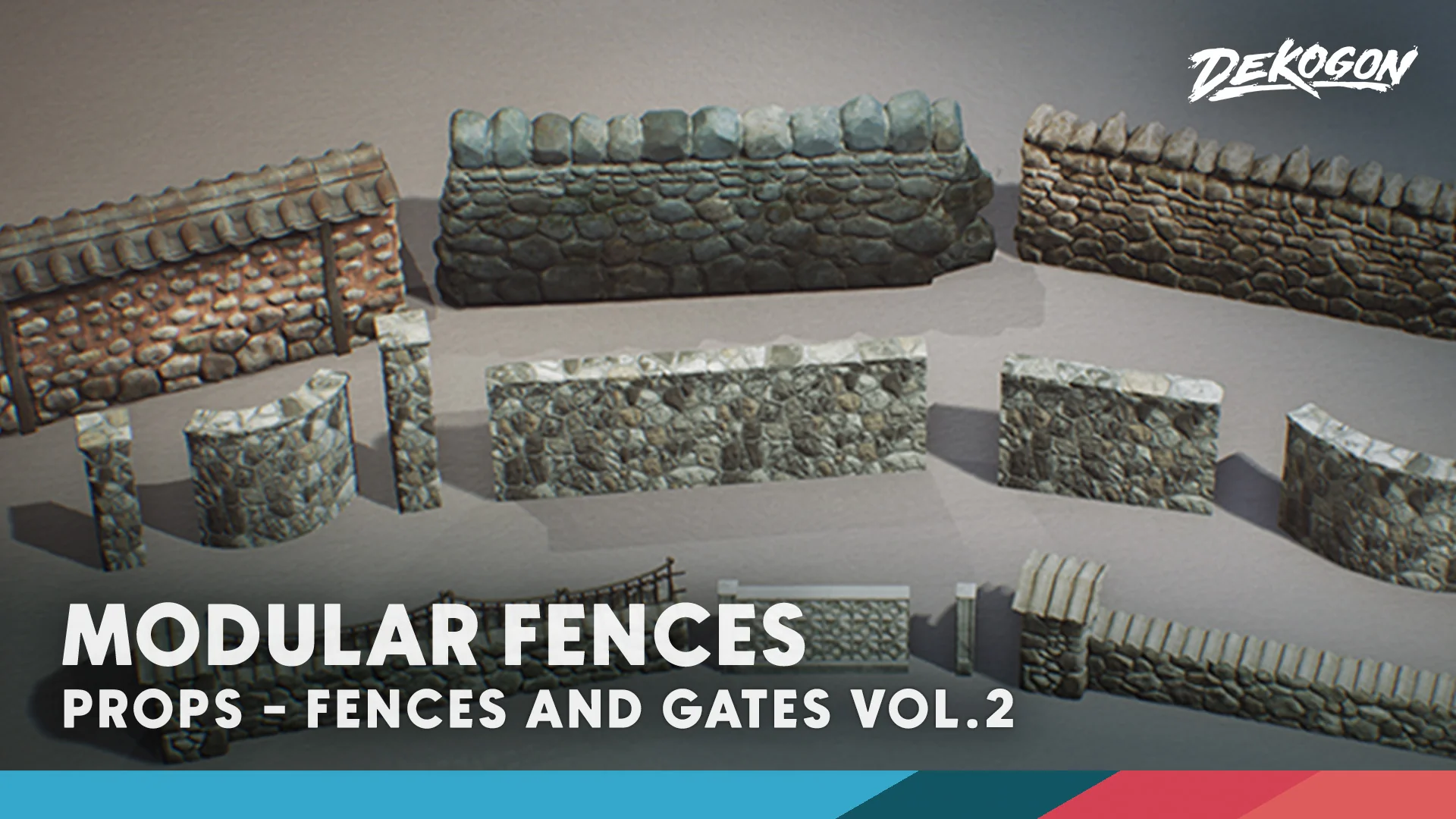
The tag set attached to this project opens a clear window into suitable applications: Gate, Stone, Modular, Lowpoly, Metal, Defense, Fantasy, Barrier, Medieval, Realistic, Cemetery, Wall, Fence, Horror, and Stonewall define the territory these props occupy. A production can lean historical with medieval stonewalls and iron gates, shift toward atmospheric horror with cemetery fences under dynamic lighting, or deploy the same modular pieces for fantasy fortifications. Defense and barrier tags point toward functional enclosures meant to read as protective or restrictive structures rather than decorative trim.
Modular design sits at the center of the workflow. Instead of single monolithic walls, individual fence panels, gate units, and stonewall sections can be combined, repeated, and oriented to match layout requirements. That approach keeps iteration fast when blocking out a compound, adjusting a cemetery boundary, or extending a castle perimeter. The low-poly tag indicates the geometry stays economical even though the visual target is realistic fidelity.
Master Material Controls and Channel Packing
A single Master Material setup governs the majority of props and models included in the pack. Rather than authoring independent materials for each mesh, the setup centralizes control so artists can adjust properties uniformly across an entire fence system or differentiate sections as needed.
The Material exposes additional controls for Roughness, Albedo, Normals, and more. Fine-tuning surface response—whether dulling a weathered metal gate, adjusting stone color variation, or tightening normal detail on a stonewall—can happen at the Instance level without creating new textures. This keeps Material count low and iteration quick.
Texture efficiency extends to the Channel Packing approach. Roughness, Metallic, and Ambient Occlusion (AO) share a single map across packed channels, reducing the number of textures sampled per Material. For game pipelines where texture memory and draw calls matter, that consolidation helps keep performance in check while preserving the full PBR response needed for convincing metalwork and weathered stone.
Full Geometry and Lighting Verification
Every model is fully detailed from all sides. Fences and gate props frequently appear in contexts where players or cameras can view them from either face—a perimeter wall bordering both an interior courtyard and exterior terrain, for instance. Two-sided geometry quality means the same asset works double duty without requiring mirrored duplicates or hidden face workaround art.
The pack also includes a test dynamic lighting scene. Establishing how stonewalls, metal gates, and fences respond to moving light sources is essential for scenes set at dusk, night, or within torchlit environments. Having a ready-made dynamic lighting setup lets artists validate shadow behavior, surface Roughness response, and Ambient Occlusion depth before committing to final scene lighting.
Texture Distribution and Detail Tiers
Texture allocation follows a practical distribution. 20 textures at 2048×2048 resolution handle the majority of surface detail for fences, gates, walls, and associated props—this is where close-up fidelity matters most. 3 textures at 128×128 resolution serve smaller elements where lower resolution is sufficient, while a single 256×256 texture covers intermediate needs. Reserving high-resolution maps for hero surfaces and stepping down for secondary pieces keeps the texture budget aligned with visual priority.
All texture sets target high quality and fidelity, with most at 2048×2048 resolution or above. That baseline ensures metal gates read with believable weathering, stone surfaces carry appropriate granularity, and painted or branded elements maintain sharpness under scrutiny.
Custom Branding and Legal Clearance
Every branding element and label visible on the props was custom made by the studio. For production teams, that removes a common obstruction: intellectual property concerns tied to real-world signage, manufacturer names, or trademarked logos. Props can be used across commercial, educational, and personal projects without legal complications arising from third-party branding.
The art was created by Dekogon Kollab Artists, a collaborative studio effort rather than a compilation of externally sourced content. This means the visual language stays consistent across the full set—metal weathering, stone color palettes, and surface treatments follow a unified authorship from the first fence post to the final gate latch.
Project Fit and Scene Integration
When planning a scene around Fences and Gates - VOL.2, the modular workflow pairs naturally with environment builds that require repeatable perimeter logic. A cemetery layout can combine stonewall sections with iron fence lines and gated entrances, all governed by the same Master Material. A medieval fortification can extend defensive walls and barrier props using the same channel-packed PBR pipeline. Horror environments benefit from the dynamic lighting test scene as a reference for isolating how fence silhouettes and gate shadows play under unstable light.
The resource also carries compatibility with Meridian 1988: Cedar Point School - Modular Environment (VOL 57). For teams already building within that environment framework, Fences and Gates - VOL.2 slots into an established modular pipeline without requiring material or scale reconfiguration. The same Master Material controls, channel-packed textures, and fully detailed geometry standards apply across both sets.
Because the props are optimized for games, they can populate large outdoor areas without overwhelming performance targets. The combination of low-poly geometry, consolidated texture sampling, and a unified Master Material keeps overhead minimal while preserving the AAA visual standard the pack targets.
 Walls
Walls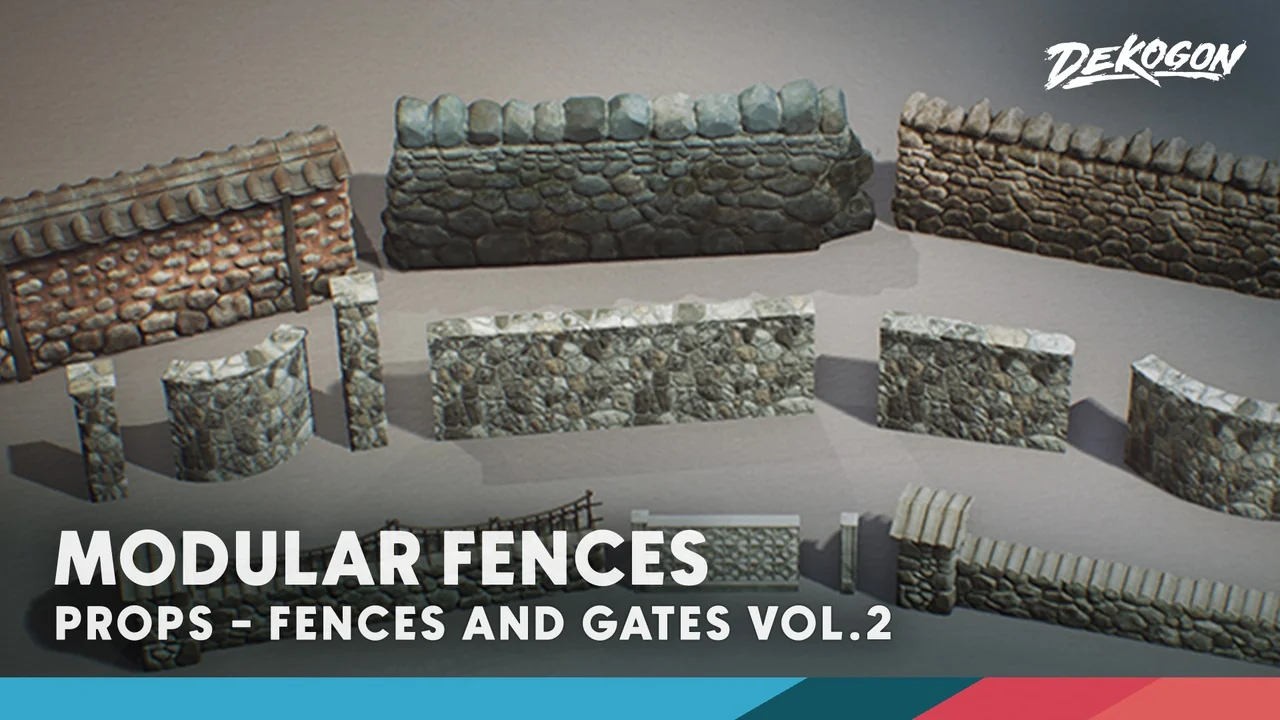
 Industrial Buildin
 Tools
Tools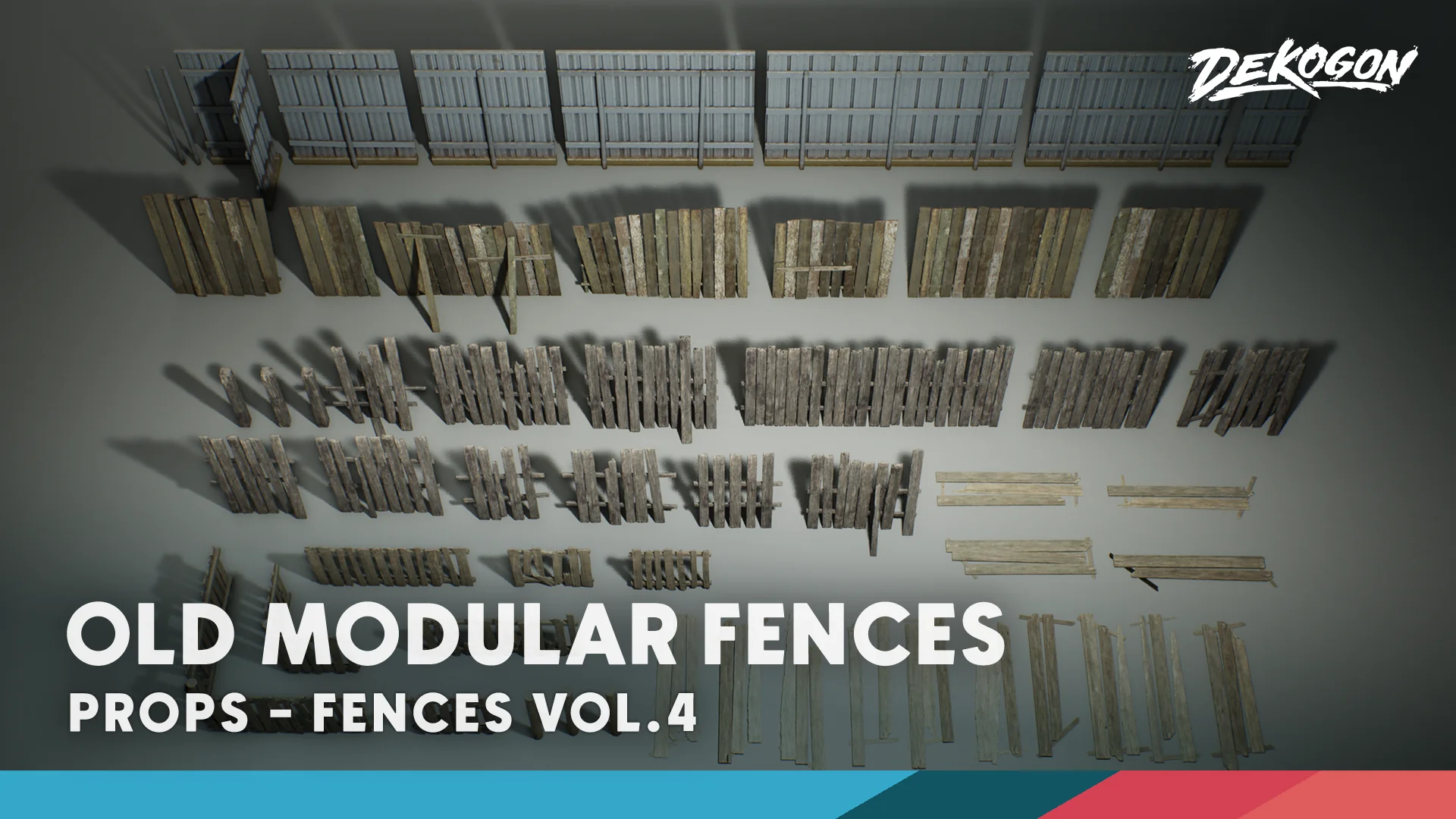 Railings & Fences