"7ad89cffa44984cf"{"id":"1002525","slug":"fallen-knight","title":"Fallen Knight","category":"Game Development Resource","engine":"4.18+,5.0+","assetVersion":"","engineVersion":"Engine Version: 4.18+,5.0+","tag":"Game Development R","accent":"blue","visual":"mech","summary":"Technical analysis of the Fallen Knight 3D character, detailing mesh counts, skin color variants, modular armor and weapons, and UE5 transformation compatibilit","platform":"Unreal Engine","indexPolicy":"index","publishedAt":"2026-11-13T09:16:26.308Z","updatedAt":"2026-11-13T09:16:26.308Z","sourceNotes":[],"fileContents":[],"compatibility":["Unreal Engine","Engine Version: 4.18+,5.0+"],"featuredImage":{"alt":"Fallen Knight","src":"/wp-content/uploads/published/2026/11/ff90aa17af16-fd7d3b7a-3a56-4c92-89f3-6b539505241a-0f1b6656d6.webp"},"hasDownloadLink":true,"downloads":0,"terms":[],"galleryImages":[{"src":"/wp-content/uploads/published/2026/11/df6e142835f5-879dfc0f-7fe8-4fa8-86ab-8a3c83f33828-81df8d59d5.webp","alt":"Fallen Knight"},{"src":"/wp-content/uploads/published/2026/11/9d52c4b63967-2085df8b-73bc-435a-b292-ac8f9a4125a5-97452b3a3e.webp","alt":"Fallen Knight"},{"src":"/wp-content/uploads/published/2026/11/e71d22e4aaf4-c3eadd2b-5da1-490c-8728-0b479768e7c9-62f5b05c82.webp","alt":"Fallen Knight"},{"src":"/wp-content/uploads/published/2026/11/bc9a6e865a7d-68ebaaef-4f05-4fe9-a64a-d01e0b4816e2-d1d080abfd.webp","alt":"Fallen Knight"},{"src":"/wp-content/uploads/published/2026/11/5667ff93dc68-d86c10a0-eefa-4d66-8239-0aaf6ae2caf3-714f024f54.webp","alt":"Fallen Knight"},{"src":"/wp-content/uploads/published/2026/11/1523c688ad56-3ed9e938-031d-4c72-ae9a-a9c947e49f23-751a509472.webp","alt":"Fallen Knight"},{"src":"/wp-content/uploads/published/2026/11/8391cdebfcdf-4209997b-f675-40b8-ac4d-99c50b2de9a9-8fe0073f0f.webp","alt":"Fallen Knight"},{"src":"/wp-content/uploads/published/2026/11/7848f8ff2ab0-2a11b629-4f54-4b02-b00e-4efa6b0b4c56-b3700e591e.webp","alt":"Fallen Knight"},{"src":"/wp-content/uploads/published/2026/11/83cf166037f0-7546801d-dca3-4863-96b2-19d45b7218ff-d377014b70.webp","alt":"Fallen Knight"},{"src":"/wp-content/uploads/published/2026/11/180ad4c6cb8d-42c0bd2b-8035-4398-b04f-de1464ea8dd2-186ac6a8b4.webp","alt":"Fallen Knight"}],"accessPanel":{"kind":"resource","title":"Get this resource","eyebrow":"Free resource","message":"Download this resource in your browser.","fileName":"Content.7z","safetyNote":"Resources are manually reviewed before listing to improve quality and reduce obvious risks.","actionLabel":"Get this resource","resourceType":"Resource archive","versions":[]},"contentHtml":"\u003cp\u003eA fully realized male warrior character carries specific structural requirements when integrated into dynamic 3D scenes. The Fallen Knight appears in the scene as a rigged, animated male human figure designed around a dark, creepy medieval fantasy aesthetic. Built with lowpoly optimization principles in mind while retaining detailed surface silhouettes, the character functions across real-time rendering pipelines where geometric efficiency and visual presence must balance against performance constraints.\u003c/p\u003e\u003ch2\u003eMesh Density Across the Fallen Knight Anatomy\u003c/h2\u003e\u003cp\u003eEvaluating the asset begins with its geometric distribution between organic and manufactured components. The base character anatomy and the outer plating do not share a single monolithic mesh budget; instead, the underlying form and the layered equipment divide into discrete segments with dedicated counts.\u003c/p\u003e\u003cp\u003eThe organic foundation consists of the male human body, which registers at 14,136 polygons, 15,544 vertices, and 28,128 triangles. This geometric allocation provides sufficient surface resolution across the limbs, torso, and facial region to support smooth organic deformations under skeletal movement. Maintaining 28,128 triangles across the underlying body ensures that when the animated rig bends at the joints—such as elbows, knees, spine, and shoulders—the silhouette holds its form without collapsing or producing unnatural pinching artifacts.\u003c/p\u003e\u003cp\u003eLayered over the body is the protective suit, which represents the densest component of the asset. The armor accounts for 28,546 polygons, 35,375 vertices, and 56,017 triangles. Because rigid and articulated plating contains complex overlapping plates, hinges, straps, and edged contours, it commands nearly double the geometric density of the base anatomy. Across 56,017 triangles, the armor defines the jagged, imposing contours required by the creepy medieval theme without relying solely on normal maps to simulate depth. When the body and armor are evaluated together, the combined character figure totals 42,682 polygons, 50,919 vertices, and 84,145 triangles, creating a detailed primary entity suited for real-time interaction.\u003c/p\u003e\u003ch2\u003eModular Gear and Knight Weaponry Polycounters\u003c/h2\u003e\u003cp\u003eBeyond the character figure, the asset includes complementary equipment intended for combat-ready staging: a single-handed sword and a protective shield. Both elements follow strict real-time polygon budgets that keep peripheral equipment lightweight, preventing unnecessary overhead during active gameplay sequences.\u003c/p\u003e\u003cp\u003eThe sword is constructed with 494 polygons, 633 vertices, and 953 triangles. Keeping the blade, crossguard, grip, and pommel under 1,000 triangles ensures that the weapon can be socketed to hand bones or scabbards without exerting heavy strain on rendering passes. The geometry focuses density along the leading edges and the hilt structure, preserving the profile of a functional medieval sidearm during rapid swinging animations or close-up combat framing.\u003c/p\u003e\u003cp\u003eThe shield mirrors this focused efficiency, registering at 483 polygons, 530 vertices, and 842 triangles. Its polygonal distribution secures the curvature of the defensive surface, edge reinforcement, and mounting points on the reverse side while maintaining a triangle count well below 900. Combined, the sword and shield add only 977 polygons, 1,163 vertices, and 1,795 triangles to the total loadout. Incorporating both pieces of weaponry brings the complete asset assembly—body, armor, sword, and shield—to exactly 43,659 polygons, 52,082 vertices, and 85,940 triangles. This separation between core character meshes and external armament allows developers to equip, unequip, or swap items independently depending on state transitions.\u003c/p\u003e\u003ch2\u003eSurface Tone and Skin Variation Parameters\u003c/h2\u003e\u003cp\u003eVisual diversity for the character relies on dedicated surface alterations. The skin features 3 distinct color variations, providing flexibility in how the entity is presented across different encounters, hostile factions, or narrative contexts. Within medieval fantasy environments characterized by creepy or unsettling tones, differing skin palettes enable subtle shifts in physiological state, environmental exposure, or character corruption.\u003c/p\u003e\u003cp\u003eThese 3 skin color options allow project teams to deploy multiple instances of the male figure without each character appearing identical. Because the asset belongs to the creepy medieval aesthetic, variations in skin tone reinforce themes of rot, affliction, or unnatural resilience directly on the underlying anatomical mesh. When combined with the heavy silhouette of the armor plating, the exposed skin regions establish clear contrast against the metallic and worn surfaces of the gear.\u003c/p\u003e\u003ch2\u003eRigged Character Integration and Transformation Compatibility\u003c/h2\u003e\u003cp\u003eFunctional implementation in engine workflows relies directly on the skeletal structure and compatibility features defined for the asset. Tagged as rigged and animated, the character model possesses a bone hierarchy capable of driving locomotion, combat sequences, and specialized systemic interactions out of the box.\u003c/p\u003e\u003cp\u003eThe asset lists explicit compatibility with Unreal Engine 5 (UE5), enabling direct placement into modern render pipelines utilizing advanced shading and animation tools. In addition to standard UE5 implementation, the model supports specific compatibility with \"Werewolf | Real-Time Transformation\" workflows. This feature addresses a technical hurdle in character development: transitioning seamlessly between a human knight form and a monstrous werewolf creature during active runtime.\u003c/p\u003e\u003cp\u003eReal-time transformation setups require careful alignment of vertex weights, skeletal hierarchies, and mesh morph targets or swap mechanisms. Because the body (28,128 triangles) and armor (56,017 triangles) are cleanly segregated, developers can manage how the armor breaks, detaches, or warps when initiating a shape-shift sequence into a beast form. The presence of the rigged male human structure ensures that pre-transformation animations—such as agony states, staggering, or sudden physical distortion—execute reliably before triggering the full creature transition within UE5.\u003c/p\u003e\u003ch2\u003eImplementation Considerations for Production Pipelines\u003c/h2\u003e\u003cp\u003eDeploying this character requires evaluating the geometric ceiling across hardware targets. At 85,940 total triangles with all gear attached, the model fits comfortably into mid-to-high-spec real-time configurations while maintaining the structural fidelity needed for hero characters, elite antagonists, or narrative bosses. The lowpoly tagging combined with targeted polygon placement keeps the weapon assets under 1,000 triangles each, focusing computational resources squarely on the animated armor and deformer systems.\u003c/p\u003e\u003cp\u003eThe inclusion of 3 skin variations eliminates the need to author supplementary diffuse textures from scratch when staging variations of the figure. For teams developing within UE5, particularly those leveraging runtime transformation systems involving werewolves and cursed medieval knights, the asset provides a structurally documented baseline ready for rigging integration, material assignment, and cinematic scene construction.\u003c/p\u003e\n\n\u003ch2\u003eMore From The Same Workflow\u003c/h2\u003e\n\u003cul\u003e\n\u003cli\u003e\u003ca href=\"https://3dcghub.com/esm-lion-knight/\" rel=\"noopener noreferrer\"\u003eESM Lion Knight\u003c/a\u003e\u003c/li\u003e\n\u003cli\u003e\u003ca href=\"https://3dcghub.com/esm-royal-knight-golden-bird/\" rel=\"noopener noreferrer\"\u003eESM Royal Knight: Golden Bird\u003c/a\u003e\u003c/li\u003e\n\u003cli\u003e\u003ca href=\"https://3dcghub.com/red-knight/\" rel=\"noopener noreferrer\"\u003eRed Knight\u003c/a\u003e\u003c/li\u003e\n\u003cli\u003e\u003ca href=\"https://3dcghub.com/dark-knight/\" rel=\"noopener noreferrer\"\u003eDark Knight\u003c/a\u003e\u003c/li\u003e\n\u003cli\u003e\u003ca href=\"https://3dcghub.com/modular-fantasy-knights/\" rel=\"noopener noreferrer\"\u003eModular Fantasy Knights\u003c/a\u003e\u003c/li\u003e\n\u003c/ul\u003e","contentTextLength":7278,"navigation":{"current":52,"total":4499,"previous":{"id":"1002526","slug":"fantasy-knight","title":"Fantasy Knight","category":"Characters \u0026 Creatures","platform":"Unreal Engine","updatedAt":"2026-11-13T09:17:55.626Z"},"next":{"id":"1002524","slug":"esm-haunt-army","title":"ESM Haunt Army","category":"Characters \u0026 Creatures","platform":"Unreal Engine","updatedAt":"2026-11-13T09:14:33.428Z"}},"relatedResources":[{"id":"1002475","slug":"esm-lion-knight","title":"ESM Lion Knight","category":"Characters \u0026 Creatures","engine":"4.22+,5.0+","assetVersion":"","engineVersion":"Engine Version: 4.22+,5.0+","tag":"Characters","accent":"blue","visual":"character","summary":"Technical breakdown of ESM Lion Knight, covering Animation Blueprints, retargeting setup, script integration, weapon assets, and ESM Code Spider support.","platform":"Unreal Engine","indexPolicy":"index","publishedAt":"2026-11-12T03:27:30.212Z","updatedAt":"2026-11-12T03:27:30.212Z","sourceNotes":[],"fileContents":[],"compatibility":["Unreal Engine","Engine Version: 4.22+,5.0+"],"featuredImage":{"alt":"ESM Lion Knight","src":"/wp-content/uploads/published/2026/11/01a0ce7c368d-aa6d231a-4894-40e8-8592-54453589f1a6-a8b6e3b94b.webp"},"hasDownloadLink":true,"downloads":0},{"id":"1002476","slug":"esm-royal-knight-golden-bird","title":"ESM Royal Knight: Golden Bird","category":"Characters \u0026 Creatures","engine":"4.22+,5.0+","assetVersion":"","engineVersion":"Engine Version: 4.22+,5.0+","tag":"Characters","accent":"blue","visual":"character","summary":"Examine ESM Royal Knight: Golden Bird, featuring realistic fantasy styling, gold light armor, an animation blueprint, and ESM Code Spider compatibility.","platform":"Unreal Engine","indexPolicy":"index","publishedAt":"2026-11-12T03:28:19.677Z","updatedAt":"2026-11-12T03:28:19.677Z","sourceNotes":[],"fileContents":[],"compatibility":["Unreal Engine","Engine Version: 4.22+,5.0+"],"featuredImage":{"alt":"ESM Royal Knight: Golden Bird","src":"/wp-content/uploads/published/2026/11/b5bcd7fd24b8-a3e783f3-6ea4-47cb-acdc-1c3bd820760c-54002a21e3.webp"},"hasDownloadLink":true,"downloads":0},{"id":"1002493","slug":"red-knight","title":"Red Knight","category":"Humans","engine":"4.22+,5.0+","assetVersion":"","engineVersion":"Engine Version: 4.22+,5.0+","tag":"Humans","accent":"blue","visual":"mech","summary":"A technical breakdown of the lowpoly Red Knight character, covering texture customization, engine shader differences, animations, and Yippy Kawaii compatibility","platform":"Unreal Engine","indexPolicy":"index","publishedAt":"2026-11-12T03:58:22.626Z","updatedAt":"2026-11-12T03:58:22.626Z","sourceNotes":[],"fileContents":[],"compatibility":["Unreal Engine","Engine Version: 4.22+,5.0+"],"featuredImage":{"alt":"Red Knight","src":"/wp-content/uploads/published/2026/11/8c8ce5564981-0e955ed6-9c9d-4e80-b62a-ba32896c74df-c20436f29a.webp"},"hasDownloadLink":true,"downloads":0}]}
Game Development R
Fallen Knight
Technical analysis of the Fallen Knight 3D character, detailing mesh counts, skin color variants, modular armor and weapons, and UE5 transformation compatibilit
Category:Unreal EnginePlatform: Unreal EngineEngine Version: 4.18+,5.0+Published: Nov 13, 2026
Game Development R
Resource overview
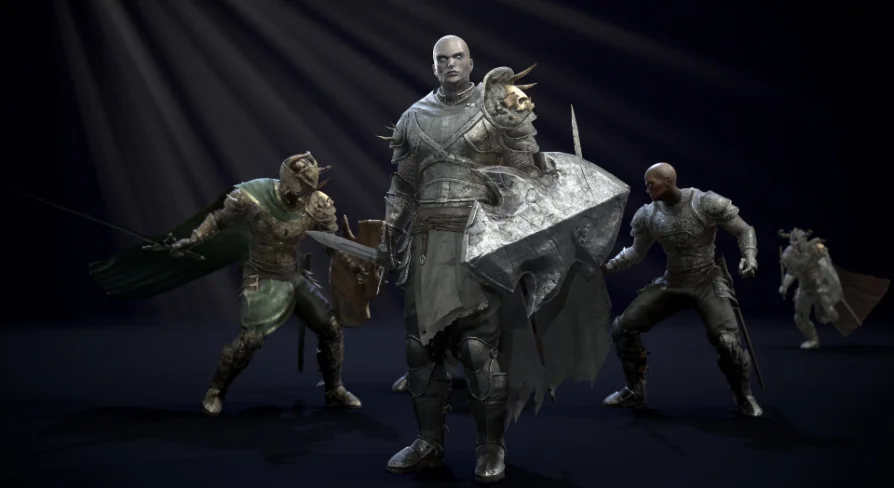
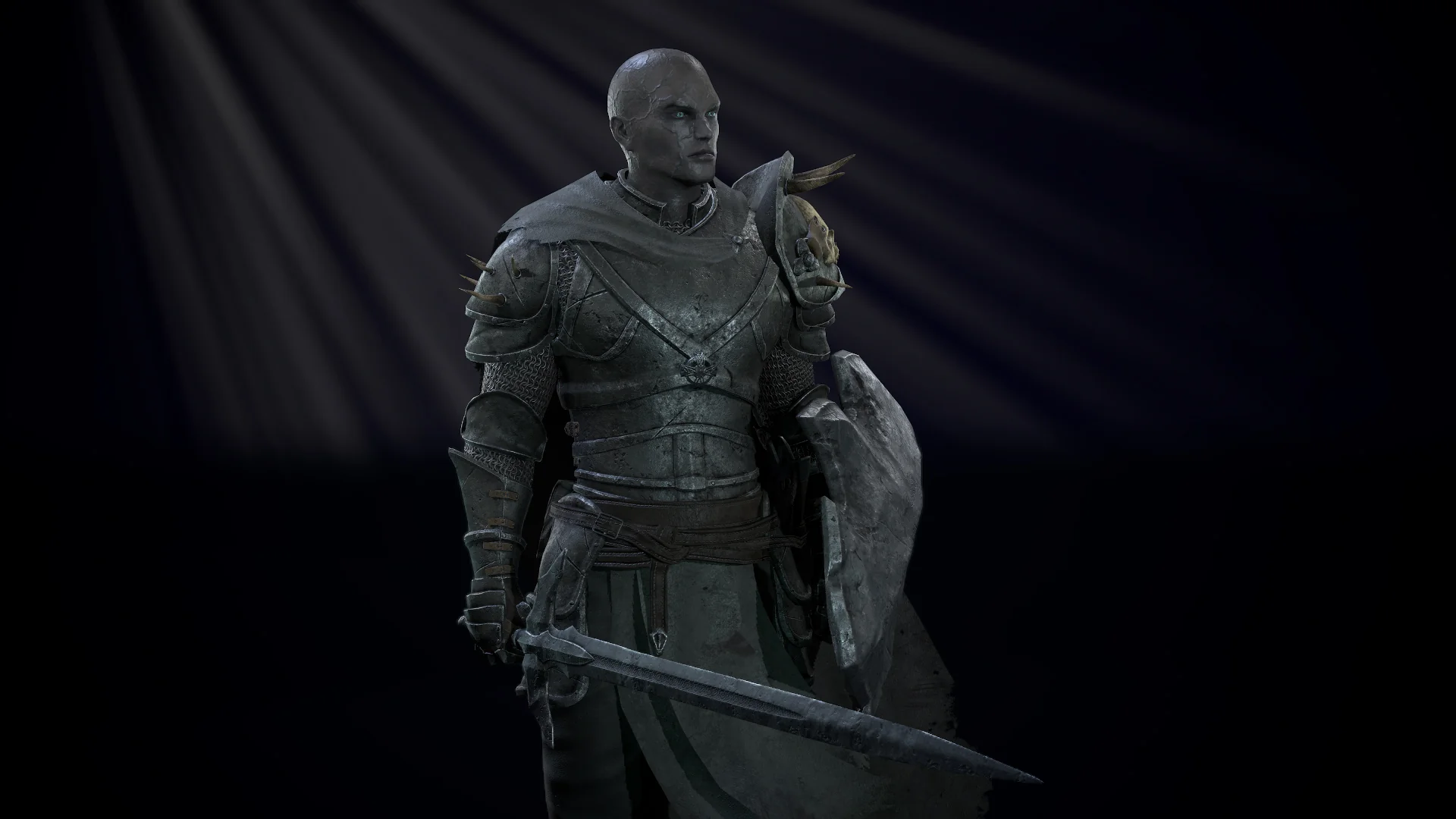
A fully realized male warrior character carries specific structural requirements when integrated into dynamic 3D scenes. The Fallen Knight appears in the scene as a rigged, animated male human figure designed around a dark, creepy medieval fantasy aesthetic. Built with lowpoly optimization principles in mind while retaining detailed surface silhouettes, the character functions across real-time rendering pipelines where geometric efficiency and visual presence must balance against performance constraints.
Mesh Density Across the Fallen Knight Anatomy
Evaluating the asset begins with its geometric distribution between organic and manufactured components. The base character anatomy and the outer plating do not share a single monolithic mesh budget; instead, the underlying form and the layered equipment divide into discrete segments with dedicated counts.
The organic foundation consists of the male human body, which registers at 14,136 polygons, 15,544 vertices, and 28,128 triangles. This geometric allocation provides sufficient surface resolution across the limbs, torso, and facial region to support smooth organic deformations under skeletal movement. Maintaining 28,128 triangles across the underlying body ensures that when the animated rig bends at the joints—such as elbows, knees, spine, and shoulders—the silhouette holds its form without collapsing or producing unnatural pinching artifacts.
Layered over the body is the protective suit, which represents the densest component of the asset. The armor accounts for 28,546 polygons, 35,375 vertices, and 56,017 triangles. Because rigid and articulated plating contains complex overlapping plates, hinges, straps, and edged contours, it commands nearly double the geometric density of the base anatomy. Across 56,017 triangles, the armor defines the jagged, imposing contours required by the creepy medieval theme without relying solely on normal maps to simulate depth. When the body and armor are evaluated together, the combined character figure totals 42,682 polygons, 50,919 vertices, and 84,145 triangles, creating a detailed primary entity suited for real-time interaction.
Modular Gear and Knight Weaponry Polycounters
Beyond the character figure, the asset includes complementary equipment intended for combat-ready staging: a single-handed sword and a protective shield. Both elements follow strict real-time polygon budgets that keep peripheral equipment lightweight, preventing unnecessary overhead during active gameplay sequences.
The sword is constructed with 494 polygons, 633 vertices, and 953 triangles. Keeping the blade, crossguard, grip, and pommel under 1,000 triangles ensures that the weapon can be socketed to hand bones or scabbards without exerting heavy strain on rendering passes. The geometry focuses density along the leading edges and the hilt structure, preserving the profile of a functional medieval sidearm during rapid swinging animations or close-up combat framing.
The shield mirrors this focused efficiency, registering at 483 polygons, 530 vertices, and 842 triangles. Its polygonal distribution secures the curvature of the defensive surface, edge reinforcement, and mounting points on the reverse side while maintaining a triangle count well below 900. Combined, the sword and shield add only 977 polygons, 1,163 vertices, and 1,795 triangles to the total loadout. Incorporating both pieces of weaponry brings the complete asset assembly—body, armor, sword, and shield—to exactly 43,659 polygons, 52,082 vertices, and 85,940 triangles. This separation between core character meshes and external armament allows developers to equip, unequip, or swap items independently depending on state transitions.
Surface Tone and Skin Variation Parameters
Visual diversity for the character relies on dedicated surface alterations. The skin features 3 distinct color variations, providing flexibility in how the entity is presented across different encounters, hostile factions, or narrative contexts. Within medieval fantasy environments characterized by creepy or unsettling tones, differing skin palettes enable subtle shifts in physiological state, environmental exposure, or character corruption.
These 3 skin color options allow project teams to deploy multiple instances of the male figure without each character appearing identical. Because the asset belongs to the creepy medieval aesthetic, variations in skin tone reinforce themes of rot, affliction, or unnatural resilience directly on the underlying anatomical mesh. When combined with the heavy silhouette of the armor plating, the exposed skin regions establish clear contrast against the metallic and worn surfaces of the gear.
Rigged Character Integration and Transformation Compatibility
Functional implementation in engine workflows relies directly on the skeletal structure and compatibility features defined for the asset. Tagged as rigged and animated, the character model possesses a bone hierarchy capable of driving locomotion, combat sequences, and specialized systemic interactions out of the box.
The asset lists explicit compatibility with Unreal Engine 5 (UE5), enabling direct placement into modern render pipelines utilizing advanced shading and animation tools. In addition to standard UE5 implementation, the model supports specific compatibility with "Werewolf | Real-Time Transformation" workflows. This feature addresses a technical hurdle in character development: transitioning seamlessly between a human knight form and a monstrous werewolf creature during active runtime.
Real-time transformation setups require careful alignment of vertex weights, skeletal hierarchies, and mesh morph targets or swap mechanisms. Because the body (28,128 triangles) and armor (56,017 triangles) are cleanly segregated, developers can manage how the armor breaks, detaches, or warps when initiating a shape-shift sequence into a beast form. The presence of the rigged male human structure ensures that pre-transformation animations—such as agony states, staggering, or sudden physical distortion—execute reliably before triggering the full creature transition within UE5.
Implementation Considerations for Production Pipelines
Deploying this character requires evaluating the geometric ceiling across hardware targets. At 85,940 total triangles with all gear attached, the model fits comfortably into mid-to-high-spec real-time configurations while maintaining the structural fidelity needed for hero characters, elite antagonists, or narrative bosses. The lowpoly tagging combined with targeted polygon placement keeps the weapon assets under 1,000 triangles each, focusing computational resources squarely on the animated armor and deformer systems.
The inclusion of 3 skin variations eliminates the need to author supplementary diffuse textures from scratch when staging variations of the figure. For teams developing within UE5, particularly those leveraging runtime transformation systems involving werewolves and cursed medieval knights, the asset provides a structurally documented baseline ready for rigging integration, material assignment, and cinematic scene construction.
 Game Development R
 Characters
 Characters
 Humans