"07a32e720bd988c8"{"id":"1002475","slug":"esm-lion-knight","title":"ESM Lion Knight","category":"Characters \u0026 Creatures","engine":"4.22+,5.0+","assetVersion":"","engineVersion":"Engine Version: 4.22+,5.0+","tag":"Characters","accent":"blue","visual":"character","summary":"Technical breakdown of ESM Lion Knight, covering Animation Blueprints, retargeting setup, script integration, weapon assets, and ESM Code Spider support.","platform":"Unreal Engine","indexPolicy":"index","publishedAt":"2026-11-12T03:27:30.212Z","updatedAt":"2026-11-12T03:27:30.212Z","sourceNotes":[],"fileContents":[],"compatibility":["Unreal Engine","Engine Version: 4.22+,5.0+"],"featuredImage":{"alt":"ESM Lion Knight","src":"/wp-content/uploads/published/2026/11/01a0ce7c368d-aa6d231a-4894-40e8-8592-54453589f1a6-a8b6e3b94b.webp"},"hasDownloadLink":true,"downloads":0,"terms":[{"taxonomy":"category","slug":"characters-and-creatures","name":"Characters \u0026 Creatures"}],"galleryImages":[{"src":"/wp-content/uploads/published/2026/11/a666f63bdc27-48858e4b-edab-4cb9-b951-fda89d6ad2a4-eb962b1f64.webp","alt":"ESM Lion Knight"},{"src":"/wp-content/uploads/published/2026/11/ab4002eaacb6-7a1169e6-5e6b-474f-8f6b-f8c123ca8d79-640b68a6bd.webp","alt":"ESM Lion Knight"},{"src":"/wp-content/uploads/published/2026/11/1a75fd4df475-73e2cf0e-f8f6-4b4a-93f4-3cfc14de7a06-9a824e56b9.webp","alt":"ESM Lion Knight"},{"src":"/wp-content/uploads/published/2026/11/df3718502566-cc8ac69a-b3cb-405a-b9f0-16190c708999-6d6a325342.webp","alt":"ESM Lion Knight"},{"src":"/wp-content/uploads/published/2026/11/7f629ee85dcb-4946bd42-e886-4e86-b6c1-75d9c508dbbc-dc855ec6a1.webp","alt":"ESM Lion Knight"},{"src":"/wp-content/uploads/published/2026/11/ea0c51dfe714-25235ec2-7f4b-4b48-8d14-f3195c438c6e-66bbdb2959.webp","alt":"ESM Lion Knight"},{"src":"/wp-content/uploads/published/2026/11/c574f063af72-58d7517c-2fd0-4830-8d46-ab0086454197-e88c861abc.webp","alt":"ESM Lion Knight"},{"src":"/wp-content/uploads/published/2026/11/f386a0daf805-5e7e1caf-8c59-44cd-b5a1-769bb77f5cd9-d0990c12df.webp","alt":"ESM Lion Knight"},{"src":"/wp-content/uploads/published/2026/11/5d004d05e491-d15fb3a9-864e-4a27-bda5-ee770d20941a-073781c90d.webp","alt":"ESM Lion Knight"},{"src":"/wp-content/uploads/published/2026/11/684e87e5f5df-04850f1d-74da-4c23-b4e5-7370bdc03c54-8583202bc1.webp","alt":"ESM Lion Knight"}],"accessPanel":{"kind":"resource","title":"Get this resource","eyebrow":"Free resource","message":"Download this resource in your browser.","fileName":"Content.7z","safetyNote":"Resources are manually reviewed before listing to improve quality and reduce obvious risks.","actionLabel":"Get this resource","resourceType":"Resource archive","versions":[]},"contentHtml":"\u003ch2\u003eConfiguring the ESM Lion Knight Animation Blueprint and Retargeting Pipeline\u003c/h2\u003e\n\u003cp\u003eIntegrating a heavy combatant begins with aligning the skeletal rig and setting up the underlying state logic. Deploying the ESM Lion Knight into an active scene relies on connecting its included Animation Blueprint to standard locomotion and combat controllers. Because the character is constructed to serve either as an individual boss or as an elite soldier stationed across larger encounters, the skeletal structure requires clean motion transfer across various locomotion states.\u003c/p\u003e\n\u003cp\u003eRetargeting remains central to getting the character operational within an existing motion library. Following a retarget workflow allows motion data from external libraries to translate cleanly onto the knight's proportions without distorting shoulder armor plates or causing weapon grips to drift out of alignment. The Animation Blueprint provides the foundational framework needed to manage transitions between idle stances, heavy directional runs, guard positions, and weapon swings.\u003c/p\u003e\n\u003cp\u003eWhen setting up the blueprint, developers can map transitional parameters directly to movement speeds and combat states. Having an Animation Blueprint already tied to the character minimizes the initial rig-binding phase, letting teams route locomotion variables, blend spaces, and attack montages into the knight's state machine without constructing movement logic from an empty asset.\u003c/p\u003e \u003ch2\u003eCombat Logic and Script Deployment for the Lion Knight Archetype\u003c/h2\u003e\n\u003cp\u003eScaling a character between a singular boss encounter and a squad of elite soldiers requires adaptable scripting. The ESM Lion Knight package incorporates script functionality designed to govern combat behavior and state transitions. When utilized as a boss, the character demands script routines that support elongated engagement sequences, phase transitions, and sustained defensive behaviors. Script hooks allow technical designers to manage hit reactions, balance poise meters, and orchestrate heavy attack windups that communicate power to the player.\u003c/p\u003e\n\u003cp\u003eAdapting the same character into an elite soldier role shifts the implementation focus toward group cohesion and modular parameters. Instead of managing complex single-target boss routines, the underlying script setup can be parameterized to govern squad aggro radiuses, coordinated flank behaviors, and synchronized melee strikes. Because the character carries a mighty, formidable visual presence, elite soldiers built from this template operate effectively as gatekeepers or high-priority threats within mixed-unit encounters.\u003c/p\u003e\n\u003cp\u003eSeparating behavioral scripts from core visual assets keeps combat staging organized. Designers can bind custom behavior trees or state machines to the provided scripts, dictating how the character handles target acquisition, closes distance, and executes weapon strikes in both narrow corridors and sprawling arenas.\u003c/p\u003e \u003ch2\u003eWeapon Configuration and Realistic Visual Execution\u003c/h2\u003e\n\u003cp\u003eVisual authenticity in fantasy combat relies heavily on how equipment interacts with the underlying character mesh. The ESM Lion Knight embraces a realistic aesthetic, steering away from exaggerated proportions in favor of functional, grounded armor surfacing and believable weapon scale. The included weapon is built to complement the knight's imposing stature, functioning as an extension of the character's offensive threat.\u003c/p\u003e\n\u003cp\u003eAttaching the weapon requires proper socket placement along the hand bones within the skeletal hierarchy. Ensuring the weapon sits correctly within the socket guarantees that hit-trace collision volumes align accurately with attack animations. Whether the knight executes an overhead cleave or a horizontal sweep, clean socket binding prevents positional drift between the weapon mesh and the Animation Blueprint's attack frames.\u003c/p\u003e\n\u003cp\u003eThe realistic design language also extends across the armor plating. Plate contours, joint articulation areas, and material definitions avoid stretching or pinching when the character enters low combat stances or executes wide swings. This structural integrity maintains visual fidelity during dynamic combat exchanges, ensuring the knight retains its weighty presence under direct camera focus.\u003c/p\u003e \u003ch2\u003eWeeping Dark Shaders and Red Glowing Eye Modifications\u003c/h2\u003e\n\u003cp\u003eVisual variety plays an essential role when deploying the same underlying model across diverse combat scenarios. The character package includes an alternate setup featuring a weeping dark material paired with red glowing eyes. This visual variant transforms the knight from a traditional noble guardian into a corrupted or supernatural adversary, dramatically altering how the model reads in low-light environments.\u003c/p\u003e\n\u003cp\u003eThe weeping dark material alters surface reflectance and texture tone, giving the armor an ominous, weather-beaten, or cursed appearance. Applying this dark shader allows level designers to visually isolate specific enemies—such as a corrupted commander leading a squad of standard soldiers—without needing to import an entirely different skeletal mesh. The contrast between dark steel surfaces and fluid, weeping accents reinforces the character's fantasy roots while keeping the aesthetic grounded.\u003c/p\u003e\n\u003cp\u003eThe red glowing eyes provide immediate gameplay readability. In dark dungeon environments or shadow-heavy arenas, emissive eye elements act as clear focal points for the player, telegraphing head orientation, facing direction, and target lock. Teams can also script material swaps during live gameplay, triggering the red glowing eye setup alongside the weeping dark material during phase changes to signal when a boss enters an enraged or heightened state of aggression.\u003c/p\u003e \u003ch2\u003eESM Code Spider Compatibility and Project Integration\u003c/h2\u003e\n\u003cp\u003eEnsuring that character assets communicate seamlessly with broader gameplay systems prevents technical debt during production. The ESM Lion Knight features compatibility with ESM Code Spider, streamlining how the asset interfaces with existing technical frameworks in that ecosystem. This compatibility provides a reliable foundation for hooking the knight into standardized health systems, AI controllers, inventory slots, and combat registries.\u003c/p\u003e\n\u003cp\u003eIntegrating a compatible asset within an established code base eliminates the need to rewrite custom interface functions for basic character operations. The script hooks align with existing architecture conventions, allowing developers to plug the knight directly into combat managers and world-spawning systems without refactoring core game logic. This architectural alignment proves particularly valuable when deploying multiple units across complex level structures.\u003c/p\u003e\n\u003cp\u003eManaging the asset over time requires maintaining clear organization among its Animation Blueprints, weapon sockets, and material instances. By keeping the standard realistic materials and the weeping dark variants neatly organized within the project folder structure, production teams can iterate on combat balance, expand animation libraries, and deploy the ESM Lion Knight across varying encounter types with minimal overhead.\u003c/p\u003e\n\n\u003ch2\u003eExplore Similar Assets\u003c/h2\u003e\n\u003cul\u003e\n\u003cli\u003e\u003ca href=\"https://3dcghub.com/esm-aida-s1-young-female-knight/\" rel=\"noopener noreferrer\"\u003eESM Aida S1: young female knight\u003c/a\u003e\u003c/li\u003e\n\u003cli\u003e\u003ca href=\"https://3dcghub.com/esm-hurricaneknight-raphael/\" rel=\"noopener noreferrer\"\u003eESM HurricaneKnight Raphael\u003c/a\u003e\u003c/li\u003e\n\u003cli\u003e\u003ca href=\"https://3dcghub.com/esm-novice-sorceress/\" rel=\"noopener noreferrer\"\u003eESM Novice Sorceress\u003c/a\u003e\u003c/li\u003e\n\u003cli\u003e\u003ca href=\"https://3dcghub.com/dark-knight/\" rel=\"noopener noreferrer\"\u003eDark Knight\u003c/a\u003e\u003c/li\u003e\n\u003cli\u003e\u003ca href=\"https://3dcghub.com/animalia-lion-male/\" rel=\"noopener noreferrer\"\u003eAnimalia - Lion (male)\u003c/a\u003e\u003c/li\u003e\n\u003c/ul\u003e","contentTextLength":7196,"navigation":{"current":24,"total":4421,"previous":{"id":"1002476","slug":"esm-royal-knight-golden-bird","title":"ESM Royal Knight: Golden Bird","category":"Characters \u0026 Creatures","platform":"Unreal Engine","updatedAt":"2026-11-12T03:28:19.677Z"},"next":{"id":"1002474","slug":"esm-aida-s1-young-female-knight","title":"ESM Aida S1: young female knight","category":"Characters \u0026 Creatures","platform":"Unreal Engine","updatedAt":"2026-11-12T03:23:24.987Z"}},"relatedResources":[{"id":"1002476","slug":"esm-royal-knight-golden-bird","title":"ESM Royal Knight: Golden Bird","category":"Characters \u0026 Creatures","engine":"4.22+,5.0+","assetVersion":"","engineVersion":"Engine Version: 4.22+,5.0+","tag":"Characters","accent":"blue","visual":"character","summary":"Examine ESM Royal Knight: Golden Bird, featuring realistic fantasy styling, gold light armor, an animation blueprint, and ESM Code Spider compatibility.","platform":"Unreal Engine","indexPolicy":"index","publishedAt":"2026-11-12T03:28:19.677Z","updatedAt":"2026-11-12T03:28:19.677Z","sourceNotes":[],"fileContents":[],"compatibility":["Unreal Engine","Engine Version: 4.22+,5.0+"],"featuredImage":{"alt":"ESM Royal Knight: Golden Bird","src":"/wp-content/uploads/published/2026/11/b5bcd7fd24b8-a3e783f3-6ea4-47cb-acdc-1c3bd820760c-54002a21e3.webp"},"hasDownloadLink":true,"downloads":0},{"id":"1002474","slug":"esm-aida-s1-young-female-knight","title":"ESM Aida S1: young female knight","category":"Characters \u0026 Creatures","engine":"4.22+,5.0+","assetVersion":"","engineVersion":"Engine Version: 4.22+,5.0+","tag":"Characters","accent":"blue","visual":"character","summary":"Explore ESM Aida S1, a realistic young female knight asset featuring an idle costume, animation blueprint, script systems, and ESM Code Spider compatibility.","platform":"Unreal Engine","indexPolicy":"index","publishedAt":"2026-11-12T03:23:24.987Z","updatedAt":"2026-11-12T03:23:24.987Z","sourceNotes":[],"fileContents":[],"compatibility":["Unreal Engine","Engine Version: 4.22+,5.0+"],"featuredImage":{"alt":"ESM Aida S1: young female knight","src":"/wp-content/uploads/published/2026/11/87be3090a28b-52c99ba7-8154-46a2-a6a5-cf67b1499962-32d2c65179.webp"},"hasDownloadLink":true,"downloads":0},{"id":"1002011","slug":"esm-hurricaneknight-raphael","title":"ESM HurricaneKnight Raphael","category":"Characters \u0026 Creatures","engine":"4.26+,5.0+","assetVersion":"","engineVersion":"Engine Version: 4.26+,5.0+","tag":"Characters","accent":"blue","visual":"character","summary":"Explore ESM HurricaneKnight Raphael, a realistic fantasy knight featuring an animation blueprint, scripting support, and holy warrior styling.","platform":"Unreal Engine","indexPolicy":"index","publishedAt":"2026-10-26T12:31:34.413Z","updatedAt":"2026-10-26T12:31:34.413Z","sourceNotes":[],"fileContents":[],"compatibility":["Unreal Engine","Engine Version: 4.26+,5.0+"],"featuredImage":{"alt":"ESM HurricaneKnight Raphael","src":"/wp-content/uploads/published/2026/10/5ba69b252509-ef9a9613-9aac-41c8-8383-3be5c295a394-5082a9673f.webp"},"hasDownloadLink":true,"downloads":0}]}
Characters
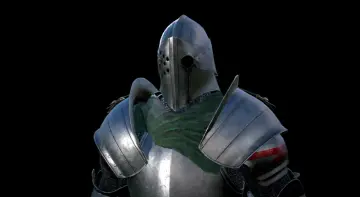
ESM Lion Knight
Technical breakdown of ESM Lion Knight, covering Animation Blueprints, retargeting setup, script integration, weapon assets, and ESM Code Spider support.
Configuring the ESM Lion Knight Animation Blueprint and Retargeting Pipeline
Integrating a heavy combatant begins with aligning the skeletal rig and setting up the underlying state logic. Deploying the ESM Lion Knight into an active scene relies on connecting its included Animation Blueprint to standard locomotion and combat controllers. Because the character is constructed to serve either as an individual boss or as an elite soldier stationed across larger encounters, the skeletal structure requires clean motion transfer across various locomotion states.
Retargeting remains central to getting the character operational within an existing motion library. Following a retarget workflow allows motion data from external libraries to translate cleanly onto the knight's proportions without distorting shoulder armor plates or causing weapon grips to drift out of alignment. The Animation Blueprint provides the foundational framework needed to manage transitions between idle stances, heavy directional runs, guard positions, and weapon swings.
When setting up the blueprint, developers can map transitional parameters directly to movement speeds and combat states. Having an Animation Blueprint already tied to the character minimizes the initial rig-binding phase, letting teams route locomotion variables, blend spaces, and attack montages into the knight's state machine without constructing movement logic from an empty asset.
Combat Logic and Script Deployment for the Lion Knight Archetype
Scaling a character between a singular boss encounter and a squad of elite soldiers requires adaptable scripting. The ESM Lion Knight package incorporates script functionality designed to govern combat behavior and state transitions. When utilized as a boss, the character demands script routines that support elongated engagement sequences, phase transitions, and sustained defensive behaviors. Script hooks allow technical designers to manage hit reactions, balance poise meters, and orchestrate heavy attack windups that communicate power to the player.
Adapting the same character into an elite soldier role shifts the implementation focus toward group cohesion and modular parameters. Instead of managing complex single-target boss routines, the underlying script setup can be parameterized to govern squad aggro radiuses, coordinated flank behaviors, and synchronized melee strikes. Because the character carries a mighty, formidable visual presence, elite soldiers built from this template operate effectively as gatekeepers or high-priority threats within mixed-unit encounters.
Separating behavioral scripts from core visual assets keeps combat staging organized. Designers can bind custom behavior trees or state machines to the provided scripts, dictating how the character handles target acquisition, closes distance, and executes weapon strikes in both narrow corridors and sprawling arenas.
Weapon Configuration and Realistic Visual Execution
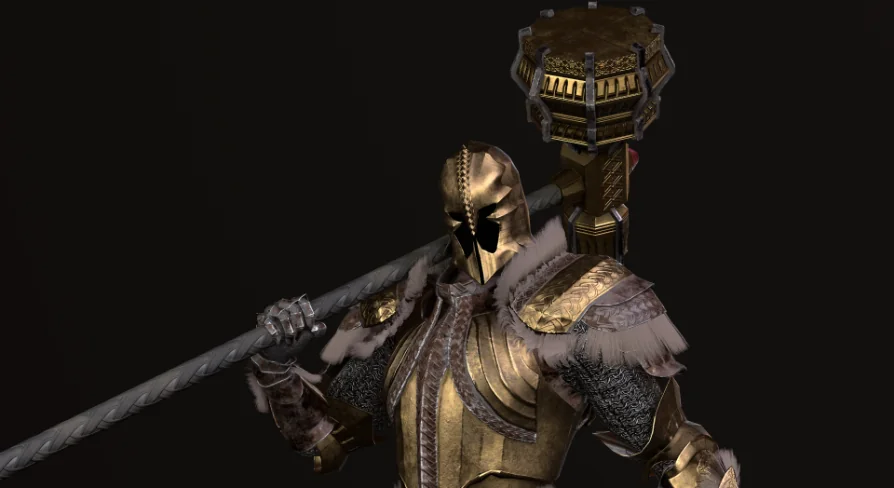
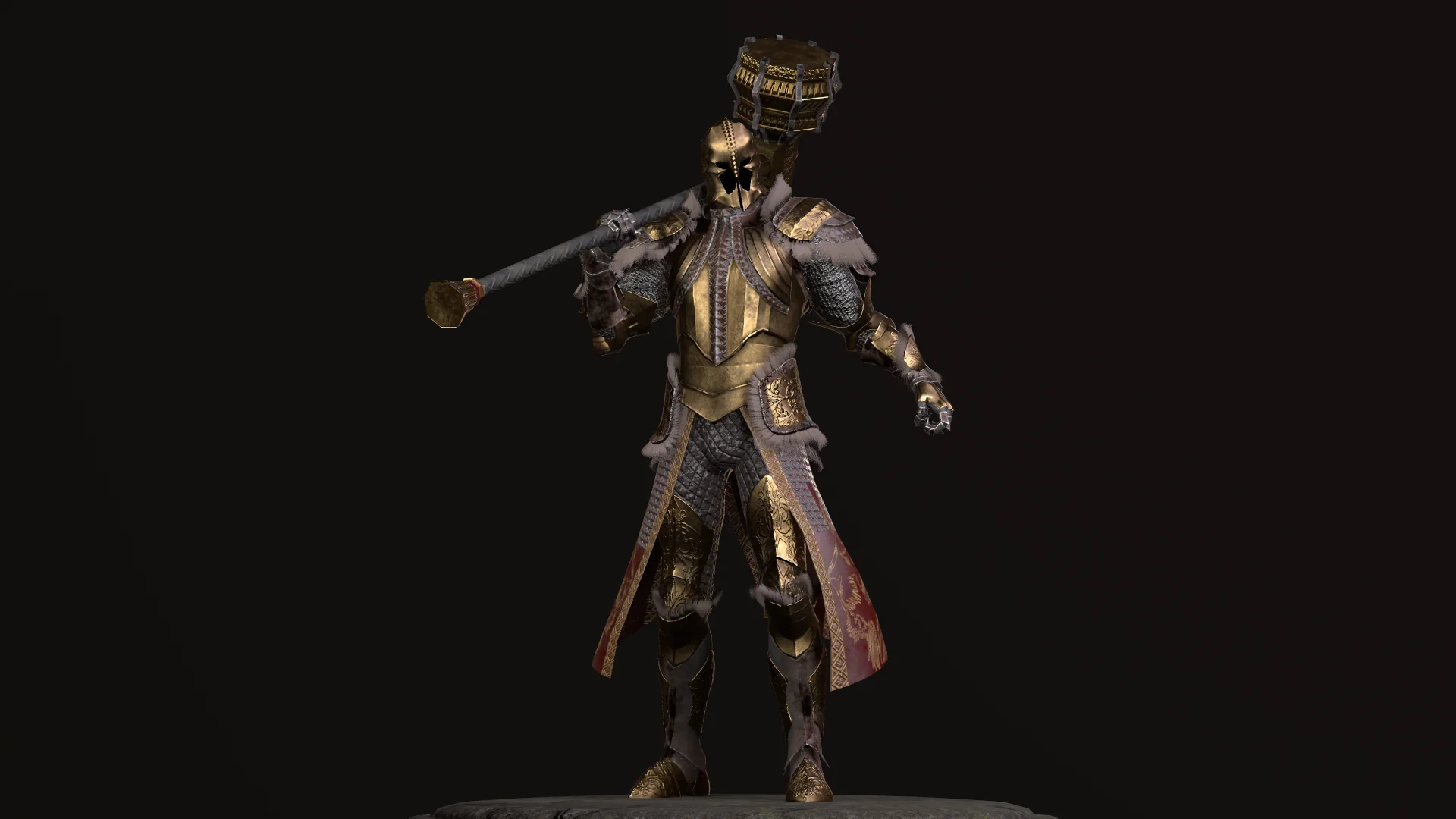
Visual authenticity in fantasy combat relies heavily on how equipment interacts with the underlying character mesh. The ESM Lion Knight embraces a realistic aesthetic, steering away from exaggerated proportions in favor of functional, grounded armor surfacing and believable weapon scale. The included weapon is built to complement the knight's imposing stature, functioning as an extension of the character's offensive threat.
Attaching the weapon requires proper socket placement along the hand bones within the skeletal hierarchy. Ensuring the weapon sits correctly within the socket guarantees that hit-trace collision volumes align accurately with attack animations. Whether the knight executes an overhead cleave or a horizontal sweep, clean socket binding prevents positional drift between the weapon mesh and the Animation Blueprint's attack frames.
The realistic design language also extends across the armor plating. Plate contours, joint articulation areas, and material definitions avoid stretching or pinching when the character enters low combat stances or executes wide swings. This structural integrity maintains visual fidelity during dynamic combat exchanges, ensuring the knight retains its weighty presence under direct camera focus.
Weeping Dark Shaders and Red Glowing Eye Modifications
Visual variety plays an essential role when deploying the same underlying model across diverse combat scenarios. The character package includes an alternate setup featuring a weeping dark material paired with red glowing eyes. This visual variant transforms the knight from a traditional noble guardian into a corrupted or supernatural adversary, dramatically altering how the model reads in low-light environments.
The weeping dark material alters surface reflectance and texture tone, giving the armor an ominous, weather-beaten, or cursed appearance. Applying this dark shader allows level designers to visually isolate specific enemies—such as a corrupted commander leading a squad of standard soldiers—without needing to import an entirely different skeletal mesh. The contrast between dark steel surfaces and fluid, weeping accents reinforces the character's fantasy roots while keeping the aesthetic grounded.
The red glowing eyes provide immediate gameplay readability. In dark dungeon environments or shadow-heavy arenas, emissive eye elements act as clear focal points for the player, telegraphing head orientation, facing direction, and target lock. Teams can also script material swaps during live gameplay, triggering the red glowing eye setup alongside the weeping dark material during phase changes to signal when a boss enters an enraged or heightened state of aggression.
ESM Code Spider Compatibility and Project Integration
Ensuring that character assets communicate seamlessly with broader gameplay systems prevents technical debt during production. The ESM Lion Knight features compatibility with ESM Code Spider, streamlining how the asset interfaces with existing technical frameworks in that ecosystem. This compatibility provides a reliable foundation for hooking the knight into standardized health systems, AI controllers, inventory slots, and combat registries.
Integrating a compatible asset within an established code base eliminates the need to rewrite custom interface functions for basic character operations. The script hooks align with existing architecture conventions, allowing developers to plug the knight directly into combat managers and world-spawning systems without refactoring core game logic. This architectural alignment proves particularly valuable when deploying multiple units across complex level structures.
Managing the asset over time requires maintaining clear organization among its Animation Blueprints, weapon sockets, and material instances. By keeping the standard realistic materials and the weeping dark variants neatly organized within the project folder structure, production teams can iterate on combat balance, expand animation libraries, and deploy the ESM Lion Knight across varying encounter types with minimal overhead.
 Characters
 Characters
 Characters
 Characters