"a19e0535960bd083"{"id":"1002016","slug":"fabric-material-pack-v4-20-pcs-4k-material","title":"Fabric Material Pack V4 - 20 Pcs 4k Material","category":"Fabric \u0026 Clothing","engine":"5.0+","assetVersion":"","engineVersion":"Engine Version: 5.0+","tag":"Fabric \u0026 Clothing","accent":"blue","visual":"luts","summary":"Examine the technical setup, 4k PNG tiling, and Substance-prepared PBR workflow of Fabric Material Pack V4 for games, cinematics, and cloth texturing.","platform":"Unreal Engine","publishedAt":"2026-10-26T12:55:39.072Z","updatedAt":"2026-10-26T12:55:39.072Z","sourceNotes":[],"fileContents":[],"compatibility":["Unreal Engine","Engine Version: 5.0+"],"featuredImage":{"alt":"Fabric Material Pack V4 - 20 Pcs 4k Material","src":"/wp-content/uploads/published/2026/10/3f6309213654-a5c6f3d4-8249-4ea5-87d2-9d466275eab2-23e7fee2fe.webp"},"hasDownloadLink":true,"downloads":0,"terms":[{"taxonomy":"category","slug":"fabric-and-clothing","name":"Fabric \u0026 Clothing"}],"galleryImages":[{"src":"/wp-content/uploads/published/2026/10/afd5e5cdd8b5-91af1a7d-d55b-4079-b120-fd4b5b88bf0b-2ca295cb49.webp","alt":"Fabric Material Pack V4 - 20 Pcs 4k Material"},{"src":"/wp-content/uploads/published/2026/10/172717935f09-ecfc331b-e454-4a84-8ca4-cb8a927279b8-c3f5c9c6e5.webp","alt":"Fabric Material Pack V4 - 20 Pcs 4k Material"},{"src":"/wp-content/uploads/published/2026/10/6ec1cda6b86e-3600f78d-4c55-40df-bc4a-b2e166179e47-770f14dca4.webp","alt":"Fabric Material Pack V4 - 20 Pcs 4k Material"},{"src":"/wp-content/uploads/published/2026/10/78b88152c3ee-c03d2116-e5fb-440f-b599-b21e31722be8-7944077426.webp","alt":"Fabric Material Pack V4 - 20 Pcs 4k Material"},{"src":"/wp-content/uploads/published/2026/10/6f6e02298b05-e4c89de8-f21e-4fc0-8107-21e6d09ce0ca-8594dd78a0.webp","alt":"Fabric Material Pack V4 - 20 Pcs 4k Material"},{"src":"/wp-content/uploads/published/2026/10/44ece2513f6c-3f5be052-9c03-47f2-847d-a94d12d29612-a64cde4ea7.webp","alt":"Fabric Material Pack V4 - 20 Pcs 4k Material"},{"src":"/wp-content/uploads/published/2026/10/072b94b9bb0c-4719ae1d-32fd-4ff7-af5d-c2b8ada9282d-7ba626541e.webp","alt":"Fabric Material Pack V4 - 20 Pcs 4k Material"},{"src":"/wp-content/uploads/published/2026/10/5477912c40b6-eaf503af-f6e3-4c1e-a988-b924805285cc-4dbdeb2bf5.webp","alt":"Fabric Material Pack V4 - 20 Pcs 4k Material"},{"src":"/wp-content/uploads/published/2026/10/50d649fe671b-0ef19ff9-7a8b-4a76-8f7c-30241860dae7-157227ad66.webp","alt":"Fabric Material Pack V4 - 20 Pcs 4k Material"}],"accessPanel":{"kind":"resource","title":"Download this resource","eyebrow":"Free Download","message":"Log in or create a free account to start your download.","fileName":"Content.7z","safetyNote":"Resources are manually reviewed before listing to improve quality and reduce obvious risks.","actionLabel":"Download Free","resourceType":"Resource archive"},"contentHtml":"\u003ch2\u003eImporting 4k.png Textures into Real-Time and Film Shading Pipelines\u003c/h2\u003e\u003cp\u003eIntegrating twenty distinct fabric surfaces begins with asset ingestion, where resolution and file formats dictate pipeline efficiency. Fabric Material Pack V4 supplies all twenty materials as 4k resolution images exported in the standard.png format. Dropping.png image maps into an engine or offline renderer provides an uncompressed, clean starting point for PBR shading graphs.\u003c/p\u003e\u003cp\u003eBecause every map operates at a consistent 4096 by 4096 pixel dimension, shader networks can be configured with uniform texture samplers across master materials. Whether assigning base color, normal, roughness, or auxiliary channels inside a modern rendering graph, the textures slot directly into standard PBR inputs without requiring manual color space conversions or pre-scaling. Setting up instances from a single master cloth material allows artists to cycle through the twenty individual surface varieties rapidly across clothing geometries, character costumes, and interior dressing.\u003c/p\u003e\u003ch2\u003eSubstance Authoring and Tiling Behavior across 20 Fabric Materials\u003c/h2\u003e\u003cp\u003eEvery surface in this collection is prepared with Substance, ensuring that mathematical continuity and procedural textile alignment are resolved prior to texture baking. A core operational requirement of any general-purpose fabric set is its tiling integrity. Fabric Material Pack V4 consists entirely of tilable material setups, removing visible seams, harsh directional lines, or repetitive repeating artifacts across wide surface expansions.\u003c/p\u003e\u003cp\u003eSeamless tiling enables flexible UV scaling across complex meshes. Tailored character garments often present irregular UV seams along patterns, sleeves, and hems. When applying tilable cloth, the seamless edges generated through the Substance authoring process prevent texture breaks along geometric borders. On larger architectural surfaces such as drapery, bedspreads, or furniture upholstery, UV coordinate multipliers can be driven upward to scale the thread density without exposing square borders or lighting breaks where texture tiles repeat.\u003c/p\u003e\u003ch2\u003eDenim, Cloth, and High-Resolution PBR Surface Definition\u003c/h2\u003e\u003cp\u003eThe collection focuses squarely on physical textile structures, including dedicated denim weaves alongside general cloth surfaces. Fabric and denim call for precise surface relief, where the angle of individual threads, cross-weave patterns, and micro-fiber variations catch directional light. The 4k resolution ensures that these micro-structures remain sharp and defined even when a camera pushes into macro range.\u003c/p\u003e\u003cp\u003eIn standard PBR shading, denim demands a specific balance of micro-roughness and tight directional normals to capture the distinct diagonal twill pattern characteristic of rugged cotton weaves. Standard cloth weaves, by contrast, rely on finer warp-and-weft distribution to maintain a soft, light-scattering appearance. Because all twenty materials are anchored in physically based rendering principles, the resulting reflections, specular highlights, and surface breaks respond accurately under changing environmental lighting conditions, whether placed under a harsh direct sunlight setup or subtle interior ambient illumination.\u003c/p\u003e\u003ch2\u003eGame and Movie Engine Application for Tilable Cloth\u003c/h2\u003e\u003cp\u003eProduction standards diverge significantly between real-time interactive game engines and high-end cinematic offline rendering, yet this collection targets both formats through its texture density and preparation. For cinematic projects, the 4k.png files can be loaded directly into offline path-traced shaders, providing immediate high-frequency detail across close-up character close-ups without pixel stretching or compression artifacts.\u003c/p\u003e\u003cp\u003eFor real-time game development, a 4k footprint provides maximum resolution flexibility. Studios working within strict memory budgets can ingest the 4k.png textures and apply internal engine compression formats, downsampling to 2k or 1k where performance targets dictate, or maintaining the full 4k resolution on hero characters and immediate foreground elements. Because the base files are prepared cleanly from Substance, downsizing does not introduce algorithmic noise into the normal or roughness information, preserving readibility across varying platform requirements.\u003c/p\u003e\u003ch2\u003eLayering Fabric Material Pack V4 with Surface Damages Texture Mega Pack Imperfections\u003c/h2\u003e\u003cp\u003ePristine fabric textures serve as a foundational layer, but complex production environments frequently demand distress, scuffs, dirt, and age. Fabric Material Pack V4 maintains compatibility with the Surface Damages Texture Mega Pack - Imperfections, allowing artists to construct compound, layered shader setups.\u003c/p\u003e\u003cp\u003eBy feeding imperfection masks from the damage pack into the roughness, base color, or height blends of the twenty fabric materials, clean denim and cloth materials can be degraded into weathered workwear, battle-worn garments, or neglected set dressing. The consistent high-resolution detail of both packages ensures that scratch lines, fabric frays, and surface grime sit convincingly atop the underlying 4k textile weave without resolution mismatching or textural disparity between the base cloth and the damage overlay.\u003c/p\u003e\u003ch2\u003eProduction Readiness and Asset Deployment\u003c/h2\u003e\u003cp\u003eDeploying Fabric Material Pack V4 across an active production requires minimal asset management overhead. With twenty distinct tilable variations delivered in universal 4k.png format, the pack provides immediate texturing capability across costumes, props, and architectural set dressing. The technical preparation in Substance guarantees reliable PBR values that respond predictably from initial blockout through final cinematic lighting and game-engine deployment.\u003c/p\u003e\n\n\u003ch2\u003eExplore Similar Assets\u003c/h2\u003e\n\u003cul\u003e\n\u003cli\u003e\u003ca href=\"https://3dcghub.com/realistic-lace-material-pack-4k-v3/\" title=\"Realistic Lace Material Pack 4K - V3\"\u003eRealistic Lace Material Pack 4K - V3\u003c/a\u003e\u003c/li\u003e\n\u003cli\u003e\u003ca href=\"https://3dcghub.com/56-fabric-textile-materials-4k-pbr-collection/\" title=\"56 Fabric \u0026amp; Textile Materials (4K PBR Collection)\"\u003e56 Fabric \u0026amp; Textile Materials (4K PBR Collection)\u003c/a\u003e\u003c/li\u003e\n\u003cli\u003e\u003ca href=\"https://3dcghub.com/glitter-shader/\" title=\"Glitter Shader\"\u003eGlitter Shader\u003c/a\u003e\u003c/li\u003e\n\u003cli\u003e\u003ca href=\"https://3dcghub.com/stylized-animated-lava-material-pack-85-pcs/\" title=\"Stylized Animated Lava Material Pack 85 Pcs\"\u003eStylized Animated Lava Material Pack 85 Pcs\u003c/a\u003e\u003c/li\u003e\n\u003cli\u003e\u003ca href=\"https://3dcghub.com/ue4-mannequin-dynamic-suit-pack-pbr/\" title=\"UE4 Mannequin Dynamic Suit Pack (PBR)\"\u003eUE4 Mannequin Dynamic Suit Pack (PBR)\u003c/a\u003e\u003c/li\u003e\n\u003c/ul\u003e","contentTextLength":5917,"navigation":{"current":75,"total":4026,"previous":{"id":"1002017","slug":"fade-camera-occluders","title":"Fade Camera Occluders","category":"Gameplay Features","platform":"Unreal Engine","updatedAt":"2026-10-26T12:56:17.838Z"},"next":{"id":"1002015","slug":"exland","title":"EXLAND","category":"Variety","platform":"Unreal Engine","updatedAt":"2026-10-26T12:54:33.246Z"}},"relatedResources":[{"id":"1000873","slug":"realistic-lace-material-pack-4k-v3","title":"Realistic Lace Material Pack 4K - V3","category":"Fabric \u0026 Clothing","engine":"5.1+","assetVersion":"","engineVersion":"Engine Version: 5.1+","tag":"Fabric \u0026 Clothing","accent":"blue","visual":"luts","summary":"A 20-piece PBR lace material pack with tileable 4K textures, customizable parameters, Substance-prepared surfaces, and a demo scene rendered in Unreal Engine 5.","platform":"Unreal Engine","publishedAt":"2026-08-05T15:01:25.198Z","updatedAt":"2026-08-05T15:01:25.198Z","sourceNotes":[],"fileContents":[],"compatibility":["Unreal Engine","Engine Version: 5.1+"],"featuredImage":{"alt":"Realistic Lace Material Pack 4K - V3","src":"/wp-content/uploads/published/2026/08/5ef52b4f7d8d-15850038-5722-4ba0-8d0e-758357851764-65d2db67e6.webp"},"hasDownloadLink":true,"downloads":2},{"id":"12567","slug":"56-fabric-textile-materials-4k-pbr-collection","title":"56 Fabric \u0026 Textile Materials (4K PBR Collection)","category":"Fabric \u0026 Clothing","engine":"5.0+","assetVersion":"Engine version: 5.0+","engineVersion":"4.20","tag":"Fabric \u0026 Clothing","accent":"blue","visual":"luts","summary":"This massive library of 4K scan-based fabric materials is optimized for Unreal Engine. It features a flexible Master Material for instant customization across 56 unique seamless textiles.","platform":"Unreal Engine","publishedAt":"2026-03-07T12:46:41.000Z","updatedAt":"2026-04-19T15:47:51.000Z","sourceNotes":[],"fileContents":[],"compatibility":["Unreal Engine","Engine version: 5.0+"],"featuredImage":{"alt":"56 Fabric \u0026 Textile Materials (4K PBR Collection)","src":"https://3dcghub.com/wp-content/uploads/2026/03/54217ec1-60fe-4a79-afdd-b38312a8c3b0.webp"},"hasDownloadLink":true,"downloads":1},{"id":"12585","slug":"glitter-shader","title":"Glitter Shader","category":"Fabric \u0026 Clothing","engine":"5.4+","assetVersion":"Engine version: 5.4+","engineVersion":"5.4","tag":"Fabric \u0026 Clothing","accent":"blue","visual":"luts","summary":"Enhance your Unreal Engine projects with a procedural Glitter Shader designed for stylized emissive effects. This tool allows for flexible implementation on static and skinned meshes through advanced material functions.","platform":"Unreal Engine","publishedAt":"2026-03-07T12:51:37.000Z","updatedAt":"2026-04-19T15:47:51.000Z","sourceNotes":[],"fileContents":[],"compatibility":["Unreal Engine","Engine version: 5.4+"],"featuredImage":{"alt":"Glitter Shader","src":"https://3dcghub.com/wp-content/uploads/2026/03/5ad28374-7ff9-4d84-b814-543fe341c5ee.webp"},"hasDownloadLink":true,"downloads":0}]}
Fabric & Clothing
Fabric Material Pack V4 - 20 Pcs 4k Material
Examine the technical setup, 4k PNG tiling, and Substance-prepared PBR workflow of Fabric Material Pack V4 for games, cinematics, and cloth texturing.
Importing 4k.png Textures into Real-Time and Film Shading Pipelines
Integrating twenty distinct fabric surfaces begins with asset ingestion, where resolution and file formats dictate pipeline efficiency. Fabric Material Pack V4 supplies all twenty materials as 4k resolution images exported in the standard.png format. Dropping.png image maps into an engine or offline renderer provides an uncompressed, clean starting point for PBR shading graphs.
Because every map operates at a consistent 4096 by 4096 pixel dimension, shader networks can be configured with uniform texture samplers across master materials. Whether assigning base color, normal, roughness, or auxiliary channels inside a modern rendering graph, the textures slot directly into standard PBR inputs without requiring manual color space conversions or pre-scaling. Setting up instances from a single master cloth material allows artists to cycle through the twenty individual surface varieties rapidly across clothing geometries, character costumes, and interior dressing.
Substance Authoring and Tiling Behavior across 20 Fabric Materials
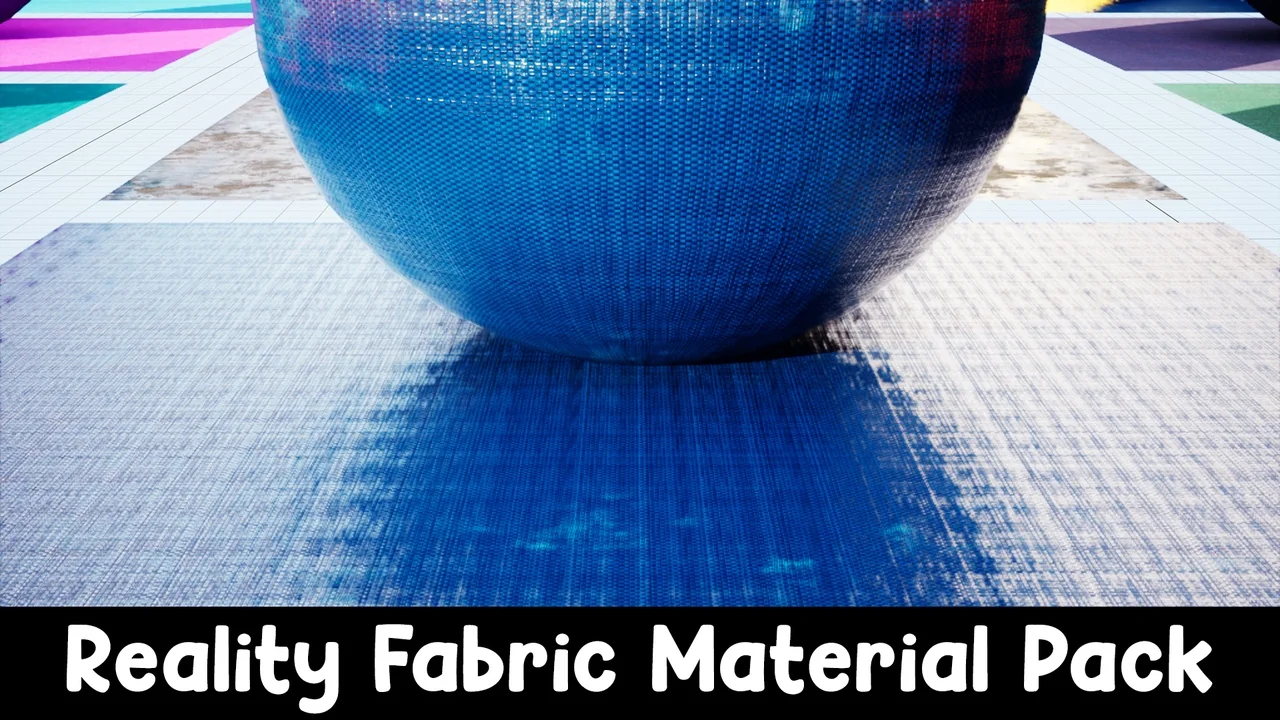
Every surface in this collection is prepared with Substance, ensuring that mathematical continuity and procedural textile alignment are resolved prior to texture baking. A core operational requirement of any general-purpose fabric set is its tiling integrity. Fabric Material Pack V4 consists entirely of tilable material setups, removing visible seams, harsh directional lines, or repetitive repeating artifacts across wide surface expansions.
Seamless tiling enables flexible UV scaling across complex meshes. Tailored character garments often present irregular UV seams along patterns, sleeves, and hems. When applying tilable cloth, the seamless edges generated through the Substance authoring process prevent texture breaks along geometric borders. On larger architectural surfaces such as drapery, bedspreads, or furniture upholstery, UV coordinate multipliers can be driven upward to scale the thread density without exposing square borders or lighting breaks where texture tiles repeat.
Denim, Cloth, and High-Resolution PBR Surface Definition
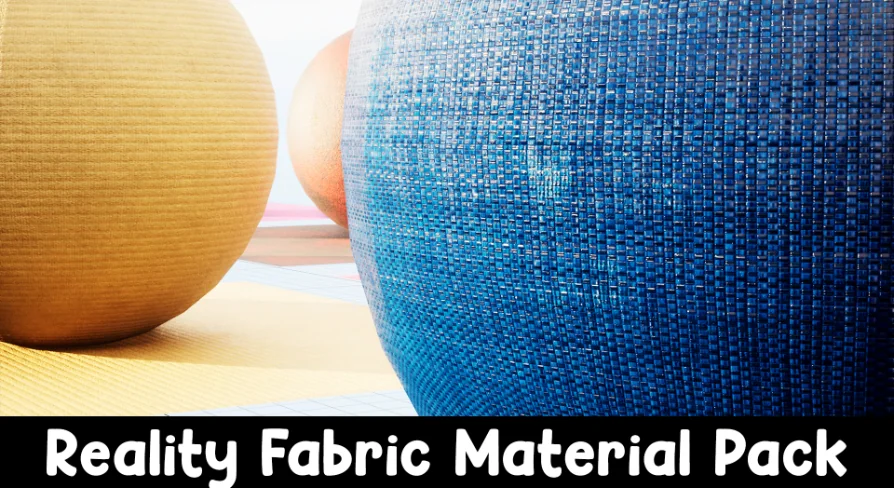
The collection focuses squarely on physical textile structures, including dedicated denim weaves alongside general cloth surfaces. Fabric and denim call for precise surface relief, where the angle of individual threads, cross-weave patterns, and micro-fiber variations catch directional light. The 4k resolution ensures that these micro-structures remain sharp and defined even when a camera pushes into macro range.
In standard PBR shading, denim demands a specific balance of micro-roughness and tight directional normals to capture the distinct diagonal twill pattern characteristic of rugged cotton weaves. Standard cloth weaves, by contrast, rely on finer warp-and-weft distribution to maintain a soft, light-scattering appearance. Because all twenty materials are anchored in physically based rendering principles, the resulting reflections, specular highlights, and surface breaks respond accurately under changing environmental lighting conditions, whether placed under a harsh direct sunlight setup or subtle interior ambient illumination.
Game and Movie Engine Application for Tilable Cloth
Production standards diverge significantly between real-time interactive game engines and high-end cinematic offline rendering, yet this collection targets both formats through its texture density and preparation. For cinematic projects, the 4k.png files can be loaded directly into offline path-traced shaders, providing immediate high-frequency detail across close-up character close-ups without pixel stretching or compression artifacts.
For real-time game development, a 4k footprint provides maximum resolution flexibility. Studios working within strict memory budgets can ingest the 4k.png textures and apply internal engine compression formats, downsampling to 2k or 1k where performance targets dictate, or maintaining the full 4k resolution on hero characters and immediate foreground elements. Because the base files are prepared cleanly from Substance, downsizing does not introduce algorithmic noise into the normal or roughness information, preserving readibility across varying platform requirements.
Layering Fabric Material Pack V4 with Surface Damages Texture Mega Pack Imperfections
Pristine fabric textures serve as a foundational layer, but complex production environments frequently demand distress, scuffs, dirt, and age. Fabric Material Pack V4 maintains compatibility with the Surface Damages Texture Mega Pack - Imperfections, allowing artists to construct compound, layered shader setups.
By feeding imperfection masks from the damage pack into the roughness, base color, or height blends of the twenty fabric materials, clean denim and cloth materials can be degraded into weathered workwear, battle-worn garments, or neglected set dressing. The consistent high-resolution detail of both packages ensures that scratch lines, fabric frays, and surface grime sit convincingly atop the underlying 4k textile weave without resolution mismatching or textural disparity between the base cloth and the damage overlay.
Production Readiness and Asset Deployment
Deploying Fabric Material Pack V4 across an active production requires minimal asset management overhead. With twenty distinct tilable variations delivered in universal 4k.png format, the pack provides immediate texturing capability across costumes, props, and architectural set dressing. The technical preparation in Substance guarantees reliable PBR values that respond predictably from initial blockout through final cinematic lighting and game-engine deployment.
 Fabric & Clothing
 Fabric & Clothing
 Fabric & Clothing
 Fabric & Clothing