"f813c18d2170b1f6"{"id":"1000055","slug":"european-alleys","title":"European Alleys","category":"Cities","engine":"4.26+,5.0+","assetVersion":"","engineVersion":"4.26+,5.0+","tag":"Cities","accent":"blue","visual":"mech","summary":"European Alleys is a modular city environment with hundreds of assets, customizable blueprints, day and night demo maps, and building randomization tools.","platform":"Unreal Engine","publishedAt":"2026-05-24T15:45:17.616Z","updatedAt":"2026-05-24T15:49:10.937Z","sourceNotes":[],"fileContents":[],"compatibility":["Unreal Engine","Engine version: 4.26+,5.0+"],"featuredImage":{"alt":"European Alleys","src":"/wp-content/uploads/published/2026/05/de1c4bc899d3-e9c5217c-cf05-4474-9902-d73c72ea4cce-80bb7f4a48.webp"},"hasDownloadLink":true,"downloads":2,"terms":[{"taxonomy":"category","slug":"cities","name":"Cities"}],"galleryImages":[{"src":"/wp-content/uploads/published/2026/05/f0447c0fae50-96cc0f2d-1845-499d-859e-fea2dd638292-9b42bfab52.webp","alt":"European Alleys"},{"src":"/wp-content/uploads/published/2026/05/0dc9327f77bf-90f0ecd5-2b01-4b37-bd89-b70b7b2377e9-1f17b375b8.webp","alt":"European Alleys"},{"src":"/wp-content/uploads/published/2026/05/42e8148ab787-a7f4a27c-95e8-4ee9-9f2d-271d0027d8bc-3e3971e75a.webp","alt":"European Alleys"},{"src":"/wp-content/uploads/published/2026/05/b5ee979311f5-f800f130-444f-4994-8fb9-015f8b782722-81aeef80db.webp","alt":"European Alleys"},{"src":"/wp-content/uploads/published/2026/05/1bdcf08eb7d2-5c16dea3-4de4-446f-a7b7-dd797d570f8e-a1a8060ba5.webp","alt":"European Alleys"},{"src":"/wp-content/uploads/published/2026/05/491e8e6abfed-a5528694-4db9-45bb-9610-ad5a14c1889b-414ea73487.webp","alt":"European Alleys"},{"src":"/wp-content/uploads/published/2026/05/9e94919e58f5-441378c9-8851-4214-98c8-ec64a49f9401-ef370823c4.webp","alt":"European Alleys"},{"src":"/wp-content/uploads/published/2026/05/f0aa6f8cb08c-26426f26-119f-4ee8-9ec8-216462ef7223-4cf3f98ce9.webp","alt":"European Alleys"},{"src":"/wp-content/uploads/published/2026/05/794f4fb07eba-155f5f90-ad17-4267-ba67-93f3e1ffeb10-6b52581ae0.webp","alt":"European Alleys"},{"src":"/wp-content/uploads/published/2026/05/f884c66c1fdc-216c0544-307c-481f-88e3-2169c8a41773-be3cdfc6a8.webp","alt":"European Alleys"}],"accessPanel":{"kind":"resource","title":"Access this resource","eyebrow":"Free Download","message":"Log in or create a free account to start your download.","fileName":"Content.7z","safetyNote":"Resources are manually reviewed before listing to improve quality and reduce obvious risks.","actionLabel":"Download Free","resourceType":"Resource archive"},"contentHtml":"\u003cp\u003eEuropean Alleys combines hundreds of assets, modular building pieces, and customizable blueprints into a game environment focused on realistic European street scenes. The package is aimed at constructing alleyways, roads, and city spaces with a workflow that goes beyond static placement by adding blueprint-driven placement and randomization.\u003c/p\u003e\u003cp\u003eAt its core, this is a modular environment resource. The included assets support custom building creation, while the blueprints help speed up scene assembly and introduce variation. Separate day and night demo maps show the environment in different lighting setups, giving the pack a clearer sense of range within the same urban theme.\u003c/p\u003e\u003ch2\u003eHundreds of assets across streets, roads, and buildings\u003c/h2\u003e\u003cp\u003eThe environment covers the parts needed for a European city setting: streets, roads, buildings, and modular level pieces. That combination makes the pack more than a small decorative scene. It is structured as a broader environment kit where multiple elements work together rather than as isolated props.\u003c/p\u003e\u003cp\u003eThe tags point directly to the visual and production focus: PBR, street, modular, level, realistic, road, building, European, blueprint, and city. Taken together, those terms place the resource in a grounded urban setting rather than a stylized or abstract one. The realistic and European angle is especially important here, because it frames how the modular parts are intended to read when assembled into alleys and connected street layouts.\u003c/p\u003e\u003cp\u003eHaving hundreds of assets matters most in a set like this because variety is part of the scene itself. European alley environments depend on repetition with differences: related building forms, connected street sections, and city details that can be arranged into a larger whole. This pack supports that kind of assembly through quantity as well as modular construction.\u003c/p\u003e\u003ch2\u003eCustom buildings with modular assets\u003c/h2\u003e\u003cp\u003eOne of the clearest practical uses in European Alleys is custom building creation. The modular assets are meant to be combined, which gives the environment a flexible structure. Instead of relying on a single fixed arrangement, users can piece together buildings and shape different sections of a city block or alley network.\u003c/p\u003e\u003cp\u003eThat modular approach fits several likely scene goals. It can support compact alley compositions, longer road-connected spaces, or more layered urban arrangements where buildings need to be adjusted to fit a layout. The important point is not a specific preset style of architecture variation, but the ability to make custom buildings from the provided parts.\u003c/p\u003e\u003cp\u003eFor environment work, this shifts the package toward construction rather than simple dressing. A modular building workflow gives more control over how close, narrow, or open a scene feels. In a European alley setting, those spatial differences are often what define the mood of the environment, whether the user is building a tight street passage or a broader urban segment connected by roads and facades.\u003c/p\u003e\u003ch2\u003eBlueprints for easy placement and randomization\u003c/h2\u003e\u003cp\u003eBlueprint support is one of the defining parts of the package. European Alleys includes customizable blueprints, and those blueprints are tied directly to easy placement and randomization options. This adds a procedural layer to the environment without shifting attention away from the modular assets themselves.\u003c/p\u003e\u003cp\u003eEasy placement suggests a workflow where the user can assemble scenes more quickly than by placing each part entirely by hand. In a city environment with many related components, that kind of setup can reduce repetition in the building process while still keeping the scene coherent. The blueprints are not presented as a separate technical extra; they are part of how the environment is meant to be used.\u003c/p\u003e\u003cp\u003eRandomization is equally significant. Urban scenes benefit from variation, especially when the setting includes repeated architectural modules and connected street elements. Blueprint-driven randomization helps break up uniformity and makes it easier to produce multiple scene outcomes from the same core set of pieces. For users building custom alleys or larger city stretches, this can make the environment feel less rigid while still staying within the same visual language.\u003c/p\u003e\u003cp\u003eThe blueprint showcase attached to the resource points to this system as a major feature rather than a minor utility. That emphasis places the pack in a practical middle ground between manual modular assembly and faster scene iteration.\u003c/p\u003e\u003ch2\u003eDay and night demo maps in European Alleys\u003c/h2\u003e\u003cp\u003eEuropean Alleys includes separate demo maps for day and night. That split is useful because it presents the same environment across two different lighting conditions instead of limiting it to one showcase setup. In a street-based environment, lighting changes can strongly affect how building surfaces, roads, and alley depth are perceived, so having both variants broadens how the pack can be evaluated and used.\u003c/p\u003e\u003cp\u003eThe day demo map speaks to clarity of form and material response in open light, while the night demo map points to a more atmospheric reading of the same kind of space. Even without adding new content categories, the existence of both maps expands the package's practical range. A user working on a realistic city scene can look at how the environment functions in bright and dark conditions without needing to rebuild a test setup from scratch.\u003c/p\u003e\u003cp\u003eThis also connects back to the modular and blueprint-driven structure. A resource that already supports custom building and randomization becomes more useful when it is shown under different environmental conditions. Day and night maps help frame the kit as something that can support more than a single presentation style within its urban European theme.\u003c/p\u003e\u003ch2\u003eDistance field ambient occlusions for the demo scenes\u003c/h2\u003e\u003cp\u003eThere is one specific visual note attached to the environment: for better visuals in the demo scenes, distance field ambient occlusions should be enabled in the engine settings. That recommendation is narrowly scoped, but it is concrete and practical.\u003c/p\u003e\u003cp\u003eThe detail matters because it identifies a setting that improves how the demo scenes appear. In an alley and building environment, ambient occlusion can have a visible effect on depth, contact shadows, and the separation between modular surfaces. The note does not redefine the package, but it does show that the visual presentation of the demo maps benefits from that engine-level option.\u003c/p\u003e\u003cp\u003eThis is especially relevant for anyone evaluating the pack through its included demo scenes. Since the environment is presented in both day and night variants, visual depth and surface interaction play an important role in how convincing those scenes feel. Enabling the specified setting helps the showcased environment read more strongly.\u003c/p\u003e\u003ch2\u003eWhere this modular European city setup fits best\u003c/h2\u003e\u003cp\u003eEuropean Alleys is set up for projects that need a realistic European street environment assembled from modular parts instead of one locked scene. Its strongest fit is with alleyways, roads, city blocks, and building arrangements where variation is important and where blueprint-based placement can speed up environment work.\u003c/p\u003e\u003cp\u003eThe package is also a good match for users who want to move between direct layout control and randomized results. The modular assets support custom construction, while the blueprints support faster population and variation. Separate day and night demo maps make it easier to work within different lighting contexts of the same urban theme.\u003c/p\u003e\u003cp\u003eFor developers and environment artists who need European-style streets, roads, and buildings with room to customize the layout, this pack is prepared for assembling and varying city scenes rather than treating the environment as a fixed backdrop.\u003c/p\u003e\n\n\u003ch2\u003eMore From The Same Workflow\u003c/h2\u003e\n\u003cul\u003e\n\u003cli\u003e\u003ca href=\"https://3dcghub.com/forgotten-alley/\" title=\"Forgotten Alley\"\u003eForgotten Alley\u003c/a\u003e\u003c/li\u003e\n\u003cli\u003e\u003ca href=\"https://3dcghub.com/future-slums-2/\" title=\"Future Slums 2\"\u003eFuture Slums 2\u003c/a\u003e\u003c/li\u003e\n\u003cli\u003e\u003ca href=\"https://3dcghub.com/modular-post-soviet-building/\" title=\"Modular Post Soviet Building\"\u003eModular Post Soviet Building\u003c/a\u003e\u003c/li\u003e\n\u003cli\u003e\u003ca href=\"https://3dcghub.com/modern-city-downtown-megapack-modern-city-downtown-building-usa-town-street/\" title=\"Modern City Downtown Megapack ( Modern City Downtown Building USA Town Street )\"\u003eModern City Downtown Megapack ( Modern City Downtown Building USA Town Street )\u003c/a\u003e\u003c/li\u003e\n\u003cli\u003e\u003ca href=\"https://3dcghub.com/skyscraper-modular-fps-map/\" title=\"Skyscraper Modular FPS Map\"\u003eSkyscraper Modular FPS Map\u003c/a\u003e\u003c/li\u003e\n\u003c/ul\u003e","contentTextLength":7917,"navigation":{"current":1738,"total":3651,"previous":{"id":"1000057","slug":"fantasy-dungeon","title":"Fantasy Dungeon","category":"Dungeon","platform":"Unreal Engine","updatedAt":"2026-05-24T15:58:40.717Z"},"next":{"id":"1000056","slug":"evil-forest-creature","title":"Evil Forest Creature","category":"Characters \u0026 Creatures","platform":"Unreal Engine","updatedAt":"2026-05-24T15:48:39.520Z"}},"relatedResources":[{"id":"7140","slug":"forgotten-alley","title":"Forgotten Alley","category":"Cities","engine":"4.26+,5.0+","assetVersion":"Engine version: 4.26+,5.0+","engineVersion":"4.10","tag":"Cities","accent":"blue","visual":"city","summary":"Discover a stunning 3D environment where ancient traditional alleys meet the glow of modern skyscrapers. This asset provides a rich, atmospheric setting for game developers and digital artists.","platform":"Unreal Engine","publishedAt":"2026-02-20T17:51:34.000Z","updatedAt":"2026-04-19T15:56:03.000Z","sourceNotes":[],"fileContents":[],"compatibility":["Unreal Engine","Engine version: 4.26+,5.0+"],"featuredImage":{"alt":"Forgotten Alley","src":"https://3dcghub.com/wp-content/uploads/2026/02/cba3c29e-8424-4ffe-a492-ba69eec988c6.webp"},"hasDownloadLink":true,"downloads":0},{"id":"7243","slug":"modular-post-soviet-building","title":"Modular Post Soviet Building","category":"Cities","engine":"4.26+,5.0+","assetVersion":"Engine version: 4.26+,5.0+","engineVersion":"4.18","tag":"Cities","accent":"blue","visual":"city","summary":"Create authentic Eastern European environments with this comprehensive modular building kit. It features interactive doors, interior meshes, and a variety of urban props for realistic scene dressing.","platform":"Unreal Engine","publishedAt":"2026-02-20T19:05:34.000Z","updatedAt":"2026-04-19T15:56:02.000Z","sourceNotes":[],"fileContents":[],"compatibility":["Unreal Engine","Engine version: 4.26+,5.0+"],"featuredImage":{"alt":"Modular Post Soviet Building","src":"https://3dcghub.com/wp-content/uploads/2026/02/60a0c4dd-8057-4ef8-8ca7-ec24fddf6756.webp"},"hasDownloadLink":true,"downloads":1},{"id":"7157","slug":"future-slums-2","title":"Future Slums 2","category":"Cities","engine":"4.26+,5.0+","assetVersion":"Engine version: 4.26+,5.0+","engineVersion":"4.26","tag":"Cities","accent":"blue","visual":"city","summary":"Transform your digital worlds with Future Slums 2, a collection of high-poly assets designed for cinematic excellence. Create dense, urban decay with neon-lit alleys and towering shantytowns.","platform":"Unreal Engine","publishedAt":"2026-02-20T17:54:25.000Z","updatedAt":"2026-04-19T15:56:03.000Z","sourceNotes":[],"fileContents":[],"compatibility":["Unreal Engine","Engine version: 4.26+,5.0+"],"featuredImage":{"alt":"Future Slums 2","src":"https://3dcghub.com/wp-content/uploads/2026/02/7adfe70b-a5c6-479e-b8a2-c7341570086b.webp"},"hasDownloadLink":true,"downloads":0}]}
Cities
European Alleys
European Alleys is a modular city environment with hundreds of assets, customizable blueprints, day and night demo maps, and building randomization tools.
Category:Unreal Engine,CitiesPlatform: Unreal EngineEngine version: 4.26+,5.0+Published: May 24, 2026
Cities
Resource overview
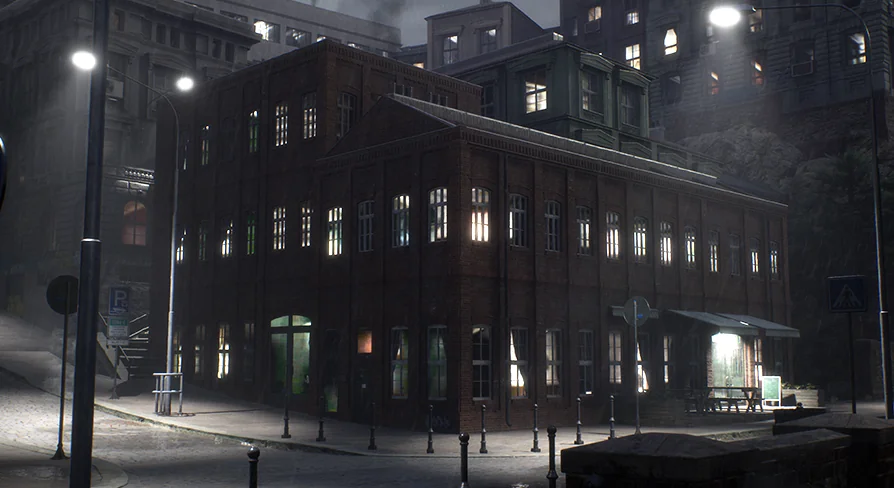
European Alleys combines hundreds of assets, modular building pieces, and customizable blueprints into a game environment focused on realistic European street scenes. The package is aimed at constructing alleyways, roads, and city spaces with a workflow that goes beyond static placement by adding blueprint-driven placement and randomization.
At its core, this is a modular environment resource. The included assets support custom building creation, while the blueprints help speed up scene assembly and introduce variation. Separate day and night demo maps show the environment in different lighting setups, giving the pack a clearer sense of range within the same urban theme.
Hundreds of assets across streets, roads, and buildings
The environment covers the parts needed for a European city setting: streets, roads, buildings, and modular level pieces. That combination makes the pack more than a small decorative scene. It is structured as a broader environment kit where multiple elements work together rather than as isolated props.
The tags point directly to the visual and production focus: PBR, street, modular, level, realistic, road, building, European, blueprint, and city. Taken together, those terms place the resource in a grounded urban setting rather than a stylized or abstract one. The realistic and European angle is especially important here, because it frames how the modular parts are intended to read when assembled into alleys and connected street layouts.
Having hundreds of assets matters most in a set like this because variety is part of the scene itself. European alley environments depend on repetition with differences: related building forms, connected street sections, and city details that can be arranged into a larger whole. This pack supports that kind of assembly through quantity as well as modular construction.
Custom buildings with modular assets
One of the clearest practical uses in European Alleys is custom building creation. The modular assets are meant to be combined, which gives the environment a flexible structure. Instead of relying on a single fixed arrangement, users can piece together buildings and shape different sections of a city block or alley network.
That modular approach fits several likely scene goals. It can support compact alley compositions, longer road-connected spaces, or more layered urban arrangements where buildings need to be adjusted to fit a layout. The important point is not a specific preset style of architecture variation, but the ability to make custom buildings from the provided parts.
For environment work, this shifts the package toward construction rather than simple dressing. A modular building workflow gives more control over how close, narrow, or open a scene feels. In a European alley setting, those spatial differences are often what define the mood of the environment, whether the user is building a tight street passage or a broader urban segment connected by roads and facades.
Blueprints for easy placement and randomization
Blueprint support is one of the defining parts of the package. European Alleys includes customizable blueprints, and those blueprints are tied directly to easy placement and randomization options. This adds a procedural layer to the environment without shifting attention away from the modular assets themselves.
Easy placement suggests a workflow where the user can assemble scenes more quickly than by placing each part entirely by hand. In a city environment with many related components, that kind of setup can reduce repetition in the building process while still keeping the scene coherent. The blueprints are not presented as a separate technical extra; they are part of how the environment is meant to be used.
Randomization is equally significant. Urban scenes benefit from variation, especially when the setting includes repeated architectural modules and connected street elements. Blueprint-driven randomization helps break up uniformity and makes it easier to produce multiple scene outcomes from the same core set of pieces. For users building custom alleys or larger city stretches, this can make the environment feel less rigid while still staying within the same visual language.
The blueprint showcase attached to the resource points to this system as a major feature rather than a minor utility. That emphasis places the pack in a practical middle ground between manual modular assembly and faster scene iteration.
Day and night demo maps in European Alleys
European Alleys includes separate demo maps for day and night. That split is useful because it presents the same environment across two different lighting conditions instead of limiting it to one showcase setup. In a street-based environment, lighting changes can strongly affect how building surfaces, roads, and alley depth are perceived, so having both variants broadens how the pack can be evaluated and used.
The day demo map speaks to clarity of form and material response in open light, while the night demo map points to a more atmospheric reading of the same kind of space. Even without adding new content categories, the existence of both maps expands the package's practical range. A user working on a realistic city scene can look at how the environment functions in bright and dark conditions without needing to rebuild a test setup from scratch.
This also connects back to the modular and blueprint-driven structure. A resource that already supports custom building and randomization becomes more useful when it is shown under different environmental conditions. Day and night maps help frame the kit as something that can support more than a single presentation style within its urban European theme.
Distance field ambient occlusions for the demo scenes
There is one specific visual note attached to the environment: for better visuals in the demo scenes, distance field ambient occlusions should be enabled in the engine settings. That recommendation is narrowly scoped, but it is concrete and practical.
The detail matters because it identifies a setting that improves how the demo scenes appear. In an alley and building environment, ambient occlusion can have a visible effect on depth, contact shadows, and the separation between modular surfaces. The note does not redefine the package, but it does show that the visual presentation of the demo maps benefits from that engine-level option.
This is especially relevant for anyone evaluating the pack through its included demo scenes. Since the environment is presented in both day and night variants, visual depth and surface interaction play an important role in how convincing those scenes feel. Enabling the specified setting helps the showcased environment read more strongly.
Where this modular European city setup fits best
European Alleys is set up for projects that need a realistic European street environment assembled from modular parts instead of one locked scene. Its strongest fit is with alleyways, roads, city blocks, and building arrangements where variation is important and where blueprint-based placement can speed up environment work.
The package is also a good match for users who want to move between direct layout control and randomized results. The modular assets support custom construction, while the blueprints support faster population and variation. Separate day and night demo maps make it easier to work within different lighting contexts of the same urban theme.
For developers and environment artists who need European-style streets, roads, and buildings with room to customize the layout, this pack is prepared for assembling and varying city scenes rather than treating the environment as a fixed backdrop.
 Cities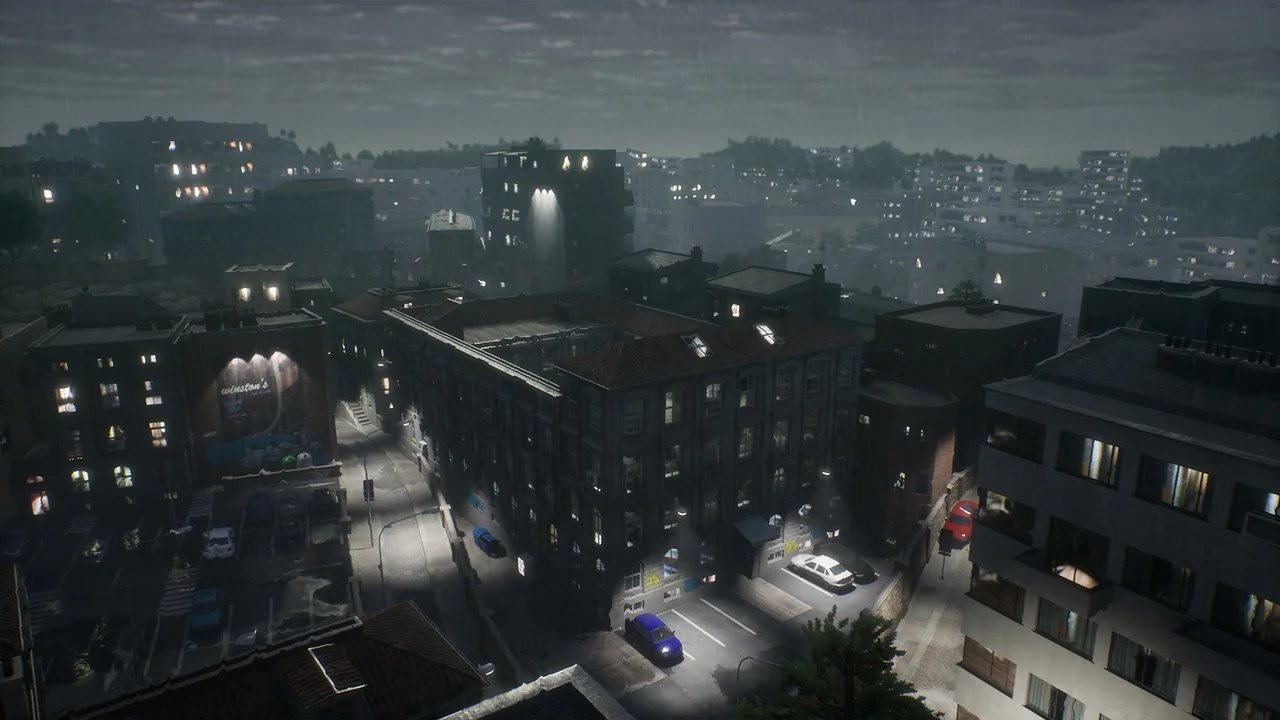
 Cities
 Cities
 Cities