"f813c18d2170b1f6"{"id":"1000054","slug":"eternal-temple","title":"Eternal Temple","category":"Fantasy","engine":"4.26+,5.0+","assetVersion":"","engineVersion":"4.26+,5.0+","tag":"Fantasy","accent":"blue","visual":"mech","summary":"Eternal Temple is a modular fantasy ruin and dungeon environment pack with over 200 parts, presets, props, 3 demo levels, and top-down occlusion support.","platform":"Unreal Engine","publishedAt":"2026-05-24T15:30:50.281Z","updatedAt":"2026-05-24T15:30:50.281Z","sourceNotes":[],"fileContents":[],"compatibility":["Unreal Engine","Engine version: 4.26+,5.0+"],"featuredImage":{"alt":"Eternal Temple","src":"/wp-content/uploads/published/2026/05/78b439012a0b-45c211f9-3c05-4b71-9e34-9c7690031660-67edc71a9a.webp"},"hasDownloadLink":true,"downloads":0,"terms":[{"taxonomy":"category","slug":"fantasy","name":"Fantasy"}],"galleryImages":[{"src":"/wp-content/uploads/published/2026/05/b03707f00e0b-c5604497-864c-46c1-bdef-45f241f16973-79b27f84b8.webp","alt":"Eternal Temple"},{"src":"/wp-content/uploads/published/2026/05/d1b8c7a09b16-b2f0183e-aed3-42a7-8dc8-0a2da5357975-28ffec612d.webp","alt":"Eternal Temple"},{"src":"/wp-content/uploads/published/2026/05/ff51392dbcfa-fcd570d6-acb5-457f-b664-e4ecb3c36e58-0edafb4209.webp","alt":"Eternal Temple"},{"src":"/wp-content/uploads/published/2026/05/0f6acc6ccb9d-5326512b-6d0a-4ead-b51a-ff72fa4ded7e-482a011edd.webp","alt":"Eternal Temple"},{"src":"/wp-content/uploads/published/2026/05/6123bc71e244-79ecf136-213a-497e-9f13-679ae9befc1d-4fc695efd4.webp","alt":"Eternal Temple"},{"src":"/wp-content/uploads/published/2026/05/8f432462e9e2-877f003b-5332-4f18-9231-37ad893680e7-b0007be027.webp","alt":"Eternal Temple"},{"src":"/wp-content/uploads/published/2026/05/3f4c5b2207d4-2960a7e3-eb28-4ae5-8947-865293754a73-911fa75033.webp","alt":"Eternal Temple"}],"accessPanel":{"kind":"resource","title":"Access this resource","eyebrow":"Free Download","message":"Log in or create a free account to start your download.","fileName":"Content.7z","safetyNote":"Resources are manually reviewed before listing to improve quality and reduce obvious risks.","actionLabel":"Download Free","resourceType":"Resource archive"},"contentHtml":"\u003cp\u003eWhen a project needs an ancient fantasy location, the first hurdle is rarely the idea. The harder part is turning that idea into a usable level setup with enough structure to support different camera angles, scene layouts, and gameplay spaces. Eternal Temple approaches that problem as a modular environment kit anchored in temples, ruins, and dungeon-like architecture.\u003c/p\u003e\n\u003cp\u003eThe package brings together over 200 modular parts, along with buildings and ruin presets, environmental props, and three demo levels. Its tags point clearly toward the kind of production it serves: modular, overgrown, fantasy, dungeon, top-down, temple, RPG, architecture, ruin, and ancient. Rather than locking the environment into a single presentation, it supports both constructed scenes and playable examples, with a basic system for hiding view-blocking objects in top-down views.\u003c/p\u003e \u003ch2\u003eStarting with over 200 modular parts\u003c/h2\u003e\n\u003cp\u003eA set with over 200 modular parts gives the environment a construction-first workflow. Instead of depending on one fixed temple layout, the pack provides a large pool of pieces that can be arranged into different architectural spaces.\u003c/p\u003e\n\u003cp\u003eThat matters most when a scene needs variation across connected areas. A temple complex, a ruin section, and a dungeon passage do not have to read as separate art sets when they are assembled from the same modular language. The modular structure also suits iterative level work. A creator can begin with broad architectural placement, then refine pathways, room shapes, and ruin density while staying inside the same visual theme of ancient fantasy architecture.\u003c/p\u003e \u003ch2\u003eBuildings and ruin presets for faster scene assembly\u003c/h2\u003e\n\u003cp\u003eNot every production begins from a blank grid. Eternal Temple includes buildings and ruin presets, which shifts part of the setup process from piece-by-piece assembly to ready-made structural starting points.\u003c/p\u003e\n\u003cp\u003eFor implementation, presets help in two different ways. First, they can speed up early level composition by placing larger environment forms quickly. Second, they provide examples of how the modular parts can be combined into coherent temple or ruin arrangements. In a fantasy or RPG production, that makes it easier to establish a believable location language early on, then modify those preset structures to suit traversal, combat spaces, or scenic framing. The combination of modular parts and presets means the pack can support both detailed custom building and faster block-in work.\u003c/p\u003e \u003ch2\u003eProps that fill the temple without changing its theme\u003c/h2\u003e\n\u003cp\u003eArchitecture alone rarely makes a place feel inhabited, abandoned, or functional. Eternal Temple includes props such as furniture, barrels, and torches, extending the pack beyond walls and ruins into the smaller elements that complete a scene.\u003c/p\u003e\n\u003cp\u003eThese props are important because they let the environment move from bare construction to readable space. Furniture can imply interior use, barrels can add storage or utility cues, and torches can reinforce the dungeon and temple atmosphere suggested by the pack’s fantasy and ancient ruin themes. Since these items are included alongside the structural pieces, the creator can populate rooms, edges, and transitional spaces without breaking away from the same environment set. In practical level-building terms, that keeps decorative dressing closely tied to the architecture instead of treating it as a separate pass with unrelated assets.\u003c/p\u003e \u003ch2\u003eThree demo levels: Top-Down, FP Dungeon, and FP Outdoor\u003c/h2\u003e\n\u003cp\u003eEternal Temple does not stop at loose content pieces. It also includes three demo levels: Top-Down, FP Dungeon, and FP Outdoor. That immediately frames the environment as something meant to be viewed and used in more than one gameplay context.\u003c/p\u003e\n\u003cp\u003eThe Top-Down demo level points toward strategy, action RPG, or other elevated-camera uses where readability from above is essential. FP Dungeon shifts the same thematic material toward enclosed first-person exploration, where corridors, rooms, and tighter architectural spaces become the focus. FP Outdoor expands the setting into a more open first-person presentation, suggesting temple exteriors, ruin approaches, or outdoor sections connected to the larger complex. Together, these demos show the environment across distinct scene types not just one isolated showcase. For a creator evaluating how to implement the pack, that spread is one of the clearest practical details: the content is not restricted to only overhead play or only corridor-based dungeon scenes.\u003c/p\u003e \u003ch3\u003eUsing the Top-Down demo as a layout reference\u003c/h3\u003e\n\u003cp\u003eThe Top-Down level is especially useful because it connects directly to one of the package’s stated systems. A top-down environment often has to deal with architectural elements that interrupt camera clarity.\u003c/p\u003e\n\u003cp\u003eIn that context, the included level can serve as a working example of how temple and ruin geometry behaves when viewed from above. It gives the creator a direct reference point for arranging modular architecture in a way that still supports top-down readability.\u003c/p\u003e \u003ch2\u003eHandling view blocking in top-down temple scenes\u003c/h2\u003e\n\u003cp\u003eOne of the package’s more specific implementation features is a basic system of hiding view-blocking objects for top-down views. That is a practical addition, especially for environments built from tall architecture, ruin fragments, and enclosed temple structures.\u003c/p\u003e\n\u003cp\u003eTop-down scenes often need a compromise between visual richness and clear sightlines. Columns, walls, roofs, and large decorative forms can establish scale and mood, but they can also get in the way when the camera looks down into playable spaces. A basic hide system addresses that exact friction point. In use, it supports a workflow where the environment can remain structurally dense while still adapting to a camera angle that needs visibility into the level. Because this feature is explicitly tied to top-down views, it fits naturally beside the Top-Down demo level and helps position the pack for projects where fantasy ruins must remain playable from above, not just visually impressive from ground level.\u003c/p\u003e \u003ch2\u003eWhere Eternal Temple fits in production\u003c/h2\u003e\n\u003cp\u003eEternal Temple fits best in the stage where a project needs to turn a fantasy temple idea into an actual playable environment set. Its content spans structural assembly, preset-based scene setup, prop dressing, and camera-aware top-down handling.\u003c/p\u003e\n\u003cp\u003eThat makes it suitable for building ancient ruins, dungeon spaces, and temple architecture across different play perspectives. A creator can assemble custom layouts from the modular parts, begin faster with building and ruin presets, dress spaces with furniture, barrels, and torches, and reference the included Top-Down, FP Dungeon, and FP Outdoor demo levels when shaping scene flow. In a production pipeline, it works as an environment foundation for fantasy and RPG locations where modular construction and scene readability both matter.\u003c/p\u003e\n\n\u003ch2\u003eMore From The Same Workflow\u003c/h2\u003e\n\u003cul\u003e\n\u003cli\u003e\u003ca href=\"https://3dcghub.com/cartoon-temple-environment/\" title=\"Cartoon Temple Environment\"\u003eCartoon Temple Environment\u003c/a\u003e\u003c/li\u003e\n\u003cli\u003e\u003ca href=\"https://3dcghub.com/ornate-temple/\" title=\"Ornate Temple\"\u003eOrnate Temple\u003c/a\u003e\u003c/li\u003e\n\u003cli\u003e\u003ca href=\"https://3dcghub.com/ancient-cave-ruins-ancient-temple-ruins-ancient-valley/\" title=\"Ancient Cave Ruins (Ancient Temple Ruins, Ancient Valley )\"\u003eAncient Cave Ruins (Ancient Temple Ruins, Ancient Valley )\u003c/a\u003e\u003c/li\u003e\n\u003cli\u003e\u003ca href=\"https://3dcghub.com/scans-lost-temple-cave/\" title=\"[SCANS] Lost Temple Cave\"\u003e[SCANS] Lost Temple Cave\u003c/a\u003e\u003c/li\u003e\n\u003cli\u003e\u003ca href=\"https://3dcghub.com/oriental-ancient-picturestemple-archway-mountain-gate/\" title=\"Oriental ancient pictures,temple/Archway/Mountain gate\"\u003eOriental ancient pictures,temple/Archway/Mountain gate\u003c/a\u003e\u003c/li\u003e\n\u003c/ul\u003e","contentTextLength":7036,"navigation":{"current":1740,"total":3651,"previous":{"id":"1000056","slug":"evil-forest-creature","title":"Evil Forest Creature","category":"Characters \u0026 Creatures","platform":"Unreal Engine","updatedAt":"2026-05-24T15:48:39.520Z"},"next":{"id":"1000038","slug":"ceratosaurus-lite-version","title":"Ceratosaurus Lite Version","category":"Characters \u0026 Creatures","platform":"Unreal Engine","updatedAt":"2026-05-22T20:16:13.775Z"}},"relatedResources":[{"id":"1000036","slug":"cartoon-temple-environment","title":"Cartoon Temple Environment","category":"Fantasy","engine":"4.26+,5.0+","assetVersion":"","engineVersion":"4.26+,5.0+","tag":"Fantasy","accent":"blue","visual":"city","summary":"A PBR cartoon environment package with modular eastern traditional architecture, stylized plants, rocks, hand-painted textures, and cartoon Niagara effects.","platform":"Unreal Engine","publishedAt":"2026-05-21T10:21:42.388Z","updatedAt":"2026-05-21T10:21:42.388Z","sourceNotes":[],"fileContents":[],"compatibility":["Unreal Engine","Engine version: 4.26+,5.0+"],"featuredImage":{"alt":"Cartoon Temple Environment","src":"/wp-content/uploads/published/2026/05/b2fe74542722-ec7155b7-6243-45cd-bc9b-3ef9ec0cc668-488815e131.webp"},"hasDownloadLink":true,"downloads":1},{"id":"7989","slug":"ornate-temple","title":"Ornate Temple","category":"Fantasy","engine":"5.3+","assetVersion":"Engine version: 5.3+","engineVersion":"5.3","tag":"Fantasy","accent":"blue","visual":"city","summary":"Create breathtaking ancient environments with this collection of high-quality temple assets. Inspired by South and South-East Asian architecture, these meshes are perfect for fantasy and historical projects.","platform":"Unreal Engine","publishedAt":"2026-02-22T16:17:03.000Z","updatedAt":"2026-04-19T15:55:51.000Z","sourceNotes":[],"fileContents":[],"compatibility":["Unreal Engine","Engine version: 5.3+"],"featuredImage":{"alt":"Ornate Temple","src":"https://3dcghub.com/wp-content/uploads/2026/02/6c97adf6-707a-4277-9645-9fbabe4b810f.webp"},"hasDownloadLink":true,"downloads":0},{"id":"1001452","slug":"roman-temple-ruins-roman-temple-ruins-historical-building-building-rome","title":"Roman Temple Ruins ( Roman Temple Ruins Historical Building Building Rome )","category":"Historical","engine":"4.22+,5.0+","assetVersion":"","engineVersion":"Engine Version: 4.22+,5.0+","tag":"Historical","accent":"blue","visual":"mech","summary":"Explore the Roman Temple Ruins environment pack featuring 130 unique meshes, a preassembled scene, and integrated Ultimate Level Art Tool workflows.","platform":"Unreal Engine","publishedAt":"2026-10-08T00:55:54.084Z","updatedAt":"2026-10-08T00:55:54.084Z","sourceNotes":[],"fileContents":[],"compatibility":["Unreal Engine","Engine Version: 4.22+,5.0+"],"featuredImage":{"alt":"Roman Temple Ruins ( Roman Temple Ruins Historical Building Building Rome )","src":"/wp-content/uploads/published/2026/10/caf3f57d89ea-eb43117b-6c44-4bd8-a842-67db63551db6-c90eceb5e4.webp"},"hasDownloadLink":true,"downloads":0}]}
Fantasy
Eternal Temple
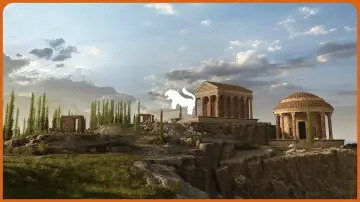
Eternal Temple is a modular fantasy ruin and dungeon environment pack with over 200 parts, presets, props, 3 demo levels, and top-down occlusion support.
Category:Unreal Engine,FantasyPlatform: Unreal EngineEngine version: 4.26+,5.0+Published: May 24, 2026
Fantasy
Resource overview
When a project needs an ancient fantasy location, the first hurdle is rarely the idea. The harder part is turning that idea into a usable level setup with enough structure to support different camera angles, scene layouts, and gameplay spaces. Eternal Temple approaches that problem as a modular environment kit anchored in temples, ruins, and dungeon-like architecture.
The package brings together over 200 modular parts, along with buildings and ruin presets, environmental props, and three demo levels. Its tags point clearly toward the kind of production it serves: modular, overgrown, fantasy, dungeon, top-down, temple, RPG, architecture, ruin, and ancient. Rather than locking the environment into a single presentation, it supports both constructed scenes and playable examples, with a basic system for hiding view-blocking objects in top-down views.
Starting with over 200 modular parts
A set with over 200 modular parts gives the environment a construction-first workflow. Instead of depending on one fixed temple layout, the pack provides a large pool of pieces that can be arranged into different architectural spaces.
That matters most when a scene needs variation across connected areas. A temple complex, a ruin section, and a dungeon passage do not have to read as separate art sets when they are assembled from the same modular language. The modular structure also suits iterative level work. A creator can begin with broad architectural placement, then refine pathways, room shapes, and ruin density while staying inside the same visual theme of ancient fantasy architecture.
Buildings and ruin presets for faster scene assembly
Not every production begins from a blank grid. Eternal Temple includes buildings and ruin presets, which shifts part of the setup process from piece-by-piece assembly to ready-made structural starting points.
For implementation, presets help in two different ways. First, they can speed up early level composition by placing larger environment forms quickly. Second, they provide examples of how the modular parts can be combined into coherent temple or ruin arrangements. In a fantasy or RPG production, that makes it easier to establish a believable location language early on, then modify those preset structures to suit traversal, combat spaces, or scenic framing. The combination of modular parts and presets means the pack can support both detailed custom building and faster block-in work.
Props that fill the temple without changing its theme
Architecture alone rarely makes a place feel inhabited, abandoned, or functional. Eternal Temple includes props such as furniture, barrels, and torches, extending the pack beyond walls and ruins into the smaller elements that complete a scene.
These props are important because they let the environment move from bare construction to readable space. Furniture can imply interior use, barrels can add storage or utility cues, and torches can reinforce the dungeon and temple atmosphere suggested by the pack’s fantasy and ancient ruin themes. Since these items are included alongside the structural pieces, the creator can populate rooms, edges, and transitional spaces without breaking away from the same environment set. In practical level-building terms, that keeps decorative dressing closely tied to the architecture instead of treating it as a separate pass with unrelated assets.
Three demo levels: Top-Down, FP Dungeon, and FP Outdoor
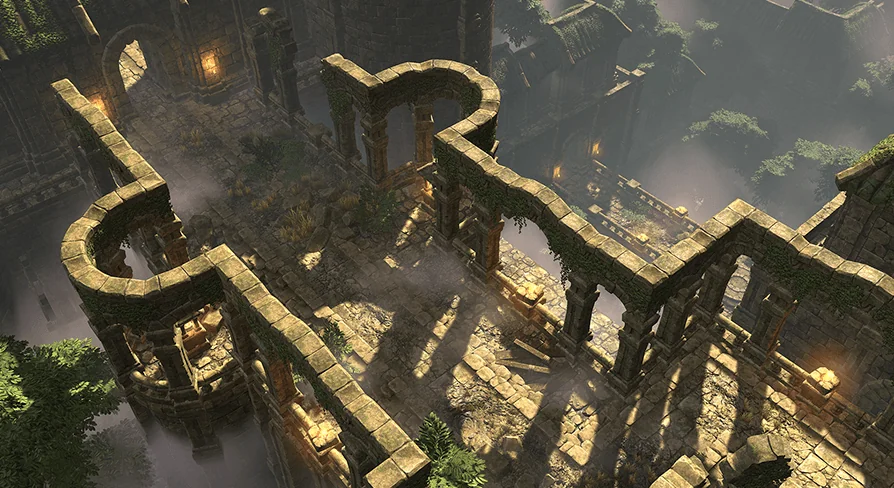
Eternal Temple does not stop at loose content pieces. It also includes three demo levels: Top-Down, FP Dungeon, and FP Outdoor. That immediately frames the environment as something meant to be viewed and used in more than one gameplay context.
The Top-Down demo level points toward strategy, action RPG, or other elevated-camera uses where readability from above is essential. FP Dungeon shifts the same thematic material toward enclosed first-person exploration, where corridors, rooms, and tighter architectural spaces become the focus. FP Outdoor expands the setting into a more open first-person presentation, suggesting temple exteriors, ruin approaches, or outdoor sections connected to the larger complex. Together, these demos show the environment across distinct scene types not just one isolated showcase. For a creator evaluating how to implement the pack, that spread is one of the clearest practical details: the content is not restricted to only overhead play or only corridor-based dungeon scenes.
Using the Top-Down demo as a layout reference
The Top-Down level is especially useful because it connects directly to one of the package’s stated systems. A top-down environment often has to deal with architectural elements that interrupt camera clarity.
In that context, the included level can serve as a working example of how temple and ruin geometry behaves when viewed from above. It gives the creator a direct reference point for arranging modular architecture in a way that still supports top-down readability.
Handling view blocking in top-down temple scenes
One of the package’s more specific implementation features is a basic system of hiding view-blocking objects for top-down views. That is a practical addition, especially for environments built from tall architecture, ruin fragments, and enclosed temple structures.
Top-down scenes often need a compromise between visual richness and clear sightlines. Columns, walls, roofs, and large decorative forms can establish scale and mood, but they can also get in the way when the camera looks down into playable spaces. A basic hide system addresses that exact friction point. In use, it supports a workflow where the environment can remain structurally dense while still adapting to a camera angle that needs visibility into the level. Because this feature is explicitly tied to top-down views, it fits naturally beside the Top-Down demo level and helps position the pack for projects where fantasy ruins must remain playable from above, not just visually impressive from ground level.
Where Eternal Temple fits in production
Eternal Temple fits best in the stage where a project needs to turn a fantasy temple idea into an actual playable environment set. Its content spans structural assembly, preset-based scene setup, prop dressing, and camera-aware top-down handling.
That makes it suitable for building ancient ruins, dungeon spaces, and temple architecture across different play perspectives. A creator can assemble custom layouts from the modular parts, begin faster with building and ruin presets, dress spaces with furniture, barrels, and torches, and reference the included Top-Down, FP Dungeon, and FP Outdoor demo levels when shaping scene flow. In a production pipeline, it works as an environment foundation for fantasy and RPG locations where modular construction and scene readability both matter.
 Fantasy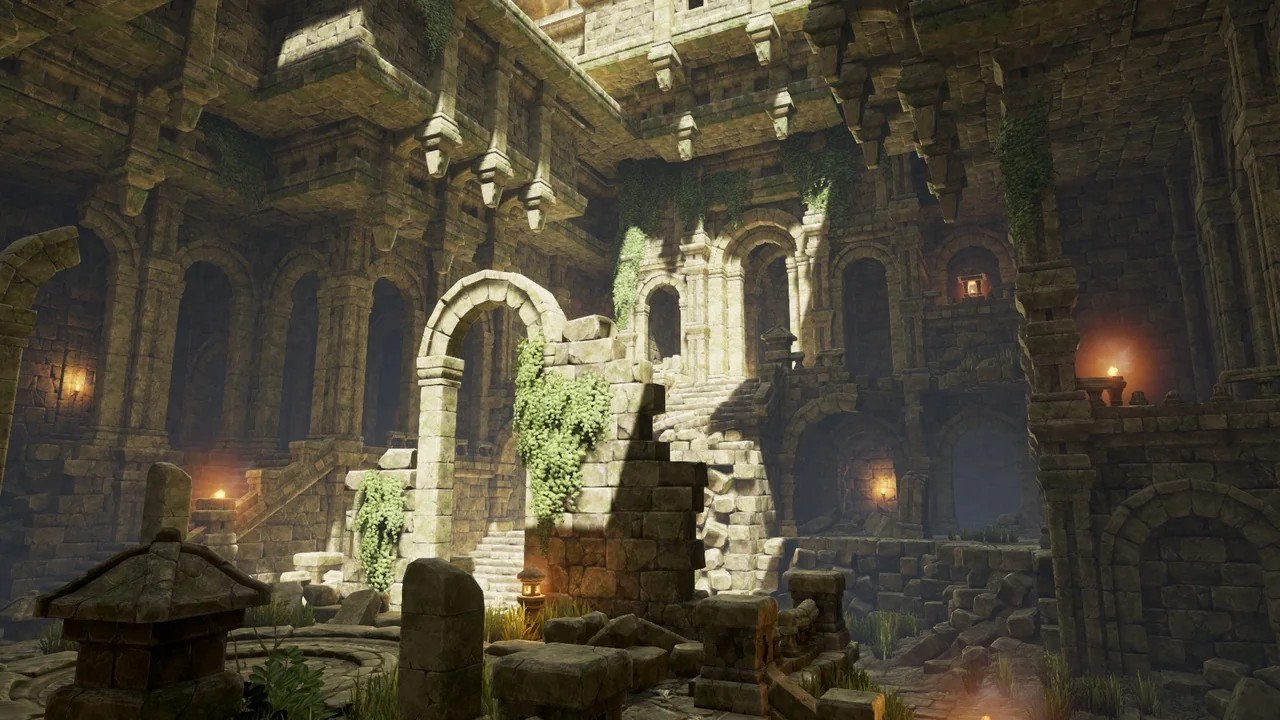
 Fantasy
 Fantasy
 Historical