"7e6fc58c410f2894"{"id":"1000504","slug":"easy-fog","title":"Easy Fog","category":"Weather","engine":"5.1+","assetVersion":"","engineVersion":"Engine Version: 5.1+","tag":"Weather","accent":"blue","visual":"mech","summary":"Easy Fog brings wind-animated fog cards to Unreal Engine 5, offering art-directable density, emissive control, and Lumen/Pathtracing compatibility.","platform":"Unreal Engine","publishedAt":"2026-07-13T12:12:11.722Z","updatedAt":"2026-07-13T12:12:11.722Z","sourceNotes":[],"fileContents":[],"compatibility":["Unreal Engine","Engine Version: 5.1+"],"featuredImage":{"alt":"Easy Fog","src":"/wp-content/uploads/published/2026/07/e5732a9c2208-1f276f36-7edb-4751-95b6-23f5f289ebb6-a3f5fd3fa5.webp"},"hasDownloadLink":true,"downloads":1,"terms":[{"taxonomy":"category","slug":"weather-vfx","name":"Weather"}],"galleryImages":[{"src":"/wp-content/uploads/published/2026/07/1a887e16450d-c494c2f3-c403-47a0-98d9-4f1f24a997dd-c39e7206fe.webp","alt":"Easy Fog"},{"src":"/wp-content/uploads/published/2026/07/eaf7099f1751-9e38e388-f2ea-496e-b4eb-fac5213e2254-c163f08da2.webp","alt":"Easy Fog"},{"src":"/wp-content/uploads/published/2026/07/d91c815652a1-83c190b2-198d-4c1f-b63d-7a6efbc6f6b7-fbf6f88d53.webp","alt":"Easy Fog"},{"src":"/wp-content/uploads/published/2026/07/1d6ef1f1fd97-4740d552-b7ea-49c0-a57b-efab385c362e-c2ade1b5ce.webp","alt":"Easy Fog"},{"src":"/wp-content/uploads/published/2026/07/805049f775ce-523d2c56-6db1-451a-b65b-ebf5b247b1eb-a7c092b174.webp","alt":"Easy Fog"}],"accessPanel":{"kind":"resource","title":"Download this resource","eyebrow":"Free Download","message":"Log in or create a free account to start your download.","fileName":"Content.7z","safetyNote":"Resources are manually reviewed before listing to improve quality and reduce obvious risks.","actionLabel":"Download Free","resourceType":"Resource archive"},"contentHtml":"\u003ch2\u003eBuilding Atmospheric Depth Without the Performance Cost\u003c/h2\u003e When constructing environments in Unreal Engine 5, establishing a thick, moody atmosphere often relies on heavy volumetric rendering that can bottleneck a scene. Easy Fog approaches this visual challenge from a different angle. Instead of relying on true volumetric rendering, the tool utilizes fog cards that are specifically crafted to feel and look as volumetric as possible. The core advantage here is the absence of performance overhead. By leaning on material properties and card placement, creators can polish their environments and establish a distinct mood without taxing the engine. This makes the tool suitable for both real-time games and pre-rendered cinematics where frame budgets and render times are critical concerns. \u003ch2\u003eDirecting the Look of Easy Fog Cards\u003c/h2\u003e Art direction is central to the Easy Fog workflow. The tool is built to make it simple to adjust and capture the exact look required for a level. Each fog card can be fine-tuned to match its specific position in the world and integrate seamlessly with the surrounding environment. The creator provides several specific material parameters to drive this control: \u003cul\u003e \u003cli\u003e\u003cstrong\u003eFog Density:\u003c/strong\u003e Controls the opacity and thickness of the fog card, allowing artists to dial in exactly how much of the background geometry should be obscured.\u003c/li\u003e \u003cli\u003e\u003cstrong\u003eEmissive:\u003c/strong\u003e Adds a self-illuminated quality to the fog, useful for simulating light catching in misty air or creating a glowing, unnatural atmosphere.\u003c/li\u003e \u003cli\u003e\u003cstrong\u003eNormal Intensity:\u003c/strong\u003e Adjusts how the provided normal maps interact with scene lighting, adding three-dimensional depth to the flat cards.\u003c/li\u003e \u003cli\u003e\u003cstrong\u003eBase Color:\u003c/strong\u003e Tints the fog to match the environmental lighting, ensuring the atmosphere does not feel disconnected from the surrounding terrain or sky.\u003c/li\u003e\n\u003c/ul\u003e By combining these adjustments, artists can ensure the fog cards do not appear as flat, disconnected sprites hovering in the distance. \u003ch3\u003eMimicking Volumetrics With Normal Maps\u003c/h3\u003e To sell the illusion of volume, the package includes dedicated normal maps. Applying these maps to the fog cards allows them to catch lighting from the environment in a way that mimics a true volumetric feel. When the normal intensity is adjusted, the fog and clouds gain subtle bumps and ridges that react to directional light, giving the atmosphere a tangible texture rather than a smooth, visually flat gradient. This technique is what bridges the gap between the low-cost nature of a fog card and the high-end visual fidelity expected from modern Unreal Engine 5 projects. \u003ch2\u003eWind and Flowmap Animation\u003c/h2\u003e Static fog can often make a digital environment feel dead. To breathe life into a scene, Easy Fog includes wind effects driven by realistic flowmap animation. Rather than relying on a simple panning texture, the flowmap system gives the fog cards a wispy, flowing movement. This animation style is designed to add realism to the world by simulating how air currents push and pull moisture. The continuous, organic motion helps the fog cards blend into the dynamic environment, further masking their two-dimensional nature and reinforcing the illusion of thick, moving atmosphere. \u003ch3\u003eGeometry Blending and Immersion\u003c/h3\u003e A common issue with card-based atmospheric tools is visible clipping when the sprites intersect with level geometry, instantly ruining immersion. Easy Fog addresses this through its material setup. The material itself is designed to blend seamlessly with geometry in the level. This means trees, rocks, and structures can sit in front of and behind the fog without introducing harsh edges or obvious card-like effects. The fog interacts with the world geometry naturally, allowing creators to place cards deep within complex scenes without worrying about the visual breaks that typically plague sprite-based effects. \u003ch2\u003eRendering Support Across UE5 Pipelines\u003c/h2\u003e Unreal Engine 5 offers multiple rendering paths, and atmospheric tools need to be flexible to fit into various production pipelines. Easy Fog is compatible with Lumen, the engine's default global illumination and reflections system, ensuring the fog cards react appropriately to bounced lighting. It also works with Pathtracing for high-fidelity cinematic renders. As of the 20/11/2025 update, the tool includes support for Raytraced Translucency. This ensures that light passing through the fog cards is calculated accurately when raytracing is enabled, adding another layer of physical accuracy to the atmosphere. The tool is fully functional across engine versions 4.27 through 5.8. Supporting material, tutorials, and documentation accompany the tool, alongside update histories and additional videos covering the latest features. These resources cover everything from basic implementation to utilizing the newest flowmap animations. \u003ch3\u003eWhere Easy Fog Fits in Scene Production\u003c/h3\u003e The tool is tagged across a wide spectrum of environmental uses, including dust, mist, rain, smoke, and general weather effects. This range makes it practical for a variety of scene types, from rainy, moody alleys to expansive, dusty landscapes. Because the fog cards are game-ready and adjustable via blueprints and dynamic materials, they serve projects that require dynamic environmental changes driven by gameplay. Cinematic creators working on postproduction scenery will also find the art-directable parameters useful for locking in specific ambience without waiting on heavy volumetric renders.\n\n\u003ch2\u003eContinue Browsing Similar Packs\u003c/h2\u003e\n\u003cul\u003e\n\u003cli\u003e\u003ca href=\"https://3dcghub.com/vdb-cloud-and-fog-pack-1/\" title=\"VDB Cloud \u0026amp; Fog Pack 1\"\u003eVDB Cloud \u0026amp; Fog Pack 1\u003c/a\u003e\u003c/li\u003e\n\u003cli\u003e\u003ca href=\"https://3dcghub.com/ultra-volumetrics/\" title=\"Ultra Volumetrics\"\u003eUltra Volumetrics\u003c/a\u003e\u003c/li\u003e\n\u003cli\u003e\u003ca href=\"https://3dcghub.com/desert-and-snow-vdb-collection/\" title=\"Desert \u0026amp; Snow VDB Collection\"\u003eDesert \u0026amp; Snow VDB Collection\u003c/a\u003e\u003c/li\u003e\n\u003cli\u003e\u003ca href=\"https://3dcghub.com/ambient-fx-in-unreal-engine/\" title=\"Ambient Fx in Unreal Engine\"\u003eAmbient Fx in Unreal Engine\u003c/a\u003e\u003c/li\u003e\n\u003cli\u003e\u003ca href=\"https://3dcghub.com/lightning-electric-effect-alembics-pack/\" title=\"Lightning \u0026amp; Electric Effect Alembics Pack\"\u003eLightning \u0026amp; Electric Effect Alembics Pack\u003c/a\u003e\u003c/li\u003e\n\u003c/ul\u003e","contentTextLength":5591,"navigation":{"current":1254,"total":3618,"previous":{"id":"1000505","slug":"flips-and-tricks","title":"Flips and Tricks","category":"Variety","platform":"Unreal Engine","updatedAt":"2026-07-13T12:15:37.522Z"},"next":{"id":"1000503","slug":"drivable-cars-supercar","title":"Drivable Cars: Supercar","category":"Cars \u0026 Trucks","platform":"Unreal Engine","updatedAt":"2026-07-13T12:08:55.990Z"}},"relatedResources":[{"id":"1000032","slug":"vdb-cloud-and-fog-pack-1","title":"VDB Cloud \u0026 Fog Pack 1","category":"Weather","engine":"5.3+","assetVersion":"","engineVersion":"5.3+","tag":"Weather","accent":"blue","visual":"mech","summary":"A practical look at VDB Cloud \u0026 Fog Pack 1 for Unreal Engine, covering setup notes, rendering commands, and where simulated cloud and fog caches fit best.","platform":"Unreal Engine","publishedAt":"2026-05-21T08:56:43.608Z","updatedAt":"2026-05-21T08:56:43.608Z","sourceNotes":[],"fileContents":[],"compatibility":["Unreal Engine","Engine version: 5.3+"],"featuredImage":{"alt":"VDB Cloud \u0026 Fog Pack 1","src":"/wp-content/uploads/published/2026/05/b3d307c1fa74-e5c0ac20-065a-46cc-aad4-b1167829ec9a-0133e863dc.webp"},"hasDownloadLink":true,"downloads":2},{"id":"17676","slug":"ultra-volumetrics","title":"Ultra Volumetrics","category":"Weather","engine":"4.27,5.0+","assetVersion":"Engine version: 4.27,5.0+","engineVersion":"4.27","tag":"Weather","accent":"blue","visual":"animation","summary":"Enhance your game environments with Ultra Volumetrics, a performant solution for local volumetric fog. This toolset features paintable flow maps, spline-based placement, and full physics interactivity.","platform":"Unreal Engine","publishedAt":"2026-03-13T15:10:01.000Z","updatedAt":"2026-04-19T15:43:29.000Z","sourceNotes":[],"fileContents":[],"compatibility":["Unreal Engine","Engine version: 4.27,5.0+"],"featuredImage":{"alt":"Ultra Volumetrics","src":"https://3dcghub.com/wp-content/uploads/2026/03/1cdfde32-9989-4e52-8d6b-1e1a30df7c43.webp"},"hasDownloadLink":true,"downloads":0},{"id":"1001197","slug":"particles-and-wind-control-system","title":"Particles and Wind Control System","category":"Weather","engine":"5.0+","assetVersion":"","engineVersion":"Engine Version: 5.0+","tag":"Weather","accent":"blue","visual":"mech","summary":"Explore how the Particles and Wind Control System brings responsive blueprint particles, wind interaction, and candle VFX to Unreal Engine fantasy scenes.","platform":"Unreal Engine","publishedAt":"2026-09-17T07:47:59.292Z","updatedAt":"2026-09-17T07:47:59.292Z","sourceNotes":[],"fileContents":[],"compatibility":["Unreal Engine","Engine Version: 5.0+"],"featuredImage":{"alt":"Particles and Wind Control System","src":"/wp-content/uploads/published/2026/09/c8c13a50b5e6-8dc2814d-69da-4e9c-8f3a-97d48c81a15a-65ffba71ca.webp"},"hasDownloadLink":true,"downloads":0}]}
Weather
Easy Fog
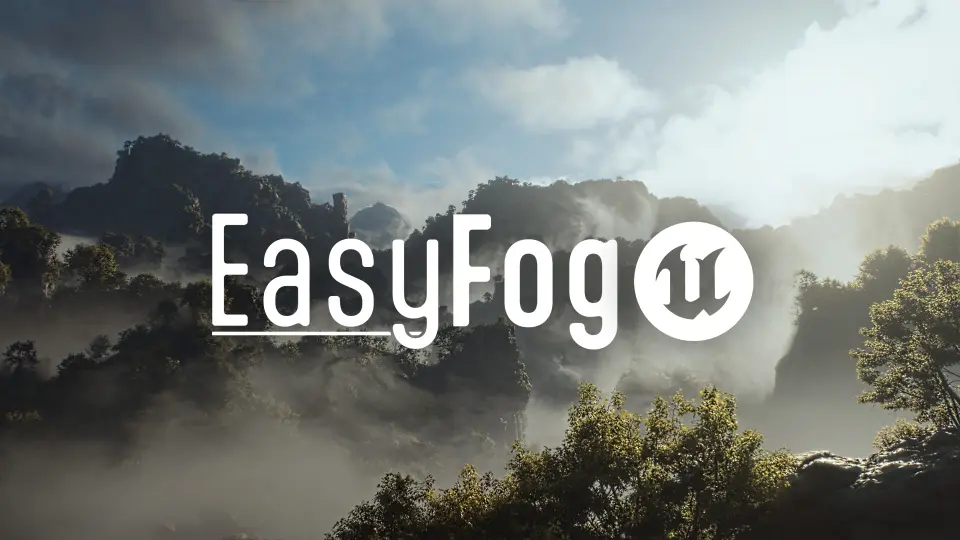
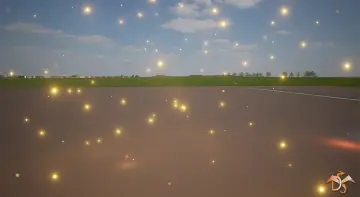
Easy Fog brings wind-animated fog cards to Unreal Engine 5, offering art-directable density, emissive control, and Lumen/Pathtracing compatibility.
Building Atmospheric Depth Without the Performance Cost
When constructing environments in Unreal Engine 5, establishing a thick, moody atmosphere often relies on heavy volumetric rendering that can bottleneck a scene. Easy Fog approaches this visual challenge from a different angle. Instead of relying on true volumetric rendering, the tool utilizes fog cards that are specifically crafted to feel and look as volumetric as possible. The core advantage here is the absence of performance overhead. By leaning on material properties and card placement, creators can polish their environments and establish a distinct mood without taxing the engine. This makes the tool suitable for both real-time games and pre-rendered cinematics where frame budgets and render times are critical concerns.
Directing the Look of Easy Fog Cards
Art direction is central to the Easy Fog workflow. The tool is built to make it simple to adjust and capture the exact look required for a level. Each fog card can be fine-tuned to match its specific position in the world and integrate seamlessly with the surrounding environment. The creator provides several specific material parameters to drive this control:
Fog Density: Controls the opacity and thickness of the fog card, allowing artists to dial in exactly how much of the background geometry should be obscured.
Emissive: Adds a self-illuminated quality to the fog, useful for simulating light catching in misty air or creating a glowing, unnatural atmosphere.
Normal Intensity: Adjusts how the provided normal maps interact with scene lighting, adding three-dimensional depth to the flat cards.
Base Color: Tints the fog to match the environmental lighting, ensuring the atmosphere does not feel disconnected from the surrounding terrain or sky.
By combining these adjustments, artists can ensure the fog cards do not appear as flat, disconnected sprites hovering in the distance.
Mimicking Volumetrics With Normal Maps
To sell the illusion of volume, the package includes dedicated normal maps. Applying these maps to the fog cards allows them to catch lighting from the environment in a way that mimics a true volumetric feel. When the normal intensity is adjusted, the fog and clouds gain subtle bumps and ridges that react to directional light, giving the atmosphere a tangible texture rather than a smooth, visually flat gradient. This technique is what bridges the gap between the low-cost nature of a fog card and the high-end visual fidelity expected from modern Unreal Engine 5 projects.
Wind and Flowmap Animation
Static fog can often make a digital environment feel dead. To breathe life into a scene, Easy Fog includes wind effects driven by realistic flowmap animation. Rather than relying on a simple panning texture, the flowmap system gives the fog cards a wispy, flowing movement. This animation style is designed to add realism to the world by simulating how air currents push and pull moisture. The continuous, organic motion helps the fog cards blend into the dynamic environment, further masking their two-dimensional nature and reinforcing the illusion of thick, moving atmosphere.
Geometry Blending and Immersion
A common issue with card-based atmospheric tools is visible clipping when the sprites intersect with level geometry, instantly ruining immersion. Easy Fog addresses this through its material setup. The material itself is designed to blend seamlessly with geometry in the level. This means trees, rocks, and structures can sit in front of and behind the fog without introducing harsh edges or obvious card-like effects. The fog interacts with the world geometry naturally, allowing creators to place cards deep within complex scenes without worrying about the visual breaks that typically plague sprite-based effects.
Rendering Support Across UE5 Pipelines
Unreal Engine 5 offers multiple rendering paths, and atmospheric tools need to be flexible to fit into various production pipelines. Easy Fog is compatible with Lumen, the engine's default global illumination and reflections system, ensuring the fog cards react appropriately to bounced lighting. It also works with Pathtracing for high-fidelity cinematic renders. As of the 20/11/2025 update, the tool includes support for Raytraced Translucency. This ensures that light passing through the fog cards is calculated accurately when raytracing is enabled, adding another layer of physical accuracy to the atmosphere. The tool is fully functional across engine versions 4.27 through 5.8. Supporting material, tutorials, and documentation accompany the tool, alongside update histories and additional videos covering the latest features. These resources cover everything from basic implementation to utilizing the newest flowmap animations.
Where Easy Fog Fits in Scene Production
The tool is tagged across a wide spectrum of environmental uses, including dust, mist, rain, smoke, and general weather effects. This range makes it practical for a variety of scene types, from rainy, moody alleys to expansive, dusty landscapes. Because the fog cards are game-ready and adjustable via blueprints and dynamic materials, they serve projects that require dynamic environmental changes driven by gameplay. Cinematic creators working on postproduction scenery will also find the art-directable parameters useful for locking in specific ambience without waiting on heavy volumetric renders.
 Weather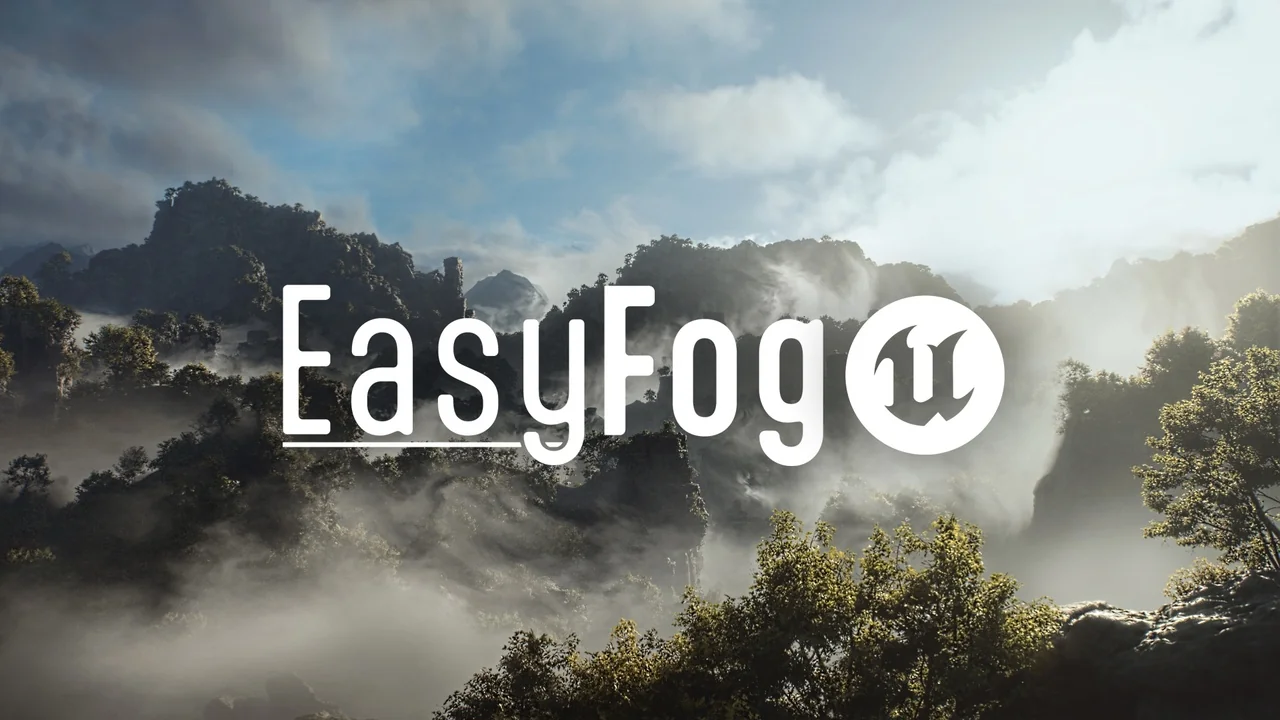
 Weather
 Weather
 Weather