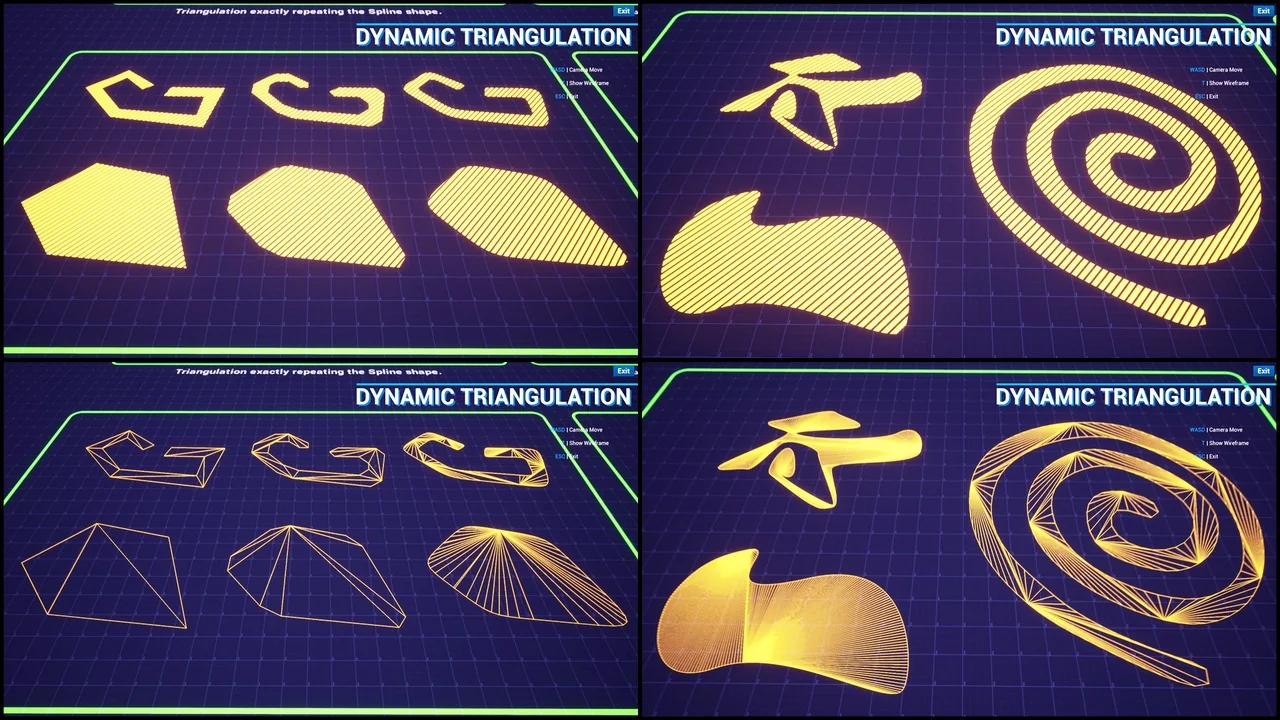
Dynamic Triangulation is a specialized C++ plugin designed to facilitate the creation of polygonal meshes from specific point data. This tool provides developers with the ability to generate geometry both within the editor and during active gameplay. By utilizing sets of consecutive points, such as spline points, users can define specific areas and transform them into functional meshes.
Efficient Procedural Workflows
The plugin is optimized for high performance. This ensures that mesh generation does not hinder the user experience. Developers can edit and generate these meshes at runtime or while working in the editor. Consequently, this flexibility allows for dynamic environment changes or procedural level design.
One of the core strengths of Dynamic Triangulation is its ability to handle closed splines. The system can triangulate these shapes while precisely repeating the original spline’s geometry. This ensures that the generated mesh remains faithful to the defined boundaries.
Advanced Mesh Customization
Beyond basic generation, the plugin includes several tools for refining geometry. For instance, it features a function for chamfering or rounding corners. This allows for more organic or polished shapes rather than strictly sharp angles. Additionally, a dedicated function exists to remove duplicate points. Cleaning the data before mesh generation helps maintain mesh integrity and performance.
Once a mesh is generated, it can be baked into a single static mesh. This feature is particularly useful for developers who want to finalize procedural shapes for better optimization. The plugin also automatically generates UVs for all created meshes, simplifying the texturing process.
Integrated Materials and Visuals
The package comes with a selection of materials that offer various visual effects. These materials include support for moving animations, texture rotation, and flickering effects. Furthermore, opacity masks are included to provide greater control over transparency.
The included materials are versatile in their application. They are designed to work effectively with or without UV coordinates. This ensures that even complex procedural shapes can maintain a high-quality visual appearance regardless of the mapping method used.
Technical Implementation and Source Code
Dynamic Triangulation is built with transparency and customization in mind. Both the Blueprints and the C++ code include detailed comments to help developers understand the underlying logic. Moreover, the full source code is provided with the plugin.
To assist with the initial setup, the asset includes an example project. This project features an overview scene and practical examples of how to implement the system at runtime. These resources provide a clear starting point for integrating the plugin into any project.
Conclusion
This C++ plugin offers a robust set of tools for anyone needing to generate geometry from point data. With its focus on performance and flexibility, it serves as a valuable resource for both editor-based construction and runtime procedural generation. The inclusion of source code and commented logic ensures that the developer can easily adapt the tool to their specific needs.
Screenshots & Gallery