"7ad89cffa44984cf"{"id":"1002522","slug":"dragon-for-boss-monster-pbr","title":"Dragon for Boss Monster : PBR","category":"Creatures \u0026 Monsters","engine":"4.26+,5.0+","assetVersion":"","engineVersion":"Engine Version: 4.26+,5.0+","tag":"Creatures","accent":"blue","visual":"character","summary":"Examine the technical specs of Dragon for Boss Monster: PBR, featuring 4 dragon variants under 5k tris, 2048x2048 PBR textures, and 18 animations.","platform":"Unreal Engine","indexPolicy":"index","publishedAt":"2026-11-13T09:07:10.432Z","updatedAt":"2026-11-13T09:07:10.432Z","sourceNotes":[],"fileContents":[],"compatibility":["Unreal Engine","Engine Version: 4.26+,5.0+"],"featuredImage":{"alt":"Dragon for Boss Monster : PBR","src":"/wp-content/uploads/published/2026/11/0361dfebe345-7f290548-664d-40c4-b1b8-1be5aac3991b-b6a71c6843.webp"},"hasDownloadLink":true,"downloads":0,"terms":[{"taxonomy":"category","slug":"creatures-and-monsters","name":"Creatures \u0026 Monsters"}],"galleryImages":[{"src":"/wp-content/uploads/published/2026/11/efa6d757bcde-123df5c2-3bad-4738-9dda-6d5cc88a0525-adcbfe7730.webp","alt":"Dragon for Boss Monster : PBR"},{"src":"/wp-content/uploads/published/2026/11/8f5be2aa2bf2-ff336de4-09ca-4735-ba3f-cb4a70796697-0ff4dad84d.webp","alt":"Dragon for Boss Monster : PBR"},{"src":"/wp-content/uploads/published/2026/11/0d1d6f5263a2-409cbd91-6312-4ee2-91b0-90b1cf91ee1e-b23db6c6c1.webp","alt":"Dragon for Boss Monster : PBR"},{"src":"/wp-content/uploads/published/2026/11/5e4da00b193a-6b240217-9ebd-4091-b8c7-599ba51b98b1-e9f587c271.webp","alt":"Dragon for Boss Monster : PBR"},{"src":"/wp-content/uploads/published/2026/11/83fb81e12f3a-2cc8e7e3-291a-47bd-a2a1-8445b7d65957-acf4a416e0.webp","alt":"Dragon for Boss Monster : PBR"}],"accessPanel":{"kind":"resource","title":"Get this resource","eyebrow":"Free resource","message":"Download this resource in your browser.","fileName":"Content.7z","safetyNote":"Resources are manually reviewed before listing to improve quality and reduce obvious risks.","actionLabel":"Get this resource","resourceType":"Resource archive","versions":[]},"contentHtml":"\u003ch2\u003eStaging Arenas for Dragon for Boss Monster Encounters\u003c/h2\u003e\u003cp\u003eConstructing a memorable confrontation in an action or role-playing game requires an antagonist that dominates the scene without crashing the frame budget. Cavernous subterranean vaults, volcanic calderas, and desecrated fortress courtyards serve as classic backdrops for climactic encounters. In these settings, an evil dragon functions as both the visual centerpiece and the primary mechanical hurdle for the player. The asset package provides dedicated low-poly creature meshes tailored to populate these exact battlegrounds, balancing menacing creature design with strict geometry budgets that suit real-time execution.\u003c/p\u003e\u003cp\u003eWhen laying out a boss arena, level designers must consider how the enemy creature interacts with dynamic lights, particle effects, and spatial boundaries. An encounter against a hulking reptilian beast involves wide sweeps, aerial maneuvers, and ranged strikes that can easily crowd the screen. Because the models in this pack remain tightly optimized, technical artists gain the headroom needed to populate the surrounding environment with destructible pillars, interactive hazards, and layered spell VFX without encountering performance bottlenecks during intense combat sequences.\u003c/p\u003e\u003ch2\u003eMesh Budgets Across the Four Dragon Archetypes\u003c/h2\u003e\u003cp\u003eThe collection supplies four specific dragon variations, each structured with an exact polygon count suited for low-poly rendering pipelines. Every variant represents an individual creature model with its own structural distribution of triangles, ensuring distinct geometric variety across different stages of a game campaign.\u003c/p\u003e\u003cp\u003eDragon the Usurper carries the highest triangle density in the pack at 4,832 triangles. This allocation gives the Usurper mesh enough edge flow around the horns, snout, wing joints, and tail segments to serve as a primary chapter boss or endgame threat where closer camera framing might occur. Even at this highest tier, the polygon count stays well below five thousand triangles, preserving baseline performance.\u003c/p\u003e\u003cp\u003eDragon the Terror Bringer is built at 4,684 triangles. The subtle decrease in polycount preserves essential silhouette features while giving technical directors an alternative model for mid-tier boss encounters or heavily scripted narrative set pieces. The topology remains dense enough across the torso and limbs to deform cleanly during complex offensive poses.\u003c/p\u003e\u003cp\u003eDragon the Nightmare drops the budget further to 4,382 triangles. This variant fits cleanly into scenarios where multiple dynamic elements share the screen, such as environmental weather systems or high-density spell casting. The reduction in geometry makes it an effective candidate for recurring mini-boss roles or intense arena challenges.\u003c/p\u003e\u003cp\u003eDragon the Soul Eater represents the leanest model in the quartet, clocking in at 3,864 triangles. Operating under four thousand triangles makes the Soul Eater suitable for performance-critical scenarios, hardware platforms with strict vertex budgets, or multi-monster combat scenarios where multiple large creatures must share screen space simultaneously without inducing draw-call latency.\u003c/p\u003e\u003ch2\u003eSurface Shading with 2048x2048 PBR Color Variations\u003c/h2\u003e\u003cp\u003eVisual variety across the four models is expanded through physically based rendering materials configured at 2048x2048 resolution. Texture maps authored at 2K resolution on models under five thousand triangles yield a high texel density, keeping skin scales, claw surfaces, wing membranes, and facial details legible from both standard third-person follow cameras and wide isometric views.\u003c/p\u003e\u003cp\u003eThe package provides four distinct color variations for the PBR texture sets. These palette shifts allow developers to implement thematic differentiation without altering the underlying mesh data. A project can designate specific colorways to signal different damage affinities, elemental phases, or distinct subterranean environments, such as assigning one coloration to a fiery magma chamber and another to a blighted, toxic dungeon floor.\u003c/p\u003e\u003cp\u003eBecause the textures follow standard PBR workflows, the surface response reacts naturally under diverse lighting conditions. Whether placed in dark, torch-lit corridors or brightly lit exterior ruins under dynamic directional sun systems, the balance of roughness, reflectivity, and surface normal data preserves depth across the low-poly geometry.\u003c/p\u003e\u003ch2\u003eCombat State Machines Driven by 18 Dragon Animations\u003c/h2\u003e\u003cp\u003eA boss encounter relies heavily on fluid motion to telegraph incoming strikes and respond convincingly to player inputs. The package incorporates up to 18 various animations, establishing a functional kinematic foundation for complete RPG combat loops.\u003c/p\u003e\u003cp\u003eIntegrating these animations into an engine state machine allows technical animators to build responsive behavior trees. With 18 discrete motion clips available, developers can construct multi-phase attack routines, smooth transitions between resting and active stances, hit-reaction flinches, directional movement cycles, and catastrophic defeat sequences. Having this volume of animations pre-built eliminates the immediate need to source separate motion assets or manage complex retargeting pipelines for quadrupeds with wings.\u003c/p\u003e\u003cp\u003eThe animation set also supports phase-based combat logic. For instance, designers can stage the initial encounter using grounded movement and basic strike animations, shifting into higher-intensity attack variations as the boss's health pool diminishes. The availability of distinct clips allows encounters to feel reactive and varied rather than repetitive.\u003c/p\u003e\u003ch2\u003eIntegration within the RPG Monster Wave Pipeline\u003c/h2\u003e\u003cp\u003eThe asset lists explicit compatibility with the RPG Monster Wave Bundle PBR ecosystem. This alignment enables level creators to build coherent encounter progressions that transition seamlessly from basic minions to terrifying apex monsters.\u003c/p\u003e\u003cp\u003eIn wave-based survival modes, arena gauntlets, and progressive dungeon crawlers, artistic consistency across enemy tiers is essential for immersion. Because this dragon pack shares stylistic and material parity with the RPG Monster Wave Bundle PBR, developers can stage early waves featuring smaller creatures before introducing one of the four dragon variants as a final wave climax. The matching low-poly aesthetic and PBR material setup ensure that lighting models, scale relationships, and visual fidelity remain unified throughout the entire encounter pipeline.\u003c/p\u003e\u003ch2\u003eProject Suitability and Production Fit\u003c/h2\u003e\u003cp\u003eThis resource serves projects that require distinct, low-poly evil dragon bosses capable of running across hardware configurations with rigid performance ceilings. The combination of triangle counts between 3,864 and 4,832 tris, 2048x2048 PBR texture sets with four color options, and an extensive library of 18 animations provides the practical building blocks needed to implement complete boss encounters in action, strategy, and role-playing titles.\u003c/p\u003e\n\n\u003ch2\u003eExplore Similar Assets\u003c/h2\u003e\n\u003cul\u003e\n\u003cli\u003e\u003ca href=\"https://3dcghub.com/demonkiller/\" rel=\"noopener noreferrer\"\u003eDemonKiller\u003c/a\u003e\u003c/li\u003e\n\u003cli\u003e\u003ca href=\"https://3dcghub.com/orc-warlock-modular/\" rel=\"noopener noreferrer\"\u003eOrc Warlock (Modular)\u003c/a\u003e\u003c/li\u003e\n\u003cli\u003e\u003ca href=\"https://3dcghub.com/ocean-monster-fish-pack-part-1-fish-low-poly-model-0/\" rel=\"noopener noreferrer\"\u003eOcean Monster Fish Pack - Part 1 - Fish low poly model - #0\u003c/a\u003e\u003c/li\u003e\n\u003cli\u003e\u003ca href=\"https://3dcghub.com/monsters-wraith/\" rel=\"noopener noreferrer\"\u003eMonsters - Wraith\u003c/a\u003e\u003c/li\u003e\n\u003cli\u003e\u003ca href=\"https://3dcghub.com/otherside-beast/\" rel=\"noopener noreferrer\"\u003eOtherside beast\u003c/a\u003e\u003c/li\u003e\n\u003c/ul\u003e","contentTextLength":7078,"navigation":{"current":55,"total":4499,"previous":{"id":"1002523","slug":"elemental-dragon","title":"Elemental Dragon","category":"Characters \u0026 Creatures","platform":"Unreal Engine","updatedAt":"2026-11-13T09:09:14.448Z"},"next":{"id":"1002521","slug":"demonkiller","title":"DemonKiller","category":"Creatures \u0026 Monsters","platform":"Unreal Engine","updatedAt":"2026-11-13T09:06:10.171Z"}},"relatedResources":[{"id":"1002521","slug":"demonkiller","title":"DemonKiller","category":"Creatures \u0026 Monsters","engine":"4.20+,5.0+","assetVersion":"","engineVersion":"Engine Version: 4.20+,5.0+","tag":"Creatures","accent":"blue","visual":"character","summary":"Explore the DemonKiller low poly character, featuring 19 combat and locomotion animations, 2K to 4K PBR textures, and Animation Blueprint integration.","platform":"Unreal Engine","indexPolicy":"index","publishedAt":"2026-11-13T09:06:10.171Z","updatedAt":"2026-11-13T09:06:10.171Z","sourceNotes":[],"fileContents":[],"compatibility":["Unreal Engine","Engine Version: 4.20+,5.0+"],"featuredImage":{"alt":"DemonKiller","src":"/wp-content/uploads/published/2026/11/4f579b823a5c-5db47bb3-a4c9-4652-918b-d088558c3e1c-a20895aba7.webp"},"hasDownloadLink":true,"downloads":0},{"id":"1002410","slug":"orc-warlock-modular","title":"Orc Warlock (Modular)","category":"Creatures \u0026 Monsters","engine":"4.18+,5.0+","assetVersion":"","engineVersion":"Engine Version: 4.18+,5.0+","tag":"Creatures","accent":"blue","visual":"character","summary":"Modular Orc Warlock 3D character featuring 4K PBR textures, 9 texture sets, facial blendshapes, dynamic bones, and cloth simulation settings.","platform":"Unreal Engine","indexPolicy":"index","publishedAt":"2026-11-10T12:07:32.680Z","updatedAt":"2026-11-10T12:07:32.680Z","sourceNotes":[],"fileContents":[],"compatibility":["Unreal Engine","Engine Version: 4.18+,5.0+"],"featuredImage":{"alt":"Orc Warlock (Modular)","src":"/wp-content/uploads/published/2026/11/ab393dc06201-809dce1d-d4c7-40a4-8ce3-bd687327bc09-5c75a6b4b4.webp"},"hasDownloadLink":true,"downloads":0},{"id":"1001825","slug":"ocean-monster-fish-pack-part-1-fish-low-poly-model-0","title":"Ocean Monster Fish Pack - Part 1 - Fish low poly model - #0","category":"Creatures \u0026 Monsters","engine":"4.18+,5.0+","assetVersion":"","engineVersion":"Engine Version: 4.18+,5.0+","tag":"Creatures","accent":"blue","visual":"character","summary":"Examine the low poly Ocean Monster Fish Pack featuring five animated, rigged marine creatures with 4K PBR textures across Unreal Engine and Unity.","platform":"Unreal Engine","indexPolicy":"index","publishedAt":"2026-10-21T08:18:12.289Z","updatedAt":"2026-10-21T08:18:12.289Z","sourceNotes":[],"fileContents":[],"compatibility":["Unreal Engine","Engine Version: 4.18+,5.0+"],"featuredImage":{"alt":"Ocean Monster Fish Pack - Part 1 - Fish low poly model - #0","src":"/wp-content/uploads/published/2026/10/307594b28609-aedf553b-e9ec-4960-a36d-06dec6ccf525-52826cf4ae.webp"},"hasDownloadLink":true,"downloads":0}]}
Creatures
Dragon for Boss Monster : PBR
Examine the technical specs of Dragon for Boss Monster: PBR, featuring 4 dragon variants under 5k tris, 2048x2048 PBR textures, and 18 animations.
Staging Arenas for Dragon for Boss Monster Encounters
Constructing a memorable confrontation in an action or role-playing game requires an antagonist that dominates the scene without crashing the frame budget. Cavernous subterranean vaults, volcanic calderas, and desecrated fortress courtyards serve as classic backdrops for climactic encounters. In these settings, an evil dragon functions as both the visual centerpiece and the primary mechanical hurdle for the player. The asset package provides dedicated low-poly creature meshes tailored to populate these exact battlegrounds, balancing menacing creature design with strict geometry budgets that suit real-time execution.
When laying out a boss arena, level designers must consider how the enemy creature interacts with dynamic lights, particle effects, and spatial boundaries. An encounter against a hulking reptilian beast involves wide sweeps, aerial maneuvers, and ranged strikes that can easily crowd the screen. Because the models in this pack remain tightly optimized, technical artists gain the headroom needed to populate the surrounding environment with destructible pillars, interactive hazards, and layered spell VFX without encountering performance bottlenecks during intense combat sequences.
Mesh Budgets Across the Four Dragon Archetypes
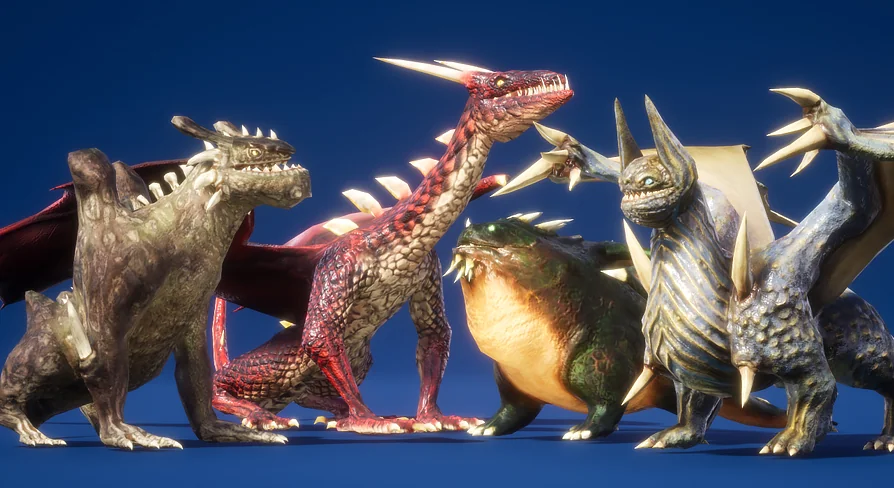
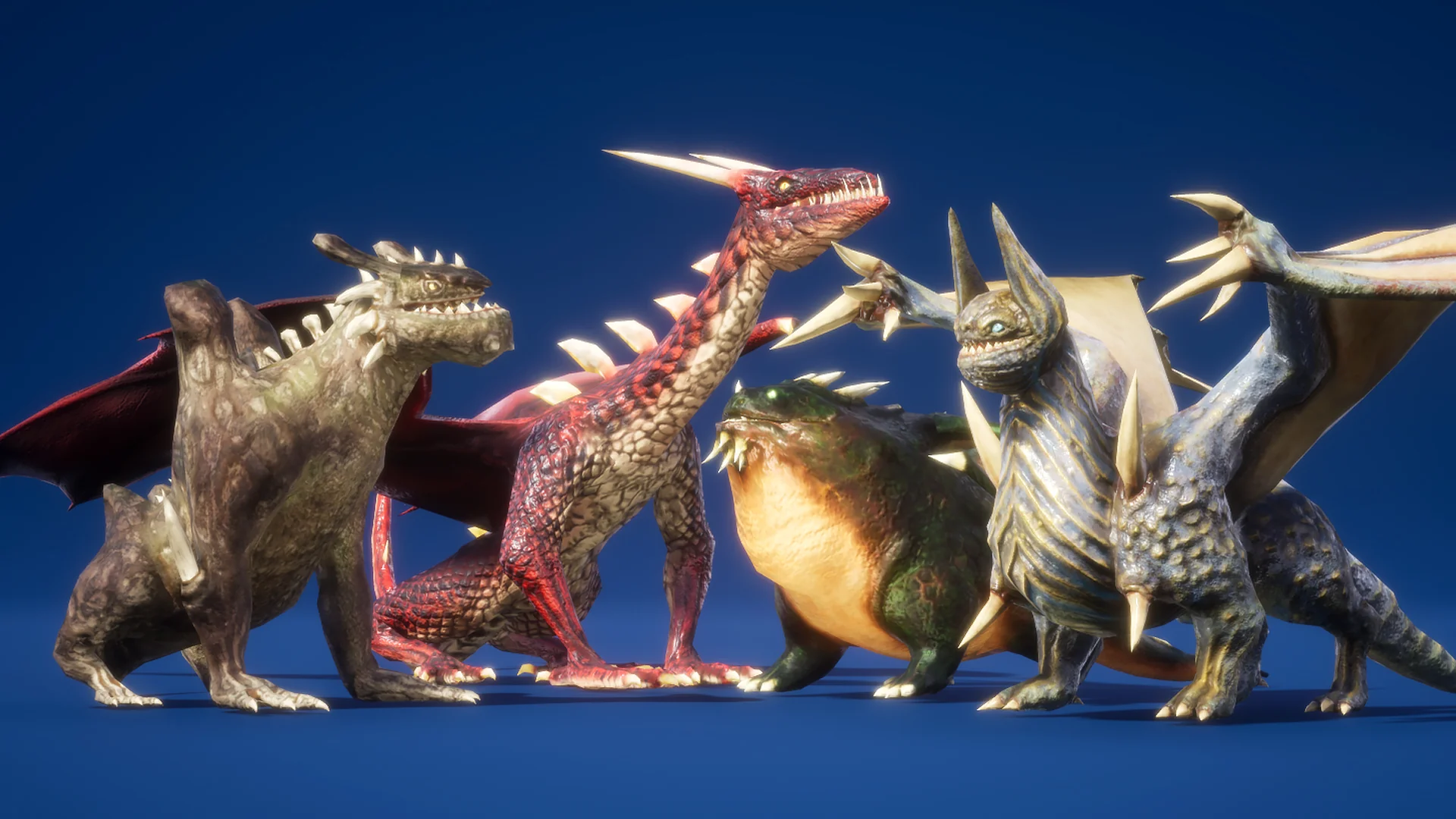
The collection supplies four specific dragon variations, each structured with an exact polygon count suited for low-poly rendering pipelines. Every variant represents an individual creature model with its own structural distribution of triangles, ensuring distinct geometric variety across different stages of a game campaign.
Dragon the Usurper carries the highest triangle density in the pack at 4,832 triangles. This allocation gives the Usurper mesh enough edge flow around the horns, snout, wing joints, and tail segments to serve as a primary chapter boss or endgame threat where closer camera framing might occur. Even at this highest tier, the polygon count stays well below five thousand triangles, preserving baseline performance.
Dragon the Terror Bringer is built at 4,684 triangles. The subtle decrease in polycount preserves essential silhouette features while giving technical directors an alternative model for mid-tier boss encounters or heavily scripted narrative set pieces. The topology remains dense enough across the torso and limbs to deform cleanly during complex offensive poses.
Dragon the Nightmare drops the budget further to 4,382 triangles. This variant fits cleanly into scenarios where multiple dynamic elements share the screen, such as environmental weather systems or high-density spell casting. The reduction in geometry makes it an effective candidate for recurring mini-boss roles or intense arena challenges.
Dragon the Soul Eater represents the leanest model in the quartet, clocking in at 3,864 triangles. Operating under four thousand triangles makes the Soul Eater suitable for performance-critical scenarios, hardware platforms with strict vertex budgets, or multi-monster combat scenarios where multiple large creatures must share screen space simultaneously without inducing draw-call latency.
Surface Shading with 2048x2048 PBR Color Variations
Visual variety across the four models is expanded through physically based rendering materials configured at 2048x2048 resolution. Texture maps authored at 2K resolution on models under five thousand triangles yield a high texel density, keeping skin scales, claw surfaces, wing membranes, and facial details legible from both standard third-person follow cameras and wide isometric views.
The package provides four distinct color variations for the PBR texture sets. These palette shifts allow developers to implement thematic differentiation without altering the underlying mesh data. A project can designate specific colorways to signal different damage affinities, elemental phases, or distinct subterranean environments, such as assigning one coloration to a fiery magma chamber and another to a blighted, toxic dungeon floor.
Because the textures follow standard PBR workflows, the surface response reacts naturally under diverse lighting conditions. Whether placed in dark, torch-lit corridors or brightly lit exterior ruins under dynamic directional sun systems, the balance of roughness, reflectivity, and surface normal data preserves depth across the low-poly geometry.
Combat State Machines Driven by 18 Dragon Animations
A boss encounter relies heavily on fluid motion to telegraph incoming strikes and respond convincingly to player inputs. The package incorporates up to 18 various animations, establishing a functional kinematic foundation for complete RPG combat loops.
Integrating these animations into an engine state machine allows technical animators to build responsive behavior trees. With 18 discrete motion clips available, developers can construct multi-phase attack routines, smooth transitions between resting and active stances, hit-reaction flinches, directional movement cycles, and catastrophic defeat sequences. Having this volume of animations pre-built eliminates the immediate need to source separate motion assets or manage complex retargeting pipelines for quadrupeds with wings.
The animation set also supports phase-based combat logic. For instance, designers can stage the initial encounter using grounded movement and basic strike animations, shifting into higher-intensity attack variations as the boss's health pool diminishes. The availability of distinct clips allows encounters to feel reactive and varied rather than repetitive.
Integration within the RPG Monster Wave Pipeline
The asset lists explicit compatibility with the RPG Monster Wave Bundle PBR ecosystem. This alignment enables level creators to build coherent encounter progressions that transition seamlessly from basic minions to terrifying apex monsters.
In wave-based survival modes, arena gauntlets, and progressive dungeon crawlers, artistic consistency across enemy tiers is essential for immersion. Because this dragon pack shares stylistic and material parity with the RPG Monster Wave Bundle PBR, developers can stage early waves featuring smaller creatures before introducing one of the four dragon variants as a final wave climax. The matching low-poly aesthetic and PBR material setup ensure that lighting models, scale relationships, and visual fidelity remain unified throughout the entire encounter pipeline.
Project Suitability and Production Fit
This resource serves projects that require distinct, low-poly evil dragon bosses capable of running across hardware configurations with rigid performance ceilings. The combination of triangle counts between 3,864 and 4,832 tris, 2048x2048 PBR texture sets with four color options, and an extensive library of 18 animations provides the practical building blocks needed to implement complete boss encounters in action, strategy, and role-playing titles.
 Creatures
 Creatures
 Creatures
 Creatures