"4481da9c895ef786"{"id":"1000286","slug":"br-50-fpsk-ready","title":"BR-50 (FPSK Ready)","category":"Weapons \u0026 Combat","engine":"4.26+,5.0+","assetVersion":"","engineVersion":"Engine Version: 4.26+,5.0+","tag":"Weapons \u0026 Combat","accent":"blue","visual":"mech","summary":"A skeletal mesh sniper rifle packaged with an interactive, tailored carry case. Built for seamless integration into the FPS Kit with pre-configured Blueprints.","platform":"Unreal Engine","publishedAt":"2026-07-03T17:04:35.254Z","updatedAt":"2026-07-03T17:04:35.254Z","sourceNotes":[],"fileContents":[],"compatibility":["Unreal Engine","Engine Version: 4.26+,5.0+"],"featuredImage":{"alt":"BR-50 (FPSK Ready)","src":"/wp-content/uploads/published/2026/07/685beddadcc1-0fed6734-8377-4b2b-9fb5-cbf415c4aea0-9f8a69d65f.webp"},"hasDownloadLink":true,"downloads":0,"terms":[{"taxonomy":"category","slug":"weapons-and-combat","name":"Weapons \u0026 Combat"}],"galleryImages":[{"src":"/wp-content/uploads/published/2026/07/d84201ee2fb7-fd4f5573-7b15-4913-a546-81b8f6f166ef-75c6d80d39.webp","alt":"BR-50 (FPSK Ready)"},{"src":"/wp-content/uploads/published/2026/07/f2146341a68c-529357d1-22f8-4e47-953d-7a79433b882a-80f25b2462.webp","alt":"BR-50 (FPSK Ready)"},{"src":"/wp-content/uploads/published/2026/07/8fcc594c2ec5-db320e76-4360-4289-b42d-412817ab5294-d975c46bcd.webp","alt":"BR-50 (FPSK Ready)"},{"src":"/wp-content/uploads/published/2026/07/c520d50d8f9a-e73dfad5-1603-430e-90ab-ffd47da06050-fd7f243eff.webp","alt":"BR-50 (FPSK Ready)"},{"src":"/wp-content/uploads/published/2026/07/68ced637db73-bfaa1227-2670-49e0-a38b-e5f53791b85b-88133169af.webp","alt":"BR-50 (FPSK Ready)"},{"src":"/wp-content/uploads/published/2026/07/9df6ca44a62f-b396579e-ae5b-4861-bccf-39eae929e47a-c150aa8e7d.webp","alt":"BR-50 (FPSK Ready)"},{"src":"/wp-content/uploads/published/2026/07/9ccb2c81f089-5b555417-6476-4971-bb71-e7e26e730d30-b2db4ab74a.webp","alt":"BR-50 (FPSK Ready)"}],"accessPanel":{"kind":"resource","title":"Download this resource","eyebrow":"Free Download","message":"Log in or create a free account to start your download.","fileName":"BR-50 (FPSK Ready).7z","safetyNote":"Resources are manually reviewed before listing to improve quality and reduce obvious risks.","actionLabel":"Download Free","resourceType":"Resource archive"},"contentHtml":"\u003ch2\u003eSkeletal Mesh Sniper Rifle and Technical Foundation\u003c/h2\u003e\n\u003cp\u003eThe BR-50 (FPSK Ready) provides a functional foundation for integrating a precision firearm into a development project. Classified by its tags as a sniper rifle, the core of the package is the gun skeletal mesh model. Delivering the weapon as a skeletal mesh rather than a static piece of geometry is a critical distinction for interactive development. A skeletal mesh includes an internal bone hierarchy, which is the absolute prerequisite for binding the weapon to character animations. When developers implement a sniper rifle, it requires a complex series of animated states—firing mechanisms cycling, reloading sequences, and idle handling movements. The included skeletal mesh provides the necessary structural anchor points to support these dynamic behaviors, allowing artists and programmers to attach their custom animation sets directly to the firearm.\u003c/p\u003e\n\u003cp\u003eBecause the asset is defined specifically as a sniper rifle, its skeletal mesh is scaled and proportioned to match the visual language of long-range tactical engagements. The length of the barrel, the positioning of the stock, and the overall silhouette dictate how the weapon will behave on screen. In a first-person perspective, the skeletal mesh occupies a significant portion of the player’s view, meaning the underlying rig must be robust enough to handle precise, up-close movements without visual clipping. By starting with a fully configured skeletal rig, developers bypass the initial setup phase of defining bone weights and hierarchies, moving immediately into the animation and logic implementation phases.\u003c/p\u003e\n\u003ch2\u003eTailored Carry Case and Custom Foam Insets\u003c/h2\u003e\n\u003cp\u003eBeyond the firearm itself, the resource includes a dedicated gun carry case, which expands how the weapon can be presented within a game environment. The carry case is designed with tailored box sizes, ensuring that the external dimensions physically correspond to the scale of the sniper rifle housed inside. This tailored approach prevents the visual disconnect of a large weapon clipping through a generic, undersized prop box. Inside the case, the presentation is further refined through the use of custom foam insets. These foam cutouts are modeled to perfectly cradle the skeletal mesh of the gun. Furthermore, the foam insets are designed to account for attachments, providing dedicated nesting spaces for modular components if they are included in the developer's specific loadout.\u003c/p\u003e\n\u003cp\u003eThe inclusion of tailored foam insets offers significant opportunities for environmental storytelling and user interface design. Rather than spawning a high-powered sniper rifle directly onto the floor of a level or having it float as a generic pickup icon, level designers can place the fully packed carry case onto a table in a safehouse or within a tactical armory. When the weapon is displayed securely within its custom foam cutouts, it communicates a sense of realism and care, framing the firearm as a specialized piece of military or tactical hardware. This setup is highly effective for pre-mission staging areas, in-game weapon customization screens, or cinematic sequences where a character unveils their equipment.\u003c/p\u003e\n\u003ch2\u003eInteractive Carry Case Blueprint\u003c/h2\u003e\n\u003cp\u003eTo support these dynamic presentation scenarios, the carry case is not provided merely as a static mesh. The package includes a specific Carry Case Blueprint that dictates the mechanical behavior of the prop. This Blueprint is pre-configured to allow for easy opening and closing of the case lid. By packaging this logic directly into a Blueprint, the developer is provided with an interactive asset right out of the box. The Blueprint can be easily tied to player proximity sensors, direct input commands, or cinematic timeline triggers.\u003c/p\u003e\n\u003cp\u003eImplementing the Carry Case Blueprint saves level designers and technical artists from the repetitive task of manually rigging case hinges, calculating rotation angles for the lid, and scripting the opening timelines from scratch. A developer can simply drag the Blueprint into the scene, define the interaction method, and allow the pre-built logic to handle the smooth transition between the closed and open states. Whether the case is used as a secure loot container in a survival game or as a mission-critical objective in a tactical shooter, the easy opening and closing mechanism ensures the prop behaves reliably during gameplay.\u003c/p\u003e\n\u003ch2\u003eFPS Kit Integration and the Import Process\u003c/h2\u003e\n\u003cp\u003eOn a technical integration level, the BR-50 is explicitly structured to be FPSK Ready. The FPS Kit (FPSK) is a standardized framework used by developers to handle shooter mechanics, and integrating custom weapon models into such a kit requires specific formatting. The asset has been configured so that the FPS Kit import process is made to be as seamless and easy as possible. This means the skeletal mesh, its bone orientations, and its scaling are already aligned with the structural expectations of the FPSK system, removing the trial-and-error friction typically associated with migrating independent assets into complex gameplay templates.\u003c/p\u003e\n\u003cp\u003eTo further support this seamless integration, the package includes an Image Guide directly within the FPSK files. This visual documentation walks developers through the exact steps required to implement the weapon and its carry case into the kit. By following the Image Guide, users can ensure that the skeletal mesh binds correctly to the FPSK logic on the first attempt. For developers seeking additional support or community interaction regarding the asset, a Discord server is available. Accessing the main channels within the Discord requires users to go through a standard verification process, ensuring a structured environment for technical discussion, video showcases, and implementation troubleshooting.\u003c/p\u003e\n\n\u003ch2\u003eMore From The Same Workflow\u003c/h2\u003e\n\u003cul\u003e\n\u003cli\u003e\u003ca href=\"https://3dcghub.com/knife-dagger/\" title=\"Knife Dagger\"\u003eKnife Dagger\u003c/a\u003e\u003c/li\u003e\n\u003cli\u003e\u003ca href=\"https://3dcghub.com/c4-bomb-with-fps-animations/\" title=\"C4 Bomb With FPS Animations\"\u003eC4 Bomb With FPS Animations\u003c/a\u003e\u003c/li\u003e\n\u003cli\u003e\u003ca href=\"https://3dcghub.com/10-fantasy-stylish-weapon/\" title=\"10 Fantasy Stylish Weapon\"\u003e10 Fantasy Stylish Weapon\u003c/a\u003e\u003c/li\u003e\n\u003cli\u003e\u003ca href=\"https://3dcghub.com/medieval-viking-weapons-and-shields-set-medieval-viking-weapons-shield-old/\" title=\"Medieval / Viking Weapons and Shields Set ( Medieval Viking Weapons Shield Old )\"\u003eMedieval / Viking Weapons and Shields Set ( Medieval Viking Weapons Shield Old )\u003c/a\u003e\u003c/li\u003e\n\u003cli\u003e\u003ca href=\"https://3dcghub.com/cyberpunk-handguns-cyberpunk-handguns-handgun-cyberpunks-weapon-guns/\" title=\"Cyberpunk Handguns ( Cyberpunk Handguns Handgun Cyberpunks Weapon Guns )\"\u003eCyberpunk Handguns ( Cyberpunk Handguns Handgun Cyberpunks Weapon Guns )\u003c/a\u003e\u003c/li\u003e\n\u003c/ul\u003e","contentTextLength":6054,"navigation":{"current":1119,"total":3269,"previous":{"id":"1000287","slug":"chairs-asset-pack","title":"Chairs - Asset Pack","category":"Furniture \u0026 Fixtures","platform":"Unreal Engine","updatedAt":"2026-07-03T17:08:09.906Z"},"next":{"id":"1000285","slug":"middle-eastern-town-gigapack-w-level-pcg-met-palace-bazaar-city","title":"Middle Eastern Town Gigapack w/ Level PCG ( MET, Palace, Bazaar, City)","category":"Historical","platform":"Unreal Engine","updatedAt":"2026-07-03T16:58:55.632Z"}},"relatedResources":[{"id":"1000294","slug":"fps-weapon-ak47-modular-customizable","title":"FPS Weapon AK47 (Modular, Customizable)","category":"Weapons \u0026 Combat","engine":"4.26+,5.0+","assetVersion":"","engineVersion":"Engine Version: 4.26+,5.0+","tag":"Weapons \u0026 Combat","accent":"blue","visual":"mech","summary":"A high-fidelity, game-ready AK47 mesh featuring a Blueprint customization system, modular attachments, UI elements, and performance-scaling capabilities.","platform":"Unreal Engine","publishedAt":"2026-07-03T17:43:23.817Z","updatedAt":"2026-07-03T17:46:34.318Z","sourceNotes":[],"fileContents":[],"compatibility":["Unreal Engine","Engine Version: 4.26+,5.0+"],"featuredImage":{"alt":"FPS Weapon AK47 (Modular, Customizable)","src":"/wp-content/uploads/published/2026/07/f99d88c234c4-f98c833f-e34a-420a-9054-6283dd1cb7c5-22af1cba83.webp"},"hasDownloadLink":true,"downloads":2},{"id":"1000725","slug":"axes-pack","title":"Axes Pack","category":"Weapons \u0026 Combat","engine":"4.26+,5.0+","assetVersion":"","engineVersion":"Engine Version: 4.26+,5.0+","tag":"Weapons \u0026 Combat","accent":"blue","visual":"mech","summary":"Axes Pack delivers five ready-for-battle melee axes with rigged versions, PBR materials, four texture resolutions, and 17 Blueprints for Unreal Engine workflows","platform":"Unreal Engine","publishedAt":"2026-07-26T15:29:31.703Z","updatedAt":"2026-07-26T15:55:51.664Z","sourceNotes":[],"fileContents":[],"compatibility":["Unreal Engine","Engine Version: 4.26+,5.0+"],"featuredImage":{"alt":"Axes Pack","src":"/wp-content/uploads/published/2026/07/6183996495d5-3e87e9af-7afa-4979-98e1-e5a25d473023-16fc163f21.webp"},"hasDownloadLink":true,"downloads":0},{"id":"5413","slug":"medieval-viking-weapons-and-shields-set-medieval-viking-weapons-shield-old","title":"Medieval / Viking Weapons and Shields Set ( Medieval Viking Weapons Shield Old )","category":"Weapons \u0026 Combat","engine":"4.26+,5.0+","assetVersion":"Engine version: 4.26+,5.0+","engineVersion":"4.19","tag":"Weapons \u0026 Combat","accent":"blue","visual":"luts","summary":"Enhance your game project with this optimized set of 18 Medieval and Viking weapons and shields. Features ZBrush sculpting and 2K textures for high detail.","platform":"Unreal Engine","publishedAt":"2026-02-15T15:00:55.000Z","updatedAt":"2026-04-19T15:56:57.000Z","sourceNotes":[],"fileContents":[],"compatibility":["Unreal Engine","Engine version: 4.26+,5.0+"],"featuredImage":{"alt":"Medieval / Viking Weapons and Shields Set ( Medieval Viking Weapons Shield Old )","src":"https://3dcghub.com/wp-content/uploads/2026/02/53285e9e-8a05-46f8-8475-cb377c2aba8b.webp"},"hasDownloadLink":true,"downloads":1}]}
Weapons & Combat
BR-50 (FPSK Ready)
A skeletal mesh sniper rifle packaged with an interactive, tailored carry case. Built for seamless integration into the FPS Kit with pre-configured Blueprints.
Skeletal Mesh Sniper Rifle and Technical Foundation
The BR-50 (FPSK Ready) provides a functional foundation for integrating a precision firearm into a development project. Classified by its tags as a sniper rifle, the core of the package is the gun skeletal mesh model. Delivering the weapon as a skeletal mesh rather than a static piece of geometry is a critical distinction for interactive development. A skeletal mesh includes an internal bone hierarchy, which is the absolute prerequisite for binding the weapon to character animations. When developers implement a sniper rifle, it requires a complex series of animated states—firing mechanisms cycling, reloading sequences, and idle handling movements. The included skeletal mesh provides the necessary structural anchor points to support these dynamic behaviors, allowing artists and programmers to attach their custom animation sets directly to the firearm.
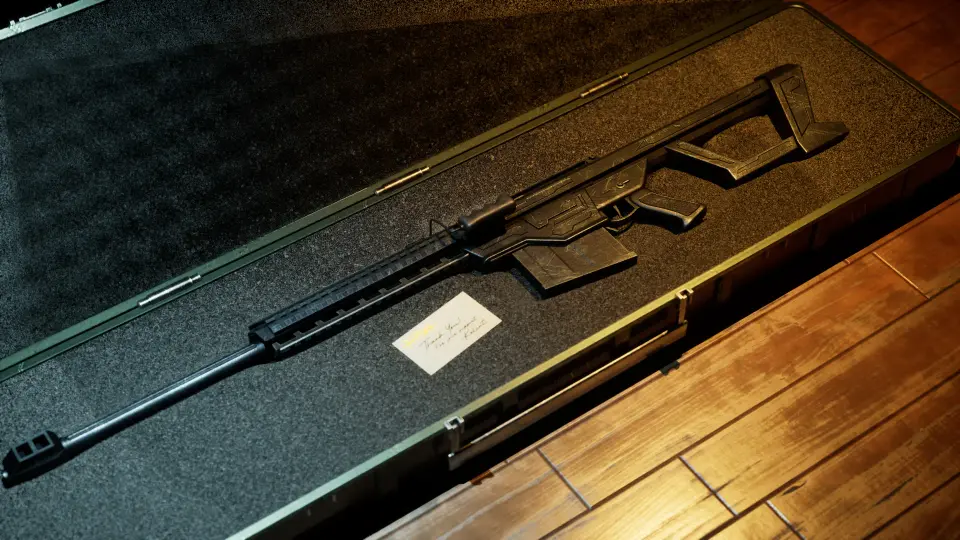
Because the asset is defined specifically as a sniper rifle, its skeletal mesh is scaled and proportioned to match the visual language of long-range tactical engagements. The length of the barrel, the positioning of the stock, and the overall silhouette dictate how the weapon will behave on screen. In a first-person perspective, the skeletal mesh occupies a significant portion of the player’s view, meaning the underlying rig must be robust enough to handle precise, up-close movements without visual clipping. By starting with a fully configured skeletal rig, developers bypass the initial setup phase of defining bone weights and hierarchies, moving immediately into the animation and logic implementation phases.
Tailored Carry Case and Custom Foam Insets
Beyond the firearm itself, the resource includes a dedicated gun carry case, which expands how the weapon can be presented within a game environment. The carry case is designed with tailored box sizes, ensuring that the external dimensions physically correspond to the scale of the sniper rifle housed inside. This tailored approach prevents the visual disconnect of a large weapon clipping through a generic, undersized prop box. Inside the case, the presentation is further refined through the use of custom foam insets. These foam cutouts are modeled to perfectly cradle the skeletal mesh of the gun. Furthermore, the foam insets are designed to account for attachments, providing dedicated nesting spaces for modular components if they are included in the developer's specific loadout.
The inclusion of tailored foam insets offers significant opportunities for environmental storytelling and user interface design. Rather than spawning a high-powered sniper rifle directly onto the floor of a level or having it float as a generic pickup icon, level designers can place the fully packed carry case onto a table in a safehouse or within a tactical armory. When the weapon is displayed securely within its custom foam cutouts, it communicates a sense of realism and care, framing the firearm as a specialized piece of military or tactical hardware. This setup is highly effective for pre-mission staging areas, in-game weapon customization screens, or cinematic sequences where a character unveils their equipment.
Interactive Carry Case Blueprint
To support these dynamic presentation scenarios, the carry case is not provided merely as a static mesh. The package includes a specific Carry Case Blueprint that dictates the mechanical behavior of the prop. This Blueprint is pre-configured to allow for easy opening and closing of the case lid. By packaging this logic directly into a Blueprint, the developer is provided with an interactive asset right out of the box. The Blueprint can be easily tied to player proximity sensors, direct input commands, or cinematic timeline triggers.
Implementing the Carry Case Blueprint saves level designers and technical artists from the repetitive task of manually rigging case hinges, calculating rotation angles for the lid, and scripting the opening timelines from scratch. A developer can simply drag the Blueprint into the scene, define the interaction method, and allow the pre-built logic to handle the smooth transition between the closed and open states. Whether the case is used as a secure loot container in a survival game or as a mission-critical objective in a tactical shooter, the easy opening and closing mechanism ensures the prop behaves reliably during gameplay.
FPS Kit Integration and the Import Process
On a technical integration level, the BR-50 is explicitly structured to be FPSK Ready. The FPS Kit (FPSK) is a standardized framework used by developers to handle shooter mechanics, and integrating custom weapon models into such a kit requires specific formatting. The asset has been configured so that the FPS Kit import process is made to be as seamless and easy as possible. This means the skeletal mesh, its bone orientations, and its scaling are already aligned with the structural expectations of the FPSK system, removing the trial-and-error friction typically associated with migrating independent assets into complex gameplay templates.
To further support this seamless integration, the package includes an Image Guide directly within the FPSK files. This visual documentation walks developers through the exact steps required to implement the weapon and its carry case into the kit. By following the Image Guide, users can ensure that the skeletal mesh binds correctly to the FPSK logic on the first attempt. For developers seeking additional support or community interaction regarding the asset, a Discord server is available. Accessing the main channels within the Discord requires users to go through a standard verification process, ensuring a structured environment for technical discussion, video showcases, and implementation troubleshooting.
 Weapons & Combat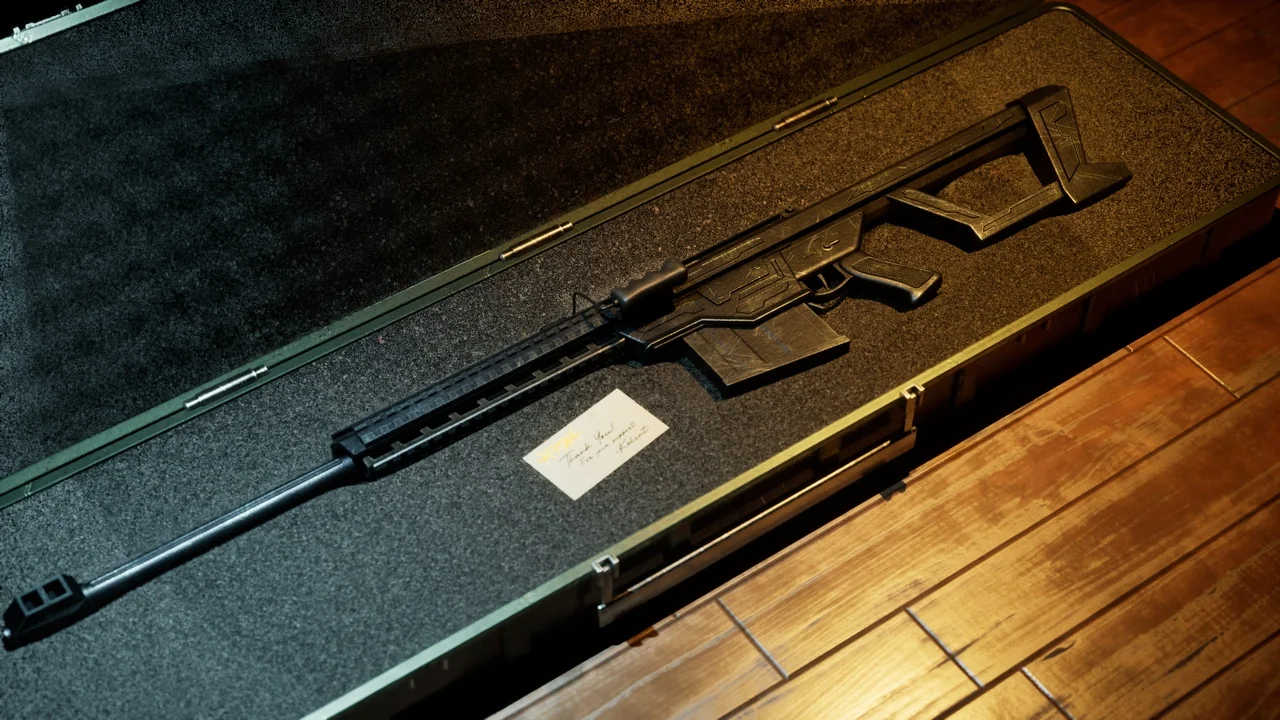
 Weapons & Combat
 Weapons & Combat
 Weapons & Combat