"4481da9c895ef786"{"id":"1000294","slug":"fps-weapon-ak47-modular-customizable","title":"FPS Weapon AK47 (Modular, Customizable)","category":"Weapons \u0026 Combat","engine":"4.26+,5.0+","assetVersion":"","engineVersion":"Engine Version: 4.26+,5.0+","tag":"Weapons \u0026 Combat","accent":"blue","visual":"mech","summary":"A high-fidelity, game-ready AK47 mesh featuring a Blueprint customization system, modular attachments, UI elements, and performance-scaling capabilities.","platform":"Unreal Engine","publishedAt":"2026-07-03T17:43:23.817Z","updatedAt":"2026-07-03T17:46:34.318Z","sourceNotes":[],"fileContents":[],"compatibility":["Unreal Engine","Engine Version: 4.26+,5.0+"],"featuredImage":{"alt":"FPS Weapon AK47 (Modular, Customizable)","src":"/wp-content/uploads/published/2026/07/f99d88c234c4-f98c833f-e34a-420a-9054-6283dd1cb7c5-22af1cba83.webp"},"hasDownloadLink":true,"downloads":2,"terms":[{"taxonomy":"category","slug":"weapons-and-combat","name":"Weapons \u0026 Combat"}],"galleryImages":[{"src":"/wp-content/uploads/published/2026/07/0a6db3c29039-69347d6f-ca9d-43a5-a276-ae331c3d7ea4-38fdeb1c85.webp","alt":"FPS Weapon AK47 (Modular, Customizable)"},{"src":"/wp-content/uploads/published/2026/07/3aea1133fe51-aeaa3707-0c06-4386-a35f-51dbfc93e236-d150efe603.webp","alt":"FPS Weapon AK47 (Modular, Customizable)"},{"src":"/wp-content/uploads/published/2026/07/195ce7f6826e-ddd8ff9a-c1bf-4b2e-b3bf-b60a3895da39-463db87682.webp","alt":"FPS Weapon AK47 (Modular, Customizable)"},{"src":"/wp-content/uploads/published/2026/07/9a557260fe6c-71d776a2-a550-42d8-8d27-17a0d3979a38-5a84d124ff.webp","alt":"FPS Weapon AK47 (Modular, Customizable)"}],"accessPanel":{"kind":"resource","title":"Download this resource","eyebrow":"Free Download","message":"Log in or create a free account to start your download.","fileName":"Content.7z","safetyNote":"Resources are manually reviewed before listing to improve quality and reduce obvious risks.","actionLabel":"Download Free","resourceType":"Resource archive"},"contentHtml":"\u003ch2\u003eHigh-Fidelity Geometry for First-Person Camera Proximity\u003c/h2\u003e\n\u003cp\u003eIn first-person shooters, the primary weapon occupies a significant portion of the player's screen, sitting just inches away from the virtual camera. This extreme proximity demands a high level of structural detail and visual fidelity to maintain immersion. The FPS Weapon AK47 is designed specifically to meet these rendering requirements, functioning as a game-ready mesh built to withstand up-close scrutiny during gameplay.\u003c/p\u003e\n\u003cp\u003eTo achieve this, the asset's polycount and texture budget are aligned with the standards seen in modern AAA titles, similar to the visual density found in franchises like Call of Duty. Every component of the rifle, from the receiver and dust cover to the barrel and iron sights, is modeled to reflect realistic proportions and mechanical depth. The high-resolution texture allocation ensures that surface details respond accurately to in-game lighting, capturing the realistic wear, material contrast, and structural nuances expected of a modern tactical firearm asset.\u003c/p\u003e\n\u003cp\u003eBecause the weapon is built to these AAA specifications, environmental lighting casts accurate shadows across the intricate grooves and mechanical recesses of the mesh. This level of detail is crucial for first-person idle animations, inspection sequences, and aiming down sights, where the player's focus is entirely concentrated on the weapon's surface.\u003c/p\u003e\n\u003ch2\u003eBlueprint Logic for Swappable Attachments\u003c/h2\u003e\n\u003cp\u003eModern weapon systems in games rarely rely on static, single-piece meshes. Instead, they require dynamic loadouts that can change based on player choices or progression. This AK47 embraces that flexibility through its entirely modular construction. Rather than functioning as a single fused object, the weapon is built in interchangeable pieces, allowing developers to manipulate its silhouette and functionality on the fly.\u003c/p\u003e\n\u003cp\u003eTo support this modularity, the package includes a dedicated Blueprint Weapon Customization System. This visual scripting logic handles the complex backend work of detaching and reattaching different components. Developers can utilize this system to swap out different attachments, completely altering the loadout of the base AK47. Whether changing out a standard magazine for an extended variant, swapping optics, or adding different grips, the Blueprint system provides the foundational framework needed to manage these modular transitions seamlessly within the game engine.\u003c/p\u003e\n\u003cp\u003eThis Blueprint setup significantly accelerates the prototyping phase for inventory and loadout mechanics. Instead of writing custom logic from scratch to handle socket attachments and mesh visibility, technical artists and developers can leverage the included system to immediately begin testing different weapon configurations in their project's environment.\u003c/p\u003e\n\u003ch2\u003eUser Interface for Weapon Customization\u003c/h2\u003e\n\u003cp\u003eA modular weapon system is only effective if players have a way to interact with it. Bridging the gap between the backend Blueprint logic and the front-end player experience, the asset includes a built-in User Interface specifically designed to display customization options. This UI framework allows developers to visualize how the attachment swapping mechanics will look to the end-user.\u003c/p\u003e\n\u003cp\u003eHaving a UI included alongside the mesh and Blueprints provides a cohesive template for building out gunsmith menus or pre-match loadout screens. As developers swap attachments using the UI, they can immediately see the results reflected on the 3D model. This integrated approach ensures that the visual changes to the AK47 and the interface tracking those changes remain perfectly synchronized, offering a solid starting point for a fully realized weapon customization menu.\u003c/p\u003e\n\u003ch2\u003eTexture Scaling and Camera Perspective Optimization\u003c/h2\u003e\n\u003cp\u003eWhile the baseline texture budget is designed to support the intense scrutiny of a first-person perspective, the asset remains adaptable for projects with different camera setups. In a third-person shooter or an isometric action game, the camera pulls significantly further back from the player character. In these scenarios, rendering ultra-high-resolution textures on the weapon is an inefficient use of system memory and can negatively impact frame rates.\u003c/p\u003e\n\u003cp\u003eTo account for varying project requirements, the weapon's textures are structured so they can be easily downscaled. By reducing the texture resolution to 2K, developers can aggressively optimize performance for third-person games without sacrificing the perceived quality of the asset. From a distance, the 2K textures maintain the realistic aesthetic and material definition of the AK47, ensuring the weapon still looks authentic while freeing up crucial VRAM for other environmental assets or character details.\u003c/p\u003e\n\u003cp\u003eThis scalability makes the weapon versatile across multiple genres. A studio could theoretically use the full-resolution textures for close-up cinematic sequences or first-person segments, and dynamically swap to the downscaled 2K textures during standard third-person gameplay to maintain a smooth, optimized rendering pipeline.\u003c/p\u003e\n\u003ch2\u003eIncluded Rigging and Animation Implementation Notes\u003c/h2\u003e\n\u003cp\u003eTo prepare the AK47 for movement and interaction, a basic rig for the weapon is included in the package. This skeletal hierarchy provides the necessary bones and joints required to manipulate the moving parts of the firearm. Because an AK47 relies on mechanical actions to function, this rig allows animators to independently control elements like the charging handle, the trigger, and the magazine release.\u003c/p\u003e\n\u003cp\u003eBy providing a rigged mesh, the asset bypasses the tedious process of assigning vertex weights and setting up pivot points for mechanical components. Technical animators can immediately import the weapon and begin authoring custom sequences. The rig supports all standard weapon actions, from the sharp pullback of the bolt during a reload cycle to the subtle vibration of the barrel during automatic fire.\u003c/p\u003e\n\u003cp\u003eIt is important to note that while the rig is present, pre-made animations and sound effects are intentionally not included. This blank-slate approach is often preferred by development teams, as it prevents conflicts with existing audio libraries or established animation styles. Developers are free to implement their own custom sound design—such as specific gunshot transients or mechanical Foley—and author animations that perfectly match the exact proportions and rigging of their specific player character. The provided structural framework ensures that when those custom animations and sounds are applied, the AK47 will behave and articulate exactly as a realistic modular weapon should.\u003c/p\u003e\n\n\u003ch2\u003eMore From The Same Workflow\u003c/h2\u003e\n\u003cul\u003e\n\u003cli\u003e\u003ca href=\"https://3dcghub.com/ww2-germany-weapons/\" title=\"WW2 Germany Weapons\"\u003eWW2 Germany Weapons\u003c/a\u003e\u003c/li\u003e\n\u003cli\u003e\u003ca href=\"https://3dcghub.com/br-50-fpsk-ready/\" title=\"BR-50 (FPSK Ready)\"\u003eBR-50 (FPSK Ready)\u003c/a\u003e\u003c/li\u003e\n\u003cli\u003e\u003ca href=\"https://3dcghub.com/c4-bomb-with-fps-animations/\" title=\"C4 Bomb With FPS Animations\"\u003eC4 Bomb With FPS Animations\u003c/a\u003e\u003c/li\u003e\n\u003cli\u003e\u003ca href=\"https://3dcghub.com/modular-weapons-shotgun-pack-props/\" title=\"Modular Weapons - Shotgun Pack Props\"\u003eModular Weapons - Shotgun Pack Props\u003c/a\u003e\u003c/li\u003e\n\u003cli\u003e\u003ca href=\"https://3dcghub.com/ultimate-fps-animations-pack/\" title=\"Ultimate FPS Animations Pack\"\u003eUltimate FPS Animations Pack\u003c/a\u003e\u003c/li\u003e\n\u003c/ul\u003e","contentTextLength":6797,"navigation":{"current":1112,"total":3269,"previous":{"id":"1000293","slug":"forest-tools-ultimate-scattering-system","title":"Forest Tools - Ultimate Scattering System","category":"Procedural Systems","platform":"Unreal Engine","updatedAt":"2026-07-03T17:46:38.058Z"},"next":{"id":"1000292","slug":"flexpath-smooth-navigation","title":"FlexPath – Smooth Navigation","category":"Gameplay Features","platform":"Unreal Engine","updatedAt":"2026-07-03T17:29:22.212Z"}},"relatedResources":[{"id":"1000333","slug":"sci-fi-arsenal-vol-3-1","title":"Sci-fi Arsenal Vol 3.1","category":"Weapons \u0026 Combat","engine":"4.27,5.0+","assetVersion":"","engineVersion":"Engine Version: 4.27,5.0+","tag":"Weapons \u0026 Combat","accent":"blue","visual":"mech","summary":"A high-quality collection of sci-fi weapons for next-gen shooters in Unreal Engine, featuring custom blueprints, Control Rigs, and customizable materials.","platform":"Unreal Engine","publishedAt":"2026-07-05T07:27:08.923Z","updatedAt":"2026-07-05T07:27:08.923Z","sourceNotes":[],"fileContents":[],"compatibility":["Unreal Engine","Engine Version: 4.27,5.0+"],"featuredImage":{"alt":"Sci-fi Arsenal Vol 3.1","src":"/wp-content/uploads/published/2026/07/55f35fc469c7-e976b5d6-4493-484b-8d86-8e8c45e987e8-07f31ee841.webp"},"hasDownloadLink":true,"downloads":0},{"id":"1000286","slug":"br-50-fpsk-ready","title":"BR-50 (FPSK Ready)","category":"Weapons \u0026 Combat","engine":"4.26+,5.0+","assetVersion":"","engineVersion":"Engine Version: 4.26+,5.0+","tag":"Weapons \u0026 Combat","accent":"blue","visual":"mech","summary":"A skeletal mesh sniper rifle packaged with an interactive, tailored carry case. Built for seamless integration into the FPS Kit with pre-configured Blueprints.","platform":"Unreal Engine","publishedAt":"2026-07-03T17:04:35.254Z","updatedAt":"2026-07-03T17:04:35.254Z","sourceNotes":[],"fileContents":[],"compatibility":["Unreal Engine","Engine Version: 4.26+,5.0+"],"featuredImage":{"alt":"BR-50 (FPSK Ready)","src":"/wp-content/uploads/published/2026/07/685beddadcc1-0fed6734-8377-4b2b-9fb5-cbf415c4aea0-9f8a69d65f.webp"},"hasDownloadLink":true,"downloads":0},{"id":"5506","slug":"ww2-germany-weapons","title":"WW2 Germany Weapons","category":"Weapons \u0026 Combat","engine":"4.26+,5.0+","assetVersion":"Engine version: 4.26+,5.0+","engineVersion":"4.26","tag":"Weapons \u0026 Combat","accent":"blue","visual":"city","summary":"Enhance your historical shooter with this realistic WW2 German weapon pack. Featuring 5 animated guns with high-quality PBR textures for game development.","platform":"Unreal Engine","publishedAt":"2026-02-15T15:35:54.000Z","updatedAt":"2026-04-19T15:56:56.000Z","sourceNotes":[],"fileContents":[],"compatibility":["Unreal Engine","Engine version: 4.26+,5.0+"],"featuredImage":{"alt":"WW2 Germany Weapons","src":"https://3dcghub.com/wp-content/uploads/2026/02/eb836f48-9462-4f7c-9a0c-8938316f45cd.webp"},"hasDownloadLink":true,"downloads":2}]}
Weapons & Combat
FPS Weapon AK47 (Modular, Customizable)
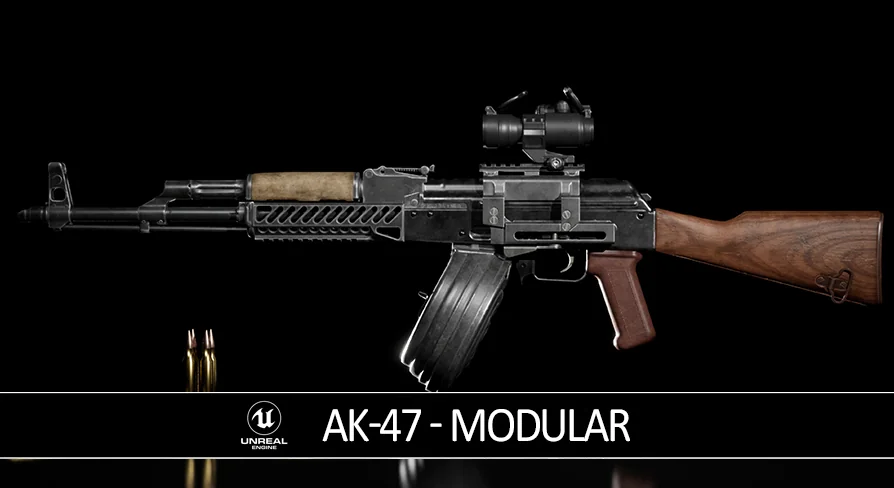
A high-fidelity, game-ready AK47 mesh featuring a Blueprint customization system, modular attachments, UI elements, and performance-scaling capabilities.
High-Fidelity Geometry for First-Person Camera Proximity
In first-person shooters, the primary weapon occupies a significant portion of the player's screen, sitting just inches away from the virtual camera. This extreme proximity demands a high level of structural detail and visual fidelity to maintain immersion. The FPS Weapon AK47 is designed specifically to meet these rendering requirements, functioning as a game-ready mesh built to withstand up-close scrutiny during gameplay.
To achieve this, the asset's polycount and texture budget are aligned with the standards seen in modern AAA titles, similar to the visual density found in franchises like Call of Duty. Every component of the rifle, from the receiver and dust cover to the barrel and iron sights, is modeled to reflect realistic proportions and mechanical depth. The high-resolution texture allocation ensures that surface details respond accurately to in-game lighting, capturing the realistic wear, material contrast, and structural nuances expected of a modern tactical firearm asset.
Because the weapon is built to these AAA specifications, environmental lighting casts accurate shadows across the intricate grooves and mechanical recesses of the mesh. This level of detail is crucial for first-person idle animations, inspection sequences, and aiming down sights, where the player's focus is entirely concentrated on the weapon's surface.
Blueprint Logic for Swappable Attachments
Modern weapon systems in games rarely rely on static, single-piece meshes. Instead, they require dynamic loadouts that can change based on player choices or progression. This AK47 embraces that flexibility through its entirely modular construction. Rather than functioning as a single fused object, the weapon is built in interchangeable pieces, allowing developers to manipulate its silhouette and functionality on the fly.
To support this modularity, the package includes a dedicated Blueprint Weapon Customization System. This visual scripting logic handles the complex backend work of detaching and reattaching different components. Developers can utilize this system to swap out different attachments, completely altering the loadout of the base AK47. Whether changing out a standard magazine for an extended variant, swapping optics, or adding different grips, the Blueprint system provides the foundational framework needed to manage these modular transitions seamlessly within the game engine.
This Blueprint setup significantly accelerates the prototyping phase for inventory and loadout mechanics. Instead of writing custom logic from scratch to handle socket attachments and mesh visibility, technical artists and developers can leverage the included system to immediately begin testing different weapon configurations in their project's environment.
User Interface for Weapon Customization
A modular weapon system is only effective if players have a way to interact with it. Bridging the gap between the backend Blueprint logic and the front-end player experience, the asset includes a built-in User Interface specifically designed to display customization options. This UI framework allows developers to visualize how the attachment swapping mechanics will look to the end-user.
Having a UI included alongside the mesh and Blueprints provides a cohesive template for building out gunsmith menus or pre-match loadout screens. As developers swap attachments using the UI, they can immediately see the results reflected on the 3D model. This integrated approach ensures that the visual changes to the AK47 and the interface tracking those changes remain perfectly synchronized, offering a solid starting point for a fully realized weapon customization menu.
Texture Scaling and Camera Perspective Optimization
While the baseline texture budget is designed to support the intense scrutiny of a first-person perspective, the asset remains adaptable for projects with different camera setups. In a third-person shooter or an isometric action game, the camera pulls significantly further back from the player character. In these scenarios, rendering ultra-high-resolution textures on the weapon is an inefficient use of system memory and can negatively impact frame rates.
To account for varying project requirements, the weapon's textures are structured so they can be easily downscaled. By reducing the texture resolution to 2K, developers can aggressively optimize performance for third-person games without sacrificing the perceived quality of the asset. From a distance, the 2K textures maintain the realistic aesthetic and material definition of the AK47, ensuring the weapon still looks authentic while freeing up crucial VRAM for other environmental assets or character details.
This scalability makes the weapon versatile across multiple genres. A studio could theoretically use the full-resolution textures for close-up cinematic sequences or first-person segments, and dynamically swap to the downscaled 2K textures during standard third-person gameplay to maintain a smooth, optimized rendering pipeline.
Included Rigging and Animation Implementation Notes
To prepare the AK47 for movement and interaction, a basic rig for the weapon is included in the package. This skeletal hierarchy provides the necessary bones and joints required to manipulate the moving parts of the firearm. Because an AK47 relies on mechanical actions to function, this rig allows animators to independently control elements like the charging handle, the trigger, and the magazine release.
By providing a rigged mesh, the asset bypasses the tedious process of assigning vertex weights and setting up pivot points for mechanical components. Technical animators can immediately import the weapon and begin authoring custom sequences. The rig supports all standard weapon actions, from the sharp pullback of the bolt during a reload cycle to the subtle vibration of the barrel during automatic fire.
It is important to note that while the rig is present, pre-made animations and sound effects are intentionally not included. This blank-slate approach is often preferred by development teams, as it prevents conflicts with existing audio libraries or established animation styles. Developers are free to implement their own custom sound design—such as specific gunshot transients or mechanical Foley—and author animations that perfectly match the exact proportions and rigging of their specific player character. The provided structural framework ensures that when those custom animations and sounds are applied, the AK47 will behave and articulate exactly as a realistic modular weapon should.
 Weapons & Combat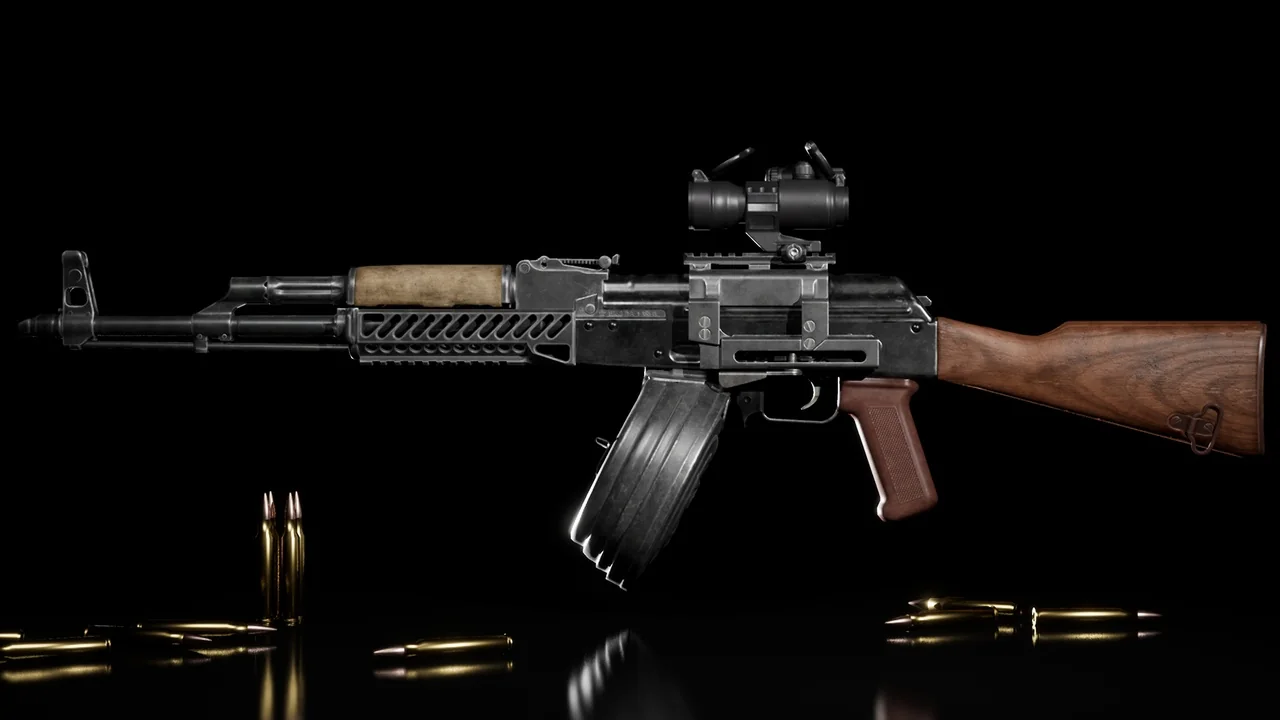
 Weapons & Combat
 Weapons & Combat
 Weapons & Combat