"7ad89cffa44984cf"{"id":"1002509","slug":"bone-monster-3","title":"Bone Monster 3","category":"Characters \u0026 Creatures","engine":"4.18+,5.0+","assetVersion":"","engineVersion":"Engine Version: 4.18+,5.0+","tag":"Characters","accent":"blue","visual":"character","summary":"Detailed breakdown of the Bone Monster 3 character model, featuring Epic skeleton rigging, 3 color schemes, adjustable emission, and full mesh polycounts.","platform":"Unreal Engine","indexPolicy":"index","publishedAt":"2026-11-13T08:43:09.387Z","updatedAt":"2026-11-13T08:43:09.387Z","sourceNotes":[],"fileContents":[],"compatibility":["Unreal Engine","Engine Version: 4.18+,5.0+"],"featuredImage":{"alt":"Bone Monster 3","src":"/wp-content/uploads/published/2026/11/3c184f7a7c4f-3fded370-29bd-4844-b226-2b6a9d84eae7-19d6dfd598.webp"},"hasDownloadLink":true,"downloads":0,"terms":[{"taxonomy":"category","slug":"characters-and-creatures","name":"Characters \u0026 Creatures"}],"galleryImages":[{"src":"/wp-content/uploads/published/2026/11/686969c4ed40-dddf857f-879b-4b75-95e7-78101791e17b-cc211afa3e.webp","alt":"Bone Monster 3"},{"src":"/wp-content/uploads/published/2026/11/2b5c0790f1d8-fac96a1a-5ffc-406f-9e18-eb1a19316f2e-740508263c.webp","alt":"Bone Monster 3"},{"src":"/wp-content/uploads/published/2026/11/6a6401ceb4da-879a4cfe-cdca-4925-8bb6-5b488d2911e8-0b3476c544.webp","alt":"Bone Monster 3"},{"src":"/wp-content/uploads/published/2026/11/f4b090239897-cb42206a-233a-4b0a-a692-8fa09cf34cf4-ff034226e1.webp","alt":"Bone Monster 3"},{"src":"/wp-content/uploads/published/2026/11/af621236d850-57a5f48b-0d89-4197-8f1c-d4e51cc0f477-80994c9166.webp","alt":"Bone Monster 3"},{"src":"/wp-content/uploads/published/2026/11/2e570b2df641-b87eaec2-5531-422b-8497-b5a4a0047619-6b14fe5c6a.webp","alt":"Bone Monster 3"},{"src":"/wp-content/uploads/published/2026/11/63e9b079e2fe-2d63db88-0f9d-484c-871e-f4c9054cb702-e10296456a.webp","alt":"Bone Monster 3"},{"src":"/wp-content/uploads/published/2026/11/8f37006ccd75-ee5aea25-d93a-46bf-bdc5-51f0c79db1e7-8910b7b841.webp","alt":"Bone Monster 3"},{"src":"/wp-content/uploads/published/2026/11/65b43c7d9cbc-fccb9272-d91a-4c76-8f5d-50e6faca9cf3-8aa35aa7c8.webp","alt":"Bone Monster 3"},{"src":"/wp-content/uploads/published/2026/11/029226feef65-103c1bd0-9141-4fcc-8130-16a1acb6876b-b8fde874bd.webp","alt":"Bone Monster 3"}],"accessPanel":{"kind":"resource","title":"Get this resource","eyebrow":"Free resource","message":"Download this resource in your browser.","fileName":"Content.7z","safetyNote":"Resources are manually reviewed before listing to improve quality and reduce obvious risks.","actionLabel":"Get this resource","resourceType":"Resource archive","versions":[]},"contentHtml":"\u003ch2\u003eDark Fantasy Encounters and Level Contexts\u003c/h2\u003e\n\u003cp\u003eDungeon corridors, ruined crypts, and desolate medieval battlefields require enemy combatants that immediately communicate danger and ancient malice. Bone Monster 3 steps directly into these spaces as a hybrid creature designed to function as an undead infantry unit, demonic guardian, or brutal fantasy warrior. Its visual framing bridges the gap between reanimated skeletal horror and an organized frontline soldier, carrying the silhouette of a beast combined with martial armaments.\u003c/p\u003e\n\u003cp\u003ePlacing such a creature within dark environments allows level designers to set specific combat paces. Because the character is realized as a monstrous soldier rather than a mindless feral beast, it serves effectively in encounters where defensive positioning, weapon swings, and coordinated skirmishes are required. The presence of explicit martial gear alongside a demonic skeletal anatomy makes the character suitable for stronghold ruins, subterranean ritual sites, cursed catacombs, and gothic fortress gates.\u003c/p\u003e \u003ch2\u003eBone Monster Geometry and Mesh Budgets\u003c/h2\u003e\n\u003cp\u003eBalancing geometric detail against the performance limits of real-time rendering demands precise polygon allocation across every active component. Bone Monster 3 is constructed as a low-poly character asset divided logically between the creature itself and its external offensive and defensive gear. This separation guarantees that the core character mesh and its handheld equipment manage their computational footprints predictably during dense gameplay scenes.\u003c/p\u003e\n\u003cp\u003eThe primary character base mesh carries a density of 21,372 vertices and 21,531 faces. This topology concentrates surface definition along the anatomical contours, skeletal ridges, joint articulations, and organic structures that define the monster's silhouette. Having more than twenty-one thousand faces allocated directly to the base body ensures that deformation points around the limbs, torso, and head remain smooth during heavy combat animations without suffering from extreme silhouette degradation or geometric collapsing.\u003c/p\u003e\n\u003cp\u003eEquipment assets attached to the creature follow their own discrete budgets:\u003c/p\u003e\n\u003cul\u003e\n\u003cli\u003e\u003cstrong\u003eShield:\u003c/strong\u003e Composed of 4,502 vertices and 4,562 faces, providing defined curvature, rim structures, and surface reinforcement suited for high-impact blocking animations.\u003c/li\u003e\n\u003cli\u003e\u003cstrong\u003eSword:\u003c/strong\u003e Modeled with 1,415 vertices and 1,438 faces, balancing blade edge clarity and hilt detail with lightweight geometric overhead.\u003c/li\u003e\n\u003c/ul\u003e\n\u003cp\u003eWhen fully equipped with both the sword and shield, the combined model configuration reaches 27,289 vertices and 27,531 faces. This total keeps the full encounter setup within standard limits for modern action titles, action role-playing games, and dungeon crawlers where multiple enemy combatants might be rendered simultaneously on screen.\u003c/p\u003e \u003ch2\u003eEpic Skeleton Rigging and Animation Blueprint Integration\u003c/h2\u003e\n\u003cp\u003eUnderneath the surface mesh, the character is structured on an Epic skeleton rig. Utilizing this standard skeletal hierarchy streamlines the technical overhead required to get the creature walking, attacking, and reacting inside an interactive project. Because the bone hierarchy matches the standardized Epic convention, retargeting existing animation libraries becomes a direct technical process rather than requiring custom joint remapping from scratch.\u003c/p\u003e\n\u003cp\u003eThe rigged structure allows the asset to link cleanly into animation blueprints and gameplay scripts. Developers configuring state machines can drive locomotion blendspaces, dynamic hit reactions, stagger sequences, and multi-directional melee strikes using established logic trees. Whether controlled by an artificial intelligence script that commands shield blocking and sword sweeps or embedded into cinematic cutscenes, the skeleton preserves anatomical proportions across complex movement transitions.\u003c/p\u003e\n\u003cp\u003eDecoupling the sword and shield from the base mesh allows technical artists to socket weapons directly to the hand bones. This arrangement gives game programmers the flexibility to script weapon drops, dismemberment sequences, off-hand blocking states, or equipment swaps without modifying the underlying skeletal mesh of the creature.\u003c/p\u003e \u003ch2\u003eSurface Materials and Bone Monster Color Profiles\u003c/h2\u003e\n\u003cp\u003eMaterial presentation plays a massive role in distinguishing enemy tiers and adapting a single character model to varied environmental lighting conditions. Bone Monster 3 utilizes physically based rendering materials, ensuring that surface reflections, roughness values, and metallic properties respond accurately under dynamic point lights, torchlight, or directional sun angles.\u003c/p\u003e\n\u003cp\u003eTo help distinguish between creature ranks, elemental affiliations, or regional variants, the model provides three distinct color schemes. These alternate color setups allow technical directors to deploy the asset across different areas of a campaign without immediate visual repetition. One variant might populate cold subterranean tombs, while an alternate palette can represent corrupted elite variants encountered in deeper, ritual-bound areas of a game map.\u003c/p\u003e\n\u003cp\u003eThe asset also features an adjustable emission material. By exposing the emission parameters, developers can fine-tune the intensity, falloff, and color tint of glowing elements across the model. In low-visibility gameplay conditions such as unlit catacombs or night encounters, dialling in emission creates striking focal points. Glowing eye sockets, subterranean magical accents, or pulsing internal energy channels can be raised to heighten horror or adjusted downward to fit a grittier, purely physical aesthetic.\u003c/p\u003e \u003ch2\u003eCombat Equipment Assets and Production Compatibility\u003c/h2\u003e\n\u003cp\u003eIntegrating third-party characters into an active pipeline requires knowing precisely what comes packaged in the asset and what belongs to surrounding production staging. The package provides the base character, the 4,562-face shield, and the 1,438-face sword. Other scene dressings or secondary props that might appear in promotional demonstrations—specifically shovels and modular environmental scenes such as external medieval game environment packs—are excluded from the package.\u003c/p\u003e\n\u003cp\u003eThe asset lists compatibility with the Basilisk environment, offering a verified baseline for technical integration within targeted production systems. Because all components adhere to standard low-poly PBR workflows and standard skeletal hierarchies, implementation centers on importing the geometry, assigning the desired color scheme, tuning the emission brightness, and hooking the Epic skeleton into existing animation graphs.\u003c/p\u003e\n\u003cp\u003eFor development teams assembling dark fantasy titles, horror survival games, or medieval combat scenarios, Bone Monster 3 functions as a dependable, pre-configured combatant. Its granular geometric separation between body and equipment, combined with emission control and established skeletal conventions, provides a straightforward path from import to active in-engine gameplay.\u003c/p\u003e\n\n\u003ch2\u003eRelated Resources Worth Checking\u003c/h2\u003e\n\u003cul\u003e\n\u003cli\u003e\u003ca href=\"https://3dcghub.com/sci-fi-quick-sand-worm/\" rel=\"noopener noreferrer\"\u003eSCI FI: QUICK SAND WORM\u003c/a\u003e\u003c/li\u003e\n\u003cli\u003e\u003ca href=\"https://3dcghub.com/monster-beetle-pack/\" rel=\"noopener noreferrer\"\u003eMonster_Beetle_Pack\u003c/a\u003e\u003c/li\u003e\n\u003cli\u003e\u003ca href=\"https://3dcghub.com/luminous-monster/\" rel=\"noopener noreferrer\"\u003eLuminous Monster\u003c/a\u003e\u003c/li\u003e\n\u003cli\u003e\u003ca href=\"https://3dcghub.com/flying-monster/\" rel=\"noopener noreferrer\"\u003eFlying Monster\u003c/a\u003e\u003c/li\u003e\n\u003cli\u003e\u003ca href=\"https://3dcghub.com/dinosaur-megalodon-sea-monster-series-5/\" rel=\"noopener noreferrer\"\u003eDinosaur MEGALODON - Sea Monster Series 5\u003c/a\u003e\u003c/li\u003e\n\u003c/ul\u003e","contentTextLength":7067,"navigation":{"current":68,"total":4499,"previous":{"id":"1002510","slug":"bones-dragon","title":"Bones Dragon","category":"Creatures \u0026 Monsters","platform":"Unreal Engine","updatedAt":"2026-11-13T08:45:04.389Z"},"next":{"id":"1002508","slug":"black-dragon","title":"Black Dragon","category":"Characters \u0026 Creatures","platform":"Unreal Engine","updatedAt":"2026-11-13T08:22:50.098Z"}},"relatedResources":[{"id":"3360","slug":"sci-fi-quick-sand-worm","title":"SCI FI: QUICK SAND WORM","category":"Characters \u0026 Creatures","engine":"4.26+,5.0+","assetVersion":"Engine version: 4.26+,5.0+","engineVersion":"4.15","tag":"Characters","accent":"blue","visual":"character","summary":"Discover the massive 70-meter Sci-Fi Sand Worm for your next game. This high-quality 3D alien monster features 8K PBR textures and a professional 90-bone rig.","platform":"Unreal Engine","indexPolicy":"noindex","publishedAt":"2026-02-09T06:50:06.000Z","updatedAt":"2026-04-19T15:57:39.000Z","sourceNotes":[],"fileContents":[],"compatibility":["Unreal Engine","Engine version: 4.26+,5.0+"],"featuredImage":{"alt":"SCI FI: QUICK SAND WORM","src":"https://3dcghub.com/wp-content/uploads/2026/02/deefdd1a.webp"},"hasDownloadLink":true,"downloads":5},{"id":"1001612","slug":"monster-beetle-pack","title":"Monster_Beetle_Pack","category":"Characters \u0026 Creatures","engine":"4.18+,5.0+","assetVersion":"","engineVersion":"Engine Version: 4.18+,5.0+","tag":"Characters","accent":"blue","visual":"character","summary":"Examine the technical geometry, animation counts, and 4096x4096 UV mapping across all seven creatures in the Monster_Beetle_Pack collection.","platform":"Unreal Engine","indexPolicy":"index","publishedAt":"2026-10-10T16:55:05.925Z","updatedAt":"2026-10-10T16:55:05.925Z","sourceNotes":[],"fileContents":[],"compatibility":["Unreal Engine","Engine Version: 4.18+,5.0+"],"featuredImage":{"alt":"Monster_Beetle_Pack","src":"/wp-content/uploads/published/2026/10/8bafb1873962-ee385f0b-e5aa-44eb-899a-74a6c5b2b1e6-61fffc8ef4.webp"},"hasDownloadLink":true,"downloads":4},{"id":"1002551","slug":"mushroom-monster-pack-pbr","title":"Mushroom Monster Pack PBR","category":"Characters \u0026 Creatures","engine":"4.26+,5.0+","assetVersion":"","engineVersion":"Engine Version: 4.26+,5.0+","tag":"Characters","accent":"blue","visual":"character","summary":"Explore the Mushroom Monster Pack PBR, featuring rigged animations, 30 morph targets, 9 texture variants, Substance customization, and audio.","platform":"Unreal Engine","indexPolicy":"index","publishedAt":"2026-11-13T10:04:14.578Z","updatedAt":"2026-11-13T10:04:14.578Z","sourceNotes":[],"fileContents":[],"compatibility":["Unreal Engine","Engine Version: 4.26+,5.0+"],"featuredImage":{"alt":"Mushroom Monster Pack PBR","src":"/wp-content/uploads/published/2026/11/d7d8072a8c88-491e2cc5-7246-4ed0-a58e-d7c143dda8c7-91e9c83b0d.webp"},"hasDownloadLink":true,"downloads":0}]}
Characters
Bone Monster 3
Detailed breakdown of the Bone Monster 3 character model, featuring Epic skeleton rigging, 3 color schemes, adjustable emission, and full mesh polycounts.
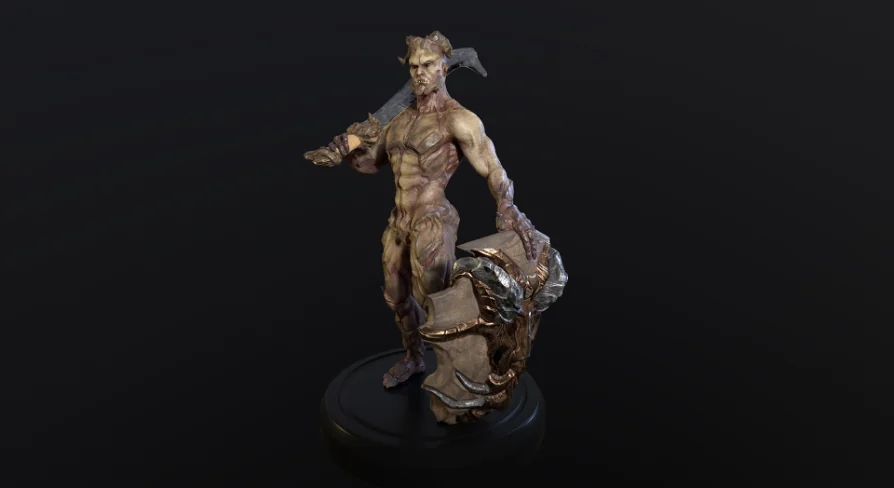
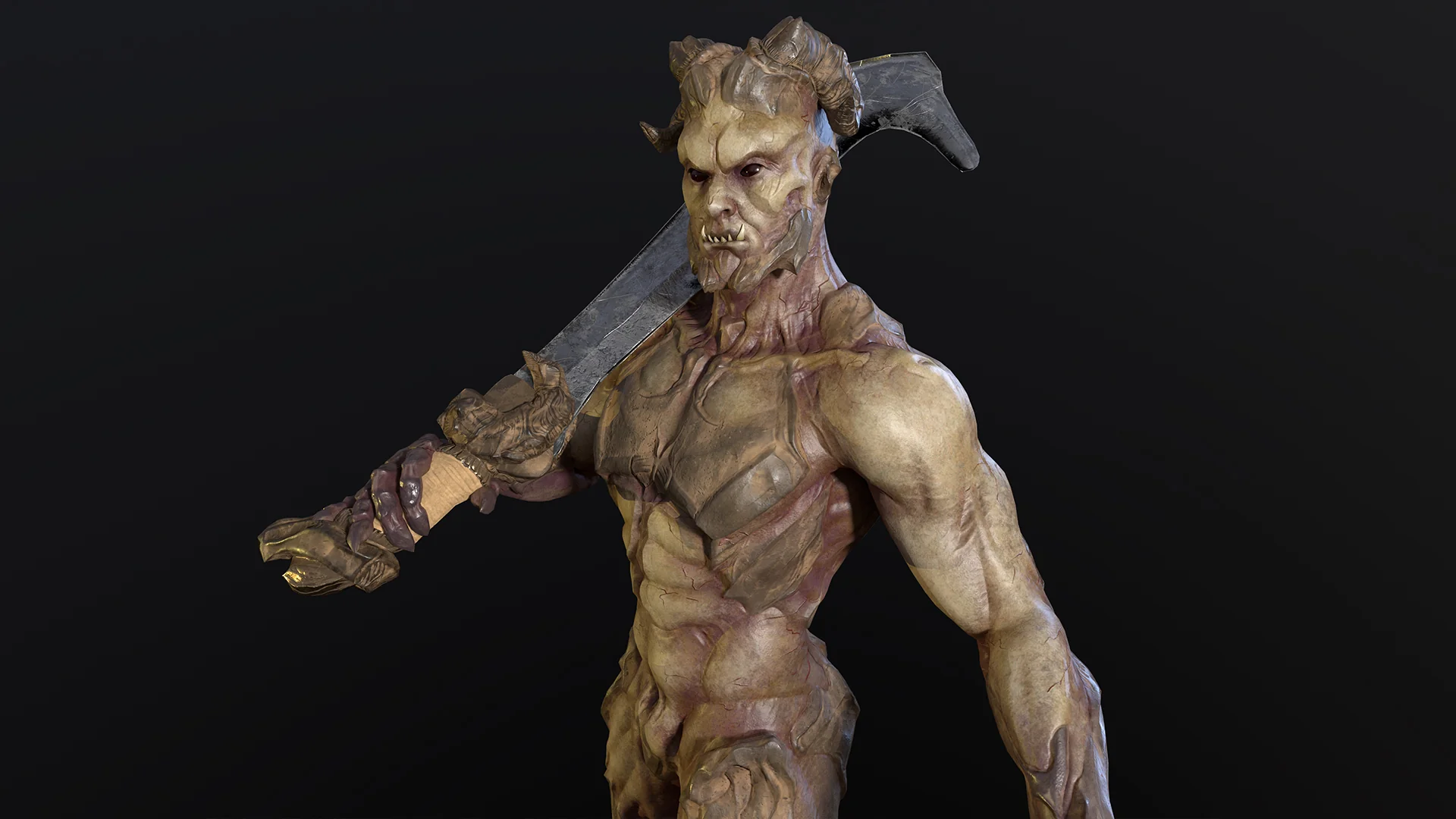
Dungeon corridors, ruined crypts, and desolate medieval battlefields require enemy combatants that immediately communicate danger and ancient malice. Bone Monster 3 steps directly into these spaces as a hybrid creature designed to function as an undead infantry unit, demonic guardian, or brutal fantasy warrior. Its visual framing bridges the gap between reanimated skeletal horror and an organized frontline soldier, carrying the silhouette of a beast combined with martial armaments.
Placing such a creature within dark environments allows level designers to set specific combat paces. Because the character is realized as a monstrous soldier rather than a mindless feral beast, it serves effectively in encounters where defensive positioning, weapon swings, and coordinated skirmishes are required. The presence of explicit martial gear alongside a demonic skeletal anatomy makes the character suitable for stronghold ruins, subterranean ritual sites, cursed catacombs, and gothic fortress gates.
Bone Monster Geometry and Mesh Budgets
Balancing geometric detail against the performance limits of real-time rendering demands precise polygon allocation across every active component. Bone Monster 3 is constructed as a low-poly character asset divided logically between the creature itself and its external offensive and defensive gear. This separation guarantees that the core character mesh and its handheld equipment manage their computational footprints predictably during dense gameplay scenes.
The primary character base mesh carries a density of 21,372 vertices and 21,531 faces. This topology concentrates surface definition along the anatomical contours, skeletal ridges, joint articulations, and organic structures that define the monster's silhouette. Having more than twenty-one thousand faces allocated directly to the base body ensures that deformation points around the limbs, torso, and head remain smooth during heavy combat animations without suffering from extreme silhouette degradation or geometric collapsing.
Equipment assets attached to the creature follow their own discrete budgets:
Shield: Composed of 4,502 vertices and 4,562 faces, providing defined curvature, rim structures, and surface reinforcement suited for high-impact blocking animations.
Sword: Modeled with 1,415 vertices and 1,438 faces, balancing blade edge clarity and hilt detail with lightweight geometric overhead.
When fully equipped with both the sword and shield, the combined model configuration reaches 27,289 vertices and 27,531 faces. This total keeps the full encounter setup within standard limits for modern action titles, action role-playing games, and dungeon crawlers where multiple enemy combatants might be rendered simultaneously on screen.
Epic Skeleton Rigging and Animation Blueprint Integration
Underneath the surface mesh, the character is structured on an Epic skeleton rig. Utilizing this standard skeletal hierarchy streamlines the technical overhead required to get the creature walking, attacking, and reacting inside an interactive project. Because the bone hierarchy matches the standardized Epic convention, retargeting existing animation libraries becomes a direct technical process rather than requiring custom joint remapping from scratch.
The rigged structure allows the asset to link cleanly into animation blueprints and gameplay scripts. Developers configuring state machines can drive locomotion blendspaces, dynamic hit reactions, stagger sequences, and multi-directional melee strikes using established logic trees. Whether controlled by an artificial intelligence script that commands shield blocking and sword sweeps or embedded into cinematic cutscenes, the skeleton preserves anatomical proportions across complex movement transitions.
Decoupling the sword and shield from the base mesh allows technical artists to socket weapons directly to the hand bones. This arrangement gives game programmers the flexibility to script weapon drops, dismemberment sequences, off-hand blocking states, or equipment swaps without modifying the underlying skeletal mesh of the creature.
Surface Materials and Bone Monster Color Profiles
Material presentation plays a massive role in distinguishing enemy tiers and adapting a single character model to varied environmental lighting conditions. Bone Monster 3 utilizes physically based rendering materials, ensuring that surface reflections, roughness values, and metallic properties respond accurately under dynamic point lights, torchlight, or directional sun angles.
To help distinguish between creature ranks, elemental affiliations, or regional variants, the model provides three distinct color schemes. These alternate color setups allow technical directors to deploy the asset across different areas of a campaign without immediate visual repetition. One variant might populate cold subterranean tombs, while an alternate palette can represent corrupted elite variants encountered in deeper, ritual-bound areas of a game map.
The asset also features an adjustable emission material. By exposing the emission parameters, developers can fine-tune the intensity, falloff, and color tint of glowing elements across the model. In low-visibility gameplay conditions such as unlit catacombs or night encounters, dialling in emission creates striking focal points. Glowing eye sockets, subterranean magical accents, or pulsing internal energy channels can be raised to heighten horror or adjusted downward to fit a grittier, purely physical aesthetic.
Combat Equipment Assets and Production Compatibility
Integrating third-party characters into an active pipeline requires knowing precisely what comes packaged in the asset and what belongs to surrounding production staging. The package provides the base character, the 4,562-face shield, and the 1,438-face sword. Other scene dressings or secondary props that might appear in promotional demonstrations—specifically shovels and modular environmental scenes such as external medieval game environment packs—are excluded from the package.
The asset lists compatibility with the Basilisk environment, offering a verified baseline for technical integration within targeted production systems. Because all components adhere to standard low-poly PBR workflows and standard skeletal hierarchies, implementation centers on importing the geometry, assigning the desired color scheme, tuning the emission brightness, and hooking the Epic skeleton into existing animation graphs.
For development teams assembling dark fantasy titles, horror survival games, or medieval combat scenarios, Bone Monster 3 functions as a dependable, pre-configured combatant. Its granular geometric separation between body and equipment, combined with emission control and established skeletal conventions, provides a straightforward path from import to active in-engine gameplay.
 Characters
 Characters
 Characters
 Characters