"031373f479d9561a"{"id":"1000245","slug":"biomass-cover","title":"Biomass Cover","category":"Dungeon","engine":"4.26+,5.0+","assetVersion":"","engineVersion":"Engine Version: 4.26+,5.0+","tag":"Dungeon","accent":"blue","visual":"mech","summary":"A modular collection of realistic biological pieces designed to build alien nests, insect hives, and disgusting biohazard surfaces for horror environments.","platform":"Unreal Engine","publishedAt":"2026-06-30T20:03:31.110Z","updatedAt":"2026-06-30T20:03:31.110Z","sourceNotes":[],"fileContents":[],"compatibility":["Unreal Engine","Engine Version: 4.26+,5.0+"],"featuredImage":{"alt":"Biomass Cover","src":"/wp-content/uploads/published/2026/06/d7d971851000-4af11d4a-a9a2-448d-a980-745190cb2d06-33f939909e.webp"},"hasDownloadLink":true,"downloads":0,"terms":[{"taxonomy":"category","slug":"dungeon","name":"Dungeon"}],"galleryImages":[{"src":"/wp-content/uploads/published/2026/06/06d273c3a545-066a4cff-9f22-4f39-b09e-2dd34a9cf1ad-c2bd1b77ad.webp","alt":"Biomass Cover"},{"src":"/wp-content/uploads/published/2026/06/080f8d1d5c50-da700fb2-8d91-43aa-a7cf-1ab05dc45db9-231aadcba7.webp","alt":"Biomass Cover"},{"src":"/wp-content/uploads/published/2026/06/40aa12a0643f-3ef45e43-38a0-49c5-bce4-b67e0110a509-0cc58e33f6.webp","alt":"Biomass Cover"},{"src":"/wp-content/uploads/published/2026/06/f4af506872c0-f84a4ed2-6c07-4b8e-919f-3d3a533ef16b-a8b74c8594.webp","alt":"Biomass Cover"},{"src":"/wp-content/uploads/published/2026/06/0e58d07420f5-29793064-be40-49da-9b16-38bd7d6283dd-0b5caa7393.webp","alt":"Biomass Cover"},{"src":"/wp-content/uploads/published/2026/06/5b89e7b462b6-dab959c4-3432-4443-befa-7bc38bb41afc-6dc528825c.webp","alt":"Biomass Cover"},{"src":"/wp-content/uploads/published/2026/06/69a49ef44dfd-0483a633-a4c6-4270-8162-c265dabb1e8f-dbc957fafe.webp","alt":"Biomass Cover"},{"src":"/wp-content/uploads/published/2026/06/961089025b3e-b8477105-ce2c-4606-bebd-60171a293614-b07bfeb5f0.webp","alt":"Biomass Cover"},{"src":"/wp-content/uploads/published/2026/06/d45572fa4d1d-fafdae7d-4f3f-4284-89df-ae794baa94fc-818541b0f4.webp","alt":"Biomass Cover"}],"accessPanel":{"kind":"resource","title":"Download this resource","eyebrow":"Free Download","message":"Log in or create a free account to start your download.","fileName":"Content.7z","safetyNote":"Resources are manually reviewed before listing to improve quality and reduce obvious risks.","actionLabel":"Download Free","resourceType":"Resource archive"},"contentHtml":"\u003ch2\u003eModular Surface Coverage\u003c/h2\u003e\n\u003cp\u003eIntegrating Biomass Cover into an environment relies on a modular workflow. Instead of using massive, pre-configured static meshes that dictate the layout of a room, level designers are provided with a lot of biomass pieces. This modularity allows developers to construct custom configurations of organic matter that conform to the specific geometry of their scenes. The setup process involves taking these individual biological components and arranging them across existing floors, walls, and ceilings. By snapping and overlapping the pieces, environment artists can build continuous trails of fleshy growth or isolated clusters of organic debris. This approach ensures that the biological infestation feels organic and unrestricted, adapting seamlessly to different architectural layouts without obvious repetition.\u003c/p\u003e\n\u003cp\u003eThe primary function of these assets is to serve as biological decor that provides surface cover. In a production pipeline, transforming a clean environment into an infested zone requires secondary layers of set dressing. The biomass pieces act as this connective tissue, covering hard surfaces to break up straight lines and rigid silhouettes. When applied over existing props, bulkheads, or terrain, the organic matter visually overtakes the environment. The modular pieces can be scaled and rotated to creep up pillars, spill out of ventilation shafts, or pool in the corners of a room. This flexible surface coverage allows level designers to control the exact density of the infestation, ranging from light biological dusting to completely impassable walls of flesh.\u003c/p\u003e\n\u003ch2\u003eConstructing Alien and Insect Nests\u003c/h2\u003e\n\u003cp\u003eThematic applications of the modular pieces lean heavily into alien and insectoid environments. Using the assortment of biological matter, developers can construct intricate nest structures that serve as the focal point of a level. Building a nest requires centralized clusters of organic mass that appear to spread outward into the surrounding area. By layering the modular components, artists can create the epicenter of an alien hive or an overgrown insect colony. The shapes are designed to evoke a living habitat, allowing the individual pieces to be combined into dense incubation chambers, spawning pools, or hive walls. When clustered tightly, the biomass forms grotesque biological barriers that completely obscure the original architecture of the space.\u003c/p\u003e\n\u003ch2\u003eRealistic Biological Horror\u003c/h2\u003e\n\u003cp\u003eThe visual identity of the collection is grounded in a realistic art style, deliberately avoiding stylized or exaggerated proportions. This commitment to realism is essential for horror environments, where grounded visuals are necessary to evoke a visceral reaction from the audience. The textures and forms of the biomass are intended to look authentically disgusting, mimicking raw, diseased, or mutated flesh. This realistic approach ensures that the biological matter appears wet, heavy, and structurally sound. When these disgusting elements are applied as decor across a scene, they elevate the horror atmosphere by making the environment feel deeply corrupted and unsafe. The stark contrast between realistic biological growth and traditional building materials draws immediate attention to the creeping hazard.\u003c/p\u003e\n\u003ch2\u003eBiohazard and Sci-Fi Environments\u003c/h2\u003e\n\u003cp\u003eWithin science fiction settings, the biomass pieces provide the physical manifestation of a biohazard outbreak. A common requirement for sci-fi level design is the ability to visually communicate that a research facility or derelict spacecraft has been compromised by an unknown biological agent. By applying the cover assets to corridors, laboratories, and containment zones, developers can clearly mark an area as a hazard. The modularity allows the infestation to appear active and aggressive, consuming high-tech machinery and wrapping around industrial pipes. The visual clash between sterile sci-fi architecture and chaotic biological growth creates a compelling environmental narrative, signaling to the player that the zone is toxic, quarantined, or overrun by alien life.\u003c/p\u003e\n\u003ch2\u003eDark Fantasy Integration\u003c/h2\u003e\n\u003cp\u003eBeyond science fiction, the biological pieces are equally applicable to dark fantasy environments. Fantasy settings frequently require corrupted lands, monster dens, or dungeons that have been overtaken by unnatural organic forces. The biomass cover can be utilized to dress these fantasy interiors, transforming a standard cavern into the pulsating lair of a massive beast. The organic shapes blend naturally into rocky terrain, acting as strange fungal growths or fleshy outcroppings that warn of nearby danger. As environmental decor, the pieces break up the visual monotony of traditional stone and wood, introducing a layer of biological corruption that fits seamlessly into horror-tinged fantasy landscapes.\u003c/p\u003e\n\u003ch2\u003eLevel Navigation and Hazard Marking\u003c/h2\u003e\n\u003cp\u003eThe placement of these biological pieces directly impacts player navigation and level flow. Because the assets represent a clear physical hazard, environment artists can use them to guide or restrict movement through a space. A dense clustering of biomass can serve as a natural roadblock, funneling characters down a specific path or blocking off inaccessible doorways. The disgusting nature of the realistic flesh acts as a visual deterrent, naturally encouraging players to avoid certain surfaces or sections of a room. By strategically placing the modular cover pieces, developers can create chokepoints, define combat arenas within a larger hive, or highlight areas where environmental damage might occur due to the biohazard.\u003c/p\u003e\n\u003ch2\u003eFinalizing the Infested Scene\u003c/h2\u003e\n\u003cp\u003eBringing an infested scene to completion requires careful attention to how the biological pieces interact with the underlying surfaces. The modular workflow allows for intricate detailing, where smaller pieces of biomass are used to blend the edges of larger fleshy mounds into the floor or walls. This meticulous layering ensures that the transition between clean architecture and biological horror feels gradual and grounded. Whether constructing a sprawling alien nest, detailing a contained biohazard leak, or dressing a fantasy monster lair, the extensive collection of biomass pieces provides the necessary building blocks. The realistic, disgusting aesthetic ensures that the final environment delivers a highly atmospheric and unsettling experience.\u003c/p\u003e\n\n\u003ch2\u003eContinue Browsing Similar Packs\u003c/h2\u003e\n\u003cul\u003e\n\u003cli\u003e\u003ca href=\"https://3dcghub.com/underground-ossuary/\" title=\"Underground Ossuary\"\u003eUnderground Ossuary\u003c/a\u003e\u003c/li\u003e\n\u003cli\u003e\u003ca href=\"https://3dcghub.com/ancient-cave-ruins-ancient-temple-ruins-ancient-valley/\" title=\"Ancient Cave Ruins (Ancient Temple Ruins, Ancient Valley )\"\u003eAncient Cave Ruins (Ancient Temple Ruins, Ancient Valley )\u003c/a\u003e\u003c/li\u003e\n\u003cli\u003e\u003ca href=\"https://3dcghub.com/modular-medieval-underground-prison-kit/\" title=\"Modular Medieval Underground Prison Kit\"\u003eModular Medieval Underground Prison Kit\u003c/a\u003e\u003c/li\u003e\n\u003cli\u003e\u003ca href=\"https://3dcghub.com/fantasy-dungeon/\" title=\"Fantasy Dungeon\"\u003eFantasy Dungeon\u003c/a\u003e\u003c/li\u003e\n\u003cli\u003e\u003ca href=\"https://3dcghub.com/sharurs-gothic-dungeon/\" title=\"Sharur\u0026#039;s Gothic Dungeon\"\u003eSharur\u0026#039;s Gothic Dungeon\u003c/a\u003e\u003c/li\u003e\n\u003c/ul\u003e","contentTextLength":6567,"navigation":{"current":1104,"total":3223,"previous":{"id":"1000246","slug":"gangs-pack-01","title":"Gangs Pack 01","category":"Characters \u0026 Creatures","platform":"Unreal Engine","updatedAt":"2026-06-30T20:16:36.753Z"},"next":{"id":"1000244","slug":"asian-animal-tiger","title":"Asian Animal - Tiger","category":"Animals","platform":"Unreal Engine","updatedAt":"2026-06-30T19:57:16.638Z"}},"relatedResources":[{"id":"1000915","slug":"dark-castle-environment","title":"Dark Castle Environment","category":"Dungeon","engine":"4.26+,5.0+","assetVersion":"","engineVersion":"Engine Version: 4.26+,5.0+","tag":"Dungeon","accent":"blue","visual":"city","summary":"A modular, extra-detailed dark castle environment for games and films, built for dynamic lighting and ray tracing, with full rebuild flexibility.","platform":"Unreal Engine","publishedAt":"2026-08-08T03:51:27.274Z","updatedAt":"2026-08-08T03:51:27.274Z","sourceNotes":[],"fileContents":[],"compatibility":["Unreal Engine","Engine Version: 4.26+,5.0+"],"featuredImage":{"alt":"Dark Castle Environment","src":"/wp-content/uploads/published/2026/08/c32c4a95081d-c90ee306-b93e-4d28-a815-a87bb6a5e7e6-54293fdf95.webp"},"hasDownloadLink":true,"downloads":1},{"id":"1000378","slug":"merlins-cave-environment-fantasy-dungeon-cave-fantasy-dungeon-cave-cave-cave","title":"Merlins Cave Environment ( Fantasy Dungeon Cave Fantasy Dungeon Cave Cave Cave )","category":"Dungeon","engine":"4.26+,5.0+","assetVersion":"","engineVersion":"Engine Version: 4.26+,5.0+","tag":"Dungeon","accent":"blue","visual":"city","summary":"A detailed breakdown of the Merlins Cave Environment, featuring 135 unique meshes, world-aligned materials, and the Ultimate Level Art Tool for modular level de","platform":"Unreal Engine","publishedAt":"2026-07-06T18:41:47.502Z","updatedAt":"2026-07-06T18:41:47.502Z","sourceNotes":[],"fileContents":[],"compatibility":["Unreal Engine","Engine Version: 4.26+,5.0+"],"featuredImage":{"alt":"Merlins Cave Environment ( Fantasy Dungeon Cave Fantasy Dungeon Cave Cave Cave )","src":"/wp-content/uploads/published/2026/07/87649763adde-a91ad985-ca50-4949-a2bd-274c7f9ed342-b848070cb4.webp"},"hasDownloadLink":true,"downloads":1},{"id":"1000111","slug":"underground-ossuary","title":"Underground Ossuary","category":"Dungeon","engine":"Engine Version: 4.26+,5.0+","assetVersion":"","engineVersion":"Engine Version: 4.26+,5.0+","tag":"Dungeon","accent":"blue","visual":"mech","summary":"A horror environment scene inspired by European catacombs and ossuaries, featuring tunnels, caves, skeletal constructs, wall materials, and select effects.","platform":"Unreal Engine","publishedAt":"2026-06-07T23:22:35.386Z","updatedAt":"2026-06-07T23:22:35.386Z","sourceNotes":[],"fileContents":[],"compatibility":["Unreal Engine","Engine Version: 4.26+,5.0+"],"featuredImage":{"alt":"Underground Ossuary","src":"/wp-content/uploads/published/2026/06/68ad3eec3bbc-6ae9b746-6c91-44e6-b534-9d37c108c42e-e29b6c2361.webp"},"hasDownloadLink":true,"downloads":2}]}
Dungeon
Biomass Cover
A modular collection of realistic biological pieces designed to build alien nests, insect hives, and disgusting biohazard surfaces for horror environments.
Category:Unreal Engine,DungeonPlatform: Unreal EngineEngine Version: 4.26+,5.0+Published: Jun 30, 2026
Dungeon
Resource overview
Modular Surface Coverage
Integrating Biomass Cover into an environment relies on a modular workflow. Instead of using massive, pre-configured static meshes that dictate the layout of a room, level designers are provided with a lot of biomass pieces. This modularity allows developers to construct custom configurations of organic matter that conform to the specific geometry of their scenes. The setup process involves taking these individual biological components and arranging them across existing floors, walls, and ceilings. By snapping and overlapping the pieces, environment artists can build continuous trails of fleshy growth or isolated clusters of organic debris. This approach ensures that the biological infestation feels organic and unrestricted, adapting seamlessly to different architectural layouts without obvious repetition.
The primary function of these assets is to serve as biological decor that provides surface cover. In a production pipeline, transforming a clean environment into an infested zone requires secondary layers of set dressing. The biomass pieces act as this connective tissue, covering hard surfaces to break up straight lines and rigid silhouettes. When applied over existing props, bulkheads, or terrain, the organic matter visually overtakes the environment. The modular pieces can be scaled and rotated to creep up pillars, spill out of ventilation shafts, or pool in the corners of a room. This flexible surface coverage allows level designers to control the exact density of the infestation, ranging from light biological dusting to completely impassable walls of flesh.
Constructing Alien and Insect Nests
Thematic applications of the modular pieces lean heavily into alien and insectoid environments. Using the assortment of biological matter, developers can construct intricate nest structures that serve as the focal point of a level. Building a nest requires centralized clusters of organic mass that appear to spread outward into the surrounding area. By layering the modular components, artists can create the epicenter of an alien hive or an overgrown insect colony. The shapes are designed to evoke a living habitat, allowing the individual pieces to be combined into dense incubation chambers, spawning pools, or hive walls. When clustered tightly, the biomass forms grotesque biological barriers that completely obscure the original architecture of the space.
Realistic Biological Horror
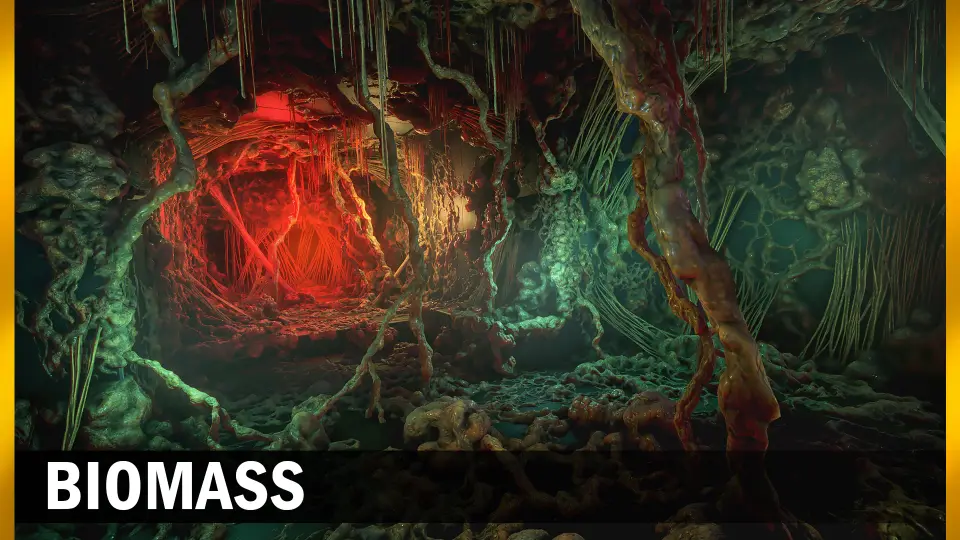
The visual identity of the collection is grounded in a realistic art style, deliberately avoiding stylized or exaggerated proportions. This commitment to realism is essential for horror environments, where grounded visuals are necessary to evoke a visceral reaction from the audience. The textures and forms of the biomass are intended to look authentically disgusting, mimicking raw, diseased, or mutated flesh. This realistic approach ensures that the biological matter appears wet, heavy, and structurally sound. When these disgusting elements are applied as decor across a scene, they elevate the horror atmosphere by making the environment feel deeply corrupted and unsafe. The stark contrast between realistic biological growth and traditional building materials draws immediate attention to the creeping hazard.
Biohazard and Sci-Fi Environments
Within science fiction settings, the biomass pieces provide the physical manifestation of a biohazard outbreak. A common requirement for sci-fi level design is the ability to visually communicate that a research facility or derelict spacecraft has been compromised by an unknown biological agent. By applying the cover assets to corridors, laboratories, and containment zones, developers can clearly mark an area as a hazard. The modularity allows the infestation to appear active and aggressive, consuming high-tech machinery and wrapping around industrial pipes. The visual clash between sterile sci-fi architecture and chaotic biological growth creates a compelling environmental narrative, signaling to the player that the zone is toxic, quarantined, or overrun by alien life.
Dark Fantasy Integration
Beyond science fiction, the biological pieces are equally applicable to dark fantasy environments. Fantasy settings frequently require corrupted lands, monster dens, or dungeons that have been overtaken by unnatural organic forces. The biomass cover can be utilized to dress these fantasy interiors, transforming a standard cavern into the pulsating lair of a massive beast. The organic shapes blend naturally into rocky terrain, acting as strange fungal growths or fleshy outcroppings that warn of nearby danger. As environmental decor, the pieces break up the visual monotony of traditional stone and wood, introducing a layer of biological corruption that fits seamlessly into horror-tinged fantasy landscapes.
Level Navigation and Hazard Marking
The placement of these biological pieces directly impacts player navigation and level flow. Because the assets represent a clear physical hazard, environment artists can use them to guide or restrict movement through a space. A dense clustering of biomass can serve as a natural roadblock, funneling characters down a specific path or blocking off inaccessible doorways. The disgusting nature of the realistic flesh acts as a visual deterrent, naturally encouraging players to avoid certain surfaces or sections of a room. By strategically placing the modular cover pieces, developers can create chokepoints, define combat arenas within a larger hive, or highlight areas where environmental damage might occur due to the biohazard.
Finalizing the Infested Scene
Bringing an infested scene to completion requires careful attention to how the biological pieces interact with the underlying surfaces. The modular workflow allows for intricate detailing, where smaller pieces of biomass are used to blend the edges of larger fleshy mounds into the floor or walls. This meticulous layering ensures that the transition between clean architecture and biological horror feels gradual and grounded. Whether constructing a sprawling alien nest, detailing a contained biohazard leak, or dressing a fantasy monster lair, the extensive collection of biomass pieces provides the necessary building blocks. The realistic, disgusting aesthetic ensures that the final environment delivers a highly atmospheric and unsettling experience.
 Dungeon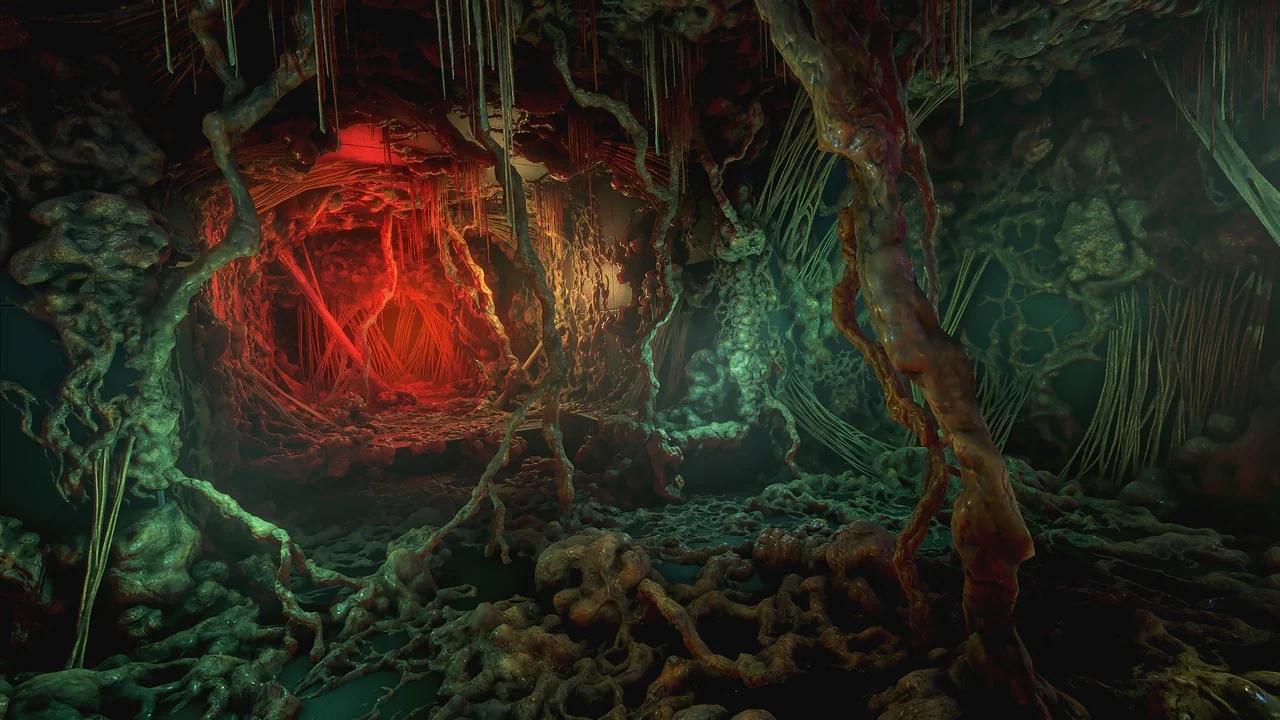
 Dungeon
 Dungeon
 Dungeon