"c68a05d5e51405b3"{"id":"1000111","slug":"underground-ossuary","title":"Underground Ossuary","category":"Dungeon","engine":"Engine Version: 4.26+,5.0+","assetVersion":"","engineVersion":"Engine Version: 4.26+,5.0+","tag":"Dungeon","accent":"blue","visual":"mech","summary":"A horror environment scene inspired by European catacombs and ossuaries, featuring tunnels, caves, skeletal constructs, wall materials, and select effects.","platform":"Unreal Engine","publishedAt":"2026-06-07T23:22:35.386Z","updatedAt":"2026-06-07T23:22:35.386Z","sourceNotes":[],"fileContents":[],"compatibility":["Unreal Engine","Engine Version: 4.26+,5.0+"],"featuredImage":{"alt":"Underground Ossuary","src":"/wp-content/uploads/published/2026/06/68ad3eec3bbc-6ae9b746-6c91-44e6-b534-9d37c108c42e-e29b6c2361.webp"},"hasDownloadLink":true,"downloads":2,"terms":[{"taxonomy":"category","slug":"dungeon","name":"Dungeon"}],"galleryImages":[{"src":"/wp-content/uploads/published/2026/06/eae8a8bfcab0-1743c47b-1a79-40de-ad87-68c8c603f7df-5220ab3855.webp","alt":"Underground Ossuary"},{"src":"/wp-content/uploads/published/2026/06/3f96bff8b1d2-e5a302b6-e4c6-439a-b82b-86c3cba1aaed-923b6436d0.webp","alt":"Underground Ossuary"},{"src":"/wp-content/uploads/published/2026/06/a27d56dd6b83-ca760de5-d368-4d56-80f1-341286c76255-3185b5e358.webp","alt":"Underground Ossuary"},{"src":"/wp-content/uploads/published/2026/06/e898bec43711-424d252a-6df3-4ba0-baac-6aac7feb69c2-45674993d5.webp","alt":"Underground Ossuary"},{"src":"/wp-content/uploads/published/2026/06/ef997f0ff424-583fb556-ca4e-4bc8-b4e5-b032ba269d66-964e63cee7.webp","alt":"Underground Ossuary"},{"src":"/wp-content/uploads/published/2026/06/9b3ca6200234-d2f4a873-3651-49ed-aafe-105c07933f0d-369b194927.webp","alt":"Underground Ossuary"},{"src":"/wp-content/uploads/published/2026/06/a84a20160982-29513da7-d2b3-4efd-9d2f-6ad6bf00f55a-7e6b791d17.webp","alt":"Underground Ossuary"},{"src":"/wp-content/uploads/published/2026/06/dec57ea4da1d-9c04c643-1b78-4d11-898b-f901cba947ef-e4a8890134.webp","alt":"Underground Ossuary"},{"src":"/wp-content/uploads/published/2026/06/716ffcf8dfa6-ac924205-3453-4f3d-8238-0edf3a39033e-329c441b13.webp","alt":"Underground Ossuary"},{"src":"/wp-content/uploads/published/2026/06/0b8a13403bd6-d150ffeb-3763-46da-a12d-99bff4debc23-9a521ebea6.webp","alt":"Underground Ossuary"}],"accessPanel":{"kind":"resource","title":"Access this resource","eyebrow":"Free Download","message":"Log in or create a free account to start your download.","fileName":"Content.7z","safetyNote":"Resources are manually reviewed before listing to improve quality and reduce obvious risks.","actionLabel":"Download Free","resourceType":"Resource archive"},"contentHtml":"\u003cp\u003eFor projects that need an underground setting with a heavy, unsettling mood, \u003cstrong\u003eUnderground Ossuary\u003c/strong\u003e Is aimed at exactly that kind of scene work. It draws from catacombs and ossuaries around Europe as well as movie-inspired imagery, giving it a clear identity rooted in burial spaces, age, confinement, and visual unease.\u003c/p\u003e\n\u003cp\u003eThe package is focused on a complete scene not just one isolated object. Its main components are tunnels, caves, skeletal constructs, and wall materials, supported by a small number of particle and sound effects. That combination points to an environment intended to be experienced spatially, where atmosphere comes not only from architecture and surface treatment but also from the details that reinforce a dark setting.\u003c/p\u003e \u003ch2\u003eWhere Underground Ossuary fits best\u003c/h2\u003e\n\u003cp\u003eThis kind of environment is most useful when a project needs spaces that feel old, hidden, and ominous. The tags attached to it point in a clear direction: atmosphere, spooky, fantasy, occult, historical, medieval, realistic, old, and horror. Those descriptors do not suggest a bright stylized dungeon or a broad all-purpose cave kit. They place the scene much closer to grave-lined corridors, ritual spaces, and age-worn subterranean passages.\u003c/p\u003e\n\u003cp\u003eThat makes it a natural fit for horror scenes where the environment itself carries tension. A narrow tunnel lined with skeletal forms can create pressure even before any character or event enters the frame. In fantasy work, the same elements can support forgotten sanctuaries, burial networks, or underground passages tied to ancient belief systems. In historical or medieval-themed settings, the emphasis on ossuaries and old wall surfaces gives the scene a grounded visual language associated with places shaped by time, ritual, and death.\u003c/p\u003e\n\u003cp\u003eBecause it is presented as a scene, it also suits projects that need a ready-made location for exploration, staging, or environmental storytelling. The strongest use cases are the ones where architecture, material age, and bone-based construction all need to work together instead of appearing as separate props.\u003c/p\u003e \u003ch2\u003eTunnels, caves, and the shape of the space\u003c/h2\u003e\n\u003cp\u003eThe most concrete structural parts named here are the tunnels and caves. Those two elements matter because they define the environment as more than a decorated room. Tunnels suggest connected movement through enclosed passages, while caves add irregular underground volume and a more natural, excavated character. Together they support a setting that can shift between constructed burial corridors and rough subterranean chambers.\u003c/p\u003e\n\u003cp\u003eThat mixture opens up several scene types without stepping outside the resource’s stated identity. One project may lean into the catacomb side, using the tunnels to create a sense of repetition, confinement, and direction. Another may use the caves to introduce more open sections where the underground world widens and becomes less orderly. The package’s theme stays consistent either way, since both parts remain tied to the same ossuary-inspired concept.\u003c/p\u003e\n\u003cp\u003eThere is also a practical visual benefit to pairing tunnels with caves in a horror or occult environment. Tunnels can carry the viewer or player forward with purpose, while caves can interrupt that rhythm with broader spaces that feel secretive or ceremonial. The source details do not describe layout complexity or scale, but they do make clear that the environment includes both passage-based and cavern-like spaces, which helps define its likely role as a traversable underground scene.\u003c/p\u003e \u003ch2\u003eSkeletal constructs and wall materials carry the identity\u003c/h2\u003e\n\u003cp\u003eThe most distinctive feature in \u003cstrong\u003eUnderground Ossuary\u003c/strong\u003e Is the inclusion of skeletal constructs. This moves the environment beyond a generic cave network. Bones and skeletal formations are what tie it directly to the idea of an ossuary, and they are also what sharpen its horror and occult character. In a fantasy scene, skeletal constructs can suggest ritual assembly or an underground place shaped by beliefs surrounding death. In a more realistic or historical mood, they reinforce the human remains aspect associated with old burial sites and catacomb spaces.\u003c/p\u003e\n\u003cp\u003eWall materials are equally important, even if they are less dramatic at first glance. For an environment defined by age and atmosphere, wall treatment carries much of the visual weight. Old underground scenes depend on surfaces that support the mood of decay, history, and enclosed dampness. The mention of wall materials indicates that the scene’s identity is not limited to major structural shapes or skeletal set dressing. It also extends to the surfaces that hold the whole space together.\u003c/p\u003e\n\u003cp\u003eThat matters most in environments where the camera spends time close to the surroundings. In a tunnel or cave sequence, walls are constantly present. Their condition helps communicate whether the space reads as medieval, historical, realistic, or purely fantastical with occult overtones. Since those tonal directions are all part of the verified description, the wall materials play a central role in maintaining consistency across the scene.\u003c/p\u003e \u003ch2\u003eAtmosphere from particle and sound effects\u003c/h2\u003e\n\u003cp\u003eUnderground horror environments often depend on more than static geometry, and this scene includes a few particle and sound effects. The wording is modest, which is useful in understanding the package correctly. The effects are present, but they are not framed as the dominant feature. They act as support for the space rather than replacing the environment itself as the main attraction.\u003c/p\u003e\n\u003cp\u003eEven a small set of effects can matter in a scene like this. Particle effects can strengthen the sense that the underground space is active rather than frozen, while sound effects help reinforce isolation, dread, or ritual intensity. In a spooky or horror context, these touches can shift a location from visually dark to fully immersive. In an occult or fantasy context, they can support the suggestion that the place has a lingering presence or purpose.\u003c/p\u003e\n\u003cp\u003eThe key point is that the package does not stop at structural pieces and materials. It also includes selected atmospheric tools that suit the same tone. That makes the environment more coherent for anyone who wants the location to feel inhabited by mood, not just assembled from underground meshes.\u003c/p\u003e \u003ch2\u003eCatacombs, ossuaries, and movie-inspired horror tone\u003c/h2\u003e\n\u003cp\u003eThe direct inspiration behind the scene gives it a strong stylistic anchor. European catacombs and ossuaries carry a specific visual language: narrow passages, stacked remains, age-darkened surfaces, and a close relationship between architecture and mortality. Bringing in movie inspiration alongside that reference suggests a scene that is not purely documentary in feeling. It keeps one foot in recognizable burial-space imagery and another in dramatic, cinematic presentation.\u003c/p\u003e\n\u003cp\u003eThat balance is helpful for creators who want a setting that can serve several adjacent genres without losing focus. A realistic horror project can emphasize the old underground structure and bone-lined atmosphere. A fantasy project can draw more from the skeletal constructs and occult tags. A medieval or historical project can use the aged burial-space identity to give its underground areas more specificity than a standard dungeon backdrop.\u003c/p\u003e\n\u003cp\u003eBecause the tone words are so consistent, the scene seems especially suited to projects that need darkness with context. It is not simply spooky in the abstract. Its atmosphere is tied to catacombs, ossuaries, skeletal imagery, and underground passage systems. That gives it a clear thematic lane.\u003c/p\u003e \u003ch2\u003eWho gets the most from Underground Ossuary\u003c/h2\u003e\n\u003cp\u003eThis scene will be most useful to creators building horror, fantasy, occult, historical, or medieval projects that need a location with a strong underground identity from the start. Its practical strength is the way the parts line up around one idea: tunnels and caves define movement and space, skeletal constructs establish the ossuary theme, wall materials support the old and realistic surface character, and a few particle and sound effects help complete the atmosphere.\u003c/p\u003e\n\u003cp\u003eIf a project needs a grave-lined catacomb mood rather than a neutral cave or a conventional dungeon, \u003cstrong\u003eUnderground Ossuary\u003c/strong\u003e Is best suited to that specific purpose.\u003c/p\u003e\n\n\u003ch2\u003eContinue Browsing Similar Packs\u003c/h2\u003e\n\u003cul\u003e\n\u003cli\u003e\u003ca href=\"https://3dcghub.com/modular-medieval-underground-prison-kit/\" title=\"Modular Medieval Underground Prison Kit\"\u003eModular Medieval Underground Prison Kit\u003c/a\u003e\u003c/li\u003e\n\u003cli\u003e\u003ca href=\"https://3dcghub.com/stylized-ancient-crypt/\" title=\"Stylized Ancient Crypt\"\u003eStylized Ancient Crypt\u003c/a\u003e\u003c/li\u003e\n\u003cli\u003e\u003ca href=\"https://3dcghub.com/ancient-cave-ruins-ancient-temple-ruins-ancient-valley/\" title=\"Ancient Cave Ruins (Ancient Temple Ruins, Ancient Valley )\"\u003eAncient Cave Ruins (Ancient Temple Ruins, Ancient Valley )\u003c/a\u003e\u003c/li\u003e\n\u003cli\u003e\u003ca href=\"https://3dcghub.com/dwarven-dungeons-environment-throne-room-dungeon-dwarf-dungeon-dungeon-3d/\" title=\"Dwarven Dungeons Environment ( Throne Room Dungeon Dwarf Dungeon Dungeon 3D )\"\u003eDwarven Dungeons Environment ( Throne Room Dungeon Dwarf Dungeon Dungeon 3D )\u003c/a\u003e\u003c/li\u003e\n\u003cli\u003e\u003ca href=\"https://3dcghub.com/fantasy-cave-ruins/\" title=\"Fantasy Cave Ruins\"\u003eFantasy Cave Ruins\u003c/a\u003e\u003c/li\u003e\n\u003c/ul\u003e","contentTextLength":8449,"navigation":{"current":1894,"total":3860,"previous":{"id":"1000112","slug":"unreal-engine-5-5-the-ultimate-cinematic-masterclass","title":"Unreal Engine 5.5 - The Ultimate Cinematic Masterclass","category":"Unreal Engine","platform":"Unreal Engine","updatedAt":"2026-06-08T09:00:23.309Z"},"next":{"id":"1000109","slug":"undercity-wonderland-bundle","title":"UnderCity + WonderLand Bundle","category":"Industrial","platform":"Unity","updatedAt":"2026-06-07T23:00:26.456Z"}},"relatedResources":[{"id":"7866","slug":"modular-medieval-underground-prison-kit","title":"Modular Medieval Underground Prison Kit","category":"Dungeon","engine":"4.27,5.0+","assetVersion":"Engine version: 4.27,5.0+","engineVersion":"4.27","tag":"Dungeon","accent":"blue","visual":"city","summary":"Build atmospheric and realistic medieval dungeons with ease using this comprehensive modular kit. It features high-quality meshes, flexible materials, and pre-built blueprints to speed up your level design process.","platform":"Unreal Engine","publishedAt":"2026-02-21T18:10:03.000Z","updatedAt":"2026-04-19T15:55:54.000Z","sourceNotes":[],"fileContents":[],"compatibility":["Unreal Engine","Engine version: 4.27,5.0+"],"featuredImage":{"alt":"Modular Medieval Underground Prison Kit","src":"https://3dcghub.com/wp-content/uploads/2026/02/e0e05312-e5fb-43e6-a599-a84ff6b92028.webp"},"hasDownloadLink":true,"downloads":0},{"id":"27953","slug":"stylized-ancient-crypt","title":"Stylized Ancient Crypt","category":"Dungeon","engine":"5.3+","assetVersion":"Engine version: 5.3+","engineVersion":"","tag":"Dungeon","accent":"blue","visual":"city","summary":"Stylized Ancient Crypt packages a complete underground environment for Unreal Engine, including assets, maps, and materials. It focuses on game-ready scene assembly with 87 meshes, 2K texture sets, shared material controls, and support for modern UE5 render...","platform":"Unreal Engine","publishedAt":"2026-04-30T07:46:14.000Z","updatedAt":"2026-04-30T07:46:15.000Z","sourceNotes":[],"fileContents":[],"compatibility":["Unreal Engine","Engine version: 5.3+"],"featuredImage":{"alt":"Stylized Ancient Crypt","src":"https://3dcghub.com/wp-content/uploads/2026/04/cb8b2d0c8c7e_9a216b29-9385-414d-a78b-6cb7ff46944d.webp"},"hasDownloadLink":true,"downloads":1},{"id":"1001782","slug":"stylized-nanite-dungeon-pack","title":"Stylized - Nanite Dungeon Pack","category":"Dungeon","engine":"4.25+,5.0+","assetVersion":"","engineVersion":"Engine Version: 4.25+,5.0+","tag":"Dungeon","accent":"blue","visual":"mech","summary":"Explore Stylized - Nanite Dungeon Pack for Unreal Engine 5.0+, featuring modular structural meshes, Niagara VFX, flickering lights, and custom shaders.","platform":"Unreal Engine","publishedAt":"2026-10-20T03:36:23.010Z","updatedAt":"2026-10-20T03:36:23.010Z","sourceNotes":[],"fileContents":[],"compatibility":["Unreal Engine","Engine Version: 4.25+,5.0+"],"featuredImage":{"alt":"Stylized - Nanite Dungeon Pack","src":"/wp-content/uploads/published/2026/10/262b9eced9c6-133a2412-a402-4d90-9943-f32ae2b555fb-46c49d92f6.webp"},"hasDownloadLink":true,"downloads":2}]}
Dungeon
Underground Ossuary
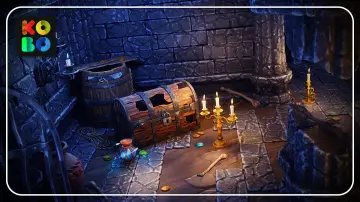
A horror environment scene inspired by European catacombs and ossuaries, featuring tunnels, caves, skeletal constructs, wall materials, and select effects.
Category:Unreal Engine,DungeonPlatform: Unreal EngineEngine Version: 4.26+,5.0+Published: Jun 7, 2026
Dungeon
Resource overview
For projects that need an underground setting with a heavy, unsettling mood, Underground Ossuary Is aimed at exactly that kind of scene work. It draws from catacombs and ossuaries around Europe as well as movie-inspired imagery, giving it a clear identity rooted in burial spaces, age, confinement, and visual unease.
The package is focused on a complete scene not just one isolated object. Its main components are tunnels, caves, skeletal constructs, and wall materials, supported by a small number of particle and sound effects. That combination points to an environment intended to be experienced spatially, where atmosphere comes not only from architecture and surface treatment but also from the details that reinforce a dark setting.
Where Underground Ossuary fits best
This kind of environment is most useful when a project needs spaces that feel old, hidden, and ominous. The tags attached to it point in a clear direction: atmosphere, spooky, fantasy, occult, historical, medieval, realistic, old, and horror. Those descriptors do not suggest a bright stylized dungeon or a broad all-purpose cave kit. They place the scene much closer to grave-lined corridors, ritual spaces, and age-worn subterranean passages.
That makes it a natural fit for horror scenes where the environment itself carries tension. A narrow tunnel lined with skeletal forms can create pressure even before any character or event enters the frame. In fantasy work, the same elements can support forgotten sanctuaries, burial networks, or underground passages tied to ancient belief systems. In historical or medieval-themed settings, the emphasis on ossuaries and old wall surfaces gives the scene a grounded visual language associated with places shaped by time, ritual, and death.
Because it is presented as a scene, it also suits projects that need a ready-made location for exploration, staging, or environmental storytelling. The strongest use cases are the ones where architecture, material age, and bone-based construction all need to work together instead of appearing as separate props.
Tunnels, caves, and the shape of the space
The most concrete structural parts named here are the tunnels and caves. Those two elements matter because they define the environment as more than a decorated room. Tunnels suggest connected movement through enclosed passages, while caves add irregular underground volume and a more natural, excavated character. Together they support a setting that can shift between constructed burial corridors and rough subterranean chambers.
That mixture opens up several scene types without stepping outside the resource’s stated identity. One project may lean into the catacomb side, using the tunnels to create a sense of repetition, confinement, and direction. Another may use the caves to introduce more open sections where the underground world widens and becomes less orderly. The package’s theme stays consistent either way, since both parts remain tied to the same ossuary-inspired concept.
There is also a practical visual benefit to pairing tunnels with caves in a horror or occult environment. Tunnels can carry the viewer or player forward with purpose, while caves can interrupt that rhythm with broader spaces that feel secretive or ceremonial. The source details do not describe layout complexity or scale, but they do make clear that the environment includes both passage-based and cavern-like spaces, which helps define its likely role as a traversable underground scene.
Skeletal constructs and wall materials carry the identity
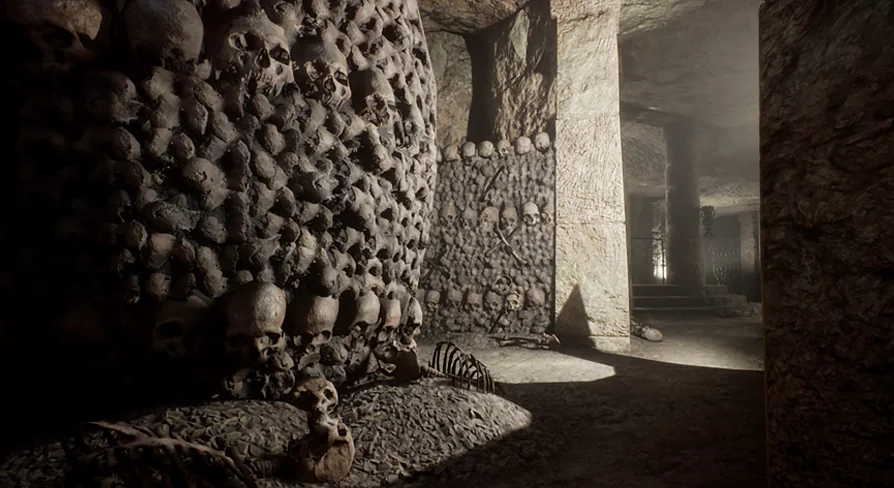
The most distinctive feature in Underground Ossuary Is the inclusion of skeletal constructs. This moves the environment beyond a generic cave network. Bones and skeletal formations are what tie it directly to the idea of an ossuary, and they are also what sharpen its horror and occult character. In a fantasy scene, skeletal constructs can suggest ritual assembly or an underground place shaped by beliefs surrounding death. In a more realistic or historical mood, they reinforce the human remains aspect associated with old burial sites and catacomb spaces.
Wall materials are equally important, even if they are less dramatic at first glance. For an environment defined by age and atmosphere, wall treatment carries much of the visual weight. Old underground scenes depend on surfaces that support the mood of decay, history, and enclosed dampness. The mention of wall materials indicates that the scene’s identity is not limited to major structural shapes or skeletal set dressing. It also extends to the surfaces that hold the whole space together.
That matters most in environments where the camera spends time close to the surroundings. In a tunnel or cave sequence, walls are constantly present. Their condition helps communicate whether the space reads as medieval, historical, realistic, or purely fantastical with occult overtones. Since those tonal directions are all part of the verified description, the wall materials play a central role in maintaining consistency across the scene.
Atmosphere from particle and sound effects
Underground horror environments often depend on more than static geometry, and this scene includes a few particle and sound effects. The wording is modest, which is useful in understanding the package correctly. The effects are present, but they are not framed as the dominant feature. They act as support for the space rather than replacing the environment itself as the main attraction.
Even a small set of effects can matter in a scene like this. Particle effects can strengthen the sense that the underground space is active rather than frozen, while sound effects help reinforce isolation, dread, or ritual intensity. In a spooky or horror context, these touches can shift a location from visually dark to fully immersive. In an occult or fantasy context, they can support the suggestion that the place has a lingering presence or purpose.
The key point is that the package does not stop at structural pieces and materials. It also includes selected atmospheric tools that suit the same tone. That makes the environment more coherent for anyone who wants the location to feel inhabited by mood, not just assembled from underground meshes.
Catacombs, ossuaries, and movie-inspired horror tone
The direct inspiration behind the scene gives it a strong stylistic anchor. European catacombs and ossuaries carry a specific visual language: narrow passages, stacked remains, age-darkened surfaces, and a close relationship between architecture and mortality. Bringing in movie inspiration alongside that reference suggests a scene that is not purely documentary in feeling. It keeps one foot in recognizable burial-space imagery and another in dramatic, cinematic presentation.
That balance is helpful for creators who want a setting that can serve several adjacent genres without losing focus. A realistic horror project can emphasize the old underground structure and bone-lined atmosphere. A fantasy project can draw more from the skeletal constructs and occult tags. A medieval or historical project can use the aged burial-space identity to give its underground areas more specificity than a standard dungeon backdrop.
Because the tone words are so consistent, the scene seems especially suited to projects that need darkness with context. It is not simply spooky in the abstract. Its atmosphere is tied to catacombs, ossuaries, skeletal imagery, and underground passage systems. That gives it a clear thematic lane.
Who gets the most from Underground Ossuary
This scene will be most useful to creators building horror, fantasy, occult, historical, or medieval projects that need a location with a strong underground identity from the start. Its practical strength is the way the parts line up around one idea: tunnels and caves define movement and space, skeletal constructs establish the ossuary theme, wall materials support the old and realistic surface character, and a few particle and sound effects help complete the atmosphere.
If a project needs a grave-lined catacomb mood rather than a neutral cave or a conventional dungeon, Underground Ossuary Is best suited to that specific purpose.
 Dungeon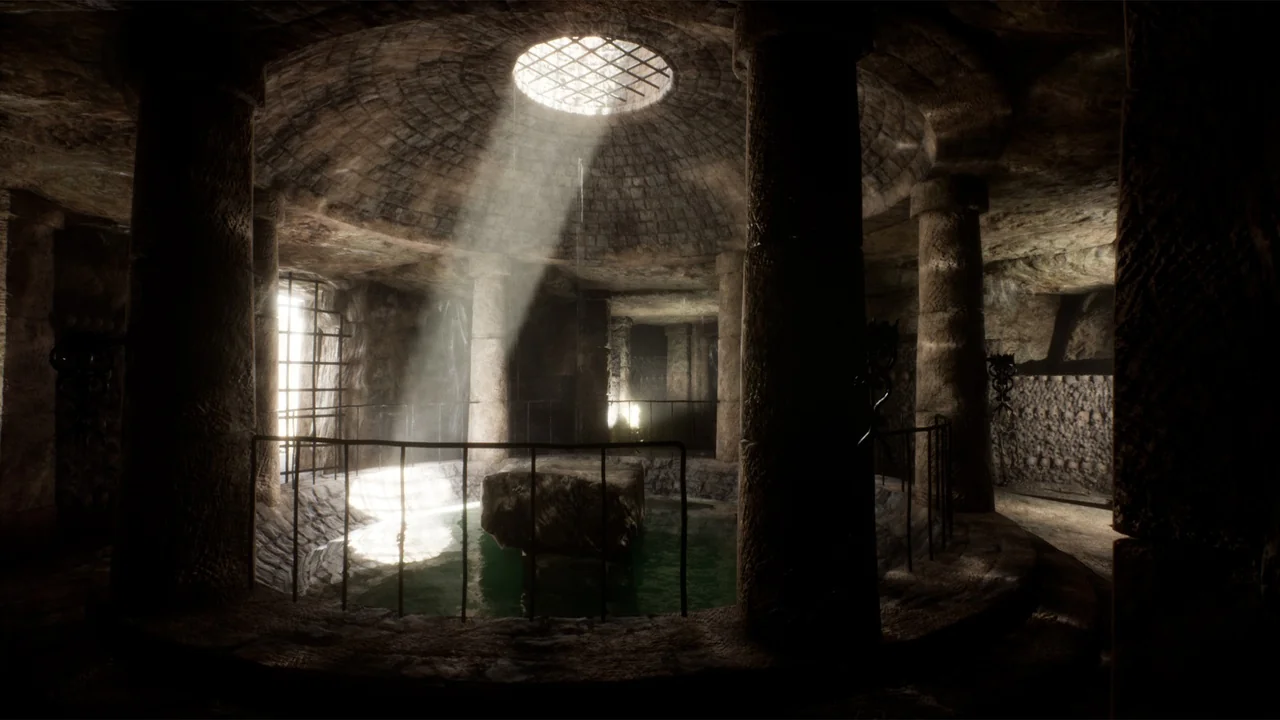
 Dungeon
 Dungeon
 Dungeon