"1f00f67f9253451b"{"id":"1000169","slug":"art-of-shader-distortion-and-glitches","title":"Art Of Shader - Distortion And Glitches","category":"Shaders","engine":"4.27,5.0+","assetVersion":"","engineVersion":"Engine Version: 4.27,5.0+","tag":"Shaders","accent":"blue","visual":"mech","summary":"A comprehensive pack of 40 customizable shaders utilizing Blueprint Actors, Post Process materials, and Niagara FX to create real-time glitch and distortion eff","platform":"Unreal Engine","publishedAt":"2026-06-19T16:49:55.317Z","updatedAt":"2026-06-19T16:49:55.317Z","sourceNotes":[],"fileContents":[],"compatibility":["Unreal Engine","Engine Version: 4.27,5.0+"],"featuredImage":{"alt":"Art Of Shader - Distortion And Glitches","src":"/wp-content/uploads/published/2026/06/19a1408c909c-ebd56bbf-af41-427e-aac4-e2808acf9bad-d1ec457364.webp"},"hasDownloadLink":true,"downloads":0,"terms":[{"taxonomy":"category","slug":"shaders","name":"Shaders"}],"galleryImages":[{"src":"/wp-content/uploads/published/2026/06/a6107d453b31-3e205ad3-7f2f-4be1-9ebc-611caf16aa71-1a9b037436.webp","alt":"Art Of Shader - Distortion And Glitches"},{"src":"/wp-content/uploads/published/2026/06/d125c9abbd6f-da8cafec-d88f-4661-b626-5b4345e6fea1-4aadd414a7.webp","alt":"Art Of Shader - Distortion And Glitches"},{"src":"/wp-content/uploads/published/2026/06/53e2df6edb74-4fe57584-47b8-4366-b88f-b9c4e4d0b6cf-38472ba312.webp","alt":"Art Of Shader - Distortion And Glitches"},{"src":"/wp-content/uploads/published/2026/06/4da084f7f2bc-9917ce0a-5a0f-497d-a3fb-99ab8bf74f82-cc832465f7.webp","alt":"Art Of Shader - Distortion And Glitches"},{"src":"/wp-content/uploads/published/2026/06/1650de0214d6-0436bb1b-2983-420a-a3bd-512a51535559-1ae983e06e.webp","alt":"Art Of Shader - Distortion And Glitches"},{"src":"/wp-content/uploads/published/2026/06/58ff9f97ad88-2138897e-1a22-4477-860e-b6c3257feb8d-8baa33c18d.webp","alt":"Art Of Shader - Distortion And Glitches"},{"src":"/wp-content/uploads/published/2026/06/b77ec5c6fd25-574cd672-9253-43ba-bf34-1f2bc1821dae-8f59da59b6.webp","alt":"Art Of Shader - Distortion And Glitches"}],"accessPanel":{"kind":"resource","title":"Download this resource","eyebrow":"Free Download","message":"Log in or create a free account to start your download.","fileName":"Content.7z","safetyNote":"Resources are manually reviewed before listing to improve quality and reduce obvious risks.","actionLabel":"Download Free","resourceType":"Resource archive"},"contentHtml":"\u003ch2\u003eConfiguring Visual Interference with 40 Customizable Shaders\u003c/h2\u003e\n\u003cp\u003eEstablishing convincing digital interference, screen tearing, or environmental warping often requires constructing complex material networks to handle the necessary mathematical offsets. Art Of Shader - Distortion And Glitches addresses this technical requirement by supplying a dedicated pack of 40 customizable shaders. These assets are specifically engineered to inject varied forms of visual instability directly into a project. Available as part of the broader The Art of Shader Megapack, this standalone collection focuses entirely on the precise manipulation of screen space and surface rendering.\u003c/p\u003e\n\u003cp\u003eBy offering a modular approach to visual effects, the package allows developers to introduce deliberate imperfections into their rendering pipeline. The shaders are built to be flexible, supporting parameterized material instances that grant users direct control over how the distortion behaves. Rather than relying on static overlays, the procedural nature of the shaders ensures that the resulting artifacts react dynamically within the engine, fitting seamlessly into the established rendering environment.\u003c/p\u003e \u003ch2\u003eCombining Effects via Blueprint Actors\u003c/h2\u003e\n\u003cp\u003eManaging multiple layers of screen distortion can quickly become a cumbersome process when dealing with individual material nodes. To streamline implementation, the pack utilizes Blueprint Actors to manage the interaction between different shader layers. These Blueprint Actors facilitate the easy combining, blending, and grouping of the post-process materials based on certain common properties.\u003c/p\u003e\n\u003cp\u003eThis organizational structure allows developers to stack multiple interference patterns without manually rebuilding the underlying math for each combination. By grouping shaders based on shared attributes, the Blueprint system ensures that overlapping effects resolve correctly on screen. This setup reduces the technical friction normally associated with blending complex post-process stacks, making it possible to experiment with different combinations of visual corruption rapidly.\u003c/p\u003e \u003ch2\u003eApplying Distortion to Actors and Scenes\u003c/h2\u003e\n\u003cp\u003eThe versatility of the shader pack lies in its multiple application methods. The 40 shaders can be deployed as Post Process Blendable Materials to affect the entire camera view, or they can be utilized as Mesh Materials to isolate the distortion to specific actors. This dual functionality means that a developer can apply a global tracking error to the player's perspective or restrict the visual breakdown to a single malfunctioning terminal or holographic character.\u003c/p\u003e\n\u003cp\u003eBecause the effects integrate with standard material workflows, they can also interface with User Widget (UMG) elements for user interface corruption. The inclusion of pixel and voxel-oriented rendering tags indicates that the shaders can interpret and manipulate geometry and screen space in various ways, relying on customized scripts and procedural generation to warp the target actors and scenes accurately.\u003c/p\u003e \u003ch2\u003eExploring VCRGlitch, BrokenPixels, and Other Glitch Variants\u003c/h2\u003e\n\u003cp\u003eThe specific visual styles included in the pack cover a wide spectrum of digital and analog interference. Users can choose, combine, and customize an array of distinct visual breakdowns to suit their specific artistic direction. Among the named effects are VCRGlitch and InterlacedGlitch, which replicate the analog tracking errors, scanlines, and color bleeding characteristic of aging magnetic tape and older cathode-ray tube displays.\u003c/p\u003e\n\u003cp\u003eFor more modern, digital corruption, the pack provides effects like BlockySurface, BrokenPixels, and GlitcySpectrum. These options introduce harsh geometric artifacting, pixel sorting, and aggressive chromatic separation. Additionally, effects designated as Wavy and general Artifacts offer softer or more erratic rendering errors. Because these are all driven by parameterized material instances, variables such as the intensity, scale, and speed of the BrokenPixels or the frequency of the VCRGlitch can be dialed in precisely to match the required scenario.\u003c/p\u003e \u003ch2\u003eIntegrating with Niagara FX and Procedural Systems\u003c/h2\u003e\n\u003cp\u003eBeyond static meshes and post-process volumes, Art Of Shader - Distortion And Glitches extends its functionality into the engine's particle rendering systems. The shaders are fully compatible with Niagara FX, allowing developers to apply complex distortion mathematics directly to particle emitters. This capability is crucial for generating advanced visual effects where the distortion needs to be localized, volumetric, or tied to a specific event, such as an explosion of digital data or a collapsing energy field.\u003c/p\u003e\n\u003cp\u003eThe interaction between the shaders and Niagara FX supports transparent and emissive rendering properties, ensuring that glitched particles can glow intensely or blend smoothly with the background environment. By utilizing procedural generation techniques, the particle systems can drive the distortion dynamically, creating unpredictable and highly detailed visual interference that evolves over time.\u003c/p\u003e \u003ch2\u003eAdapting to Realistic and Stylized Rendering\u003c/h2\u003e\n\u003cp\u003eThe parameterized structure of the materials ensures that the glitch effects can be adapted to fit entirely different artistic directions. The shader pack supports a broad range of rendering styles, from highly realistic cinematic environments to stylized, cartoon, and anime-inspired aesthetics. A subtle, transparent wavy effect might be used to simulate heat haze in a realistic scene, while aggressive, emissive blocky artifacts could be deployed in a stylized cyberpunk setting.\u003c/p\u003e\n\u003cp\u003eIt is important to note that the 3D assets and environments displayed in the promotional images are for demonstration purposes only and are not included in the pack. The resource functions strictly as a modular toolkit of custom shaders, providing the technical foundation necessary to build, blend, and customize advanced distortion networks across varied rendering pipelines.\u003c/p\u003e\n\n\u003ch2\u003eRelated Resources Worth Checking\u003c/h2\u003e\n\u003cul\u003e\n\u003cli\u003e\u003ca href=\"https://3dcghub.com/parallax-card-material/\" title=\"Parallax Card Material\"\u003eParallax Card Material\u003c/a\u003e\u003c/li\u003e\n\u003cli\u003e\u003ca href=\"https://3dcghub.com/wall-fx-pack/\" title=\"Wall FX pack\"\u003eWall FX pack\u003c/a\u003e\u003c/li\u003e\n\u003cli\u003e\u003ca href=\"https://3dcghub.com/slime-vfx/\" title=\"Slime VFX\"\u003eSlime VFX\u003c/a\u003e\u003c/li\u003e\n\u003cli\u003e\u003ca href=\"https://3dcghub.com/custom-motion-blur/\" title=\"Custom Motion Blur\"\u003eCustom Motion Blur\u003c/a\u003e\u003c/li\u003e\n\u003cli\u003e\u003ca href=\"https://3dcghub.com/stylized-rendering-system-cel-shader/\" title=\"Stylized Rendering System (Cel-Shader)\"\u003eStylized Rendering System (Cel-Shader)\u003c/a\u003e\u003c/li\u003e\n\u003c/ul\u003e","contentTextLength":6096,"navigation":{"current":1180,"total":3222,"previous":{"id":"1000170","slug":"post-process-hand-draw-outline","title":"Post Process Hand Draw Outline","category":"Variety","platform":"Unreal Engine","updatedAt":"2026-06-19T16:53:03.610Z"},"next":{"id":"1000168","slug":"scifi-drones","title":"SciFi Drones","category":"Mechanical \u0026 Robots","platform":"Unreal Engine","updatedAt":"2026-06-19T13:50:05.524Z"}},"relatedResources":[{"id":"1000868","slug":"post-process-shader-world-effect","title":"Post Process Shader - World Effect","category":"Shaders","engine":"5.0+","assetVersion":"","engineVersion":"Engine Version: 5.0+","tag":"Shaders","accent":"blue","visual":"mech","summary":"A post-processing shader for Unreal Engine 5 that creates atmospheric and eerie visuals—fog, glow, distortion, color filters—with fully adjustable parameters an","platform":"Unreal Engine","publishedAt":"2026-08-05T06:52:48.407Z","updatedAt":"2026-08-05T06:52:48.407Z","sourceNotes":[],"fileContents":[],"compatibility":["Unreal Engine","Engine Version: 5.0+"],"featuredImage":{"alt":"Post Process Shader - World Effect","src":"/wp-content/uploads/published/2026/08/74d3c34c609f-04e864c3-4d40-4a94-a958-896d7bdc2d3a-f95815c78c.webp"},"hasDownloadLink":true,"downloads":0},{"id":"1001000","slug":"lens-and-film-post-process","title":"Lens and Film Post Process","category":"Shaders","engine":"5.1+","assetVersion":"","engineVersion":"Engine Version: 5.1+","tag":"Shaders","accent":"blue","visual":"mech","summary":"Customizable post-processing effect for blur, lens distortion, chromatic aberration, film grain, light leaks, and more. Includes disk blur types and cinematic r","platform":"Unreal Engine","publishedAt":"2026-08-20T09:55:15.932Z","updatedAt":"2026-08-20T09:55:15.932Z","sourceNotes":[],"fileContents":[],"compatibility":["Unreal Engine","Engine Version: 5.1+"],"featuredImage":{"alt":"Lens and Film Post Process","src":"/wp-content/uploads/published/2026/08/9f516287e615-b76a2f41-7419-402c-9096-7d1b7d173679-78137b7b8c.webp"},"hasDownloadLink":true,"downloads":0},{"id":"12250","slug":"parallax-card-material","title":"Parallax Card Material","category":"Art \u0026 Traditional","engine":"4.26+,5.0+","assetVersion":"Engine version: 4.26+,5.0+","engineVersion":"4.25","tag":"Art \u0026 Traditional","accent":"blue","visual":"luts","summary":"Transform flat illustrations into dynamic 3D visuals using the Parallax Card Material. This project includes a master material, five illustrated Tarot cards, and an optimized pipeline for developers.","platform":"Unreal Engine","publishedAt":"2026-03-07T12:03:09.000Z","updatedAt":"2026-04-19T15:48:01.000Z","sourceNotes":[],"fileContents":[],"compatibility":["Unreal Engine","Engine version: 4.26+,5.0+"],"featuredImage":{"alt":"Parallax Card Material","src":"https://3dcghub.com/wp-content/uploads/2026/03/890102b7-18bc-4d80-8936-e17c07325c50.webp"},"hasDownloadLink":true,"downloads":1}]}
Shaders
Art Of Shader - Distortion And Glitches
A comprehensive pack of 40 customizable shaders utilizing Blueprint Actors, Post Process materials, and Niagara FX to create real-time glitch and distortion eff
Category:Unreal Engine,ShadersPlatform: Unreal EngineEngine Version: 4.27,5.0+Published: Jun 19, 2026
Shaders
Resource overview
Configuring Visual Interference with 40 Customizable Shaders
Establishing convincing digital interference, screen tearing, or environmental warping often requires constructing complex material networks to handle the necessary mathematical offsets. Art Of Shader - Distortion And Glitches addresses this technical requirement by supplying a dedicated pack of 40 customizable shaders. These assets are specifically engineered to inject varied forms of visual instability directly into a project. Available as part of the broader The Art of Shader Megapack, this standalone collection focuses entirely on the precise manipulation of screen space and surface rendering.
By offering a modular approach to visual effects, the package allows developers to introduce deliberate imperfections into their rendering pipeline. The shaders are built to be flexible, supporting parameterized material instances that grant users direct control over how the distortion behaves. Rather than relying on static overlays, the procedural nature of the shaders ensures that the resulting artifacts react dynamically within the engine, fitting seamlessly into the established rendering environment.
Combining Effects via Blueprint Actors
Managing multiple layers of screen distortion can quickly become a cumbersome process when dealing with individual material nodes. To streamline implementation, the pack utilizes Blueprint Actors to manage the interaction between different shader layers. These Blueprint Actors facilitate the easy combining, blending, and grouping of the post-process materials based on certain common properties.
This organizational structure allows developers to stack multiple interference patterns without manually rebuilding the underlying math for each combination. By grouping shaders based on shared attributes, the Blueprint system ensures that overlapping effects resolve correctly on screen. This setup reduces the technical friction normally associated with blending complex post-process stacks, making it possible to experiment with different combinations of visual corruption rapidly.
Applying Distortion to Actors and Scenes
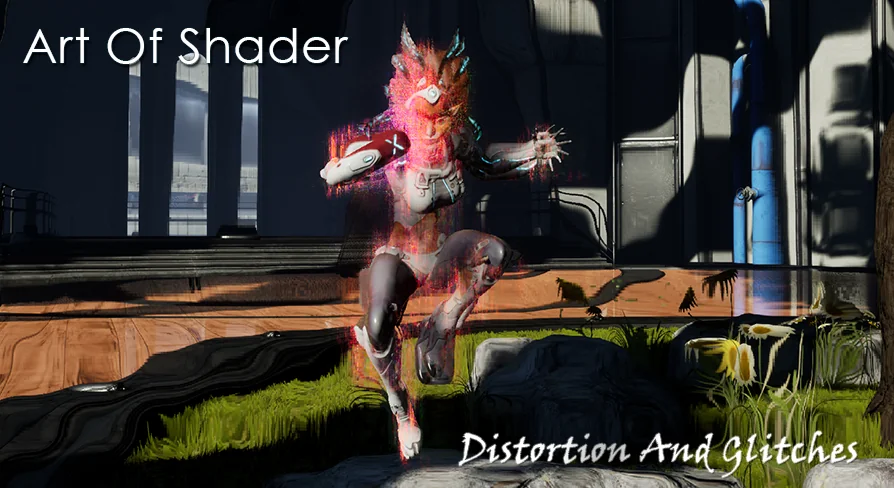
The versatility of the shader pack lies in its multiple application methods. The 40 shaders can be deployed as Post Process Blendable Materials to affect the entire camera view, or they can be utilized as Mesh Materials to isolate the distortion to specific actors. This dual functionality means that a developer can apply a global tracking error to the player's perspective or restrict the visual breakdown to a single malfunctioning terminal or holographic character.
Because the effects integrate with standard material workflows, they can also interface with User Widget (UMG) elements for user interface corruption. The inclusion of pixel and voxel-oriented rendering tags indicates that the shaders can interpret and manipulate geometry and screen space in various ways, relying on customized scripts and procedural generation to warp the target actors and scenes accurately.
Exploring VCRGlitch, BrokenPixels, and Other Glitch Variants
The specific visual styles included in the pack cover a wide spectrum of digital and analog interference. Users can choose, combine, and customize an array of distinct visual breakdowns to suit their specific artistic direction. Among the named effects are VCRGlitch and InterlacedGlitch, which replicate the analog tracking errors, scanlines, and color bleeding characteristic of aging magnetic tape and older cathode-ray tube displays.
For more modern, digital corruption, the pack provides effects like BlockySurface, BrokenPixels, and GlitcySpectrum. These options introduce harsh geometric artifacting, pixel sorting, and aggressive chromatic separation. Additionally, effects designated as Wavy and general Artifacts offer softer or more erratic rendering errors. Because these are all driven by parameterized material instances, variables such as the intensity, scale, and speed of the BrokenPixels or the frequency of the VCRGlitch can be dialed in precisely to match the required scenario.
Integrating with Niagara FX and Procedural Systems
Beyond static meshes and post-process volumes, Art Of Shader - Distortion And Glitches extends its functionality into the engine's particle rendering systems. The shaders are fully compatible with Niagara FX, allowing developers to apply complex distortion mathematics directly to particle emitters. This capability is crucial for generating advanced visual effects where the distortion needs to be localized, volumetric, or tied to a specific event, such as an explosion of digital data or a collapsing energy field.
The interaction between the shaders and Niagara FX supports transparent and emissive rendering properties, ensuring that glitched particles can glow intensely or blend smoothly with the background environment. By utilizing procedural generation techniques, the particle systems can drive the distortion dynamically, creating unpredictable and highly detailed visual interference that evolves over time.
Adapting to Realistic and Stylized Rendering
The parameterized structure of the materials ensures that the glitch effects can be adapted to fit entirely different artistic directions. The shader pack supports a broad range of rendering styles, from highly realistic cinematic environments to stylized, cartoon, and anime-inspired aesthetics. A subtle, transparent wavy effect might be used to simulate heat haze in a realistic scene, while aggressive, emissive blocky artifacts could be deployed in a stylized cyberpunk setting.
It is important to note that the 3D assets and environments displayed in the promotional images are for demonstration purposes only and are not included in the pack. The resource functions strictly as a modular toolkit of custom shaders, providing the technical foundation necessary to build, blend, and customize advanced distortion networks across varied rendering pipelines.
 Shaders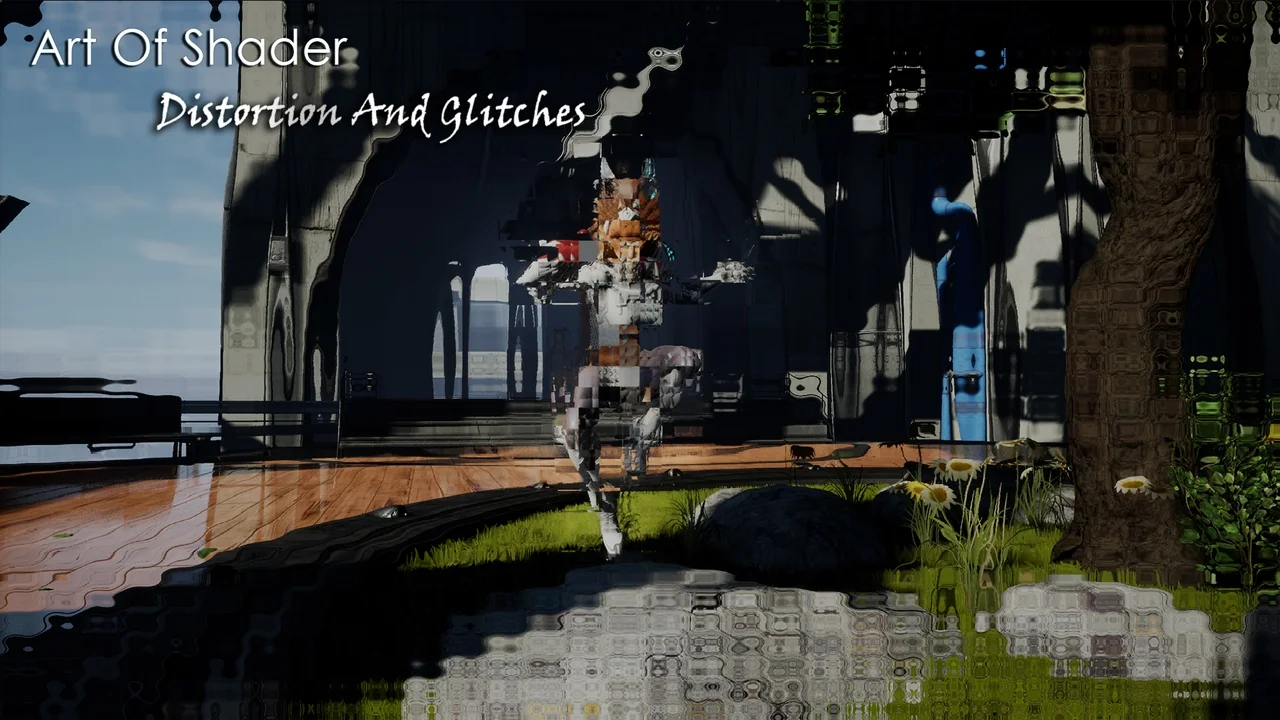
 Shaders
 Shaders
 Art & Traditional