"177e4e4394b9ce1f"{"id":"1001589","slug":"anime-hair","title":"Anime Hair","category":"Clothing \u0026 Accessories","engine":"4.26+,5.0+","assetVersion":"","engineVersion":"Engine Version: 4.26+,5.0+","tag":"Clothing","accent":"blue","visual":"mech","summary":"A groom-based collection of 23 anime-inspired hairstyles and modular strands built for MetaHumans and conventional humanoid character rigs.","platform":"Unreal Engine","publishedAt":"2026-10-10T16:06:27.339Z","updatedAt":"2026-10-10T16:06:27.339Z","sourceNotes":[],"fileContents":[],"compatibility":["Unreal Engine","Engine Version: 4.26+,5.0+"],"featuredImage":{"alt":"Anime Hair","src":"/wp-content/uploads/published/2026/10/ee5170028da9-0d62c9e9-1c63-48c0-9589-f690dafb0042-21398be5a8.webp"},"hasDownloadLink":true,"downloads":0,"terms":[{"taxonomy":"category","slug":"clothing-and-accessories","name":"Clothing \u0026 Accessories"}],"galleryImages":[{"src":"/wp-content/uploads/published/2026/10/982fc0b4d816-ae90d438-1d8d-479d-a46d-00a1c8f01645-2ac2c8c505.webp","alt":"Anime Hair"},{"src":"/wp-content/uploads/published/2026/10/904aceaf9ff0-503f2022-787e-40d6-8925-762f2c74d950-abad4b5177.webp","alt":"Anime Hair"},{"src":"/wp-content/uploads/published/2026/10/6fc7a19a1e71-5731e392-7837-4e7a-86ae-dd0d6e1218d9-06544d9eff.webp","alt":"Anime Hair"},{"src":"/wp-content/uploads/published/2026/10/50c815ec4bcc-83b61609-8780-4833-951e-d2d6855bd681-e9642073b1.webp","alt":"Anime Hair"},{"src":"/wp-content/uploads/published/2026/10/dc946eae5ac1-1a33888e-1a5d-4a01-ac42-f23f7513806c-58f0db0a37.webp","alt":"Anime Hair"},{"src":"/wp-content/uploads/published/2026/10/d0ab895a1a80-90ab310e-a91f-44d4-8a55-d15f4855fe44-009981b9d0.webp","alt":"Anime Hair"},{"src":"/wp-content/uploads/published/2026/10/11eb12d31c4a-ed50863c-814f-4b32-b7ae-ba672e3f6716-938c8257ba.webp","alt":"Anime Hair"},{"src":"/wp-content/uploads/published/2026/10/d1a10ff2258e-2d36bca9-2de4-48f7-9c3d-ed974fe6797a-035679f2d2.webp","alt":"Anime Hair"},{"src":"/wp-content/uploads/published/2026/10/5e58aa3560e1-2b4f37c3-4ecc-49c2-b2f7-2c97b2f1ca82-32f2e6f9cd.webp","alt":"Anime Hair"},{"src":"/wp-content/uploads/published/2026/10/ff77949de106-71553e3c-763a-40ad-be9c-71133237aa31-d609493547.webp","alt":"Anime Hair"}],"accessPanel":{"kind":"resource","title":"Download this resource","eyebrow":"Free Download","message":"Log in or create a free account to start your download.","fileName":"Content.7z","safetyNote":"Resources are manually reviewed before listing to improve quality and reduce obvious risks.","actionLabel":"Download Free","resourceType":"Resource archive"},"contentHtml":"\u003ch2\u003eStylized Character Aesthetics with Hair Groom Systems\u003c/h2\u003e\u003cp\u003eTranslating stylized anime silhouettes into strand-based groom pipelines often presents unique challenges for 3D character artists. Traditional polygonal hair cards can establish broad shapes quickly, yet they lack the individual strand definition and interactive groom dynamics native to modern engine viewports. Anime Hair approaches this gap by rendering stylized, anime-influenced silhouettes through strand groom systems. The collection targets both male and female character setups, placing its primary design emphasis on male hair forms that frequently prove difficult to assemble with realistic groom simulations.\u003c/p\u003e\u003cp\u003eBecause each hairstyle relies entirely on the groom architecture, the strands react to lighting, shadowing, and strand-level shading systems in real time. This bridge between stylized silhouette design and groom technology allows character artists to produce productions featuring sharp bangs, spiky crowns, parted fringes, and swept-back tufts without sacrificing the strand density expected in contemporary cinematic rendering.\u003c/p\u003e\u003ch2\u003eThe 23 Anime Hair Variations and Modular Assemblies\u003c/h2\u003e\u003cp\u003eAt the center of the package is an assortment of 20 distinct base hairstyles, augmented by two bonus variations to reach 23 configurations in total. These styles span diverse silhouette choices, addressing short cropped profiles, medium layered cuts, and voluminous spikes characteristic of action-oriented anime character designs. Rather than locking artists into single rigid groom assets, select pieces within the package operate modularly.\u003c/p\u003e\u003cp\u003eThese modular sections can be extracted and isolated, functioning independently or layering directly onto other hairstyles in the library. For production pipelines requiring distinct background characters or varied iterations of hero protagonists, this modular separation enables tailored silhouettes. An artist can take modular bangs or distinct side tufts from one hairstyle and seat them alongside the base strands of another, building hybrid arrangements without modifying underlying strand generation graphs outside the engine environment.\u003c/p\u003e\u003ch2\u003eDirect Attachment to MetaHuman and Humanoid Skeletons\u003c/h2\u003e\u003cp\u003eIntegrating groom grooms into character skeletal setups often demands intricate binding generation, aligning groom caches to skeletal meshes through complex skinning maps. In Anime Hair, direct binding workflows are streamlined. Binding assets are no longer required to place the hair onto a target figure. Instead, each groom asset attaches directly to the character by dragging the groom into place and parenting it to the skeleton's head bone.\u003c/p\u003e\u003cp\u003eThis attachment pipeline works uniformly across any conventional humanoid skeleton as well as MetaHuman rigs. Because humanoid head proportions vary substantially between realistic scans, stylized proportions, and standard mannequin bases, fitting the groom to a head mesh is handled by standard transformation. Artists scale and reposition the groom asset precisely as they would adjust a standard prop or static accessory. Once parented to the head bone and sized to match the cranium of the character, the hair tracks head motion smoothly throughout skeletal animations and cinematics.\u003c/p\u003e\u003ch2\u003eShading Workflows and Dual-Color Groom Shaders\u003c/h2\u003e\u003cp\u003eAchieving the visual punch of anime character art depends heavily on hair coloration, highlights, and secondary tones. Any standard hair groom material can be assigned across the styles in this package, allowing integration with existing custom groom shader setups, stylized color ramps, or physically based strand materials.\u003c/p\u003e\u003cp\u003eTo support multi-tonal looks without requiring extensive shader authoring from scratch, the collection includes a dual-color groom material. This setup allows artists to define distinct root and tip color values, layered highlights, or separated color streaks across the hair strands. Whether establishing natural dark hair with subtle sheen shifts or fantasy-inspired high-contrast gradients common in anime productions, the underlying groom properties accept material adjustments cleanly without disturbing strand placement or density.\u003c/p\u003e\u003ch2\u003eViewport Groom Stability and Ongoing Additions\u003c/h2\u003e\u003cp\u003eDeploying dense strand grooms in real-time viewports can occasionally introduce visual artifacts, particularly temporal flickering along fine strand edges during camera movement or dynamic lighting shifts. Managing this flickering requires standard groom rendering adjustments, ensuring temporal anti-aliasing and groom sampling settings align with the high-frequency strand data present throughout the stylized shapes.\u003c/p\u003e\u003cp\u003eThe collection also maintains room for ongoing updates aimed at filling gaps in hair design. When specific character archetypes demand parting types, fringes, or unique modular cuts that are not immediately present among the 23 variations, new groom pieces can be incorporated into the collection over time to meet expanding production requirements. This ongoing development path ensures the asset library adapts alongside evolving character rosters, giving artists an adaptable, scalable foundation for stylized strand groom creation.\u003c/p\u003e\n\n\u003ch2\u003eMore From The Same Workflow\u003c/h2\u003e\n\u003cul\u003e\n\u003cli\u003e\u003ca href=\"https://3dcghub.com/metawardrobe-metahuman/\" title=\"MetaWardrobe - Metahuman\"\u003eMetaWardrobe - Metahuman\u003c/a\u003e\u003c/li\u003e\n\u003cli\u003e\u003ca href=\"https://3dcghub.com/surgery-gloves-147-model-for-metahumans-all-mh-bodies-ue5-skeletons-rigged/\" title=\"Surgery Gloves 147 Model for Metahumans - All MH Bodies \u0026amp; UE5 Skeletons - Rigged\"\u003eSurgery Gloves 147 Model for Metahumans - All MH Bodies \u0026amp; UE5 Skeletons - Rigged\u003c/a\u003e\u003c/li\u003e\n\u003cli\u003e\u003ca href=\"https://3dcghub.com/hair-starter-pack/\" title=\"Hair Starter Pack\"\u003eHair Starter Pack\u003c/a\u003e\u003c/li\u003e\n\u003cli\u003e\u003ca href=\"https://3dcghub.com/stylised-hair-shader/\" title=\"Stylised Hair Shader\"\u003eStylised Hair Shader\u003c/a\u003e\u003c/li\u003e\n\u003cli\u003e\u003ca href=\"https://3dcghub.com/bunny-cute-fighting-anime-warrior-girl-realistic-mmorpg-fps-stylized-character/\" title=\"Bunny - Cute Fighting Anime Warrior Girl Realistic MMORPG FPS Stylized Character\"\u003eBunny - Cute Fighting Anime Warrior Girl Realistic MMORPG FPS Stylized Character\u003c/a\u003e\u003c/li\u003e\n\u003c/ul\u003e","contentTextLength":5408,"navigation":{"current":25,"total":3551,"previous":{"id":"1001590","slug":"art-of-shader-advanced-distortion","title":"Art of Shader - Advanced Distortion","category":"Shaders","platform":"Unreal Engine","updatedAt":"2026-10-10T16:10:36.328Z"},"next":{"id":"1001588","slug":"animated-humpback-whale","title":"Animated Humpback Whale","category":"Characters \u0026 Creatures","platform":"Unreal Engine","updatedAt":"2026-10-10T16:05:44.835Z"}},"relatedResources":[{"id":"28322","slug":"metawardrobe-metahuman","title":"MetaWardrobe - Metahuman","category":"Clothing \u0026 Accessories","engine":"5.4+","assetVersion":"Engine version: 5.4+","engineVersion":"","tag":"Clothing","accent":"blue","visual":"character","summary":"MetaWardrobe focuses on a common character-production task: giving MetaHuman characters more wardrobe options without starting each outfit from scratch. It is an expanding clothing pack for Unreal Engine, supported by ongoing outfit updates and tutorials, i...","platform":"Unreal Engine","publishedAt":"2026-05-07T09:12:00.000Z","updatedAt":"2026-05-07T09:12:01.000Z","sourceNotes":[],"fileContents":[],"compatibility":["Unreal Engine","Engine version: 5.4+"],"featuredImage":{"alt":"MetaWardrobe - Metahuman","src":"https://3dcghub.com/wp-content/uploads/2026/05/29dde0259099_a50126df-4113-4d58-80c0-da34ea241580.webp"},"hasDownloadLink":true,"downloads":9},{"id":"27876","slug":"surgery-gloves-147-model-for-metahumans-all-mh-bodies-ue5-skeletons-rigged","title":"Surgery Gloves 147 Model for Metahumans - All MH Bodies \u0026 UE5 Skeletons - Rigged","category":"Clothing \u0026 Accessories","engine":"5.3+","assetVersion":"Engine version: 5.3+","engineVersion":"","tag":"Clothing","accent":"blue","visual":"character","summary":"Surgery Gloves 147 targets a very specific character workflow: adding medical-style latex gloves to MetaHumans and UE5 mannequins without rebuilding the fit for each body. The package covers all male and female MetaHuman bodies, supports the new parametric...","platform":"Unreal Engine","publishedAt":"2026-04-30T05:25:47.000Z","updatedAt":"2026-04-30T05:25:48.000Z","sourceNotes":[],"fileContents":[],"compatibility":["Unreal Engine","Engine version: 5.3+"],"featuredImage":{"alt":"Surgery Gloves 147 Model for Metahumans - All MH Bodies \u0026 UE5 Skeletons - Rigged","src":"https://3dcghub.com/wp-content/uploads/2026/04/27712e77c11a_d0fa8353-fc9b-4c9a-bae4-6b195c8fb111.webp"},"hasDownloadLink":true,"downloads":3},{"id":"2544","slug":"hair-starter-pack","title":"Hair Starter Pack","category":"Characters \u0026 Creatures","engine":"4.27,5.0+","assetVersion":"Engine version: 4.27,5.0+","engineVersion":"4.26","tag":"Characters","accent":"blue","visual":"character","summary":"Enhance your game characters with the Hair Starter Pack. Features advanced groom technology, gradient materials, and easy integration for realistic results.","platform":"Unreal Engine","publishedAt":"2026-02-07T10:18:33.000Z","updatedAt":"2026-04-19T15:58:01.000Z","sourceNotes":[],"fileContents":[],"compatibility":["Unreal Engine","Engine version: 4.27,5.0+"],"featuredImage":{"alt":"Hair Starter Pack","src":"https://3dcghub.com/wp-content/uploads/2026/02/bb2aff12-415c-4df8-8b18-5bd4dfd428ba.webp"},"hasDownloadLink":true,"downloads":0}]}
Clothing
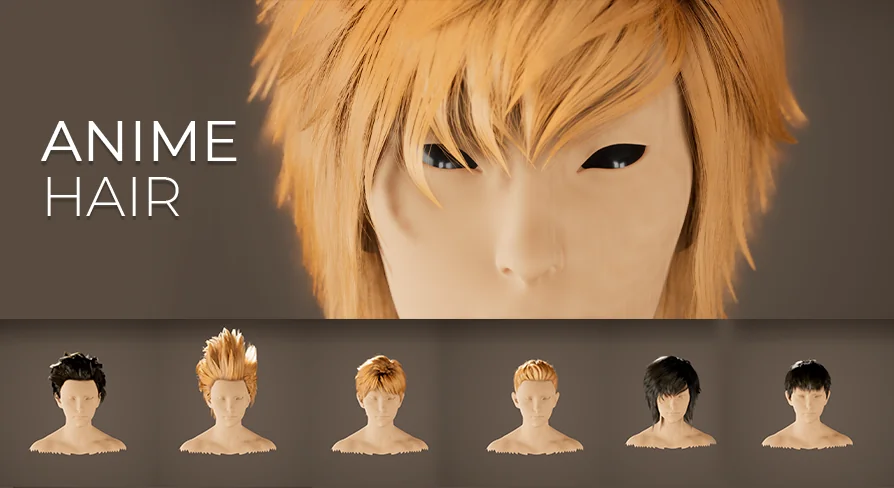
Anime Hair
A groom-based collection of 23 anime-inspired hairstyles and modular strands built for MetaHumans and conventional humanoid character rigs.
Stylized Character Aesthetics with Hair Groom Systems
Translating stylized anime silhouettes into strand-based groom pipelines often presents unique challenges for 3D character artists. Traditional polygonal hair cards can establish broad shapes quickly, yet they lack the individual strand definition and interactive groom dynamics native to modern engine viewports. Anime Hair approaches this gap by rendering stylized, anime-influenced silhouettes through strand groom systems. The collection targets both male and female character setups, placing its primary design emphasis on male hair forms that frequently prove difficult to assemble with realistic groom simulations.
Because each hairstyle relies entirely on the groom architecture, the strands react to lighting, shadowing, and strand-level shading systems in real time. This bridge between stylized silhouette design and groom technology allows character artists to produce productions featuring sharp bangs, spiky crowns, parted fringes, and swept-back tufts without sacrificing the strand density expected in contemporary cinematic rendering.
The 23 Anime Hair Variations and Modular Assemblies
At the center of the package is an assortment of 20 distinct base hairstyles, augmented by two bonus variations to reach 23 configurations in total. These styles span diverse silhouette choices, addressing short cropped profiles, medium layered cuts, and voluminous spikes characteristic of action-oriented anime character designs. Rather than locking artists into single rigid groom assets, select pieces within the package operate modularly.
These modular sections can be extracted and isolated, functioning independently or layering directly onto other hairstyles in the library. For production pipelines requiring distinct background characters or varied iterations of hero protagonists, this modular separation enables tailored silhouettes. An artist can take modular bangs or distinct side tufts from one hairstyle and seat them alongside the base strands of another, building hybrid arrangements without modifying underlying strand generation graphs outside the engine environment.
Direct Attachment to MetaHuman and Humanoid Skeletons
Integrating groom grooms into character skeletal setups often demands intricate binding generation, aligning groom caches to skeletal meshes through complex skinning maps. In Anime Hair, direct binding workflows are streamlined. Binding assets are no longer required to place the hair onto a target figure. Instead, each groom asset attaches directly to the character by dragging the groom into place and parenting it to the skeleton's head bone.
This attachment pipeline works uniformly across any conventional humanoid skeleton as well as MetaHuman rigs. Because humanoid head proportions vary substantially between realistic scans, stylized proportions, and standard mannequin bases, fitting the groom to a head mesh is handled by standard transformation. Artists scale and reposition the groom asset precisely as they would adjust a standard prop or static accessory. Once parented to the head bone and sized to match the cranium of the character, the hair tracks head motion smoothly throughout skeletal animations and cinematics.
Shading Workflows and Dual-Color Groom Shaders
Achieving the visual punch of anime character art depends heavily on hair coloration, highlights, and secondary tones. Any standard hair groom material can be assigned across the styles in this package, allowing integration with existing custom groom shader setups, stylized color ramps, or physically based strand materials.
To support multi-tonal looks without requiring extensive shader authoring from scratch, the collection includes a dual-color groom material. This setup allows artists to define distinct root and tip color values, layered highlights, or separated color streaks across the hair strands. Whether establishing natural dark hair with subtle sheen shifts or fantasy-inspired high-contrast gradients common in anime productions, the underlying groom properties accept material adjustments cleanly without disturbing strand placement or density.
Viewport Groom Stability and Ongoing Additions
Deploying dense strand grooms in real-time viewports can occasionally introduce visual artifacts, particularly temporal flickering along fine strand edges during camera movement or dynamic lighting shifts. Managing this flickering requires standard groom rendering adjustments, ensuring temporal anti-aliasing and groom sampling settings align with the high-frequency strand data present throughout the stylized shapes.
The collection also maintains room for ongoing updates aimed at filling gaps in hair design. When specific character archetypes demand parting types, fringes, or unique modular cuts that are not immediately present among the 23 variations, new groom pieces can be incorporated into the collection over time to meet expanding production requirements. This ongoing development path ensures the asset library adapts alongside evolving character rosters, giving artists an adaptable, scalable foundation for stylized strand groom creation.
 Clothing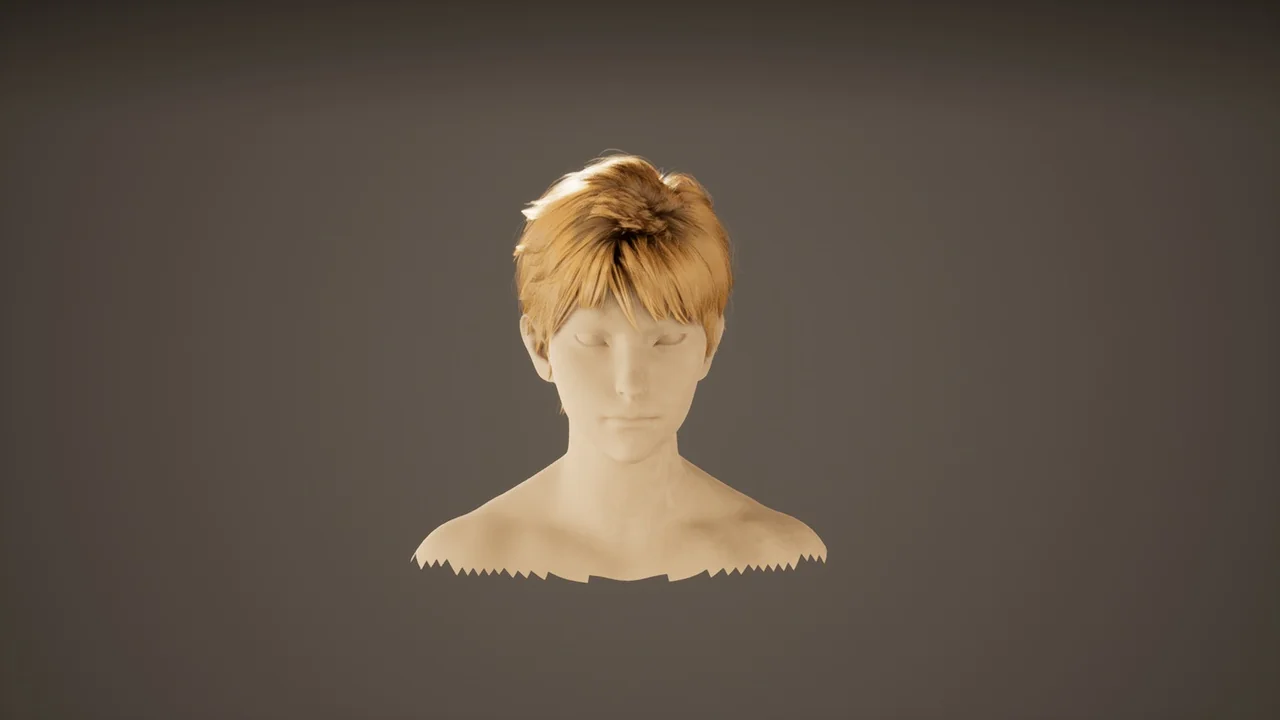
 Clothing
 Clothing
 Characters