"a7cfa646d0d8ae55"{"id":"28322","slug":"metawardrobe-metahuman","title":"MetaWardrobe - Metahuman","category":"Clothing \u0026 Accessories","engine":"5.4+","assetVersion":"Engine version: 5.4+","engineVersion":"","tag":"Clothing","accent":"blue","visual":"character","summary":"MetaWardrobe focuses on a common character-production task: giving MetaHuman characters more wardrobe options without starting each outfit from scratch. It is an expanding clothing pack for Unreal Engine, supported by ongoing outfit updates and tutorials, i...","platform":"Unreal Engine","publishedAt":"2026-05-07T09:12:00.000Z","updatedAt":"2026-05-07T09:12:01.000Z","sourceNotes":[],"fileContents":[],"compatibility":["Unreal Engine","Engine version: 5.4+"],"featuredImage":{"alt":"MetaWardrobe - Metahuman","src":"https://3dcghub.com/wp-content/uploads/2026/05/29dde0259099_a50126df-4113-4d58-80c0-da34ea241580.webp"},"hasDownloadLink":true,"downloads":9,"terms":[{"taxonomy":"category","slug":"clothing-and-accessories","name":"Clothing \u0026 Accessories"},{"taxonomy":"post_tag","slug":"characters","name":"Characters"},{"taxonomy":"post_tag","slug":"plugins","name":"Plugins"},{"taxonomy":"post_tag","slug":"unreal-engine-5","name":"Unreal Engine 5"}],"galleryImages":[{"src":"https://3dcghub.com/wp-content/uploads/2026/05/6511d6ef31b6_11f72a86-4c4d-4389-978f-9c19dc3918ad.webp","alt":"MetaWardrobe - Metahuman"},{"src":"https://3dcghub.com/wp-content/uploads/2026/05/0fc13f76adc2_ca17c7ac-7b4c-45b8-807e-afb0b11bcffa.webp","alt":"MetaWardrobe - Metahuman"},{"src":"https://3dcghub.com/wp-content/uploads/2026/05/e49b0150f398_831eedea-3562-492b-85d5-22644ee2c077.webp","alt":"MetaWardrobe - Metahuman"},{"src":"https://3dcghub.com/wp-content/uploads/2026/05/e6b5d31a3684_f13060b9-bbe6-4b08-9beb-b8ed709a4b22.webp","alt":"MetaWardrobe - Metahuman"},{"src":"https://3dcghub.com/wp-content/uploads/2026/05/f4da6b0460cb_feffecd9-7a14-4677-9f30-8a704a59d9c6.webp","alt":"MetaWardrobe - Metahuman"},{"src":"https://3dcghub.com/wp-content/uploads/2026/05/0628e75d2532_e0a57b17-0119-4577-8c6b-30267e3101d5.webp","alt":"MetaWardrobe - Metahuman"},{"src":"https://3dcghub.com/wp-content/uploads/2026/05/0e14ce943749_31beae90-af23-4d76-b100-a9b6835cd7b8.webp","alt":"MetaWardrobe - Metahuman"},{"src":"https://3dcghub.com/wp-content/uploads/2026/05/de480e6c41e4_37d61541-c3e3-4982-a2f6-88a58dacf45f.webp","alt":"MetaWardrobe - Metahuman"},{"src":"https://3dcghub.com/wp-content/uploads/2026/05/2a786d8861ef_a4b9240d-0af5-4396-b700-c73c8b5aa276.webp","alt":"MetaWardrobe - Metahuman"},{"src":"https://3dcghub.com/wp-content/uploads/2026/05/0a9ed6ce845a_949866b3-e6af-4a23-ba16-10f248517776.webp","alt":"MetaWardrobe - Metahuman"}],"accessPanel":{"kind":"resource","title":"Access this resource","eyebrow":"Free Download","message":"Log in or create a free account to start your download.","fileName":"Content.7z","safetyNote":"All resources are 100% manually reviewed to eliminate all risks.","actionLabel":"Download Free","resourceType":"Resource archive"},"contentHtml":"\u003cp\u003eDressing MetaHuman characters can quickly become a bottleneck when a project needs more than one look, more than one setting, or more than one type of character presentation. MetaWardrobe addresses that part of the workflow directly. It is an ever-growing clothing pack made primarily for Unreal Engine MetaHuman tall normal weight female and male body types, giving teams and creators a clothing-focused resource that can keep expanding instead of staying fixed to a small initial set.\u003c/p\u003e \u003cp\u003eThat ongoing expansion is one of the most practical parts of the package. New outfits, tutorials, and video updates are regularly added, so the pack is not framed as a closed set of garments. It works more like a wardrobe resource that can continue to grow alongside a project that needs fresh character presentation over time.\u003c/p\u003e \u003ch2\u003eMetaWardrobe for Unreal Engine MetaHuman characters\u003c/h2\u003e\n\u003cp\u003eThe pack sits in a very specific production space: Unreal Engine MetaHuman character dressing. Rather than targeting characters in a broad or unspecified way, it is primarily aimed at MetaHuman tall normal weight female and male body types. That matters in day-to-day production because clothing resources are most useful when they are clearly matched to the character system they are meant to support.\u003c/p\u003e \u003cp\u003eIn practical terms, MetaWardrobe fits where a team needs to move from a base MetaHuman into a more defined on-screen character. A neutral MetaHuman often needs clothing to establish role, world, mood, and time period. This pack answers that need with a collection shaped around wearables, outfits, and apparel rather than around a single costume idea. The tags attached to it point to a wide visual spread, including postapocalyptic, modern, sci-fi, middle ages, fantasy, medieval, casualwear, realistic, ancient, Victorian, and cyberpunk directions. For production, that range suggests a wardrobe resource that can serve very different scene types without leaving the MetaHuman workflow.\u003c/p\u003e \u003ch2\u003eSeason 2 outfit updates and a pack that keeps growing\u003c/h2\u003e\n\u003cp\u003eMetaWardrobe is presented with a Season 2 outfit update videos playlist, which reinforces the idea that this is an actively expanding clothing pack rather than a static drop of content.\u003c/p\u003e \u003cp\u003eFor ongoing productions, that makes the pack easier to place in a longer pipeline. A one-off clothing set can help with a single scene or a single character pass, but an ever-growing pack is more useful when the wardrobe demands of a project keep changing. If a cinematic, interactive experience, or character-driven sequence needs additional looks later in development, a resource that continues to receive new outfits and video updates can stay relevant longer. The regular addition of tutorials also changes how the pack functions in practice. It is not only about the clothing pieces themselves; it also supports the setup and usage process with guided material, which is valuable when a team wants to keep momentum instead of pausing to solve every clothing task from scratch.\u003c/p\u003e \u003ch2\u003eParametric clothing in UE5.6 changes the setup flow\u003c/h2\u003e\n\u003cp\u003eOne of the clearest implementation details is the newly added parametric clothing. To get a version that includes parametric clothing, the product needs to be added and downloaded to a UE5.6 project.\u003c/p\u003e \u003cp\u003eThat detail places MetaWardrobe in a more current MetaHuman workflow where clothing is not only selected but also handled with resizing and adjustment in mind. The available tutorial coverage reflects that shift. There is a latest tutorial focused on using the newly added parametric clothing, a main usage tutorial, and another tutorial that shows how to create resizable MetaHuman clothing for the UE5.6 MetaHuman Plugin in 10 minutes. Taken together, these tutorials show where the pack fits after download: not as a passive library sitting in a content folder, but as a working clothing resource meant to be used, adjusted, and integrated into character setup. For artists and developers, that means the pack supports both direct use and the practical learning steps around newer clothing behavior in UE5.6.\u003c/p\u003e \u003ch3\u003eWhere the tutorials matter in production\u003c/h3\u003e\n\u003cp\u003eClothing resources become far more useful when setup guidance is part of the package. Here, the tutorial material helps in three distinct moments of the workflow: getting familiar with the main usage path, understanding the newly added parametric clothing, and learning a fast approach to resizable MetaHuman clothing with the UE5.6 MetaHuman Plugin.\u003c/p\u003e \u003cp\u003eThat combination makes MetaWardrobe easier to place into a character pipeline where multiple people may touch the same assets. A character artist may focus on selecting outfits, while a technical artist or developer may care more about resizing and implementation details. The tutorial coverage supports both sides of that handoff without shifting the pack away from its main purpose, which remains clothing for MetaHuman characters.\u003c/p\u003e \u003ch2\u003eFrom casualwear to cyberpunk: where MetaWardrobe fits on screen\u003c/h2\u003e\n\u003cp\u003eThe style tags connected to MetaWardrobe give a strong sense of where it can be used visually. It spans casualwear and realistic presentation, but also reaches into fantasy, medieval, ancient, Victorian, postapocalyptic, sci-fi, and cyberpunk territory. That is a broad mix of costume language inside one clothing-centered resource.\u003c/p\u003e \u003cp\u003eIn production terms, that makes the pack useful for scene building across different world types and character roles. A grounded modern character, a stylized future-facing figure, or a wardrobe choice meant to push a fantasy or historical mood can all sit within the same MetaHuman clothing workflow. Because the pack is also tagged as modular, accessory-focused, rigged, wearable, collection-based, and regularly updated, it reads less like a single themed costume and more like a wardrobe system that can help define multiple character identities. For teams working with MetaHumans across varied story settings, that flexibility is where the pack becomes most practical: it can support repeated character outfitting tasks while staying inside Unreal Engine and inside the MetaHuman body types it explicitly targets.\u003c/p\u003e \u003cp\u003eMetaWardrobe makes the most sense in productions that expect to keep dressing MetaHuman characters over time. Between its expanding outfit library, UE5.6 parametric clothing path, and tutorial support, it fits naturally into a workflow where character presentation is an ongoing task rather than a one-time pass.\u003c/p\u003e\n\n\u003ch2\u003eRelated Resources Worth Checking\u003c/h2\u003e\n\u003cul\u003e\n\u003cli\u003e\u003ca href=\"https://3dcghub.com/1950s-characters-bundle-1950s-characters-bundle-1950-character-gangster-3d/\" title=\"1950s Characters Bundle ( 1950s Characters Bundle 1950 Character Gangster 3D )\"\u003e1950s Characters Bundle ( 1950s Characters Bundle 1950 Character Gangster 3D )\u003c/a\u003e\u003c/li\u003e\n\u003cli\u003e\u003ca href=\"https://3dcghub.com/character-rigged-npc-character-rigged-npc-rig-characters-animated-3d/\" title=\"Character / Rigged / NPC ( Character Rigged NPC Rig Characters Animated 3D )\"\u003eCharacter / Rigged / NPC ( Character Rigged NPC Rig Characters Animated 3D )\u003c/a\u003e\u003c/li\u003e\n\u003cli\u003e\u003ca href=\"https://3dcghub.com/ultimate-level-art-tool-ulat-tools-plugin-plugins/\" title=\"Ultimate Level Art Tool – ULAT ( Tools / Plugin / Plugins )\"\u003eUltimate Level Art Tool – ULAT ( Tools / Plugin / Plugins )\u003c/a\u003e\u003c/li\u003e\n\u003c/ul\u003e","contentTextLength":6682,"navigation":{"current":1299,"total":3167,"previous":{"id":"28335","slug":"l-chinesewarrior","title":"L: ChineseWarrior","category":"Characters \u0026 Creatures","platform":"Unreal Engine","updatedAt":"2026-05-07T09:49:19.000Z"},"next":{"id":"28306","slug":"mega-game-music-collection","title":"Mega Game Music Collection","category":"Music","platform":"Unreal Engine","updatedAt":"2026-05-06T17:25:30.000Z"}},"relatedResources":[{"id":"27876","slug":"surgery-gloves-147-model-for-metahumans-all-mh-bodies-ue5-skeletons-rigged","title":"Surgery Gloves 147 Model for Metahumans - All MH Bodies \u0026 UE5 Skeletons - Rigged","category":"Clothing \u0026 Accessories","engine":"5.3+","assetVersion":"Engine version: 5.3+","engineVersion":"","tag":"Clothing","accent":"blue","visual":"character","summary":"Surgery Gloves 147 targets a very specific character workflow: adding medical-style latex gloves to MetaHumans and UE5 mannequins without rebuilding the fit for each body. The package covers all male and female MetaHuman bodies, supports the new parametric...","platform":"Unreal Engine","publishedAt":"2026-04-30T05:25:47.000Z","updatedAt":"2026-04-30T05:25:48.000Z","sourceNotes":[],"fileContents":[],"compatibility":["Unreal Engine","Engine version: 5.3+"],"featuredImage":{"alt":"Surgery Gloves 147 Model for Metahumans - All MH Bodies \u0026 UE5 Skeletons - Rigged","src":"https://3dcghub.com/wp-content/uploads/2026/04/27712e77c11a_d0fa8353-fc9b-4c9a-bae4-6b195c8fb111.webp"},"hasDownloadLink":true,"downloads":2},{"id":"13487","slug":"runtime-metahuman-lip-sync-ai-for-npcs-cc4-genesis-arkit-and-more","title":"Runtime MetaHuman Lip Sync (AI for NPCs) (+ CC4, Genesis, ARKit, and more)","category":"Animations","engine":"1.0 - 1.18","assetVersion":"Engine version: 5.5 - 5.7","engineVersion":"Asset Version: 1.0 - 1.18","tag":"Animations","accent":"blue","visual":"animation","summary":"Enhance your digital characters with zero-latency, real-time lip synchronization that works completely offline. This plugin supports MetaHumans, CC4, and Genesis characters across multiple platforms.","platform":"Unreal Engine","publishedAt":"2026-03-10T17:28:41.000Z","updatedAt":"2026-07-05T07:03:46.447Z","sourceNotes":[],"fileContents":[],"compatibility":["Unreal Engine","Engine version: 5.5 - 5.7","Asset Version: 1.0 - 1.18"],"featuredImage":{"alt":"Runtime MetaHuman Lip Sync (AI for NPCs) (+ CC4, Genesis, ARKit, and more)","src":"https://3dcghub.com/wp-content/uploads/2026/03/b4351251-5c6e-4b55-9c60-117d4a331ef7.webp"},"hasDownloadLink":true,"downloads":5},{"id":"1000906","slug":"zendyn-for-metahumans","title":"ZenDyn For Metahumans","category":"Animations","engine":"5.6","assetVersion":"Asset Version: 1.0.1","engineVersion":"Engine Version: 5.6","tag":"Animations","accent":"blue","visual":"animation","summary":"ZenDyn For Metahumans adds facial animation control, smoothing, dynamics, and emotion poses to Metahumans, cleaning up LiveLink jitter and bringing more life to","platform":"Unreal Engine","publishedAt":"2026-08-06T05:20:19.468Z","updatedAt":"2026-08-06T05:20:19.468Z","sourceNotes":[],"fileContents":[],"compatibility":["Unreal Engine","Asset Version: 1.0.1","Engine Version: 5.6"],"featuredImage":{"alt":"ZenDyn For Metahumans","src":"/wp-content/uploads/published/2026/08/8b1d0703068e-4262ea7c-1529-4f3a-a927-70052ef633f2-268518c19f.webp"},"hasDownloadLink":true,"downloads":3}]}
Clothing
MetaWardrobe - Metahuman
MetaWardrobe focuses on a common character-production task: giving MetaHuman characters more wardrobe options without starting each outfit from scratch. It is an expanding clothing pack for Unreal Engine, supported by ongoing outfit updates and tutorials, i...
Dressing MetaHuman characters can quickly become a bottleneck when a project needs more than one look, more than one setting, or more than one type of character presentation. MetaWardrobe addresses that part of the workflow directly. It is an ever-growing clothing pack made primarily for Unreal Engine MetaHuman tall normal weight female and male body types, giving teams and creators a clothing-focused resource that can keep expanding instead of staying fixed to a small initial set.
That ongoing expansion is one of the most practical parts of the package. New outfits, tutorials, and video updates are regularly added, so the pack is not framed as a closed set of garments. It works more like a wardrobe resource that can continue to grow alongside a project that needs fresh character presentation over time.
MetaWardrobe for Unreal Engine MetaHuman characters
The pack sits in a very specific production space: Unreal Engine MetaHuman character dressing. Rather than targeting characters in a broad or unspecified way, it is primarily aimed at MetaHuman tall normal weight female and male body types. That matters in day-to-day production because clothing resources are most useful when they are clearly matched to the character system they are meant to support.
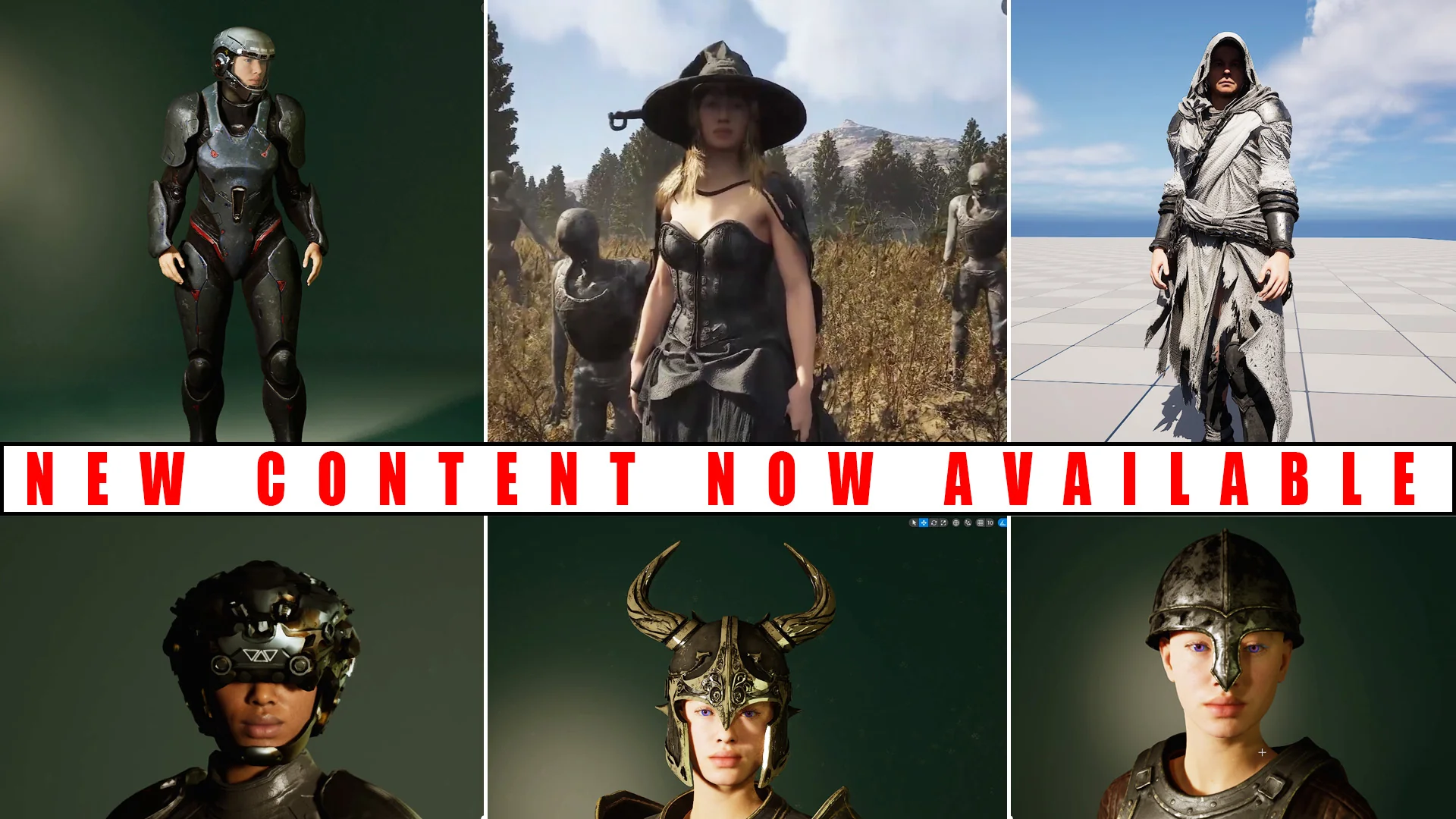
In practical terms, MetaWardrobe fits where a team needs to move from a base MetaHuman into a more defined on-screen character. A neutral MetaHuman often needs clothing to establish role, world, mood, and time period. This pack answers that need with a collection shaped around wearables, outfits, and apparel rather than around a single costume idea. The tags attached to it point to a wide visual spread, including postapocalyptic, modern, sci-fi, middle ages, fantasy, medieval, casualwear, realistic, ancient, Victorian, and cyberpunk directions. For production, that range suggests a wardrobe resource that can serve very different scene types without leaving the MetaHuman workflow.
Season 2 outfit updates and a pack that keeps growing
MetaWardrobe is presented with a Season 2 outfit update videos playlist, which reinforces the idea that this is an actively expanding clothing pack rather than a static drop of content.
For ongoing productions, that makes the pack easier to place in a longer pipeline. A one-off clothing set can help with a single scene or a single character pass, but an ever-growing pack is more useful when the wardrobe demands of a project keep changing. If a cinematic, interactive experience, or character-driven sequence needs additional looks later in development, a resource that continues to receive new outfits and video updates can stay relevant longer. The regular addition of tutorials also changes how the pack functions in practice. It is not only about the clothing pieces themselves; it also supports the setup and usage process with guided material, which is valuable when a team wants to keep momentum instead of pausing to solve every clothing task from scratch.
Parametric clothing in UE5.6 changes the setup flow
One of the clearest implementation details is the newly added parametric clothing. To get a version that includes parametric clothing, the product needs to be added and downloaded to a UE5.6 project.
That detail places MetaWardrobe in a more current MetaHuman workflow where clothing is not only selected but also handled with resizing and adjustment in mind. The available tutorial coverage reflects that shift. There is a latest tutorial focused on using the newly added parametric clothing, a main usage tutorial, and another tutorial that shows how to create resizable MetaHuman clothing for the UE5.6 MetaHuman Plugin in 10 minutes. Taken together, these tutorials show where the pack fits after download: not as a passive library sitting in a content folder, but as a working clothing resource meant to be used, adjusted, and integrated into character setup. For artists and developers, that means the pack supports both direct use and the practical learning steps around newer clothing behavior in UE5.6.
Where the tutorials matter in production
Clothing resources become far more useful when setup guidance is part of the package. Here, the tutorial material helps in three distinct moments of the workflow: getting familiar with the main usage path, understanding the newly added parametric clothing, and learning a fast approach to resizable MetaHuman clothing with the UE5.6 MetaHuman Plugin.
That combination makes MetaWardrobe easier to place into a character pipeline where multiple people may touch the same assets. A character artist may focus on selecting outfits, while a technical artist or developer may care more about resizing and implementation details. The tutorial coverage supports both sides of that handoff without shifting the pack away from its main purpose, which remains clothing for MetaHuman characters.
From casualwear to cyberpunk: where MetaWardrobe fits on screen
The style tags connected to MetaWardrobe give a strong sense of where it can be used visually. It spans casualwear and realistic presentation, but also reaches into fantasy, medieval, ancient, Victorian, postapocalyptic, sci-fi, and cyberpunk territory. That is a broad mix of costume language inside one clothing-centered resource.
In production terms, that makes the pack useful for scene building across different world types and character roles. A grounded modern character, a stylized future-facing figure, or a wardrobe choice meant to push a fantasy or historical mood can all sit within the same MetaHuman clothing workflow. Because the pack is also tagged as modular, accessory-focused, rigged, wearable, collection-based, and regularly updated, it reads less like a single themed costume and more like a wardrobe system that can help define multiple character identities. For teams working with MetaHumans across varied story settings, that flexibility is where the pack becomes most practical: it can support repeated character outfitting tasks while staying inside Unreal Engine and inside the MetaHuman body types it explicitly targets.
MetaWardrobe makes the most sense in productions that expect to keep dressing MetaHuman characters over time. Between its expanding outfit library, UE5.6 parametric clothing path, and tutorial support, it fits naturally into a workflow where character presentation is an ongoing task rather than a one-time pass.
 Clothing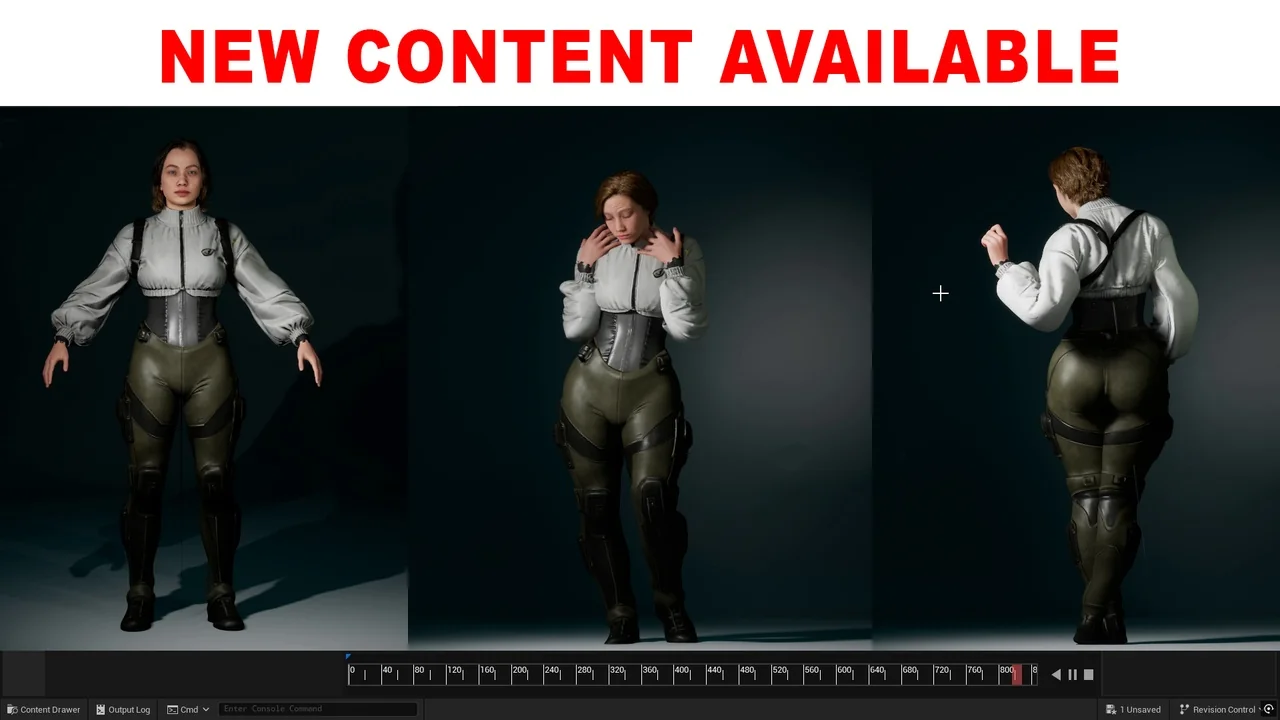
 Clothing
 Animations
 Animations