"7aa4acc705f0d80b"{"id":"1001947","slug":"ancient-cemetery-props","title":"Ancient Cemetery Props","category":"Environments","engine":"4.12+,5.0+","assetVersion":"","engineVersion":"Engine Version: 4.12+,5.0+","tag":"Environments","accent":"blue","visual":"city","summary":"Examine the technical setup, LOD structure, and world-building capabilities of Ancient Cemetery Props for desktop and VR environmental production.","platform":"Unreal Engine","publishedAt":"2026-10-24T11:20:42.864Z","updatedAt":"2026-10-24T11:20:42.864Z","sourceNotes":[],"fileContents":[],"compatibility":["Unreal Engine","Engine Version: 4.12+,5.0+"],"featuredImage":{"alt":"Ancient Cemetery Props","src":"/wp-content/uploads/published/2026/10/85a1d8e8909a-9e13170b-da81-4aa9-a639-53436da15856-39ab481be7.webp"},"hasDownloadLink":true,"downloads":0,"terms":[{"taxonomy":"category","slug":"environments","name":"Environments"}],"galleryImages":[{"src":"/wp-content/uploads/published/2026/10/cbc28a0c87a1-fca0dddf-1afc-4a61-92b5-5f417aeefc70-d4cb44196e.webp","alt":"Ancient Cemetery Props"},{"src":"/wp-content/uploads/published/2026/10/3a6dd92b776f-f62c7036-d374-4718-a21b-fc98a41aae3e-11abf83540.webp","alt":"Ancient Cemetery Props"},{"src":"/wp-content/uploads/published/2026/10/86641a2d610e-1f771e60-ded6-4de6-88c3-23c0acd51dae-385643f321.webp","alt":"Ancient Cemetery Props"},{"src":"/wp-content/uploads/published/2026/10/e4826c37e28e-6c584101-7c95-42d6-9b91-4a42d5691681-a50e64e3c0.webp","alt":"Ancient Cemetery Props"},{"src":"/wp-content/uploads/published/2026/10/c08a502f25e8-51a9a1a7-5786-4a4d-8bfd-9b1a0efe1732-fd907959f1.webp","alt":"Ancient Cemetery Props"}],"accessPanel":{"kind":"resource","title":"Download this resource","eyebrow":"Free Download","message":"Log in or create a free account to start your download.","fileName":"Content.7z","safetyNote":"Resources are manually reviewed before listing to improve quality and reduce obvious risks.","actionLabel":"Download Free","resourceType":"Resource archive"},"contentHtml":"\u003ch2\u003eConstructing Somber Grounds with Ancient Cemetery Props\u003c/h2\u003e\u003cp\u003eDepicting age, neglect, and historical weight in a digital space requires careful environmental dressing. Whether constructing a decaying churchyard for a horror title or an abandoned shrine tucked within a fantasy world, ground-level assets dictate the mood of the location. Ancient Cemetery Props provides an immediate kit for staging these solemn outdoor environments, centered around weathered stone markers and organic ground elements.\u003c/p\u003e\u003cp\u003eThe package focuses on a modular collection of eight gravestones accompanied by grass tufts and loose autumn leaves. Together, these pieces establish an authentic spatial narrative of abandonment, seasonal decay, and isolation. Instead of presenting pristine monuments, the collection draws directly on gothic and realistic aesthetics, making it suitable for dark fantasy spaces, period-accurate historical cemeteries, or atmospheric horror encounters where quiet environmental tension is paramount.\u003c/p\u003e\u003ch2\u003eThe Core Elements: Eight Gravestones, Grass, and Autumn Leaves\u003c/h2\u003e\u003cp\u003eThe centerpiece of the collection is its set of eight gravestones. Rather than relying on duplicated geometry with shifted surface materials, every mesh in the set is distinct. This variety gives level designers the ability to populate a cemetery plot without visible repetition breaking the illusion. Across the eight variants, individual silhouette changes, structural decay, and chipped edges suggest monuments erected at different times, subjected to varying degrees of weathering.\u003c/p\u003e\u003cp\u003eSurrounding the stone markers are two key secondary elements: standalone grass clumps and loose autumn leaves. Placing stone assets directly onto bare terrain textures often exposes artificial seams where geometry meets the ground plane. The included grass assets break up these hard contact edges, embedding the gravestones into the sod. The scatter of autumn leaves introduces organic clutter, hinting at nearby deciduous foliage, seasonal shifts, and a lack of groundskeeping. By distributing the foliage meshes across the bases of the markers, creators can transition naturally from open terrain to burial plots without requiring extensive bespoke ground dressing.\u003c/p\u003e\u003ch2\u003eTexture Detailing and Custom UV Architecture\u003c/h2\u003e\u003cp\u003eSurface authenticity across the collection is governed by 2k textures applied across custom UV layouts. Every single mesh features its own custom UV unwrap, maximizing the resolution across prominent surfaces. Because players in desktop titles and virtual reality experiences frequently inspect props from immediate proximity, texture fidelity on the stone faces and foliage cards must hold up under close viewing angles.\u003c/p\u003e\u003cp\u003eThe 2k resolution strikes a balanced midpoint between visual crispness and resource efficiency. The surface mapping captures the pitted porosity of aged stone, structural fractures, subtle surface discoloration, and natural wear typical of ancient burial grounds. For the autumn leaves and grass elements, clean alpha handling and surface maps maintain visual clarity against varying ground surfaces without causing noisy artifacts or specular bleed under harsh directional lighting.\u003c/p\u003e\u003ch2\u003ePerformance Engineering: LODs for Desktop and VR Games\u003c/h2\u003e\u003cp\u003ePerformance optimization dictates whether an atmospheric scene functions cleanly during real-time rendering. Ancient Cemetery Props has been tested on PC and is built to target both standard desktop games and virtual reality experiences. VR projects face stringent constraints, demanding high refresh rates, stereoscopic rendering stability, and low latency to prevent visual discomfort.\u003c/p\u003e\u003cp\u003eTo satisfy these requirements, every mesh incorporates custom Level of Detail (LOD) steps. These LOD stages progressively reduce polygon density as distance from the camera increases, preserving performance when multiple gravestones and scattered foliage instances fill the viewport at once. The inclusion of dedicated LODs guarantees that broad outdoor graveyards—featuring dozens of instanced stones and high-density leaf scatter—maintain balanced draw times. Testing on PC verifies that the geometry and texture footprint perform reliably under standard desktop lighting models as well as the rigorous frame-rate targets needed for head-mounted displays.\u003c/p\u003e\u003ch2\u003eStylistic Flexibility Across Fantasy, Gothic, and Realistic Projects\u003c/h2\u003e\u003cp\u003eThe stylistic execution of the props positions them across several genre categories. While tagged for fantasy and gothic applications, their material definition remains grounded in physical realism. This dual character makes the assets straightforward to place in diverse creative contexts:\u003c/p\u003e\u003cul\u003e\u003cli\u003e\u003cstrong\u003eRealistic Historical Settings:\u003c/strong\u003e Century-old parish grounds, village burial sites, or untended frontier plots that require aged, unadorned stone markers.\u003c/li\u003e\u003cli\u003e\u003cstrong\u003eGothic Environments:\u003c/strong\u003e Moody, fog-laden landscapes where arched, monumental silhouettes emphasize a brooding, melancholic tone.\u003c/li\u003e\u003cli\u003e\u003cstrong\u003eHorror Sequences:\u003c/strong\u003e Haunted graveyards, desolate crypt exteriors, and overgrown ruins where scattered leaves and neglected graves heighten vulnerability.\u003c/li\u003e\u003cli\u003e\u003cstrong\u003eFantasy Locales:\u003c/strong\u003e Ancient ruins, forgotten battlefields, or wayside shrines embedded deep within wilderness settings.\u003c/li\u003e\u003c/ul\u003e\u003ch2\u003eWorkflow Integration with Sharur's Normandy Village and PCG Plants\u003c/h2\u003e\u003cp\u003eThe collection integrates directly alongside broader scene-assembly packages, maintaining visual and structural compatibility with Sharur's Normandy Village and procedural systems such as PCG Plants. When paired with Normandy Village architecture, the gravestones seamlessly align with historic European stone buildings, church ruins, and rural hamlet perimeters, offering matching material weight and architectural age.\u003c/p\u003e\u003cp\u003eIntegration with PCG Plants opens procedural scattering possibilities. Level artists can feed the grass and autumn leaf assets into procedural generation graphs, automatically scattering foliage around gravestone collision bounds or painting clusters across broad terrain regions. This capability bridges the gap between individual hero prop placement and rapid, procedural world composition, allowing dense cemetery grounds to be built swiftly while preserving structural fidelity across desktop and VR applications alike.\u003c/p\u003e\n\n\u003ch2\u003eExplore Similar Assets\u003c/h2\u003e\n\u003cul\u003e\n\u003cli\u003e\u003ca href=\"https://3dcghub.com/cemetery-vol-1-gravestones/\" title=\"Cemetery - VOL.1 - Gravestones\"\u003eCemetery - VOL.1 - Gravestones\u003c/a\u003e\u003c/li\u003e\n\u003cli\u003e\u003ca href=\"https://3dcghub.com/cemetery/\" title=\"Cemetery\"\u003eCemetery\u003c/a\u003e\u003c/li\u003e\n\u003cli\u003e\u003ca href=\"https://3dcghub.com/asian-canal-environment-asian-canal-environment-asian-ancient-bridge-old-3d/\" title=\"Asian Canal Environment (Asian Canal Environment Asian Ancient Bridge Old 3D )\"\u003eAsian Canal Environment (Asian Canal Environment Asian Ancient Bridge Old 3D )\u003c/a\u003e\u003c/li\u003e\n\u003cli\u003e\u003ca href=\"https://3dcghub.com/polygon-ancient-empire/\" title=\"POLYGON - Ancient Empire\"\u003ePOLYGON - Ancient Empire\u003c/a\u003e\u003c/li\u003e\n\u003cli\u003e\u003ca href=\"https://3dcghub.com/poseidon-statues-poseidon-statues-statue-ancient-mythical-roman-prop-3d-art/\" title=\"Poseidon Statues ( Poseidon Statues Statue Ancient Mythical Roman Prop 3D Art )\"\u003ePoseidon Statues ( Poseidon Statues Statue Ancient Mythical Roman Prop 3D Art )\u003c/a\u003e\u003c/li\u003e\n\u003c/ul\u003e","contentTextLength":6432,"navigation":{"current":43,"total":3925,"previous":{"id":"1001948","slug":"animal-skull-pack","title":"Animal Skull Pack","category":"Horror","platform":"Unreal Engine","updatedAt":"2026-10-24T11:22:48.530Z"},"next":{"id":"1001946","slug":"american-bar","title":"American Bar","category":"Tools, Objects \u0026 Decor","platform":"Unreal Engine","updatedAt":"2026-10-24T11:20:17.570Z"}},"relatedResources":[{"id":"1001134","slug":"cemetery-vol-1-gravestones","title":"Cemetery - VOL.1 - Gravestones","category":"Tombs \u0026 Gravestones","engine":"4.26+,5.0+","assetVersion":"","engineVersion":"Engine Version: 4.26+,5.0+","tag":"Tombs","accent":"blue","visual":"mech","summary":"Unreal Engine graveyard prop pack with 66 channel-packed texture sets, master material controls, real-time lighting, and custom-made labels. Built for horror, f","platform":"Unreal Engine","publishedAt":"2026-09-09T02:27:08.459Z","updatedAt":"2026-09-09T02:27:08.459Z","sourceNotes":[],"fileContents":[],"compatibility":["Unreal Engine","Engine Version: 4.26+,5.0+"],"featuredImage":{"alt":"Cemetery - VOL.1 - Gravestones","src":"/wp-content/uploads/published/2026/09/4b4f48b7dd32-914a8410-0549-494c-93c7-f4fd0bb74b79-ef5d24987d.webp"},"hasDownloadLink":true,"downloads":0},{"id":"1000765","slug":"cemetery","title":"Cemetery","category":"Abandoned","engine":"4.26+,5.0+","assetVersion":"","engineVersion":"Engine Version: 4.26+,5.0+","tag":"Abandoned","accent":"blue","visual":"mech","summary":"Cemetery is a complete abandoned graveyard package with an Abandoned Chapel, Cemetery_props, and Autumn alley—tombstones, crypts, fences, graves, trees, foliage","platform":"Unreal Engine","publishedAt":"2026-07-28T16:49:36.862Z","updatedAt":"2026-07-28T16:49:36.862Z","sourceNotes":[],"fileContents":[],"compatibility":["Unreal Engine","Engine Version: 4.26+,5.0+"],"featuredImage":{"alt":"Cemetery","src":"/wp-content/uploads/published/2026/07/162b9902c6c9-52b2d138-5fe5-4100-a30b-6e1c2ced99b9-46411a8ea3.webp"},"hasDownloadLink":true,"downloads":0},{"id":"1000976","slug":"asian-canal-environment-asian-canal-environment-asian-ancient-bridge-old-3d","title":"Asian Canal Environment (Asian Canal Environment Asian Ancient Bridge Old 3D )","category":"Historical","engine":"4.26+,5.0+","assetVersion":"","engineVersion":"Engine Version: 4.26+,5.0+","tag":"Historical","accent":"blue","visual":"city","summary":"Asian Canal Environment is an Unreal Engine pack with an Example Showcase Map and building/prop models for ancient Asian canal scenes, compatible with ULAT.","platform":"Unreal Engine","publishedAt":"2026-08-17T17:14:31.122Z","updatedAt":"2026-08-17T17:14:31.122Z","sourceNotes":[],"fileContents":[],"compatibility":["Unreal Engine","Engine Version: 4.26+,5.0+"],"featuredImage":{"alt":"Asian Canal Environment (Asian Canal Environment Asian Ancient Bridge Old 3D )","src":"/wp-content/uploads/published/2026/08/4e403f279309-a42f0ffe-5751-4412-ad9f-5795b68f275f-0bad43f902.webp"},"hasDownloadLink":true,"downloads":2}]}
Environments
Ancient Cemetery Props
Examine the technical setup, LOD structure, and world-building capabilities of Ancient Cemetery Props for desktop and VR environmental production.
Category:Unreal Engine,EnvironmentsPlatform: Unreal EngineEngine Version: 4.12+,5.0+Published: Oct 24, 2026
Environments
Resource overview
Constructing Somber Grounds with Ancient Cemetery Props
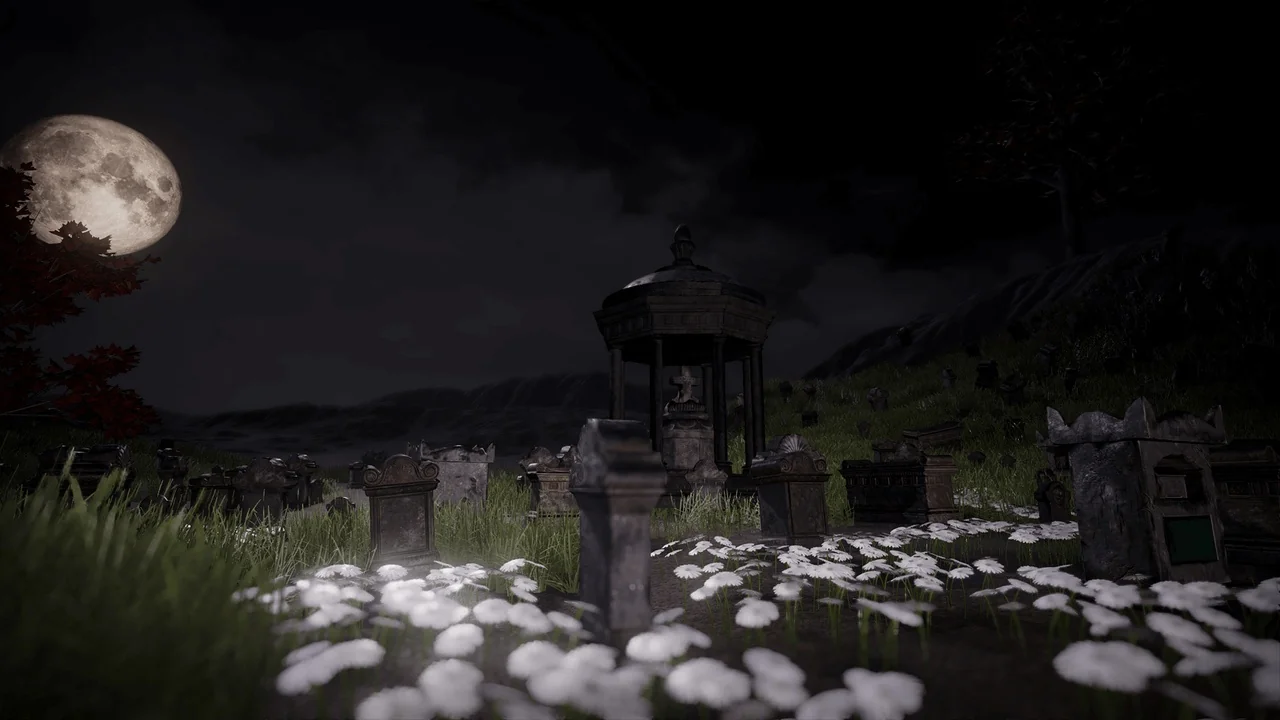
Depicting age, neglect, and historical weight in a digital space requires careful environmental dressing. Whether constructing a decaying churchyard for a horror title or an abandoned shrine tucked within a fantasy world, ground-level assets dictate the mood of the location. Ancient Cemetery Props provides an immediate kit for staging these solemn outdoor environments, centered around weathered stone markers and organic ground elements.
The package focuses on a modular collection of eight gravestones accompanied by grass tufts and loose autumn leaves. Together, these pieces establish an authentic spatial narrative of abandonment, seasonal decay, and isolation. Instead of presenting pristine monuments, the collection draws directly on gothic and realistic aesthetics, making it suitable for dark fantasy spaces, period-accurate historical cemeteries, or atmospheric horror encounters where quiet environmental tension is paramount.
The Core Elements: Eight Gravestones, Grass, and Autumn Leaves
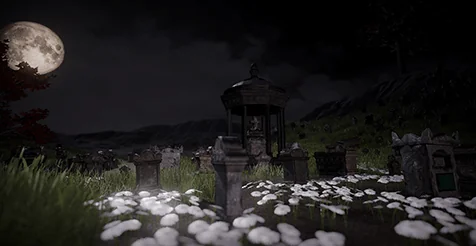
The centerpiece of the collection is its set of eight gravestones. Rather than relying on duplicated geometry with shifted surface materials, every mesh in the set is distinct. This variety gives level designers the ability to populate a cemetery plot without visible repetition breaking the illusion. Across the eight variants, individual silhouette changes, structural decay, and chipped edges suggest monuments erected at different times, subjected to varying degrees of weathering.
Surrounding the stone markers are two key secondary elements: standalone grass clumps and loose autumn leaves. Placing stone assets directly onto bare terrain textures often exposes artificial seams where geometry meets the ground plane. The included grass assets break up these hard contact edges, embedding the gravestones into the sod. The scatter of autumn leaves introduces organic clutter, hinting at nearby deciduous foliage, seasonal shifts, and a lack of groundskeeping. By distributing the foliage meshes across the bases of the markers, creators can transition naturally from open terrain to burial plots without requiring extensive bespoke ground dressing.
Texture Detailing and Custom UV Architecture
Surface authenticity across the collection is governed by 2k textures applied across custom UV layouts. Every single mesh features its own custom UV unwrap, maximizing the resolution across prominent surfaces. Because players in desktop titles and virtual reality experiences frequently inspect props from immediate proximity, texture fidelity on the stone faces and foliage cards must hold up under close viewing angles.
The 2k resolution strikes a balanced midpoint between visual crispness and resource efficiency. The surface mapping captures the pitted porosity of aged stone, structural fractures, subtle surface discoloration, and natural wear typical of ancient burial grounds. For the autumn leaves and grass elements, clean alpha handling and surface maps maintain visual clarity against varying ground surfaces without causing noisy artifacts or specular bleed under harsh directional lighting.
Performance Engineering: LODs for Desktop and VR Games
Performance optimization dictates whether an atmospheric scene functions cleanly during real-time rendering. Ancient Cemetery Props has been tested on PC and is built to target both standard desktop games and virtual reality experiences. VR projects face stringent constraints, demanding high refresh rates, stereoscopic rendering stability, and low latency to prevent visual discomfort.
To satisfy these requirements, every mesh incorporates custom Level of Detail (LOD) steps. These LOD stages progressively reduce polygon density as distance from the camera increases, preserving performance when multiple gravestones and scattered foliage instances fill the viewport at once. The inclusion of dedicated LODs guarantees that broad outdoor graveyards—featuring dozens of instanced stones and high-density leaf scatter—maintain balanced draw times. Testing on PC verifies that the geometry and texture footprint perform reliably under standard desktop lighting models as well as the rigorous frame-rate targets needed for head-mounted displays.
Stylistic Flexibility Across Fantasy, Gothic, and Realistic Projects
The stylistic execution of the props positions them across several genre categories. While tagged for fantasy and gothic applications, their material definition remains grounded in physical realism. This dual character makes the assets straightforward to place in diverse creative contexts:
Realistic Historical Settings: Century-old parish grounds, village burial sites, or untended frontier plots that require aged, unadorned stone markers.
Gothic Environments: Moody, fog-laden landscapes where arched, monumental silhouettes emphasize a brooding, melancholic tone.
Horror Sequences: Haunted graveyards, desolate crypt exteriors, and overgrown ruins where scattered leaves and neglected graves heighten vulnerability.
Fantasy Locales: Ancient ruins, forgotten battlefields, or wayside shrines embedded deep within wilderness settings.
Workflow Integration with Sharur's Normandy Village and PCG Plants
The collection integrates directly alongside broader scene-assembly packages, maintaining visual and structural compatibility with Sharur's Normandy Village and procedural systems such as PCG Plants. When paired with Normandy Village architecture, the gravestones seamlessly align with historic European stone buildings, church ruins, and rural hamlet perimeters, offering matching material weight and architectural age.
Integration with PCG Plants opens procedural scattering possibilities. Level artists can feed the grass and autumn leaf assets into procedural generation graphs, automatically scattering foliage around gravestone collision bounds or painting clusters across broad terrain regions. This capability bridges the gap between individual hero prop placement and rapid, procedural world composition, allowing dense cemetery grounds to be built swiftly while preserving structural fidelity across desktop and VR applications alike.
 Environments
 Tombs
 Abandoned
 Historical