"4481da9c895ef786"{"id":"22594","slug":"agents-navigation","title":"Agents Navigation","category":"Behavior AI","engine":"Original Unity version: 2022.3.48","assetVersion":"Original Unity version: 2022.3.48","engineVersion":"Asset Version:4.0.10 - 4.4.4","tag":"Behavior AI","accent":"cyan","visual":"animation","summary":"Agents Navigation provides a high-performance, modular solution for agent movement, utilizing Unity's latest technology stack to handle flocking, avoidance, and NavMesh integration.","platform":"Unity","publishedAt":"2026-04-06T13:27:01.000Z","updatedAt":"2026-04-19T15:37:09.000Z","sourceNotes":[],"fileContents":[],"compatibility":["Unity","Original Unity version: 2022.3.48","Asset Version: 4.0.10 - 4.4.4"],"featuredImage":{"alt":"Agents Navigation","src":"https://3dcghub.com/wp-content/uploads/2026/04/58280c12bed4_75b47b8a-d882-4f39-94c6-e43a46187efc_1280x720_stretch.webp"},"hasDownloadLink":true,"downloads":0,"terms":[{"taxonomy":"category","slug":"behavior-ai","name":"Behavior AI"},{"taxonomy":"post_tag","slug":"environment","name":"Environment"},{"taxonomy":"post_tag","slug":"game-systems","name":"Game Systems"},{"taxonomy":"post_tag","slug":"unity","name":"Unity"}],"galleryImages":[{"src":"https://3dcghub.com/wp-content/uploads/2026/04/32815236e370_0aef4825-c020-42a8-bc93-a3a3c1c3091f_scaled.webp","alt":"Agents Navigation"},{"src":"https://3dcghub.com/wp-content/uploads/2026/04/55daba295c5a_b36f74ed-6c96-4adf-a96d-d48be06cdf0a_scaled.webp","alt":"Agents Navigation"},{"src":"https://3dcghub.com/wp-content/uploads/2026/04/28aa6215ac30_622075d9-7500-49c5-933f-04734d44668b_scaled.webp","alt":"Agents Navigation"},{"src":"https://3dcghub.com/wp-content/uploads/2026/04/64e95cea01a5_5a90020e-2cc0-45db-8d21-19d2b1dcd494_scaled.webp","alt":"Agents Navigation"}],"accessPanel":{"kind":"resource","title":"Access this resource","eyebrow":"Free Download","message":"Log in or create a free account to start your download.","fileName":"Agents Navigation v4.0.10 - 4.4.4.7z","safetyNote":"All resources are 100% manually reviewed to eliminate all risks.","actionLabel":"Download Free","resourceType":"Resource archive"},"contentHtml":"\u003ch2\u003eHigh-Performance Navigation Architecture\u003c/h2\u003e\n\u003cp\u003eThe Agents Navigation package is designed as a modular and scalable solution for managing agent movement within Unity. Built specifically with the Data-Oriented Technology Stack (DOTS) in mind, the framework utilizes Unity’s modern tech stack to maximize efficiency. This includes the use of SIMD mathematics, the C# Job System, and the Burst compiler to handle complex navigation logic. By leveraging the Entity Component System (ECS), the system is capable of handling large numbers of agents through parallelized code, ensuring high performance out of the box.\u003c/p\u003e\n\n\u003ch2\u003eImplementation Workflows: ECS and Hybrid Modes\u003c/h2\u003e\n\u003cp\u003eWhile the architecture is rooted in ECS, the package supports multiple development workflows to accommodate different project requirements. For developers working within a pure Entity-driven environment, the package utilizes ECS natively to maintain maximum performance. \u003c/p\u003e\n\n\u003cp\u003eFor projects using standard Object-Oriented Programming (OOP), a hybrid workflow is available. This mode allows GameObjects to be synchronized with Entities, enabling the navigation features to be used within a traditional workflow. While this provides a lower barrier to entry for existing projects, it is noted that performance in hybrid mode may be slightly lower than a pure ECS implementation due to the overhead of synchronization.\u003c/p\u003e\n\n\u003ch2\u003eCore Navigation and Steering Features\u003c/h2\u003e\n\u003cp\u003eThe framework includes a variety of navigation and spatial awareness features that work across both 2D and 3D environments. These behaviors are designed to be modular, allowing developers to add or remove them based on the specific needs of their AI. The package provides the following core features:\u003c/p\u003e\n\u003cul\u003e\n \u003cli\u003e\u003cstrong\u003eUnity NavMesh Support:\u003c/strong\u003e Includes multithreaded support for 3D NavMesh navigation.\u003c/li\u003e\n \u003cli\u003e\u003cstrong\u003eAvoidance:\u003c/strong\u003e Local steering logic to prevent collisions between agents in 2D and 3D spaces.\u003c/li\u003e\n \u003cli\u003e\u003cstrong\u003eFlocking:\u003c/strong\u003e Specialized 3D behaviors, specifically Alignment and Cohesion, to simulate group dynamics.\u003c/li\u003e\n \u003cli\u003e\u003cstrong\u003eSeparation:\u003c/strong\u003e Maintains individual agent spacing in 2D and 3D environments.\u003c/li\u003e\n \u003cli\u003e\u003cstrong\u003eCollision Detection:\u003c/strong\u003e Integrated systems for handling agent-to-agent or agent-to-environment collisions.\u003c/li\u003e\n\u003c/ul\u003e\n\n\u003ch2\u003eAPI Structure and Extensibility\u003c/h2\u003e\n\u003cp\u003eThe package employs a multi-layered API that allows for low-level interactions, catering to developers who need to customize the underlying navigation logic. The codebase is built with a clear architecture that emphasizes clean coding practices, making it easier to scale and extend. Because the system is modular, it can be expanded with minimal changes to the core package. \u003c/p\u003e\n\n\u003cp\u003eCustomization is a central focus, as the developer acknowledges that every game has unique navigation requirements. While the system is designed to be easily modified, efficient extension of its functionality typically requires a working knowledge of ECS. This modularity also extends to third-party integrations; the package currently supports out-of-the-box integration with the A* Pathfinding Project and is compatible with other extensions like Crowds, the CIVIL-AI-SYSTEM, and Animatron.\u003c/p\u003e\n\n\u003ch2\u003eApplication and Genre Versatility\u003c/h2\u003e\n\u003cp\u003eThe framework is intended to serve as a foundation for any project requiring robust navigation. The current version is specifically tailored for genres that demand high unit counts and precise movement, such as 2D and 3D Real-Time Strategy (RTS) games, MOBAs, RPGs, and shooters. By providing a scalable codebase, the package allows developers to build complex AI behaviors on top of a performance-optimized baseline.\u003c/p\u003e\n\n\u003ch2\u003eContinue Browsing Similar Packs\u003c/h2\u003e\n\u003cul\u003e\n\u003cli\u003e\u003ca href=\"https://3dcghub.com/ambient-sounds-interactive-soundscapes-for-unity-6/\" title=\"Ambient Sounds – Interactive Soundscapes for Unity 6\"\u003eAmbient Sounds – Interactive Soundscapes for Unity 6\u003c/a\u003e\u003c/li\u003e\n\u003cli\u003e\u003ca href=\"https://3dcghub.com/pegasus-flythroughs-for-unity-6/\" title=\"Pegasus – Flythroughs for Unity 6\"\u003ePegasus – Flythroughs for Unity 6\u003c/a\u003e\u003c/li\u003e\n\u003cli\u003e\u003ca href=\"https://3dcghub.com/motion-matching-for-unity/\" title=\"Motion Matching for Unity\"\u003eMotion Matching for Unity\u003c/a\u003e\u003c/li\u003e\n\u003cli\u003e\u003ca href=\"https://3dcghub.com/audio-visualization-playlist-system/\" title=\"Audio Visualization \u0026amp;amp; Playlist System\"\u003eAudio Visualization \u0026amp; Playlist System\u003c/a\u003e\u003c/li\u003e\n\u003cli\u003e\u003ca href=\"https://3dcghub.com/audio-sync-pro/\" title=\"Audio Sync Pro\"\u003eAudio Sync Pro\u003c/a\u003e\u003c/li\u003e\n\u003c/ul\u003e","contentTextLength":3740,"navigation":{"current":3103,"total":3269,"previous":{"id":"22599","slug":"ash-vehicle-ai","title":"Ash Vehicle AI","category":"Behavior AI","platform":"Unity","updatedAt":"2026-04-19T15:37:09.000Z"},"next":{"id":"22621","slug":"blaze-ai-engine","title":"Blaze AI Engine","category":"Behavior AI","platform":"Unity","updatedAt":"2026-04-19T15:37:08.000Z"}},"relatedResources":[{"id":"22587","slug":"a-pathfinding-project-pro","title":"A* Pathfinding Project Pro","category":"Behavior AI","engine":"Original Unity version: 2021.3.45","assetVersion":"Original Unity version: 2021.3.45","engineVersion":"Asset Version:5.1.2","tag":"Behavior AI","accent":"cyan","visual":"mech","summary":"A* Pathfinding Project Pro offers a robust framework for managing AI navigation in Unity. By leveraging multithreading and the Burst compiler, it enables complex movement logic across diverse graph types.","platform":"Unity","publishedAt":"2026-04-06T13:26:51.000Z","updatedAt":"2026-04-19T15:37:10.000Z","sourceNotes":[],"fileContents":[],"compatibility":["Unity","Original Unity version: 2021.3.45","Asset Version: 5.1.2"],"featuredImage":{"alt":"A* Pathfinding Project Pro","src":"https://3dcghub.com/wp-content/uploads/2026/04/2fdf049e6f1c_03e43c32-286b-4169-b5d1-ef8ee4751951_1280x720_stretch.webp"},"hasDownloadLink":true,"downloads":2},{"id":"22657","slug":"mobile-pedestrian-system","title":"Mobile Pedestrian System","category":"Behavior AI","engine":"Original Unity version: 2021.3.45","assetVersion":"Original Unity version: 2021.3.45","engineVersion":"Asset Version:1.1.2","tag":"Behavior AI","accent":"cyan","visual":"luts","summary":"The Mobile Pedestrian System offers a framework for creating realistic urban movement through grid-based navigation and root motion animation. It supports dynamic zoning, obstacle avoidance, and seamless integration with traffic systems.","platform":"Unity","publishedAt":"2026-04-06T13:37:03.000Z","updatedAt":"2026-04-19T15:37:06.000Z","sourceNotes":[],"fileContents":[],"compatibility":["Unity","Original Unity version: 2021.3.45","Asset Version: 1.1.2"],"featuredImage":{"alt":"Mobile Pedestrian System","src":"https://3dcghub.com/wp-content/uploads/2026/04/2780ec011d3b_e7d03524-9803-4cab-8b61-c4b7c814f3d0_1280x720_stretch.webp"},"hasDownloadLink":true,"downloads":0},{"id":"22629","slug":"civil-ai-system","title":"CIVIL-AI-SYSTEM","category":"Behavior AI","engine":"Original Unity version: 2022.3.7","assetVersion":"Original Unity version: 2022.3.7","engineVersion":"","tag":"Behavior AI","accent":"cyan","visual":"mech","summary":"CIVIL-AI-SYSTEM provides a framework for creating lived-in digital environments without requiring manual coding or complex graphs. The system focuses on automated population, work and need behaviors, and detailed item interaction.","platform":"Unity","publishedAt":"2026-04-06T13:32:31.000Z","updatedAt":"2026-04-19T15:37:07.000Z","sourceNotes":[],"fileContents":[],"compatibility":["Unity","Original Unity version: 2022.3.7"],"featuredImage":{"alt":"CIVIL-AI-SYSTEM","src":"https://3dcghub.com/wp-content/uploads/2026/04/9d2dbe998cce_9050041d-d7c4-4dcc-916a-c08c9afd7189_1280x720_stretch.webp"},"hasDownloadLink":true,"downloads":1}]}
Behavior AI
Agents Navigation
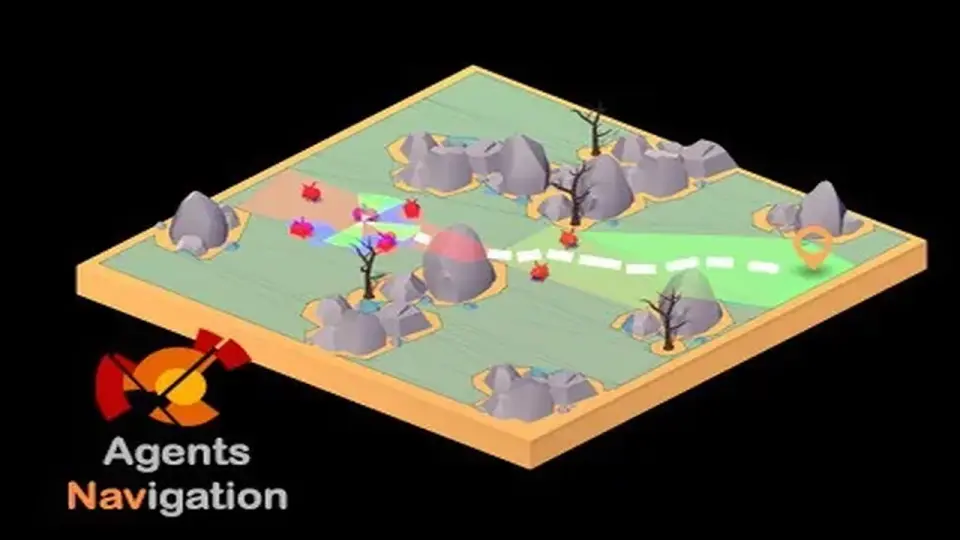
Agents Navigation provides a high-performance, modular solution for agent movement, utilizing Unity's latest technology stack to handle flocking, avoidance, and NavMesh integration.
The Agents Navigation package is designed as a modular and scalable solution for managing agent movement within Unity. Built specifically with the Data-Oriented Technology Stack (DOTS) in mind, the framework utilizes Unity’s modern tech stack to maximize efficiency. This includes the use of SIMD mathematics, the C# Job System, and the Burst compiler to handle complex navigation logic. By leveraging the Entity Component System (ECS), the system is capable of handling large numbers of agents through parallelized code, ensuring high performance out of the box.
Implementation Workflows: ECS and Hybrid Modes
While the architecture is rooted in ECS, the package supports multiple development workflows to accommodate different project requirements. For developers working within a pure Entity-driven environment, the package utilizes ECS natively to maintain maximum performance.
For projects using standard Object-Oriented Programming (OOP), a hybrid workflow is available. This mode allows GameObjects to be synchronized with Entities, enabling the navigation features to be used within a traditional workflow. While this provides a lower barrier to entry for existing projects, it is noted that performance in hybrid mode may be slightly lower than a pure ECS implementation due to the overhead of synchronization.
Core Navigation and Steering Features
The framework includes a variety of navigation and spatial awareness features that work across both 2D and 3D environments. These behaviors are designed to be modular, allowing developers to add or remove them based on the specific needs of their AI. The package provides the following core features:
Unity NavMesh Support: Includes multithreaded support for 3D NavMesh navigation.
Avoidance: Local steering logic to prevent collisions between agents in 2D and 3D spaces.
Flocking: Specialized 3D behaviors, specifically Alignment and Cohesion, to simulate group dynamics.
Separation: Maintains individual agent spacing in 2D and 3D environments.
Collision Detection: Integrated systems for handling agent-to-agent or agent-to-environment collisions.
API Structure and Extensibility
The package employs a multi-layered API that allows for low-level interactions, catering to developers who need to customize the underlying navigation logic. The codebase is built with a clear architecture that emphasizes clean coding practices, making it easier to scale and extend. Because the system is modular, it can be expanded with minimal changes to the core package.
Customization is a central focus, as the developer acknowledges that every game has unique navigation requirements. While the system is designed to be easily modified, efficient extension of its functionality typically requires a working knowledge of ECS. This modularity also extends to third-party integrations; the package currently supports out-of-the-box integration with the A* Pathfinding Project and is compatible with other extensions like Crowds, the CIVIL-AI-SYSTEM, and Animatron.
Application and Genre Versatility
The framework is intended to serve as a foundation for any project requiring robust navigation. The current version is specifically tailored for genres that demand high unit counts and precise movement, such as 2D and 3D Real-Time Strategy (RTS) games, MOBAs, RPGs, and shooters. By providing a scalable codebase, the package allows developers to build complex AI behaviors on top of a performance-optimized baseline.
 Behavior AI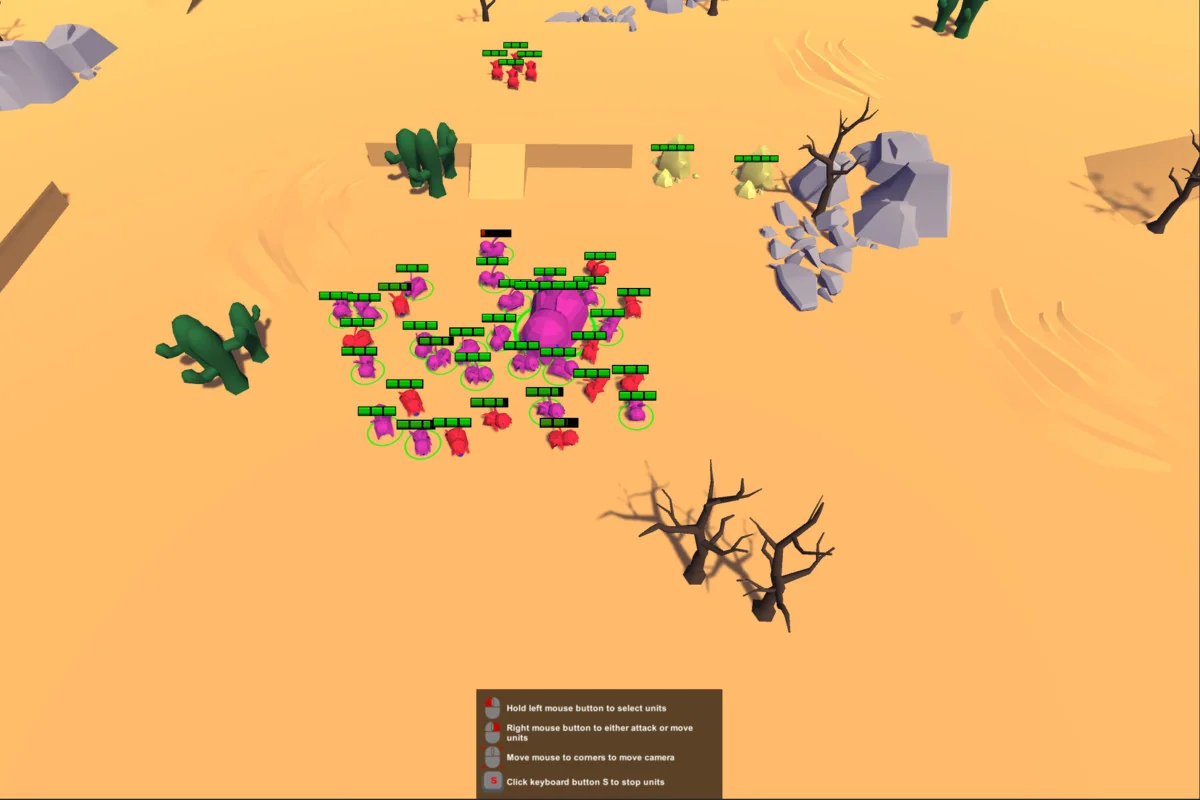
 Behavior AI
 Behavior AI
 Behavior AI