"7e6fc58c410f2894"{"id":"1001036","slug":"35-ar-vr-northeastern-us-plants-and-ecosystems","title":"35 AR VR Northeastern US Plants and Ecosystems","category":"Forest \u0026 Jungle","engine":"4.26+,5.0+","assetVersion":"","engineVersion":"Engine Version: 4.26+,5.0+","tag":"Forest \u0026 Jungle","accent":"blue","visual":"mech","summary":"A 35-plant AR/VR pack built from wild photographs, with 102 low-poly meshes, LODs, wind material, and subsurface scattering for Appalachian landscapes.","platform":"Unreal Engine","publishedAt":"2026-08-27T09:14:52.711Z","updatedAt":"2026-08-27T09:14:52.711Z","sourceNotes":[],"fileContents":[],"compatibility":["Unreal Engine","Engine Version: 4.26+,5.0+"],"featuredImage":{"alt":"35 AR VR Northeastern US Plants and Ecosystems","src":"/wp-content/uploads/published/2026/08/6ed0e278dc08-4e00e931-9fb3-4774-aee7-4e9de627ad0f-91681ca39c.webp"},"hasDownloadLink":true,"downloads":0,"terms":[{"taxonomy":"category","slug":"forest-and-jungle","name":"Forest \u0026 Jungle"}],"galleryImages":[{"src":"/wp-content/uploads/published/2026/08/4d5ffe167c86-083d5c68-567c-4cdc-9689-d61d8db62dc6-5b9fec0d3d.webp","alt":"35 AR VR Northeastern US Plants and Ecosystems"},{"src":"/wp-content/uploads/published/2026/08/4c69cab659cc-56afcd1c-4dd5-46ad-a7c0-8da586b7d8da-8bbd1c31b8.webp","alt":"35 AR VR Northeastern US Plants and Ecosystems"},{"src":"/wp-content/uploads/published/2026/08/2202b9c0c5f8-929b9179-77fa-4556-9034-70657f45b17c-8f7bfbb281.webp","alt":"35 AR VR Northeastern US Plants and Ecosystems"},{"src":"/wp-content/uploads/published/2026/08/02ab74c6241f-5cf00bcf-20de-440a-9d51-5664bc238d23-4278f5cb9a.webp","alt":"35 AR VR Northeastern US Plants and Ecosystems"},{"src":"/wp-content/uploads/published/2026/08/99476d52be38-97274daa-4cd3-4bc8-8bd2-93b451a83401-2d2ed080c0.webp","alt":"35 AR VR Northeastern US Plants and Ecosystems"},{"src":"/wp-content/uploads/published/2026/08/04a26785254b-fed82ec4-48aa-42a5-9418-5fc7c5883b4e-592f630b27.webp","alt":"35 AR VR Northeastern US Plants and Ecosystems"},{"src":"/wp-content/uploads/published/2026/08/c55e6373d46d-16df5d7f-c0b9-473a-a498-2ea4dc29a5c9-b1edfc6ab7.webp","alt":"35 AR VR Northeastern US Plants and Ecosystems"},{"src":"/wp-content/uploads/published/2026/08/835a8a9a01ec-2f4617af-98a0-409c-b7e5-cad454491ece-4e6d38c898.webp","alt":"35 AR VR Northeastern US Plants and Ecosystems"},{"src":"/wp-content/uploads/published/2026/08/2240c86d5e12-4e912aa6-186b-451f-b16e-3f8cd5f5cbe1-5a8ab96631.webp","alt":"35 AR VR Northeastern US Plants and Ecosystems"},{"src":"/wp-content/uploads/published/2026/08/9d954296edec-755c4319-e200-48ef-91b1-41b5c01134b7-b9654b5fe2.webp","alt":"35 AR VR Northeastern US Plants and Ecosystems"}],"accessPanel":{"kind":"resource","title":"Download this resource","eyebrow":"Free Download","message":"Log in or create a free account to start your download.","fileName":"Content.7z","safetyNote":"Resources are manually reviewed before listing to improve quality and reduce obvious risks.","actionLabel":"Download Free","resourceType":"Resource archive"},"contentHtml":"\u003cp\u003eAssembling a believable Northeastern US forest in real time usually means weighing dense photogrammetry against draw calls, or settling for flat billboard cards that die in close-up. This pack attempts to split that difference: 35 photorealistic, low-polygon plants built from photographs taken in the wild, with enough variation and technical setup to read as a real Appalachian ecosystem.\u003c/p\u003e \u003ch2\u003eFrom Field Photographs to a 35-Plant Northeastern List\u003c/h2\u003e\n\u003cp\u003eEvery plant in the set starts as photography from the field. That gives the leaf shapes, branching patterns, and bark detail a native character that procedural approximations often miss. The pack covers a wide cross-section of the Appalachian forest floor and canopy: American Beech, Black Cherry, Eastern Hemlock, Mountain Laurel, Northern Red Oak, Red Maple, Tulip Tree, White Oak, and dozens more.\u003c/p\u003e\n\u003cp\u003eThose 35 species are not single static plates. Each one comes in individual variations, so scattered trees and herbs don't look like stamped clones when placed across a valley or along a trail. LODs are already included, so the same plant can step down cleanly as the camera pulls back. The wind and light effects were derived from the same wild captures, meaning the plants carry directional shading and natural highlight positions baked into their overall appearance.\u003c/p\u003e \u003ch2\u003e102 Unique Meshes for Layered Appalachian Scenes\u003c/h2\u003e\n\u003cp\u003eAcross the 35 species, the pack adds up to 102 unique meshes. That count is what makes layering possible. You can build a mixed hardwood slope with different ages of the same tree, or a dense understory where each cluster of ferns and wildflowers has its own silhouette. The ecosystem style is clear from the species list: blue flag iris and bluets near damp ground, wild blue phlox and Virginia bluebells on richer slopes, and dry-area staples like greenbriar and serviceberry at the edges.\u003c/p\u003e\n\u003cp\u003eWith a mesh count that high, the pack can support a single cohesive ecosystem rather than just a handful of isolated props. The included Appalachian forest grouping is a natural starting point for arranging these plants into a larger narrative, from a park-like woodlot to the kind of overgrown edge where May apple and wild ginger compete for shade. Species like Christmas Fern and Cinnamon Fern fill the mid-layer, while snags—standing dead wood—add vertical breaks that keep the canopy from feeling too uniform.\u003c/p\u003e \u003ch2\u003eWind, Light Effects, and a Watered-Down Leaf Shader\u003c/h2\u003e\n\u003cp\u003eStatic low-poly foliage can look fine on a still frame, but in VR or AR any lack of response to the environment breaks immersion. The pack includes an editable wind material with leaf rustle, so the same tree moves in a breeze without needing per-leaf physics on every branch. This is paired with light effects derived from the source photography.\u003c/p\u003e\n\u003cp\u003eSubsurface scattering maps are present on the leaf surfaces, letting light bleed through canopies and show that warm translucency you get with real leaves backlit by sun. The same maps handle reflection, so a wet leaf or a smooth broadleaf still catches the sky. These are small shading details, but they keep low-polygon plants from reading as flat tokens. The wind material is also editable, so you can tune the strength of the rustle per scene without touching the mesh itself.\u003c/p\u003e \u003ch2\u003eGround Materials and a Landscape for Large-Scale Painting\u003c/h2\u003e\n\u003cp\u003eFoliage floats if the ground beneath it is a plain texture. The pack supplies six ground materials for landscape painting, covering the typical forest floor tones found in Northeastern hardwood country. Alongside them are a selection of weeds meant to add ground-surface noise, breaking up the smooth stretches between plants.\u003c/p\u003e\n\u003cp\u003eMore important for big scenes, there is a dedicated landscape built for large-scale foliage painting in the Appalachian style. You can use it as a test bed for distributing the 35 species across a realistic terrain, or as a base for a larger play environment. The weeds and ground materials tie the plant meshes to the terrain, so the whole scene keeps one visual language.\u003c/p\u003e\n\u003ch3\u003eHabitat-Specific Compatibility\u003c/h3\u003e\n\u003cp\u003eThe set also carries compatibility notes for Mesic Flatwoods Habitat Brush, making it relevant to habitat-focused workflows beyond the standard Appalachian forest layout. For a team building a museum, educational simulation, or virtual reality nature walk, this matters. The tags associated with the pack—Museum, Education, Reality, Simulation—spell out the intended use: not a hero prop, but a database of reliable foliage for teaching and environmental storytelling.\u003c/p\u003e \u003ch2\u003eWhere This Pack Fits in a Production\u003c/h2\u003e\n\u003cp\u003eFor a project that needs Northeastern US coverage without waiting on custom scans of every fern and hardwood, this pack is a solid middle ground. The 35 documented plants and 102 meshes provide a dense, reusable vocabulary for building forests that behave like the real thing. Because the plant list runs from American Beech and Bellwort to Yellow Violet and Wood Poppy, there is enough botanical variety to fill entire levels with native species rather than repeating the same three trees. The included ground materials and landscape give the pack a head start for environment artists who want to block out a scene and then layer in the foliage with the included painting tools.\u003c/p\u003e\n\n\u003ch2\u003eMore From The Same Workflow\u003c/h2\u003e\n\u003cul\u003e\n\u003cli\u003e\u003ca href=\"https://3dcghub.com/beech-forest-ecosystem/\" title=\"Beech Forest Ecosystem\"\u003eBeech Forest Ecosystem\u003c/a\u003e\u003c/li\u003e\n\u003cli\u003e\u003ca href=\"https://3dcghub.com/cactus-plants-desert-garden/\" title=\"Cactus Plants: Desert Garden\"\u003eCactus Plants: Desert Garden\u003c/a\u003e\u003c/li\u003e\n\u003cli\u003e\u003ca href=\"https://3dcghub.com/wildlands-stylized-nature-pine-forest-trees-foliage-nature-forest-biome/\" title=\"Wildlands: Stylized Nature (Pine Forest, Trees, Foliage, Nature, Forest, Biome)\"\u003eWildlands: Stylized Nature (Pine Forest, Trees, Foliage, Nature, Forest, Biome)\u003c/a\u003e\u003c/li\u003e\n\u003cli\u003e\u003ca href=\"https://3dcghub.com/survival-interactable-procedural-nature-ecosystem/\" title=\"Survival Interactable Procedural Nature Ecosystem\"\u003eSurvival Interactable Procedural Nature Ecosystem\u003c/a\u003e\u003c/li\u003e\n\u003cli\u003e\u003ca href=\"https://3dcghub.com/alien-planet-fantasy-environment-swamp-plants/\" title=\"Alien Planet Fantasy Environment - Swamp Plants\"\u003eAlien Planet Fantasy Environment - Swamp Plants\u003c/a\u003e\u003c/li\u003e\n\u003c/ul\u003e","contentTextLength":5487,"navigation":{"current":694,"total":3618,"previous":{"id":"1001038","slug":"abandoned-factory-industrial-railway-zone-update-v-2","title":"ABANDONED FACTORY / Industrial railway zone (Update V.2)","category":"Abandoned","platform":"Unreal Engine","updatedAt":"2026-08-27T10:13:05.620Z"},"next":{"id":"1001035","slug":"hyper-time-manager-system-v4","title":"Hyper Time Manager System v4","category":"Gameplay Features","platform":"Unreal Engine","updatedAt":"2026-08-25T11:24:46.098Z"}},"relatedResources":[{"id":"1001037","slug":"35-ar-vr-southeastern-us-plants-and-ecosystems","title":"35 AR VR Southeastern US Plants and Ecosystems","category":"Forest \u0026 Jungle","engine":"4.26+,5.0+","assetVersion":"","engineVersion":"Engine Version: 4.26+,5.0+","tag":"Forest \u0026 Jungle","accent":"blue","visual":"mech","summary":"35 photorealistic low-polygon plants with 146 unique meshes, editable wind material, subsurface scattering, and 10 Central Florida ecosystems for AR/VR and open","platform":"Unreal Engine","publishedAt":"2026-08-27T09:22:13.532Z","updatedAt":"2026-08-27T11:07:01.455Z","sourceNotes":[],"fileContents":[],"compatibility":["Unreal Engine","Engine Version: 4.26+,5.0+"],"featuredImage":{"alt":"35 AR VR Southeastern US Plants and Ecosystems","src":"/wp-content/uploads/published/2026/08/eb3e39105ade-05e15bb5-9dd1-4606-8216-76d4d248f55c-7419f05ad5.webp"},"hasDownloadLink":true,"downloads":0},{"id":"8116","slug":"beech-forest-ecosystem","title":"Beech Forest Ecosystem","category":"Forest \u0026 Jungle","engine":"5.1+","assetVersion":"Engine version: 5.1+","engineVersion":"5.1","tag":"Forest \u0026 Jungle","accent":"blue","visual":"city","summary":"Transform your digital environments with a professional-grade temperate forest kit. This resource uses advanced scanning technology to provide realistic trees, plants, and lighting setups for Unreal Engine 5.","platform":"Unreal Engine","publishedAt":"2026-02-22T17:06:23.000Z","updatedAt":"2026-04-19T15:55:34.000Z","sourceNotes":[],"fileContents":[],"compatibility":["Unreal Engine","Engine version: 5.1+"],"featuredImage":{"alt":"Beech Forest Ecosystem","src":"https://3dcghub.com/wp-content/uploads/2026/02/348e3f80-916b-4ccf-91c2-8cb48e9f96b2.webp"},"hasDownloadLink":true,"downloads":1},{"id":"8132","slug":"cactus-plants-desert-garden","title":"Cactus Plants: Desert Garden","category":"Forest \u0026 Jungle","engine":"4.26+,5.0+","assetVersion":"Engine version: 4.26+,5.0+","engineVersion":"4.19","tag":"Forest \u0026 Jungle","accent":"blue","visual":"city","summary":"Enhance your digital environments with this versatile collection of cactus and rock meshes. Featuring seamless textures and high-quality designs, it is perfect for both indoor and outdoor scenes.","platform":"Unreal Engine","publishedAt":"2026-02-22T17:17:57.000Z","updatedAt":"2026-04-19T15:55:33.000Z","sourceNotes":[],"fileContents":[],"compatibility":["Unreal Engine","Engine version: 4.26+,5.0+"],"featuredImage":{"alt":"Cactus Plants: Desert Garden","src":"https://3dcghub.com/wp-content/uploads/2026/02/99012614-c693-4dcb-8e1f-b297922d93a9.webp"},"hasDownloadLink":true,"downloads":0}]}
Forest & Jungle
35 AR VR Northeastern US Plants and Ecosystems
A 35-plant AR/VR pack built from wild photographs, with 102 low-poly meshes, LODs, wind material, and subsurface scattering for Appalachian landscapes.
Assembling a believable Northeastern US forest in real time usually means weighing dense photogrammetry against draw calls, or settling for flat billboard cards that die in close-up. This pack attempts to split that difference: 35 photorealistic, low-polygon plants built from photographs taken in the wild, with enough variation and technical setup to read as a real Appalachian ecosystem.
From Field Photographs to a 35-Plant Northeastern List
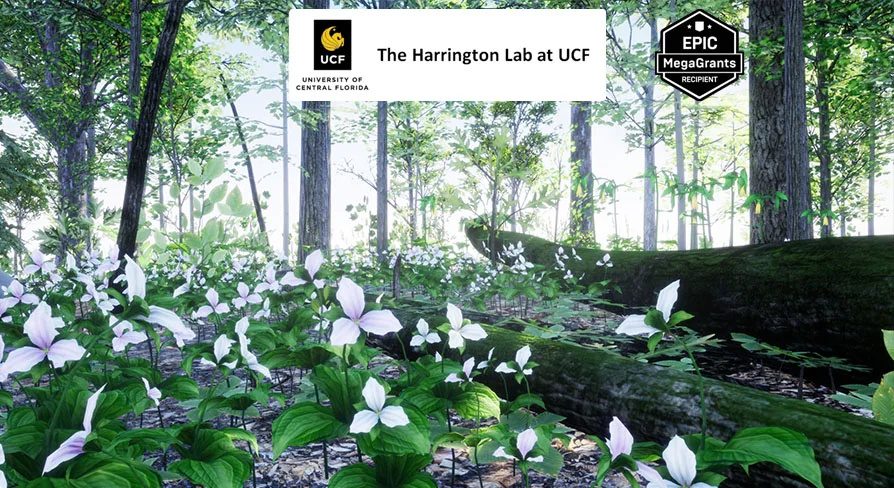
Every plant in the set starts as photography from the field. That gives the leaf shapes, branching patterns, and bark detail a native character that procedural approximations often miss. The pack covers a wide cross-section of the Appalachian forest floor and canopy: American Beech, Black Cherry, Eastern Hemlock, Mountain Laurel, Northern Red Oak, Red Maple, Tulip Tree, White Oak, and dozens more.
Those 35 species are not single static plates. Each one comes in individual variations, so scattered trees and herbs don't look like stamped clones when placed across a valley or along a trail. LODs are already included, so the same plant can step down cleanly as the camera pulls back. The wind and light effects were derived from the same wild captures, meaning the plants carry directional shading and natural highlight positions baked into their overall appearance.
102 Unique Meshes for Layered Appalachian Scenes
Across the 35 species, the pack adds up to 102 unique meshes. That count is what makes layering possible. You can build a mixed hardwood slope with different ages of the same tree, or a dense understory where each cluster of ferns and wildflowers has its own silhouette. The ecosystem style is clear from the species list: blue flag iris and bluets near damp ground, wild blue phlox and Virginia bluebells on richer slopes, and dry-area staples like greenbriar and serviceberry at the edges.
With a mesh count that high, the pack can support a single cohesive ecosystem rather than just a handful of isolated props. The included Appalachian forest grouping is a natural starting point for arranging these plants into a larger narrative, from a park-like woodlot to the kind of overgrown edge where May apple and wild ginger compete for shade. Species like Christmas Fern and Cinnamon Fern fill the mid-layer, while snags—standing dead wood—add vertical breaks that keep the canopy from feeling too uniform.
Wind, Light Effects, and a Watered-Down Leaf Shader
Static low-poly foliage can look fine on a still frame, but in VR or AR any lack of response to the environment breaks immersion. The pack includes an editable wind material with leaf rustle, so the same tree moves in a breeze without needing per-leaf physics on every branch. This is paired with light effects derived from the source photography.
Subsurface scattering maps are present on the leaf surfaces, letting light bleed through canopies and show that warm translucency you get with real leaves backlit by sun. The same maps handle reflection, so a wet leaf or a smooth broadleaf still catches the sky. These are small shading details, but they keep low-polygon plants from reading as flat tokens. The wind material is also editable, so you can tune the strength of the rustle per scene without touching the mesh itself.
Ground Materials and a Landscape for Large-Scale Painting
Foliage floats if the ground beneath it is a plain texture. The pack supplies six ground materials for landscape painting, covering the typical forest floor tones found in Northeastern hardwood country. Alongside them are a selection of weeds meant to add ground-surface noise, breaking up the smooth stretches between plants.
More important for big scenes, there is a dedicated landscape built for large-scale foliage painting in the Appalachian style. You can use it as a test bed for distributing the 35 species across a realistic terrain, or as a base for a larger play environment. The weeds and ground materials tie the plant meshes to the terrain, so the whole scene keeps one visual language.
Habitat-Specific Compatibility
The set also carries compatibility notes for Mesic Flatwoods Habitat Brush, making it relevant to habitat-focused workflows beyond the standard Appalachian forest layout. For a team building a museum, educational simulation, or virtual reality nature walk, this matters. The tags associated with the pack—Museum, Education, Reality, Simulation—spell out the intended use: not a hero prop, but a database of reliable foliage for teaching and environmental storytelling.
Where This Pack Fits in a Production
For a project that needs Northeastern US coverage without waiting on custom scans of every fern and hardwood, this pack is a solid middle ground. The 35 documented plants and 102 meshes provide a dense, reusable vocabulary for building forests that behave like the real thing. Because the plant list runs from American Beech and Bellwort to Yellow Violet and Wood Poppy, there is enough botanical variety to fill entire levels with native species rather than repeating the same three trees. The included ground materials and landscape give the pack a head start for environment artists who want to block out a scene and then layer in the foliage with the included painting tools.
 Forest & Jungle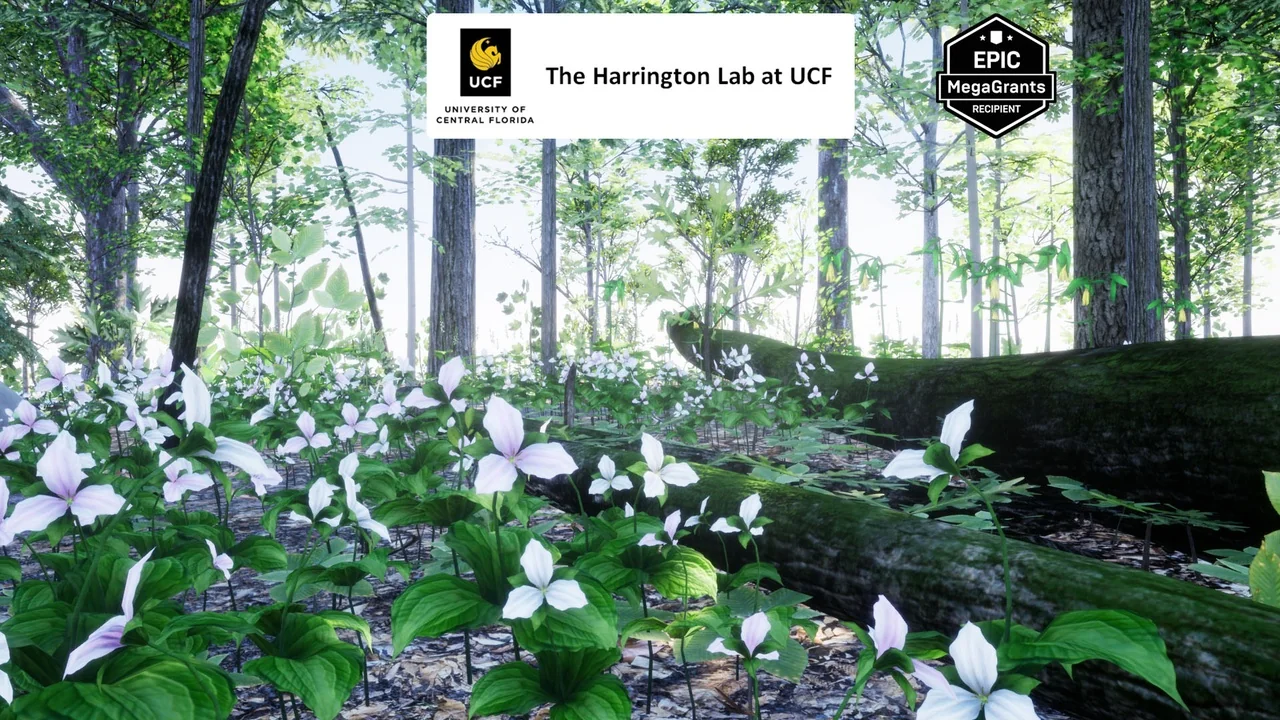
 Forest & Jungle
 Forest & Jungle
 Forest & Jungle