"7e6fc58c410f2894"{"id":"1001037","slug":"35-ar-vr-southeastern-us-plants-and-ecosystems","title":"35 AR VR Southeastern US Plants and Ecosystems","category":"Forest \u0026 Jungle","engine":"4.26+,5.0+","assetVersion":"","engineVersion":"Engine Version: 4.26+,5.0+","tag":"Forest \u0026 Jungle","accent":"blue","visual":"mech","summary":"35 photorealistic low-polygon plants with 146 unique meshes, editable wind material, subsurface scattering, and 10 Central Florida ecosystems for AR/VR and open","platform":"Unreal Engine","publishedAt":"2026-08-27T09:22:13.532Z","updatedAt":"2026-08-27T11:07:01.455Z","sourceNotes":[],"fileContents":[],"compatibility":["Unreal Engine","Engine Version: 4.26+,5.0+"],"featuredImage":{"alt":"35 AR VR Southeastern US Plants and Ecosystems","src":"/wp-content/uploads/published/2026/08/eb3e39105ade-05e15bb5-9dd1-4606-8216-76d4d248f55c-7419f05ad5.webp"},"hasDownloadLink":true,"downloads":0,"terms":[{"taxonomy":"category","slug":"forest-and-jungle","name":"Forest \u0026 Jungle"}],"galleryImages":[{"src":"/wp-content/uploads/published/2026/08/41be60b31801-30a847cc-8153-42e5-83fe-c898bf7a92ca-390342b03a.webp","alt":"35 AR VR Southeastern US Plants and Ecosystems"},{"src":"/wp-content/uploads/published/2026/08/636420539b62-92eba356-0506-4309-b22c-bcd3990ce14b-5d617f38a7.webp","alt":"35 AR VR Southeastern US Plants and Ecosystems"},{"src":"/wp-content/uploads/published/2026/08/ba2d42878290-32fbea1c-2510-4ab9-84ea-00dbd98d3819-d5283c5d47.webp","alt":"35 AR VR Southeastern US Plants and Ecosystems"},{"src":"/wp-content/uploads/published/2026/08/e80af29ce1b3-dfa00d2f-cb75-433c-a42f-467dfbb477cd-f65710d40e.webp","alt":"35 AR VR Southeastern US Plants and Ecosystems"},{"src":"/wp-content/uploads/published/2026/08/05f7ad64ec49-df4ed1c0-8d8e-4351-b486-0ff8dd846b50-47d8fe16aa.webp","alt":"35 AR VR Southeastern US Plants and Ecosystems"},{"src":"/wp-content/uploads/published/2026/08/26c2ff0688ba-01f755d6-4e4c-4e18-95c0-a5f1c19ab3e4-2042672a42.webp","alt":"35 AR VR Southeastern US Plants and Ecosystems"},{"src":"/wp-content/uploads/published/2026/08/f0fbd47e8bdf-51f070f9-73fb-47cd-ba15-c49f1e21652e-756df78f1d.webp","alt":"35 AR VR Southeastern US Plants and Ecosystems"},{"src":"/wp-content/uploads/published/2026/08/52913d3658da-99f3eb4c-5f79-417e-877e-ea752a6b5ee9-c5272dd52d.webp","alt":"35 AR VR Southeastern US Plants and Ecosystems"},{"src":"/wp-content/uploads/published/2026/08/b2fa19d16046-5c59daa5-8f6a-45f9-b496-e6ab0160455d-c7a5aff5af.webp","alt":"35 AR VR Southeastern US Plants and Ecosystems"},{"src":"/wp-content/uploads/published/2026/08/c5e91144e4f3-dabc38cb-831f-46d5-9b32-72f6935ae913-fef824708a.webp","alt":"35 AR VR Southeastern US Plants and Ecosystems"}],"accessPanel":{"kind":"resource","title":"Download this resource","eyebrow":"Free Download","message":"Log in or create a free account to start your download.","fileName":"Content.7z","safetyNote":"Resources are manually reviewed before listing to improve quality and reduce obvious risks.","actionLabel":"Download Free","resourceType":"Resource archive"},"contentHtml":"\u003cp\u003eFilling a large open world with vegetation that reads as real and still runs well is a constant juggling act. The usual fix is to sprinkle a few high-detail hero assets and rely on distance tricks for the rest. This collection goes the other way: 35 photorealistic, low-polygon plants built from photographs taken in the wild, with individual variations, LODs, and wind and light effects included. It is meant for large open worlds, AR, and VR, where the render budget is tight but the scene still needs to feel alive.\u003c/p\u003e \u003ch2\u003eFrom Wild Photographs to 146 Meshes\u003c/h2\u003e\n\u003cp\u003eEvery plant in the set traces back to photographs taken outdoors, so the silhouette and surface detail come from the real species rather than from concept art. The collection turns those references into 146 unique meshes for Central Florida landscapes. Many species are represented by more than one mesh, giving you natural variation when you instance the same plant across a field or a forest floor.\u003c/p\u003e\n\u003cp\u003eThe meshes are kept low-polygon, which is what keeps the whole set usable in real-time scenes. On top of that, each asset carries LODs that step down as the camera moves away, plus wind and light effects that make the foliage react to the environment. The combination means you can place dense clusters without the frame rate collapsing.\u003c/p\u003e \u003ch2\u003eA Field Guide to Central Florida in One Asset List\u003c/h2\u003e\n\u003cp\u003eThe plant roster covers 35 species, from the iconic Sabal Palm and Longleaf Pine to the less familiar Feay's Palafox and Titusville Balm. The full list is: American Beautyberry, Blazing Star, Bog Button, Bracken Fern, Chalky Bluestem, Coastalplain Honeycomb, Coontie, Dahoon Holly, Feay's Palafox, Fetterbush, Flattop Goldenrod, Florida Paintbrush, Florida Tickseed, Forked Bluecurl, Goldenrod, Hooded Pitcher Plant, Lopsided Indiangrass, Longleaf Pine, Pond Cypress, Prickly Pear, Rayless Sunflower, Reindeer Moss, Sabal Palm, Sand Live Oak, Saw Palmetto, Scarlet Calamint, Scrub Rosemary, Shortleaf Rosegentian, Spanish Moss, St. John's Wort, Tall Jointweed, Titusville Balm, Waterlily, Wax Myrtle, and Wiregrass.\u003c/p\u003e\n\u003cp\u003eMore useful than the individual plants are the 10 example natural communities and ecosystems included in the set. These were assembled using plant inventory and plant distribution GIS data specific to Central Florida. They show how the species group together in real-world associations, which is a head start for anyone building a believable landscape rather than a random scatter of trees.\u003c/p\u003e \u003ch2\u003eWind, Subsurface Scattering, and Ground Detail\u003c/h2\u003e\n\u003cp\u003eThe materials give the collection some of its character. The editable wind material includes a leaf rustle setting, so you can adjust how much a plant moves with the breeze. That same material system feeds the wind and light effects, keeping the motion consistent across the scene.\u003c/p\u003e\n\u003cp\u003eSubsurface scattering maps handle light transparency and reflection on leaf surfaces. A thin leaf lit from behind will pick up the right degree of glow, and the front face still reflects highlights. That matters for dense undergrowth where sunlight filters through the canopy.\u003c/p\u003e\n\u003cp\u003eBelow the plants, six ground materials are ready for landscape painting, and the pack includes some weeds to add surface noise. You can paint the terrain with these layers, then place the weed assets to break up the flatness.\u003c/p\u003e \u003ch2\u003eWhere the Collection Sits in a Real-Time Production\u003c/h2\u003e\n\u003cp\u003eBecause the assets are low-polygon with LODs, they fit naturally into large open worlds where draw calls and triangle counts are tight. The same attributes make them a reasonable pick for AR and VR, where the renderer has to work hard to keep the frame rate stable while the user looks around.\u003c/p\u003e\n\u003cp\u003eThe example ecosystems take the guesswork out of scene assembly. Instead of hand-placing each species, you can use the provided communities as a starting point and then adjust density and placement. That is useful for anything from a nature-focused VR experience to the outdoor sections of a realistic level.\u003c/p\u003e\n\u003cp\u003eFor landscape artists, the ground materials and weed scatter fill the gap between broad terrain textures and individual plant meshes. Paint the base terrain, scatter the included weeds and groundcover species, and the ground stops looking like a flat texture.\u003c/p\u003e \u003ch2\u003eA Practical Takeaway for Environment Builders\u003c/h2\u003e\n\u003cp\u003eWhat makes this collection practical is the range of detail built into a single library. You get the individual meshes, the wind and light setup, the ground materials, and the example ecosystems all in one place. That saves the time usually spent stitching together separate vegetation packs and hoping they share the same look and feel.\u003c/p\u003e\n\u003cp\u003eFor a project set in the subtropical Southeast, this is a direct route to a believable landscape. The species list and the GIS-driven ecosystems give you a botanically grounded starting point, while the low-polygon construction keeps the whole thing fast enough for interactive use. It is not a set of generic forest stand-ins; it is a targeted kit for one specific part of the world.\u003c/p\u003e\n\n\u003ch2\u003eMore From The Same Workflow\u003c/h2\u003e\n\u003cul\u003e\n\u003cli\u003e\u003ca href=\"https://3dcghub.com/35-ar-vr-northeastern-us-plants-and-ecosystems/\" title=\"35 AR VR Northeastern US Plants and Ecosystems\"\u003e35 AR VR Northeastern US Plants and Ecosystems\u003c/a\u003e\u003c/li\u003e\n\u003cli\u003e\u003ca href=\"https://3dcghub.com/beech-forest-ecosystem/\" title=\"Beech Forest Ecosystem\"\u003eBeech Forest Ecosystem\u003c/a\u003e\u003c/li\u003e\n\u003cli\u003e\u003ca href=\"https://3dcghub.com/wildlands-stylized-nature-pine-forest-trees-foliage-nature-forest-biome/\" title=\"Wildlands: Stylized Nature (Pine Forest, Trees, Foliage, Nature, Forest, Biome)\"\u003eWildlands: Stylized Nature (Pine Forest, Trees, Foliage, Nature, Forest, Biome)\u003c/a\u003e\u003c/li\u003e\n\u003cli\u003e\u003ca href=\"https://3dcghub.com/survival-interactable-procedural-nature-ecosystem/\" title=\"Survival Interactable Procedural Nature Ecosystem\"\u003eSurvival Interactable Procedural Nature Ecosystem\u003c/a\u003e\u003c/li\u003e\n\u003cli\u003e\u003ca href=\"https://3dcghub.com/cactus-plants-desert-garden/\" title=\"Cactus Plants: Desert Garden\"\u003eCactus Plants: Desert Garden\u003c/a\u003e\u003c/li\u003e\n\u003c/ul\u003e","contentTextLength":5224,"navigation":{"current":689,"total":3618,"previous":{"id":"13862","slug":"dynamic-ai-system","title":"Dynamic AI System","category":"Engine Tools","platform":"Unreal Engine","updatedAt":"2026-08-27T11:07:36.100Z"},"next":{"id":"1001041","slug":"advanced-locomotion-component-v2-4","title":"Advanced Locomotion Component v2.4","category":"Gameplay Features","platform":"Unreal Engine","updatedAt":"2026-08-27T10:43:05.017Z"}},"relatedResources":[{"id":"1001036","slug":"35-ar-vr-northeastern-us-plants-and-ecosystems","title":"35 AR VR Northeastern US Plants and Ecosystems","category":"Forest \u0026 Jungle","engine":"4.26+,5.0+","assetVersion":"","engineVersion":"Engine Version: 4.26+,5.0+","tag":"Forest \u0026 Jungle","accent":"blue","visual":"mech","summary":"A 35-plant AR/VR pack built from wild photographs, with 102 low-poly meshes, LODs, wind material, and subsurface scattering for Appalachian landscapes.","platform":"Unreal Engine","publishedAt":"2026-08-27T09:14:52.711Z","updatedAt":"2026-08-27T09:14:52.711Z","sourceNotes":[],"fileContents":[],"compatibility":["Unreal Engine","Engine Version: 4.26+,5.0+"],"featuredImage":{"alt":"35 AR VR Northeastern US Plants and Ecosystems","src":"/wp-content/uploads/published/2026/08/6ed0e278dc08-4e00e931-9fb3-4774-aee7-4e9de627ad0f-91681ca39c.webp"},"hasDownloadLink":true,"downloads":0},{"id":"8116","slug":"beech-forest-ecosystem","title":"Beech Forest Ecosystem","category":"Forest \u0026 Jungle","engine":"5.1+","assetVersion":"Engine version: 5.1+","engineVersion":"5.1","tag":"Forest \u0026 Jungle","accent":"blue","visual":"city","summary":"Transform your digital environments with a professional-grade temperate forest kit. This resource uses advanced scanning technology to provide realistic trees, plants, and lighting setups for Unreal Engine 5.","platform":"Unreal Engine","publishedAt":"2026-02-22T17:06:23.000Z","updatedAt":"2026-04-19T15:55:34.000Z","sourceNotes":[],"fileContents":[],"compatibility":["Unreal Engine","Engine version: 5.1+"],"featuredImage":{"alt":"Beech Forest Ecosystem","src":"https://3dcghub.com/wp-content/uploads/2026/02/348e3f80-916b-4ccf-91c2-8cb48e9f96b2.webp"},"hasDownloadLink":true,"downloads":1},{"id":"8132","slug":"cactus-plants-desert-garden","title":"Cactus Plants: Desert Garden","category":"Forest \u0026 Jungle","engine":"4.26+,5.0+","assetVersion":"Engine version: 4.26+,5.0+","engineVersion":"4.19","tag":"Forest \u0026 Jungle","accent":"blue","visual":"city","summary":"Enhance your digital environments with this versatile collection of cactus and rock meshes. Featuring seamless textures and high-quality designs, it is perfect for both indoor and outdoor scenes.","platform":"Unreal Engine","publishedAt":"2026-02-22T17:17:57.000Z","updatedAt":"2026-04-19T15:55:33.000Z","sourceNotes":[],"fileContents":[],"compatibility":["Unreal Engine","Engine version: 4.26+,5.0+"],"featuredImage":{"alt":"Cactus Plants: Desert Garden","src":"https://3dcghub.com/wp-content/uploads/2026/02/99012614-c693-4dcb-8e1f-b297922d93a9.webp"},"hasDownloadLink":true,"downloads":0}]}
Forest & Jungle
35 AR VR Southeastern US Plants and Ecosystems
35 photorealistic low-polygon plants with 146 unique meshes, editable wind material, subsurface scattering, and 10 Central Florida ecosystems for AR/VR and open
Filling a large open world with vegetation that reads as real and still runs well is a constant juggling act. The usual fix is to sprinkle a few high-detail hero assets and rely on distance tricks for the rest. This collection goes the other way: 35 photorealistic, low-polygon plants built from photographs taken in the wild, with individual variations, LODs, and wind and light effects included. It is meant for large open worlds, AR, and VR, where the render budget is tight but the scene still needs to feel alive.
From Wild Photographs to 146 Meshes
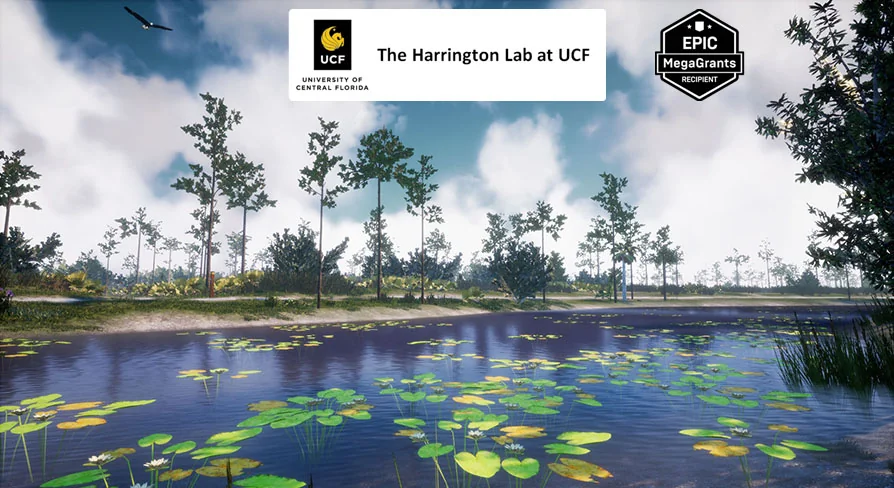
Every plant in the set traces back to photographs taken outdoors, so the silhouette and surface detail come from the real species rather than from concept art. The collection turns those references into 146 unique meshes for Central Florida landscapes. Many species are represented by more than one mesh, giving you natural variation when you instance the same plant across a field or a forest floor.
The meshes are kept low-polygon, which is what keeps the whole set usable in real-time scenes. On top of that, each asset carries LODs that step down as the camera moves away, plus wind and light effects that make the foliage react to the environment. The combination means you can place dense clusters without the frame rate collapsing.
A Field Guide to Central Florida in One Asset List
The plant roster covers 35 species, from the iconic Sabal Palm and Longleaf Pine to the less familiar Feay's Palafox and Titusville Balm. The full list is: American Beautyberry, Blazing Star, Bog Button, Bracken Fern, Chalky Bluestem, Coastalplain Honeycomb, Coontie, Dahoon Holly, Feay's Palafox, Fetterbush, Flattop Goldenrod, Florida Paintbrush, Florida Tickseed, Forked Bluecurl, Goldenrod, Hooded Pitcher Plant, Lopsided Indiangrass, Longleaf Pine, Pond Cypress, Prickly Pear, Rayless Sunflower, Reindeer Moss, Sabal Palm, Sand Live Oak, Saw Palmetto, Scarlet Calamint, Scrub Rosemary, Shortleaf Rosegentian, Spanish Moss, St. John's Wort, Tall Jointweed, Titusville Balm, Waterlily, Wax Myrtle, and Wiregrass.
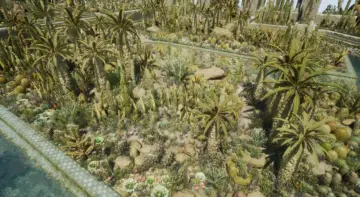
More useful than the individual plants are the 10 example natural communities and ecosystems included in the set. These were assembled using plant inventory and plant distribution GIS data specific to Central Florida. They show how the species group together in real-world associations, which is a head start for anyone building a believable landscape rather than a random scatter of trees.
Wind, Subsurface Scattering, and Ground Detail
The materials give the collection some of its character. The editable wind material includes a leaf rustle setting, so you can adjust how much a plant moves with the breeze. That same material system feeds the wind and light effects, keeping the motion consistent across the scene.
Subsurface scattering maps handle light transparency and reflection on leaf surfaces. A thin leaf lit from behind will pick up the right degree of glow, and the front face still reflects highlights. That matters for dense undergrowth where sunlight filters through the canopy.
Below the plants, six ground materials are ready for landscape painting, and the pack includes some weeds to add surface noise. You can paint the terrain with these layers, then place the weed assets to break up the flatness.
Where the Collection Sits in a Real-Time Production
Because the assets are low-polygon with LODs, they fit naturally into large open worlds where draw calls and triangle counts are tight. The same attributes make them a reasonable pick for AR and VR, where the renderer has to work hard to keep the frame rate stable while the user looks around.
The example ecosystems take the guesswork out of scene assembly. Instead of hand-placing each species, you can use the provided communities as a starting point and then adjust density and placement. That is useful for anything from a nature-focused VR experience to the outdoor sections of a realistic level.
For landscape artists, the ground materials and weed scatter fill the gap between broad terrain textures and individual plant meshes. Paint the base terrain, scatter the included weeds and groundcover species, and the ground stops looking like a flat texture.
A Practical Takeaway for Environment Builders
What makes this collection practical is the range of detail built into a single library. You get the individual meshes, the wind and light setup, the ground materials, and the example ecosystems all in one place. That saves the time usually spent stitching together separate vegetation packs and hoping they share the same look and feel.
For a project set in the subtropical Southeast, this is a direct route to a believable landscape. The species list and the GIS-driven ecosystems give you a botanically grounded starting point, while the low-polygon construction keeps the whole thing fast enough for interactive use. It is not a set of generic forest stand-ins; it is a targeted kit for one specific part of the world.
 Forest & Jungle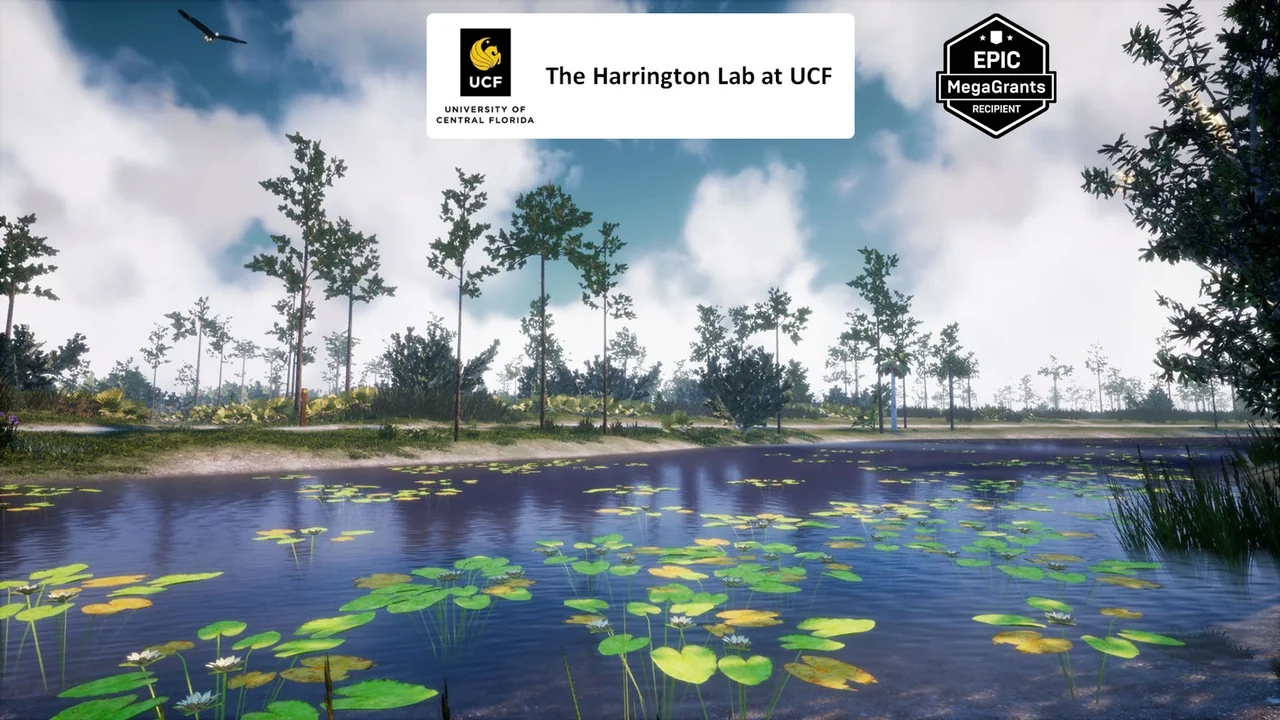
 Forest & Jungle
 Forest & Jungle
 Forest & Jungle