"a7cfa646d0d8ae55"{"id":"1001223","slug":"the-vagrant-background-construction-pack-02","title":"The Vagrant: Background Construction Pack 02","category":"Environments","engine":"5.0+","assetVersion":"","engineVersion":"Engine Version: 5.0+","tag":"Environments","accent":"blue","visual":"city","summary":"Construct layered fantasy scenes with 2D sprites from The Vagrant, featuring Battlefield and Witch Forest background sets compatible with Pack 01.","platform":"Unreal Engine","publishedAt":"2026-09-19T09:17:07.755Z","updatedAt":"2026-09-19T09:17:07.755Z","sourceNotes":[],"fileContents":[],"compatibility":["Unreal Engine","Engine Version: 5.0+"],"featuredImage":{"alt":"The Vagrant: Background Construction Pack 02","src":"/wp-content/uploads/published/2026/09/9ef3cc3e92f7-0c506552-4244-4480-8a67-5e3651bcea58-1fc2d3422a.webp"},"hasDownloadLink":true,"downloads":0,"terms":[{"taxonomy":"category","slug":"environments-sprites-and-flipbooks","name":"Environments"}],"galleryImages":[{"src":"/wp-content/uploads/published/2026/09/ea8db703d073-12d49bba-f724-4364-a6ee-d2411133c74b-b5998f408d.webp","alt":"The Vagrant: Background Construction Pack 02"},{"src":"/wp-content/uploads/published/2026/09/6631b6135fc3-94dfa547-8e6f-4e32-b6ac-42a8b9d5c4dc-48d23cf9e7.webp","alt":"The Vagrant: Background Construction Pack 02"},{"src":"/wp-content/uploads/published/2026/09/2ef9c963fa29-4eb558fe-89c8-4cee-b9ac-0d3036907820-62f4075eaa.webp","alt":"The Vagrant: Background Construction Pack 02"},{"src":"/wp-content/uploads/published/2026/09/db1da4f8aeea-4e198d44-2486-4d9e-af00-9bed68562d1d-360562eb2a.webp","alt":"The Vagrant: Background Construction Pack 02"},{"src":"/wp-content/uploads/published/2026/09/6d670d473d14-8632c2ff-2c41-40a1-be5a-6109c22f87c0-128e901e89.webp","alt":"The Vagrant: Background Construction Pack 02"},{"src":"/wp-content/uploads/published/2026/09/0f281fbb23b7-f2364a0a-a2a2-42bf-bfeb-b42ff1a331f7-2b8054a7b0.webp","alt":"The Vagrant: Background Construction Pack 02"}],"accessPanel":{"kind":"resource","title":"Download this resource","eyebrow":"Free Download","message":"Log in or create a free account to start your download.","fileName":"Content.7z","safetyNote":"Resources are manually reviewed before listing to improve quality and reduce obvious risks.","actionLabel":"Download Free","resourceType":"Resource archive"},"contentHtml":"\u003ch2\u003eImplementing 2D Sprites for Action RPG Environments\u003c/h2\u003e\u003cp\u003eAssembling a responsive environment for a two-dimensional project requires background elements that function both as decorative backdrops and as coherent spatial anchors. The Vagrant: Background Construction Pack 02 brings assets directly out of the production framework of the 2D action RPG \u003cem\u003eThe Vagrant\u003c/em\u003e, allowing creators to implement authentic environmental layouts straight into their 2D engine scenes.\u003c/p\u003e\u003cp\u003eUsing pre-rendered and hand-authored 2D sprites derived from a completed commercial title changes how staging is handled. Rather than working from isolated illustrations that must be manually sliced and test-fitted, these background sets reflect the operational standards of fast-paced side-scrolling combat. The visual language balances readability against rich detail, ensuring that foreground action remains clear while the rear layers provide depth, tone, and environmental framing.\u003c/p\u003e\u003cp\u003eBringing these pieces into an active scene setup involves placing individual sprite components into distinct parallax layers, backdrop planes, and framing clusters. Because the collection is grouped by discrete thematic zones, developers can drop the art into existing tilemaps, object hierarchies, or sprite renderers to establish dramatic horizons, dense natural foliage, and worn terrain surfaces without starting environment creation from scratch.\u003c/p\u003e\u003ch2\u003eStaging the Battlefield Environment Set\u003c/h2\u003e\u003cp\u003eThe Battlefield set within the pack provides visual elements driven by conflict, martial devastation, and rugged topography. In high-tempo action RPG sequences, open terrain presents specific design challenges: broad areas must feel vast and contested without turning into monotonous visual planes that disorient the player.\u003c/p\u003e\u003cp\u003eSprite components in the Battlefield collection enable developers to arrange wide expanses featuring dramatic terrain breaks, weathered obstacles, and thematic clutter characteristic of a war-torn landscape. Staging this backdrop involves organizing ground pieces to define horizon elevations, while secondary scenic sprites are set back to convey distant vistas of past struggle. The fantasy styling preserves strong shapes and clear silhouettes, which helps combat silhouettes remain legible when characters, enemies, and spell effects occupy the screen simultaneously.\u003c/p\u003e\u003cp\u003ePlacing these elements across multiple depth channels allows level designers to calibrate horizontal scrolling speeds. Distant mountain outlines or ruined earth can scroll at minimal speeds, while closer rubble and field structures move more briskly relative to player movement. This gives the Battlefield set the visual weight required for extended running sequences, boss encounters, and high-intensity platforming sections typical of stylized action titles.\u003c/p\u003e\u003ch2\u003eBuilding Density with the Witch Forest Sprite Assets\u003c/h2\u003e\u003cp\u003eContrasting the open, stark lines of martial conflict, the Witch Forest set shifts the environment toward organic complexity, deep shadows, and mysterious wilderness. Constructing a forest backdrop requires modular foliage, twisted trunks, canopy silhouettes, and ambient forest details that can overlap naturally to suggest dense woodland growth.\u003c/p\u003e\u003cp\u003eThe Witch Forest components are built to produce layers of organic framing. Forest environments in side-scrolling games often rely on dense verticality to heighten tension or signal danger. By combining the trunk assets, overhead branch spreads, and ambient undergrowth included in this set, creators can construct deep woods that box in the player or open up into eerie clearings suitable for sorcerous encounters.\u003c/p\u003e\u003cp\u003eWhen laying out the Witch Forest assets, layering depth becomes the primary tool for atmospheric control. Placing winding branches in the near background creates an immediate sense of enclosure, while paler, tinted forest silhouettes in the deep background suggest an endless wood stretching far beyond the playable path. The stylized art style ties the fantastical forms together, giving the entire forest area a unified, painted fantasy identity that fits seamlessly into dark or magical narrative arcs.\u003c/p\u003e\u003ch2\u003eIntegration Across The Vagrant: Background Construction Pack 01\u003c/h2\u003e\u003cp\u003eA central technical advantage of this package is its direct compatibility with The Vagrant: Background Construction Pack 01. Rather than functioning as an isolated visual style that resists combination with other assets, Pack 02 shares the core production baseline, art direction, and world-building logic established across the earlier release.\u003c/p\u003e\u003cp\u003eThis architectural continuity allows creators to execute transitions between diverse biome types. A level that begins in the ruined clearings of the Battlefield set can transition progressively toward the borders of the Witch Forest, blending structural components from both sets to depict contested woodland edges. When paired with environments from Pack 01, the scope of possible level progression multiplies, enabling cohesive journeys from settled fantasy regions through untamed wilderness and battle-scarred war zones without jarring aesthetic breaks.\u003c/p\u003e\u003cp\u003eBecause both packs share the stylized, painterly execution originating from \u003cem\u003eThe Vagrant\u003c/em\u003e, lighting setups, global post-processing volumes, and ambient color palettes apply smoothly across pieces from either library. Sprite scale, detailing density, and color saturation remain aligned, removing the need to manually repaint or re-grade textures before placing them in the same level.\u003c/p\u003e\u003ch2\u003eWorkflow Placement in Stylized 2D Action Projects\u003c/h2\u003e\u003cp\u003eDeploying ready-made background collections resolves one of the heaviest bottlenecks in indie and modular game development: the labor-intensive cycle of illustrating and slicing vast non-interactive scenery. Because this pack is classified as a stylized fantasy collection, it fits directly into workflows aimed at expressive, story-driven, or mechanically demanding 2D action games.\u003c/p\u003e\u003cp\u003eLevel designers can treat the sprite collections as modular construction kits. Prototyping an encounter area begins with rough blockouts using the larger ground and horizon silhouettes. Once platform spacing and camera bounds are finalized, mid-ground and background layers are detailed with the distinctive features of the Battlefield or Witch Forest. This separation between game-space geometry and visual staging speeds up level iteration, ensuring that cosmetic changes can be made without destabilizing collision planes or enemy patrol paths.\u003c/p\u003e\u003cp\u003eThe end result is an production-ready backdrop assembly system. By delivering distinct settings rooted in an established commercial release, The Vagrant: Background Construction Pack 02 supplies creators with proven, cohesive visual assets that elevate level aesthetics across any stylized 2D fantasy project.\u003c/p\u003e\n\n\u003ch2\u003eMore From The Same Workflow\u003c/h2\u003e\n\u003cul\u003e\n\u003cli\u003e\u003ca href=\"https://3dcghub.com/the-vagrant-background-construction-pack-01/\" title=\"The Vagrant: Background Construction Pack 01\"\u003eThe Vagrant: Background Construction Pack 01\u003c/a\u003e\u003c/li\u003e\n\u003cli\u003e\u003ca href=\"https://3dcghub.com/2d-pixel-scene-3/\" title=\"2D Pixel Scene 3\"\u003e2D Pixel Scene 3\u003c/a\u003e\u003c/li\u003e\n\u003cli\u003e\u003ca href=\"https://3dcghub.com/cinematic-clouds-bp/\" title=\"Cinematic Clouds BP\"\u003eCinematic Clouds BP\u003c/a\u003e\u003c/li\u003e\n\u003cli\u003e\u003ca href=\"https://3dcghub.com/destruction-decal-bp/\" title=\"Destruction Decal BP\"\u003eDestruction Decal BP\u003c/a\u003e\u003c/li\u003e\n\u003cli\u003e\u003ca href=\"https://3dcghub.com/anime-sky-hdri-plus/\" title=\"Anime Sky HDRI Plus\"\u003eAnime Sky HDRI Plus\u003c/a\u003e\u003c/li\u003e\n\u003c/ul\u003e","contentTextLength":6913,"navigation":{"current":2,"total":3167,"previous":{"id":"1001224","slug":"craft-resources-icons","title":"Craft Resources Icons","category":"Icons","platform":"Unreal Engine","updatedAt":"2026-09-19T09:18:22.427Z"},"next":{"id":"1001222","slug":"the-vagrant-background-construction-pack-01","title":"The Vagrant: Background Construction Pack 01","category":"Environments","platform":"Unreal Engine","updatedAt":"2026-09-19T09:15:19.959Z"}},"relatedResources":[{"id":"1001222","slug":"the-vagrant-background-construction-pack-01","title":"The Vagrant: Background Construction Pack 01","category":"Environments","engine":"5.0+","assetVersion":"","engineVersion":"Engine Version: 5.0+","tag":"Environments","accent":"blue","visual":"city","summary":"Build layered 2D action RPG settlements with The Vagrant: Background Construction Pack 01, featuring stylized fantasy village interior and exterior sprite sets.","platform":"Unreal Engine","publishedAt":"2026-09-19T09:15:19.959Z","updatedAt":"2026-09-19T09:15:19.959Z","sourceNotes":[],"fileContents":[],"compatibility":["Unreal Engine","Engine Version: 5.0+"],"featuredImage":{"alt":"The Vagrant: Background Construction Pack 01","src":"/wp-content/uploads/published/2026/09/c800e16f8eae-f895aff3-7b8a-4a70-aefa-1128b43abdc3-aebb316065.webp"},"hasDownloadLink":true,"downloads":0},{"id":"13352","slug":"2d-pixel-scene-3","title":"2D Pixel Scene 3","category":"Environments","engine":"4.26+,5.0+","assetVersion":"Engine version: 4.26+,5.0+","engineVersion":"4.24","tag":"Environments","accent":"blue","visual":"city","summary":"Enhance your project with 2D Pixel Scene 3, a collection of 70 unique pixel art images. These versatile assets are ideal for immersive game backgrounds and stylized user interface elements.","platform":"Unreal Engine","publishedAt":"2026-03-10T16:54:29.000Z","updatedAt":"2026-04-19T15:46:29.000Z","sourceNotes":[],"fileContents":[],"compatibility":["Unreal Engine","Engine version: 4.26+,5.0+"],"featuredImage":{"alt":"2D Pixel Scene 3","src":"https://3dcghub.com/wp-content/uploads/2026/03/64accedb-3522-47eb-ac77-d60113db1219.webp"},"hasDownloadLink":true,"downloads":0},{"id":"13372","slug":"cinematic-clouds-bp","title":"Cinematic Clouds BP","category":"Environments","engine":"5.1+","assetVersion":"Engine version: 5.1+","engineVersion":"5.1","tag":"Environments","accent":"blue","visual":"city","summary":"Enhance your Unreal Engine environments with Cinematic Clouds BP, featuring 131 high-resolution cloud flipbooks. This user-friendly tool allows for rapid customization of speed, color, and emissive power through a simple drag-and-drop system.","platform":"Unreal Engine","publishedAt":"2026-03-10T16:54:45.000Z","updatedAt":"2026-04-19T15:46:28.000Z","sourceNotes":[],"fileContents":[],"compatibility":["Unreal Engine","Engine version: 5.1+"],"featuredImage":{"alt":"Cinematic Clouds BP","src":"https://3dcghub.com/wp-content/uploads/2026/03/952344cb-e73c-4ffc-80c0-9c0091d98ee5.webp"},"hasDownloadLink":true,"downloads":1}]}
Environments
The Vagrant: Background Construction Pack 02
Construct layered fantasy scenes with 2D sprites from The Vagrant, featuring Battlefield and Witch Forest background sets compatible with Pack 01.
Implementing 2D Sprites for Action RPG Environments
Assembling a responsive environment for a two-dimensional project requires background elements that function both as decorative backdrops and as coherent spatial anchors. The Vagrant: Background Construction Pack 02 brings assets directly out of the production framework of the 2D action RPG The Vagrant, allowing creators to implement authentic environmental layouts straight into their 2D engine scenes.
Using pre-rendered and hand-authored 2D sprites derived from a completed commercial title changes how staging is handled. Rather than working from isolated illustrations that must be manually sliced and test-fitted, these background sets reflect the operational standards of fast-paced side-scrolling combat. The visual language balances readability against rich detail, ensuring that foreground action remains clear while the rear layers provide depth, tone, and environmental framing.
Bringing these pieces into an active scene setup involves placing individual sprite components into distinct parallax layers, backdrop planes, and framing clusters. Because the collection is grouped by discrete thematic zones, developers can drop the art into existing tilemaps, object hierarchies, or sprite renderers to establish dramatic horizons, dense natural foliage, and worn terrain surfaces without starting environment creation from scratch.
Staging the Battlefield Environment Set
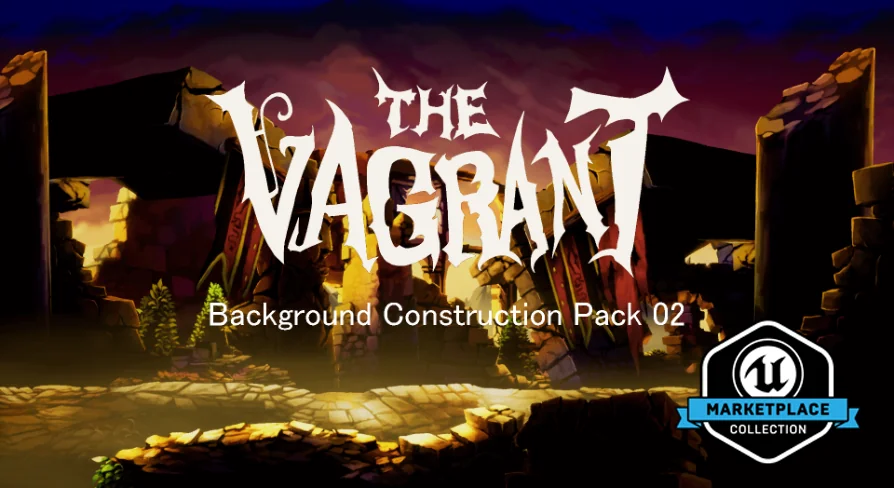
The Battlefield set within the pack provides visual elements driven by conflict, martial devastation, and rugged topography. In high-tempo action RPG sequences, open terrain presents specific design challenges: broad areas must feel vast and contested without turning into monotonous visual planes that disorient the player.
Sprite components in the Battlefield collection enable developers to arrange wide expanses featuring dramatic terrain breaks, weathered obstacles, and thematic clutter characteristic of a war-torn landscape. Staging this backdrop involves organizing ground pieces to define horizon elevations, while secondary scenic sprites are set back to convey distant vistas of past struggle. The fantasy styling preserves strong shapes and clear silhouettes, which helps combat silhouettes remain legible when characters, enemies, and spell effects occupy the screen simultaneously.
Placing these elements across multiple depth channels allows level designers to calibrate horizontal scrolling speeds. Distant mountain outlines or ruined earth can scroll at minimal speeds, while closer rubble and field structures move more briskly relative to player movement. This gives the Battlefield set the visual weight required for extended running sequences, boss encounters, and high-intensity platforming sections typical of stylized action titles.
Building Density with the Witch Forest Sprite Assets
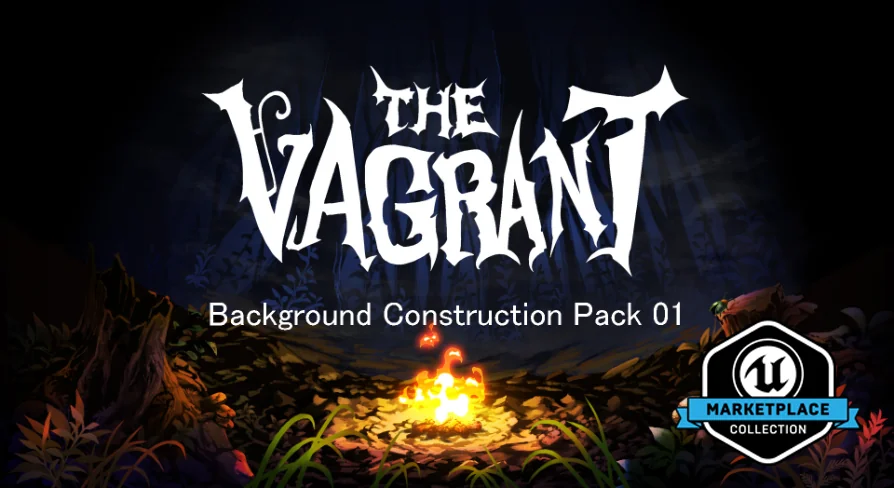
Contrasting the open, stark lines of martial conflict, the Witch Forest set shifts the environment toward organic complexity, deep shadows, and mysterious wilderness. Constructing a forest backdrop requires modular foliage, twisted trunks, canopy silhouettes, and ambient forest details that can overlap naturally to suggest dense woodland growth.
The Witch Forest components are built to produce layers of organic framing. Forest environments in side-scrolling games often rely on dense verticality to heighten tension or signal danger. By combining the trunk assets, overhead branch spreads, and ambient undergrowth included in this set, creators can construct deep woods that box in the player or open up into eerie clearings suitable for sorcerous encounters.
When laying out the Witch Forest assets, layering depth becomes the primary tool for atmospheric control. Placing winding branches in the near background creates an immediate sense of enclosure, while paler, tinted forest silhouettes in the deep background suggest an endless wood stretching far beyond the playable path. The stylized art style ties the fantastical forms together, giving the entire forest area a unified, painted fantasy identity that fits seamlessly into dark or magical narrative arcs.
Integration Across The Vagrant: Background Construction Pack 01
A central technical advantage of this package is its direct compatibility with The Vagrant: Background Construction Pack 01. Rather than functioning as an isolated visual style that resists combination with other assets, Pack 02 shares the core production baseline, art direction, and world-building logic established across the earlier release.
This architectural continuity allows creators to execute transitions between diverse biome types. A level that begins in the ruined clearings of the Battlefield set can transition progressively toward the borders of the Witch Forest, blending structural components from both sets to depict contested woodland edges. When paired with environments from Pack 01, the scope of possible level progression multiplies, enabling cohesive journeys from settled fantasy regions through untamed wilderness and battle-scarred war zones without jarring aesthetic breaks.
Because both packs share the stylized, painterly execution originating from The Vagrant, lighting setups, global post-processing volumes, and ambient color palettes apply smoothly across pieces from either library. Sprite scale, detailing density, and color saturation remain aligned, removing the need to manually repaint or re-grade textures before placing them in the same level.
Workflow Placement in Stylized 2D Action Projects
Deploying ready-made background collections resolves one of the heaviest bottlenecks in indie and modular game development: the labor-intensive cycle of illustrating and slicing vast non-interactive scenery. Because this pack is classified as a stylized fantasy collection, it fits directly into workflows aimed at expressive, story-driven, or mechanically demanding 2D action games.
Level designers can treat the sprite collections as modular construction kits. Prototyping an encounter area begins with rough blockouts using the larger ground and horizon silhouettes. Once platform spacing and camera bounds are finalized, mid-ground and background layers are detailed with the distinctive features of the Battlefield or Witch Forest. This separation between game-space geometry and visual staging speeds up level iteration, ensuring that cosmetic changes can be made without destabilizing collision planes or enemy patrol paths.
The end result is an production-ready backdrop assembly system. By delivering distinct settings rooted in an established commercial release, The Vagrant: Background Construction Pack 02 supplies creators with proven, cohesive visual assets that elevate level aesthetics across any stylized 2D fantasy project.
 Environments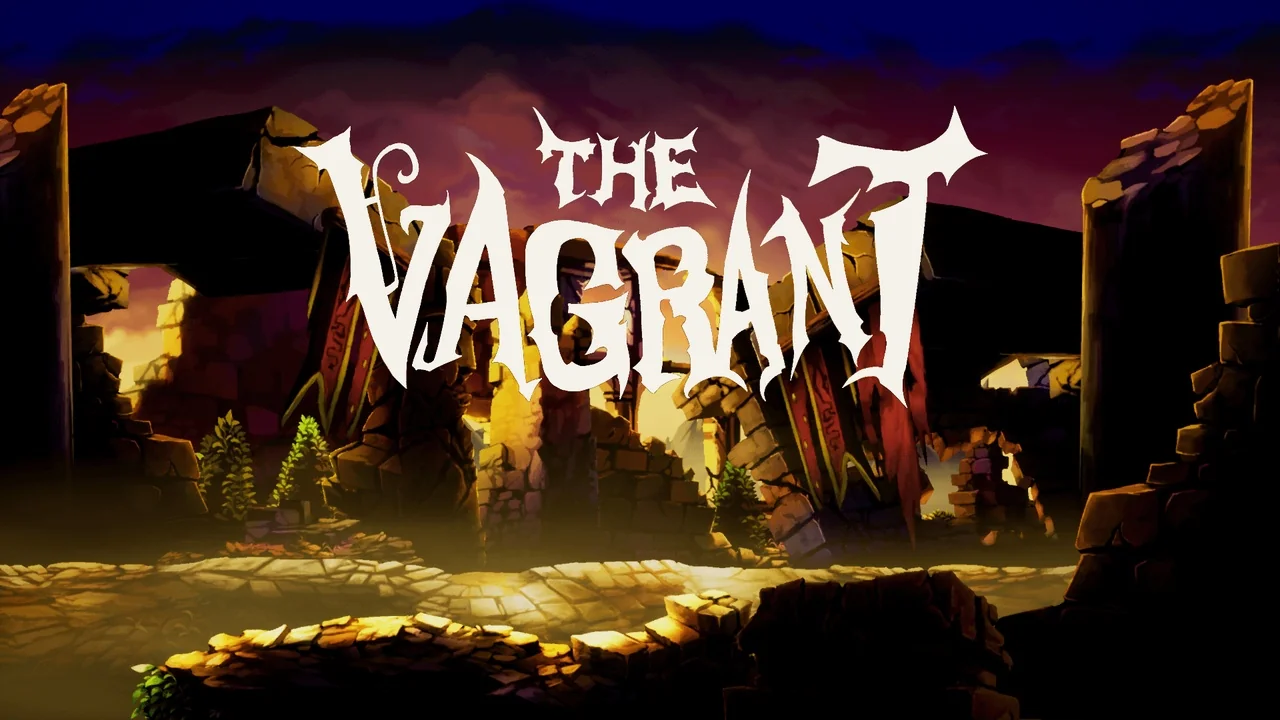
 Environments
 Environments
 Environments