"c68a05d5e51405b3"{"id":"1000108","slug":"the-backroom-5-modular-levels-1","title":"The Backroom 5 Modular levels 1","category":"Horror","engine":"Engine Version: 5.0+","assetVersion":"Engine Version: 5.0+","engineVersion":"","tag":"Horror","accent":"blue","visual":"mech","summary":"Implement a modular PBR environment designed to construct five distinct backroom levels, featuring realistic interior details and Unreal Engine water plugin int","platform":"Unreal Engine","publishedAt":"2026-06-07T16:52:31.424Z","updatedAt":"2026-06-07T16:52:31.424Z","sourceNotes":[],"fileContents":[],"compatibility":["Unreal Engine","Engine Version: 5.0+"],"featuredImage":{"alt":"The Backroom 5 Modular levels 1","src":"/wp-content/uploads/published/2026/06/dc651e3d6f6b-d26707da-c926-4f6c-9ff1-3d00ca59ee3f-bd6aa85d11.webp"},"hasDownloadLink":true,"downloads":1,"terms":[{"taxonomy":"category","slug":"horror","name":"Horror"}],"galleryImages":[{"src":"/wp-content/uploads/published/2026/06/971b6e119828-7bee07ef-8e6c-4683-8450-5a42b5d6f735-50e4829bec.webp","alt":"The Backroom 5 Modular levels 1"},{"src":"/wp-content/uploads/published/2026/06/71b32fdc2175-84c52340-9443-4771-8358-a935840d601a-fadee96752.webp","alt":"The Backroom 5 Modular levels 1"},{"src":"/wp-content/uploads/published/2026/06/c8997d39382f-af312d3d-0616-45f3-b039-fcc9f68a2916-b27e4ff6c1.webp","alt":"The Backroom 5 Modular levels 1"},{"src":"/wp-content/uploads/published/2026/06/56bb2f6ac448-79a2ef33-f877-4868-9b66-4e89a2c7223f-5e20eb1c6f.webp","alt":"The Backroom 5 Modular levels 1"},{"src":"/wp-content/uploads/published/2026/06/3edaef07f52a-4f22b22c-0c44-455f-812d-2f15a8dafea4-3aa7833415.webp","alt":"The Backroom 5 Modular levels 1"},{"src":"/wp-content/uploads/published/2026/06/1226ad4a4f22-c75a7b33-f266-4170-8bba-f041ceb9e3c7-7c55365c1b.webp","alt":"The Backroom 5 Modular levels 1"},{"src":"/wp-content/uploads/published/2026/06/8dfe7c6d3ca3-b274bfb5-59cc-4900-9201-a224b94e9aea-26477f8eb5.webp","alt":"The Backroom 5 Modular levels 1"},{"src":"/wp-content/uploads/published/2026/06/f122fa0ebfb5-a95b38a3-a59f-43bb-b67a-e4dbb815ef78-ffc27d4ea4.webp","alt":"The Backroom 5 Modular levels 1"},{"src":"/wp-content/uploads/published/2026/06/07508e54e1ce-15b99e8d-16cd-42c3-819e-9deaf264b14c-8317ee81f3.webp","alt":"The Backroom 5 Modular levels 1"},{"src":"/wp-content/uploads/published/2026/06/049b35b2f86e-e6a12eda-e5bc-4d61-b87e-b2c5e8dd990d-1b96ab161b.webp","alt":"The Backroom 5 Modular levels 1"}],"accessPanel":{"kind":"resource","title":"Access this resource","eyebrow":"Free Download","message":"Log in or create a free account to start your download.","fileName":"Backroom5.7z","safetyNote":"Resources are manually reviewed before listing to improve quality and reduce obvious risks.","actionLabel":"Download Free","resourceType":"Resource archive"},"contentHtml":"\u003ch2\u003eAssembling the Modular Architecture\u003c/h2\u003e\n\u003cp\u003eConstructing an environment that feels both expansive and deeply claustrophobic requires a specific approach to level design. This pack provides a modular workflow designed specifically to build interior spaces themed around the backrooms concept. The core implementation relies on piecing together individual structural components to form seamless, repeating corridors and rooms. Because the backrooms aesthetic is defined by its monotonous, endless architecture, utilizing a modular pack is the most effective way to generate massive floor plans without encountering extreme memory overhead.\u003c/p\u003e\n\u003cp\u003eDevelopers construct these environments by snapping the modular pieces along a standardized grid. This allows for the rapid assembly of non-linear, maze-like layouts that are essential for disorienting the player. The pack includes the necessary architectural variations to build out five different levels of the backrooms. This multi-level approach allows for significant environmental shifts within a single project. A developer can establish a baseline of normalcy in the initial sections and progressively introduce structural decay, altered layouts, or entirely different architectural styles as the player transitions through the five distinct areas. The modularity ensures that these transitions can be handled smoothly, with pieces fitting together to bridge the gap between different thematic zones.\u003c/p\u003e\n\u003cp\u003eWorking with a modular interior system also provides flexibility during the prototyping phase. Level designers can easily block out the flow of a horror sequence, adjust the length of a hallway to build tension, or dead-end a corridor to force the player into a specific encounter. The structural pieces serve as the foundational building blocks, allowing the developer to focus on the psychological impact of the layout rather than modeling individual rooms from scratch.\u003c/p\u003e\n\u003ch2\u003eConfiguring the Unreal Engine Water System\u003c/h2\u003e\n\u003cp\u003eA specific technical requirement for realizing the full scope of these environments involves the handling of liquid surfaces. For the water elements present within the pack, the implementation relies directly on the free Unreal Engine water plugin. This is a critical setup step for developers utilizing the flooded or submerged variations of the five available levels. Prior to opening the affected maps or placing water volumes, the native water plugin must be actively enabled within the project's plugin directory.\u003c/p\u003e\n\u003cp\u003eUtilizing the engine's built-in plugin, rather than relying on custom static meshes or basic translucent planes, tightly integrates the environment's water with Unreal Engine's standard rendering pipeline. This integration ensures that the liquid surfaces react dynamically to the surrounding realistic interior. The water will correctly reflect the artificial lighting placed within the modular corridors and interact with the engine's standard post-processing effects. When constructing the flooded backroom levels, the plugin manages the complex surface rendering, allowing the developer to focus on how the modular architectural pieces intersect with the water level, creating submerged hazards or impassable routes within the maze.\u003c/p\u003e\n\u003ch2\u003eImplementing PBR for Realistic Interiors\u003c/h2\u003e\n\u003cp\u003eTo ground the surreal and endless layouts in a believable reality, the pack utilizes Physically Based Rendering (PBR) across its materials. Implementing these realistic interior surfaces requires careful attention to the engine's lighting setup. The PBR workflow relies on a combination of base color, normal, roughness, and metallic maps that dictate exactly how light scatters, absorbs, and reflects off the modular walls, floors, and ceilings.\u003c/p\u003e\n\u003cp\u003eIn an interior environment, the sense of realism hinges entirely on these material responses. The sterile, unsettling atmosphere of the backrooms is amplified when the surfaces look physically accurate under artificial lighting. Developers must place point lights, spotlights, or emissive materials to simulate the harsh fluorescent glare typical of such spaces. The PBR roughness maps will dictate the dull sheen of a carpeted floor or the sharp reflections of a linoleum hallway. The normal maps provide the necessary micro-detail to flat architectural planes, giving depth to wallpaper seams, ceiling tiles, and floorboards.\u003c/p\u003e\n\u003cp\u003eBecause the environments are entirely enclosed interiors, there is no reliance on natural directional sunlight or skyboxes to provide ambient illumination. Every light source must be deliberately placed, and the PBR materials are calibrated to respond to these localized light bounces. This realism is crucial for maintaining the illusion of a tangible space, preventing the repetitive modular architecture from feeling artificial or gamified.\u003c/p\u003e\n\u003ch2\u003eStructuring Terror in Closed Environments\u003c/h2\u003e\n\u003cp\u003eThe combination of grid-based modularity, PBR realism, and specific environmental hazards like water culminates in the pack's primary thematic focus: terror and horror. The backrooms concept is inherently tied to the psychological dread of liminal spaces—areas of transition that feel abandoned yet eerily familiar. Developers leverage the modular pieces to construct these disorienting floor plans, intentionally confusing the player's sense of direction.\u003c/p\u003e\n\u003cp\u003eThe realistic interior aesthetic grounds the horror. By presenting an environment that looks completely mundane and physically accurate, the surreal nature of the endless, inescapable rooms becomes deeply unsettling. The horror is derived from the environment itself rather than relying solely on external threats. The ability to build five different levels allows developers to escalate this terror over time. The transition from a dry, recognizable office interior to a degraded, flooded corridor changes both the visual pacing and the gameplay dynamics.\u003c/p\u003e\n\u003cp\u003eInterior levels naturally restrict player movement and limit their line of sight. By carefully arranging the modular walls and doorways, developers control exactly what the player can and cannot see, which is a fundamental mechanic in building suspense. The realistic lighting bouncing off the PBR surfaces creates deep shadows in the corners of the repeating rooms, providing the perfect canvas for terror-focused gameplay and cinematic sequences.\u003c/p\u003e\n\n\u003ch2\u003eContinue Browsing Similar Packs\u003c/h2\u003e\n\u003cul\u003e\n\u003cli\u003e\u003ca href=\"https://3dcghub.com/brushify-underworld-pack/\" title=\"Brushify - Underworld Pack\"\u003eBrushify - Underworld Pack\u003c/a\u003e\u003c/li\u003e\n\u003cli\u003e\u003ca href=\"https://3dcghub.com/the-great-marsh/\" title=\"The Great Marsh\"\u003eThe Great Marsh\u003c/a\u003e\u003c/li\u003e\n\u003cli\u003e\u003ca href=\"https://3dcghub.com/bald-cypress-swamp/\" title=\"Bald Cypress Swamp\"\u003eBald Cypress Swamp\u003c/a\u003e\u003c/li\u003e\n\u003cli\u003e\u003ca href=\"https://3dcghub.com/modular-hospital-abandoned-hospital-horror-hospital-modular-hospital-asylum/\" title=\"Modular Hospital (Abandoned Hospital, Horror Hospital, Modular Hospital, Asylum)\"\u003eModular Hospital (Abandoned Hospital, Horror Hospital, Modular Hospital, Asylum)\u003c/a\u003e\u003c/li\u003e\n\u003cli\u003e\u003ca href=\"https://3dcghub.com/haunted-house-haunted-hanunted-horror-horror-house-abandoned-house-dark-3d/\" title=\"Haunted House ( Haunted Hanunted Horror Horror House Abandoned House Dark 3D )\"\u003eHaunted House ( Haunted Hanunted Horror Horror House Abandoned House Dark 3D )\u003c/a\u003e\u003c/li\u003e\n\u003c/ul\u003e","contentTextLength":6529,"navigation":{"current":1896,"total":3860,"previous":{"id":"1000109","slug":"undercity-wonderland-bundle","title":"UnderCity + WonderLand Bundle","category":"Industrial","platform":"Unity","updatedAt":"2026-06-07T23:00:26.456Z"},"next":{"id":"1000107","slug":"swampy-industrial-zone","title":"Swampy industrial zone","category":"Apocalyptic / Post-apocalyptic","platform":"Unreal Engine","updatedAt":"2026-06-07T16:48:55.437Z"}},"relatedResources":[{"id":"1001375","slug":"abandoned-horror-mansion-interior-abandoned-horror-mansion-abandoned-horror","title":"Abandoned Horror Mansion Interior ( Abandoned Horror Mansion Abandoned Horror )","category":"Horror","engine":"5.0+","assetVersion":"","engineVersion":"Engine Version: 5.0+","tag":"Horror","accent":"blue","visual":"mech","summary":"Explore the Abandoned Horror Mansion Interior pack featuring 159 vintage assets, preassembled showcase scenes, and Ultimate Level Art Tool integration.","platform":"Unreal Engine","publishedAt":"2026-10-04T12:02:03.835Z","updatedAt":"2026-10-04T12:02:03.835Z","sourceNotes":[],"fileContents":[],"compatibility":["Unreal Engine","Engine Version: 5.0+"],"featuredImage":{"alt":"Abandoned Horror Mansion Interior ( Abandoned Horror Mansion Abandoned Horror )","src":"/wp-content/uploads/published/2026/10/146268fa3b71-f5c39a4f-fc29-4e08-8fc4-805e0c3465b5-3601687c7e.webp"},"hasDownloadLink":true,"downloads":0},{"id":"1001677","slug":"wild-west-ghost-town-of-fogmourn","title":"Wild West Ghost Town of Fogmourn","category":"Horror","engine":"4.25+,5.0+","assetVersion":"","engineVersion":"Engine Version: 4.25+,5.0+","tag":"Horror","accent":"blue","visual":"mech","summary":"Construct desolate frontier levels with the Wild West Ghost Town of Fogmourn, featuring modular town assets, props, vegetation, and baked lighting.","platform":"Unreal Engine","publishedAt":"2026-10-13T15:28:07.889Z","updatedAt":"2026-10-13T15:28:07.889Z","sourceNotes":[],"fileContents":[],"compatibility":["Unreal Engine","Engine Version: 4.25+,5.0+"],"featuredImage":{"alt":"Wild West Ghost Town of Fogmourn","src":"/wp-content/uploads/published/2026/10/e90b02147535-d647335a-e992-4ca6-9777-41277ab4c841-f0d07dbba1.webp"},"hasDownloadLink":true,"downloads":0},{"id":"1001633","slug":"halloween-graveyard","title":"Halloween Graveyard","category":"Horror","engine":"4.25+,5.0+","assetVersion":"","engineVersion":"Engine Version: 4.25+,5.0+","tag":"Horror","accent":"blue","visual":"mech","summary":"Construct spooky nighttime cemetery levels with the low-poly Halloween Graveyard pack, featuring tombstones, coffins, skeletons, pumpkins, and torches.","platform":"Unreal Engine","publishedAt":"2026-10-13T02:10:37.560Z","updatedAt":"2026-10-13T02:10:37.560Z","sourceNotes":[],"fileContents":[],"compatibility":["Unreal Engine","Engine Version: 4.25+,5.0+"],"featuredImage":{"alt":"Halloween Graveyard","src":"/wp-content/uploads/published/2026/10/8cd8b98f757e-153c0a9e-49b9-4bd4-84aa-64e64247ee79-387a029ad1.webp"},"hasDownloadLink":true,"downloads":0}]}
Horror
The Backroom 5 Modular levels 1
Implement a modular PBR environment designed to construct five distinct backroom levels, featuring realistic interior details and Unreal Engine water plugin int
Category:Unreal Engine,HorrorPlatform: Unreal EngineEngine Version: 5.0+Published: Jun 7, 2026
Horror
Resource overview
Assembling the Modular Architecture
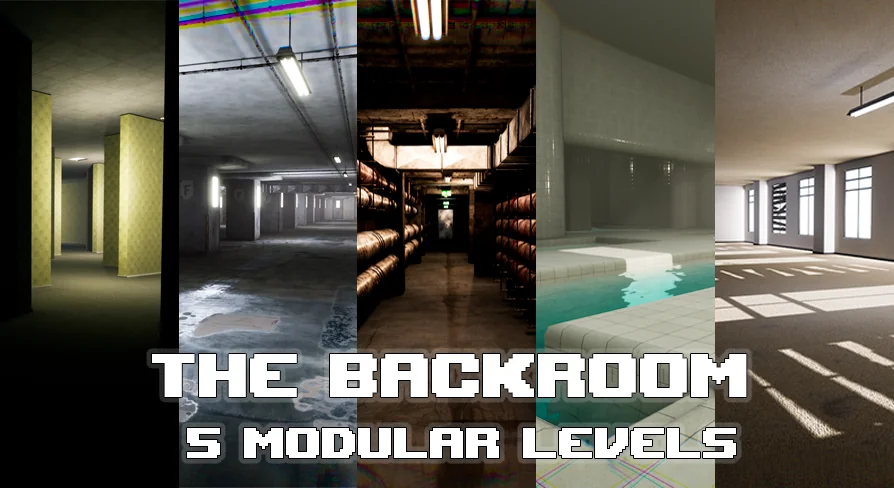
Constructing an environment that feels both expansive and deeply claustrophobic requires a specific approach to level design. This pack provides a modular workflow designed specifically to build interior spaces themed around the backrooms concept. The core implementation relies on piecing together individual structural components to form seamless, repeating corridors and rooms. Because the backrooms aesthetic is defined by its monotonous, endless architecture, utilizing a modular pack is the most effective way to generate massive floor plans without encountering extreme memory overhead.
Developers construct these environments by snapping the modular pieces along a standardized grid. This allows for the rapid assembly of non-linear, maze-like layouts that are essential for disorienting the player. The pack includes the necessary architectural variations to build out five different levels of the backrooms. This multi-level approach allows for significant environmental shifts within a single project. A developer can establish a baseline of normalcy in the initial sections and progressively introduce structural decay, altered layouts, or entirely different architectural styles as the player transitions through the five distinct areas. The modularity ensures that these transitions can be handled smoothly, with pieces fitting together to bridge the gap between different thematic zones.
Working with a modular interior system also provides flexibility during the prototyping phase. Level designers can easily block out the flow of a horror sequence, adjust the length of a hallway to build tension, or dead-end a corridor to force the player into a specific encounter. The structural pieces serve as the foundational building blocks, allowing the developer to focus on the psychological impact of the layout rather than modeling individual rooms from scratch.
Configuring the Unreal Engine Water System
A specific technical requirement for realizing the full scope of these environments involves the handling of liquid surfaces. For the water elements present within the pack, the implementation relies directly on the free Unreal Engine water plugin. This is a critical setup step for developers utilizing the flooded or submerged variations of the five available levels. Prior to opening the affected maps or placing water volumes, the native water plugin must be actively enabled within the project's plugin directory.
Utilizing the engine's built-in plugin, rather than relying on custom static meshes or basic translucent planes, tightly integrates the environment's water with Unreal Engine's standard rendering pipeline. This integration ensures that the liquid surfaces react dynamically to the surrounding realistic interior. The water will correctly reflect the artificial lighting placed within the modular corridors and interact with the engine's standard post-processing effects. When constructing the flooded backroom levels, the plugin manages the complex surface rendering, allowing the developer to focus on how the modular architectural pieces intersect with the water level, creating submerged hazards or impassable routes within the maze.
Implementing PBR for Realistic Interiors
To ground the surreal and endless layouts in a believable reality, the pack utilizes Physically Based Rendering (PBR) across its materials. Implementing these realistic interior surfaces requires careful attention to the engine's lighting setup. The PBR workflow relies on a combination of base color, normal, roughness, and metallic maps that dictate exactly how light scatters, absorbs, and reflects off the modular walls, floors, and ceilings.
In an interior environment, the sense of realism hinges entirely on these material responses. The sterile, unsettling atmosphere of the backrooms is amplified when the surfaces look physically accurate under artificial lighting. Developers must place point lights, spotlights, or emissive materials to simulate the harsh fluorescent glare typical of such spaces. The PBR roughness maps will dictate the dull sheen of a carpeted floor or the sharp reflections of a linoleum hallway. The normal maps provide the necessary micro-detail to flat architectural planes, giving depth to wallpaper seams, ceiling tiles, and floorboards.
Because the environments are entirely enclosed interiors, there is no reliance on natural directional sunlight or skyboxes to provide ambient illumination. Every light source must be deliberately placed, and the PBR materials are calibrated to respond to these localized light bounces. This realism is crucial for maintaining the illusion of a tangible space, preventing the repetitive modular architecture from feeling artificial or gamified.
Structuring Terror in Closed Environments
The combination of grid-based modularity, PBR realism, and specific environmental hazards like water culminates in the pack's primary thematic focus: terror and horror. The backrooms concept is inherently tied to the psychological dread of liminal spaces—areas of transition that feel abandoned yet eerily familiar. Developers leverage the modular pieces to construct these disorienting floor plans, intentionally confusing the player's sense of direction.
The realistic interior aesthetic grounds the horror. By presenting an environment that looks completely mundane and physically accurate, the surreal nature of the endless, inescapable rooms becomes deeply unsettling. The horror is derived from the environment itself rather than relying solely on external threats. The ability to build five different levels allows developers to escalate this terror over time. The transition from a dry, recognizable office interior to a degraded, flooded corridor changes both the visual pacing and the gameplay dynamics.
Interior levels naturally restrict player movement and limit their line of sight. By carefully arranging the modular walls and doorways, developers control exactly what the player can and cannot see, which is a fundamental mechanic in building suspense. The realistic lighting bouncing off the PBR surfaces creates deep shadows in the corners of the repeating rooms, providing the perfect canvas for terror-focused gameplay and cinematic sequences.
 Horror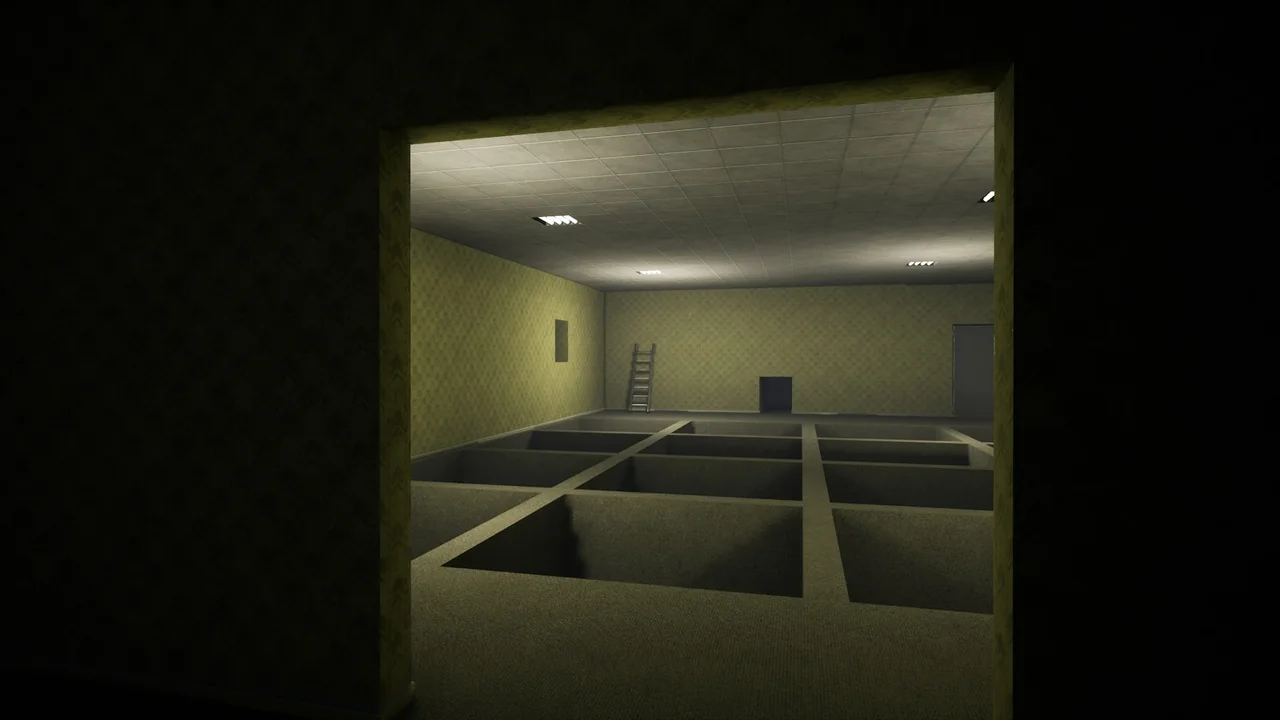
 Horror
 Horror
 Horror