"c68a05d5e51405b3"{"id":"1000107","slug":"swampy-industrial-zone","title":"Swampy industrial zone","category":"Apocalyptic / Post-apocalyptic","engine":"Engine Version: 5.0+","assetVersion":"Engine Version: 5.0+","engineVersion":"","tag":"Apocalyptic","accent":"blue","visual":"mech","summary":"A post-apocalyptic swamp environment with garages, depot, gas station, hangar, damaged vehicles, rail elements, and dense overgrown vegetation.","platform":"Unreal Engine","publishedAt":"2026-06-07T16:48:55.437Z","updatedAt":"2026-06-07T16:48:55.437Z","sourceNotes":[],"fileContents":[],"compatibility":["Unreal Engine","Engine Version: 5.0+"],"featuredImage":{"alt":"Swampy industrial zone","src":"/wp-content/uploads/published/2026/06/9726e82b8e3c-31543bf5-cb53-45ab-9ce1-27329425b583-4c404456d5.webp"},"hasDownloadLink":true,"downloads":2,"terms":[{"taxonomy":"category","slug":"apocalyptic-post-apocalyptic","name":"Apocalyptic / Post-apocalyptic"}],"galleryImages":[{"src":"/wp-content/uploads/published/2026/06/d53859fbf377-f0f70f4c-2d3b-4f14-922c-39b9dae59705-02af265ad0.webp","alt":"Swampy industrial zone"},{"src":"/wp-content/uploads/published/2026/06/1d8dfcfb6b01-e4f085aa-30df-4ba6-b1c0-69d0c2fb0877-a90b9df792.webp","alt":"Swampy industrial zone"},{"src":"/wp-content/uploads/published/2026/06/39043cb0bd23-a4488e06-5813-4da5-93af-6568002f51ae-75f4b9fc39.webp","alt":"Swampy industrial zone"},{"src":"/wp-content/uploads/published/2026/06/7c844afff9f5-a2bef58e-39d3-4068-a716-48232750d84b-b722dbb117.webp","alt":"Swampy industrial zone"},{"src":"/wp-content/uploads/published/2026/06/38ba354dd767-271ccf27-74cb-4eab-995e-1ecb7245f5a1-a3bb700aa0.webp","alt":"Swampy industrial zone"},{"src":"/wp-content/uploads/published/2026/06/d0c366f9694e-c08cb6b0-e991-44be-b7dc-17b5799e5174-03647b6b34.webp","alt":"Swampy industrial zone"},{"src":"/wp-content/uploads/published/2026/06/4926ad9e68c9-e57f53a9-c314-4c62-8aa4-d991890dfe98-94f9f27752.webp","alt":"Swampy industrial zone"},{"src":"/wp-content/uploads/published/2026/06/0239a6cc9215-f75986c8-4fd6-4aa4-95ff-08b8d6ca5b9e-db18bc5a71.webp","alt":"Swampy industrial zone"},{"src":"/wp-content/uploads/published/2026/06/29e5f3fe860f-c79a0639-41de-479f-9b53-4153152f3ed6-fb48d0b3de.webp","alt":"Swampy industrial zone"},{"src":"/wp-content/uploads/published/2026/06/b03bc43fc926-6ad5e6d6-86c1-4d9a-bfc9-049869ebaa04-6b335f80f2.webp","alt":"Swampy industrial zone"}],"accessPanel":{"kind":"resource","title":"Access this resource","eyebrow":"Free Download","message":"Log in or create a free account to start your download.","fileName":"Content.7z","safetyNote":"Resources are manually reviewed before listing to improve quality and reduce obvious risks.","actionLabel":"Download Free","resourceType":"Resource archive"},"contentHtml":"\u003cp\u003eIt plays like a full location instead of one structure. \u003cstrong\u003eSwampy industrial zone\u003c/strong\u003e Can be used as a ready-made stage, but it also supports assembling a custom environment from its included parts. The package brings together architectural structures, a gas station, a hangar, a depot, garages, damaged vehicles, rail-side elements, and swamp vegetation, creating a post-apocalyptic industrial setting that already carries a strong mood before any project-specific dressing is added.\u003c/p\u003e \u003cp\u003eThe set includes the contents of Post-apocalypse garages, Post-apocalypse depot, Post-apocalypse gas station, and Swampy forest, along with a demo video that gives an overview of the map and a character walk around the location. The walking character is not part of the product, but the walkthrough still helps frame how the environment reads at ground level. For teams blocking out a level, pitching a mood-heavy backdrop, or filling a ruined industrial edge with natural overgrowth, that combination makes the package sit between a scene kit and a complete stage.\u003c/p\u003e \u003ch2\u003eSwampy industrial zone as a playable or ready-made stage\u003c/h2\u003e\n\u003cp\u003eThe most immediate production use here is straightforward: drop in a complete industrial zone that already has narrative weight. The environment is structured through recognizable place types that naturally suggest routes, cover, landmarks, and staging points. A gas station, depot, hangars, and garages all read clearly in a scene, and the damaged cars, wagons, tractor, and trailer push the location toward abandonment and past use rather than a clean industrial site.\u003c/p\u003e \u003cp\u003eThat matters in workflows where environment art needs to do more than fill space. A location like this can function as a playable level, a cinematic backdrop, or a storytelling set where the history of the place is visible in every cluster of props. The presence of both architectural structures and landscape elements means it is not limited to a hard-surface yard. It blends built forms with swamp terrain, letting a project move between enclosed, object-dense pockets and wetter, more open ground.\u003c/p\u003e \u003cp\u003eThe tags tied to the set point in the same direction: station, gas, post, fantasy, zone, garage, depot, level, realistic, industrial, swamp, Soviet, horror, apocalyptic. Those cues place the environment in a lane where realism, decay, and atmosphere are more important than cleanliness or symmetry. In practical use, it fits productions that need a harsh industrial site being swallowed by wetlands and neglect.\u003c/p\u003e \u003ch2\u003eGas station, garages, and depot pieces carry the scene\u003c/h2\u003e\n\u003cp\u003eThe gas station section is more than an exterior shell. It includes unique elements as well as interior and exterior objects, giving that part of the location a denser sense of use. The set includes a filling station, a cash register, fire accessories, lighting devices, and more. For scene construction, that means the gas station can read from a distance as a landmark and still hold up when the camera or player moves close enough to inspect the area around the pumps or into the service space.\u003c/p\u003e \u003cp\u003eThe garages add a smaller-scale layer of lived-in clutter. Inside them are a bicycle, tools, a tool table, a cabinet, various cans, boxes, and more. These are the kinds of objects that help bridge the gap between architecture and story dressing. In a production workflow, they can quickly turn a garage from a bare shell into a place that implies repair work, storage, abandonment, or scavenging without needing to source separate prop clusters.\u003c/p\u003e \u003cp\u003eThe depot expands the industrial side of the package with several building options. One of its notable details is a sheet metal roof that can be assembled by the user, which gives that area a more configurable role inside the wider set. Alongside the depot structures are wagons of several types, rails, sleepers, poles, and more. That rail infrastructure opens up another read for the scene: not just roadside industry, but a transport or storage area that once connected to a larger network.\u003c/p\u003e \u003cp\u003eTaken together, these parts give the package a layered environment hierarchy. The gas station provides a recognizable public-facing space, the garages support tighter prop-heavy corners, and the depot extends the location into heavier industrial ground. Instead of relying on one hero building, the scene gains variety from these adjacent site types.\u003c/p\u003e \u003ch2\u003eSwampy forest elements reshape the industrial area\u003c/h2\u003e\n\u003cp\u003eThe swamp portion is not just a backdrop around the buildings. It includes landscape material, water, and vegetation such as trees, reeds, grass, and lilies. That shifts the package from a simple industrial ruin into a site where the natural environment has become inseparable from the man-made one. In visual terms, the water and plant life soften hard edges, break up open surfaces, and create transitions between roads, rail lines, structures, and flooded ground.\u003c/p\u003e \u003cp\u003eMany objects are overgrown with vines, which is one of the clearest style-defining details in the set. The vine growth helps sell the passage of time and the sense that the industrial zone has been reclaimed by the swamp. Just as important for practical scene work, the vines can be used or removed from the stage. That gives teams a direct way to control how abandoned the environment feels without changing the broader structure of the location.\u003c/p\u003e \u003cp\u003eWith the vines present, the set leans harder into horror, post-apocalyptic, and overrun-zone imagery. With them removed, it can read as a less overgrown industrial site still shaped by water and vegetation. That simple visual control is useful when the same location needs to support different story beats or sit at different points along a timeline of decay.\u003c/p\u003e \u003ch2\u003eVehicles, wagons, and rail details support environmental storytelling\u003c/h2\u003e\n\u003cp\u003eSeveral of the included objects help the location feel interrupted rather than merely empty. Damaged cars, wagons, a tractor, and a trailer all suggest halted work, failed transport, or a rushed exit. These are not abstract decoration pieces in the way a random scatter of debris might be. They are recognizable remnants of function, and they reinforce the industrial identity of the map while pushing it firmly into post-apocalyptic territory.\u003c/p\u003e \u003cp\u003eThe wagon variety also pairs naturally with the depot’s rails, sleepers, and poles. That allows the environment to frame different pockets of activity inside the same scene. One area can feel like a former loading or transit edge, another like a repair corner, and another like a service stop structured through the gas station. Since these elements are already part of the same package, the environment can keep a consistent visual language while still shifting between sub-areas.\u003c/p\u003e \u003cp\u003eFor production, this matters when a team needs a location to hold attention across multiple shots or routes. The scene is not relying on one repeated building type. It uses structures, transport elements, scattered machinery, and swamp growth to keep the eye moving through the space.\u003c/p\u003e \u003ch2\u003eWhere the set fits in a real environment workflow\u003c/h2\u003e\n\u003cp\u003eSwampy industrial zone works in two closely related ways. It can serve as a ready-made stage when a project needs an immediate location with a clear theme. It also works as a construction set for teams that want to shape their own version of the zone from the included components. That split is important. Some productions need a location fast; others need a consistent collection of structures and props that can be rearranged into a custom layout while staying inside one visual family.\u003c/p\u003e \u003cp\u003eThe included demo overview and the character walk around the location help frame how the environment reads as a whole and how it feels from ground level. Even though the character is not included, the walkthrough still points to a practical use case: evaluating sightlines, density, and the relationship between structures, vehicles, and swamp cover in a more scene-based way than static imagery alone.\u003c/p\u003e \u003cp\u003eTeams looking at the package are really evaluating whether they need an industrial-swamp location that already includes its own architectural anchors, cluttered interiors, rail-side details, and vegetation layer. Here, those pieces are already tied together. The strongest takeaway is that the set is not limited to one hero building or one patch of swamp. It offers a complete post-apocalyptic zone with garages, depot structures, gas station details, transport remnants, and overgrown landscape elements that can be used as-is or reworked into a custom stage.\u003c/p\u003e\n\n\u003ch2\u003eExplore Similar Assets\u003c/h2\u003e\n\u003cul\u003e\n\u003cli\u003e\u003ca href=\"https://3dcghub.com/post-apocalypse-city/\" title=\"Post-apocalypse city\"\u003ePost-apocalypse city\u003c/a\u003e\u003c/li\u003e\n\u003cli\u003e\u003ca href=\"https://3dcghub.com/decay-oil-drums-district-rusty-industrial-slum/\" title=\"Decay: Oil Drums District - [Rusty Industrial Slum]\"\u003eDecay: Oil Drums District - [Rusty Industrial Slum]\u003c/a\u003e\u003c/li\u003e\n\u003cli\u003e\u003ca href=\"https://3dcghub.com/shelter/\" title=\"Shelter\"\u003eShelter\u003c/a\u003e\u003c/li\u003e\n\u003cli\u003e\u003ca href=\"https://3dcghub.com/polygon-apocalypse-wasteland/\" title=\"POLYGON - Apocalypse Wasteland\"\u003ePOLYGON - Apocalypse Wasteland\u003c/a\u003e\u003c/li\u003e\n\u003cli\u003e\u003ca href=\"https://3dcghub.com/hangar-warehouse-in-the-tropics/\" title=\"Hangar warehouse in the tropics\"\u003eHangar warehouse in the tropics\u003c/a\u003e\u003c/li\u003e\n\u003c/ul\u003e","contentTextLength":8607,"navigation":{"current":1897,"total":3860,"previous":{"id":"1000108","slug":"the-backroom-5-modular-levels-1","title":"The Backroom 5 Modular levels 1","category":"Horror","platform":"Unreal Engine","updatedAt":"2026-06-07T16:52:31.424Z"},"next":{"id":"1000106","slug":"super-pack-of-skeletons","title":"Super pack of skeletons","category":"Characters \u0026 Creatures","platform":"Unreal Engine","updatedAt":"2026-06-07T16:30:49.830Z"}},"relatedResources":[{"id":"6905","slug":"post-apocalypse-city","title":"Post-apocalypse city","category":"Apocalyptic / Post-apocalyptic","engine":"5.3+","assetVersion":"Engine version: 5.3+","engineVersion":"5.3","tag":"Apocalyptic","accent":"blue","visual":"city","summary":"Transform your game world with this massive environment bundle featuring over 1700 meshes. This collection combines industrial zones and city squares with full support for modern Unreal Engine 5 features.","platform":"Unreal Engine","publishedAt":"2026-02-20T15:58:38.000Z","updatedAt":"2026-04-19T15:56:06.000Z","sourceNotes":[],"fileContents":[],"compatibility":["Unreal Engine","Engine version: 5.3+"],"featuredImage":{"alt":"Post-apocalypse city","src":"https://3dcghub.com/wp-content/uploads/2026/02/3f376d0a-fae3-44b1-a02f-62e645ebf3e2.webp"},"hasDownloadLink":true,"downloads":5},{"id":"6871","slug":"decay-oil-drums-district-rusty-industrial-slum","title":"Decay: Oil Drums District - [Rusty Industrial Slum]","category":"Apocalyptic / Post-apocalyptic","engine":"5.1+","assetVersion":"Engine version: 5.1+","engineVersion":"5.1","tag":"Apocalyptic","accent":"blue","visual":"city","summary":"Transform your game environments with a massive collection of over 450 industrial assets. This pack features smart shaders and blueprint tools to help you build realistic, weathered slums and wastelands.","platform":"Unreal Engine","publishedAt":"2026-02-20T15:48:34.000Z","updatedAt":"2026-04-19T15:56:06.000Z","sourceNotes":[],"fileContents":[],"compatibility":["Unreal Engine","Engine version: 5.1+"],"featuredImage":{"alt":"Decay: Oil Drums District - [Rusty Industrial Slum]","src":"https://3dcghub.com/wp-content/uploads/2026/02/9e2ac79e-b21a-487e-99d8-39ff14d9ba83.webp"},"hasDownloadLink":true,"downloads":1},{"id":"6922","slug":"shelter","title":"Shelter","category":"Apocalyptic / Post-apocalyptic","engine":"5.4+","assetVersion":"Engine version: 5.4+","engineVersion":"5.4","tag":"Apocalyptic","accent":"blue","visual":"city","summary":"The Shelter Environment Pack provides a high-quality collection of assets for Unreal Engine developers. It is perfect for creating realistic underground bunkers or survival zones in post-apocalyptic settings.","platform":"Unreal Engine","publishedAt":"2026-02-20T16:08:22.000Z","updatedAt":"2026-04-19T15:56:05.000Z","sourceNotes":[],"fileContents":[],"compatibility":["Unreal Engine","Engine version: 5.4+"],"featuredImage":{"alt":"Shelter","src":"https://3dcghub.com/wp-content/uploads/2026/02/982c108d-7514-4449-a708-9340b2a1f2ee.webp"},"hasDownloadLink":true,"downloads":1}]}
Apocalyptic
Swampy industrial zone
A post-apocalyptic swamp environment with garages, depot, gas station, hangar, damaged vehicles, rail elements, and dense overgrown vegetation.
It plays like a full location instead of one structure. Swampy industrial zone Can be used as a ready-made stage, but it also supports assembling a custom environment from its included parts. The package brings together architectural structures, a gas station, a hangar, a depot, garages, damaged vehicles, rail-side elements, and swamp vegetation, creating a post-apocalyptic industrial setting that already carries a strong mood before any project-specific dressing is added.
The set includes the contents of Post-apocalypse garages, Post-apocalypse depot, Post-apocalypse gas station, and Swampy forest, along with a demo video that gives an overview of the map and a character walk around the location. The walking character is not part of the product, but the walkthrough still helps frame how the environment reads at ground level. For teams blocking out a level, pitching a mood-heavy backdrop, or filling a ruined industrial edge with natural overgrowth, that combination makes the package sit between a scene kit and a complete stage.
Swampy industrial zone as a playable or ready-made stage
The most immediate production use here is straightforward: drop in a complete industrial zone that already has narrative weight. The environment is structured through recognizable place types that naturally suggest routes, cover, landmarks, and staging points. A gas station, depot, hangars, and garages all read clearly in a scene, and the damaged cars, wagons, tractor, and trailer push the location toward abandonment and past use rather than a clean industrial site.
That matters in workflows where environment art needs to do more than fill space. A location like this can function as a playable level, a cinematic backdrop, or a storytelling set where the history of the place is visible in every cluster of props. The presence of both architectural structures and landscape elements means it is not limited to a hard-surface yard. It blends built forms with swamp terrain, letting a project move between enclosed, object-dense pockets and wetter, more open ground.
The tags tied to the set point in the same direction: station, gas, post, fantasy, zone, garage, depot, level, realistic, industrial, swamp, Soviet, horror, apocalyptic. Those cues place the environment in a lane where realism, decay, and atmosphere are more important than cleanliness or symmetry. In practical use, it fits productions that need a harsh industrial site being swallowed by wetlands and neglect.
Gas station, garages, and depot pieces carry the scene
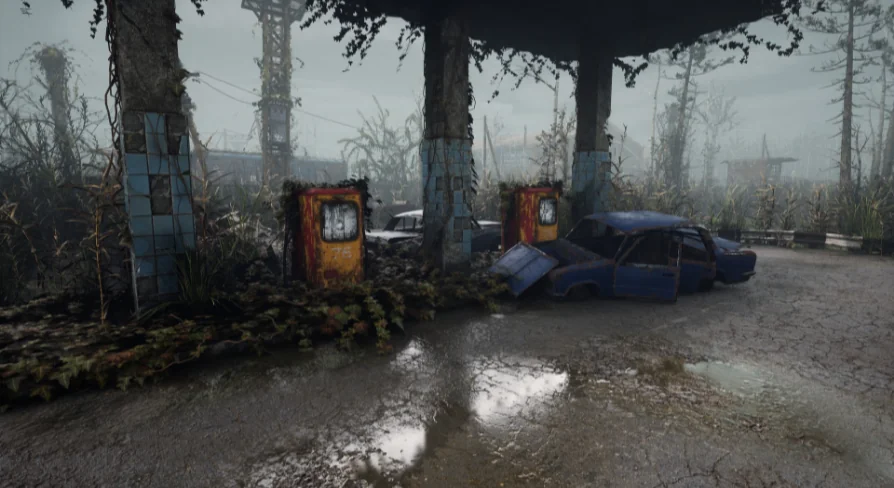
The gas station section is more than an exterior shell. It includes unique elements as well as interior and exterior objects, giving that part of the location a denser sense of use. The set includes a filling station, a cash register, fire accessories, lighting devices, and more. For scene construction, that means the gas station can read from a distance as a landmark and still hold up when the camera or player moves close enough to inspect the area around the pumps or into the service space.
The garages add a smaller-scale layer of lived-in clutter. Inside them are a bicycle, tools, a tool table, a cabinet, various cans, boxes, and more. These are the kinds of objects that help bridge the gap between architecture and story dressing. In a production workflow, they can quickly turn a garage from a bare shell into a place that implies repair work, storage, abandonment, or scavenging without needing to source separate prop clusters.
The depot expands the industrial side of the package with several building options. One of its notable details is a sheet metal roof that can be assembled by the user, which gives that area a more configurable role inside the wider set. Alongside the depot structures are wagons of several types, rails, sleepers, poles, and more. That rail infrastructure opens up another read for the scene: not just roadside industry, but a transport or storage area that once connected to a larger network.
Taken together, these parts give the package a layered environment hierarchy. The gas station provides a recognizable public-facing space, the garages support tighter prop-heavy corners, and the depot extends the location into heavier industrial ground. Instead of relying on one hero building, the scene gains variety from these adjacent site types.
Swampy forest elements reshape the industrial area
The swamp portion is not just a backdrop around the buildings. It includes landscape material, water, and vegetation such as trees, reeds, grass, and lilies. That shifts the package from a simple industrial ruin into a site where the natural environment has become inseparable from the man-made one. In visual terms, the water and plant life soften hard edges, break up open surfaces, and create transitions between roads, rail lines, structures, and flooded ground.
Many objects are overgrown with vines, which is one of the clearest style-defining details in the set. The vine growth helps sell the passage of time and the sense that the industrial zone has been reclaimed by the swamp. Just as important for practical scene work, the vines can be used or removed from the stage. That gives teams a direct way to control how abandoned the environment feels without changing the broader structure of the location.
With the vines present, the set leans harder into horror, post-apocalyptic, and overrun-zone imagery. With them removed, it can read as a less overgrown industrial site still shaped by water and vegetation. That simple visual control is useful when the same location needs to support different story beats or sit at different points along a timeline of decay.
Vehicles, wagons, and rail details support environmental storytelling
Several of the included objects help the location feel interrupted rather than merely empty. Damaged cars, wagons, a tractor, and a trailer all suggest halted work, failed transport, or a rushed exit. These are not abstract decoration pieces in the way a random scatter of debris might be. They are recognizable remnants of function, and they reinforce the industrial identity of the map while pushing it firmly into post-apocalyptic territory.
The wagon variety also pairs naturally with the depot’s rails, sleepers, and poles. That allows the environment to frame different pockets of activity inside the same scene. One area can feel like a former loading or transit edge, another like a repair corner, and another like a service stop structured through the gas station. Since these elements are already part of the same package, the environment can keep a consistent visual language while still shifting between sub-areas.
For production, this matters when a team needs a location to hold attention across multiple shots or routes. The scene is not relying on one repeated building type. It uses structures, transport elements, scattered machinery, and swamp growth to keep the eye moving through the space.
Where the set fits in a real environment workflow
Swampy industrial zone works in two closely related ways. It can serve as a ready-made stage when a project needs an immediate location with a clear theme. It also works as a construction set for teams that want to shape their own version of the zone from the included components. That split is important. Some productions need a location fast; others need a consistent collection of structures and props that can be rearranged into a custom layout while staying inside one visual family.
The included demo overview and the character walk around the location help frame how the environment reads as a whole and how it feels from ground level. Even though the character is not included, the walkthrough still points to a practical use case: evaluating sightlines, density, and the relationship between structures, vehicles, and swamp cover in a more scene-based way than static imagery alone.
Teams looking at the package are really evaluating whether they need an industrial-swamp location that already includes its own architectural anchors, cluttered interiors, rail-side details, and vegetation layer. Here, those pieces are already tied together. The strongest takeaway is that the set is not limited to one hero building or one patch of swamp. It offers a complete post-apocalyptic zone with garages, depot structures, gas station details, transport remnants, and overgrown landscape elements that can be used as-is or reworked into a custom stage.
 Apocalyptic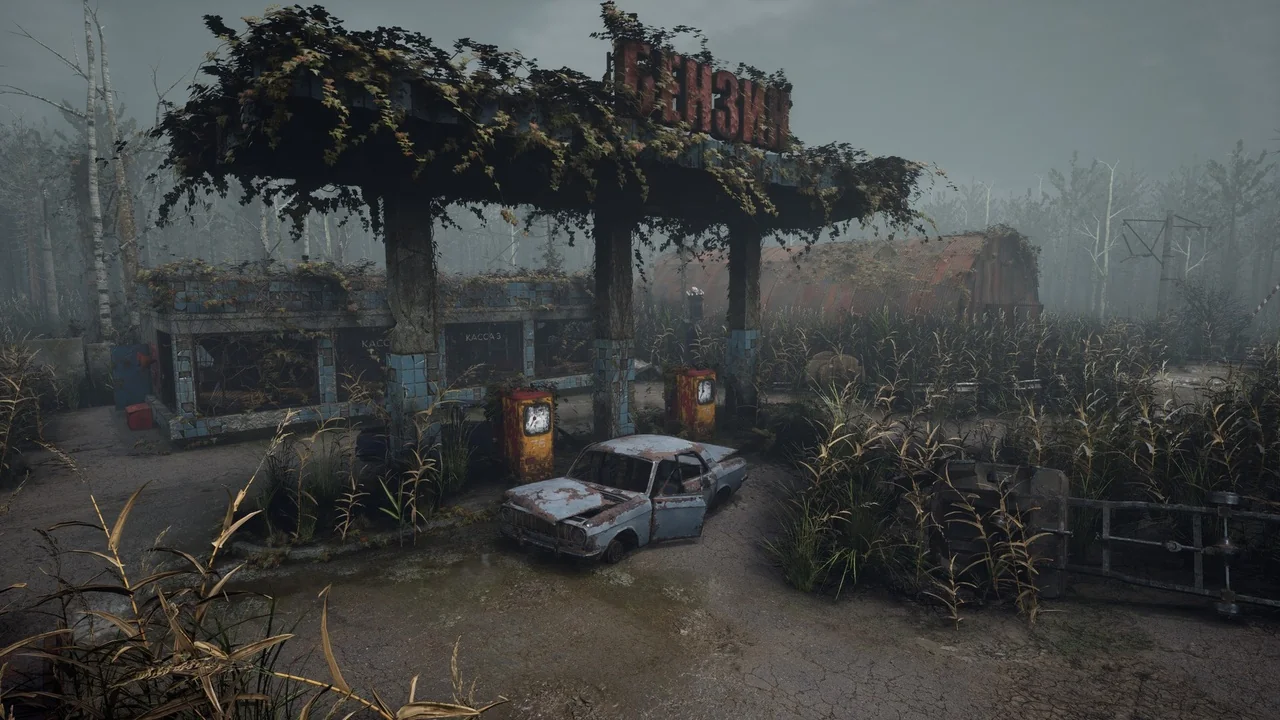
 Apocalyptic
![Decay: Oil Drums District - [Rusty Industrial Slum]](/_img/360/wp-content/uploads/2026/02/9e2ac79e-b21a-487e-99d8-39ff14d9ba83.webp) Apocalyptic
Apocalyptic Apocalyptic