"c68a05d5e51405b3"{"id":"1000105","slug":"stylized-pirate-port-city-modular-pirate-port-city-modular-dock-pirate-city","title":"Stylized Pirate Port City Modular ( Pirate Port City Modular Dock Pirate City )","category":"Fantasy","engine":"Engine Version: 4.27,5.0+","assetVersion":"Engine Version: 4.27,5.0+","engineVersion":"","tag":"Fantasy","accent":"blue","visual":"city","summary":"A modular stylized pirate port city environment pack with building pieces, props, material instance controls, and ULAT compatibility.","platform":"Unreal Engine","publishedAt":"2026-06-07T16:18:40.463Z","updatedAt":"2026-06-07T16:18:40.463Z","sourceNotes":[],"fileContents":[],"compatibility":["Unreal Engine","Engine Version: 4.27,5.0+"],"featuredImage":{"alt":"Stylized Pirate Port City Modular ( Pirate Port City Modular Dock Pirate City )","src":"/wp-content/uploads/published/2026/06/4a88b65c402e-1fb6ddfb-e407-4ffb-bad5-12f3464a910f-f3b010b712.webp"},"hasDownloadLink":true,"downloads":1,"terms":[{"taxonomy":"category","slug":"fantasy","name":"Fantasy"}],"galleryImages":[{"src":"/wp-content/uploads/published/2026/06/d7320a59eb0a-bf393329-6153-4b49-9b7c-b5f897d31ec7-0713b0a7fb.webp","alt":"Stylized Pirate Port City Modular ( Pirate Port City Modular Dock Pirate City )"},{"src":"/wp-content/uploads/published/2026/06/6e41da538c59-855626cf-19f8-42bd-b3a8-dacb7099060d-0556297043.webp","alt":"Stylized Pirate Port City Modular ( Pirate Port City Modular Dock Pirate City )"},{"src":"/wp-content/uploads/published/2026/06/c692dd4f24f4-9b7ec160-d19a-40c4-8c30-87238d18a8ae-b70a2ececb.webp","alt":"Stylized Pirate Port City Modular ( Pirate Port City Modular Dock Pirate City )"},{"src":"/wp-content/uploads/published/2026/06/823b845903d1-e1f1ec80-ce71-4c7a-ba4e-5e2a378e5890-1e8a6616cc.webp","alt":"Stylized Pirate Port City Modular ( Pirate Port City Modular Dock Pirate City )"},{"src":"/wp-content/uploads/published/2026/06/8abfe63c9468-838d9c85-1abe-4d47-a571-8aae9ef919e5-2c0f3dffc5.webp","alt":"Stylized Pirate Port City Modular ( Pirate Port City Modular Dock Pirate City )"},{"src":"/wp-content/uploads/published/2026/06/fbd74be976c1-0b7e43df-4374-4a9a-a154-e9053bd14508-f6317cf1b6.webp","alt":"Stylized Pirate Port City Modular ( Pirate Port City Modular Dock Pirate City )"},{"src":"/wp-content/uploads/published/2026/06/56e5ce77df9b-621b7a91-68b1-409a-809e-514a9eae696c-bf79b6a9e0.webp","alt":"Stylized Pirate Port City Modular ( Pirate Port City Modular Dock Pirate City )"},{"src":"/wp-content/uploads/published/2026/06/1687fe36bf6f-c2cd0f0f-4ffe-4727-866b-1a2d305156c6-4087d6c0af.webp","alt":"Stylized Pirate Port City Modular ( Pirate Port City Modular Dock Pirate City )"},{"src":"/wp-content/uploads/published/2026/06/f8066124a6a7-df4d2302-5218-4e37-b40a-218bf4f7a107-c8970dc9e9.webp","alt":"Stylized Pirate Port City Modular ( Pirate Port City Modular Dock Pirate City )"},{"src":"/wp-content/uploads/published/2026/06/aa7a01b38f8c-d1e65da8-9f30-4e84-b004-1c1a0a9e1da1-7e34b5076f.webp","alt":"Stylized Pirate Port City Modular ( Pirate Port City Modular Dock Pirate City )"}],"accessPanel":{"kind":"resource","title":"Access this resource","eyebrow":"Free Download","message":"Log in or create a free account to start your download.","fileName":"Content.7z","safetyNote":"Resources are manually reviewed before listing to improve quality and reduce obvious risks.","actionLabel":"Download Free","resourceType":"Resource archive"},"contentHtml":"\u003cp\u003eFor scenes shaped by docks, harbors, pirate towns, and stylized coastal settlements, \u003cstrong\u003eStylized Pirate Port City Modular ( Pirate Port City Modular Dock Pirate City )\u003c/strong\u003e Sits in the part of production where environment assembly needs to move quickly without losing visual variety. It is a high-quality modular asset pack that combines easy-to-assemble building assets with high-quality props, giving teams a set of pieces meant for constructing and polishing a pirate port environment.\u003c/p\u003e\u003cp\u003eThe pack is anchored in modular scene building. Rather than treating the environment as a fixed layout, it supports rearranging and combining parts to create custom spaces. That makes it a practical fit for workflows where a harbor district, dockside path, clustered waterfront buildings, or a broader pirate city needs to be blocked out and refined through repeated iteration. The resource is also described as game ready and optimized, which places it squarely in real-time environment production rather than concept-only scene dressing.\u003c/p\u003e\u003ch2\u003eStylized Pirate Port City Modular for fast harbor scene assembly\u003c/h2\u003e\u003cp\u003eThe core value here is not just the pirate theme, but the way the environment is structured for assembly. The pack includes many modular building assets that are specifically noted as easy to assemble. In practice, that means the environment can be approached as a set of reusable construction parts rather than a small number of finished, locked-together buildings. For a stylized port city, that modular structure matters because these scenes often depend on repeating architectural language across docks, market edges, waterfront buildings, and connected walkways.\u003c/p\u003e\u003cp\u003eHigh-quality props are part of the package as well, which broadens its role beyond simple layout work. The props support the step after core construction, when an environment needs density, identity, and visual polish. A pirate port scene usually depends on more than architecture alone. Even in a stylized setting, the sense of place comes from how structural pieces and smaller set dressing work together. This pack is positioned to cover both sides of that process: the modular building stage and the detail pass that helps the location feel populated.\u003c/p\u003e\u003cp\u003eThe stylized direction also gives the resource a clear visual lane. It is aimed at pirate port city environments rather than a general-purpose waterfront pack, so it fits productions that want fantasy-leaning harbor spaces, dock districts, sea-facing settlements, or pirate-themed worldbuilding. The tags attached to it consistently reinforce that identity through terms such as pirate, port, city, modular, dock, harbor, fantasy, sea, ship, and ocean, along with repeated references to pirate towns, markets, shipyards, hideouts, docks, and coastal strongholds.\u003c/p\u003e\u003ch2\u003eMesh and material variation inside the pirate city workflow\u003c/h2\u003e\u003cp\u003eOne of the most practical details is the pack's emphasis on quick iteration between mesh and material variations. That gives the resource a role beyond static asset placement. It supports the repeated adjustment phase that happens after an environment is assembled but before it feels production-ready. Instead of rebuilding a location from scratch to get more variety, teams can move between existing meshes and materials to alter how sections of the city read on screen.\u003c/p\u003e\u003cp\u003eThat can be especially useful in a modular pirate port, where repetition is one of the main risks. Harbor districts often rely on recurring building forms and dockside structures. Variation in mesh and material choices helps break up that repetition while keeping the overall environment stylistically consistent. The pack explicitly frames this as a way to populate and polish a game environment, which highlights two different workflow stages. First comes population, where empty structural spaces are filled out into believable areas. Then comes polish, where variation helps refine mood, readability, and visual richness.\u003c/p\u003e\u003cp\u003eThe material side is supported further by controllable parameters in material instances. This is an important production detail because it suggests that changes can be managed through parameter control rather than requiring every adjustment to happen at the base material level. For environment artists, that keeps visual tweaking closer to scene assembly. It allows a faster back-and-forth between placing assets and refining how they look in context.\u003c/p\u003e\u003cp\u003eThat leaves a pack that is not only modular in geometry, but also flexible in presentation. That combination is often what makes an environment pack useful across more than one map area or layout pass. A team can assemble structures, shift mesh choices, adjust material instance parameters, and keep iterating toward a denser, more finished pirate city.\u003c/p\u003e\u003ch2\u003eUltimate Level Art Tool and custom modular buildings\u003c/h2\u003e\u003cp\u003eA major supporting detail is compatibility with the \u003cstrong\u003eUltimate Level Art Tool\u003c/strong\u003e, abbreviated as \u003cstrong\u003eULAT\u003c/strong\u003e. This tool is described as allowing fast creation of custom modular buildings while also offering a seamless and distinctive way to populate scenes naturally. This is relevant because it extends the pack from being a standalone set of modular assets into something that can participate in a broader level art workflow.\u003c/p\u003e\u003cp\u003eFor productions already leaning on modular building systems, ULAT compatibility gives this environment pack a more specific place in the pipeline. It can serve as content that works with a tool focused on custom modular building creation and natural scene population. In other words, the pack is not only about having pirate-themed pieces available; it is also about fitting those pieces into a faster building and population process.\u003c/p\u003e\u003cp\u003eThe relationship between the pack and ULAT is straightforward. The environment assets provide the visual and structural content, while ULAT supports rapid custom building creation and scene population. When those two parts are used together, the workflow is aimed at constructing modular pirate architecture efficiently and then filling the scene in a way that feels less mechanical.\u003c/p\u003e\u003cp\u003eThe original expanded name associated with ULAT is given as \u003cem\u003eA modular design development tool for mobile and web-based systems\u003c/em\u003e. That naming detail is part of the tool context attached to the pack, though the key production takeaway remains the same: this environment pack is compatible with a system intended to speed up custom modular building work.\u003c/p\u003e\u003ch2\u003eWhere Stylized Pirate Port City fits in Unreal Engine scene production\u003c/h2\u003e\u003cp\u003eThe tags tied to the resource place it firmly in Unreal Engine-oriented environment work, and they repeatedly connect it with open-world pirate ports, modular pirate towns, pirate shipyards, dockyards, markets, watchtowers, coastal villages, trading posts, and fortress-like harbor spaces. Taken together, those terms point to a fairly broad range of scene types inside one visual theme.\u003c/p\u003e\u003cp\u003eThat makes the pack relevant at multiple scales. It can support a tighter dock or harbor section where modular buildings and props need to form a compact gameplay space. It also suits larger port-town construction, where repeating structures, route variation, and environmental dressing need to carry a stylized pirate identity across a bigger area. Because it is game ready and optimized, the intended usage is clearly inside production scenes rather than only showcase assembly.\u003c/p\u003e\u003cp\u003eThe repeated pirate and coastal tags also suggest a pack that works best when the environment needs a clear thematic read at first glance. A generic seaside village is one thing; a stylized pirate port city depends on stronger thematic cues in both architecture and props. This resource is tailored to that specific lane, making it more useful for teams that already know they want a pirate harbor, dock city, or fantasy port settlement rather than a neutral maritime backdrop.\u003c/p\u003e\u003ch3\u003eWhat stands out in the pack itself\u003c/h3\u003e\u003cul\u003e\u003cli\u003eHigh-quality assets\u003c/li\u003e\u003cli\u003eGame ready and optimized construction\u003c/li\u003e\u003cli\u003eMany easy-to-assemble modular building assets\u003c/li\u003e\u003cli\u003eHigh-quality props for scene population and polish\u003c/li\u003e\u003cli\u003eQuick iteration through mesh and material variations\u003c/li\u003e\u003cli\u003eControllable parameters in material instances\u003c/li\u003e\u003cli\u003eCompatibility with the Ultimate Level Art Tool\u003c/li\u003e\u003c/ul\u003e\u003ch2\u003eA practical fit for pirate harbors, dockyards, and modular port towns\u003c/h2\u003e\u003cp\u003eThis pack makes the most sense when the job is to build a stylized pirate environment through reusable pieces rather than rely on a single fixed scene. Its strengths are clearly tied to modular construction, fast iteration, and scene population. If a project needs pirate docks, a harbor district, a fantasy port town, or a broader pirate city assembled in a flexible way, the resource is aligned with that workflow.\u003c/p\u003e\u003cp\u003eThe short practical takeaway is simple: this is a modular pirate port environment pack for teams that want to assemble buildings quickly, vary meshes and materials as they refine the scene, and fold the work into a ULAT-compatible level art process.\u003c/p\u003e\n\n\u003ch2\u003eExplore Similar Assets\u003c/h2\u003e\n\u003cul\u003e\n\u003cli\u003e\u003ca href=\"https://3dcghub.com/stylized-winter-city-environment/\" title=\"Stylized winter city environment\"\u003eStylized winter city environment\u003c/a\u003e\u003c/li\u003e\n\u003cli\u003e\u003ca href=\"https://3dcghub.com/dreamscape-stylized-environment-tower-stylized-nature-open-world-fantasy/\" title=\"Dreamscape: Stylized Environment Tower - Stylized Nature Open World Fantasy\"\u003eDreamscape: Stylized Environment Tower - Stylized Nature Open World Fantasy\u003c/a\u003e\u003c/li\u003e\n\u003cli\u003e\u003ca href=\"https://3dcghub.com/stylized-perched-church-stylized-perched-churche-church-hilltop-stylised-3d/\" title=\"Stylized Perched Church ( Stylized Perched Churche Church Hilltop Stylised 3D )\"\u003eStylized Perched Church ( Stylized Perched Churche Church Hilltop Stylised 3D )\u003c/a\u003e\u003c/li\u003e\n\u003cli\u003e\u003ca href=\"https://3dcghub.com/modular-medieval-docks-harbor-medieval-town-stylized-town-town-city/\" title=\"Modular Medieval Docks / Harbor (Medieval Town, Stylized Town, Town, City)\"\u003eModular Medieval Docks / Harbor (Medieval Town, Stylized Town, Town, City)\u003c/a\u003e\u003c/li\u003e\n\u003cli\u003e\u003ca href=\"https://3dcghub.com/city-of-dream/\" title=\"City Of Dream\"\u003eCity Of Dream\u003c/a\u003e\u003c/li\u003e\n\u003c/ul\u003e","contentTextLength":9172,"navigation":{"current":1899,"total":3860,"previous":{"id":"1000106","slug":"super-pack-of-skeletons","title":"Super pack of skeletons","category":"Characters \u0026 Creatures","platform":"Unreal Engine","updatedAt":"2026-06-07T16:30:49.830Z"},"next":{"id":"1000104","slug":"stylized-male-and-female-characters-with-assets-and-ui","title":"Stylized Male and Female characters, with assets and UI","category":"Characters \u0026 Creatures","platform":"Unreal Engine","updatedAt":"2026-06-07T16:04:14.141Z"}},"relatedResources":[{"id":"1001086","slug":"fantasy-medieval-kingdom-stylized-castle-town-village-dungeon-kingdom","title":"Fantasy Medieval Kingdom (Stylized Castle, Town, Village, Dungeon, Kingdom)","category":"Fantasy","engine":"5.0+","assetVersion":"","engineVersion":"Engine Version: 5.0+","tag":"Fantasy","accent":"blue","visual":"mech","summary":"Fully playable 2x2 km stylized medieval open world with castle city, village, magic forest, dungeons, docks, underwater zones, modular buildings, and full inter","platform":"Unreal Engine","publishedAt":"2026-09-04T16:54:26.409Z","updatedAt":"2026-09-04T16:54:26.409Z","sourceNotes":[],"fileContents":[],"compatibility":["Unreal Engine","Engine Version: 5.0+"],"featuredImage":{"alt":"Fantasy Medieval Kingdom (Stylized Castle, Town, Village, Dungeon, Kingdom)","src":"/wp-content/uploads/published/2026/09/a67503d4b022-dd68fe93-0fdf-41df-bcd0-363d13ef92f5-d48693974f.webp"},"hasDownloadLink":true,"downloads":6},{"id":"1001669","slug":"stylized-lost-island","title":"Stylized Lost Island","category":"Fantasy","engine":"4.20+,5.0+","assetVersion":"","engineVersion":"Engine Version: 4.20+,5.0+","tag":"Fantasy","accent":"blue","visual":"mech","summary":"Explore the Stylized Lost Island asset package, featuring focused props and materials designed for stylized fantasy landscapes and level creation.","platform":"Unreal Engine","publishedAt":"2026-10-13T15:12:03.566Z","updatedAt":"2026-10-13T15:12:03.566Z","sourceNotes":[],"fileContents":[],"compatibility":["Unreal Engine","Engine Version: 4.20+,5.0+"],"featuredImage":{"alt":"Stylized Lost Island","src":"/wp-content/uploads/published/2026/10/0599ec0aeabb-a3e61077-ca06-4318-b2d4-1997d7076fdf-36d65ef8fd.webp"},"hasDownloadLink":true,"downloads":1},{"id":"1001559","slug":"stylized-dungeon-castle","title":"Stylized Dungeon Castle","category":"Fantasy","engine":"4.26+,5.0+","assetVersion":"","engineVersion":"Engine Version: 4.26+,5.0+","tag":"Fantasy","accent":"blue","visual":"mech","summary":"Stylized Dungeon Castle provides a modular low-poly kit with PBR materials, custom material instances, and dozens of architectural parts and props.","platform":"Unreal Engine","publishedAt":"2026-10-10T03:50:13.480Z","updatedAt":"2026-10-10T03:50:13.480Z","sourceNotes":[],"fileContents":[],"compatibility":["Unreal Engine","Engine Version: 4.26+,5.0+"],"featuredImage":{"alt":"Stylized Dungeon Castle","src":"/wp-content/uploads/published/2026/10/d8153114fcbb-7ff92175-07be-40dc-92b8-59d8ec741b37-2e7c7e175f.webp"},"hasDownloadLink":true,"downloads":0}]}
Fantasy
Stylized Pirate Port City Modular ( Pirate Port City Modular Dock Pirate City )
A modular stylized pirate port city environment pack with building pieces, props, material instance controls, and ULAT compatibility.
Category:Unreal Engine,FantasyPlatform: Unreal EngineEngine Version: 4.27,5.0+Published: Jun 7, 2026
Fantasy
Resource overview
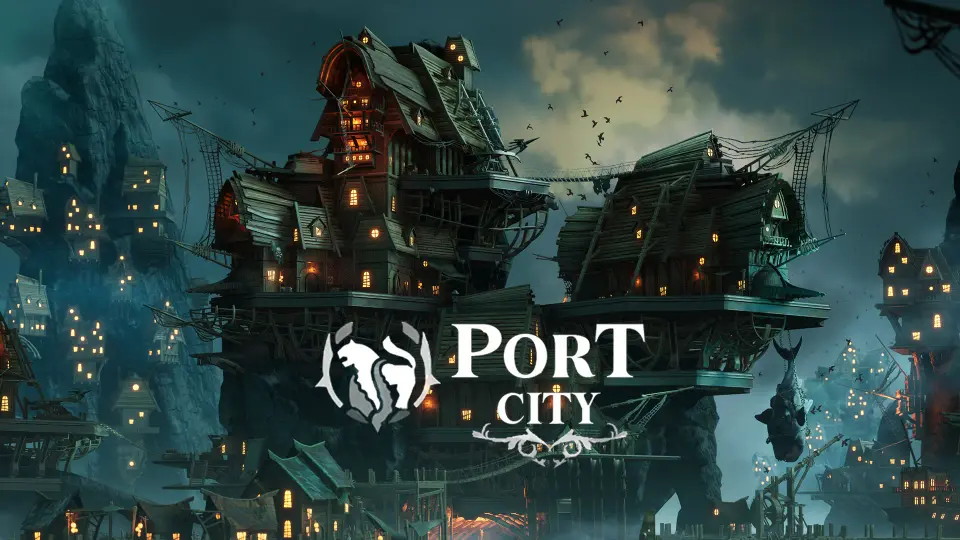
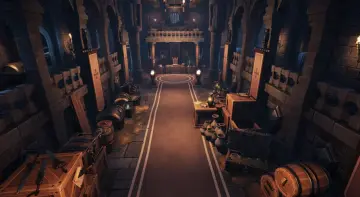
For scenes shaped by docks, harbors, pirate towns, and stylized coastal settlements, Stylized Pirate Port City Modular ( Pirate Port City Modular Dock Pirate City ) Sits in the part of production where environment assembly needs to move quickly without losing visual variety. It is a high-quality modular asset pack that combines easy-to-assemble building assets with high-quality props, giving teams a set of pieces meant for constructing and polishing a pirate port environment.
The pack is anchored in modular scene building. Rather than treating the environment as a fixed layout, it supports rearranging and combining parts to create custom spaces. That makes it a practical fit for workflows where a harbor district, dockside path, clustered waterfront buildings, or a broader pirate city needs to be blocked out and refined through repeated iteration. The resource is also described as game ready and optimized, which places it squarely in real-time environment production rather than concept-only scene dressing.
Stylized Pirate Port City Modular for fast harbor scene assembly
The core value here is not just the pirate theme, but the way the environment is structured for assembly. The pack includes many modular building assets that are specifically noted as easy to assemble. In practice, that means the environment can be approached as a set of reusable construction parts rather than a small number of finished, locked-together buildings. For a stylized port city, that modular structure matters because these scenes often depend on repeating architectural language across docks, market edges, waterfront buildings, and connected walkways.
High-quality props are part of the package as well, which broadens its role beyond simple layout work. The props support the step after core construction, when an environment needs density, identity, and visual polish. A pirate port scene usually depends on more than architecture alone. Even in a stylized setting, the sense of place comes from how structural pieces and smaller set dressing work together. This pack is positioned to cover both sides of that process: the modular building stage and the detail pass that helps the location feel populated.
The stylized direction also gives the resource a clear visual lane. It is aimed at pirate port city environments rather than a general-purpose waterfront pack, so it fits productions that want fantasy-leaning harbor spaces, dock districts, sea-facing settlements, or pirate-themed worldbuilding. The tags attached to it consistently reinforce that identity through terms such as pirate, port, city, modular, dock, harbor, fantasy, sea, ship, and ocean, along with repeated references to pirate towns, markets, shipyards, hideouts, docks, and coastal strongholds.
Mesh and material variation inside the pirate city workflow
One of the most practical details is the pack's emphasis on quick iteration between mesh and material variations. That gives the resource a role beyond static asset placement. It supports the repeated adjustment phase that happens after an environment is assembled but before it feels production-ready. Instead of rebuilding a location from scratch to get more variety, teams can move between existing meshes and materials to alter how sections of the city read on screen.
That can be especially useful in a modular pirate port, where repetition is one of the main risks. Harbor districts often rely on recurring building forms and dockside structures. Variation in mesh and material choices helps break up that repetition while keeping the overall environment stylistically consistent. The pack explicitly frames this as a way to populate and polish a game environment, which highlights two different workflow stages. First comes population, where empty structural spaces are filled out into believable areas. Then comes polish, where variation helps refine mood, readability, and visual richness.
The material side is supported further by controllable parameters in material instances. This is an important production detail because it suggests that changes can be managed through parameter control rather than requiring every adjustment to happen at the base material level. For environment artists, that keeps visual tweaking closer to scene assembly. It allows a faster back-and-forth between placing assets and refining how they look in context.
That leaves a pack that is not only modular in geometry, but also flexible in presentation. That combination is often what makes an environment pack useful across more than one map area or layout pass. A team can assemble structures, shift mesh choices, adjust material instance parameters, and keep iterating toward a denser, more finished pirate city.
Ultimate Level Art Tool and custom modular buildings
A major supporting detail is compatibility with the Ultimate Level Art Tool, abbreviated as ULAT. This tool is described as allowing fast creation of custom modular buildings while also offering a seamless and distinctive way to populate scenes naturally. This is relevant because it extends the pack from being a standalone set of modular assets into something that can participate in a broader level art workflow.
For productions already leaning on modular building systems, ULAT compatibility gives this environment pack a more specific place in the pipeline. It can serve as content that works with a tool focused on custom modular building creation and natural scene population. In other words, the pack is not only about having pirate-themed pieces available; it is also about fitting those pieces into a faster building and population process.
The relationship between the pack and ULAT is straightforward. The environment assets provide the visual and structural content, while ULAT supports rapid custom building creation and scene population. When those two parts are used together, the workflow is aimed at constructing modular pirate architecture efficiently and then filling the scene in a way that feels less mechanical.
The original expanded name associated with ULAT is given as A modular design development tool for mobile and web-based systems. That naming detail is part of the tool context attached to the pack, though the key production takeaway remains the same: this environment pack is compatible with a system intended to speed up custom modular building work.
Where Stylized Pirate Port City fits in Unreal Engine scene production
The tags tied to the resource place it firmly in Unreal Engine-oriented environment work, and they repeatedly connect it with open-world pirate ports, modular pirate towns, pirate shipyards, dockyards, markets, watchtowers, coastal villages, trading posts, and fortress-like harbor spaces. Taken together, those terms point to a fairly broad range of scene types inside one visual theme.
That makes the pack relevant at multiple scales. It can support a tighter dock or harbor section where modular buildings and props need to form a compact gameplay space. It also suits larger port-town construction, where repeating structures, route variation, and environmental dressing need to carry a stylized pirate identity across a bigger area. Because it is game ready and optimized, the intended usage is clearly inside production scenes rather than only showcase assembly.
The repeated pirate and coastal tags also suggest a pack that works best when the environment needs a clear thematic read at first glance. A generic seaside village is one thing; a stylized pirate port city depends on stronger thematic cues in both architecture and props. This resource is tailored to that specific lane, making it more useful for teams that already know they want a pirate harbor, dock city, or fantasy port settlement rather than a neutral maritime backdrop.
What stands out in the pack itself
High-quality assets
Game ready and optimized construction
Many easy-to-assemble modular building assets
High-quality props for scene population and polish
Quick iteration through mesh and material variations
Controllable parameters in material instances
Compatibility with the Ultimate Level Art Tool
A practical fit for pirate harbors, dockyards, and modular port towns
This pack makes the most sense when the job is to build a stylized pirate environment through reusable pieces rather than rely on a single fixed scene. Its strengths are clearly tied to modular construction, fast iteration, and scene population. If a project needs pirate docks, a harbor district, a fantasy port town, or a broader pirate city assembled in a flexible way, the resource is aligned with that workflow.
The short practical takeaway is simple: this is a modular pirate port environment pack for teams that want to assemble buildings quickly, vary meshes and materials as they refine the scene, and fold the work into a ULAT-compatible level art process.
 Fantasy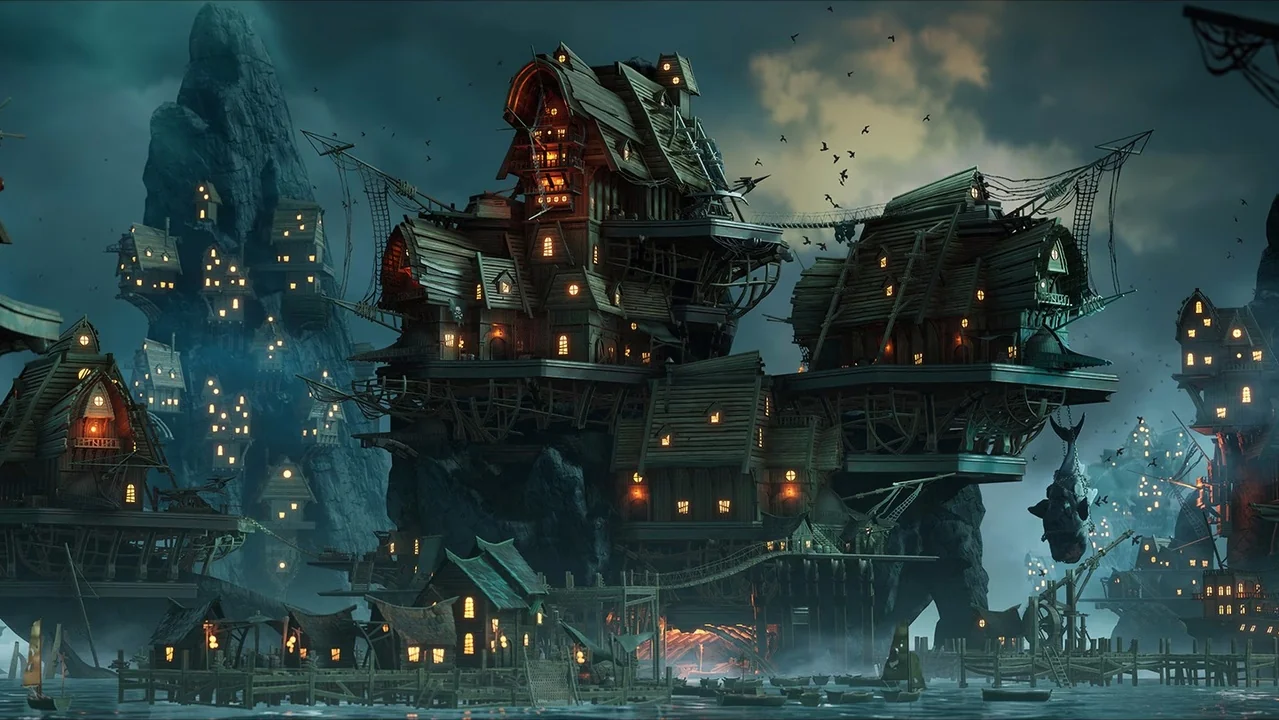
 Fantasy
 Fantasy
 Fantasy