"7b46a695175d8694"{"id":"1000401","slug":"space-launch-ground-control-command-center","title":"Space Launch Ground Control Command Center","category":"Sky \u0026 Space","engine":"4.26+,5.0+","assetVersion":"","engineVersion":"Engine Version: 4.26+,5.0+","tag":"Sky \u0026 Space","accent":"blue","visual":"mech","summary":"Implement a modular, PBR-ready Soviet space launch environment featuring over 140 props and a strict 10.24ppm texel density optimized for VR and first-person pr","platform":"Unreal Engine","publishedAt":"2026-07-08T06:50:30.997Z","updatedAt":"2026-07-08T06:50:30.997Z","sourceNotes":[],"fileContents":[],"compatibility":["Unreal Engine","Engine Version: 4.26+,5.0+"],"featuredImage":{"alt":"Space Launch Ground Control Command Center","src":"/wp-content/uploads/published/2026/07/e14bfcb45382-a59e03c1-cda6-4157-a495-040b340b84ea-5a56237052.webp"},"hasDownloadLink":true,"downloads":2,"terms":[{"taxonomy":"category","slug":"sky-and-space","name":"Sky \u0026 Space"}],"galleryImages":[{"src":"/wp-content/uploads/published/2026/07/56791f21a397-4b3caa1a-e766-4721-bd58-c3ec96c61642-22190434f0.webp","alt":"Space Launch Ground Control Command Center"},{"src":"/wp-content/uploads/published/2026/07/ed498b9133c3-61b06893-5a4e-4559-83c6-4a7301998730-4f590c2a04.webp","alt":"Space Launch Ground Control Command Center"},{"src":"/wp-content/uploads/published/2026/07/6d4eb82e2c4c-8c01e210-62af-43fa-b1a0-2c4db8f78b9c-f9c29f77be.webp","alt":"Space Launch Ground Control Command Center"},{"src":"/wp-content/uploads/published/2026/07/0e95bfa09ae7-b9b21831-3013-4863-b930-fce0d46cf228-b0633fecc1.webp","alt":"Space Launch Ground Control Command Center"},{"src":"/wp-content/uploads/published/2026/07/c36d9e1a97bd-5f0420e9-0b08-4527-9e1f-774ecfae5c1c-699f35727c.webp","alt":"Space Launch Ground Control Command Center"},{"src":"/wp-content/uploads/published/2026/07/8a27f3657375-81cfca81-227c-4184-b7e2-99fee4a30d31-95dc349dd9.webp","alt":"Space Launch Ground Control Command Center"},{"src":"/wp-content/uploads/published/2026/07/f88e021e76a9-a2ba2dbf-ac74-42c2-95c7-d6bb40b69b3d-4101313695.webp","alt":"Space Launch Ground Control Command Center"},{"src":"/wp-content/uploads/published/2026/07/e3a30621f941-db67117f-df48-440a-b2e1-ca91f9809ed1-1075d7b384.webp","alt":"Space Launch Ground Control Command Center"},{"src":"/wp-content/uploads/published/2026/07/9e245df0a050-59ed42ff-03b7-4cb4-aad6-10d91c6092f9-a205958ff6.webp","alt":"Space Launch Ground Control Command Center"},{"src":"/wp-content/uploads/published/2026/07/0cfd23977fb7-e96f9406-1b97-425c-9fa8-2fd0b95b63b1-b20b9c4850.webp","alt":"Space Launch Ground Control Command Center"}],"accessPanel":{"kind":"resource","title":"Download this resource","eyebrow":"Free Download","message":"Log in or create a free account to start your download.","fileName":"Content.7z","safetyNote":"Resources are manually reviewed before listing to improve quality and reduce obvious risks.","actionLabel":"Download Free","resourceType":"Resource archive"},"contentHtml":"\u003ch2\u003eIntegrating First-Person and VR Camera Perspectives\u003c/h2\u003e\n\u003cp\u003eWhen implementing the Space Launch Ground Control Command Center into a new project, the initial setup phase is streamlined by the environment's default configuration. The entire asset package is authored explicitly for First-Person and Virtual Reality applications right out of the box. In standard production workflows, migrating generic environmental assets into immersive projects often requires extensive adjustment to correct scale discrepancies, collision boundaries, and material readability when viewed at macro distances. Because these assets are built specifically for close-quarter camera proximity, developers can bypass much of the initial scaling and material adjustment phase.\u003c/p\u003e\n\u003cp\u003eVirtual reality and first-person viewpoints allow players to inspect environmental elements from inches away, placing immense pressure on the structural fidelity of every object in the scene. The assets within this Soviet launch center are designed to withstand this level of scrutiny, ensuring that the transition from a wide-angle room view to a close-up inspection of a control surface remains visually consistent. This pre-configured setup allows technical artists and level designers to immediately begin blocking out their scenes without first auditing the collection for VR compatibility.\u003c/p\u003e\n\u003ch2\u003eModular Level Construction and Asset Scaling\u003c/h2\u003e\n\u003cp\u003eBuilding a realistic space launch facility requires an approach that balances broad architectural structures with dense, localized clutter. The package facilitates this workflow through a highly modular framework. Developers have access to over 60 unique items, which serve as the foundational building blocks of the environment. These unique meshes allow for flexible layout configurations, meaning developers are not restricted to a single, static room design. Instead, the structural pieces can be snapped together to create custom floor plans, winding corridors, or expansive command floors tailored to specific level design requirements.\u003c/p\u003e\n\u003cp\u003eOnce the primary architectural footprint is established, the scene can be populated using the broader collection of over 140 total props. This distinction between the 60 unique structural or foundational items and the 140 total variations and prefabs is critical for efficient set dressing. By utilizing the full range of props, environment artists can fill empty spaces, create complex technical stations, and establish the cluttered, highly functional atmosphere expected of a realistic rocket command center. The modular nature of the package ensures that even with a high density of props, the environment maintains a cohesive aesthetic without obvious or repetitive tiling.\u003c/p\u003e\n\u003ch2\u003eStandardizing Visuals with a Strict 10.24ppm Texel Ratio\u003c/h2\u003e\n\u003cp\u003eOne of the most critical technical specifications of this environment is the enforcement of a uniform 10.24ppm (pixels per meter) texel ratio across all assets. In a 3D production pipeline, maintaining a consistent texel density is a constant balancing act. When environments are constructed using assets with varying texture resolutions, the package then offers often a jarring visual disconnect—a highly detailed console might sit directly next to a noticeably blurry wall. This inconsistency instantly breaks immersion, particularly in first-person and VR environments where the camera highlights these discrepancies.\u003c/p\u003e\n\u003cp\u003eBy adhering to a strict 10.24ppm standard, the creators ensure that every surface in the Space Launch Ground Control Command Center shares the exact same level of texture clarity relative to its size. This uniform distribution of texture data simplifies the rendering pipeline and provides a reliable baseline for environment artists. When lighting and post-processing effects are applied, the entire scene reacts cohesively, as the underlying surface data shares the same resolution standard. This technical baseline is essential for achieving a AAA quality look without requiring developers to manually audit and scale UV maps across dozens of individual props.\u003c/p\u003e\n\u003ch2\u003eImplementing PBR Materials for a Realistic Soviet Aesthetic\u003c/h2\u003e\n\u003cp\u003eThe visual identity of the package is heavily rooted in an original Soviet design language, tailored specifically for realistic space and rocket launch scenarios. To support this aesthetic, the assets utilize a complete Physically Based Rendering (PBR) pipeline. Implementing PBR materials ensures that the environment responds accurately to the project's lighting setup, regardless of the specific engine or rendering path being used.\u003c/p\u003e\n\u003cp\u003eIn a realistic command center, lighting conditions can vary drastically—from harsh artificial overhead lighting to localized emissions from screens, dials, and emergency indicators. The PBR workflow guarantees that materials behave predictably under all these conditions. The metallic surfaces of heavy Soviet machinery, the matte finishes of structural housing, and the reflective properties of glass or plastic components will all bounce and absorb light according to real-world physical values. This accurate material response is what grounds the Soviet aesthetic, elevating the assets from basic thematic props to a convincing, realistic environment.\u003c/p\u003e\n\u003ch2\u003ePreserving AAA Fidelity Through the Optimization Pass\u003c/h2\u003e\n\u003cp\u003eAs a project moves from vertical slice to final release, memory budgets inevitably tighten, often forcing developers to aggressively optimize their environments. A common casualty of this process is texture resolution. The Space Launch Ground Control Command Center is specifically engineered to survive this inevitable optimization pass without losing its foundational detail.\u003c/p\u003e\n\u003cp\u003eOften, when developers down-res textures to save on memory budgets, the visual identity of the asset is destroyed, resulting in muddy, undefined shapes. However, the assets in this package are constructed so that their AAA quality does not rely solely on massive, uncompressed texture files. Because the geometry and core material properties are authored to a high standard, developers can reduce texture sizes to fit performance constraints—such as those required by standalone VR headsets or lower-end hardware—without seeing all the essential detail disappear. This production-ready approach ensures that the environment remains highly readable and visually striking even after aggressive memory management.\u003c/p\u003e\n\n\u003ch2\u003eContinue Browsing Similar Packs\u003c/h2\u003e\n\u003cul\u003e\n\u003cli\u003e\u003ca href=\"https://3dcghub.com/rocket-launch-pad-interior-modular-environment/\" title=\"Rocket Launch Pad \u0026amp; Interior / Modular Environment\"\u003eRocket Launch Pad \u0026amp; Interior / Modular Environment\u003c/a\u003e\u003c/li\u003e\n\u003cli\u003e\u003ca href=\"https://3dcghub.com/quick-cloud-vdb-cloud-volumetric-cinematic-clouds/\" title=\"Quick Cloud - VDB Cloud Volumetric Cinematic Clouds\"\u003eQuick Cloud - VDB Cloud Volumetric Cinematic Clouds\u003c/a\u003e\u003c/li\u003e\n\u003cli\u003e\u003ca href=\"https://3dcghub.com/matte-painting-skybox-pack-viii-doom-skies/\" title=\"Matte Painting Skybox Pack VIII: Doom Skies\"\u003eMatte Painting Skybox Pack VIII: Doom Skies\u003c/a\u003e\u003c/li\u003e\n\u003cli\u003e\u003ca href=\"https://3dcghub.com/stylized-dynamic-sky-weather-system/\" title=\"Stylized Dynamic Sky \u0026amp; Weather System\"\u003eStylized Dynamic Sky \u0026amp; Weather System\u003c/a\u003e\u003c/li\u003e\n\u003cli\u003e\u003ca href=\"https://3dcghub.com/space-creator/\" title=\"Space Creator\"\u003eSpace Creator\u003c/a\u003e\u003c/li\u003e\n\u003c/ul\u003e","contentTextLength":6582,"navigation":{"current":1219,"total":3481,"previous":{"id":"1000402","slug":"survivor-girl-3-modular","title":"Survivor Girl 3 (Modular)","category":"Sci-Fi","platform":"Unreal Engine","updatedAt":"2026-07-08T07:28:30.566Z"},"next":{"id":"1000400","slug":"scifi-railroad-terminal-facility-nanite","title":"Scifi Railroad Terminal Facility (Nanite)","category":"Industrial","platform":"Unity","updatedAt":"2026-07-07T18:47:57.483Z"}},"relatedResources":[{"id":"9765","slug":"rocket-launch-pad-interior-modular-environment","title":"Rocket Launch Pad \u0026 Interior / Modular Environment","category":"Sky \u0026 Space","engine":"4.26+,5.0+","assetVersion":"Engine version: 4.26+,5.0+","engineVersion":"4.24","tag":"Sky \u0026 Space","accent":"blue","visual":"city","summary":"Discover a professional PBR environment package featuring a modular rocket launch pad and detailed interiors. This set is optimized for AAA quality and high performance.","platform":"Unreal Engine","publishedAt":"2026-03-01T17:47:11.000Z","updatedAt":"2026-04-19T15:51:01.000Z","sourceNotes":[],"fileContents":[],"compatibility":["Unreal Engine","Engine version: 4.26+,5.0+"],"featuredImage":{"alt":"Rocket Launch Pad \u0026 Interior / Modular Environment","src":"https://3dcghub.com/wp-content/uploads/2026/03/46cac0ba-718b-44ac-8433-9163d43c0e16.webp"},"hasDownloadLink":true,"downloads":1},{"id":"1001130","slug":"incredible-earth-80k-photorealistic-planet","title":"Incredible Earth 80K - Photorealistic Planet","category":"Sky \u0026 Space","engine":"5.1+","assetVersion":"","engineVersion":"Engine Version: 5.1+","tag":"Sky \u0026 Space","accent":"blue","visual":"mech","summary":"A realistic Earth asset for Unreal Engine with 80K NASA-based textures, shader-driven clouds, night lights, and cinematic orbit tools. Covers setup, controls, a","platform":"Unreal Engine","publishedAt":"2026-09-09T01:54:42.653Z","updatedAt":"2026-09-09T01:54:42.653Z","sourceNotes":[],"fileContents":[],"compatibility":["Unreal Engine","Engine Version: 5.1+"],"featuredImage":{"alt":"Incredible Earth 80K - Photorealistic Planet","src":"/wp-content/uploads/published/2026/09/78c40b0d4a02-02693118-f950-478d-b12d-fe025eaa2c27-2359b964b1.webp"},"hasDownloadLink":true,"downloads":1},{"id":"9756","slug":"quick-cloud-vdb-cloud-volumetric-cinematic-clouds","title":"Quick Cloud - VDB Cloud Volumetric Cinematic Clouds","category":"Sky \u0026 Space","engine":"5.4+","assetVersion":"Engine version: 5.4+","engineVersion":"Asset Version:2.1","tag":"Sky \u0026 Space","accent":"blue","visual":"city","summary":"Quick Cloud - VDB Cloud Volumetric Cinematic Clouds is a comprehensive toolset for Unreal Engine 5.3+. It features 24 high-quality VDB assets and advanced lighting controls for cinematic environments.","platform":"Unreal Engine","publishedAt":"2026-03-01T17:45:29.000Z","updatedAt":"2026-04-19T15:51:01.000Z","sourceNotes":[],"fileContents":[],"compatibility":["Unreal Engine","Engine version: 5.4+","Asset Version: 2.1"],"featuredImage":{"alt":"Quick Cloud - VDB Cloud Volumetric Cinematic Clouds","src":"https://3dcghub.com/wp-content/uploads/2026/03/8557f0fc-bf17-4de2-a500-74a083849d54.webp"},"hasDownloadLink":true,"downloads":4}]}
Sky & Space
Space Launch Ground Control Command Center
Implement a modular, PBR-ready Soviet space launch environment featuring over 140 props and a strict 10.24ppm texel density optimized for VR and first-person pr
Integrating First-Person and VR Camera Perspectives
When implementing the Space Launch Ground Control Command Center into a new project, the initial setup phase is streamlined by the environment's default configuration. The entire asset package is authored explicitly for First-Person and Virtual Reality applications right out of the box. In standard production workflows, migrating generic environmental assets into immersive projects often requires extensive adjustment to correct scale discrepancies, collision boundaries, and material readability when viewed at macro distances. Because these assets are built specifically for close-quarter camera proximity, developers can bypass much of the initial scaling and material adjustment phase.
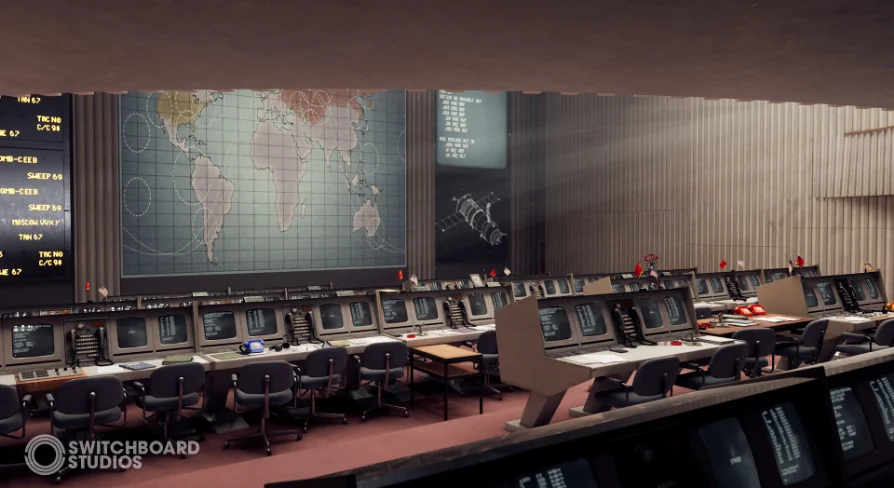
Virtual reality and first-person viewpoints allow players to inspect environmental elements from inches away, placing immense pressure on the structural fidelity of every object in the scene. The assets within this Soviet launch center are designed to withstand this level of scrutiny, ensuring that the transition from a wide-angle room view to a close-up inspection of a control surface remains visually consistent. This pre-configured setup allows technical artists and level designers to immediately begin blocking out their scenes without first auditing the collection for VR compatibility.
Modular Level Construction and Asset Scaling
Building a realistic space launch facility requires an approach that balances broad architectural structures with dense, localized clutter. The package facilitates this workflow through a highly modular framework. Developers have access to over 60 unique items, which serve as the foundational building blocks of the environment. These unique meshes allow for flexible layout configurations, meaning developers are not restricted to a single, static room design. Instead, the structural pieces can be snapped together to create custom floor plans, winding corridors, or expansive command floors tailored to specific level design requirements.
Once the primary architectural footprint is established, the scene can be populated using the broader collection of over 140 total props. This distinction between the 60 unique structural or foundational items and the 140 total variations and prefabs is critical for efficient set dressing. By utilizing the full range of props, environment artists can fill empty spaces, create complex technical stations, and establish the cluttered, highly functional atmosphere expected of a realistic rocket command center. The modular nature of the package ensures that even with a high density of props, the environment maintains a cohesive aesthetic without obvious or repetitive tiling.
Standardizing Visuals with a Strict 10.24ppm Texel Ratio
One of the most critical technical specifications of this environment is the enforcement of a uniform 10.24ppm (pixels per meter) texel ratio across all assets. In a 3D production pipeline, maintaining a consistent texel density is a constant balancing act. When environments are constructed using assets with varying texture resolutions, the package then offers often a jarring visual disconnect—a highly detailed console might sit directly next to a noticeably blurry wall. This inconsistency instantly breaks immersion, particularly in first-person and VR environments where the camera highlights these discrepancies.
By adhering to a strict 10.24ppm standard, the creators ensure that every surface in the Space Launch Ground Control Command Center shares the exact same level of texture clarity relative to its size. This uniform distribution of texture data simplifies the rendering pipeline and provides a reliable baseline for environment artists. When lighting and post-processing effects are applied, the entire scene reacts cohesively, as the underlying surface data shares the same resolution standard. This technical baseline is essential for achieving a AAA quality look without requiring developers to manually audit and scale UV maps across dozens of individual props.
Implementing PBR Materials for a Realistic Soviet Aesthetic
The visual identity of the package is heavily rooted in an original Soviet design language, tailored specifically for realistic space and rocket launch scenarios. To support this aesthetic, the assets utilize a complete Physically Based Rendering (PBR) pipeline. Implementing PBR materials ensures that the environment responds accurately to the project's lighting setup, regardless of the specific engine or rendering path being used.
In a realistic command center, lighting conditions can vary drastically—from harsh artificial overhead lighting to localized emissions from screens, dials, and emergency indicators. The PBR workflow guarantees that materials behave predictably under all these conditions. The metallic surfaces of heavy Soviet machinery, the matte finishes of structural housing, and the reflective properties of glass or plastic components will all bounce and absorb light according to real-world physical values. This accurate material response is what grounds the Soviet aesthetic, elevating the assets from basic thematic props to a convincing, realistic environment.
Preserving AAA Fidelity Through the Optimization Pass
As a project moves from vertical slice to final release, memory budgets inevitably tighten, often forcing developers to aggressively optimize their environments. A common casualty of this process is texture resolution. The Space Launch Ground Control Command Center is specifically engineered to survive this inevitable optimization pass without losing its foundational detail.
Often, when developers down-res textures to save on memory budgets, the visual identity of the asset is destroyed, resulting in muddy, undefined shapes. However, the assets in this package are constructed so that their AAA quality does not rely solely on massive, uncompressed texture files. Because the geometry and core material properties are authored to a high standard, developers can reduce texture sizes to fit performance constraints—such as those required by standalone VR headsets or lower-end hardware—without seeing all the essential detail disappear. This production-ready approach ensures that the environment remains highly readable and visually striking even after aggressive memory management.
 Sky & Space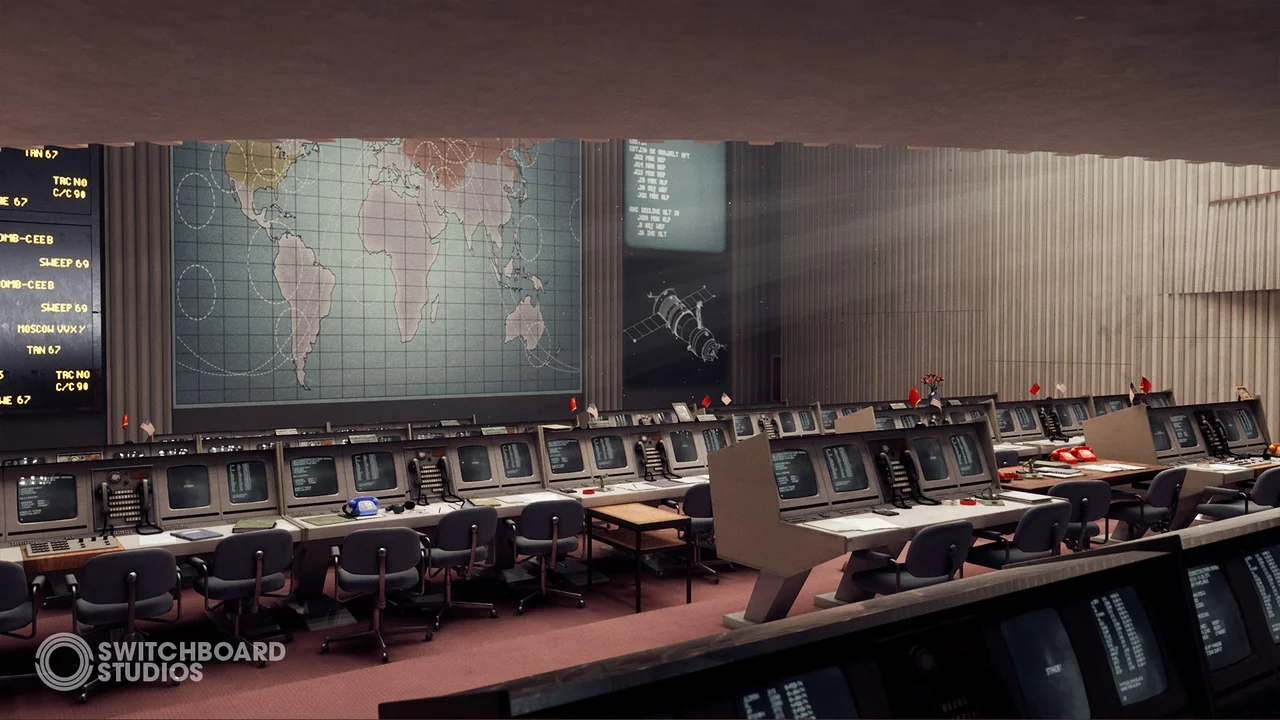
 Sky & Space
 Sky & Space
 Sky & Space