"a338a1d501976271"{"id":"1001382","slug":"sci-fi-high-city","title":"Sci Fi High City","category":"Streets \u0026 Construction","engine":"5.0+","assetVersion":"","engineVersion":"Engine Version: 5.0+","tag":"Streets","accent":"blue","visual":"city","summary":"Build sprawling futuristic urban layouts using the modular Sci Fi High City environment, optimized for Unreal Engine 5.0 with Nanite and Lumen support.","platform":"Unreal Engine","publishedAt":"2026-10-04T12:53:22.126Z","updatedAt":"2026-10-04T12:53:22.126Z","sourceNotes":[],"fileContents":[],"compatibility":["Unreal Engine","Engine Version: 5.0+"],"featuredImage":{"alt":"Sci Fi High City","src":"/wp-content/uploads/published/2026/10/99997bcd1b48-f978accb-00cf-4acc-9592-70f4c524d5d4-3c94a2f8cb.webp"},"hasDownloadLink":true,"downloads":0,"terms":[{"taxonomy":"category","slug":"streets-and-construction","name":"Streets \u0026 Construction"}],"galleryImages":[{"src":"/wp-content/uploads/published/2026/10/841c5e443578-12956efc-999d-4b71-ab54-075e05adb05a-7bed6f4883.webp","alt":"Sci Fi High City"},{"src":"/wp-content/uploads/published/2026/10/eec6e01ed99d-882fc975-8caa-45e1-8d36-ba248f37bd2d-f83fdd2d9f.webp","alt":"Sci Fi High City"},{"src":"/wp-content/uploads/published/2026/10/e0b157e4eaa6-be96d571-7c45-4e96-9db8-983eea605066-d2745e3faf.webp","alt":"Sci Fi High City"},{"src":"/wp-content/uploads/published/2026/10/c096b593b5d5-0b86e8db-6072-419d-9f9b-0154a711f5fd-81fd31a947.webp","alt":"Sci Fi High City"},{"src":"/wp-content/uploads/published/2026/10/8b6be9a0ceac-4b2bc1bc-d506-4825-97d3-51814a0d6281-780ea220f8.webp","alt":"Sci Fi High City"},{"src":"/wp-content/uploads/published/2026/10/e9c50a6aaf45-02531ed2-6db7-4c32-a952-2cdb001dfafc-36b5c25846.webp","alt":"Sci Fi High City"},{"src":"/wp-content/uploads/published/2026/10/496a6068117d-dde29f79-fcea-4a13-b5f1-7836dc0646f6-0996883d64.webp","alt":"Sci Fi High City"},{"src":"/wp-content/uploads/published/2026/10/2d2f7d010982-fd7bb575-600f-4c85-9d6b-356f6d594c01-9bd2861c69.webp","alt":"Sci Fi High City"},{"src":"/wp-content/uploads/published/2026/10/442a17838133-5b4a111f-aac4-4a87-9523-181aab56490c-b55308a26a.webp","alt":"Sci Fi High City"},{"src":"/wp-content/uploads/published/2026/10/34ff2c60ce5f-04f7b0a1-74b8-4260-850f-b268adbb5212-0749687b55.webp","alt":"Sci Fi High City"}],"accessPanel":{"kind":"resource","title":"Download this resource","eyebrow":"Free Download","message":"Log in or create a free account to start your download.","fileName":"Sci Fi High City.7z","safetyNote":"Resources are manually reviewed before listing to improve quality and reduce obvious risks.","actionLabel":"Download Free","resourceType":"Resource archive"},"contentHtml":"\u003ch2\u003eArchitectural Scope of the Sci Fi High City Environment\u003c/h2\u003e\u003cp\u003eSci Fi High City establishes an intricate, sprawling futuristic metropolis defined by dense structural layers, industrial factory components, and realistic urban frameworks. The assets inside this collection center on high-density architecture, providing the foundational pieces needed to assemble towering urban centers, sprawling industrial complexes, or multi-level dystopian districts. Because the environment embraces realistic industrial aesthetic tags, builders can construct gritty utilitarian transit hubs, sprawling production levels, or complex multi-tiered megastructures that stretch both vertically and horizontally.\u003c/p\u003e\u003cp\u003eThe structural assets are engineered to accommodate multiple narrative settings, spanning real-time game levels to cinematic movie sets. Rather than enforcing a static, unchangeable backdrop, the kit relies on complete modularity. Every structural piece can be broken down, repositioned, and reconfigured to fit custom level bounds and bespoke directorial requirements. Whether staging an intimate corridor sequence between factory structures or framing broad horizon shots of an expansive futuristic capital, the modular assets offer the flexibility needed to realize complex city layouts from the ground up.\u003c/p\u003e\u003ch2\u003eModular Kitbashing and Material Variations Across Meshes\u003c/h2\u003e\u003cp\u003eRebuilding a modular metropolis demands strong visual variety across individual structural elements to avoid identifiable repeating patterns across a scene. Sci Fi High City addresses this by providing meshes that feature alternate material setups, giving artists distinct surface treatments to deploy across repeated structural components. Applying different materials across shared meshes helps delineate between various functional city zones, allowing the same underlying architectural pieces to serve as heavy industrial machinery housings, utility conduits, or residential modular blocks.\u003c/p\u003e\u003cp\u003eThis modular construction framework lets level designers assemble distinct micro-districts within a larger metropolis. By reorienting core components, stacking horizontal platforms, and alternating materials across intersecting wall pieces, scenes maintain visual depth without requiring entirely distinct geometry for every city block. The modularity extends across factory structures, industrial walkways, and central urban plazas, ensuring that sprawling game levels maintain a coherent architectural language while offering fresh pathways and vantage points during gameplay exploration.\u003c/p\u003e\u003ch2\u003eNanite Geometry and DirectX 12 Requirements in Unreal Engine 5.0\u003c/h2\u003e\u003cp\u003eVersion 1.0 of the environment leverages modern geometric rendering pipelines by supporting Nanite in Unreal Engine 5.0. Nanite enables the use of extra detailed meshes, preserving geometric fidelity across large-scale cityscapes without requiring traditional manual level-of-detail authoring. This integration ensures that fine structural seams, industrial plating, and heavy mechanical frameworks retain their sharpness and crisp profiles even when viewed in sweeping wide-angle cinematic cameras or close-up player perspectives.\u003c/p\u003e\u003cp\u003eDeploying Nanite within this environment relies strictly on DirectX 12. Running the assets under incompatible or older graphics APIs can lead to broken geometry, visible mesh artifacts, or incomplete surface rendering. Ensuring that DirectX 12 is properly enabled in project settings guarantees that the Nanite virtualization pipeline processes the dense geometric surfaces correctly, maintaining solid geometric silhouettes throughout complex industrial configurations.\u003c/p\u003e\u003ch2\u003eIllumination with Lumen and Dynamic Ray Tracing\u003c/h2\u003e\u003cp\u003eLighting in Sci Fi High City is centered around dynamic global illumination and modern ray tracing technology. The pack supports Lumen in Unreal Engine 5.0, enabling light bounces to interact naturally with deep structural alcoves, metallic industrial surfaces, and cavernous urban corridors. To achieve the intended visual fidelity, Lumen must be actively enabled in the project rendering settings, allowing bounced lighting to realistically fill the negative spaces between dense, stacked modular structures.\u003c/p\u003e\u003cp\u003eBecause the collection is calibrated around ray tracing technology and dynamic lighting behavior, ambient light changes, moving emissive sources, and sweeping directional sun shifts integrate seamlessly with the surfaces. Polished metallic accents, industrial factory sidings, and broad street panels react dynamically to fluctuating light values, maintaining believable specular responses and shadow penumbras without baked lighting artifacts.\u003c/p\u003e\u003ch2\u003eBalancing Visual Fidelity and Dynamic Lighting Performance\u003c/h2\u003e\u003cp\u003eThe reliance on fully dynamic lighting throughout the environment carries distinct performance considerations that developers must budget for during scene assembly. While dynamic illumination eliminates the need for static lightmap baking and enables fluid shifts in environment staging, it can reduce frames per second during heavy GPU load. When rendering dense urban clusters filled with multiple interacting light bounces and ray-traced reflections, balancing scene density becomes essential to preserve interactive frame rates.\u003c/p\u003e\u003cp\u003eLevel designers can manage performance by carefully planning line-of-sight occlusions across industrial alleyways, tuning dynamic lighting distances, and structuring city districts to balance visual complexity against local rendering cost. For cinematic rendering and movie production pipelines, this dynamic framework provides full creative freedom, allowing directors to prioritize maximum visual fidelity, dynamic shadows, and ray-traced accuracy over raw frame output. In gameplay applications, monitoring performance across dense factory sectors ensures smooth navigation while retaining the atmospheric depth created by the dynamic lighting model.\u003c/p\u003e\u003ch2\u003eProduction Workflows and Compatibility Notes\u003c/h2\u003e\u003cp\u003eSci Fi High City stands as a complete release at version 1.0, geared directly toward real-time development in Unreal Engine 5.0 with noted compatibility for Temple of Sun. The modular layout ensures straightforward integration into diverse production pipelines, functioning equally well as a standalone urban scene or as an industrial district integrated into broader environmental projects. By pairing modular construction, alternate mesh materials, Nanite geometry, and Lumen illumination, the kit offers a focused foundation for creating detailed science-fiction levels and cinematic environments.\u003c/p\u003e\n\n\u003ch2\u003eMore From The Same Workflow\u003c/h2\u003e\n\u003cul\u003e\n\u003cli\u003e\u003ca href=\"https://3dcghub.com/tokyo-stylized-environment/\" title=\"Tokyo Stylized Environment\"\u003eTokyo Stylized Environment\u003c/a\u003e\u003c/li\u003e\n\u003cli\u003e\u003ca href=\"https://3dcghub.com/cyberpunk-high-city/\" title=\"Cyberpunk - High City\"\u003eCyberpunk - High City\u003c/a\u003e\u003c/li\u003e\n\u003cli\u003e\u003ca href=\"https://3dcghub.com/cyberpunk-urban-steel/\" title=\"Cyberpunk - Urban Steel\"\u003eCyberpunk - Urban Steel\u003c/a\u003e\u003c/li\u003e\n\u003cli\u003e\u003ca href=\"https://3dcghub.com/cyberpunk-kyiv-street-environment-cyberpunk-kyiv-street-street-ukraine-slav/\" title=\"Cyberpunk Kyiv Street Environment ( Cyberpunk Kyiv Street Street Ukraine Slav )\"\u003eCyberpunk Kyiv Street Environment ( Cyberpunk Kyiv Street Street Ukraine Slav )\u003c/a\u003e\u003c/li\u003e\n\u003cli\u003e\u003ca href=\"https://3dcghub.com/brushify-natural-roads-pack/\" title=\"Brushify - Natural Roads Pack\"\u003eBrushify - Natural Roads Pack\u003c/a\u003e\u003c/li\u003e\n\u003c/ul\u003e","contentTextLength":6713,"navigation":{"current":19,"total":3338,"previous":{"id":"1001383","slug":"classic-mansion","title":"Classic Mansion","category":"Interior","platform":"Unreal Engine","updatedAt":"2026-10-04T13:56:00.563Z"},"next":{"id":"1001381","slug":"favelas","title":"Favelas","category":"Cities","platform":"Unreal Engine","updatedAt":"2026-10-04T12:52:34.671Z"}},"relatedResources":[{"id":"7470","slug":"tokyo-stylized-environment","title":"Tokyo Stylized Environment","category":"Cities","engine":"5.2+","assetVersion":"Engine version: 5.2+","engineVersion":"5.2","tag":"Cities","accent":"blue","visual":"city","summary":"Build a stunning Japanese cityscape with this modular Tokyo Stylized Environment. Designed for Unreal Engine 5, it features high-quality assets and Lumen support for realistic lighting.","platform":"Unreal Engine","publishedAt":"2026-02-21T13:38:54.000Z","updatedAt":"2026-04-19T15:55:59.000Z","sourceNotes":[],"fileContents":[],"compatibility":["Unreal Engine","Engine version: 5.2+"],"featuredImage":{"alt":"Tokyo Stylized Environment","src":"https://3dcghub.com/wp-content/uploads/2026/02/906b2e50-804c-4b9c-943e-b0d0916eb9c4.webp"},"hasDownloadLink":true,"downloads":2},{"id":"27554","slug":"cyberpunk-high-city","title":"Cyberpunk - High City","category":"Cyberpunk","engine":"5.0+","assetVersion":"Engine version: 5.0+","engineVersion":"","tag":"Cyberpunk","accent":"blue","visual":"city","summary":"Cyberpunk - High City is a modular constructor for high-detailed sci-fi city streets, alleys, and blocks. It also includes a fly cars pack and a blueprint-based background traffic system.","platform":"Unreal Engine","publishedAt":"2026-04-26T07:32:19.000Z","updatedAt":"2026-04-26T07:32:20.000Z","sourceNotes":[],"fileContents":[],"compatibility":["Unreal Engine","Engine version: 5.0+"],"featuredImage":{"alt":"Cyberpunk - High City","src":"https://3dcghub.com/wp-content/uploads/2026/04/b511bde35619_8d2cc377-b2bd-497e-8c7d-0aff19074eda.webp"},"hasDownloadLink":true,"downloads":0},{"id":"7535","slug":"cyberpunk-urban-steel","title":"Cyberpunk - Urban Steel","category":"Cyberpunk","engine":"5.0+","assetVersion":"Engine version: 5.0+","engineVersion":"5.0","tag":"Cyberpunk","accent":"blue","visual":"city","summary":"Transform your game world with Cyberpunk - Urban Steel. This modular kit offers everything you need to build futuristic cities, including background traffic and automated route systems.","platform":"Unreal Engine","publishedAt":"2026-02-21T16:45:40.000Z","updatedAt":"2026-04-19T15:55:58.000Z","sourceNotes":[],"fileContents":[],"compatibility":["Unreal Engine","Engine version: 5.0+"],"featuredImage":{"alt":"Cyberpunk - Urban Steel","src":"https://3dcghub.com/wp-content/uploads/2026/02/ce86f745-eda0-4784-a844-a3d8b0e0b0ea.webp"},"hasDownloadLink":true,"downloads":0}]}
Streets
Sci Fi High City
Build sprawling futuristic urban layouts using the modular Sci Fi High City environment, optimized for Unreal Engine 5.0 with Nanite and Lumen support.
Architectural Scope of the Sci Fi High City Environment
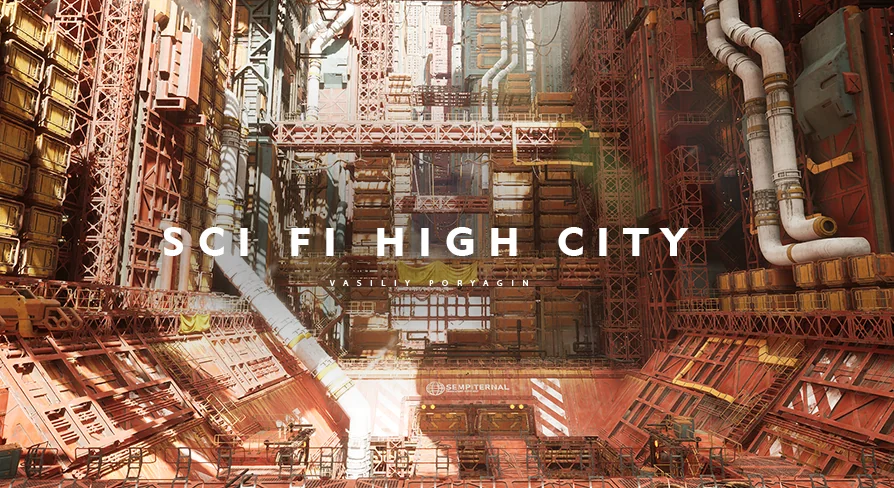
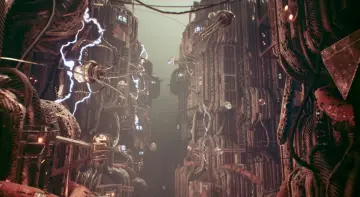
Sci Fi High City establishes an intricate, sprawling futuristic metropolis defined by dense structural layers, industrial factory components, and realistic urban frameworks. The assets inside this collection center on high-density architecture, providing the foundational pieces needed to assemble towering urban centers, sprawling industrial complexes, or multi-level dystopian districts. Because the environment embraces realistic industrial aesthetic tags, builders can construct gritty utilitarian transit hubs, sprawling production levels, or complex multi-tiered megastructures that stretch both vertically and horizontally.
The structural assets are engineered to accommodate multiple narrative settings, spanning real-time game levels to cinematic movie sets. Rather than enforcing a static, unchangeable backdrop, the kit relies on complete modularity. Every structural piece can be broken down, repositioned, and reconfigured to fit custom level bounds and bespoke directorial requirements. Whether staging an intimate corridor sequence between factory structures or framing broad horizon shots of an expansive futuristic capital, the modular assets offer the flexibility needed to realize complex city layouts from the ground up.
Modular Kitbashing and Material Variations Across Meshes
Rebuilding a modular metropolis demands strong visual variety across individual structural elements to avoid identifiable repeating patterns across a scene. Sci Fi High City addresses this by providing meshes that feature alternate material setups, giving artists distinct surface treatments to deploy across repeated structural components. Applying different materials across shared meshes helps delineate between various functional city zones, allowing the same underlying architectural pieces to serve as heavy industrial machinery housings, utility conduits, or residential modular blocks.
This modular construction framework lets level designers assemble distinct micro-districts within a larger metropolis. By reorienting core components, stacking horizontal platforms, and alternating materials across intersecting wall pieces, scenes maintain visual depth without requiring entirely distinct geometry for every city block. The modularity extends across factory structures, industrial walkways, and central urban plazas, ensuring that sprawling game levels maintain a coherent architectural language while offering fresh pathways and vantage points during gameplay exploration.
Nanite Geometry and DirectX 12 Requirements in Unreal Engine 5.0
Version 1.0 of the environment leverages modern geometric rendering pipelines by supporting Nanite in Unreal Engine 5.0. Nanite enables the use of extra detailed meshes, preserving geometric fidelity across large-scale cityscapes without requiring traditional manual level-of-detail authoring. This integration ensures that fine structural seams, industrial plating, and heavy mechanical frameworks retain their sharpness and crisp profiles even when viewed in sweeping wide-angle cinematic cameras or close-up player perspectives.
Deploying Nanite within this environment relies strictly on DirectX 12. Running the assets under incompatible or older graphics APIs can lead to broken geometry, visible mesh artifacts, or incomplete surface rendering. Ensuring that DirectX 12 is properly enabled in project settings guarantees that the Nanite virtualization pipeline processes the dense geometric surfaces correctly, maintaining solid geometric silhouettes throughout complex industrial configurations.
Illumination with Lumen and Dynamic Ray Tracing
Lighting in Sci Fi High City is centered around dynamic global illumination and modern ray tracing technology. The pack supports Lumen in Unreal Engine 5.0, enabling light bounces to interact naturally with deep structural alcoves, metallic industrial surfaces, and cavernous urban corridors. To achieve the intended visual fidelity, Lumen must be actively enabled in the project rendering settings, allowing bounced lighting to realistically fill the negative spaces between dense, stacked modular structures.
Because the collection is calibrated around ray tracing technology and dynamic lighting behavior, ambient light changes, moving emissive sources, and sweeping directional sun shifts integrate seamlessly with the surfaces. Polished metallic accents, industrial factory sidings, and broad street panels react dynamically to fluctuating light values, maintaining believable specular responses and shadow penumbras without baked lighting artifacts.
Balancing Visual Fidelity and Dynamic Lighting Performance
The reliance on fully dynamic lighting throughout the environment carries distinct performance considerations that developers must budget for during scene assembly. While dynamic illumination eliminates the need for static lightmap baking and enables fluid shifts in environment staging, it can reduce frames per second during heavy GPU load. When rendering dense urban clusters filled with multiple interacting light bounces and ray-traced reflections, balancing scene density becomes essential to preserve interactive frame rates.
Level designers can manage performance by carefully planning line-of-sight occlusions across industrial alleyways, tuning dynamic lighting distances, and structuring city districts to balance visual complexity against local rendering cost. For cinematic rendering and movie production pipelines, this dynamic framework provides full creative freedom, allowing directors to prioritize maximum visual fidelity, dynamic shadows, and ray-traced accuracy over raw frame output. In gameplay applications, monitoring performance across dense factory sectors ensures smooth navigation while retaining the atmospheric depth created by the dynamic lighting model.
Production Workflows and Compatibility Notes
Sci Fi High City stands as a complete release at version 1.0, geared directly toward real-time development in Unreal Engine 5.0 with noted compatibility for Temple of Sun. The modular layout ensures straightforward integration into diverse production pipelines, functioning equally well as a standalone urban scene or as an industrial district integrated into broader environmental projects. By pairing modular construction, alternate mesh materials, Nanite geometry, and Lumen illumination, the kit offers a focused foundation for creating detailed science-fiction levels and cinematic environments.
 Streets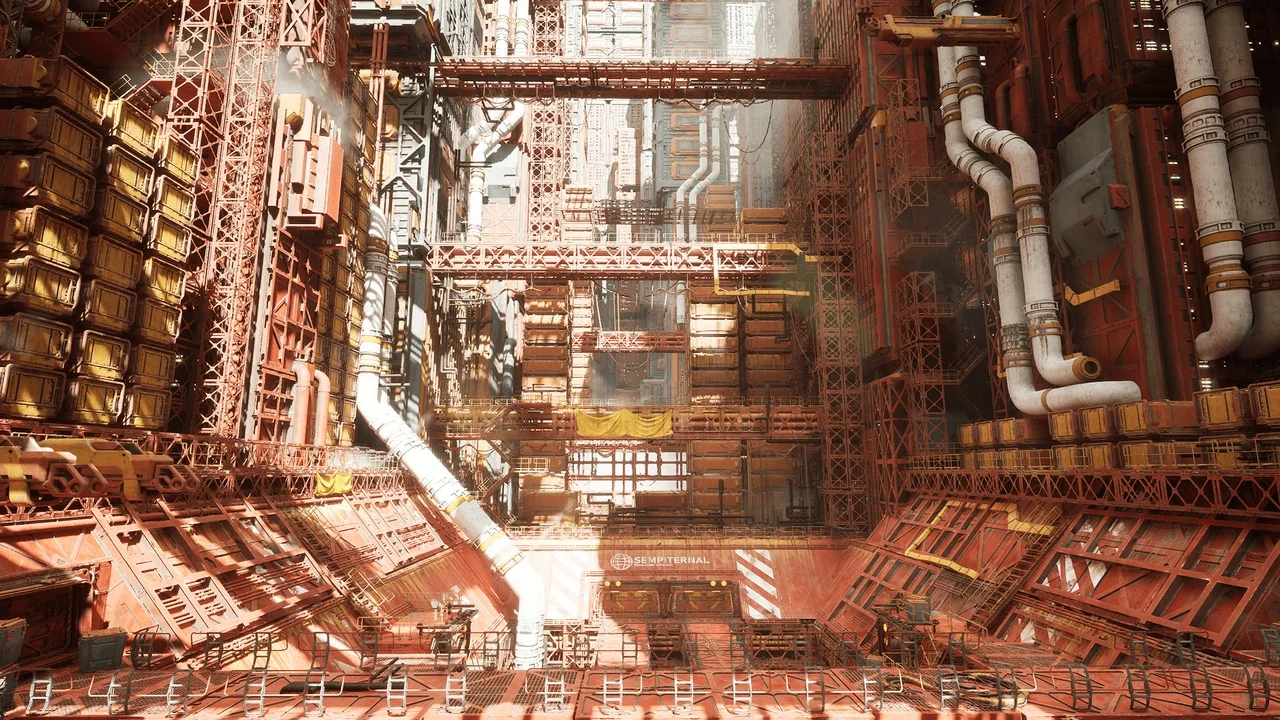
 Cities
 Cyberpunk
 Cyberpunk