"7653090fc033c927"{"id":"1000399","slug":"robot-13","title":"Robot 13","category":"Mechanical \u0026 Robots","engine":"4.26+,5.0+","assetVersion":"","engineVersion":"Engine Version: 4.26+,5.0+","tag":"Mechanical","accent":"blue","visual":"mech","summary":"A low-poly, optimized sci-fi robot model featuring UE4 Epic Skeleton compatibility, custom PBR materials, and six alpha masks for deep surface customization.","platform":"Unreal Engine","publishedAt":"2026-07-07T15:42:38.985Z","updatedAt":"2026-07-07T15:42:38.985Z","sourceNotes":[],"fileContents":[],"compatibility":["Unreal Engine","Engine Version: 4.26+,5.0+"],"featuredImage":{"alt":"Robot 13","src":"/wp-content/uploads/published/2026/07/122d49234d35-1bb9b325-e1e6-42cb-b659-de44b242bf53-920d9c39d4.webp"},"hasDownloadLink":true,"downloads":0,"terms":[{"taxonomy":"category","slug":"mechanical-and-robots","name":"Mechanical \u0026 Robots"}],"galleryImages":[{"src":"/wp-content/uploads/published/2026/07/2050bf537f67-ecd27502-9559-4ea6-ba65-643022e08134-6a765fb39b.webp","alt":"Robot 13"},{"src":"/wp-content/uploads/published/2026/07/794012dc67e6-988eaead-d4dd-4be7-99ba-4f0789d6cd8a-9bdd92e636.webp","alt":"Robot 13"},{"src":"/wp-content/uploads/published/2026/07/338bc61cbf7c-bd5af5ba-84b5-4a86-bb5d-ff213a82650c-9f6c1b7adf.webp","alt":"Robot 13"},{"src":"/wp-content/uploads/published/2026/07/b1b00c480e0e-a8252015-8934-4ffb-bb94-d3e825609262-eb3cf487be.webp","alt":"Robot 13"},{"src":"/wp-content/uploads/published/2026/07/e3b1de6a9bce-8af46bc0-3299-4de9-8285-2fdd61ac408e-2ca428f853.webp","alt":"Robot 13"},{"src":"/wp-content/uploads/published/2026/07/5e627836eacb-2c5b55ac-4f19-451a-858e-c3961a2a4ab0-47c8bdb433.webp","alt":"Robot 13"},{"src":"/wp-content/uploads/published/2026/07/10ef6be662d9-beaa73bf-9acc-44c2-afc8-12120eaf8cc3-4e11a6f13c.webp","alt":"Robot 13"},{"src":"/wp-content/uploads/published/2026/07/874b90cc5c8d-5af31467-799f-4fcc-8e97-07e0de93424b-f3033981ab.webp","alt":"Robot 13"},{"src":"/wp-content/uploads/published/2026/07/dbb508c9dc54-556763e5-15e1-4822-a991-8cf7e34927b7-5f9f22d880.webp","alt":"Robot 13"},{"src":"/wp-content/uploads/published/2026/07/692a1707a2b3-c1f66d25-5a34-4cf2-b82e-8077662767ad-ee502b6ad0.webp","alt":"Robot 13"}],"accessPanel":{"kind":"resource","title":"Download this resource","eyebrow":"Free Download","message":"Log in or create a free account to start your download.","fileName":"Content.7z","safetyNote":"Resources are manually reviewed before listing to improve quality and reduce obvious risks.","actionLabel":"Download Free","resourceType":"Resource archive"},"contentHtml":"\u003ch2\u003eLow-Poly Geometry and Scene Optimization\u003c/h2\u003e\n\u003cp\u003eRobot 13 is constructed as a low-poly model tailored for immediate integration into real-time environments and game projects. In development scenarios where hardware resources must be carefully managed, the complexity of character meshes plays a significant role in overall frame rates. By utilizing a low-poly geometric foundation, this asset minimizes the rendering cost typically associated with detailed sci-fi characters. The model features strict optimization standards designed specifically to support heavy scene population. Developers can place many instances of this mechanical model within a single level or environment without triggering significant performance degradation. This makes the asset highly practical for projects that require large groups of on-screen characters, such as swarms of robotic enemies, android factories, or massive mecha battlefields where rendering efficiency is a top priority.\u003c/p\u003e \u003ch2\u003eUE4 Epic Skeleton Integration\u003c/h2\u003e\n\u003cp\u003eTo facilitate rapid movement and behavioral scripting, the model is built with direct compatibility with the Epic Skeleton. Specifically, the rig follows the structural hierarchy established by the Unreal Engine 4 (UE4) mannequin. Maintaining this standard skeletal structure eliminates the need for custom rigging pipelines or complex bone-mapping procedures prior to animation. Because the rig matches the UE4 standard, developers can seamlessly apply any existing animations that are already compatible with this specific Epic Skeleton framework. Whether the project requires basic locomotion like walking and running, specialized combat maneuvers, or complex idle behaviors, all animations available for the UE4 skeleton can be directly assigned to the robot's mechanical joints.\u003c/p\u003e\n\u003cp\u003eThis compatibility extends to animation blueprints as well. The asset includes fundamental script and animation blueprint components, allowing the model to be quickly plugged into standard character controllers or AI behavior trees. By leveraging the vast library of Epic Skeleton animations, development teams can bring the model to life almost immediately after importing it into an engine environment.\u003c/p\u003e \u003ch2\u003eCustom PBR Materials and Alpha Masks\u003c/h2\u003e\n\u003cp\u003eDespite its low-poly geometry, Robot 13 achieves visual depth through a highly adaptable physically based rendering (PBR) material system. The package includes a custom material setup designed to give developers total control over the character's aesthetic identity. Rather than relying on rigid, pre-baked textures that lock the asset into a single visual theme, the custom material allows users to dynamically set specific colors for various parts of the robotic chassis. This color-picking functionality makes it easy to generate multiple distinct variations of the same base mesh, which is essential for differentiating between enemy factions, unit ranks, or specialized android classes within a game.\u003c/p\u003e\n\u003cp\u003eTo further enhance this customization, the asset includes six dedicated alpha masks. These masks target specific surface properties and material layers, providing granular control over the robot's final look. By adjusting these masks, developers can manipulate roughness values, introduce metallic sheen, or apply layers of dirt and grime to the exterior plating. This deep customization ensures that the model can be tailored to fit the exact environmental context of a scene. A pristine, highly reflective metallic finish can be used for an android fresh off the assembly line, while heavy dirt and varied roughness can be dialed in to represent a battle-worn cyborg that has survived multiple encounters.\u003c/p\u003e \u003ch2\u003eAddressing Blueprint Compilation in Unreal Engine 5.4\u003c/h2\u003e\n\u003cp\u003eBecause engine environments undergo continuous updates, certain blueprint logic must occasionally be adapted to maintain compatibility with newer software versions. The scripts included with this model rely on standard blueprint nodes, but one specific adjustment is required for users operating on modern iterations of Unreal Engine. Starting from Unreal Engine version 5.4, the “reset orientation and position” node has been officially removed from the engine's node library. \u003c/p\u003e\n\u003cp\u003eIf the provided blueprint is compiled in version 5.4 or later without modification, the engine will flag the missing node and halt the compilation process. To achieve a successful compilation, developers simply need to open the affected blueprint, locate the deprecated “reset orientation and position” node, and remove it from the script execution path. Once this single node is deleted, the blueprint will compile successfully, and the character's core scripts and logic will function as intended in the updated engine environment.\u003c/p\u003e \u003ch2\u003eDeploying as a Sci-Fi Enemy or NPC\u003c/h2\u003e\n\u003cp\u003eThe combination of optimized geometry, standard rigging, and deep material flexibility positions this asset as a highly modular component for sci-fi development. Classified visually through its mecha and cyborg design elements, it easily slots into the role of an antagonistic force or scripted non-player character. Because the visual identity can be shifted from a clean, high-tech android to a heavily weathered mechanical enemy using the provided alpha masks and color parameters, developers can populate entire levels using this single asset package. From frontline combat mechs to background robotic workers, the provided geometry and customizable PBR surfaces provide the necessary technical foundation for diverse in-game deployment.\u003c/p\u003e\n\n\u003ch2\u003eMore From The Same Workflow\u003c/h2\u003e\n\u003cul\u003e\n\u003cli\u003e\u003ca href=\"https://3dcghub.com/sci-fi-cyber-robot-01/\" title=\"Sci-FI Cyber Robot 01\"\u003eSci-FI Cyber Robot 01\u003c/a\u003e\u003c/li\u003e\n\u003cli\u003e\u003ca href=\"https://3dcghub.com/etasphera46/\" title=\"Etasphera46\"\u003eEtasphera46\u003c/a\u003e\u003c/li\u003e\n\u003cli\u003e\u003ca href=\"https://3dcghub.com/cyborg-soldier-v2/\" title=\"Cyborg Soldier V2\"\u003eCyborg Soldier V2\u003c/a\u003e\u003c/li\u003e\n\u003cli\u003e\u003ca href=\"https://3dcghub.com/steampunk-mechanical-creature/\" title=\"Steampunk Mechanical Creature\"\u003eSteampunk Mechanical Creature\u003c/a\u003e\u003c/li\u003e\n\u003cli\u003e\u003ca href=\"https://3dcghub.com/robot-14/\" title=\"Robot 14\"\u003eRobot 14\u003c/a\u003e\u003c/li\u003e\n\u003c/ul\u003e","contentTextLength":5591,"navigation":{"current":1241,"total":3501,"previous":{"id":"1000400","slug":"scifi-railroad-terminal-facility-nanite","title":"Scifi Railroad Terminal Facility (Nanite)","category":"Industrial","platform":"Unity","updatedAt":"2026-07-07T18:47:57.483Z"},"next":{"id":"1000398","slug":"renovate-vehicle-framework","title":"Renovate: Vehicle Framework","category":"Racing","platform":"Unreal Engine","updatedAt":"2026-07-07T15:36:06.344Z"}},"relatedResources":[{"id":"1000465","slug":"sci-fi-drone-01","title":"Sci-fi Drone 01","category":"Mechanical \u0026 Robots","engine":"4.26+,5.0+","assetVersion":"","engineVersion":"Engine Version: 4.26+,5.0+","tag":"Mechanical","accent":"blue","visual":"mech","summary":"Game-ready Sci-fi Drone 01 3D model with 4K PBR textures, 26 unique animations, emissive customization, and 33,638 triangles for Unreal Engine workflows.","platform":"Unreal Engine","publishedAt":"2026-07-11T17:21:12.823Z","updatedAt":"2026-07-11T17:21:12.823Z","sourceNotes":[],"fileContents":[],"compatibility":["Unreal Engine","Engine Version: 4.26+,5.0+"],"featuredImage":{"alt":"Sci-fi Drone 01","src":"/wp-content/uploads/published/2026/07/9167065697e5-c19fa99c-2f88-4515-8a47-e4486a401685-a730db304d.webp"},"hasDownloadLink":true,"downloads":0},{"id":"2998","slug":"sci-fi-cyber-robot-01","title":"Sci-FI Cyber Robot 01","category":"Mechanical \u0026 Robots","engine":"4.26+,5.0+","assetVersion":"Engine version: 4.26+,5.0+","engineVersion":"4.21","tag":"Mechanical","accent":"blue","visual":"character","summary":"Enhance your game with the Sci-Fi Cyber Robot 01. A low-poly, UE4/UE5 compatible character with advanced material customization for unique futuristic designs.","platform":"Unreal Engine","publishedAt":"2026-02-07T16:20:57.000Z","updatedAt":"2026-04-19T15:57:43.000Z","sourceNotes":[],"fileContents":[],"compatibility":["Unreal Engine","Engine version: 4.26+,5.0+"],"featuredImage":{"alt":"Sci-FI Cyber Robot 01","src":"https://3dcghub.com/wp-content/uploads/2026/02/df9493f3-803e-4630-b18c-aae34f08b429.webp"},"hasDownloadLink":true,"downloads":2},{"id":"2964","slug":"etasphera46","title":"Etasphera46","category":"Mechanical \u0026 Robots","engine":"4.26+,5.0+","assetVersion":"Engine version: 4.26+,5.0+","engineVersion":"4.18","tag":"Mechanical","accent":"blue","visual":"character","summary":"Discover Etasphera46, a versatile low poly android character for RPGs and shooters. Features 4K textures, modular design, and Epic Skeleton rigging.","platform":"Unreal Engine","publishedAt":"2026-02-07T16:13:54.000Z","updatedAt":"2026-04-19T15:57:44.000Z","sourceNotes":[],"fileContents":[],"compatibility":["Unreal Engine","Engine version: 4.26+,5.0+"],"featuredImage":{"alt":"Etasphera46","src":"https://3dcghub.com/wp-content/uploads/2026/02/b9a7c8ff-4c7e-414c-bfb0-cf624a58945f.webp"},"hasDownloadLink":true,"downloads":1}]}
Mechanical
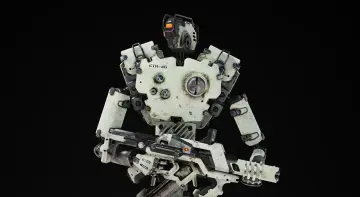
Robot 13
A low-poly, optimized sci-fi robot model featuring UE4 Epic Skeleton compatibility, custom PBR materials, and six alpha masks for deep surface customization.
Robot 13 is constructed as a low-poly model tailored for immediate integration into real-time environments and game projects. In development scenarios where hardware resources must be carefully managed, the complexity of character meshes plays a significant role in overall frame rates. By utilizing a low-poly geometric foundation, this asset minimizes the rendering cost typically associated with detailed sci-fi characters. The model features strict optimization standards designed specifically to support heavy scene population. Developers can place many instances of this mechanical model within a single level or environment without triggering significant performance degradation. This makes the asset highly practical for projects that require large groups of on-screen characters, such as swarms of robotic enemies, android factories, or massive mecha battlefields where rendering efficiency is a top priority.
UE4 Epic Skeleton Integration
To facilitate rapid movement and behavioral scripting, the model is built with direct compatibility with the Epic Skeleton. Specifically, the rig follows the structural hierarchy established by the Unreal Engine 4 (UE4) mannequin. Maintaining this standard skeletal structure eliminates the need for custom rigging pipelines or complex bone-mapping procedures prior to animation. Because the rig matches the UE4 standard, developers can seamlessly apply any existing animations that are already compatible with this specific Epic Skeleton framework. Whether the project requires basic locomotion like walking and running, specialized combat maneuvers, or complex idle behaviors, all animations available for the UE4 skeleton can be directly assigned to the robot's mechanical joints.
This compatibility extends to animation blueprints as well. The asset includes fundamental script and animation blueprint components, allowing the model to be quickly plugged into standard character controllers or AI behavior trees. By leveraging the vast library of Epic Skeleton animations, development teams can bring the model to life almost immediately after importing it into an engine environment.
Custom PBR Materials and Alpha Masks
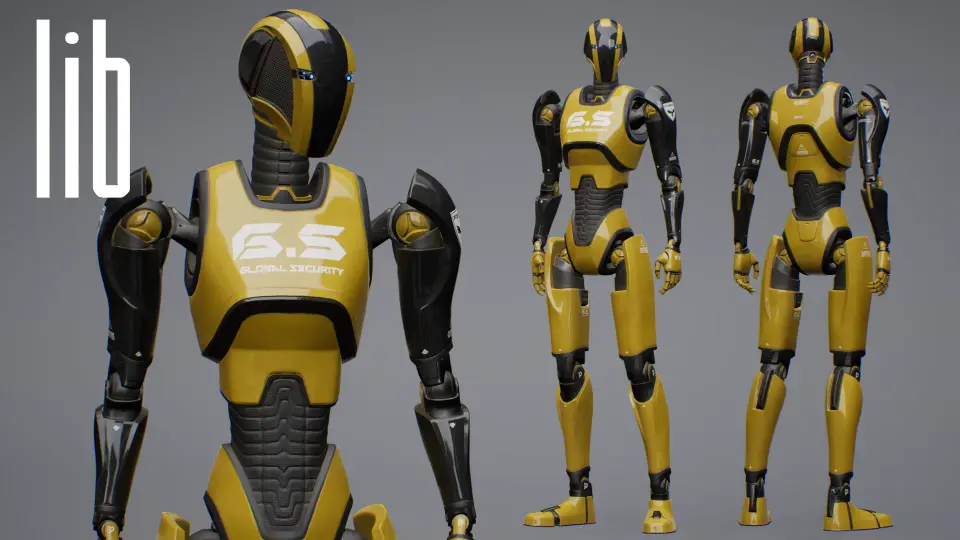
Despite its low-poly geometry, Robot 13 achieves visual depth through a highly adaptable physically based rendering (PBR) material system. The package includes a custom material setup designed to give developers total control over the character's aesthetic identity. Rather than relying on rigid, pre-baked textures that lock the asset into a single visual theme, the custom material allows users to dynamically set specific colors for various parts of the robotic chassis. This color-picking functionality makes it easy to generate multiple distinct variations of the same base mesh, which is essential for differentiating between enemy factions, unit ranks, or specialized android classes within a game.
To further enhance this customization, the asset includes six dedicated alpha masks. These masks target specific surface properties and material layers, providing granular control over the robot's final look. By adjusting these masks, developers can manipulate roughness values, introduce metallic sheen, or apply layers of dirt and grime to the exterior plating. This deep customization ensures that the model can be tailored to fit the exact environmental context of a scene. A pristine, highly reflective metallic finish can be used for an android fresh off the assembly line, while heavy dirt and varied roughness can be dialed in to represent a battle-worn cyborg that has survived multiple encounters.
Addressing Blueprint Compilation in Unreal Engine 5.4
Because engine environments undergo continuous updates, certain blueprint logic must occasionally be adapted to maintain compatibility with newer software versions. The scripts included with this model rely on standard blueprint nodes, but one specific adjustment is required for users operating on modern iterations of Unreal Engine. Starting from Unreal Engine version 5.4, the “reset orientation and position” node has been officially removed from the engine's node library.
If the provided blueprint is compiled in version 5.4 or later without modification, the engine will flag the missing node and halt the compilation process. To achieve a successful compilation, developers simply need to open the affected blueprint, locate the deprecated “reset orientation and position” node, and remove it from the script execution path. Once this single node is deleted, the blueprint will compile successfully, and the character's core scripts and logic will function as intended in the updated engine environment.
Deploying as a Sci-Fi Enemy or NPC
The combination of optimized geometry, standard rigging, and deep material flexibility positions this asset as a highly modular component for sci-fi development. Classified visually through its mecha and cyborg design elements, it easily slots into the role of an antagonistic force or scripted non-player character. Because the visual identity can be shifted from a clean, high-tech android to a heavily weathered mechanical enemy using the provided alpha masks and color parameters, developers can populate entire levels using this single asset package. From frontline combat mechs to background robotic workers, the provided geometry and customizable PBR surfaces provide the necessary technical foundation for diverse in-game deployment.
 Mechanical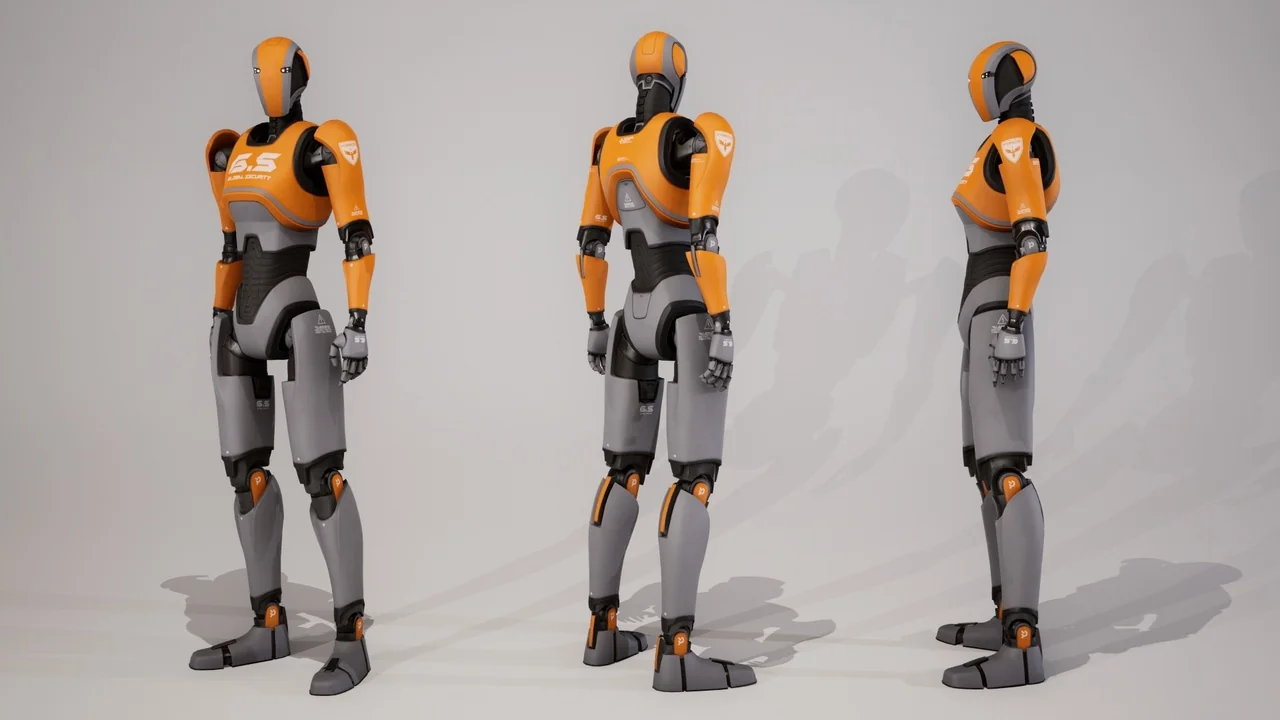
 Mechanical
 Mechanical
 Mechanical