"031373f479d9561a"{"id":"1000234","slug":"post-apocalyptic-world","title":"Post Apocalyptic World","category":"Fantasy","engine":"4.26+,5.0+","assetVersion":"","engineVersion":"Engine Version: 4.26+,5.0+","tag":"Fantasy","accent":"blue","visual":"mech","summary":"A comprehensive collection of over 100 AAA models, including modular buildings, physics doors, and paintable foliage for abandoned city environments.","platform":"Unreal Engine","publishedAt":"2026-06-28T09:27:56.832Z","updatedAt":"2026-06-28T09:27:56.832Z","sourceNotes":[],"fileContents":[],"compatibility":["Unreal Engine","Engine Version: 4.26+,5.0+"],"featuredImage":{"alt":"Post Apocalyptic World","src":"/wp-content/uploads/published/2026/06/97d5fb1e6058-db703f60-1733-400e-bb9b-15e2699218ee-9580df80b5.webp"},"hasDownloadLink":true,"downloads":1,"terms":[{"taxonomy":"category","slug":"fantasy","name":"Fantasy"}],"galleryImages":[{"src":"/wp-content/uploads/published/2026/06/d3902dbb4277-49addbb5-ef26-44a4-874c-75fecd40da5e-05c7e04bb2.webp","alt":"Post Apocalyptic World"},{"src":"/wp-content/uploads/published/2026/06/3cfe2a194869-84164bb5-86e6-491c-a43a-c59f3eae144e-543946c277.webp","alt":"Post Apocalyptic World"},{"src":"/wp-content/uploads/published/2026/06/5a3d8d86b746-0125af43-ca7c-4c8f-add3-40f535bb2afa-ac1730e09a.webp","alt":"Post Apocalyptic World"},{"src":"/wp-content/uploads/published/2026/06/7b66175eb7a5-ff1a7090-3ecd-43bb-b7f4-ea9d38a6b7c2-ba1281fbfc.webp","alt":"Post Apocalyptic World"},{"src":"/wp-content/uploads/published/2026/06/7556b43a1697-2bb48903-b144-4412-a12e-a27707df0528-5d175b93a2.webp","alt":"Post Apocalyptic World"},{"src":"/wp-content/uploads/published/2026/06/6aa7246cb4c0-06698996-6e0a-420a-b159-fbf7127d4a21-e29d0d3bf0.webp","alt":"Post Apocalyptic World"},{"src":"/wp-content/uploads/published/2026/06/44446534bb19-cbcedb6c-7c4b-4081-a051-6520c3b9f4cb-e9c1835dea.webp","alt":"Post Apocalyptic World"},{"src":"/wp-content/uploads/published/2026/06/a956c3b1c291-a790925a-356b-485b-8f11-783e4aef0343-57d1b9e092.webp","alt":"Post Apocalyptic World"}],"accessPanel":{"kind":"resource","title":"Download this resource","eyebrow":"Free Download","message":"Log in or create a free account to start your download.","fileName":"Content.7z","safetyNote":"Resources are manually reviewed before listing to improve quality and reduce obvious risks.","actionLabel":"Download Free","resourceType":"Resource archive"},"contentHtml":"\u003ch2\u003ePopulating the Post Apocalyptic World Layout\u003c/h2\u003e\n\u003cp\u003eWhen initiating a new level design, the primary challenge often lies in establishing a believable sense of scale and decay without spending weeks modeling individual assets. The Post Apocalyptic World package addresses this directly by supplying a comprehensive library of over 100 AAA models tailored for constructing an abandoned city. The core implementation relies on a straightforward drag-and-drop methodology, allowing developers to rapidly place large structural footprints and immediately evaluate the flow of the environment. By utilizing this drag-and-drop approach, environment artists can quickly transition from empty terrain to a lush and overgrown looking environment. The foundational workflow involves organizing the scene into distinct zones, utilizing the provided houses, commercial stores, and industrial buildings to map out neighborhoods and manufacturing districts. Because the assets carry tags for modular, fantasy, level, and realistic designs, they serve as a versatile baseline for various genres requiring a dilapidated urban aesthetic.\u003c/p\u003e \u003ch2\u003eArchitecting Houses and Modular Industrial Zones\u003c/h2\u003e\n\u003cp\u003eThe architectural components of the package are specifically engineered to support deep exploration rather than just serving as background scenery. The residential lineup features three distinct houses, each constructed with full interiors that span multiple floors. This multi-level design accommodates gameplay scenarios that require vertical navigation and close-quarters interior movement. To ensure that a neighborhood built from these three base houses does not look artificially repetitive, the exterior materials are highly customizable. Developers have the ability to mix and match siding, bricks, and drywall across the facades to get tons of visual variations from a limited number of base meshes.\u003c/p\u003e\n\u003cp\u003eAlongside the residential structures, the commercial offerings include one primary store model, which features a blocked-out apartment space to provide additional interior routing. For the manufacturing sector, the package includes one industrial building that is built entirely modularly. This modular approach to the industrial structure gives level designers full control over the scale and complexity of the facility, allowing it to be configured as anything from a compact workshop to a sprawling, multi-room warehouse.\u003c/p\u003e \u003ch2\u003eInterior Furnishing and Physics Implementation\u003c/h2\u003e\n\u003cp\u003eOnce the heavy architecture is locked in place, the environment requires detailing to sell the reality of an abandoned city. The asset library includes over 40 distinct props designed to fill both the interior rooms and the exterior streets. Inside the multi-story houses, these props allow for the logical furnishing of living spaces. Developers can populate the empty rooms with foundational furniture such as couches, chairs, tables, and cabinets, alongside complete kitchen setups. This interior dressing transforms the empty architectural shells into believable, formerly inhabited spaces.\u003c/p\u003e\n\u003cp\u003eBridging the gap between the static architecture and dynamic gameplay, the package also provides five doors that are built with physics. Dropping these physics-enabled doors into the structural doorways introduces immediate interactivity for player characters moving between the detailed streets and the furnished interiors.\u003c/p\u003e \u003ch2\u003ePainting Foliage and Grungy Street Debris\u003c/h2\u003e\n\u003cp\u003eThe defining characteristic of an overgrown setting is the aggressive reclamation of the urban space by nature and the accumulation of neglected debris. The vegetation system includes three distinct species of trees, each provided with two variations to ensure organic diversity across the canopy layer. At the ground level, the package supplies over a dozen variations of ground foliage, encompassing dense bushes, tall grass, and intrusive weeds. Rather than relying on tedious manual placement, developers can utilize standard engine foliage tools to paint these natural elements directly into the scene.\u003c/p\u003e\n\u003cp\u003eCrucially, this painting workflow extends far beyond simple grass placement. The same foliage tool can be used to add the final touches to the architecture by painting vines directly onto the siding and brickwork of the buildings. Furthermore, the tool is utilized to scatter urban decay across the environment. Broken rubble, loose bricks, discarded trash, and loose paper can be painted across the streets and floors to help give that added grungy look that defines the genre.\u003c/p\u003e \u003ch2\u003eCollision, LODs, and Production Readiness\u003c/h2\u003e\n\u003cp\u003eTo ensure that this dense accumulation of structures, props, and painted debris functions correctly in a live production environment, the technical foundation of the assets has been standardized. All props within the package come fully equipped with custom collision meshes. This guarantees that player characters and rigid body objects will navigate the cluttered interiors and debris-filled streets predictably, without developers needing to manually generate collision boundaries for the couches, cabinets, or scattered trash.\u003c/p\u003e\n\u003cp\u003eTo manage the rendering cost of rendering over 100 AAA models and dense painted foliage, Level of Detail (LOD) models are integrated throughout the prop library. These LODs automatically scale down the geometric complexity of the assets as the camera distance increases, ensuring that the realistic urban level remains optimized. The combination of pre-built LODs, integrated collision, and physically reactive doors delivers a streamlined experience from the initial drag-and-drop blockout to the final performance profiling.\u003c/p\u003e\n\n\u003ch2\u003eRelated Resources Worth Checking\u003c/h2\u003e\n\u003cul\u003e\n\u003cli\u003e\u003ca href=\"https://3dcghub.com/dreamscape-stylized-environment-tower-stylized-nature-open-world-fantasy/\" title=\"Dreamscape: Stylized Environment Tower - Stylized Nature Open World Fantasy\"\u003eDreamscape: Stylized Environment Tower - Stylized Nature Open World Fantasy\u003c/a\u003e\u003c/li\u003e\n\u003cli\u003e\u003ca href=\"https://3dcghub.com/polygon-apocalypse-wasteland/\" title=\"POLYGON - Apocalypse Wasteland\"\u003ePOLYGON - Apocalypse Wasteland\u003c/a\u003e\u003c/li\u003e\n\u003cli\u003e\u003ca href=\"https://3dcghub.com/fantasy-forest-environment/\" title=\"Fantasy Forest Environment\"\u003eFantasy Forest Environment\u003c/a\u003e\u003c/li\u003e\n\u003cli\u003e\u003ca href=\"https://3dcghub.com/junkyard-city/\" title=\"Junkyard City\"\u003eJunkyard City\u003c/a\u003e\u003c/li\u003e\n\u003cli\u003e\u003ca href=\"https://3dcghub.com/survival-kitchen/\" title=\"Survival Kitchen\"\u003eSurvival Kitchen\u003c/a\u003e\u003c/li\u003e\n\u003c/ul\u003e","contentTextLength":5788,"navigation":{"current":1115,"total":3223,"previous":{"id":"1000235","slug":"unreal-engine-5-how-to-awesome-cinematics","title":"Unreal Engine 5 - How to Маке Awesome Cinematics","category":"Unreal Engine","platform":"Unreal Engine","updatedAt":"2026-06-28T09:30:02.129Z"},"next":{"id":"1000233","slug":"matte-painting-skybox-pack-viii-doom-skies","title":"Matte Painting Skybox Pack VIII: Doom Skies","category":"Sky \u0026 Space","platform":"Unreal Engine","updatedAt":"2026-06-28T09:14:20.596Z"}},"relatedResources":[{"id":"1001064","slug":"post-apocalyptic-desert","title":"Post Apocalyptic Desert","category":"Apocalyptic / Post-apocalyptic","engine":"4.26+,5.0+","assetVersion":"","engineVersion":"Engine Version: 4.26+,5.0+","tag":"Apocalyptic","accent":"blue","visual":"mech","summary":"Post Apocalyptic Desert is a Unreal Engine desert environment with a drivable vehicle, extensive props and foliage, advanced materials, plus Nanite/Lumen suppor","platform":"Unreal Engine","publishedAt":"2026-09-03T15:10:50.530Z","updatedAt":"2026-09-03T15:10:50.530Z","sourceNotes":[],"fileContents":[],"compatibility":["Unreal Engine","Engine Version: 4.26+,5.0+"],"featuredImage":{"alt":"Post Apocalyptic Desert","src":"/wp-content/uploads/published/2026/09/c03aaff5c58e-a4df247e-4355-4450-95e8-7efd4f43611d-aba4e12f2c.webp"},"hasDownloadLink":true,"downloads":0},{"id":"7924","slug":"dreamscape-stylized-environment-tower-stylized-nature-open-world-fantasy","title":"Dreamscape: Stylized Environment Tower - Stylized Nature Open World Fantasy","category":"Fantasy","engine":"4.26+,5.0+","assetVersion":"Engine version: 4.26+,5.0+","engineVersion":"","tag":"Fantasy","accent":"blue","visual":"city","summary":"Build stunning stylized worlds with this massive collection of over 150 assets. It includes a modular tower, optimized foliage, and advanced landscape materials for next-gen performance.","platform":"Unreal Engine","publishedAt":"2026-02-22T15:54:58.000Z","updatedAt":"2026-04-19T15:55:52.000Z","sourceNotes":[],"fileContents":[],"compatibility":["Unreal Engine","Engine version: 4.26+,5.0+"],"featuredImage":{"alt":"Dreamscape: Stylized Environment Tower - Stylized Nature Open World Fantasy","src":"https://3dcghub.com/wp-content/uploads/2026/02/1ac90b59-2d5e-4d76-ae3a-f80afa26032b.webp"},"hasDownloadLink":true,"downloads":3},{"id":"1000327","slug":"realistic-ivy-plants","title":"Realistic IVY Plants","category":"Apocalyptic / Post-apocalyptic","engine":"5.0+","assetVersion":"","engineVersion":"Engine Version: 5.0+","tag":"Apocalyptic","accent":"blue","visual":"mech","summary":"A collection of 25 unoptimized ivy plant meshes designed for specific architectural shapes like inner and outer corners, ideal for overgrown or ruined environme","platform":"Unreal Engine","publishedAt":"2026-07-05T06:42:01.825Z","updatedAt":"2026-07-05T06:42:01.825Z","sourceNotes":[],"fileContents":[],"compatibility":["Unreal Engine","Engine Version: 5.0+"],"featuredImage":{"alt":"Realistic IVY Plants","src":"/wp-content/uploads/published/2026/07/ebf737a5d8f6-5e89b3af-7f18-4239-891f-a8ec8c3bea4f-99a7f033f2.webp"},"hasDownloadLink":true,"downloads":3}]}
Fantasy
Post Apocalyptic World
A comprehensive collection of over 100 AAA models, including modular buildings, physics doors, and paintable foliage for abandoned city environments.
Category:Unreal Engine,FantasyPlatform: Unreal EngineEngine Version: 4.26+,5.0+Published: Jun 28, 2026
Fantasy
Resource overview
Populating the Post Apocalyptic World Layout
When initiating a new level design, the primary challenge often lies in establishing a believable sense of scale and decay without spending weeks modeling individual assets. The Post Apocalyptic World package addresses this directly by supplying a comprehensive library of over 100 AAA models tailored for constructing an abandoned city. The core implementation relies on a straightforward drag-and-drop methodology, allowing developers to rapidly place large structural footprints and immediately evaluate the flow of the environment. By utilizing this drag-and-drop approach, environment artists can quickly transition from empty terrain to a lush and overgrown looking environment. The foundational workflow involves organizing the scene into distinct zones, utilizing the provided houses, commercial stores, and industrial buildings to map out neighborhoods and manufacturing districts. Because the assets carry tags for modular, fantasy, level, and realistic designs, they serve as a versatile baseline for various genres requiring a dilapidated urban aesthetic.
Architecting Houses and Modular Industrial Zones
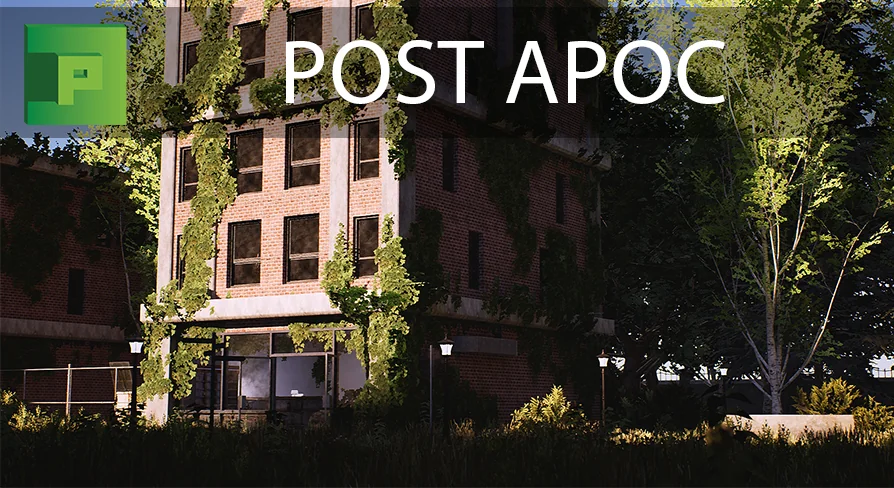
The architectural components of the package are specifically engineered to support deep exploration rather than just serving as background scenery. The residential lineup features three distinct houses, each constructed with full interiors that span multiple floors. This multi-level design accommodates gameplay scenarios that require vertical navigation and close-quarters interior movement. To ensure that a neighborhood built from these three base houses does not look artificially repetitive, the exterior materials are highly customizable. Developers have the ability to mix and match siding, bricks, and drywall across the facades to get tons of visual variations from a limited number of base meshes.
Alongside the residential structures, the commercial offerings include one primary store model, which features a blocked-out apartment space to provide additional interior routing. For the manufacturing sector, the package includes one industrial building that is built entirely modularly. This modular approach to the industrial structure gives level designers full control over the scale and complexity of the facility, allowing it to be configured as anything from a compact workshop to a sprawling, multi-room warehouse.
Interior Furnishing and Physics Implementation
Once the heavy architecture is locked in place, the environment requires detailing to sell the reality of an abandoned city. The asset library includes over 40 distinct props designed to fill both the interior rooms and the exterior streets. Inside the multi-story houses, these props allow for the logical furnishing of living spaces. Developers can populate the empty rooms with foundational furniture such as couches, chairs, tables, and cabinets, alongside complete kitchen setups. This interior dressing transforms the empty architectural shells into believable, formerly inhabited spaces.
Bridging the gap between the static architecture and dynamic gameplay, the package also provides five doors that are built with physics. Dropping these physics-enabled doors into the structural doorways introduces immediate interactivity for player characters moving between the detailed streets and the furnished interiors.
Painting Foliage and Grungy Street Debris
The defining characteristic of an overgrown setting is the aggressive reclamation of the urban space by nature and the accumulation of neglected debris. The vegetation system includes three distinct species of trees, each provided with two variations to ensure organic diversity across the canopy layer. At the ground level, the package supplies over a dozen variations of ground foliage, encompassing dense bushes, tall grass, and intrusive weeds. Rather than relying on tedious manual placement, developers can utilize standard engine foliage tools to paint these natural elements directly into the scene.
Crucially, this painting workflow extends far beyond simple grass placement. The same foliage tool can be used to add the final touches to the architecture by painting vines directly onto the siding and brickwork of the buildings. Furthermore, the tool is utilized to scatter urban decay across the environment. Broken rubble, loose bricks, discarded trash, and loose paper can be painted across the streets and floors to help give that added grungy look that defines the genre.
Collision, LODs, and Production Readiness
To ensure that this dense accumulation of structures, props, and painted debris functions correctly in a live production environment, the technical foundation of the assets has been standardized. All props within the package come fully equipped with custom collision meshes. This guarantees that player characters and rigid body objects will navigate the cluttered interiors and debris-filled streets predictably, without developers needing to manually generate collision boundaries for the couches, cabinets, or scattered trash.
To manage the rendering cost of rendering over 100 AAA models and dense painted foliage, Level of Detail (LOD) models are integrated throughout the prop library. These LODs automatically scale down the geometric complexity of the assets as the camera distance increases, ensuring that the realistic urban level remains optimized. The combination of pre-built LODs, integrated collision, and physically reactive doors delivers a streamlined experience from the initial drag-and-drop blockout to the final performance profiling.
 Fantasy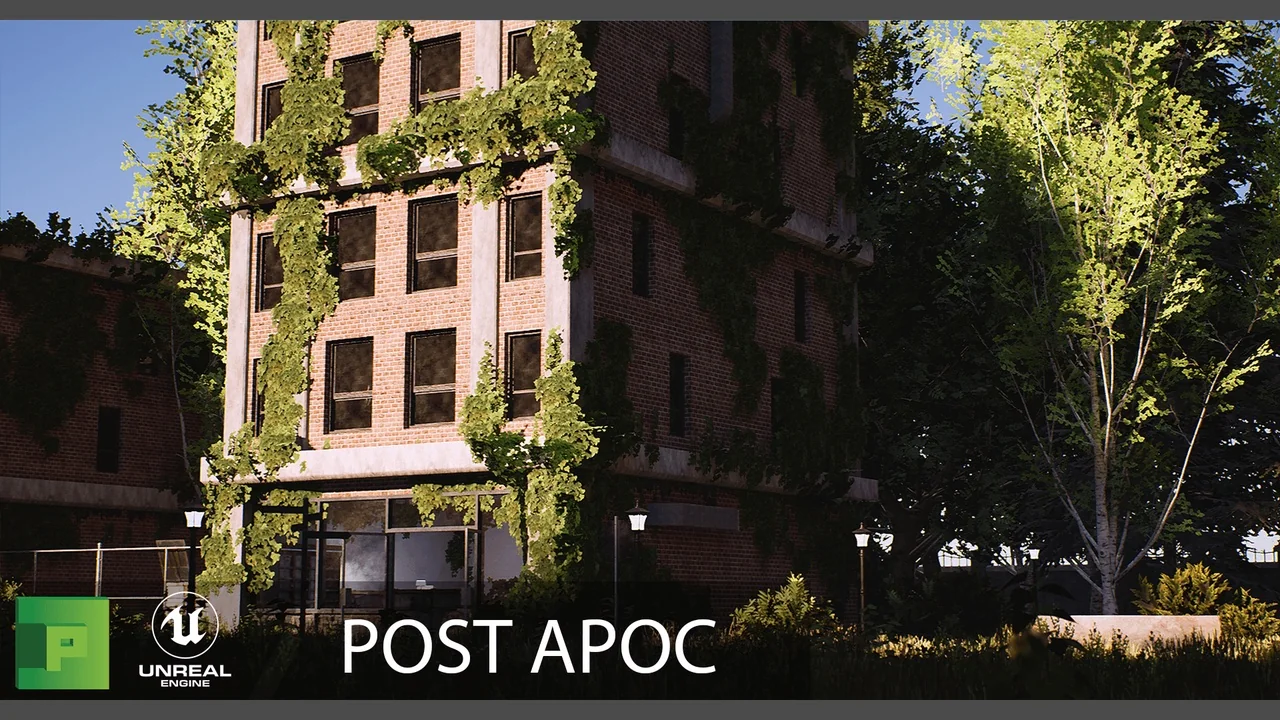
 Apocalyptic
 Fantasy
 Apocalyptic