Dynamic Particle Generation from Diverse Sources
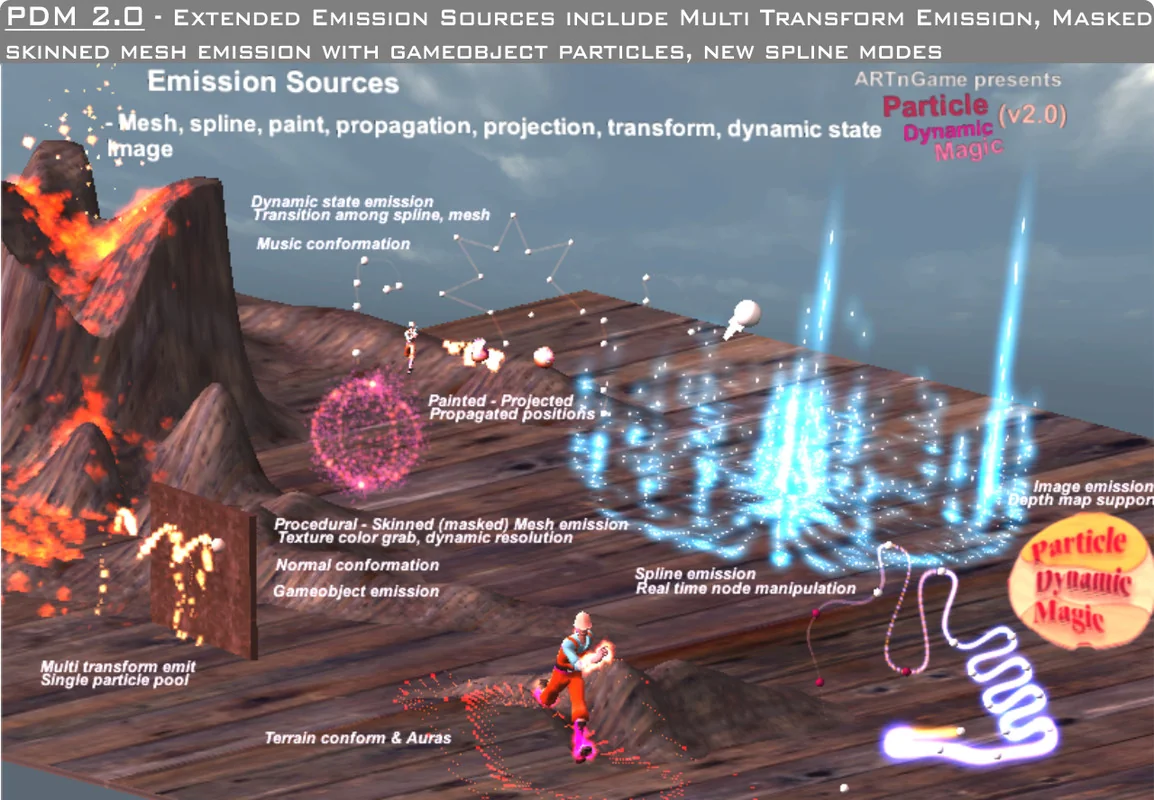
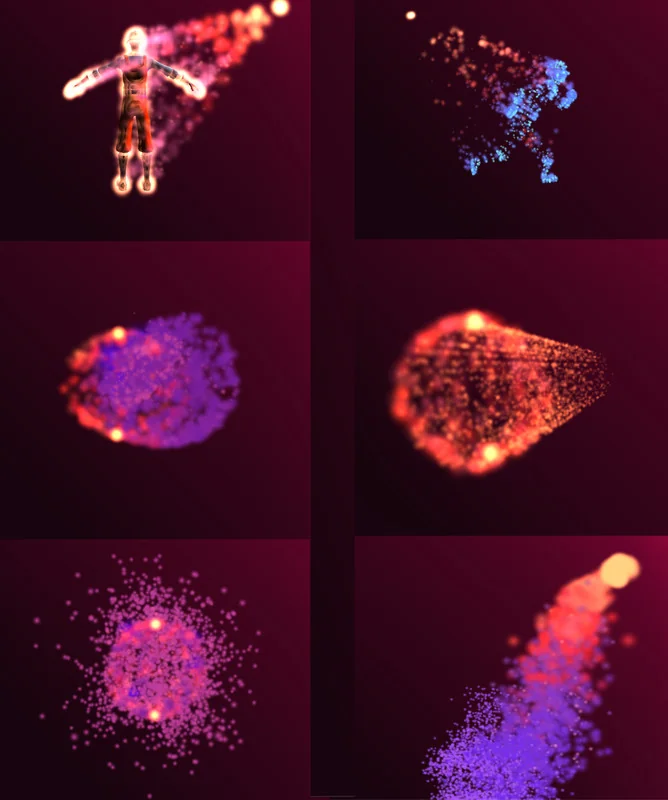
Particle Dynamic Magic 2 serves as a robust framework for Unity developers looking to move beyond standard particle behaviors. The system allows for the creation and manipulation of particles from a wide array of sources, including static, moving skinned, animated, and procedural meshes. This flexibility means that particles are not restricted to simple emitters but can be generated directly from the geometry of a character or environment object.
Beyond mesh-based emission, the framework supports particle generation from splines, images, and painted or projected positions. It also integrates with Shuriken positions, allowing developers to leverage existing Unity workflows while adding the advanced manipulation capabilities of this framework. By using propagated and projected positions, creators can design effects that feel integrated into the scene’s geometry rather than simply layered on top of it.
Interactive Splines and Physics-Based Effects
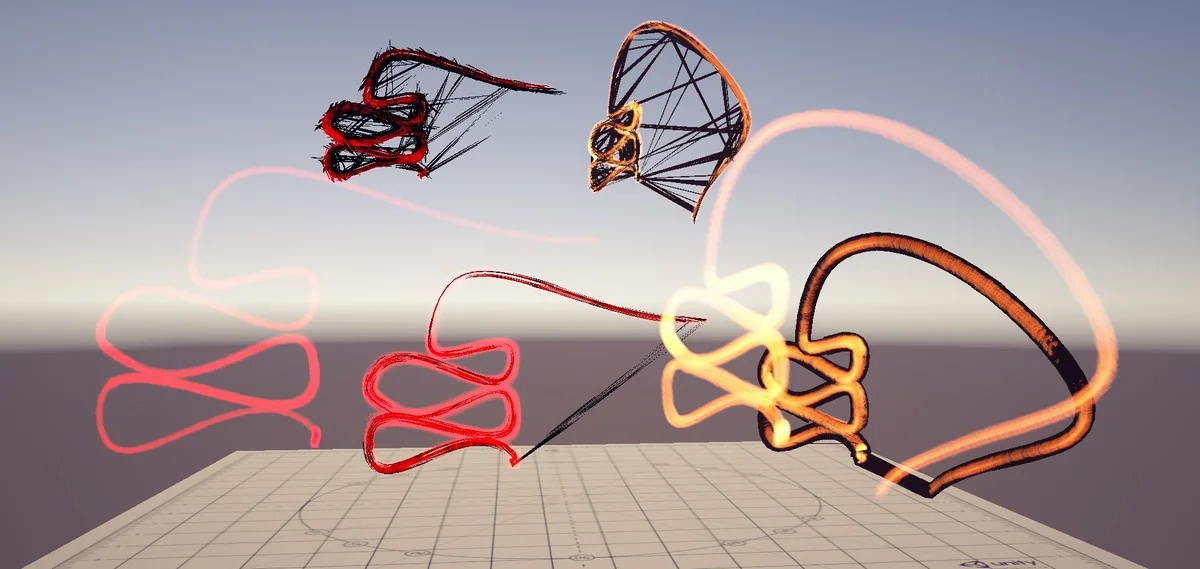
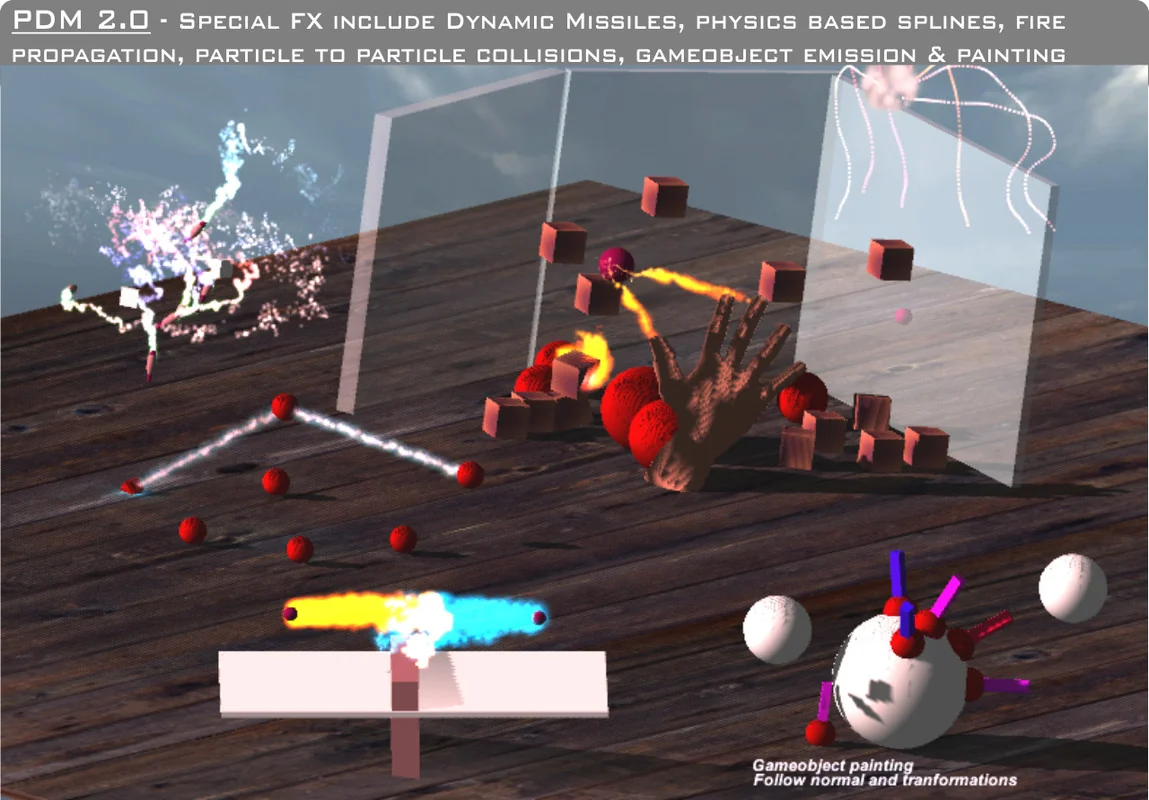
The spline creation and manipulation framework is a core component of the system, offering full support during play mode. This allows for direct interaction within the game environment, where splines can be setup to emulate organic or mechanical physics-based effects. The developer highlights the ability to create simulations for tentacles, hair, and rubber, providing a tactile quality to in-game objects.
The included spline editor facilitates direct creation and editing in both the editor and during active gameplay. This dual-mode functionality allows for real-time adjustments to particle paths and object behaviors. Because these splines can be manipulated by the user directly, they open up possibilities for gameplay mechanics where the player interacts with rope-like or fluid-like structures that maintain physical properties.
Environmental Interaction through AI Particles
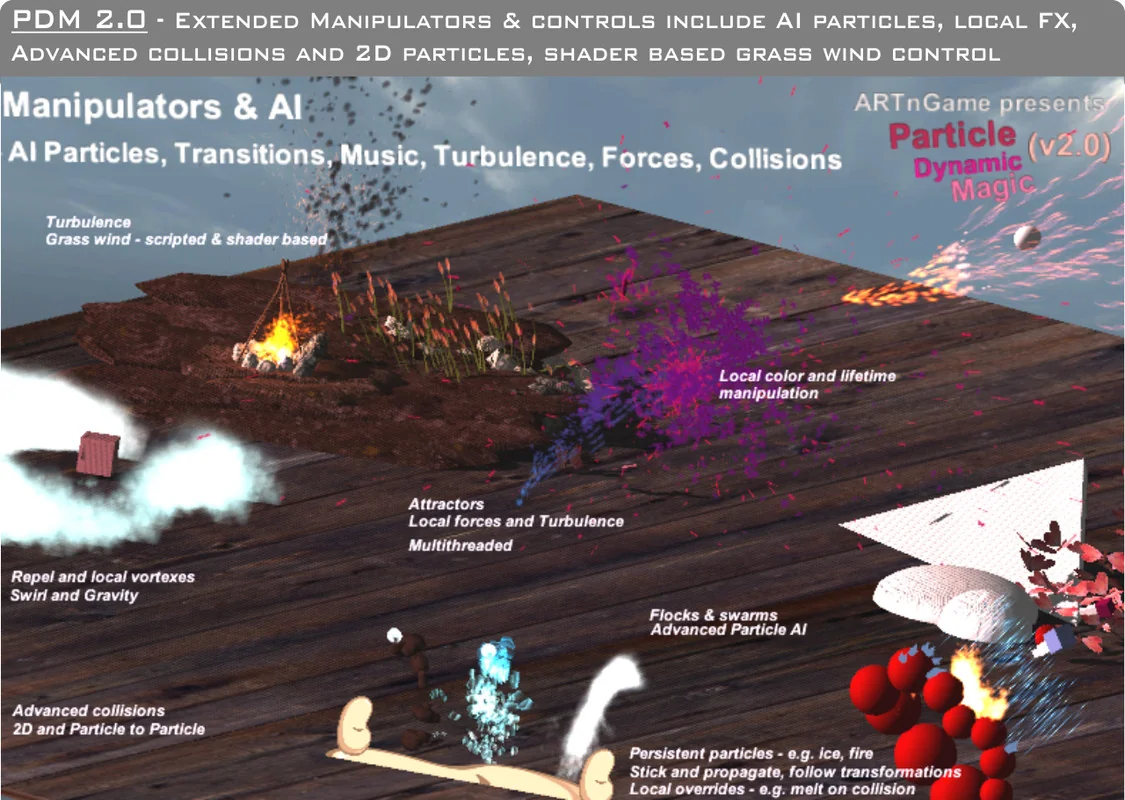
One of the more specialized modules in version 2.0 is the AI particles system. Unlike traditional particles that follow a pre-defined path or simple physics, these gameobject particles possess a level of environmental awareness. They are capable of sensing their surroundings and reacting to them dynamically. A primary application of this is obstacle avoidance, where particles or gameobjects can navigate around geometry rather than clipping through it or disappearing upon impact.
This sensing capability allows for more complex behaviors in large-scale effects, such as swarms or magical projectiles that seem to search for a path through a cluttered environment. When combined with the framework’s other manipulators, these AI-driven objects can create highly reactive scenes that respond to the player’s presence or changes in the level layout.
Dynamic Decal Distribution and Behavior
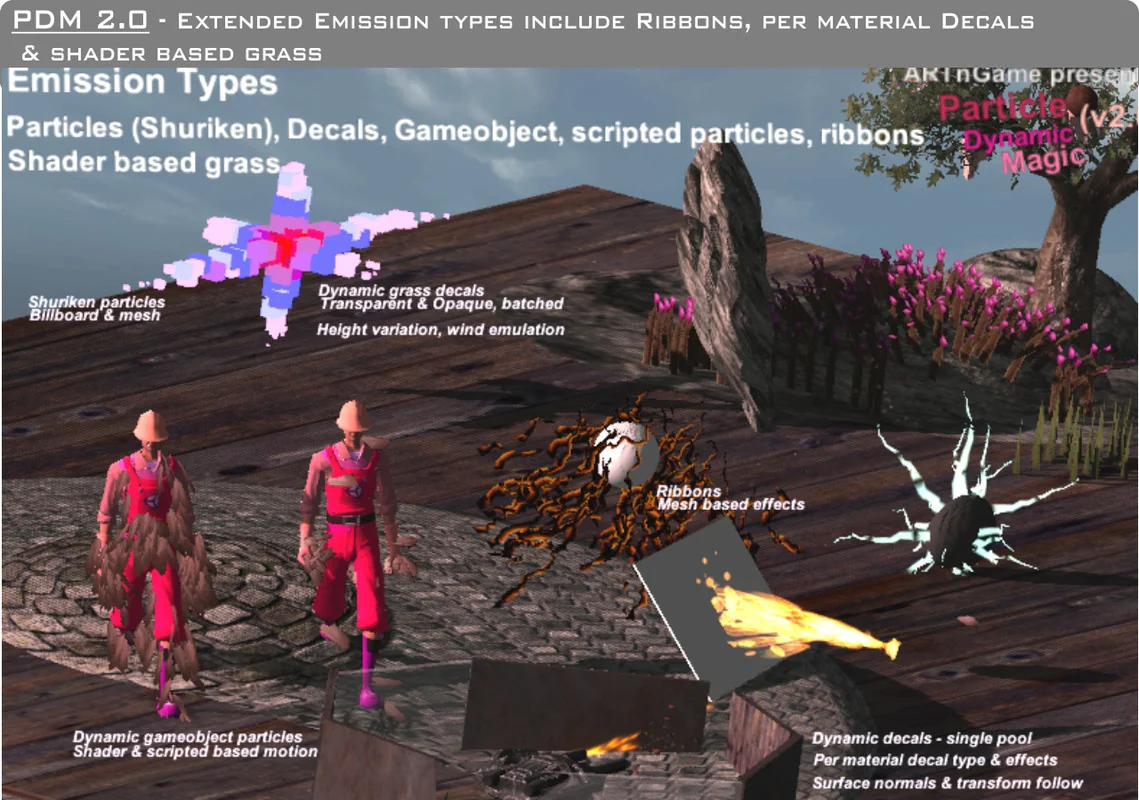
The decal system within Particle Dynamic Magic 2 is designed for real-time distribution, such as the placement of bullet holes or impact marks. These decals are not static; they are fully dynamic and follow the transformations of the objects they are painted on. If an object moves, rotates, or scales, the decal maintains its correct position and orientation on the surface.
A unique aspect of this system is that decals can be influenced by the same forces that affect particles. They can be manipulated by manipulators to shift or change based on environmental factors. The system includes a per-material option, ensuring that decals are painted correctly across different surface types. This level of integration ensures that visual effects like scorch marks or paint splatters behave as part of the world physics rather than simple 2D overlays.
Manipulators and Property Control
To control the behavior of particles and decals, the framework utilizes a variety of manipulators. These tools can alter particle behavior by applying various types of forces, including:
- Gravity and Turbulence for natural environmental motion.
- Vortexes for rotational, swirling effects.
- Repel-Attract forces for magnetic or localized movement.
In addition to spatial movement, these manipulators can change the physical properties of particles over time, such as altering their color and size. Because all features can be previewed directly in the Unity editor, developers can see how these forces interact before entering play mode. The framework is designed to allow these features to work together, enabling the creation of combination effects where splines, AI particles, and force manipulators all contribute to a single, complex visual event.
Performance and Pipeline Integration
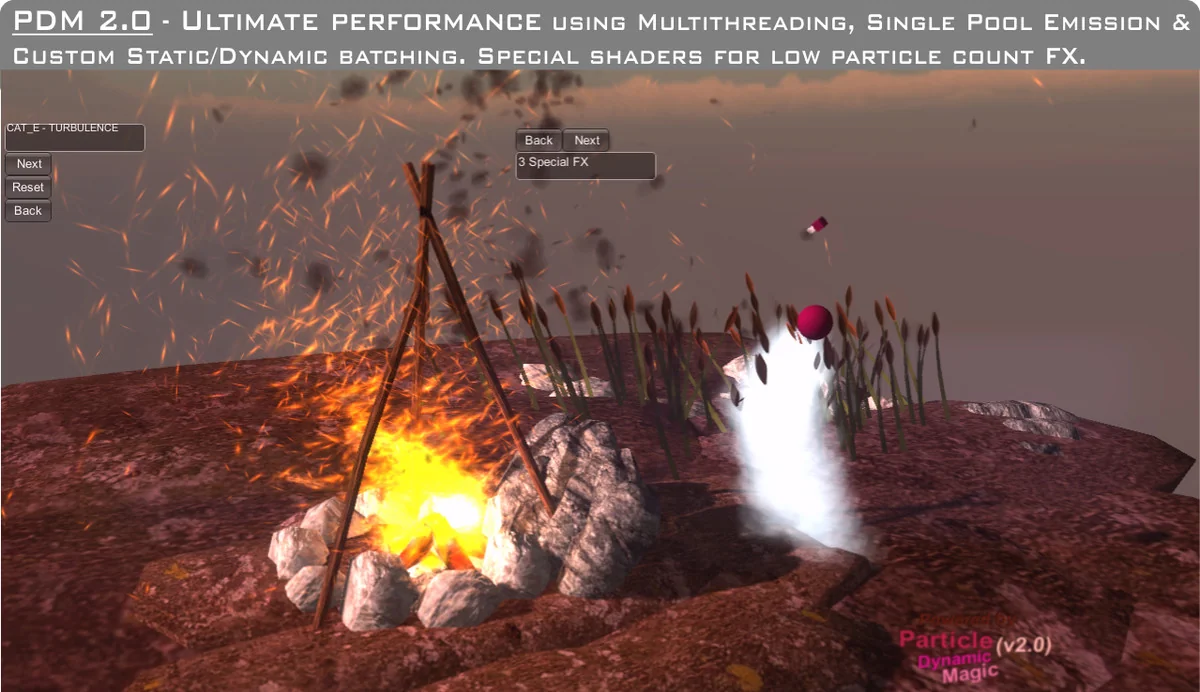
The framework addresses performance through several technical methods intended to keep scenes running smoothly even with high particle counts. It utilizes multithreading and a single pool distribution method for both particles and decals. This is complemented by custom static and dynamic batching, which helps reduce the overhead on the engine during complex simulations.
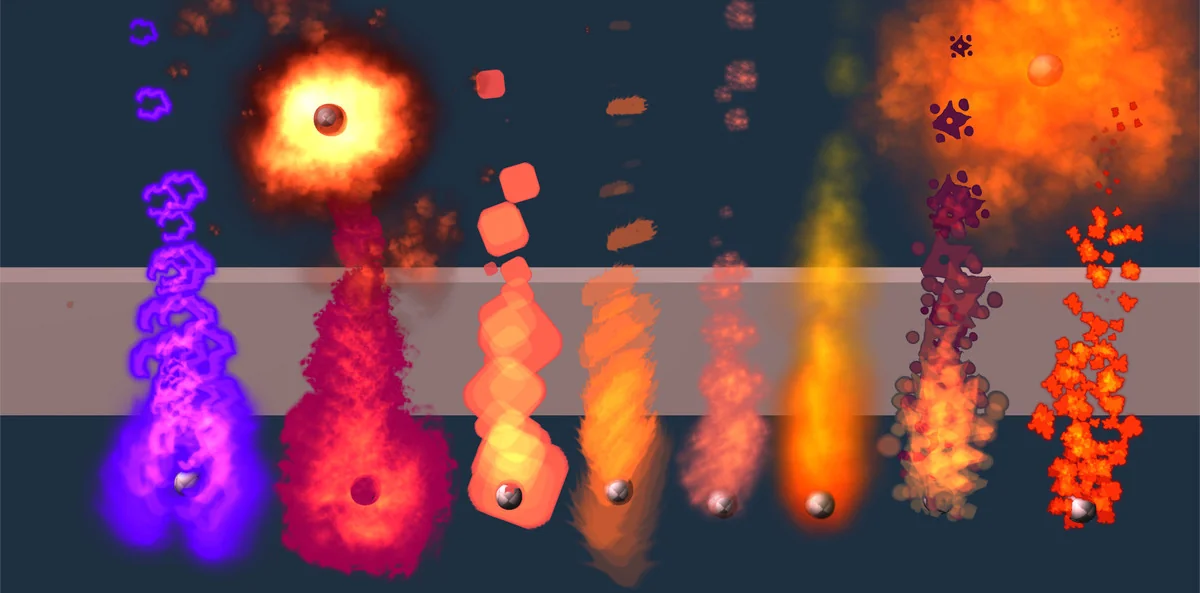
For those looking to see the system in action, the pack includes prefabs for various effects and three demo mini-games, including the AMOEBA demo and an updated version of the Angry Bots demo. These provide practical examples of how the multithreading and pooling systems handle real-time gameplay demands. The system is built to be performant while providing unique control over gameobjects and particles alike.
Project Screenshots
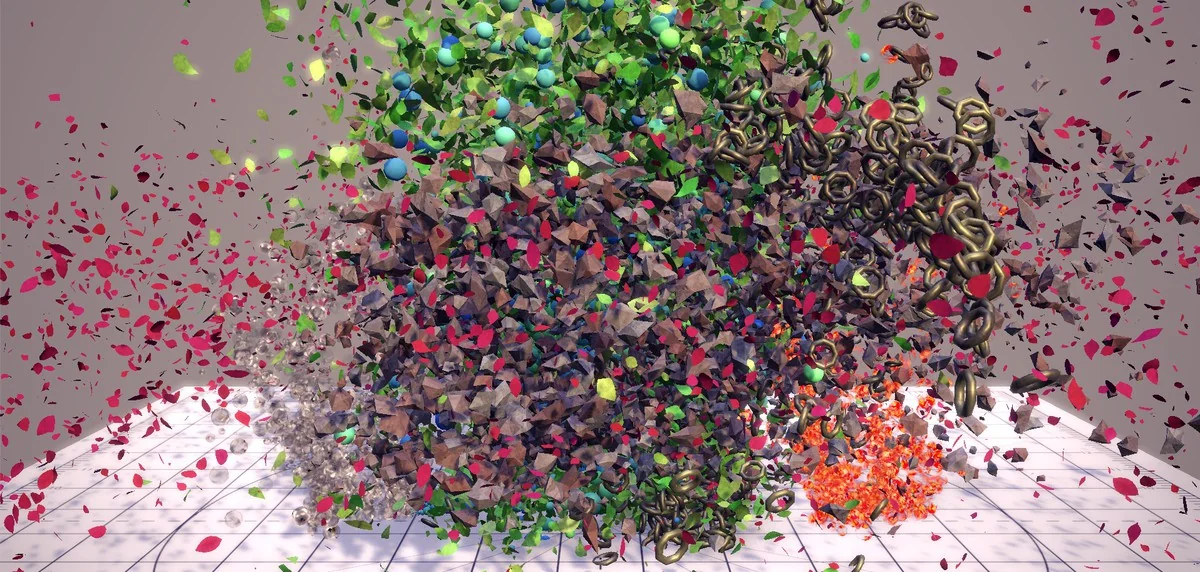
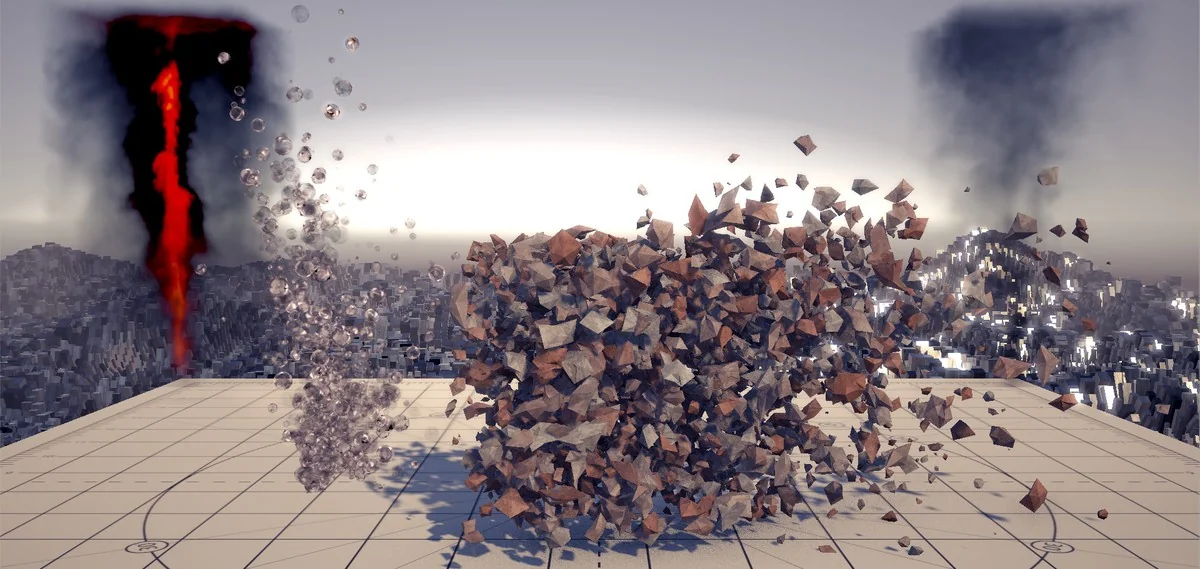
Protected download
Access this resource
All resources are 100% manually reviewed to eliminate all risks.