"72afc5f8a809d018"{"id":"1002132","slug":"niagara-weather","title":"Niagara Weather","category":"Weather","engine":"4.27+,5.0+","assetVersion":"","engineVersion":"Engine Version: 4.27+,5.0+","tag":"Weather","accent":"blue","visual":"mech","summary":"Niagara Weather supplies 20 Niagara systems for Unreal Engine, featuring rain, snow, blizzard, wind, and falling leaves for environment design.","platform":"Unreal Engine","publishedAt":"2026-10-29T09:13:04.872Z","updatedAt":"2026-10-29T09:13:04.872Z","sourceNotes":[],"fileContents":[],"compatibility":["Unreal Engine","Engine Version: 4.27+,5.0+"],"featuredImage":{"alt":"Niagara Weather","src":"/wp-content/uploads/published/2026/10/131d02cfc31a-58cf1805-d8b9-4879-be71-3617e3c4d33a-f934227ba1.webp"},"hasDownloadLink":true,"downloads":0,"terms":[{"taxonomy":"category","slug":"weather-vfx","name":"Weather"}],"galleryImages":[{"src":"/wp-content/uploads/published/2026/10/dae948f002d0-ac41be6f-9886-4d3f-83a7-d4d604bf8914-029410ba4a.webp","alt":"Niagara Weather"},{"src":"/wp-content/uploads/published/2026/10/68c11e80b0ef-121ffaeb-143c-4dde-b717-6ed667a4eaba-e1a8f3bc01.webp","alt":"Niagara Weather"},{"src":"/wp-content/uploads/published/2026/10/b80da56cfe51-ec9a43a5-00f2-44a9-bbb5-05ea2e41369f-00be2f54a7.webp","alt":"Niagara Weather"},{"src":"/wp-content/uploads/published/2026/10/3adde077f885-9f792a9d-2bbf-48c9-8a23-4b4d25afdd7d-b3b1c678bb.webp","alt":"Niagara Weather"},{"src":"/wp-content/uploads/published/2026/10/a3197e639905-3bcb0feb-5898-4c8f-a5fd-3d7b1a64b234-534e6b1efb.webp","alt":"Niagara Weather"},{"src":"/wp-content/uploads/published/2026/10/6e85e8a6732c-b5419eca-fc65-479c-b00d-125ffb0d449d-e2ef64502a.webp","alt":"Niagara Weather"},{"src":"/wp-content/uploads/published/2026/10/64d316fe8fc5-f31ec358-e135-45cc-8c1f-311538f6d95d-52195f6f8d.webp","alt":"Niagara Weather"},{"src":"/wp-content/uploads/published/2026/10/ec4484e606da-f89d4897-4699-48c8-872d-c72fbba3f008-4513c6640d.webp","alt":"Niagara Weather"},{"src":"/wp-content/uploads/published/2026/10/6b84816c2df2-c39d86b2-458e-4808-8ac2-66d759ca42ad-73f6ccc025.webp","alt":"Niagara Weather"}],"accessPanel":{"kind":"resource","title":"Download this resource","eyebrow":"Free Download","message":"Log in or create a free account to start your download.","fileName":"Content.7z","safetyNote":"Resources are manually reviewed before listing to improve quality and reduce obvious risks.","actionLabel":"Download Free","resourceType":"Resource archive"},"contentHtml":"\u003cp\u003eAtmosphere in real-time environments depends heavily on motion suspended in the air. Rain streaks cutting across a viewport, snowflakes drifting through calm pockets of cold air, leaves tumbling on sudden drafts, and blizzard conditions shearing sideways all transform static digital geometry into a living scene. Niagara Weather provides twenty distinct Niagara systems focused directly on atmospheric elements, supplying creators with modular tools to simulate calm seasonal drift or aggressive, storm-driven environments.\u003c/p\u003e \u003ch2\u003eSimulating Environmental Conditions with 20 Niagara Systems\u003c/h2\u003e\n\u003cp\u003eHaving twenty individual Niagara systems within a single collection allows visual effects artists to isolate specific environmental intensities rather than forcing a single, overly complex emitter to manage every scenario. Weather in natural landscapes is rarely uniform. A scene set in an open clearing demands broad, continuous atmospheric coverage, while an alleyway or courtyard might only need localized gusts or light precipitation falling through an opening in the canopy.\u003c/p\u003e \u003cp\u003eBy splitting environmental behaviors across twenty standalone systems, the collection gives artists control over particle volume, screen coverage, and performance budgets. You can deploy a standalone wind system to carry dust or loose debris, activate isolated falling leaves to signal an autumn transition, or stack multiple systems together to escalate a scene from a gentle drizzle into a high-intensity downpour.\u003c/p\u003e \u003ch2\u003eRain, Wind, and Blizzard Dynamics in Motion\u003c/h2\u003e\n\u003cp\u003eHigh-energy weather requires precise particle velocity and directional consistency. The rain systems in this pack concentrate on vertical speed, linear alignment, and droplet density, giving artists the visual cues needed to depict wet surfaces and heavy air. Rain particles must fall with sufficient speed to read as distinct streaks, cutting through scene lighting without completely obscuring visibility unless dialed up for extreme storms.\u003c/p\u003e \u003cp\u003eWind systems serve as the mechanical foundation for severe conditions. Wind particles visualize invisible air currents, carrying motion cues that link static level geometry with dynamic environmental shifts. When directional wind forces intersect with precipitation, the systems replicate the turbulent, whipping motion typical of exposed mountain passes or coastal gale fronts.\u003c/p\u003e \u003cp\u003eBlizzard systems represent the most violent state in the pack. Unlike standard snowfall, a blizzard demands dense, chaotic particle scattering where snowflake particles are pushed horizontally at erratic speeds. These systems fill the scene volume with high-speed whiteout particles, blurring distant silhouettes, reducing contrast, and instantly conveying sub-zero temperatures to the viewer.\u003c/p\u003e \u003ch2\u003eSnowflake Particles and Falling Leaves for Ambient Density\u003c/h2\u003e\n\u003cp\u003eQuiet environmental shifts require an entirely different approach to particle timing and drag forces. Gentle snow effects inside Niagara Weather prioritize weightlessness and subtle air resistance. Individual snowflake particles drift downward at varied rates, reacting to simulated updrafts and settling gradually into the scene rather than driving straight toward the ground. This produces a softer, calm mood suited for quiet winter landscapes, frozen forests, or nighttime architectural showcases.\u003c/p\u003e \u003cp\u003eFalling leaves introduce organic, non-uniform shapes into the particle mix. Unlike rain or snow, which generally maintain uniform silhouettes, leaves exhibit complex rotation and tumbling motions as they catch the air. The systems simulate this aerodynamic fluttering, allowing leaves to spin, level out, and dive along irregular flight paths before coming to rest. Deploying falling leaves across forest paths, derelict streets, or garden perimeters instantly establishes a seasonal context without demanding custom foliage animation rigs.\u003c/p\u003e \u003ch2\u003eIntegration Alongside Tavern Animations and Exterior Sets\u003c/h2\u003e\n\u003cp\u003eIn character-driven production pipelines, environmental weather systems often work directly in tandem with specialized character setups, including projects structured through Tavern Animations. Tavern scenes frequently rely on a stark atmospheric contrast between a cozy, illuminated interior and the hostile elements beating against windows, cracked walls, and open doorways. Setting up rain streaks or driving blizzard particles outside an inn entrance grounds interior characters in a tangible world, explaining why patrons are gathered around a hearth or sheltering from the elements.\u003c/p\u003e \u003cp\u003eBecause the collection is organized into modular Niagara systems, placing weather outside a building shell does not require rebuilding interior lighting or interfering with local animation rigs. Artists can constrain particle bounds to exterior zones, position falling leaves around entrance stoops, or let isolated wind particles sweep past a cracked windowpane to accentuate the scene's emotional tone.\u003c/p\u003e \u003ch2\u003eNiagara Bundle Collections and Workflow Footprint\u003c/h2\u003e\n\u003cp\u003eFor teams planning wider effect coverage across a full production pipeline, Niagara Weather also forms a core component within broader asset packages. It is included in both Niagara Bundle 3 and the Big Niagara Bundle. This structural inclusion gives developers clear insight into how these weather systems sit within a studio's wider library of visual effects tools.\u003c/p\u003e \u003cp\u003eWhen an active scene or cinematic sequence only requires environmental elements—rain, snow, snowflake particles, blizzard storms, wind, and falling leaves—deploying this standalone weather pack keeps project dependencies lean and focused. Studios evaluating the pack can treat these twenty Niagara systems as a targeted environmental suite, ready to drop into exterior levels, atmospheric cutscenes, or modular set pieces.\u003c/p\u003e\n\n\u003ch2\u003eContinue Browsing Similar Packs\u003c/h2\u003e\n\u003cul\u003e\n\u003cli\u003e\u003ca href=\"https://3dcghub.com/good-fx-rain/\" title=\"Good FX : Rain\"\u003eGood FX : Rain\u003c/a\u003e\u003c/li\u003e\n\u003cli\u003e\u003ca href=\"https://3dcghub.com/natural-and-insects-p1/\" title=\"Natural And Insects P1\"\u003eNatural And Insects P1\u003c/a\u003e\u003c/li\u003e\n\u003cli\u003e\u003ca href=\"https://3dcghub.com/ja-silent-hill-2-fog-vfx/\" title=\"JA - Silent Hill 2 Fog VFX\"\u003eJA - Silent Hill 2 Fog VFX\u003c/a\u003e\u003c/li\u003e\n\u003cli\u003e\u003ca href=\"https://3dcghub.com/lightning-electric-effect-alembics-pack/\" title=\"Lightning \u0026amp; Electric Effect Alembics Pack\"\u003eLightning \u0026amp; Electric Effect Alembics Pack\u003c/a\u003e\u003c/li\u003e\n\u003cli\u003e\u003ca href=\"https://3dcghub.com/clouds-generator-niagara-fluids/\" title=\"Clouds Generator - Niagara Fluids\"\u003eClouds Generator - Niagara Fluids\u003c/a\u003e\u003c/li\u003e\n\u003c/ul\u003e","contentTextLength":5914,"navigation":{"current":43,"total":4100,"previous":{"id":"1002133","slug":"npc-blacksmith","title":"NPC Blacksmith","category":"Characters \u0026 Creatures","platform":"Unreal Engine","updatedAt":"2026-10-29T09:13:53.309Z"},"next":{"id":"1002131","slug":"niagara-muzzle-flash-and-ejection-vfx-muzzle-flash-gun-vfx-bullet-vfx","title":"Niagara Muzzle Flash \u0026 Ejection VFX (Muzzle Flash, Gun VFX, Bullet VFX)","category":"Spells \u0026 Combat","platform":"Unreal Engine","updatedAt":"2026-10-29T09:12:22.074Z"}},"relatedResources":[{"id":"1001731","slug":"good-fx-rain","title":"Good FX : Rain","category":"Weather","engine":"4.25+,5.0+","assetVersion":"","engineVersion":"Engine Version: 4.25+,5.0+","tag":"Weather","accent":"blue","visual":"mech","summary":"Good FX: Rain delivers a drag-and-drop Niagara rain and splash simulation with Blueprint controls for spawn rate, scale, color, and range.","platform":"Unreal Engine","publishedAt":"2026-10-20T02:37:07.841Z","updatedAt":"2026-10-20T02:37:07.841Z","sourceNotes":[],"fileContents":[],"compatibility":["Unreal Engine","Engine Version: 4.25+,5.0+"],"featuredImage":{"alt":"Good FX : Rain","src":"/wp-content/uploads/published/2026/10/8582e50667f8-77fae63e-f4e9-45c9-8e22-f2cb6c8749f0-441821f992.webp"},"hasDownloadLink":true,"downloads":1},{"id":"17639","slug":"natural-and-insects-p1","title":"Natural And Insects P1","category":"Weather","engine":"4.26+,5.0+","assetVersion":"Engine version: 4.26+,5.0+","engineVersion":"4.26","tag":"Weather","accent":"blue","visual":"audio","summary":"Enhance your digital environments with Natural And Insects P1, a collection featuring animated insects and dynamic Niagara effects. This pack includes everything from attacking bees to interactive autumn leaves for realistic nature scenes.","platform":"Unreal Engine","publishedAt":"2026-03-13T15:02:38.000Z","updatedAt":"2026-04-19T15:43:29.000Z","sourceNotes":[],"fileContents":[],"compatibility":["Unreal Engine","Engine version: 4.26+,5.0+"],"featuredImage":{"alt":"Natural And Insects P1","src":"https://3dcghub.com/wp-content/uploads/2026/03/1078180b-3406-4eb6-8e6b-e18b002a3002.webp"},"hasDownloadLink":true,"downloads":0},{"id":"1001733","slug":"ja-silent-hill-2-fog-vfx","title":"JA - Silent Hill 2 Fog VFX","category":"Weather","engine":"5.5+","assetVersion":"","engineVersion":"Engine Version: 5.5+","tag":"Weather","accent":"blue","visual":"mech","summary":"Examine the JA - Silent Hill 2 Fog VFX pack, featuring fully editable volumetric fog, light-reactive materials, Niagara rain, and retro PSX compatibility.","platform":"Unreal Engine","publishedAt":"2026-10-20T02:38:23.542Z","updatedAt":"2026-10-20T02:38:23.542Z","sourceNotes":[],"fileContents":[],"compatibility":["Unreal Engine","Engine Version: 5.5+"],"featuredImage":{"alt":"JA - Silent Hill 2 Fog VFX","src":"/wp-content/uploads/published/2026/10/1567e71066fd-29f48fc1-2b61-4df4-897f-214120e690cc-44c52f359a.webp"},"hasDownloadLink":true,"downloads":0}]}
Weather
Niagara Weather
Niagara Weather supplies 20 Niagara systems for Unreal Engine, featuring rain, snow, blizzard, wind, and falling leaves for environment design.
Category:Unreal Engine,WeatherPlatform: Unreal EngineEngine Version: 4.27+,5.0+Published: Oct 29, 2026
Weather
Resource overview
Atmosphere in real-time environments depends heavily on motion suspended in the air. Rain streaks cutting across a viewport, snowflakes drifting through calm pockets of cold air, leaves tumbling on sudden drafts, and blizzard conditions shearing sideways all transform static digital geometry into a living scene. Niagara Weather provides twenty distinct Niagara systems focused directly on atmospheric elements, supplying creators with modular tools to simulate calm seasonal drift or aggressive, storm-driven environments.
Simulating Environmental Conditions with 20 Niagara Systems
Having twenty individual Niagara systems within a single collection allows visual effects artists to isolate specific environmental intensities rather than forcing a single, overly complex emitter to manage every scenario. Weather in natural landscapes is rarely uniform. A scene set in an open clearing demands broad, continuous atmospheric coverage, while an alleyway or courtyard might only need localized gusts or light precipitation falling through an opening in the canopy.
By splitting environmental behaviors across twenty standalone systems, the collection gives artists control over particle volume, screen coverage, and performance budgets. You can deploy a standalone wind system to carry dust or loose debris, activate isolated falling leaves to signal an autumn transition, or stack multiple systems together to escalate a scene from a gentle drizzle into a high-intensity downpour.
Rain, Wind, and Blizzard Dynamics in Motion
High-energy weather requires precise particle velocity and directional consistency. The rain systems in this pack concentrate on vertical speed, linear alignment, and droplet density, giving artists the visual cues needed to depict wet surfaces and heavy air. Rain particles must fall with sufficient speed to read as distinct streaks, cutting through scene lighting without completely obscuring visibility unless dialed up for extreme storms.
Wind systems serve as the mechanical foundation for severe conditions. Wind particles visualize invisible air currents, carrying motion cues that link static level geometry with dynamic environmental shifts. When directional wind forces intersect with precipitation, the systems replicate the turbulent, whipping motion typical of exposed mountain passes or coastal gale fronts.
Blizzard systems represent the most violent state in the pack. Unlike standard snowfall, a blizzard demands dense, chaotic particle scattering where snowflake particles are pushed horizontally at erratic speeds. These systems fill the scene volume with high-speed whiteout particles, blurring distant silhouettes, reducing contrast, and instantly conveying sub-zero temperatures to the viewer.
Snowflake Particles and Falling Leaves for Ambient Density
Quiet environmental shifts require an entirely different approach to particle timing and drag forces. Gentle snow effects inside Niagara Weather prioritize weightlessness and subtle air resistance. Individual snowflake particles drift downward at varied rates, reacting to simulated updrafts and settling gradually into the scene rather than driving straight toward the ground. This produces a softer, calm mood suited for quiet winter landscapes, frozen forests, or nighttime architectural showcases.
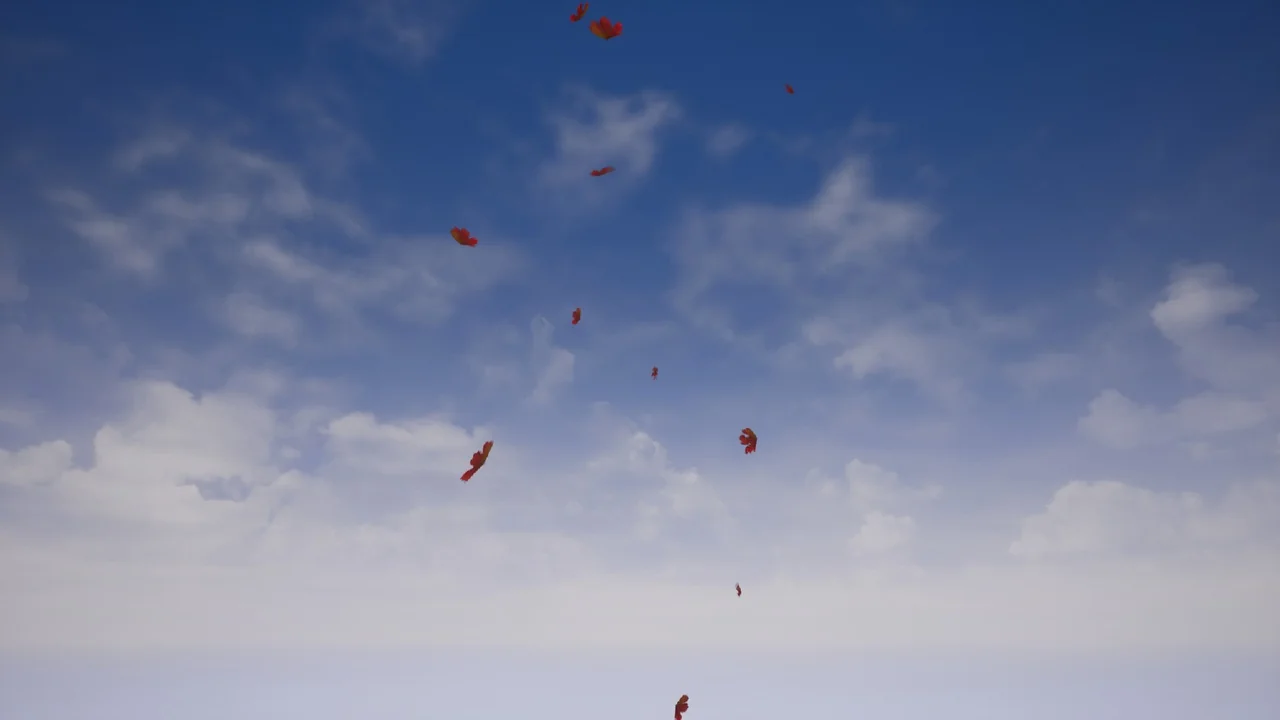
Falling leaves introduce organic, non-uniform shapes into the particle mix. Unlike rain or snow, which generally maintain uniform silhouettes, leaves exhibit complex rotation and tumbling motions as they catch the air. The systems simulate this aerodynamic fluttering, allowing leaves to spin, level out, and dive along irregular flight paths before coming to rest. Deploying falling leaves across forest paths, derelict streets, or garden perimeters instantly establishes a seasonal context without demanding custom foliage animation rigs.
Integration Alongside Tavern Animations and Exterior Sets
In character-driven production pipelines, environmental weather systems often work directly in tandem with specialized character setups, including projects structured through Tavern Animations. Tavern scenes frequently rely on a stark atmospheric contrast between a cozy, illuminated interior and the hostile elements beating against windows, cracked walls, and open doorways. Setting up rain streaks or driving blizzard particles outside an inn entrance grounds interior characters in a tangible world, explaining why patrons are gathered around a hearth or sheltering from the elements.
Because the collection is organized into modular Niagara systems, placing weather outside a building shell does not require rebuilding interior lighting or interfering with local animation rigs. Artists can constrain particle bounds to exterior zones, position falling leaves around entrance stoops, or let isolated wind particles sweep past a cracked windowpane to accentuate the scene's emotional tone.
Niagara Bundle Collections and Workflow Footprint
For teams planning wider effect coverage across a full production pipeline, Niagara Weather also forms a core component within broader asset packages. It is included in both Niagara Bundle 3 and the Big Niagara Bundle. This structural inclusion gives developers clear insight into how these weather systems sit within a studio's wider library of visual effects tools.
When an active scene or cinematic sequence only requires environmental elements—rain, snow, snowflake particles, blizzard storms, wind, and falling leaves—deploying this standalone weather pack keeps project dependencies lean and focused. Studios evaluating the pack can treat these twenty Niagara systems as a targeted environmental suite, ready to drop into exterior levels, atmospheric cutscenes, or modular set pieces.
 Weather
 Weather
 Weather
 Weather