"72afc5f8a809d018"{"id":"1002116","slug":"modular-scifi-engineer-hallways","title":"Modular SciFi: Engineer Hallways","category":"Sci-Fi","engine":"4.26+,5.0+","assetVersion":"","engineVersion":"Engine Version: 4.26+,5.0+","tag":"Sci-Fi","accent":"blue","visual":"mech","summary":"Construct detailed industrial corridors with Modular SciFi: Engineer Hallways, featuring 61 meshes, Blueprint animated doors, particles, and PBR controls.","platform":"Unreal Engine","publishedAt":"2026-10-29T08:58:36.225Z","updatedAt":"2026-10-29T08:58:36.225Z","sourceNotes":[],"fileContents":[],"compatibility":["Unreal Engine","Engine Version: 4.26+,5.0+"],"featuredImage":{"alt":"Modular SciFi: Engineer Hallways","src":"/wp-content/uploads/published/2026/10/530e57d394f5-5e51bc60-29b4-4686-8276-5f93a81ff46c-32df588476.webp"},"hasDownloadLink":true,"downloads":0,"terms":[{"taxonomy":"category","slug":"sci-fi","name":"Sci-Fi"}],"galleryImages":[{"src":"/wp-content/uploads/published/2026/10/7d0e3c2c87ab-13c39667-ed73-4d82-90f3-4bba452d0e2f-0f54712fdc.webp","alt":"Modular SciFi: Engineer Hallways"},{"src":"/wp-content/uploads/published/2026/10/a6a4fe84fd94-5ee52bc1-cd8f-4f80-8337-9c0af97da882-d711225b19.webp","alt":"Modular SciFi: Engineer Hallways"},{"src":"/wp-content/uploads/published/2026/10/7679e9bfb582-cd6920c3-1b6f-481b-9e15-d5a6c2d106c9-07eca9f194.webp","alt":"Modular SciFi: Engineer Hallways"},{"src":"/wp-content/uploads/published/2026/10/cc4db0e0ed65-de743802-4a29-4b65-ae7d-1922dc672ad8-f9bcd557c0.webp","alt":"Modular SciFi: Engineer Hallways"},{"src":"/wp-content/uploads/published/2026/10/424253c46ebe-9a808529-1ba4-4b08-a611-82aa185cb0b8-7f833a8b65.webp","alt":"Modular SciFi: Engineer Hallways"},{"src":"/wp-content/uploads/published/2026/10/30739b7e5208-22919e6c-dd3a-4dc3-90f4-b33214af3871-06d3389a1e.webp","alt":"Modular SciFi: Engineer Hallways"},{"src":"/wp-content/uploads/published/2026/10/a4f86c02c7e5-5c1a36db-5818-4499-af0c-af977e70e9fd-3c523d2eb8.webp","alt":"Modular SciFi: Engineer Hallways"}],"accessPanel":{"kind":"resource","title":"Download this resource","eyebrow":"Free Download","message":"Log in or create a free account to start your download.","fileName":"Content.7z","safetyNote":"Resources are manually reviewed before listing to improve quality and reduce obvious risks.","actionLabel":"Download Free","resourceType":"Resource archive"},"contentHtml":"\u003cp\u003eModular SciFi: Engineer Hallways provides sixty-one meshes, Blueprint-driven animated doors, matching particle systems, and surface decals engineered to produce adaptable interior corridors. Marking the first installment within the Modular SciFi Series' engineering collection, the kit concentrates on semi-futuristic and technical infrastructure settings. Whether constructing industrial service paths on an orbital outpost or subterranean conduit systems inside a research habitat, the package focuses on giving designers complete visual and structural authority over modular space station layouts.\u003c/p\u003e \u003ch2\u003eAssembly Potential Across 61 Meshes\u003c/h2\u003e\n\u003cp\u003eThe core framework relies on 61 discrete meshes engineered to snap and interlock across variable structural formations. Rather than locking levels into repetitive rectangular corridors, the geometry accommodates multiple spatial configurations, branching transit paths, maintenance access tunnels, and expanded engineering chambers. Level designers can map out sprawling deck plans or constrict the navigable space into dense, claustrophobic conduits that suggest heavy structural load-bearing requirements.\u003c/p\u003e \u003cp\u003eBecause the collection is arranged through modularity, every structural element fits alongside adjacent wall panels, flooring sections, ceiling segments, and trim pieces. This structural compatibility allows teams to assemble endless layout combinations from the same core building blocks. Broad circulation paths can transition seamlessly into narrow service routes without disrupting visual continuity. The pieces can also be rotated and rearranged to alter line-of-sight across gameplay choke points, establishing clear navigational landmarks throughout complex facility maps.\u003c/p\u003e \u003ch2\u003eBlueprint Animated Doors and Particle Systems\u003c/h2\u003e\n\u003cp\u003eCorridor layouts depend heavily on functional transitions between sectors, which the kit handles through dedicated Blueprint animated doors. These structural thresholds arrive pre-configured with operational logic, eliminating the need to rig mechanical animations or wire timeline controls from scratch. Doors cycle through opening and closing states automatically or via trigger events, allowing developers to establish security airlocks, blast seals, or standard sector dividers across their environments.\u003c/p\u003e \u003cp\u003eAccompanying particle effects integrate directly into the doorway mechanisms to reinforce mechanical action during transit. Releasing vapor, pressure bursts, or atmospheric adjustments as doors operate grounds the structural elements in physical space. Beyond the door assemblies, standalone particles and decals populate the wider scene to break up static architecture. These atmospheric elements transform sterile wall segments into an active workspace, providing subtle environmental motion and visual wear that reinforce the illusion of living, functioning machinery behind the bulkheads.\u003c/p\u003e \u003ch2\u003eCustomizing PBR Values, Colors, and Detail Normals\u003c/h2\u003e\n\u003cp\u003eTo prevent interior corridors from appearing repetitive across expansive facilities, the kit incorporates an extensive material customization workflow. Artists can directly manipulate PBR values, including roughness and metallic responses, to reflect varying states of maintenance or cleanliness. A pristine research corridor might feature smoother, semi-reflective finishes, whereas an neglected reactor access deck can be adjusted to display coarse, matte surfaces that scatter interior illumination.\u003c/p\u003e \u003cp\u003eColor grading options and base texture swaps grant additional latitude when establishing visual identity across distinct game zones:\u003c/p\u003e\n\u003cul\u003e\n\u003cli\u003eColor tuning parameters enable distinct sector identification, letting teams color-code engineering wings, storage bays, or command decks without introducing new external assets.\u003c/li\u003e\n\u003cli\u003eBase texture modifications allow base materials to transition from lightweight alloy coatings to heavy industrial plating across different rooms.\u003c/li\u003e\n\u003cli\u003eDetail normals layer micro-surface fidelity across primary geometric planes, ensuring panels maintain tactile realism during close-up camera inspection.\u003c/li\u003e\n\u003cli\u003eDecal application disrupts repetitive surface patterns, adding localized signage, technical notations, and physical surface variation across plain wall sections.\u003c/li\u003e\n\u003c/ul\u003e \u003cp\u003eAdjusting these material parameters inside the engine allows teams to maintain a singular, cohesive aesthetic across an entire installation while giving individual rooms custom artistic treatments. The ability to calibrate surface response parameters ensures the corridor geometry adapts predictably under diverse lighting setups, from high-contrast emergency strobe lighting to dim utility running lamps.\u003c/p\u003e \u003ch2\u003eDeconstructing the Three Included Example Environments\u003c/h2\u003e\n\u003cp\u003eTo showcase how the individual pieces coalesce into complete levels, the package supplies three prebuilt scenes: two full environments and one asset overview scene. The asset overview scene organizes all 61 meshes, interactive Blueprints, decals, and particle emitters in a neutral gallery format. This staging area allows developers to quickly inspect geometric proportions, pivot alignments, material parameters, and mesh silhouettes before migrating pieces into active production scenes.\u003c/p\u003e \u003cp\u003eThe two fully realized environments demonstrate practical applications of modular level design, showcasing real-world examples of corridor progression, spatial pacing, and prop distribution. By examining how the walls, ceiling grids, Blueprint doors, and decals are layered within these completed scenes, designers can observe effective structural rhythms firsthand. These spaces serve as immediate functional templates for testing character movement, collision responses, lighting configurations, and camera clearance through narrow engineering corridors.\u003c/p\u003e \u003ch2\u003eDeploying Engineer Hallways in Sci-Fi Projects\u003c/h2\u003e\n\u003cp\u003eThe specific architectural identity of Modular SciFi: Engineer Hallways sets it apart from slick, minimalist space station packs. The geometric contours, mechanical thresholds, and detailed surface controls reflect functional utility rather than speculative luxury. This focus makes the assets particularly appropriate for hard sci-fi games, industrial research complexes, deep-space mining vessels, and technical service networks where human or mechanical operators maintain critical systems.\u003c/p\u003e \u003cp\u003eBy blending flexible modular geometry, dynamic Blueprint doors, atmospheric particles, and modular surface controls, the kit gives development teams the necessary assets to stand up believable, navigable science fiction interiors quickly. Its components handle everything from basic corridor routing to interactive gameplay thresholds, functioning as a robust foundation for technical space station design.\u003c/p\u003e\n\n\u003ch2\u003eMore From The Same Workflow\u003c/h2\u003e\n\u003cul\u003e\n\u003cli\u003e\u003ca href=\"https://3dcghub.com/modular-scifi-hallways/\" title=\"Modular SciFi Hallways\"\u003eModular SciFi Hallways\u003c/a\u003e\u003c/li\u003e\n\u003cli\u003e\u003ca href=\"https://3dcghub.com/scifi-engineers-room-environment/\" title=\"SciFi Engineer\u0026#039;s Room Environment\"\u003eSciFi Engineer\u0026#039;s Room Environment\u003c/a\u003e\u003c/li\u003e\n\u003cli\u003e\u003ca href=\"https://3dcghub.com/scifi-corridor-environment/\" title=\"SciFi Corridor Environment\"\u003eSciFi Corridor Environment\u003c/a\u003e\u003c/li\u003e\n\u003cli\u003e\u003ca href=\"https://3dcghub.com/scifi-industrial-level-kit-2-0/\" title=\"SciFi/Industrial Level Kit 2.0\"\u003eSciFi/Industrial Level Kit 2.0\u003c/a\u003e\u003c/li\u003e\n\u003cli\u003e\u003ca href=\"https://3dcghub.com/modular-sci-fi-orion-mars-corridors/\" title=\"Modular Sci Fi Orion Mars Corridors\"\u003eModular Sci Fi Orion Mars Corridors\u003c/a\u003e\u003c/li\u003e\n\u003c/ul\u003e","contentTextLength":6840,"navigation":{"current":59,"total":4100,"previous":{"id":"1002117","slug":"monk-animset","title":"Monk AnimSet","category":"Combat","platform":"Unreal Engine","updatedAt":"2026-10-29T08:59:17.438Z"},"next":{"id":"1002115","slug":"modular-scifi-hallways","title":"Modular SciFi Hallways","category":"Sci-Fi","platform":"Unreal Engine","updatedAt":"2026-10-29T08:57:52.632Z"}},"relatedResources":[{"id":"1002115","slug":"modular-scifi-hallways","title":"Modular SciFi Hallways","category":"Sci-Fi","engine":"4.26+,5.0+","assetVersion":"","engineVersion":"Engine Version: 4.26+,5.0+","tag":"Sci-Fi","accent":"blue","visual":"mech","summary":"Build diverse science fiction corridors with Modular SciFi Hallways, featuring 57 unique pieces, material instances, and six example environments.","platform":"Unreal Engine","publishedAt":"2026-10-29T08:57:52.632Z","updatedAt":"2026-10-29T08:57:52.632Z","sourceNotes":[],"fileContents":[],"compatibility":["Unreal Engine","Engine Version: 4.26+,5.0+"],"featuredImage":{"alt":"Modular SciFi Hallways","src":"/wp-content/uploads/published/2026/10/c419977f4d9b-2482eddb-072d-4f6e-a836-1747bb28079e-914fbc3146.webp"},"hasDownloadLink":true,"downloads":0},{"id":"9630","slug":"scifi-engineers-room-environment","title":"SciFi Engineer's Room Environment","category":"Sci-Fi","engine":"5.3+","assetVersion":"Engine version: 5.3+","engineVersion":"5.3","tag":"Sci-Fi","accent":"blue","visual":"city","summary":"Build detailed futuristic interiors with the SciFi Engineer's Room Environment. This package includes 73 unique meshes and modular assets designed for easy level expansion and performance.","platform":"Unreal Engine","publishedAt":"2026-03-01T17:27:26.000Z","updatedAt":"2026-04-19T15:51:04.000Z","sourceNotes":[],"fileContents":[],"compatibility":["Unreal Engine","Engine version: 5.3+"],"featuredImage":{"alt":"SciFi Engineer's Room Environment","src":"https://3dcghub.com/wp-content/uploads/2026/03/544b804b-e450-4047-84a2-4473d604e995.webp"},"hasDownloadLink":true,"downloads":0},{"id":"1001665","slug":"scifi-corridor-environment","title":"SciFi Corridor Environment","category":"Sci-Fi","engine":"4.20+,5.0+","assetVersion":"","engineVersion":"Engine Version: 4.20+,5.0+","tag":"Sci-Fi","accent":"blue","visual":"city","summary":"Explore the SciFi Corridor Environment, a modular lowpoly level scene built for current gen games with customizable PBR materials and prop compatibility.","platform":"Unreal Engine","publishedAt":"2026-10-13T15:05:15.324Z","updatedAt":"2026-10-13T15:05:15.324Z","sourceNotes":[],"fileContents":[],"compatibility":["Unreal Engine","Engine Version: 4.20+,5.0+"],"featuredImage":{"alt":"SciFi Corridor Environment","src":"/wp-content/uploads/published/2026/10/522388a562b7-365997bb-848d-475f-be61-3d69c5e3307e-42292051e6.webp"},"hasDownloadLink":true,"downloads":1}]}
Sci-Fi
Modular SciFi: Engineer Hallways
Construct detailed industrial corridors with Modular SciFi: Engineer Hallways, featuring 61 meshes, Blueprint animated doors, particles, and PBR controls.
Category:Unreal Engine,Sci-FiPlatform: Unreal EngineEngine Version: 4.26+,5.0+Published: Oct 29, 2026
Sci-Fi
Resource overview
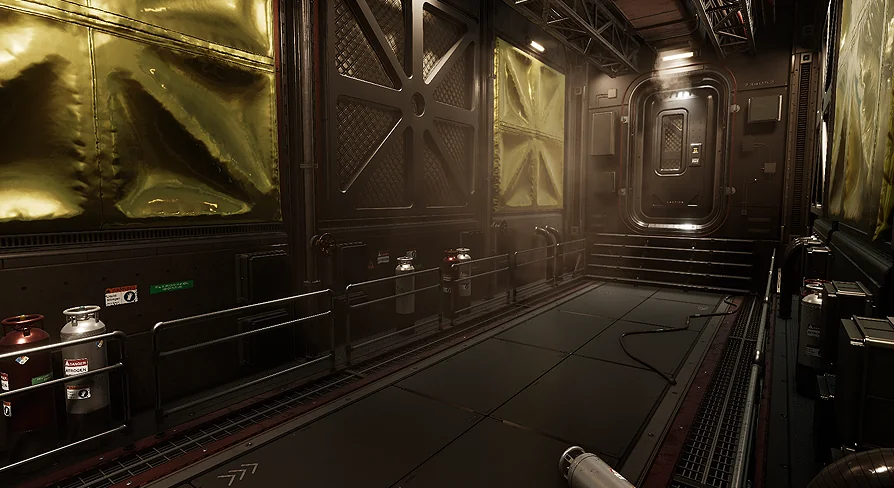
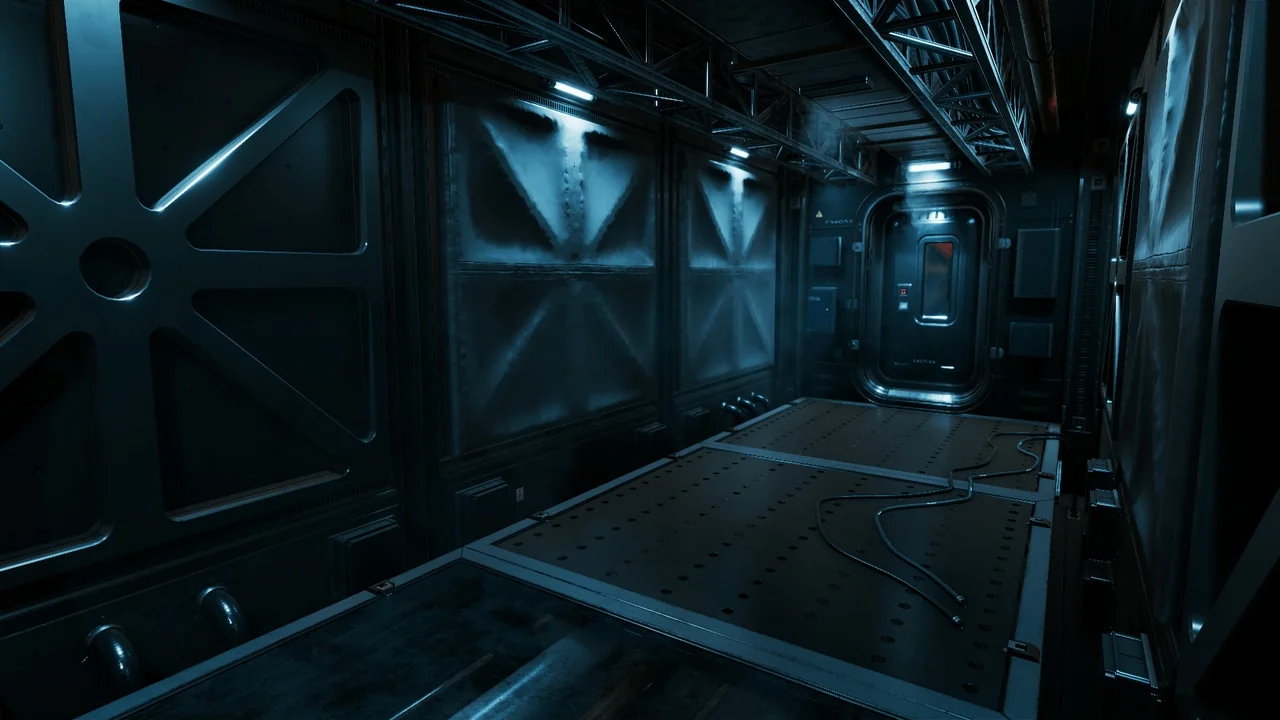
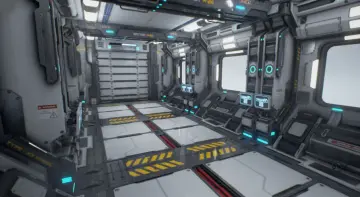
Modular SciFi: Engineer Hallways provides sixty-one meshes, Blueprint-driven animated doors, matching particle systems, and surface decals engineered to produce adaptable interior corridors. Marking the first installment within the Modular SciFi Series' engineering collection, the kit concentrates on semi-futuristic and technical infrastructure settings. Whether constructing industrial service paths on an orbital outpost or subterranean conduit systems inside a research habitat, the package focuses on giving designers complete visual and structural authority over modular space station layouts.
Assembly Potential Across 61 Meshes
The core framework relies on 61 discrete meshes engineered to snap and interlock across variable structural formations. Rather than locking levels into repetitive rectangular corridors, the geometry accommodates multiple spatial configurations, branching transit paths, maintenance access tunnels, and expanded engineering chambers. Level designers can map out sprawling deck plans or constrict the navigable space into dense, claustrophobic conduits that suggest heavy structural load-bearing requirements.
Because the collection is arranged through modularity, every structural element fits alongside adjacent wall panels, flooring sections, ceiling segments, and trim pieces. This structural compatibility allows teams to assemble endless layout combinations from the same core building blocks. Broad circulation paths can transition seamlessly into narrow service routes without disrupting visual continuity. The pieces can also be rotated and rearranged to alter line-of-sight across gameplay choke points, establishing clear navigational landmarks throughout complex facility maps.
Blueprint Animated Doors and Particle Systems
Corridor layouts depend heavily on functional transitions between sectors, which the kit handles through dedicated Blueprint animated doors. These structural thresholds arrive pre-configured with operational logic, eliminating the need to rig mechanical animations or wire timeline controls from scratch. Doors cycle through opening and closing states automatically or via trigger events, allowing developers to establish security airlocks, blast seals, or standard sector dividers across their environments.
Accompanying particle effects integrate directly into the doorway mechanisms to reinforce mechanical action during transit. Releasing vapor, pressure bursts, or atmospheric adjustments as doors operate grounds the structural elements in physical space. Beyond the door assemblies, standalone particles and decals populate the wider scene to break up static architecture. These atmospheric elements transform sterile wall segments into an active workspace, providing subtle environmental motion and visual wear that reinforce the illusion of living, functioning machinery behind the bulkheads.
Customizing PBR Values, Colors, and Detail Normals
To prevent interior corridors from appearing repetitive across expansive facilities, the kit incorporates an extensive material customization workflow. Artists can directly manipulate PBR values, including roughness and metallic responses, to reflect varying states of maintenance or cleanliness. A pristine research corridor might feature smoother, semi-reflective finishes, whereas an neglected reactor access deck can be adjusted to display coarse, matte surfaces that scatter interior illumination.
Color grading options and base texture swaps grant additional latitude when establishing visual identity across distinct game zones:
Color tuning parameters enable distinct sector identification, letting teams color-code engineering wings, storage bays, or command decks without introducing new external assets.
Base texture modifications allow base materials to transition from lightweight alloy coatings to heavy industrial plating across different rooms.
Detail normals layer micro-surface fidelity across primary geometric planes, ensuring panels maintain tactile realism during close-up camera inspection.
Decal application disrupts repetitive surface patterns, adding localized signage, technical notations, and physical surface variation across plain wall sections.
Adjusting these material parameters inside the engine allows teams to maintain a singular, cohesive aesthetic across an entire installation while giving individual rooms custom artistic treatments. The ability to calibrate surface response parameters ensures the corridor geometry adapts predictably under diverse lighting setups, from high-contrast emergency strobe lighting to dim utility running lamps.
Deconstructing the Three Included Example Environments
To showcase how the individual pieces coalesce into complete levels, the package supplies three prebuilt scenes: two full environments and one asset overview scene. The asset overview scene organizes all 61 meshes, interactive Blueprints, decals, and particle emitters in a neutral gallery format. This staging area allows developers to quickly inspect geometric proportions, pivot alignments, material parameters, and mesh silhouettes before migrating pieces into active production scenes.
The two fully realized environments demonstrate practical applications of modular level design, showcasing real-world examples of corridor progression, spatial pacing, and prop distribution. By examining how the walls, ceiling grids, Blueprint doors, and decals are layered within these completed scenes, designers can observe effective structural rhythms firsthand. These spaces serve as immediate functional templates for testing character movement, collision responses, lighting configurations, and camera clearance through narrow engineering corridors.
Deploying Engineer Hallways in Sci-Fi Projects
The specific architectural identity of Modular SciFi: Engineer Hallways sets it apart from slick, minimalist space station packs. The geometric contours, mechanical thresholds, and detailed surface controls reflect functional utility rather than speculative luxury. This focus makes the assets particularly appropriate for hard sci-fi games, industrial research complexes, deep-space mining vessels, and technical service networks where human or mechanical operators maintain critical systems.
By blending flexible modular geometry, dynamic Blueprint doors, atmospheric particles, and modular surface controls, the kit gives development teams the necessary assets to stand up believable, navigable science fiction interiors quickly. Its components handle everything from basic corridor routing to interactive gameplay thresholds, functioning as a robust foundation for technical space station design.
 Sci-Fi
 Sci-Fi
 Sci-Fi
 Sci-Fi