"0148f1904a9b0d16"{"id":"1002587","slug":"military-mercenary-bandit","title":"Military Mercenary Bandit","category":"Humans","engine":"5.0+","assetVersion":"","engineVersion":"Engine Version: 5.0+","tag":"Humans","accent":"blue","visual":"mech","summary":"Low-poly, game-ready Military Mercenary Bandit character model with 10 PBR texture sets for Unreal Engine, Unity, and Blender.","platform":"Unreal Engine","indexPolicy":"index","publishedAt":"2026-11-14T05:29:11.042Z","updatedAt":"2026-11-14T05:29:11.042Z","sourceNotes":[],"fileContents":[],"compatibility":["Unreal Engine","Engine Version: 5.0+"],"featuredImage":{"alt":"Military Mercenary Bandit","src":"/wp-content/uploads/published/2026/11/638e829462a9-c4c04819-652f-4c55-b472-9ea5e01fe35c-c28aa9c344.webp"},"hasDownloadLink":true,"downloads":0,"terms":[{"taxonomy":"category","slug":"humans","name":"Humans"}],"galleryImages":[{"src":"/wp-content/uploads/published/2026/11/34753dd4e2ee-9ec5770b-c538-42da-b60e-d4a9a1669130-170d5319e0.webp","alt":"Military Mercenary Bandit"},{"src":"/wp-content/uploads/published/2026/11/032f18ecfad5-79f613ba-c76b-4048-897d-605b29529f5d-056ca11519.webp","alt":"Military Mercenary Bandit"},{"src":"/wp-content/uploads/published/2026/11/6a36398bdd0d-50d9910d-da26-4a45-81b7-438ef8b371a7-b719aabc62.webp","alt":"Military Mercenary Bandit"},{"src":"/wp-content/uploads/published/2026/11/168d95252d7e-2dd1554c-bdc3-4a78-9c3a-a71a056242a4-d8c684a394.webp","alt":"Military Mercenary Bandit"},{"src":"/wp-content/uploads/published/2026/11/bececcdd14f5-937b5f47-42e1-4731-b4e6-7f0de3e81126-da17ea1440.webp","alt":"Military Mercenary Bandit"},{"src":"/wp-content/uploads/published/2026/11/4c3baf4e9c47-080d0e38-f215-4ee7-854c-1d5f9d7782b8-120de7c19d.webp","alt":"Military Mercenary Bandit"},{"src":"/wp-content/uploads/published/2026/11/d15edead6fce-873eadba-b876-4afd-9070-f8dc76861ffe-f7568d1df8.webp","alt":"Military Mercenary Bandit"},{"src":"/wp-content/uploads/published/2026/11/cfb19aa86d99-3ef2c291-67d9-4bac-9133-1041918740dc-a458017e13.webp","alt":"Military Mercenary Bandit"},{"src":"/wp-content/uploads/published/2026/11/68a1a51b3fe1-7176d5cd-8f39-49c9-9fef-41613986b4f1-c7705a0ca1.webp","alt":"Military Mercenary Bandit"},{"src":"/wp-content/uploads/published/2026/11/573aec90d22c-a9c3b014-9bad-4375-8933-5e9d1761099a-f4f8cad754.webp","alt":"Military Mercenary Bandit"}],"accessPanel":{"kind":"resource","title":"Get this resource","eyebrow":"Free resource","message":"Download this resource in your browser.","fileName":"Content.7z","safetyNote":"Resources are manually reviewed before listing to improve quality and reduce obvious risks.","actionLabel":"Get this resource","resourceType":"Resource archive","versions":[]},"contentHtml":"\u003cp\u003eWrecked industrial complexes, radioactive exclusion zones, and tense checkpoint standoffs require characters that reflect a world under pressure. The Military Mercenary Bandit steps into these settings as a rugged, low-poly male combatant tailored for gritty encounters. With realistic styling rooted in post-apocalyptic survival, military combat, and stalker-inspired themes, this game-ready human figure fits cleanly into shooters, action titles, and survival horror scenarios without demanding extensive asset modification or visual overhauls.\u003c/p\u003e \u003ch2\u003eAtmospheric Fit for the Mercenary in Harsh Game Worlds\u003c/h2\u003e\n\u003cp\u003eAction titles and tactical shooters frequently depend on human adversaries who look battle-worn, adaptable, and dangerous. The character presents a realistic, male human form suited to army splinter groups, rogue factions, stalker archetypes, or bandit crews operating in collapsed societies. The aesthetic leans heavily into grunge and survival reality, where functional combat gear, camouflage patterns, and weathered materials signal prolonged field deployment rather than ceremonial polish.\u003c/p\u003e\n\u003cp\u003eIn horror and post-apocalyptic settings, encounters with armed humans often supply the sharpest tactical tension. Placing this model in fog-laden swamps, ruined perimeter fences, abandoned concrete bunkers, or nocturnal city ruins immediately establishes a grounded threat. Because the silhouette adheres to authentic military contours, the character reads immediately across varying distances, whether serving as an AI-driven patrol guard in a wide-open survival zone or a close-quarters enemy in a dimly lit industrial corridor.\u003c/p\u003e \u003ch2\u003eTexture Density and the 10 Military Bandit Variations\u003c/h2\u003e\n\u003cp\u003eSustaining visual variety among enemy ranks is a constant balancing act in level design. To prevent repetitive enemy encounters, the model comes with 10 sets of character textures. These options let developers deploy multiple squad members, rival factions, or distinct difficulty tiers without introducing entirely different character meshes into memory.\u003c/p\u003e\n\u003cp\u003eThe surface work relies on physically based rendering (PBR) workflows, ensuring precise light interaction across rough fabrics, metallic buckles, and protective tactical layers. Texture density has been specifically optimized across the model surface to maintain sharp details on key areas while keeping overall memory consumption within practical game-ready limits. Textures are supplied as clean PNG files, standardizing imports across independent pipelines.\u003c/p\u003e\n\u003cp\u003ePBR textures are assembled into ORM packages, bundling Occlusion, Roughness, and Metallic channels together into single composite map formats. This packing strategy cuts down texture sampler calls in custom shaders and matches modern runtime efficiency standards. Whether rendering under the overcast ambient skylight of a survival wasteland or the harsh specular glare of an emergency flashlight in a horror basement, the surfaces retain accurate roughness values and micro-contrast.\u003c/p\u003e \u003ch2\u003eMulti-Engine Setup and the Mercenary Bandit Skeleton\u003c/h2\u003e\n\u003cp\u003eRigging and structural compatibility define how quickly an asset translates into playable mechanics. The character model is fully rigged and animated, ready to hook directly into movement logic and gameplay systems across multiple major creative environments.\u003c/p\u003e\n\u003cp\u003eFor Unreal Engine users running version 4.27 and later, the setup includes an Epic Skeleton implementation accompanied by an Animation Blueprint. This alignment enables rapid retargeting to established animation libraries, marketplace motion sets, and existing locomotion systems. The asset functions immediately within Unreal's standard character movement components, minimizing setup time for tactical maneuvers, aiming offsets, and hit-reaction behaviors.\u003c/p\u003e\n\u003cp\u003eUnity integration accommodates engine version 2022, providing native support across all three primary rendering tiers: the standard Built-in render pipeline, the Universal Render Pipeline (URP), and the High Definition Render Pipeline (HDRP). This cross-pipeline preparation ensures developers can implement the character in high-fidelity cinematic scenes using HDRP or deploy the same asset in performance-focused, multi-platform environments running URP without manual material reconstruction.\u003c/p\u003e\n\u003cp\u003eBlender workflows are addressed through a dedicated 3.6 scene file, giving 3D artists a direct platform to inspect materials, tweak the rig, construct custom posing, or generate rendered promotional stills. For alternative pipelines, proprietary engines, or standalone editing suites, raw geometry is supplied independently via FBX and OBJ mesh-only files, maintaining clean polygon structures free of proprietary modifier dependencies.\u003c/p\u003e \u003ch2\u003eLow-Poly Engineering and Production Performance\u003c/h2\u003e\n\u003cp\u003eBalancing visual fidelity against frame-time budgets is essential when multiple combatants, active physics, and dynamic lighting coexist on screen. This asset prioritizes low-poly efficiency, maintaining a reasonable polygon count that preserves anatomical definition and tactical equipment silhouettes without unnecessary surface tessellation.\u003c/p\u003e\n\u003cp\u003eThe mesh distribution focuses edge loops around primary deformation zones like knees, elbows, shoulders, and hips. This ensures clean motion during crouching, weapon aiming, sprinting, and ragdoll simulations, avoiding extreme mesh pinching or texture distortion during radical motion capture cycles. Because the model remains lightweight, developers can spawn multiple instances across open-world outposts, horde encounters, or multi-character tactical sequences while preserving consistent rendering headroom.\u003c/p\u003e \u003ch2\u003eTarget Deployments and Project Compatibility\u003c/h2\u003e\n\u003cp\u003eCreated by 3D artist Daria Viktorova, the character fills an immediate need for productions seeking grounded, gritty human fighters. Teams developing Russian-themed exclusion zone adventures, military shooters, tactical stealth games, or post-cataclysm survival sandboxes can drop the model straight into combat roles. The combination of complete engine support, flexible ORM texturing, and extensive visual variants gives independent teams and established studios alike a direct, production-ready combatant capable of holding up under rigorous game conditions.\u003c/p\u003e\n\n\u003ch2\u003eExplore Similar Assets\u003c/h2\u003e\n\u003cul\u003e\n\u003cli\u003e\u003ca href=\"https://3dcghub.com/character-military-bandit-2/\" rel=\"noopener noreferrer\"\u003eCharacter Military Bandit 2\u003c/a\u003e\u003c/li\u003e\n\u003cli\u003e\u003ca href=\"https://3dcghub.com/modular-bandits-pack/\" rel=\"noopener noreferrer\"\u003eModular Bandits Pack\u003c/a\u003e\u003c/li\u003e\n\u003cli\u003e\u003ca href=\"https://3dcghub.com/modular-military-character/\" rel=\"noopener noreferrer\"\u003eModular Military Character\u003c/a\u003e\u003c/li\u003e\n\u003cli\u003e\u003ca href=\"https://3dcghub.com/bandit/\" rel=\"noopener noreferrer\"\u003eBandit\u003c/a\u003e\u003c/li\u003e\n\u003cli\u003e\u003ca href=\"https://3dcghub.com/g2-mercenaries/\" rel=\"noopener noreferrer\"\u003eG2: Mercenaries\u003c/a\u003e\u003c/li\u003e\n\u003c/ul\u003e","contentTextLength":6321,"navigation":{"current":62,"total":4543,"previous":{"id":"1002588","slug":"modern-bridges","title":"Modern Bridges","category":"Buildings \u0026 Architecture","platform":"Unreal Engine","updatedAt":"2026-11-14T05:32:12.044Z"},"next":{"id":"1002586","slug":"medieval-modular-wall-pack-kitbash-collection","title":"Medieval Modular Wall Pack - Kitbash Collection","category":"Buildings \u0026 Architecture","platform":"Unreal Engine","updatedAt":"2026-11-14T05:28:08.228Z"}},"relatedResources":[{"id":"1880","slug":"character-military-bandit-2","title":"Character Military Bandit 2","category":"Characters \u0026 Creatures","engine":"4.26+,5.0+","assetVersion":"Engine version: 4.26+,5.0+","engineVersion":"4.17","tag":"Characters","accent":"blue","visual":"character","summary":"Enhance your project with the Military Bandit 2. This modular, low-poly 3D character features realistic textures and a ready-to-use animation blueprint.","platform":"Unreal Engine","indexPolicy":"noindex","publishedAt":"2026-02-06T22:14:44.000Z","updatedAt":"2026-04-19T15:58:27.000Z","sourceNotes":[],"fileContents":[],"compatibility":["Unreal Engine","Engine version: 4.26+,5.0+"],"featuredImage":{"alt":"Character Military Bandit 2","src":"https://3dcghub.com/wp-content/uploads/2026/02/47b24ff1-3b50-4b0c-8f67-94a82f2f53f6.webp"},"hasDownloadLink":true,"downloads":1},{"id":"24931","slug":"modular-bandits-pack","title":"Modular Bandits Pack","category":"Humans","engine":"5.0+","assetVersion":"Engine version: 5.0+","engineVersion":"","tag":"Humans","accent":"blue","visual":"character","summary":"A modular character set with over 400 interchangeable modules and 24 presets gives projects a fast way to shape bandits, soldiers, and other modern combat figures. The pack uses one UE5 skeleton, supports Tall/Masculine body types, and includes bonus weapon...","platform":"Unreal Engine","indexPolicy":"index","publishedAt":"2026-04-17T14:06:19.000Z","updatedAt":"2026-04-20T06:12:35.000Z","sourceNotes":[],"fileContents":[],"compatibility":["Unreal Engine","Engine version: 5.0+"],"featuredImage":{"alt":"Modular Bandits Pack","src":"https://3dcghub.com/wp-content/uploads/2026/04/3560f0420e1e_e8dff1c7-0139-47b4-9622-cea0bf11d010.webp"},"hasDownloadLink":true,"downloads":9},{"id":"2773","slug":"modular-military-character","title":"Modular Military Character","category":"Humans","engine":"4.18+,5.0+","assetVersion":"","engineVersion":"Engine Version: 4.18+,5.0+","tag":"Humans","accent":"blue","visual":"character","summary":"Build realistic soldiers with over 400 modular parts. This UE5-ready military character pack offers MetaHuman compatibility and 20 pre-made presets for develope","platform":"Unreal Engine","indexPolicy":"noindex","publishedAt":"2026-02-07T15:13:53.000Z","updatedAt":"2026-11-11T20:59:38.386Z","sourceNotes":[],"fileContents":[],"compatibility":["Unreal Engine","Engine Version: 4.18+,5.0+"],"featuredImage":{"alt":"Modular Military Character","src":"https://3dcghub.com/wp-content/uploads/2026/02/7f806dbd-c929-466a-98d7-dee73b531092.webp"},"hasDownloadLink":true,"downloads":6}]}
Humans
Military Mercenary Bandit
Low-poly, game-ready Military Mercenary Bandit character model with 10 PBR texture sets for Unreal Engine, Unity, and Blender.
Category:Unreal Engine,HumansPlatform: Unreal EngineEngine Version: 5.0+Published: Nov 14, 2026
Humans
Resource overview
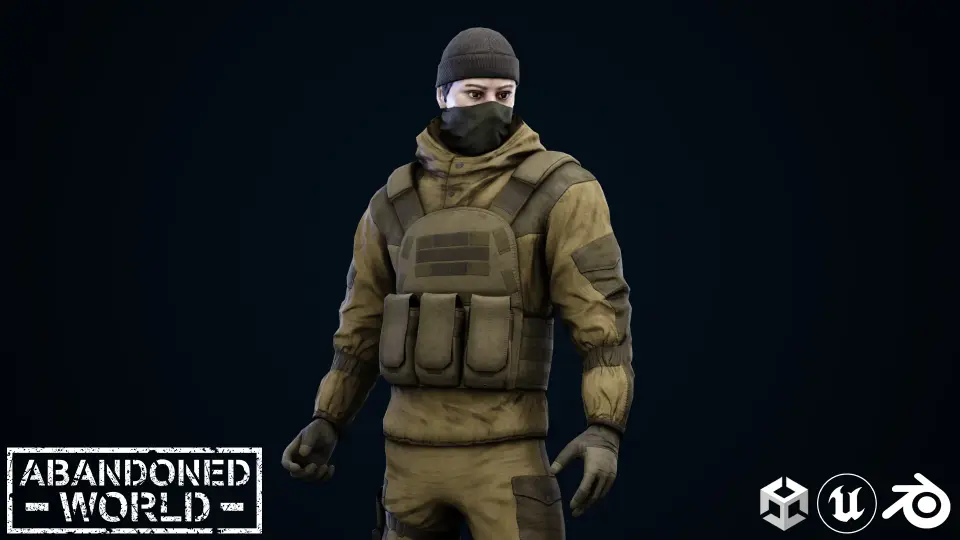
Wrecked industrial complexes, radioactive exclusion zones, and tense checkpoint standoffs require characters that reflect a world under pressure. The Military Mercenary Bandit steps into these settings as a rugged, low-poly male combatant tailored for gritty encounters. With realistic styling rooted in post-apocalyptic survival, military combat, and stalker-inspired themes, this game-ready human figure fits cleanly into shooters, action titles, and survival horror scenarios without demanding extensive asset modification or visual overhauls.
Atmospheric Fit for the Mercenary in Harsh Game Worlds
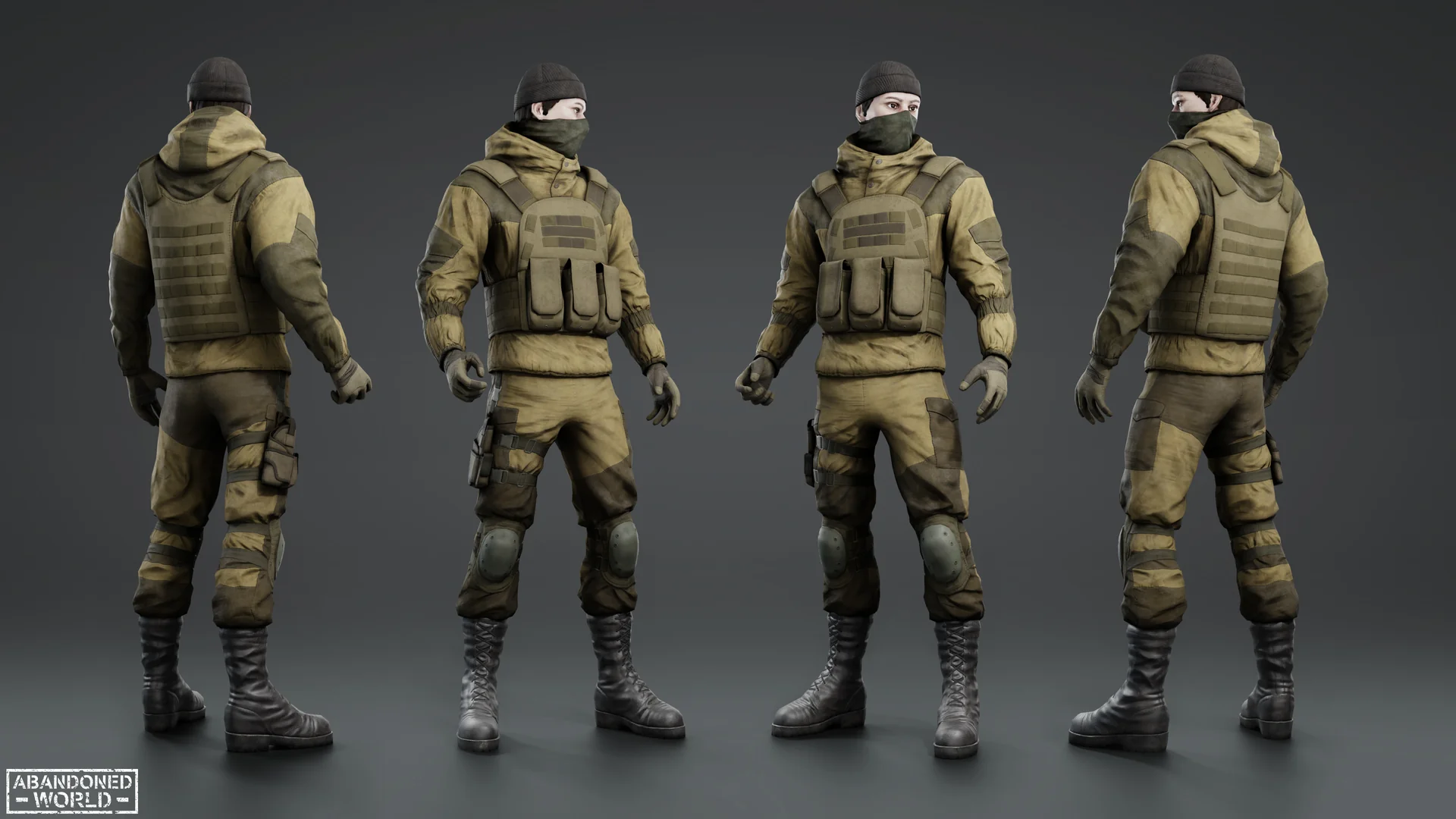
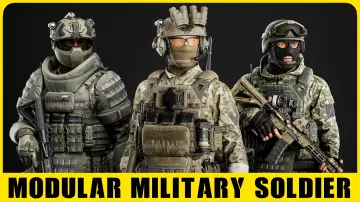
Action titles and tactical shooters frequently depend on human adversaries who look battle-worn, adaptable, and dangerous. The character presents a realistic, male human form suited to army splinter groups, rogue factions, stalker archetypes, or bandit crews operating in collapsed societies. The aesthetic leans heavily into grunge and survival reality, where functional combat gear, camouflage patterns, and weathered materials signal prolonged field deployment rather than ceremonial polish.
In horror and post-apocalyptic settings, encounters with armed humans often supply the sharpest tactical tension. Placing this model in fog-laden swamps, ruined perimeter fences, abandoned concrete bunkers, or nocturnal city ruins immediately establishes a grounded threat. Because the silhouette adheres to authentic military contours, the character reads immediately across varying distances, whether serving as an AI-driven patrol guard in a wide-open survival zone or a close-quarters enemy in a dimly lit industrial corridor.
Texture Density and the 10 Military Bandit Variations
Sustaining visual variety among enemy ranks is a constant balancing act in level design. To prevent repetitive enemy encounters, the model comes with 10 sets of character textures. These options let developers deploy multiple squad members, rival factions, or distinct difficulty tiers without introducing entirely different character meshes into memory.
The surface work relies on physically based rendering (PBR) workflows, ensuring precise light interaction across rough fabrics, metallic buckles, and protective tactical layers. Texture density has been specifically optimized across the model surface to maintain sharp details on key areas while keeping overall memory consumption within practical game-ready limits. Textures are supplied as clean PNG files, standardizing imports across independent pipelines.
PBR textures are assembled into ORM packages, bundling Occlusion, Roughness, and Metallic channels together into single composite map formats. This packing strategy cuts down texture sampler calls in custom shaders and matches modern runtime efficiency standards. Whether rendering under the overcast ambient skylight of a survival wasteland or the harsh specular glare of an emergency flashlight in a horror basement, the surfaces retain accurate roughness values and micro-contrast.
Multi-Engine Setup and the Mercenary Bandit Skeleton
Rigging and structural compatibility define how quickly an asset translates into playable mechanics. The character model is fully rigged and animated, ready to hook directly into movement logic and gameplay systems across multiple major creative environments.
For Unreal Engine users running version 4.27 and later, the setup includes an Epic Skeleton implementation accompanied by an Animation Blueprint. This alignment enables rapid retargeting to established animation libraries, marketplace motion sets, and existing locomotion systems. The asset functions immediately within Unreal's standard character movement components, minimizing setup time for tactical maneuvers, aiming offsets, and hit-reaction behaviors.
Unity integration accommodates engine version 2022, providing native support across all three primary rendering tiers: the standard Built-in render pipeline, the Universal Render Pipeline (URP), and the High Definition Render Pipeline (HDRP). This cross-pipeline preparation ensures developers can implement the character in high-fidelity cinematic scenes using HDRP or deploy the same asset in performance-focused, multi-platform environments running URP without manual material reconstruction.
Blender workflows are addressed through a dedicated 3.6 scene file, giving 3D artists a direct platform to inspect materials, tweak the rig, construct custom posing, or generate rendered promotional stills. For alternative pipelines, proprietary engines, or standalone editing suites, raw geometry is supplied independently via FBX and OBJ mesh-only files, maintaining clean polygon structures free of proprietary modifier dependencies.
Low-Poly Engineering and Production Performance
Balancing visual fidelity against frame-time budgets is essential when multiple combatants, active physics, and dynamic lighting coexist on screen. This asset prioritizes low-poly efficiency, maintaining a reasonable polygon count that preserves anatomical definition and tactical equipment silhouettes without unnecessary surface tessellation.
The mesh distribution focuses edge loops around primary deformation zones like knees, elbows, shoulders, and hips. This ensures clean motion during crouching, weapon aiming, sprinting, and ragdoll simulations, avoiding extreme mesh pinching or texture distortion during radical motion capture cycles. Because the model remains lightweight, developers can spawn multiple instances across open-world outposts, horde encounters, or multi-character tactical sequences while preserving consistent rendering headroom.
Target Deployments and Project Compatibility
Created by 3D artist Daria Viktorova, the character fills an immediate need for productions seeking grounded, gritty human fighters. Teams developing Russian-themed exclusion zone adventures, military shooters, tactical stealth games, or post-cataclysm survival sandboxes can drop the model straight into combat roles. The combination of complete engine support, flexible ORM texturing, and extensive visual variants gives independent teams and established studios alike a direct, production-ready combatant capable of holding up under rigorous game conditions.
 Humans
 Characters
 Humans
 Humans