"c14ff6bd758dadb1"{"id":"1000468","slug":"medieval-windmill-with-interiors-medieval-rural-windmill-medieval-landscape","title":"Medieval Windmill with interiors ( Medieval Rural Windmill, Medieval Landscape )","category":"Medieval","engine":"4.26+,5.0+","assetVersion":"","engineVersion":"Engine Version: 4.26+,5.0+","tag":"Medieval","accent":"blue","visual":"city","summary":"Freshcan 3D's medieval wooden windmill asset features high-res PBR textures, a real-world-referenced gear system, enterable interiors, and cinematic visualizati","platform":"Unreal Engine","publishedAt":"2026-07-11T17:55:17.080Z","updatedAt":"2026-07-11T17:55:17.080Z","sourceNotes":[],"fileContents":[],"compatibility":["Unreal Engine","Engine Version: 4.26+,5.0+"],"featuredImage":{"alt":"Medieval Windmill with interiors ( Medieval Rural Windmill, Medieval Landscape )","src":"/wp-content/uploads/published/2026/07/67b3cbfce916-6d1e48d0-9423-4076-a8a3-ac7c54cf894a-989e56f749.webp"},"hasDownloadLink":true,"downloads":0,"terms":[{"taxonomy":"category","slug":"medieval","name":"Medieval"}],"galleryImages":[{"src":"/wp-content/uploads/published/2026/07/2f0aedf9b55f-fc2b72d6-8ff7-4dca-8f54-0a8473a37c65-b6f2d31ab5.webp","alt":"Medieval Windmill with interiors ( Medieval Rural Windmill, Medieval Landscape )"},{"src":"/wp-content/uploads/published/2026/07/4ebd6df703e8-59ccf4cd-6f7d-4579-bb2b-0b4e480e7910-ebc9be287f.webp","alt":"Medieval Windmill with interiors ( Medieval Rural Windmill, Medieval Landscape )"},{"src":"/wp-content/uploads/published/2026/07/3cee3e086f29-bc10c41d-01ee-4f38-899f-0c7239bf5833-7536795c33.webp","alt":"Medieval Windmill with interiors ( Medieval Rural Windmill, Medieval Landscape )"},{"src":"/wp-content/uploads/published/2026/07/c9c5e6f226b5-390e0f8a-ecc9-4c3a-a768-2dca0e59c174-4d48b1c0a2.webp","alt":"Medieval Windmill with interiors ( Medieval Rural Windmill, Medieval Landscape )"},{"src":"/wp-content/uploads/published/2026/07/c594995f3f94-38d267cd-d700-45b2-974a-b1247650dbb9-1f6d3f63a8.webp","alt":"Medieval Windmill with interiors ( Medieval Rural Windmill, Medieval Landscape )"},{"src":"/wp-content/uploads/published/2026/07/7e47cdb8b1fb-386e35a1-0035-4cc5-a110-5c540e33744a-d5bbb70a65.webp","alt":"Medieval Windmill with interiors ( Medieval Rural Windmill, Medieval Landscape )"},{"src":"/wp-content/uploads/published/2026/07/d1f220668d2c-a45e36d1-db15-4a8e-8359-75e64f07a282-11bcb193b2.webp","alt":"Medieval Windmill with interiors ( Medieval Rural Windmill, Medieval Landscape )"},{"src":"/wp-content/uploads/published/2026/07/7cda90d31c6b-8ce15354-315f-4cbd-9d5e-75fafed8b2ae-c90e5d8619.webp","alt":"Medieval Windmill with interiors ( Medieval Rural Windmill, Medieval Landscape )"},{"src":"/wp-content/uploads/published/2026/07/86f8e2c7b475-3147d41a-062b-4aff-b346-754ad23eeb4f-a99462cbf2.webp","alt":"Medieval Windmill with interiors ( Medieval Rural Windmill, Medieval Landscape )"},{"src":"/wp-content/uploads/published/2026/07/fa7aea12ee1a-a561c042-bd93-4664-b756-49e225bbdabf-70ecd74b4b.webp","alt":"Medieval Windmill with interiors ( Medieval Rural Windmill, Medieval Landscape )"}],"accessPanel":{"kind":"resource","title":"Download this resource","eyebrow":"Free Download","message":"Log in or create a free account to start your download.","fileName":"Content.7z","safetyNote":"Resources are manually reviewed before listing to improve quality and reduce obvious risks.","actionLabel":"Download Free","resourceType":"Resource archive"},"contentHtml":"\u003ch2\u003eBuilding Authentic Medieval Landscapes with an Old Wooden Windmill\u003c/h2\u003e\u003cp\u003eRural environments in medieval settings often rely on a few strong architectural anchor points to sell the atmosphere of an ancient village or farming settlement. A windmill is one of those structures that immediately grounds a scene in agrarian life. It reads distinctly on the horizon, breaks up flat terrain, and tells a story about the surrounding settlement's daily labor. This asset provides that specific anchor for builders working on medieval landscapes, fantasy villages, or adventure game terrain.\u003c/p\u003e\u003cp\u003eThe package contains a standalone old wooden windmill rather than a modular kit or a street pattcessary for populating a full village in one file.\u003c/p\u003e\u003ch2\u003eHow the Medieval Windmill Handles Interior and Gameplay Access\u003c/h2\u003e\u003cp\u003eA windmill only carries visual weight from the outside if players never get close to it. The creator built this model to be enterable by game characters. The interior is part of the mesh design, meaning players can walkthrough the internal space. This makes the structure functional for third-person adventure games where exploration is part of the core loop. Instead of using a static facade or a locked door to suggest an interior, the asset includes a playable interior volume.\u003c/p\u003e\u003cp\u003eFor medieval village scenes, this creates the ability to use the windmill as a quest location, a storage point, or a simple piece of environmental storytelling. The character can approach the windmill, open the door, and step inside. The interior supports the structure's narrative role as a working building rather than a piece of background dressing.\u003c/p\u003e\u003ch3\u003eReal-World Gear System References Inside the Windmill\u003c/h3\u003e\u003cp\u003eWindmills function by translating wind rotation into mechanical grinding motion. The creator modeled all parts of the gear system to match real-world references. This includes the internal mechanism that connects the rotating sails to the grinding stones. The gears are not purely decorative shapes. They follow the physical logic of how a historical windmill's power transmission actually works, which adds a layer of mechanical realism for anyone looking closely at the machinery.\u003c/p\u003e\u003cp\u003eAlongside the gear system, all structural parts of the windmill draw from real-world references. This grounding in historical accuracy informs the proportions, the wooden construction style, and the overall silhouette of the building. The level of detail supports both cinematic visualization and real-time rendering for games.\u003c/p\u003e\u003ch2\u003ePractical Application Across Visualization and Game Projects\u003c/h2\u003e\u003cp\u003eThird-person games benefit significantly from enterable structures with detailed interiors. When a player can walk up to a windmill, enter it, and see the internal gear mechanism, the asset moves from being a piece of level geometry to an active part of the game space. For indie game developers, such a complete asset reduces the modeling and texturing workload required to populate a medieval setting. The model covers old wooden construction, stylized textures, and functional gameplay access in a single package.\u003c/p\u003e\u003cp\u003eFor cinematic projects, the high detail and realistic references lend themselves to rendering shots where the camera moves close to the windmill or even inside it. The internal gear system provides interestitargets for mid-range cinematic shots. Because the gears are modeled accurately, a cinematic flythrough can showcase the mechanical connection between the external sails and the internal grinding mechanism.\u003c/p\u003e\u003ch2\u003eWhy the Gear System and PBR Textures Stand Out\u003c/h2\u003e\u003cp\u003eThe gear system sets this windmill apart from simpler medieval building props. By ensuring that all mechanical parts are referenced to real-world windmill designs, the creator provides a model that holds up under close inspection. The gears connect logically, the proportions reflect historical construction, and the mechanics make visual sense. This matters for both gameplay, where a player might examine the machinery, and for cinematics, where the internal workings sell the realism of the environment.\u003c/p\u003e\u003cp\u003eThe textures shift this toward a realistic finish. They respond accurately to lighting, showing the grain of old wood, the wear of stone, and the rust or age of metal fixtures. Combined with the high-detail geometry, the windmill presents as an aged structure with a history of use. The surface detail is intended to read as a weathered, lived-in medieval building rather than a freshly constructed prop.\u003c/p\u003e\u003ch3\u003eUsing the Medieval Windmill as a Fantasy or Adventure Anchor Point\u003c/h3\u003e\u003cp\u003eFor fantasy and adventure game builders, the windmill serves as a strong anchor point in level design. It can stand alone in a field, sit at the edge of a village, or mark a quest objective in the wilderness. The old wooden construction and aged texture treatment fit naturally into landscapes that need to feel ancient and weathered. The windmill's silhouette is instantly recognizable, making it useful as a landmark for player navigation in open or semi-open environments.\u003c/p\u003e\u003cp\u003eThis asset works well for populating areas that need functional buildings rather than just decorative structures. The contrast between a detailed windmill and the surrounding terrain makes scenes feel more inhabited. Farmers, villagers, or wandering NPCs in a fantasy adventure gain a credible place to work, gather, or shelter when the windmill anchors the nearby landscape.\u003c/p\u003e\u003ch2\u003eA Direct Look at the Asset and Its Surroundings\u003c/h2\u003e\u003cp\u003eTwo videos accompany the asset documentation: an overview video and a cinematic video. The overview video shows the model's exterior, interior, and gear system from multiple angles. The cinematic video demonstrates how the windmill looks under rendered lighting conditions, showcasing the textures and the atmosphere of the structure within a scene. Viewing both provides a clear understanding of how the windmill functions as both a standalone model and a piece of a larger medieval environment.\u003c/p\u003e\u003cp\u003eThe overview and cinematic videos also help builders see the windmill in motion, particularly how the gear system operates and how the interior connects to the gameplay space. For developers working in third-person or adventure genres, seeing the structure in context clarifies how a player character would interact with the asset.\u003c/p\u003e\u003ch2\u003eRelated Environments to Pair with the Medieval Windmill\u003c/h2\u003e\u003cp\u003eThe windmill does not ship alone in its creator's catalog. Several related environment packs exist that expand the medieval setting. These include a Medieval Street Pack with medieval town buildings and a clock tower, and a Modular Medieval Environment that includes a castle, medieval houses, and a church. A Mountain Village Environment is also available with modular village houses and props for expanding rural settings.\u003c/p\u003e\u003cp\u003eNone of these related environment packs are included with the windmill package. The windmill is a standalone asset. However, the existence of these related packs means builders working on a larger medieval world can incrementally add elements that match the same thematic setting. The Medieval Street Pack extends the environment into an urban center, while the Modular Medieval Environment provides larger structures like castles and churches. The Mountain Village Environment offers modular something comparable for rural areas.\u003c/p\u003e\u003ch3\u003eFinding the Right Project Fit for This Windmill Asset\u003c/h3\u003e\u003cp\u003eFor developers building medieval adventure games, fantasy RPGs, or cinematic projects set in historical or fictionalized pasts, this windmill fills a specific role. It provides a complete, enterable structure with real-world mechanical references and high-resolution textures. It avoids the common problem of medieval building assets that look good from the outside but lack any interior play space. By combining accurate gear mechanics, detailed textures, and a walkthrough interior, it targets both gameplay and visualization in a way that smaller or simpler props do not maximize.\u003c/p\u003e\u003cp\u003eThe asset's specific fit is for projects where the windmill will be visible up close and entered by a player or camera. If the windmill is only meant to sit on a distant horizon as a low-detail silhouette piece, this asset woul asset would be overkill. For third-person adventure games, RPGs, or cinematic flythroughs that bring the camera near the structure, the detail level and mechanical accuracy become essential rather than optional.\u003c/p\u003e\u003cp\u003eBuilders who need an authentic medieval anchor piece with functional space inside will find the most value here. The gear system, real-world references, and high-res textures support close-range interaction and detailed cinematic work. For broader village or town layouts, the related packs from the same creator offer a path to expand without losing stylistic consistency.\u003c/p\u003e\n\n\u003ch2\u003eMore From The Same Workflow\u003c/h2\u003e\n\u003cul\u003e\n\u003cli\u003e\u003ca href=\"https://3dcghub.com/gothic-cathedral/\" title=\"Gothic Cathedral\"\u003eGothic Cathedral\u003c/a\u003e\u003c/li\u003e\n\u003cli\u003e\u003ca href=\"https://3dcghub.com/modular-medieval-environment-medieval-castle-medieval-houses-medieval-church/\" title=\"Modular Medieval Environment (Medieval Castle, Medieval Houses, Medieval Church)\"\u003eModular Medieval Environment (Medieval Castle, Medieval Houses, Medieval Church)\u003c/a\u003e\u003c/li\u003e\n\u003cli\u003e\u003ca href=\"https://3dcghub.com/king-arthur-medieval-castle-interior-environment-castle-medieval-throne-room/\" title=\"King Arthur Medieval Castle Interior Environment ( Castle Medieval Throne Room )\"\u003eKing Arthur Medieval Castle Interior Environment ( Castle Medieval Throne Room )\u003c/a\u003e\u003c/li\u003e\n\u003cli\u003e\u003ca href=\"https://3dcghub.com/medieval-armory/\" title=\"Medieval Armory\"\u003eMedieval Armory\u003c/a\u003e\u003c/li\u003e\n\u003cli\u003e\u003ca href=\"https://3dcghub.com/medieval-tavern-medieval-tavern-interior-exterior-modular-medieval-tavern/\" title=\"Medieval Tavern ( Medieval Tavern Interior Exterior Modular Medieval Tavern )\"\u003eMedieval Tavern ( Medieval Tavern Interior Exterior Modular Medieval Tavern )\u003c/a\u003e\u003c/li\u003e\n\u003c/ul\u003e","contentTextLength":8996,"navigation":{"current":1395,"total":3719,"previous":{"id":"1000469","slug":"mega-candles-pack","title":"Mega Candles Pack","category":"Tools, Objects \u0026 Decor","platform":"Unreal Engine","updatedAt":"2026-07-11T18:01:12.561Z"},"next":{"id":"1000467","slug":"medieval-armory","title":"Medieval Armory","category":"Medieval","platform":"Unreal Engine","updatedAt":"2026-07-11T17:34:33.035Z"}},"relatedResources":[{"id":"1001100","slug":"medieval-castle-village-environment-medieval-castle-village-medieval-castle","title":"Medieval Castle Village Environment ( Medieval Castle Village Medieval Castle )","category":"Medieval","engine":"4.26+,5.0+","assetVersion":"","engineVersion":"Engine Version: 4.26+,5.0+","tag":"Medieval","accent":"blue","visual":"city","summary":"Medieval Castle Village Environment: 300 static meshes, tileable wall materials, enterable interiors, ULAT tool, and preassembled medieval village scene.","platform":"Unreal Engine","publishedAt":"2026-09-07T04:09:55.311Z","updatedAt":"2026-09-07T04:09:55.311Z","sourceNotes":[],"fileContents":[],"compatibility":["Unreal Engine","Engine Version: 4.26+,5.0+"],"featuredImage":{"alt":"Medieval Castle Village Environment ( Medieval Castle Village Medieval Castle )","src":"/wp-content/uploads/published/2026/09/8d366b969d67-8d13f5db-3842-444b-9dc8-8d45f3739306-9f3c6e8151.webp"},"hasDownloadLink":true,"downloads":1},{"id":"9172","slug":"gothic-cathedral","title":"Gothic Cathedral","category":"Medieval","engine":"4.26+,5.0+","assetVersion":"Engine version: 4.26+,5.0+","engineVersion":"4.26","tag":"Medieval","accent":"blue","visual":"city","summary":"Create stunning medieval landscapes with this comprehensive Gothic Cathedral asset collection. Featuring over 300 modular models and advanced procedural shaders, it is perfect for high-fidelity game environments.","platform":"Unreal Engine","publishedAt":"2026-02-27T14:08:57.000Z","updatedAt":"2026-04-19T15:51:18.000Z","sourceNotes":[],"fileContents":[],"compatibility":["Unreal Engine","Engine version: 4.26+,5.0+"],"featuredImage":{"alt":"Gothic Cathedral","src":"https://3dcghub.com/wp-content/uploads/2026/02/968f2e8d-5b9f-4785-853d-462b77a96405.webp"},"hasDownloadLink":true,"downloads":2},{"id":"1000643","slug":"medieval-nordic-village-environment-medieval-exterior-interior-modular-pbr","title":"Medieval Nordic Village Environment (Medieval, Exterior, Interior, Modular, PBR)","category":"Medieval","engine":"5.0+","assetVersion":"","engineVersion":"Engine Version: 5.0+","tag":"Medieval","accent":"blue","visual":"city","summary":"A Viking-era Nordic village pack with 164 fully modular meshes, detailed interiors, fence blueprints, Niagara effects, and Lumen and Nanite support for Unreal E","platform":"Unreal Engine","publishedAt":"2026-07-21T17:35:03.057Z","updatedAt":"2026-07-21T17:35:03.057Z","sourceNotes":[],"fileContents":[],"compatibility":["Unreal Engine","Engine Version: 5.0+"],"featuredImage":{"alt":"Medieval Nordic Village Environment (Medieval, Exterior, Interior, Modular, PBR)","src":"/wp-content/uploads/published/2026/07/0f91ee80dc88-aad1c27d-aa9c-4352-860c-46ab770fba09-40f3e919eb.webp"},"hasDownloadLink":true,"downloads":1}]}
Building Authentic Medieval Landscapes with an Old Wooden Windmill
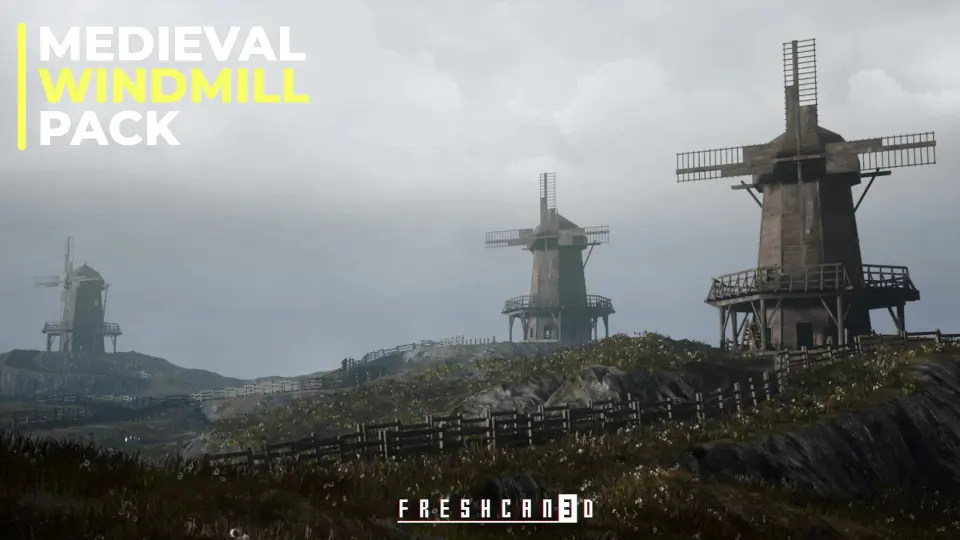
Rural environments in medieval settings often rely on a few strong architectural anchor points to sell the atmosphere of an ancient village or farming settlement. A windmill is one of those structures that immediately grounds a scene in agrarian life. It reads distinctly on the horizon, breaks up flat terrain, and tells a story about the surrounding settlement's daily labor. This asset provides that specific anchor for builders working on medieval landscapes, fantasy villages, or adventure game terrain.
The package contains a standalone old wooden windmill rather than a modular kit or a street pattcessary for populating a full village in one file.
How the Medieval Windmill Handles Interior and Gameplay Access
A windmill only carries visual weight from the outside if players never get close to it. The creator built this model to be enterable by game characters. The interior is part of the mesh design, meaning players can walkthrough the internal space. This makes the structure functional for third-person adventure games where exploration is part of the core loop. Instead of using a static facade or a locked door to suggest an interior, the asset includes a playable interior volume.
For medieval village scenes, this creates the ability to use the windmill as a quest location, a storage point, or a simple piece of environmental storytelling. The character can approach the windmill, open the door, and step inside. The interior supports the structure's narrative role as a working building rather than a piece of background dressing.
Real-World Gear System References Inside the Windmill
Windmills function by translating wind rotation into mechanical grinding motion. The creator modeled all parts of the gear system to match real-world references. This includes the internal mechanism that connects the rotating sails to the grinding stones. The gears are not purely decorative shapes. They follow the physical logic of how a historical windmill's power transmission actually works, which adds a layer of mechanical realism for anyone looking closely at the machinery.
Alongside the gear system, all structural parts of the windmill draw from real-world references. This grounding in historical accuracy informs the proportions, the wooden construction style, and the overall silhouette of the building. The level of detail supports both cinematic visualization and real-time rendering for games.
Practical Application Across Visualization and Game Projects
Third-person games benefit significantly from enterable structures with detailed interiors. When a player can walk up to a windmill, enter it, and see the internal gear mechanism, the asset moves from being a piece of level geometry to an active part of the game space. For indie game developers, such a complete asset reduces the modeling and texturing workload required to populate a medieval setting. The model covers old wooden construction, stylized textures, and functional gameplay access in a single package.
For cinematic projects, the high detail and realistic references lend themselves to rendering shots where the camera moves close to the windmill or even inside it. The internal gear system provides interestitargets for mid-range cinematic shots. Because the gears are modeled accurately, a cinematic flythrough can showcase the mechanical connection between the external sails and the internal grinding mechanism.
Why the Gear System and PBR Textures Stand Out
The gear system sets this windmill apart from simpler medieval building props. By ensuring that all mechanical parts are referenced to real-world windmill designs, the creator provides a model that holds up under close inspection. The gears connect logically, the proportions reflect historical construction, and the mechanics make visual sense. This matters for both gameplay, where a player might examine the machinery, and for cinematics, where the internal workings sell the realism of the environment.
The textures shift this toward a realistic finish. They respond accurately to lighting, showing the grain of old wood, the wear of stone, and the rust or age of metal fixtures. Combined with the high-detail geometry, the windmill presents as an aged structure with a history of use. The surface detail is intended to read as a weathered, lived-in medieval building rather than a freshly constructed prop.
Using the Medieval Windmill as a Fantasy or Adventure Anchor Point
For fantasy and adventure game builders, the windmill serves as a strong anchor point in level design. It can stand alone in a field, sit at the edge of a village, or mark a quest objective in the wilderness. The old wooden construction and aged texture treatment fit naturally into landscapes that need to feel ancient and weathered. The windmill's silhouette is instantly recognizable, making it useful as a landmark for player navigation in open or semi-open environments.
This asset works well for populating areas that need functional buildings rather than just decorative structures. The contrast between a detailed windmill and the surrounding terrain makes scenes feel more inhabited. Farmers, villagers, or wandering NPCs in a fantasy adventure gain a credible place to work, gather, or shelter when the windmill anchors the nearby landscape.
A Direct Look at the Asset and Its Surroundings
Two videos accompany the asset documentation: an overview video and a cinematic video. The overview video shows the model's exterior, interior, and gear system from multiple angles. The cinematic video demonstrates how the windmill looks under rendered lighting conditions, showcasing the textures and the atmosphere of the structure within a scene. Viewing both provides a clear understanding of how the windmill functions as both a standalone model and a piece of a larger medieval environment.
The overview and cinematic videos also help builders see the windmill in motion, particularly how the gear system operates and how the interior connects to the gameplay space. For developers working in third-person or adventure genres, seeing the structure in context clarifies how a player character would interact with the asset.
Related Environments to Pair with the Medieval Windmill
The windmill does not ship alone in its creator's catalog. Several related environment packs exist that expand the medieval setting. These include a Medieval Street Pack with medieval town buildings and a clock tower, and a Modular Medieval Environment that includes a castle, medieval houses, and a church. A Mountain Village Environment is also available with modular village houses and props for expanding rural settings.
None of these related environment packs are included with the windmill package. The windmill is a standalone asset. However, the existence of these related packs means builders working on a larger medieval world can incrementally add elements that match the same thematic setting. The Medieval Street Pack extends the environment into an urban center, while the Modular Medieval Environment provides larger structures like castles and churches. The Mountain Village Environment offers modular something comparable for rural areas.
Finding the Right Project Fit for This Windmill Asset
For developers building medieval adventure games, fantasy RPGs, or cinematic projects set in historical or fictionalized pasts, this windmill fills a specific role. It provides a complete, enterable structure with real-world mechanical references and high-resolution textures. It avoids the common problem of medieval building assets that look good from the outside but lack any interior play space. By combining accurate gear mechanics, detailed textures, and a walkthrough interior, it targets both gameplay and visualization in a way that smaller or simpler props do not maximize.
The asset's specific fit is for projects where the windmill will be visible up close and entered by a player or camera. If the windmill is only meant to sit on a distant horizon as a low-detail silhouette piece, this asset woul asset would be overkill. For third-person adventure games, RPGs, or cinematic flythroughs that bring the camera near the structure, the detail level and mechanical accuracy become essential rather than optional.
Builders who need an authentic medieval anchor piece with functional space inside will find the most value here. The gear system, real-world references, and high-res textures support close-range interaction and detailed cinematic work. For broader village or town layouts, the related packs from the same creator offer a path to expand without losing stylistic consistency.
 Medieval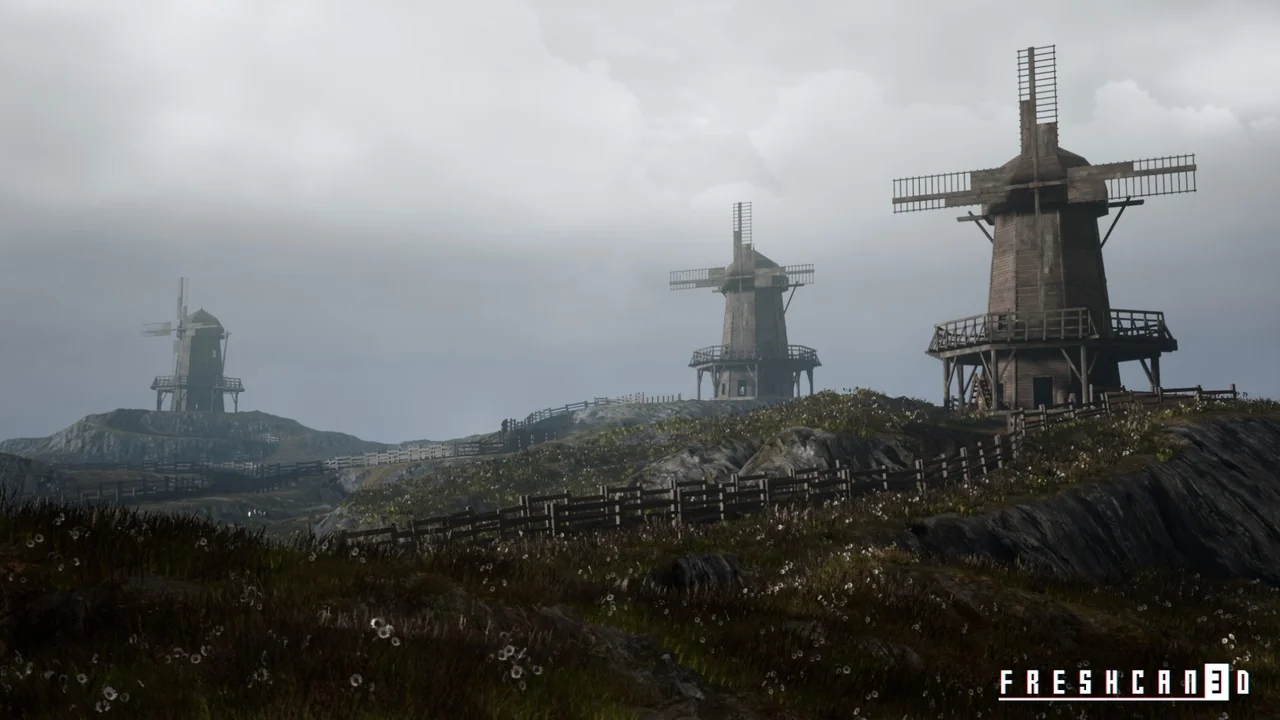
 Medieval
 Medieval
 Medieval