"fa182e0cd0a6ea73"{"id":"1000638","slug":"mafioso","title":"Mafioso","category":"Characters \u0026 Creatures","engine":"4.26+,5.0+","assetVersion":"","engineVersion":"Engine Version: 4.26+,5.0+","tag":"Characters","accent":"blue","visual":"character","summary":"Mafioso rigged character asset with Epic Skeleton, modular mesh parts, PBR TGA textures, 5 ready-made skin variations, and overcoat closure blend shapes.","platform":"Unreal Engine","publishedAt":"2026-07-21T17:10:48.909Z","updatedAt":"2026-07-21T17:10:48.909Z","sourceNotes":[],"fileContents":[],"compatibility":["Unreal Engine","Engine Version: 4.26+,5.0+"],"featuredImage":{"alt":"Mafioso","src":"/wp-content/uploads/published/2026/07/39abfd261e4e-1e529bc4-2982-4915-982f-fab79b458eed-5c51acdf37.webp"},"hasDownloadLink":true,"downloads":0,"terms":[{"taxonomy":"category","slug":"characters-and-creatures","name":"Characters \u0026 Creatures"}],"galleryImages":[{"src":"/wp-content/uploads/published/2026/07/7d6d3bbd6b7e-aae83f4e-dca8-41b5-8273-3f99fdcd29e0-3f2ab1e7eb.webp","alt":"Mafioso"},{"src":"/wp-content/uploads/published/2026/07/0a33e8d8dc56-9480040b-0d62-48b5-8e46-d96ea57c48ee-2b66ae4bff.webp","alt":"Mafioso"},{"src":"/wp-content/uploads/published/2026/07/e8d49f6a4c12-68c857a4-88af-4445-919c-71f8a46ae9b9-fbac8175c4.webp","alt":"Mafioso"},{"src":"/wp-content/uploads/published/2026/07/218116ddb6b5-3631aa51-55e4-4ba6-af45-c6809642e2e0-189c597f74.webp","alt":"Mafioso"},{"src":"/wp-content/uploads/published/2026/07/e96f1f325223-f049b774-387e-426c-8506-b6dc6707bfd8-bf57f35a52.webp","alt":"Mafioso"},{"src":"/wp-content/uploads/published/2026/07/35d48a59b458-61ac1e16-feca-40e3-b9f0-18abcf589398-bb028bdb50.webp","alt":"Mafioso"},{"src":"/wp-content/uploads/published/2026/07/7af7bcfa0414-92d77d93-be6a-4596-8010-c6efcd3f967d-2208aafb5f.webp","alt":"Mafioso"},{"src":"/wp-content/uploads/published/2026/07/e1ca69c63d65-b5354d9f-59b9-47f0-9e11-36f377ff6cf5-72522c088e.webp","alt":"Mafioso"},{"src":"/wp-content/uploads/published/2026/07/d26eb732ab96-677e824a-d848-4e8d-a980-5e87b33a17a6-d12168f532.webp","alt":"Mafioso"},{"src":"/wp-content/uploads/published/2026/07/1c7484b6f79a-083d9609-2c15-4621-b462-485b869570bd-4a34104a2b.webp","alt":"Mafioso"}],"accessPanel":{"kind":"resource","title":"Download this resource","eyebrow":"Free Download","message":"Log in or create a free account to start your download.","fileName":"Content.7z","safetyNote":"Resources are manually reviewed before listing to improve quality and reduce obvious risks.","actionLabel":"Download Free","resourceType":"Resource archive"},"contentHtml":"\u003cp\u003eProjects set in crime-driven urban environments, prohibition-era storylines, or any production calling for suited antagonists often share a common need: a reliable male character rigged to a standardized skeleton and ready for animation. The Mafioso asset sits in that space. It is a rigged character shaped by the Epic Skeleton, which places it directly on the animation compatibility path for Unreal Engine. The tagging suggests the content fits mafia, bandit, and general suited male character roles, with enough modularity to serve as a human character in broader scenes or a stylized monster figure depending on how the variations are combined.\u003c/p\u003e \u003ch2\u003eEpic Skeleton Rigging and Animation Pipeline Fit\u003c/h2\u003e \u003cp\u003eRigging with the Epic Skeleton is the central structural choice here. That rig standard means the character can share animation sets with other assets built on the same skeleton without requiring retargeting work or skeleton remodeling. A production can drop this figure into an existing UE project populated with other Epic-compatible assets and expect the existing animation library to drive the new character with minimal friction.\u003c/p\u003e \u003cp\u003eThe inclusion of a video preview identified as a UE video preview Test epic skeleton reflects the intended environment. The test context suggests the skeleton has been exercised in engine to confirm it behaves as expected under standard animation replay. For a team evaluating the asset for a real-time workflow, that testing context is the first checkpoint: it confirms the rig is compatible with Epic's animation toolset rather than being a custom skeleton that would need conversion.\u003c/p\u003e \u003ch3\u003eUsing Separate Mesh Parts in Character Assembly\u003c/h3\u003e \u003cp\u003eThe package separates mesh parts. This is a workflow decision that affects how the character can be modified at both the production and runtime levels. With separate mesh parts, the body and clothing components are not baked into a single non-editable mesh. A developer can hide, replace, or adjust those components independently, which matters when a scene calls for costume changes or when parts of the body need to be visually isolated for rendering or gameplay logic.\u003c/p\u003e \u003cp\u003eThe separated structure also pairs with the skin and clothing color system. The asset provides the ability to combine skin and clothing colors. Because the meshes are not merged into onepiece, color assignment can target the relevant component without bleed-through or texture conflict. This combination potential is what makes a single packaged character behave like a small kit: one rigged base can produce several on-screen variations without the need to reimport or re-author the asset for each look.\u003c/p\u003e \u003ch2\u003eVariation System and Ready-Made Skins\u003c/h2\u003e \u003cp\u003eThe color and variation structure is one of the more detailed aspects of the asset. The skin has 3 color variations, and the package includes 5 ready-made variations skins. The ready-made set functions as a fast path: a developer can apply one of the five immediately without configuring anything. The three skin color variations exist as raw material for those who want to handle the combination manually or script it into a character creation system.\u003c/p\u003e \u003cp\u003eThe presence of both ready-made and combinable options gives the asset two audience tiers. Teams that need a character ready for a cutscene or a quick scene population pass can use the prebuilt variations. Teams building a more interactive character system, where appearance may shift based on player choice or narrative state, can lean on the combinable skin and clothing colors to generate appearances dynamically. The clothing color combination capability is what extends the asset beyond a static figure.\u003c/p\u003e \u003ch3\u003eOvercoat Closure Blend Shapes and Physics Limitation\u003c/h3\u003e \u003cp\u003eThe asset includes Overcoat Closure blend shapes, also described as morph targets. These are deformation controls, not texture swaps or material adjustments. They allow the overcoat to close or alter its silhouette by driving mesh deformation through slider or script input. In a production context, this means a single character model can represent an overcoat-wearing figure in multiple states without swapping to a different garment mesh.\u003c/p\u003e \u003cp\u003eThere is a technical boundary stated clearly: the blend shapes do not work with active cloak physics simulation. This is not a defect in the asset but a known interaction constraint between morph target deformation and real-time cloth physics. When a physics simulation is driving the cloak, the morph targets cannot operate at the same time. A production must choose one approach for the overcoat in a given shot or sequence. If the overcoat is being driven by physics, the closure blend shapes are unavailable. If the closure state is being animated through morph targets, the physics simulation for that garment should be disabled. This limitation requires a decision at the animation setup stage rather than at render time.\u003c/p\u003e \u003ch2\u003ePBR Texture Configuration and TGA Delivery\u003c/h2\u003e \u003cp\u003eThe surface material system is PBR-based, which aligns with standard real-time rendering expectations in Unreal Engine. The texture set includes Albedo, Normal, Metalness, Roughness, Alpha, and Ambient Occlusion maps. Each map is provided in TGA format. The inclusion of an Alpha map indicates that some portion of the character or its accessories relies on transparency or a masked material, which is common for details like hair, torn fabric edges, or accessory elements that are better represented through opacity than through dense geometry.\u003c/p\u003e \u003cp\u003eHaving Metalness as a separate map means metallic surfaces on the character, such as belt buckles, buttons, or weapon-related accessories suggested by the tags, can be defined independently of the base material. Roughness control allows the same base color to read as polished or worn depending on the value assigned. The AO map adds contact shadow depth to creases and overlapping surfaces, which grounds the character in lighting rather than leaving areas flat. Delivering these in TGA provides an uncompressed, widely compatible format for import into UE and for editing in texture tools if custom adjustments are needed.\u003c/p\u003e \u003ch3\u003eAsset Compatibility and Keyword Context\u003c/h3\u003e \u003cp\u003eThe tags attached to the asset, including Mafia, Modular, Lowpoly, Bandit, Suit, Male, Monster, Weapon, Human, and Character, define the intended visual and thematic scope. The Lowpoly tag suggests the geometry density is managed for real-time performance, which fits the Unreal Engine target indicated by the rig and preview format. This makes the character suitable for crowd scenes, NPC placement, or any scenario where multiple rigged characters share screen space without overwhelming rendering budgets.\u003c/p\u003e \u003cp\u003eThe compatibility note referencing Assassin suggests the character is also viable for action-oriented or stealth-game contexts where a suited figure could serve as an antagonist, a target, or a variant NPC. The combination of a Suit, Weapon, and Male tag set expands the role beyond civilian crowd filler into scenes where the character may be involved in gameplay interactions.\u003c/p\u003e \u003cp\u003eThe Modular tag reinforces the separate mesh parts structure. It signals that the asset is intended to be broken down and reassembled rather than treated as a single locked figure. A developer working on a character wardrobe system or a game with costume progression can use the modular mesh approach to swap components without reimporting the full character.\u003c/p\u003e \u003ch2\u003eWho Benefits from This Asset\u003c/h2\u003e \u003cp\u003eThis package is most useful for developers building real-time scenes in Unreal Engine who need a rigged male character with enough variation support to fill multiple roles from a single import. The Epic Skeleton rigging makes it immediately compatible with existing animation workflows, which reduces integration time. The modularity and color combination features benefit teams that need visual variety without authoring new models. The ready-made skin variations serve teams that need populated scenes quickly. The overcoat blend shapes add character state control, though the physics limitation requires planning at the sequence level. For crime-themed, action, or general human character scenes, the asset provides a structured, animation-ready figure with the texture and rigging foundation already in place.\u003c/p\u003e\n\n\u003ch2\u003eExplore Similar Assets\u003c/h2\u003e\n\u003cul\u003e\n\u003cli\u003e\u003ca href=\"https://3dcghub.com/chinese-noble-lady/\" title=\"Chinese Noble Lady\"\u003eChinese Noble Lady\u003c/a\u003e\u003c/li\u003e\n\u003cli\u003e\u003ca href=\"https://3dcghub.com/realistic-base-skeleton/\" title=\"Realistic Base Skeleton\"\u003eRealistic Base Skeleton\u003c/a\u003e\u003c/li\u003e\n\u003cli\u003e\u003ca href=\"https://3dcghub.com/amazonian-warrior-girl/\" title=\"Amazonian warrior girl\"\u003eAmazonian warrior girl\u003c/a\u003e\u003c/li\u003e\n\u003cli\u003e\u003ca href=\"https://3dcghub.com/forester/\" title=\"Forester\"\u003eForester\u003c/a\u003e\u003c/li\u003e\n\u003cli\u003e\u003ca href=\"https://3dcghub.com/lizard-warrior/\" title=\"Lizard Warrior\"\u003eLizard Warrior\u003c/a\u003e\u003c/li\u003e\n\u003c/ul\u003e","contentTextLength":8326,"navigation":{"current":1297,"total":3789,"previous":{"id":"1000639","slug":"magic-aura-vfx","title":"Magic Aura VFX","category":"Spells \u0026 Combat","platform":"Unreal Engine","updatedAt":"2026-07-21T17:15:13.459Z"},"next":{"id":"1000637","slug":"love-fx","title":"Love FX","category":"Variety","platform":"Unreal Engine","updatedAt":"2026-07-21T17:06:02.994Z"}},"relatedResources":[{"id":"1001783","slug":"cyberpunk-girl-2","title":"Cyberpunk Girl","category":"Characters \u0026 Creatures","engine":"4.26+,5.0+","assetVersion":"","engineVersion":"Engine Version: 4.26+,5.0+","tag":"Characters","accent":"blue","visual":"character","summary":"Technical overview of the Cyberpunk Girl 3D character, detailing its Epic Skeleton rig, Apple ARKit blendshapes, 4K PBR textures, and mesh variations.","platform":"Unreal Engine","publishedAt":"2026-10-20T17:46:27.000Z","updatedAt":"2026-10-20T17:46:27.000Z","sourceNotes":[],"fileContents":[],"compatibility":["Unreal Engine","Engine Version: 4.26+,5.0+"],"featuredImage":{"alt":"Cyberpunk Girl","src":"/wp-content/uploads/published/2026/10/298bc2cc371a-338b8166-7482-4cf9-8984-a54b506c5509-1439389051.webp"},"hasDownloadLink":true,"downloads":0},{"id":"1000288","slug":"chinese-noble-lady","title":"Chinese Noble Lady","category":"Characters \u0026 Creatures","engine":"4.26+,5.0+","assetVersion":"","engineVersion":"Engine Version: 4.26+,5.0+","tag":"Characters","accent":"blue","visual":"character","summary":"A rigged 3D character model featuring an Epic Skeleton hierarchy, three body shapes, morph targets, and a modular 10-part 4K PBR texture workflow.","platform":"Unreal Engine","publishedAt":"2026-07-03T17:14:30.329Z","updatedAt":"2026-07-03T17:14:30.329Z","sourceNotes":[],"fileContents":[],"compatibility":["Unreal Engine","Engine Version: 4.26+,5.0+"],"featuredImage":{"alt":"Chinese Noble Lady","src":"/wp-content/uploads/published/2026/07/f0557a766620-5ad2eb8a-5979-4948-a50f-5e29da8379b6-60c7139b65.webp"},"hasDownloadLink":true,"downloads":1},{"id":"1001605","slug":"cyberpunk-sniper-girl","title":"Cyberpunk Sniper Girl","category":"Characters \u0026 Creatures","engine":"4.26+,5.0+","assetVersion":"","engineVersion":"Engine Version: 4.26+,5.0+","tag":"Characters","accent":"blue","visual":"character","summary":"Cyberpunk Sniper Girl character breakdown covering 4 body shapes, Epic Skeleton rigging, 10 4K PBR texture sets, and Apple ARKit facial blendshapes.","platform":"Unreal Engine","publishedAt":"2026-10-10T16:29:58.108Z","updatedAt":"2026-10-10T16:29:58.108Z","sourceNotes":[],"fileContents":[],"compatibility":["Unreal Engine","Engine Version: 4.26+,5.0+"],"featuredImage":{"alt":"Cyberpunk Sniper Girl","src":"/wp-content/uploads/published/2026/10/506286d4db2b-22acae93-9939-48b9-8849-2410b63ab75c-7980f17e44.webp"},"hasDownloadLink":true,"downloads":0}]}
Characters
Mafioso
Mafioso rigged character asset with Epic Skeleton, modular mesh parts, PBR TGA textures, 5 ready-made skin variations, and overcoat closure blend shapes.
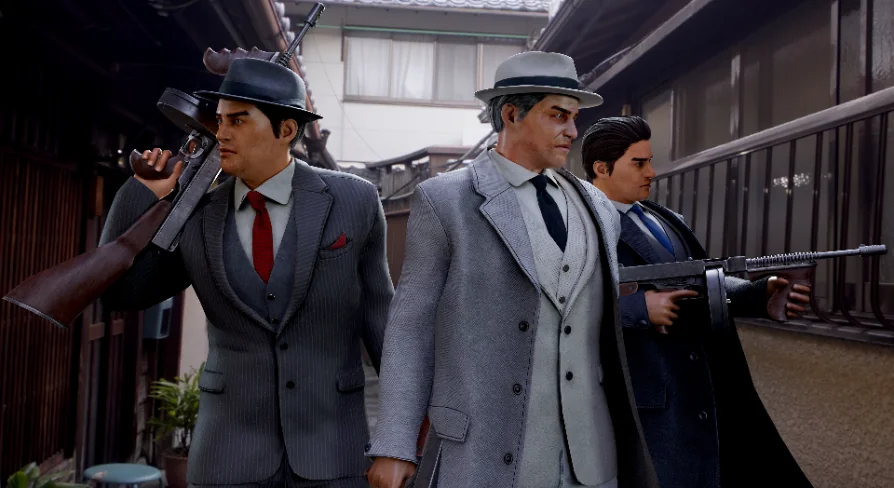
Projects set in crime-driven urban environments, prohibition-era storylines, or any production calling for suited antagonists often share a common need: a reliable male character rigged to a standardized skeleton and ready for animation. The Mafioso asset sits in that space. It is a rigged character shaped by the Epic Skeleton, which places it directly on the animation compatibility path for Unreal Engine. The tagging suggests the content fits mafia, bandit, and general suited male character roles, with enough modularity to serve as a human character in broader scenes or a stylized monster figure depending on how the variations are combined.
Epic Skeleton Rigging and Animation Pipeline Fit
Rigging with the Epic Skeleton is the central structural choice here. That rig standard means the character can share animation sets with other assets built on the same skeleton without requiring retargeting work or skeleton remodeling. A production can drop this figure into an existing UE project populated with other Epic-compatible assets and expect the existing animation library to drive the new character with minimal friction.
The inclusion of a video preview identified as a UE video preview Test epic skeleton reflects the intended environment. The test context suggests the skeleton has been exercised in engine to confirm it behaves as expected under standard animation replay. For a team evaluating the asset for a real-time workflow, that testing context is the first checkpoint: it confirms the rig is compatible with Epic's animation toolset rather than being a custom skeleton that would need conversion.
Using Separate Mesh Parts in Character Assembly
The package separates mesh parts. This is a workflow decision that affects how the character can be modified at both the production and runtime levels. With separate mesh parts, the body and clothing components are not baked into a single non-editable mesh. A developer can hide, replace, or adjust those components independently, which matters when a scene calls for costume changes or when parts of the body need to be visually isolated for rendering or gameplay logic.
The separated structure also pairs with the skin and clothing color system. The asset provides the ability to combine skin and clothing colors. Because the meshes are not merged into onepiece, color assignment can target the relevant component without bleed-through or texture conflict. This combination potential is what makes a single packaged character behave like a small kit: one rigged base can produce several on-screen variations without the need to reimport or re-author the asset for each look.
Variation System and Ready-Made Skins
The color and variation structure is one of the more detailed aspects of the asset. The skin has 3 color variations, and the package includes 5 ready-made variations skins. The ready-made set functions as a fast path: a developer can apply one of the five immediately without configuring anything. The three skin color variations exist as raw material for those who want to handle the combination manually or script it into a character creation system.
The presence of both ready-made and combinable options gives the asset two audience tiers. Teams that need a character ready for a cutscene or a quick scene population pass can use the prebuilt variations. Teams building a more interactive character system, where appearance may shift based on player choice or narrative state, can lean on the combinable skin and clothing colors to generate appearances dynamically. The clothing color combination capability is what extends the asset beyond a static figure.
Overcoat Closure Blend Shapes and Physics Limitation
The asset includes Overcoat Closure blend shapes, also described as morph targets. These are deformation controls, not texture swaps or material adjustments. They allow the overcoat to close or alter its silhouette by driving mesh deformation through slider or script input. In a production context, this means a single character model can represent an overcoat-wearing figure in multiple states without swapping to a different garment mesh.
There is a technical boundary stated clearly: the blend shapes do not work with active cloak physics simulation. This is not a defect in the asset but a known interaction constraint between morph target deformation and real-time cloth physics. When a physics simulation is driving the cloak, the morph targets cannot operate at the same time. A production must choose one approach for the overcoat in a given shot or sequence. If the overcoat is being driven by physics, the closure blend shapes are unavailable. If the closure state is being animated through morph targets, the physics simulation for that garment should be disabled. This limitation requires a decision at the animation setup stage rather than at render time.
PBR Texture Configuration and TGA Delivery
The surface material system is PBR-based, which aligns with standard real-time rendering expectations in Unreal Engine. The texture set includes Albedo, Normal, Metalness, Roughness, Alpha, and Ambient Occlusion maps. Each map is provided in TGA format. The inclusion of an Alpha map indicates that some portion of the character or its accessories relies on transparency or a masked material, which is common for details like hair, torn fabric edges, or accessory elements that are better represented through opacity than through dense geometry.
Having Metalness as a separate map means metallic surfaces on the character, such as belt buckles, buttons, or weapon-related accessories suggested by the tags, can be defined independently of the base material. Roughness control allows the same base color to read as polished or worn depending on the value assigned. The AO map adds contact shadow depth to creases and overlapping surfaces, which grounds the character in lighting rather than leaving areas flat. Delivering these in TGA provides an uncompressed, widely compatible format for import into UE and for editing in texture tools if custom adjustments are needed.
Asset Compatibility and Keyword Context
The tags attached to the asset, including Mafia, Modular, Lowpoly, Bandit, Suit, Male, Monster, Weapon, Human, and Character, define the intended visual and thematic scope. The Lowpoly tag suggests the geometry density is managed for real-time performance, which fits the Unreal Engine target indicated by the rig and preview format. This makes the character suitable for crowd scenes, NPC placement, or any scenario where multiple rigged characters share screen space without overwhelming rendering budgets.
The compatibility note referencing Assassin suggests the character is also viable for action-oriented or stealth-game contexts where a suited figure could serve as an antagonist, a target, or a variant NPC. The combination of a Suit, Weapon, and Male tag set expands the role beyond civilian crowd filler into scenes where the character may be involved in gameplay interactions.
The Modular tag reinforces the separate mesh parts structure. It signals that the asset is intended to be broken down and reassembled rather than treated as a single locked figure. A developer working on a character wardrobe system or a game with costume progression can use the modular mesh approach to swap components without reimporting the full character.
Who Benefits from This Asset
This package is most useful for developers building real-time scenes in Unreal Engine who need a rigged male character with enough variation support to fill multiple roles from a single import. The Epic Skeleton rigging makes it immediately compatible with existing animation workflows, which reduces integration time. The modularity and color combination features benefit teams that need visual variety without authoring new models. The ready-made skin variations serve teams that need populated scenes quickly. The overcoat blend shapes add character state control, though the physics limitation requires planning at the sequence level. For crime-themed, action, or general human character scenes, the asset provides a structured, animation-ready figure with the texture and rigging foundation already in place.
 Characters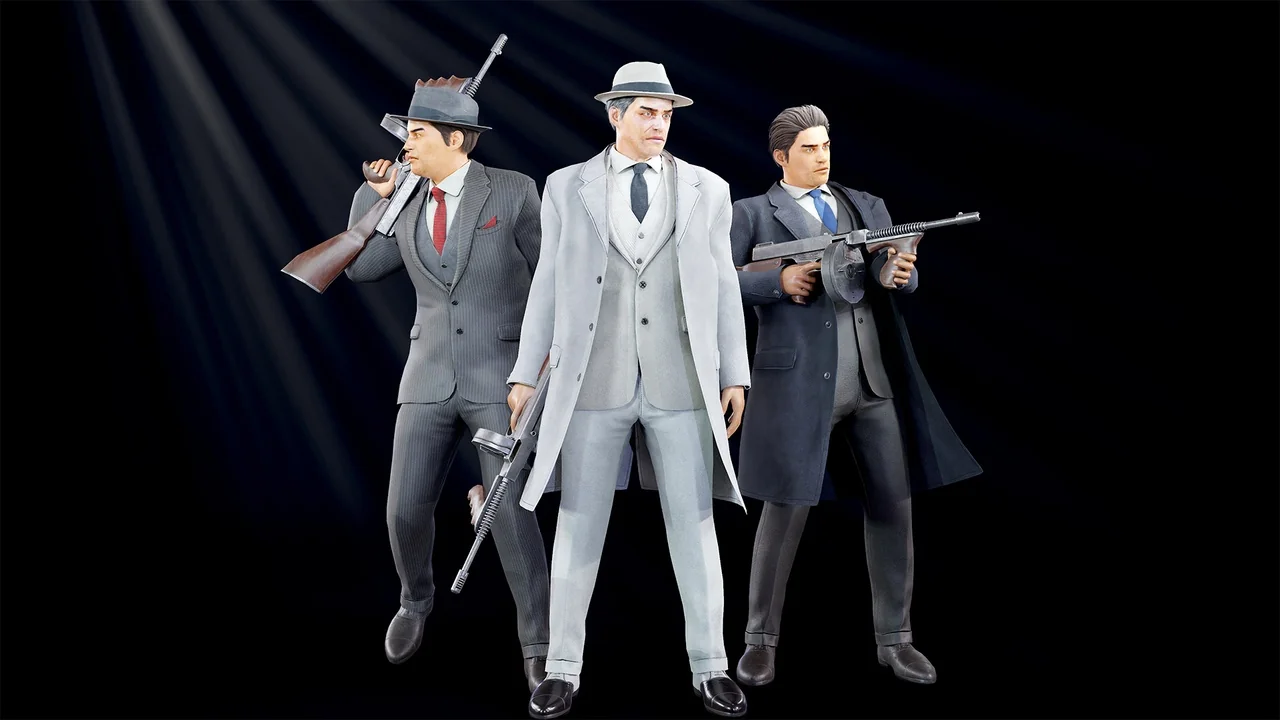
 Characters
 Characters
 Characters