"d4769ebd8b229f47"{"id":"1002097","slug":"macaque","title":"Macaque","category":"Mammals","engine":"5.2+","assetVersion":"","engineVersion":"Engine Version: 5.2+","tag":"Mammals","accent":"blue","visual":"mech","summary":"Explore the low-poly animated Macaque model for Unreal Engine, featuring 46 animations, 7 high-res texture maps, and quad-based geometry.","platform":"Unreal Engine","publishedAt":"2026-10-29T08:42:38.514Z","updatedAt":"2026-10-29T08:42:38.514Z","sourceNotes":[],"fileContents":[],"compatibility":["Unreal Engine","Engine Version: 5.2+"],"featuredImage":{"alt":"Macaque","src":"/wp-content/uploads/published/2026/10/0d0b9ab35992-8fa1fc88-a25b-4971-a272-818612966eb9-bbf51d908b.webp"},"hasDownloadLink":true,"downloads":0,"terms":[{"taxonomy":"category","slug":"mammals","name":"Mammals"}],"galleryImages":[{"src":"/wp-content/uploads/published/2026/10/6830da14d9a4-56a39ca5-73e4-49d4-b612-4b3ac7a88b24-f57a7b365b.webp","alt":"Macaque"},{"src":"/wp-content/uploads/published/2026/10/b6d726742dc2-3051f4b7-73c9-44d4-a1c1-64a598cc7536-a79bb9660a.webp","alt":"Macaque"},{"src":"/wp-content/uploads/published/2026/10/0f2dce62af4a-85fdb8bf-6691-4f46-aff4-2d76317e7d43-e4829c4824.webp","alt":"Macaque"},{"src":"/wp-content/uploads/published/2026/10/52dc24e78d07-beb5755f-3eb5-401a-9bc8-6bca59068f99-da9ba35557.webp","alt":"Macaque"},{"src":"/wp-content/uploads/published/2026/10/5747fff7a537-79edd008-0020-4fa2-9bda-8aaa6a647288-a7d5339985.webp","alt":"Macaque"},{"src":"/wp-content/uploads/published/2026/10/9a9b4f02cd4f-0a9dfbc6-e892-4a8a-b88c-1ba750983d13-0223aba1c9.webp","alt":"Macaque"},{"src":"/wp-content/uploads/published/2026/10/b77aa712009e-f0689177-8645-493f-b012-59db324f01fd-14791584b6.webp","alt":"Macaque"},{"src":"/wp-content/uploads/published/2026/10/3e9d228d2812-a6b803f3-eb9c-4c7c-9ba8-e1643f06eb75-a97063317f.webp","alt":"Macaque"},{"src":"/wp-content/uploads/published/2026/10/b641d90f6c42-cae925e4-e4a7-4378-927a-c8794afa2960-087b6bd315.webp","alt":"Macaque"}],"accessPanel":{"kind":"resource","title":"Download this resource","eyebrow":"Free Download","message":"Log in or create a free account to start your download.","fileName":"Content.7z","safetyNote":"Resources are manually reviewed before listing to improve quality and reduce obvious risks.","actionLabel":"Download Free","resourceType":"Resource archive"},"contentHtml":"\u003ch2\u003eReal-Time Wildlife Simulation with the Macaque Model\u003c/h2\u003e\n\u003cp\u003ePopulating jungle canopy spaces, rocky outcroppings, or dense forest floors in real-time games requires animal characters that strike a balance between low computational overhead and organic realism. The Macaque asset provides a fully realized primate character built specifically for these environments. Configured for immediate deployment into Unreal Engine projects, the asset supplies a comprehensive suite of animations, dedicated material configurations, and an included sample level to demonstrate ready-to-run functionality straight out of the box.\u003c/p\u003e\n\u003cp\u003eInstead of requiring technical artists to rig, bind, and author complex mammalian motion from scratch, the asset arrives pre-configured with both movement and behavioral dynamics. Wildlife simulations demand nuanced interactions with terrain, vertical structures, and group members, making the macaque a direct fit for game developers building living ecosystems, survival encounters, or ambient background fauna.\u003c/p\u003e \u003ch2\u003eQuad-Based Topology and Real-Time Geometry\u003c/h2\u003e\n\u003cp\u003eThe underlying mesh of the Macaque is built upon a clean, quad-only topology optimized for continuous real-time deformation. Totaling 9,420 triangles across 6,138 vertices, the low-poly asset keeps geometric budgets lean enough to support multiple concurrent characters within a scene without overburdening rendering pipelines.\u003c/p\u003e\n\u003cp\u003eQuad-centric modeling ensures that the skin and muscle masses around high-articulation regions—such as the shoulders, hips, hands, and facial features—bend predictably during locomotion and reactive playback. Maintaining an edge-flow suited for rigging prevents common low-poly mesh collapse when limbs bend sharply during vertical climbs or deep crouches, preserving character silhouette fidelity from all viewing angles.\u003c/p\u003e \u003ch2\u003eLocomotion, Root Motion, and In-Place Movement\u003c/h2\u003e\n\u003cp\u003eAt the center of the asset is an animation library containing 46 total sequences, split across In-Place and Root Motion formats. Supplying dual movement formats allows developers to adapt the character to different gameplay mechanics. Root Motion drives the actor location directly through keyframed asset translation for grounded, physics-accurate single-player encounters or cinematic vignettes, while In-Place clips interface cleanly with standard game engine character controllers and velocity-based movement components.\u003c/p\u003e\n\u003cp\u003eThe primary movement set covers foundational travel actions with directional flexibility:\u003c/p\u003e\n\u003cul\u003e \u003cli\u003eStandard idle states and neutral poses\u003c/li\u003e \u003cli\u003eLocomotion cycles including walk, walkleft, and walkright\u003c/li\u003e \u003cli\u003eHigh-speed navigation through run, runleft, and runright\u003c/li\u003e \u003cli\u003eJump mechanics broken into jump, jumpinplace, and jumprun\u003c/li\u003e \u003cli\u003eDirectional pivots with turnleft and turnright\u003c/li\u003e\n\u003c/ul\u003e\n\u003cp\u003eThese directional sequences allow smooth blending inside an Animation Blueprint blend space. By offering dedicated left and right variants for both walking and running, the macaque character can bank around natural ground obstacles, track targets dynamically, and traverse complex paths without sliding or snapping.\u003c/p\u003e \u003ch2\u003eDedicated Climbing System and Behavioral States\u003c/h2\u003e\n\u003cp\u003ePrimate locomotion relies heavily on three-dimensional verticality, and the included climbing animations establish a complete movement loop for non-horizontal terrain. The package includes dedicated states for climb, climbing, climbdown, climbleft, and climbright, providing directional coverage when scaling trees, cliffs, or architectural props. Transition clips like climbtosit and sittingclimb allow the macaque to anchor onto platforms or branches seamlessly, moving between traversal and resting modes without jarring frame cuts.\u003c/p\u003e\n\u003cp\u003eResting behaviors are sustained through an integrated sitting cycle, complete with idletosit, sitting, and sittoidle states. When stationary, the character can cycle through natural ambient actions, eat, or react to ambient stimuli. For interactive sequences, the macaque contains behavioral and combat gestures including attack, hitleft, hitright, threat, smile, and ungry. These expressive clips allow the character to shift instantly from an inquisitive forest inhabitant to an aggressive territorial defender. A designated die animation handles terminal health states and ragdoll transitions.\u003c/p\u003e \u003ch2\u003eHigh-Resolution Texture Maps and Fur Definition\u003c/h2\u003e\n\u003cp\u003eVisual fidelity across the character is handled through 4 specialized materials driven by 7 distinct texture maps. Resolution is split between 4096x4096 maps for broad surface definition and 1024x1024 maps for focused detail layers.\u003c/p\u003e\n\u003cp\u003eThe surface texturing is broken into core epidermal elements and specialized fur treatments:\u003c/p\u003e\n\u003cul\u003e \u003cli\u003e\u003cstrong\u003eBase Surface Maps:\u003c/strong\u003e T_Macaque_D (Diffuse), T_Macaque_N (Normal), and T_Macaque_S (Specular) define the core skin, leathery extremities, and underlying body form.\u003c/li\u003e \u003cli\u003e\u003cstrong\u003eFacial Fur Maps:\u003c/strong\u003e T_MonkeyFurFace_D and T_MonkeyFurFace_S provide dedicated diffuse coloration and specular response for the delicate hair framing the face.\u003c/li\u003e \u003cli\u003e\u003cstrong\u003eTail Fur Maps:\u003c/strong\u003e T_MonkeyFurTail_D and T_MonkeyFurTail_S establish realistic strand distribution and surface sheen across the length of the tail.\u003c/li\u003e\n\u003c/ul\u003e\n\u003cp\u003eSeparating the face and tail fur textures from the primary body maps prevents resolution stretching across fine fibrous details, preserving crisp hair cards and clean material boundaries under direct sunlight or soft jungle canopy shading.\u003c/p\u003e \u003ch2\u003eUnreal Engine Implementation and Target Workflows\u003c/h2\u003e\n\u003cp\u003eThe asset is built for direct import into Unreal Engine environments, complete with an included Sample Level that displays the character setup, mesh hierarchies, and animation playback in real time. Because the package is flagged for game-ready character workflows, developers can link the animations to custom AI scripts or standard player controller blueprints with minimal overhead.\u003c/p\u003e\n\u003cp\u003eCreators building wildlife documentaries, survival crafting mechanics, or ambient jungle scenes benefit most from this implementation. The clean triangle count ensures stable frame rates during multi-character troop displays, while the comprehensive 46-clip animation catalog and high-resolution material layout supply the necessary behavioral variety for realistic primate simulation.\u003c/p\u003e\n\n\u003ch2\u003eRelated Resources Worth Checking\u003c/h2\u003e\n\u003cul\u003e\n\u003cli\u003e\u003ca href=\"https://3dcghub.com/medhue-tiger/\" title=\"Medhue Tiger\"\u003eMedhue Tiger\u003c/a\u003e\u003c/li\u003e\n\u003cli\u003e\u003ca href=\"https://3dcghub.com/goat-with-groom/\" title=\"Goat with groom\"\u003eGoat with groom\u003c/a\u003e\u003c/li\u003e\n\u003cli\u003e\u003ca href=\"https://3dcghub.com/bears-pack/\" title=\"Bears pack\"\u003eBears pack\u003c/a\u003e\u003c/li\u003e\n\u003cli\u003e\u003ca href=\"https://3dcghub.com/elemental-horses-pack/\" title=\"Elemental Horses Pack\"\u003eElemental Horses Pack\u003c/a\u003e\u003c/li\u003e\n\u003cli\u003e\u003ca href=\"https://3dcghub.com/cartoon-cats-pack/\" title=\"Cartoon Cats pack\"\u003eCartoon Cats pack\u003c/a\u003e\u003c/li\u003e\n\u003c/ul\u003e","contentTextLength":6244,"navigation":{"current":41,"total":4063,"previous":{"id":"1002098","slug":"magicalanimset","title":"MagicalAnimSet","category":"Variety","platform":"Unreal Engine","updatedAt":"2026-10-29T08:44:24.485Z"},"next":{"id":"1002096","slug":"lucy","title":"Lucy","category":"Combat","platform":"Unreal Engine","updatedAt":"2026-10-29T08:41:49.877Z"}},"relatedResources":[{"id":"1000952","slug":"medhue-tiger","title":"Medhue Tiger","category":"Mammals","engine":"4.26+,5.0+","assetVersion":"","engineVersion":"Engine Version: 4.26+,5.0+","tag":"Mammals","accent":"blue","visual":"mech","summary":"Medhue Tiger is a low-poly 3D tiger with PBR textures, 28 animations, a drag-and-drop AI system, and an Unreal 5.6 Control Rig IK for uneven ground.","platform":"Unreal Engine","publishedAt":"2026-08-14T05:25:02.958Z","updatedAt":"2026-08-14T05:25:02.958Z","sourceNotes":[],"fileContents":[],"compatibility":["Unreal Engine","Engine Version: 4.26+,5.0+"],"featuredImage":{"alt":"Medhue Tiger","src":"/wp-content/uploads/published/2026/08/c044197a217b-f6fc2c94-014b-483a-ba87-36fa71e70819-2b0e38a7c4.webp"},"hasDownloadLink":true,"downloads":1},{"id":"1001094","slug":"goat-with-groom","title":"Goat with groom","category":"Mammals","engine":"5.0+","assetVersion":"","engineVersion":"Engine Version: 5.0+","tag":"Mammals","accent":"blue","visual":"mech","summary":"An Unreal-ready goat model with Groom support, 45 animations plus in-place variants, two mesh densities, and a morph model added for UE5.6 and newer.","platform":"Unreal Engine","publishedAt":"2026-09-06T01:50:06.593Z","updatedAt":"2026-09-06T01:50:06.593Z","sourceNotes":[],"fileContents":[],"compatibility":["Unreal Engine","Engine Version: 5.0+"],"featuredImage":{"alt":"Goat with groom","src":"/wp-content/uploads/published/2026/09/09f71220d0a9-4b4f893e-4592-484e-b857-01870b45eb80-672cabee5d.webp"},"hasDownloadLink":true,"downloads":0},{"id":"1001961","slug":"bears-pack","title":"Bears pack","category":"Mammals","engine":"4.27+,5.0+","assetVersion":"","engineVersion":"Engine Version: 4.27+,5.0+","tag":"Mammals","accent":"blue","visual":"mech","summary":"Integration and configuration breakdown for the Bears pack, covering Brown and Polar bears, UE5 groom setup, foot IK, and Blueprint mechanics.","platform":"Unreal Engine","publishedAt":"2026-10-24T11:38:14.034Z","updatedAt":"2026-10-24T11:38:14.034Z","sourceNotes":[],"fileContents":[],"compatibility":["Unreal Engine","Engine Version: 4.27+,5.0+"],"featuredImage":{"alt":"Bears pack","src":"/wp-content/uploads/published/2026/10/fc662eba9aa4-b9cf16a2-72d2-4a23-a499-861ca7a094bb-283e30664b.webp"},"hasDownloadLink":true,"downloads":0}]}
Mammals
Macaque
Explore the low-poly animated Macaque model for Unreal Engine, featuring 46 animations, 7 high-res texture maps, and quad-based geometry.
Category:Unreal Engine,MammalsPlatform: Unreal EngineEngine Version: 5.2+Published: Oct 29, 2026
Mammals
Resource overview
Real-Time Wildlife Simulation with the Macaque Model
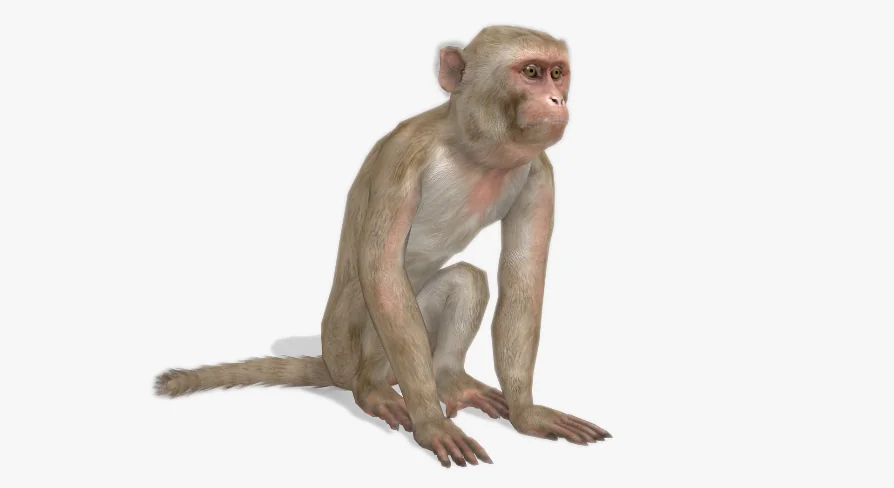
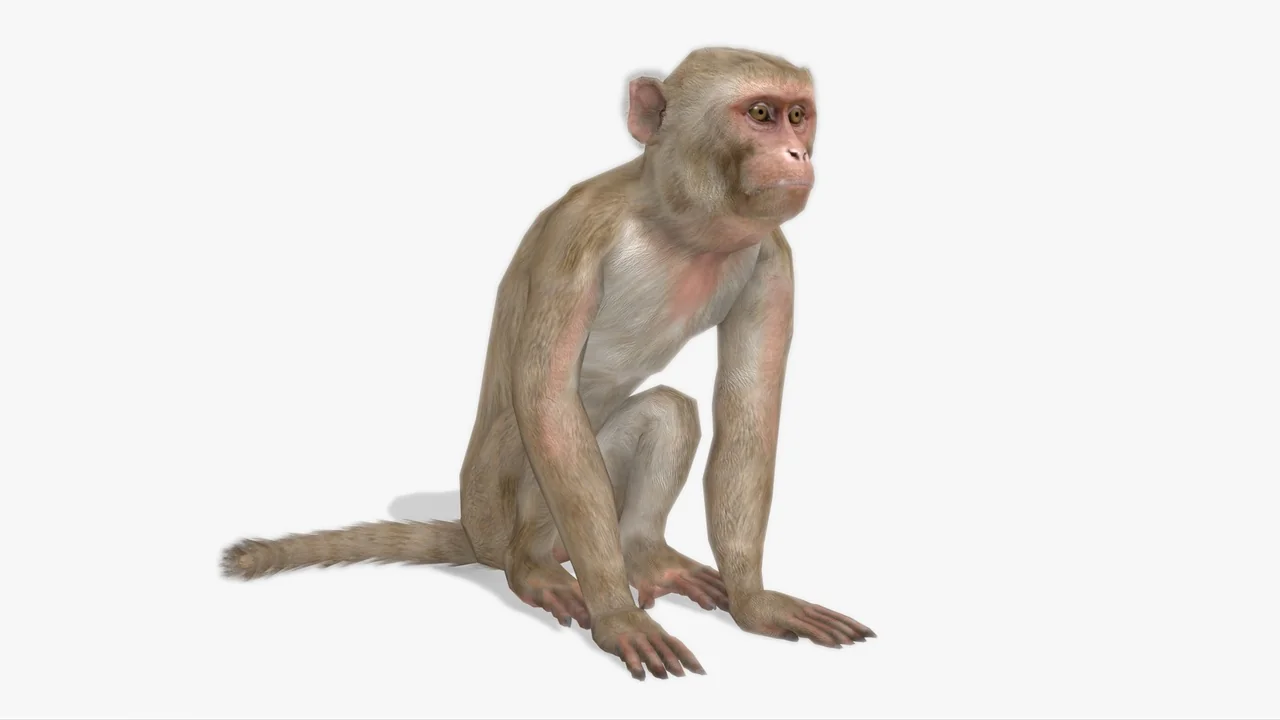
Populating jungle canopy spaces, rocky outcroppings, or dense forest floors in real-time games requires animal characters that strike a balance between low computational overhead and organic realism. The Macaque asset provides a fully realized primate character built specifically for these environments. Configured for immediate deployment into Unreal Engine projects, the asset supplies a comprehensive suite of animations, dedicated material configurations, and an included sample level to demonstrate ready-to-run functionality straight out of the box.
Instead of requiring technical artists to rig, bind, and author complex mammalian motion from scratch, the asset arrives pre-configured with both movement and behavioral dynamics. Wildlife simulations demand nuanced interactions with terrain, vertical structures, and group members, making the macaque a direct fit for game developers building living ecosystems, survival encounters, or ambient background fauna.
Quad-Based Topology and Real-Time Geometry
The underlying mesh of the Macaque is built upon a clean, quad-only topology optimized for continuous real-time deformation. Totaling 9,420 triangles across 6,138 vertices, the low-poly asset keeps geometric budgets lean enough to support multiple concurrent characters within a scene without overburdening rendering pipelines.
Quad-centric modeling ensures that the skin and muscle masses around high-articulation regions—such as the shoulders, hips, hands, and facial features—bend predictably during locomotion and reactive playback. Maintaining an edge-flow suited for rigging prevents common low-poly mesh collapse when limbs bend sharply during vertical climbs or deep crouches, preserving character silhouette fidelity from all viewing angles.
Locomotion, Root Motion, and In-Place Movement
At the center of the asset is an animation library containing 46 total sequences, split across In-Place and Root Motion formats. Supplying dual movement formats allows developers to adapt the character to different gameplay mechanics. Root Motion drives the actor location directly through keyframed asset translation for grounded, physics-accurate single-player encounters or cinematic vignettes, while In-Place clips interface cleanly with standard game engine character controllers and velocity-based movement components.
The primary movement set covers foundational travel actions with directional flexibility:
Standard idle states and neutral poses
Locomotion cycles including walk, walkleft, and walkright
High-speed navigation through run, runleft, and runright
Jump mechanics broken into jump, jumpinplace, and jumprun
Directional pivots with turnleft and turnright
These directional sequences allow smooth blending inside an Animation Blueprint blend space. By offering dedicated left and right variants for both walking and running, the macaque character can bank around natural ground obstacles, track targets dynamically, and traverse complex paths without sliding or snapping.
Dedicated Climbing System and Behavioral States
Primate locomotion relies heavily on three-dimensional verticality, and the included climbing animations establish a complete movement loop for non-horizontal terrain. The package includes dedicated states for climb, climbing, climbdown, climbleft, and climbright, providing directional coverage when scaling trees, cliffs, or architectural props. Transition clips like climbtosit and sittingclimb allow the macaque to anchor onto platforms or branches seamlessly, moving between traversal and resting modes without jarring frame cuts.
Resting behaviors are sustained through an integrated sitting cycle, complete with idletosit, sitting, and sittoidle states. When stationary, the character can cycle through natural ambient actions, eat, or react to ambient stimuli. For interactive sequences, the macaque contains behavioral and combat gestures including attack, hitleft, hitright, threat, smile, and ungry. These expressive clips allow the character to shift instantly from an inquisitive forest inhabitant to an aggressive territorial defender. A designated die animation handles terminal health states and ragdoll transitions.
High-Resolution Texture Maps and Fur Definition
Visual fidelity across the character is handled through 4 specialized materials driven by 7 distinct texture maps. Resolution is split between 4096x4096 maps for broad surface definition and 1024x1024 maps for focused detail layers.
The surface texturing is broken into core epidermal elements and specialized fur treatments:
Base Surface Maps: T_Macaque_D (Diffuse), T_Macaque_N (Normal), and T_Macaque_S (Specular) define the core skin, leathery extremities, and underlying body form.
Facial Fur Maps: T_MonkeyFurFace_D and T_MonkeyFurFace_S provide dedicated diffuse coloration and specular response for the delicate hair framing the face.
Tail Fur Maps: T_MonkeyFurTail_D and T_MonkeyFurTail_S establish realistic strand distribution and surface sheen across the length of the tail.
Separating the face and tail fur textures from the primary body maps prevents resolution stretching across fine fibrous details, preserving crisp hair cards and clean material boundaries under direct sunlight or soft jungle canopy shading.
Unreal Engine Implementation and Target Workflows
The asset is built for direct import into Unreal Engine environments, complete with an included Sample Level that displays the character setup, mesh hierarchies, and animation playback in real time. Because the package is flagged for game-ready character workflows, developers can link the animations to custom AI scripts or standard player controller blueprints with minimal overhead.
Creators building wildlife documentaries, survival crafting mechanics, or ambient jungle scenes benefit most from this implementation. The clean triangle count ensures stable frame rates during multi-character troop displays, while the comprehensive 46-clip animation catalog and high-resolution material layout supply the necessary behavioral variety for realistic primate simulation.
 Mammals
 Mammals
 Mammals
 Mammals