"a19e0535960bd083"{"id":"1002042","slug":"grapple-hook-system","title":"Grapple Hook System","category":"Weapons \u0026 Combat","engine":"5.0+","assetVersion":"","engineVersion":"Engine Version: 5.0+","tag":"Weapons \u0026 Combat","accent":"blue","visual":"mech","summary":"Explore the Grapple Hook System, a math-driven, Blueprint-powered traversal asset with third-person character support and an auto adjusting camera.","platform":"Unreal Engine","publishedAt":"2026-10-26T14:30:11.385Z","updatedAt":"2026-10-26T14:30:11.385Z","sourceNotes":[],"fileContents":[],"compatibility":["Unreal Engine","Engine Version: 5.0+"],"featuredImage":{"alt":"Grapple Hook System","src":"/wp-content/uploads/published/2026/10/c18cbf5a5237-db9bdc8c-214c-4171-97dc-811d10640561-858583b1c6.webp"},"hasDownloadLink":true,"downloads":0,"terms":[{"taxonomy":"category","slug":"weapons-and-combat","name":"Weapons \u0026 Combat"}],"galleryImages":[{"src":"/wp-content/uploads/published/2026/10/971429144f3a-10646c2e-7827-4691-8d6b-dbbf775359ad-c4004437e3.webp","alt":"Grapple Hook System"},{"src":"/wp-content/uploads/published/2026/10/de312b6fae64-d09e0917-531d-4ebd-8bad-b25ea0ea4c65-bb37353b36.webp","alt":"Grapple Hook System"},{"src":"/wp-content/uploads/published/2026/10/0fdde69b54b9-1ad72f6a-7ac1-4382-a4e2-b0bade484a08-39629a9d30.webp","alt":"Grapple Hook System"},{"src":"/wp-content/uploads/published/2026/10/93937c50c287-b5297ab3-c047-4e4b-9bcd-cbc0048c6e7c-48ab40702c.webp","alt":"Grapple Hook System"},{"src":"/wp-content/uploads/published/2026/10/8f0b91b14a5c-3c5224cb-718c-42ab-ade3-da0d3f0645e6-cd69ee06b9.webp","alt":"Grapple Hook System"},{"src":"/wp-content/uploads/published/2026/10/7cf6e7187f2b-327b47a8-b6e8-4252-986f-8ce8221e7d40-83cd9ca9ff.webp","alt":"Grapple Hook System"},{"src":"/wp-content/uploads/published/2026/10/0a4c34f528ca-3aa86df4-c07f-4853-85c9-dcd42dee80bc-585de5bc01.webp","alt":"Grapple Hook System"},{"src":"/wp-content/uploads/published/2026/10/178d3e9f96b7-4e582ab0-a2fc-459d-8858-454921330a00-e20c75cb94.webp","alt":"Grapple Hook System"},{"src":"/wp-content/uploads/published/2026/10/8aa1f26db63d-7afaab62-a8d2-4050-a5b3-18697d4f3b5e-ec0d5e062b.webp","alt":"Grapple Hook System"}],"accessPanel":{"kind":"resource","title":"Download this resource","eyebrow":"Free Download","message":"Log in or create a free account to start your download.","fileName":"Grapple Hook System.7z","safetyNote":"Resources are manually reviewed before listing to improve quality and reduce obvious risks.","actionLabel":"Download Free","resourceType":"Resource archive"},"contentHtml":"\u003cp\u003eHigh-reaching fantasy citadels, sheer cliff faces, and sprawling vertical arenas place heavy demands on character movement. Traversal mechanics that rely purely on basic running and jumping often fail to capture the fluid momentum required for high-mobility gameplay. Incorporating a dedicated hook mechanic redefines how a third-person character negotiates space, transforming flat navigational routes into multi-tiered aerial paths. The Grapple Hook System delivers this functional capability through an architecture inspired by traversal mechanics found across major AAA productions, allowing characters to anchor, swing, and propel themselves across diverse environments.\u003c/p\u003e \u003ch2\u003eThird-Person Traversal Dynamics in Fantasy and Action Environments\u003c/h2\u003e\n\u003cp\u003eVerticality changes the fundamental rhythm of third-person navigation. When characters can grapple across gaps or latch onto distant anchors, level design expands upward rather than strictly outward. In fantasy settings where ruined castles, hanging bridges, and cavernous chambers dominate the scene, an aerial tether mechanism bridges the gap between ground combat and high-altitude exploration.\u003c/p\u003e\n\u003cp\u003eBecause the system is structured around modular character movement, it operates cleanly alongside third-person perspectives. Characters are not bound to static jump pads or pre-rendered paths; instead, the grappling action creates continuous motion that keeps players engaged with the physical layout of the world. Latching onto ledges, swinging past obstacles, and launching across chasms introduces a sense of weight and physical presence that elevates standard character scripting into an expressive navigation system.\u003c/p\u003e \u003ch2\u003eThe Mathematical Foundations of the Grapple Hook Blueprints\u003c/h2\u003e\n\u003cp\u003eDeveloping believable swinging and pulling physics requires far more than basic linear interpolation. Under the hood, the Grapple Hook System is rooted in a substantial volume of mathematics. Spatial calculations dictate the tension of the line, the arc of the swing, and the directional forces exerted on the player character once the grapple engages.\u003c/p\u003e\n\u003cp\u003eTo fully grasp, refine, or customize the mechanics behind this pack, developers benefit from a solid foundation in mathematical principles. The logic handles dynamic vectors, angle calculations, and velocity adjustments to ensure that the hook does not merely pull a pawn forward in a straight line, but rather simulates the forces typical of AAA swinging mechanics. These calculations determine how momentum is preserved when entering and exiting a grapple, how gravity counteracts tension during mid-air arcs, and how terminal velocity is managed when detaching at peak elevation. Having clear math skills allows creators to dig deep into these calculation loops, tweaking acceleration curves, arc radiuses, and release velocity thresholds to suit distinct gameplay styles.\u003c/p\u003e \u003ch2\u003ePure Blueprint Scripting Without C++ Dependencies\u003c/h2\u003e\n\u003cp\u003eDespite the complex mathematical calculations running throughout the mechanic, the entire Grapple Hook System is built exclusively using visual scripting. There is no requirement to compile C++ code or manage native code dependencies, lowering technical friction for artists, scripters, and gameplay designers who prefer node-based environments.\u003c/p\u003e\n\u003cp\u003eEvery node network within the Blueprint graphs is thoroughly commented. Traversal logic, state changes, line-trace validations, and trajectory mathematics are cleanly segregated and labeled. This clear visual organization allows scripters to trace execution flow directly, seeing exactly where the hook projectile is spawned, how collision checks verify valid anchor points, and where character velocity inputs are modified during active swings. Because the system avoids low-level code compilation, adjustments to swing speed, line length, or hook detachment conditions can be iterated directly in the editor viewport with immediate feedback.\u003c/p\u003e \u003ch2\u003eAuto Adjusting Camera Behaviors and Demo Control Mapping\u003c/h2\u003e\n\u003cp\u003eHigh-velocity swinging presents immediate challenges for visual tracking, as erratic perspective shifts can easily disorient players. To maintain clear situational awareness during rapid swings, the system incorporates an auto adjusting camera setup. As the character hooks into geometry and transitions from ground locomotion to aerial swinging, the camera automatically compensates for angle changes, tracking the arc of movement without requiring erratic manual mouse or gamepad corrections.\u003c/p\u003e\n\u003cp\u003eThis automated framing keeps the player focused on upcoming landing zones and subsequent anchor points. In the included demo setup, deploying the hook is mapped directly to the \u0026ldquo;C\u0026rdquo; key input. Pressing the input fires the hook toward targeted geometry, immediately activating the underlying distance and trajectory math to pull the third-person pawn into motion. This simple input trigger serves as a clean baseline for testing swinging arcs, release timings, and camera transitions across varying terrain elevations.\u003c/p\u003e \u003ch2\u003eModular Integration Workflows and Self-Contained Documentation\u003c/h2\u003e\n\u003cp\u003eAdopting complex mechanics into an ongoing production can often risk entangling core player controllers. The Grapple Hook System is engineered with modularity in mind, allowing the core scripts and hook components to be migrated and integrated into existing character pawns with minimal friction.\u003c/p\u003e\n\u003cp\u003eThe system is packaged alongside complete documentation and integration tutorials that step through attaching the hook logic, hooking up input bindings, and configuring character movement variables. Because the package is designed to function cleanly out of the box through these detailed guides, it is delivered as a self-contained solution where the provided documentation serves as the complete operational manual. Developers seeking to infuse third-person action setups, fantasy adventures, or vertical exploration games with AAA-grade traversal can leverage this math-driven, Blueprint-native framework to deploy responsive grappling mechanics across any project.\u003c/p\u003e\n\n\u003ch2\u003eRelated Resources Worth Checking\u003c/h2\u003e\n\u003cul\u003e\n\u003cli\u003e\u003ca href=\"https://3dcghub.com/grappling-hook-dual-maneuver-system/\" title=\"Grappling Hook - Dual Maneuver System\"\u003eGrappling Hook - Dual Maneuver System\u003c/a\u003e\u003c/li\u003e\n\u003cli\u003e\u003ca href=\"https://3dcghub.com/african-weapon-pack/\" title=\"African Weapon Pack\"\u003eAfrican Weapon Pack\u003c/a\u003e\u003c/li\u003e\n\u003cli\u003e\u003ca href=\"https://3dcghub.com/multiplayer-shooter-template-with-ai/\" title=\"Multiplayer Shooter Template With AI\"\u003eMultiplayer Shooter Template With AI\u003c/a\u003e\u003c/li\u003e\n\u003cli\u003e\u003ca href=\"https://3dcghub.com/fantasy-weapon-pack/\" title=\"Fantasy Weapon Pack\"\u003eFantasy Weapon Pack\u003c/a\u003e\u003c/li\u003e\n\u003cli\u003e\u003ca href=\"https://3dcghub.com/rpg-7-grenade-launcher/\" title=\"RPG-7 GRENADE LAUNCHER\"\u003eRPG-7 GRENADE LAUNCHER\u003c/a\u003e\u003c/li\u003e\n\u003c/ul\u003e","contentTextLength":6172,"navigation":{"current":49,"total":4026,"previous":{"id":"1002043","slug":"greatsword-animset","title":"GreatSword Animset","category":"Combat","platform":"Unreal Engine","updatedAt":"2026-10-26T14:31:19.433Z"},"next":{"id":"1002041","slug":"ghosts-in-the-dark","title":"Ghosts in The Dark","category":"Creatures \u0026 Monsters","platform":"Unreal Engine","updatedAt":"2026-10-26T14:23:13.713Z"}},"relatedResources":[{"id":"5383","slug":"grappling-hook-dual-maneuver-system","title":"Grappling Hook - Dual Maneuver System","category":"Weapons \u0026 Combat","engine":"5.3+","assetVersion":"Engine version: 5.3+","engineVersion":"4.26","tag":"Weapons \u0026 Combat","accent":"blue","visual":"character","summary":"Enhance your game's movement with the Dual Maneuver Grappling Hook system. Features dual hooks, smart aiming, and multiplayer support for high-speed action.","platform":"Unreal Engine","publishedAt":"2026-02-15T14:52:31.000Z","updatedAt":"2026-04-19T15:56:57.000Z","sourceNotes":[],"fileContents":[],"compatibility":["Unreal Engine"],"featuredImage":{"alt":"Grappling Hook - Dual Maneuver System","src":"https://3dcghub.com/wp-content/uploads/2026/02/970d5c6e-60f0-44f9-9842-e93db6ce3075.webp"},"hasDownloadLink":true,"downloads":0},{"id":"1001943","slug":"african-weapon-pack","title":"African Weapon Pack","category":"Weapons \u0026 Combat","engine":"5.0+","assetVersion":"","engineVersion":"Engine Version: 5.0+","tag":"Weapons \u0026 Combat","accent":"blue","visual":"mech","summary":"Explore the African Weapon Pack, featuring 11 historical weapons, two traditional shields, and scalable 1k to 4k PBR textures for character loadouts.","platform":"Unreal Engine","publishedAt":"2026-10-24T11:18:02.991Z","updatedAt":"2026-10-24T11:18:02.991Z","sourceNotes":[],"fileContents":[],"compatibility":["Unreal Engine","Engine Version: 5.0+"],"featuredImage":{"alt":"African Weapon Pack","src":"/wp-content/uploads/published/2026/10/af111046853e-2f8a499f-057e-4b31-a00a-13e4cf28f4dd-9fb6bf5dcd.webp"},"hasDownloadLink":true,"downloads":0},{"id":"1001143","slug":"multiplayer-shooter-template-with-ai","title":"Multiplayer Shooter Template With AI","category":"Weapons \u0026 Combat","engine":"5.0+","assetVersion":"","engineVersion":"Engine Version: 5.0+","tag":"Weapons \u0026 Combat","accent":"blue","visual":"mech","summary":"Multiplayer Shooter Template With AI delivers full network replication, custom sensory AI, dynamic radar capture, and direct MetaHuman skeleton compatibility.","platform":"Unreal Engine","publishedAt":"2026-09-09T05:42:58.481Z","updatedAt":"2026-09-09T05:42:58.481Z","sourceNotes":[],"fileContents":[],"compatibility":["Unreal Engine","Engine Version: 5.0+"],"featuredImage":{"alt":"Multiplayer Shooter Template With AI","src":"/wp-content/uploads/published/2026/09/f9ce64bcb73f-d891bb99-f96d-4bc3-b423-edb9bcc0bf46-4cce92b723.webp"},"hasDownloadLink":true,"downloads":0}]}
Weapons & Combat
Grapple Hook System
Explore the Grapple Hook System, a math-driven, Blueprint-powered traversal asset with third-person character support and an auto adjusting camera.
High-reaching fantasy citadels, sheer cliff faces, and sprawling vertical arenas place heavy demands on character movement. Traversal mechanics that rely purely on basic running and jumping often fail to capture the fluid momentum required for high-mobility gameplay. Incorporating a dedicated hook mechanic redefines how a third-person character negotiates space, transforming flat navigational routes into multi-tiered aerial paths. The Grapple Hook System delivers this functional capability through an architecture inspired by traversal mechanics found across major AAA productions, allowing characters to anchor, swing, and propel themselves across diverse environments.
Third-Person Traversal Dynamics in Fantasy and Action Environments
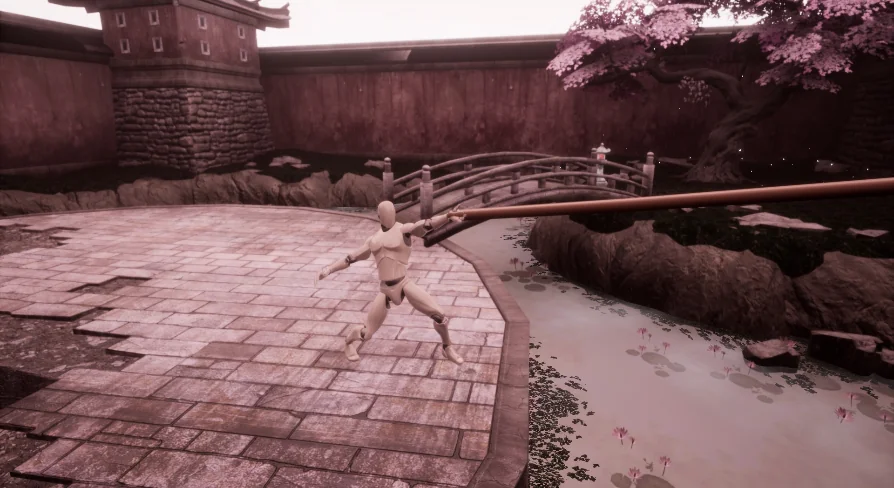
Verticality changes the fundamental rhythm of third-person navigation. When characters can grapple across gaps or latch onto distant anchors, level design expands upward rather than strictly outward. In fantasy settings where ruined castles, hanging bridges, and cavernous chambers dominate the scene, an aerial tether mechanism bridges the gap between ground combat and high-altitude exploration.
Because the system is structured around modular character movement, it operates cleanly alongside third-person perspectives. Characters are not bound to static jump pads or pre-rendered paths; instead, the grappling action creates continuous motion that keeps players engaged with the physical layout of the world. Latching onto ledges, swinging past obstacles, and launching across chasms introduces a sense of weight and physical presence that elevates standard character scripting into an expressive navigation system.
The Mathematical Foundations of the Grapple Hook Blueprints
Developing believable swinging and pulling physics requires far more than basic linear interpolation. Under the hood, the Grapple Hook System is rooted in a substantial volume of mathematics. Spatial calculations dictate the tension of the line, the arc of the swing, and the directional forces exerted on the player character once the grapple engages.
To fully grasp, refine, or customize the mechanics behind this pack, developers benefit from a solid foundation in mathematical principles. The logic handles dynamic vectors, angle calculations, and velocity adjustments to ensure that the hook does not merely pull a pawn forward in a straight line, but rather simulates the forces typical of AAA swinging mechanics. These calculations determine how momentum is preserved when entering and exiting a grapple, how gravity counteracts tension during mid-air arcs, and how terminal velocity is managed when detaching at peak elevation. Having clear math skills allows creators to dig deep into these calculation loops, tweaking acceleration curves, arc radiuses, and release velocity thresholds to suit distinct gameplay styles.
Pure Blueprint Scripting Without C++ Dependencies
Despite the complex mathematical calculations running throughout the mechanic, the entire Grapple Hook System is built exclusively using visual scripting. There is no requirement to compile C++ code or manage native code dependencies, lowering technical friction for artists, scripters, and gameplay designers who prefer node-based environments.
Every node network within the Blueprint graphs is thoroughly commented. Traversal logic, state changes, line-trace validations, and trajectory mathematics are cleanly segregated and labeled. This clear visual organization allows scripters to trace execution flow directly, seeing exactly where the hook projectile is spawned, how collision checks verify valid anchor points, and where character velocity inputs are modified during active swings. Because the system avoids low-level code compilation, adjustments to swing speed, line length, or hook detachment conditions can be iterated directly in the editor viewport with immediate feedback.
Auto Adjusting Camera Behaviors and Demo Control Mapping
High-velocity swinging presents immediate challenges for visual tracking, as erratic perspective shifts can easily disorient players. To maintain clear situational awareness during rapid swings, the system incorporates an auto adjusting camera setup. As the character hooks into geometry and transitions from ground locomotion to aerial swinging, the camera automatically compensates for angle changes, tracking the arc of movement without requiring erratic manual mouse or gamepad corrections.
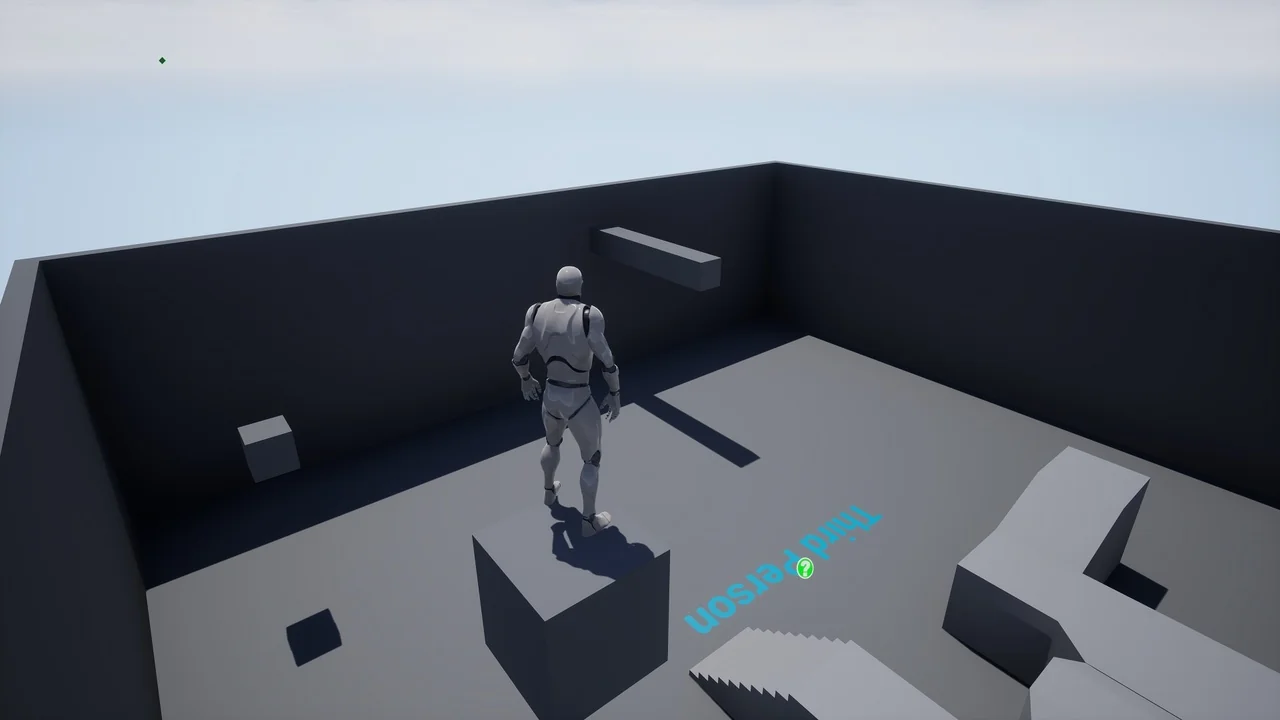
This automated framing keeps the player focused on upcoming landing zones and subsequent anchor points. In the included demo setup, deploying the hook is mapped directly to the “C” key input. Pressing the input fires the hook toward targeted geometry, immediately activating the underlying distance and trajectory math to pull the third-person pawn into motion. This simple input trigger serves as a clean baseline for testing swinging arcs, release timings, and camera transitions across varying terrain elevations.
Modular Integration Workflows and Self-Contained Documentation
Adopting complex mechanics into an ongoing production can often risk entangling core player controllers. The Grapple Hook System is engineered with modularity in mind, allowing the core scripts and hook components to be migrated and integrated into existing character pawns with minimal friction.
The system is packaged alongside complete documentation and integration tutorials that step through attaching the hook logic, hooking up input bindings, and configuring character movement variables. Because the package is designed to function cleanly out of the box through these detailed guides, it is delivered as a self-contained solution where the provided documentation serves as the complete operational manual. Developers seeking to infuse third-person action setups, fantasy adventures, or vertical exploration games with AAA-grade traversal can leverage this math-driven, Blueprint-native framework to deploy responsive grappling mechanics across any project.
 Weapons & Combat
 Weapons & Combat
 Weapons & Combat
 Weapons & Combat