"a19e0535960bd083"{"id":"1002018","slug":"fantasy-barbarian","title":"Fantasy Barbarian","category":"Characters \u0026 Creatures","engine":"4.26+,5.0+","assetVersion":"","engineVersion":"Engine Version: 4.26+,5.0+","tag":"Characters","accent":"blue","visual":"character","summary":"Explore the implementation, fabric simulation, modular clothing toggles, PBR materials, and animation pipeline of the lowpoly Fantasy Barbarian asset.","platform":"Unreal Engine","publishedAt":"2026-10-26T12:56:46.442Z","updatedAt":"2026-10-26T12:56:46.442Z","sourceNotes":[],"fileContents":[],"compatibility":["Unreal Engine","Engine Version: 4.26+,5.0+"],"featuredImage":{"alt":"Fantasy Barbarian","src":"/wp-content/uploads/published/2026/10/5325a9942648-b6008049-5c3f-4157-b5e8-aec6543e06e6-506d1284fc.webp"},"hasDownloadLink":true,"downloads":0,"terms":[{"taxonomy":"category","slug":"characters-and-creatures","name":"Characters \u0026 Creatures"}],"galleryImages":[{"src":"/wp-content/uploads/published/2026/10/d8fc27d840e1-baee7bfa-7a78-435b-87c4-4dd1c1d0db44-780254931b.webp","alt":"Fantasy Barbarian"},{"src":"/wp-content/uploads/published/2026/10/f4c2bd6fa7d3-6638d27e-d602-4525-a644-427a94a755c3-3b04d9fec3.webp","alt":"Fantasy Barbarian"},{"src":"/wp-content/uploads/published/2026/10/18b75b6622c4-aee5398c-067a-42d9-a8b5-ac6409185da0-a59099cf20.webp","alt":"Fantasy Barbarian"}],"accessPanel":{"kind":"resource","title":"Download this resource","eyebrow":"Free Download","message":"Log in or create a free account to start your download.","fileName":"Content.7z","safetyNote":"Resources are manually reviewed before listing to improve quality and reduce obvious risks.","actionLabel":"Download Free","resourceType":"Resource archive"},"contentHtml":"\u003ch2\u003eAnimationblueprint Setup and Initial Script Hookup for Fantasy Barbarian\u003c/h2\u003e\u003cp\u003eIntegrating the Fantasy Barbarian begins at the skeletal mesh and controller level, where the included script and Animationblueprint drive runtime behavior. Rather than setting up motion blending, locomotion transitions, and equipment sockets from raw bone data, the Animationblueprint provides the primary state machine logic required to link character movement to player inputs or AI instructions. Hooking this graph into a character controller requires pointing the pawn class to the barbarians mesh asset, assigning the animation graph inside the skeletal component parameters, and verifying that axis inputs translate into the blend space.\u003c/p\u003e\u003cp\u003eThe companion script serves as the functional bridge between systemic gameplay events and visual states. Weapon equips, posture changes, and stance transitions are routed through this script layer, allowing dynamic parameter updates to pass straight into the Animationblueprint variables without requiring custom animation graph rebuilding. Because lowpoly character pipelines demand lean execution, having the logic pre-structured around an integrated script and an Animationblueprint reduces friction during early game prototyping, sandbox testing, or direct insertion into existing combat frameworks.\u003c/p\u003e\u003ch2\u003eDynamic Fabric Simulation and Mesh Movement\u003c/h2\u003e\u003cp\u003eA notable technical element of the Fantasy Barbarian is the active simulation of fabric components across the character model. Real-time cloth and fabric physics remove the rigidity often found in stylized lowpoly fantasy models, allowing loincloths, sashes, cloaks, or garment extensions to react naturally to directional acceleration, jumps, and rotational turns. Instead of relying on hand-keyed bone animations for every single cloth movement, the character leverages simulated physics parameters calculated directly during runtime execution.\u003c/p\u003e\u003cp\u003eDeploying fabric simulation requires balancing collision radius values against the underlying character geometry. The collision hulls placed around the hips, legs, and torso prevent simulated cloth elements from clipping inward through the barbarians limbs during aggressive strikes or deep stance movements. When running at varied frame rates, the physics solver calculates fabric inertia based on world-space velocity, ensuring the soft materials drape, billow, and settle in rhythm with the rest of the skeletal movement.\u003c/p\u003e\u003ch2\u003eClothing Visibility Controls and Modular Part Hiding\u003c/h2\u003e\u003cp\u003eVisual versatility in character design often hinges on modularity, and the Fantasy Barbarian incorporates the ability to hide specific portions of its clothing. In production environments where gear upgrades, armor degradation, or distinct enemy variants are required, being able to toggle cloth elements directly on a single base mesh solves several asset management challenges. Rather than storing and loading multiple standalone character files for light-armored, heavy-armored, or unarmored variants, the existing geometry can be manipulated on demand.\u003c/p\u003e\u003cp\u003eHiding specific clothing sections is handled through mesh section toggles, material alpha masks, or script-driven visibility calls. This design pattern accommodates diverse staging requirements:\u003c/p\u003e\u003cul\u003e\u003cli\u003eStrip down outer garments to display an unarmored warrior for training sequences or survival scenarios.\u003c/li\u003e\u003cli\u003eHide selected chest or shoulder pieces to prevent clipping when introducing third-party modular armor plates.\u003c/li\u003e\u003cli\u003eDisable secondary fabric layers to reduce physics compute overhead in dense combat encounters.\u003c/li\u003e\u003cli\u003eSwap between bare and clothed variations dynamically using script parameters attached to inventory state updates.\u003c/li\u003e\u003c/ul\u003e\u003cp\u003eBy controlling garment visibility without altering the foundational skeleton, skin weights and deformation rules remain stable across every configuration.\u003c/p\u003e\u003ch2\u003eLowpoly PBR Material Integration and Weapon Attachment\u003c/h2\u003e\u003cp\u003eThe visual execution of the Fantasy Barbarian relies on physically based rendering (PBR) workflows constructed over an optimized lowpoly topology. Lowpoly modeling principles prioritize clear silhouette definitions and minimal triangle counts, which keeps memory footprint and GPU draw costs low. This optimization is particularly beneficial when spawning multiple instances of the barbarian across battlefields, mob encounters, or dense fantasy encampments.\u003c/p\u003e\u003cp\u003eThe PBR material setup ensures that surface properties—such as weathered leather wraps, exposed skin, polished iron, and coarse woven cloth—respond accurately to changes in scene lighting. Directional sun lamps, dim dungeon torches, and ambient environment maps interact with the roughness and metallic properties consistently, preventing the model from looking washed out or overly reflective in dynamic lighting scenarios. Furthermore, the included fantasy weapon follows the same lowpoly PBR discipline. It attaches via designated skeletal sockets on the barbarian rig, ensuring precise alignment with grip bones during combat animations, weapon draws, and idle weapon-sheathing routines.\u003c/p\u003e\u003ch2\u003eAnimation Pipeline and 56 Animations For Creatures Compatibility\u003c/h2\u003e\u003cp\u003eBeyond standard humanoid movement profiles, the Fantasy Barbarian is compatible with the 56 Animations For Creatures set. Creature animation profiles frequently emphasize broader physical stances, predatory lunges, heavy sweeping strikes, quadrupedal or beast-like crouches, and untamed kinetic motions that deviate from conventional, upright knight or soldier movements. This compatibility expands the barbarians utility into roles such as berserkers, feral fighters, or boss-level adversaries who move with untamed momentum.\u003c/p\u003e\u003cp\u003eApplying these 56 motion clips requires verifying bone retargeting nodes within the Animationblueprint. Because the asset is built with an animation blueprint and supportive scripting from the start, remapping root motion, attack arcs, and reaction hits from the creature library preserves the intended weight and timing of those sequences. The dynamic fabric simulation responds directly to these wider, more exaggerated creature animations, settling naturally as the barbarian transitions between lunges, ferocious impacts, and low-slung combat stances.\u003c/p\u003e\n\n\u003ch2\u003eMore From The Same Workflow\u003c/h2\u003e\n\u003cul\u003e\n\u003cli\u003e\u003ca href=\"https://3dcghub.com/fantasy-armour-caster-mage-sorcerer-wizard-metahuman/\" title=\"Fantasy Armour - Caster / Mage / Sorcerer / Wizard - Metahuman\"\u003eFantasy Armour - Caster / Mage / Sorcerer / Wizard - Metahuman\u003c/a\u003e\u003c/li\u003e\n\u003cli\u003e\u003ca href=\"https://3dcghub.com/fantasy-girl-2/\" title=\"FANTASY GIRL\"\u003eFANTASY GIRL\u003c/a\u003e\u003c/li\u003e\n\u003cli\u003e\u003ca href=\"https://3dcghub.com/fantasy-beast-09/\" title=\"Fantasy Beast 09\"\u003eFantasy Beast 09\u003c/a\u003e\u003c/li\u003e\n\u003cli\u003e\u003ca href=\"https://3dcghub.com/hero-mercenary-warrior/\" title=\"Hero Mercenary Warrior\"\u003eHero Mercenary Warrior\u003c/a\u003e\u003c/li\u003e\n\u003cli\u003e\u003ca href=\"https://3dcghub.com/lizard-warrior/\" title=\"Lizard Warrior\"\u003eLizard Warrior\u003c/a\u003e\u003c/li\u003e\n\u003c/ul\u003e","contentTextLength":6333,"navigation":{"current":73,"total":4026,"previous":{"id":"1002019","slug":"fantasy-flight-packs-bundle","title":"Fantasy Flight Packs Bundle","category":"Vehicles \u0026 Transportation","platform":"Unreal Engine","updatedAt":"2026-10-26T12:57:39.888Z"},"next":{"id":"1002017","slug":"fade-camera-occluders","title":"Fade Camera Occluders","category":"Gameplay Features","platform":"Unreal Engine","updatedAt":"2026-10-26T12:56:17.838Z"}},"relatedResources":[{"id":"1000601","slug":"fantasy-armour-caster-mage-sorcerer-wizard-metahuman","title":"Fantasy Armour - Caster / Mage / Sorcerer / Wizard - Metahuman","category":"Characters \u0026 Creatures","engine":"4.26+,5.0+","assetVersion":"","engineVersion":"Engine Version: 4.26+,5.0+","tag":"Characters","accent":"blue","visual":"character","summary":"Customizable fantasy caster armor pack for Unreal Engine with ~60 skeletal meshes, Master Material control, UE5 Mannequin rigging, and MetaHuman parametric clot","platform":"Unreal Engine","publishedAt":"2026-07-20T07:27:01.397Z","updatedAt":"2026-07-20T07:27:01.397Z","sourceNotes":[],"fileContents":[],"compatibility":["Unreal Engine","Engine Version: 4.26+,5.0+"],"featuredImage":{"alt":"Fantasy Armour - Caster / Mage / Sorcerer / Wizard - Metahuman","src":"/wp-content/uploads/published/2026/07/d94e74d93cde-a805533d-c1f4-44d5-a295-e5fc68bc62cf-494b58e3ee.webp"},"hasDownloadLink":true,"downloads":1},{"id":"2319","slug":"fantasy-beast-09","title":"Fantasy Beast 09","category":"Characters \u0026 Creatures","engine":"4.26+5.0+","assetVersion":"Engine version: 4.26+5.0+","engineVersion":"4.19","tag":"Characters","accent":"blue","visual":"character","summary":"Enhance your project with this optimized low-poly fantasy beast model. Featuring 24 animations, 4K textures, and two unique skins for diverse creature designs.","platform":"Unreal Engine","publishedAt":"2026-02-07T09:04:48.000Z","updatedAt":"2026-04-19T15:58:03.000Z","sourceNotes":[],"fileContents":[],"compatibility":["Unreal Engine","Engine version: 4.26+5.0+"],"featuredImage":{"alt":"Fantasy Beast 09","src":"https://3dcghub.com/wp-content/uploads/2026/02/f6e91c3b-30f9-4b38-b3b4-164fcb9f10a6.webp"},"hasDownloadLink":true,"downloads":0},{"id":"2346","slug":"fantasy-girl-2","title":"FANTASY GIRL","category":"Characters \u0026 Creatures","engine":"4.27,5.0+","assetVersion":"Engine version: 4.27,5.0+","engineVersion":"4.19","tag":"Characters","accent":"blue","visual":"character","summary":"Enhance your game with this modular Fantasy Girl character for Unreal Engine. Features 4K PBR textures, Epic Skeleton rigging, and physics-enabled clothing.","platform":"Unreal Engine","publishedAt":"2026-02-07T09:12:46.000Z","updatedAt":"2026-04-19T15:58:03.000Z","sourceNotes":[],"fileContents":[],"compatibility":["Unreal Engine","Engine version: 4.27,5.0+"],"featuredImage":{"alt":"FANTASY GIRL","src":"https://3dcghub.com/wp-content/uploads/2026/02/c8c74628-0b97-4be7-acf4-215773844dff.webp"},"hasDownloadLink":true,"downloads":0}]}
Characters
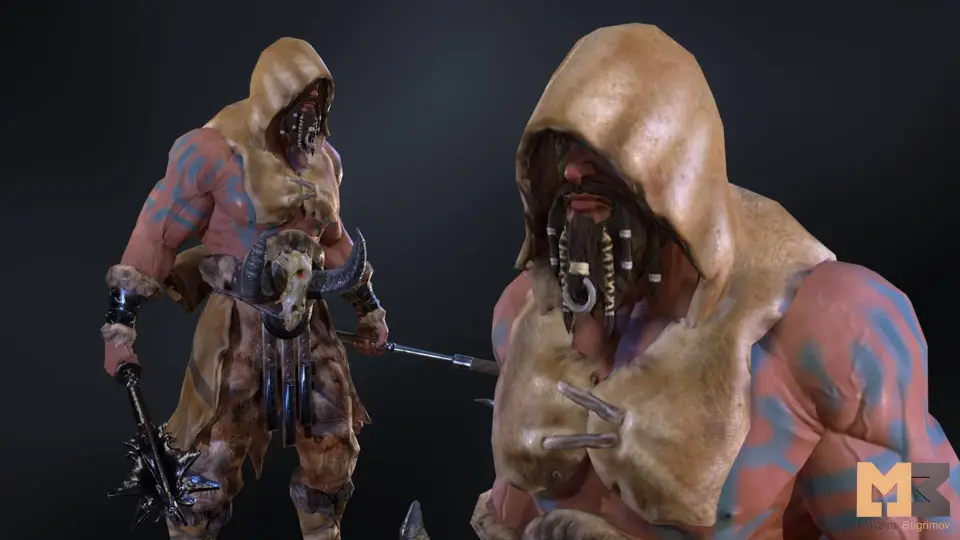
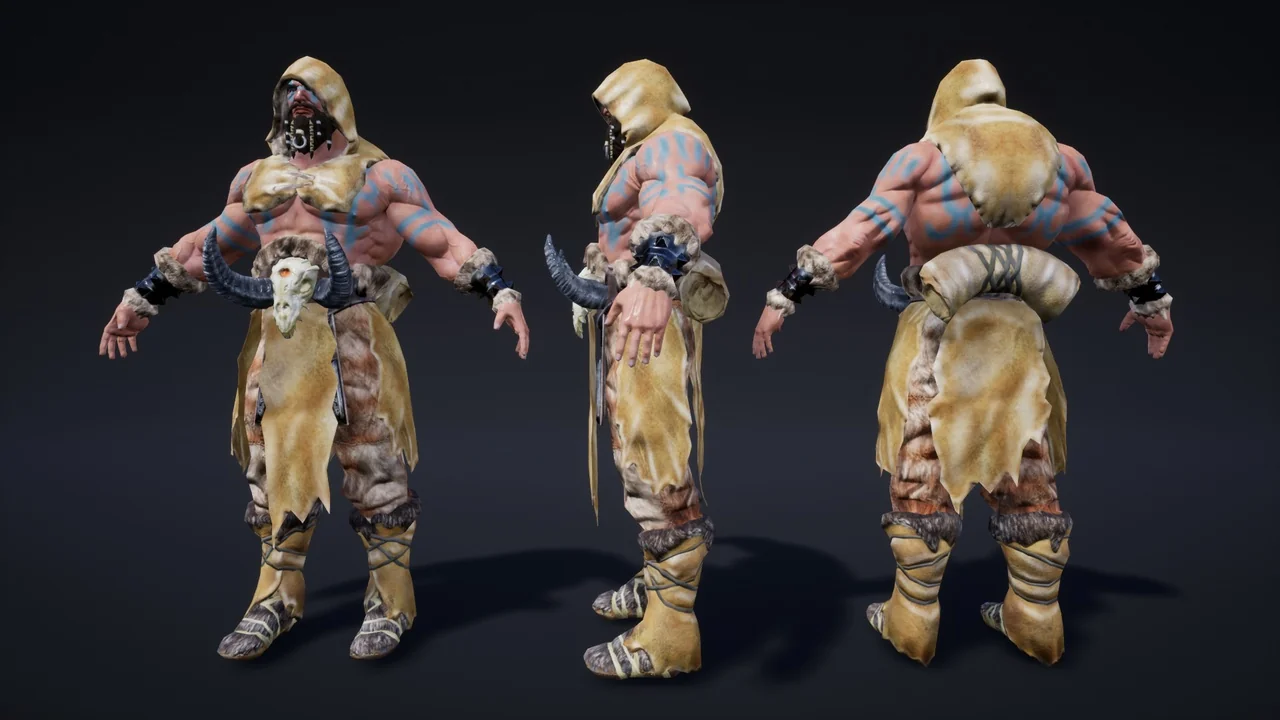
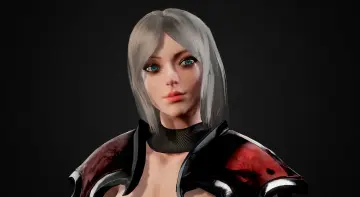
Fantasy Barbarian
Explore the implementation, fabric simulation, modular clothing toggles, PBR materials, and animation pipeline of the lowpoly Fantasy Barbarian asset.
Animationblueprint Setup and Initial Script Hookup for Fantasy Barbarian
Integrating the Fantasy Barbarian begins at the skeletal mesh and controller level, where the included script and Animationblueprint drive runtime behavior. Rather than setting up motion blending, locomotion transitions, and equipment sockets from raw bone data, the Animationblueprint provides the primary state machine logic required to link character movement to player inputs or AI instructions. Hooking this graph into a character controller requires pointing the pawn class to the barbarians mesh asset, assigning the animation graph inside the skeletal component parameters, and verifying that axis inputs translate into the blend space.
The companion script serves as the functional bridge between systemic gameplay events and visual states. Weapon equips, posture changes, and stance transitions are routed through this script layer, allowing dynamic parameter updates to pass straight into the Animationblueprint variables without requiring custom animation graph rebuilding. Because lowpoly character pipelines demand lean execution, having the logic pre-structured around an integrated script and an Animationblueprint reduces friction during early game prototyping, sandbox testing, or direct insertion into existing combat frameworks.
Dynamic Fabric Simulation and Mesh Movement
A notable technical element of the Fantasy Barbarian is the active simulation of fabric components across the character model. Real-time cloth and fabric physics remove the rigidity often found in stylized lowpoly fantasy models, allowing loincloths, sashes, cloaks, or garment extensions to react naturally to directional acceleration, jumps, and rotational turns. Instead of relying on hand-keyed bone animations for every single cloth movement, the character leverages simulated physics parameters calculated directly during runtime execution.
Deploying fabric simulation requires balancing collision radius values against the underlying character geometry. The collision hulls placed around the hips, legs, and torso prevent simulated cloth elements from clipping inward through the barbarians limbs during aggressive strikes or deep stance movements. When running at varied frame rates, the physics solver calculates fabric inertia based on world-space velocity, ensuring the soft materials drape, billow, and settle in rhythm with the rest of the skeletal movement.
Clothing Visibility Controls and Modular Part Hiding
Visual versatility in character design often hinges on modularity, and the Fantasy Barbarian incorporates the ability to hide specific portions of its clothing. In production environments where gear upgrades, armor degradation, or distinct enemy variants are required, being able to toggle cloth elements directly on a single base mesh solves several asset management challenges. Rather than storing and loading multiple standalone character files for light-armored, heavy-armored, or unarmored variants, the existing geometry can be manipulated on demand.
Hiding specific clothing sections is handled through mesh section toggles, material alpha masks, or script-driven visibility calls. This design pattern accommodates diverse staging requirements:
Strip down outer garments to display an unarmored warrior for training sequences or survival scenarios.
Hide selected chest or shoulder pieces to prevent clipping when introducing third-party modular armor plates.
Disable secondary fabric layers to reduce physics compute overhead in dense combat encounters.
Swap between bare and clothed variations dynamically using script parameters attached to inventory state updates.
By controlling garment visibility without altering the foundational skeleton, skin weights and deformation rules remain stable across every configuration.
Lowpoly PBR Material Integration and Weapon Attachment
The visual execution of the Fantasy Barbarian relies on physically based rendering (PBR) workflows constructed over an optimized lowpoly topology. Lowpoly modeling principles prioritize clear silhouette definitions and minimal triangle counts, which keeps memory footprint and GPU draw costs low. This optimization is particularly beneficial when spawning multiple instances of the barbarian across battlefields, mob encounters, or dense fantasy encampments.
The PBR material setup ensures that surface properties—such as weathered leather wraps, exposed skin, polished iron, and coarse woven cloth—respond accurately to changes in scene lighting. Directional sun lamps, dim dungeon torches, and ambient environment maps interact with the roughness and metallic properties consistently, preventing the model from looking washed out or overly reflective in dynamic lighting scenarios. Furthermore, the included fantasy weapon follows the same lowpoly PBR discipline. It attaches via designated skeletal sockets on the barbarian rig, ensuring precise alignment with grip bones during combat animations, weapon draws, and idle weapon-sheathing routines.
Animation Pipeline and 56 Animations For Creatures Compatibility
Beyond standard humanoid movement profiles, the Fantasy Barbarian is compatible with the 56 Animations For Creatures set. Creature animation profiles frequently emphasize broader physical stances, predatory lunges, heavy sweeping strikes, quadrupedal or beast-like crouches, and untamed kinetic motions that deviate from conventional, upright knight or soldier movements. This compatibility expands the barbarians utility into roles such as berserkers, feral fighters, or boss-level adversaries who move with untamed momentum.
Applying these 56 motion clips requires verifying bone retargeting nodes within the Animationblueprint. Because the asset is built with an animation blueprint and supportive scripting from the start, remapping root motion, attack arcs, and reaction hits from the creature library preserves the intended weight and timing of those sequences. The dynamic fabric simulation responds directly to these wider, more exaggerated creature animations, settling naturally as the barbarian transitions between lunges, ferocious impacts, and low-slung combat stances.
 Characters
 Characters
 Characters
 Characters