"ddd0e3fb95b0aec2"{"id":"1000047","slug":"crystals-and-crafting-environment-house-crafting-medieval-medieval-3d-old-3d","title":"Crystals and Crafting Environment ( House Crafting Medieval Medieval 3D Old 3D )","category":"Towns \u0026 Villages","engine":"5.2+","assetVersion":"","engineVersion":"5.2+","tag":"Towns \u0026 Villages","accent":"blue","visual":"city","summary":"A medieval crafting environment pack with 161 unique meshes, a preassembled scene, Lumen support, and ULAT for modular building and scene layout.","platform":"Unreal Engine","publishedAt":"2026-05-22T10:59:33.907Z","updatedAt":"2026-05-22T10:59:33.907Z","sourceNotes":[],"fileContents":[],"compatibility":["Unreal Engine","Engine version: 5.2+"],"featuredImage":{"alt":"Crystals and Crafting Environment ( House Crafting Medieval Medieval 3D Old 3D )","src":"/wp-content/uploads/published/2026/05/a5a86124fbd3-3f730657-8b59-49b4-ac32-f72a9c8550be-48006828dc.webp"},"hasDownloadLink":true,"downloads":0,"terms":[{"taxonomy":"category","slug":"towns-and-villages","name":"Towns \u0026 Villages"}],"galleryImages":[{"src":"/wp-content/uploads/published/2026/05/fb22ad6baee8-44c4eb5e-f465-4acb-a4ae-0d7227daf789-479c180184.webp","alt":"Crystals and Crafting Environment ( House Crafting Medieval Medieval 3D Old 3D )"},{"src":"/wp-content/uploads/published/2026/05/eaf03c66360d-d7c4f41c-d0ab-479d-a49d-6d689a461712-db1a122b31.webp","alt":"Crystals and Crafting Environment ( House Crafting Medieval Medieval 3D Old 3D )"},{"src":"/wp-content/uploads/published/2026/05/3e05f8fcac4b-b4cf2ad4-1bb6-4532-84d1-a292c028186b-d170bf0501.webp","alt":"Crystals and Crafting Environment ( House Crafting Medieval Medieval 3D Old 3D )"},{"src":"/wp-content/uploads/published/2026/05/968e5926e17b-faf41c49-8dc7-481a-8823-94bdc2e61cec-9356b95703.webp","alt":"Crystals and Crafting Environment ( House Crafting Medieval Medieval 3D Old 3D )"},{"src":"/wp-content/uploads/published/2026/05/ce56bdd4f44a-d936a9da-abf2-4e20-b66e-d12ebb0b874e-f49e756f50.webp","alt":"Crystals and Crafting Environment ( House Crafting Medieval Medieval 3D Old 3D )"},{"src":"/wp-content/uploads/published/2026/05/fb01abf4a112-38cdbabb-9b50-4b33-ae4f-3fd0730de14f-8dba5f208e.webp","alt":"Crystals and Crafting Environment ( House Crafting Medieval Medieval 3D Old 3D )"},{"src":"/wp-content/uploads/published/2026/05/018df026d860-85389f53-b307-40fc-8b6e-6a5013c8c9c0-25154c93cc.webp","alt":"Crystals and Crafting Environment ( House Crafting Medieval Medieval 3D Old 3D )"},{"src":"/wp-content/uploads/published/2026/05/21b297742326-fb9df109-da93-4eb6-b3af-5b4a3b05e30f-a3ee36a31f.webp","alt":"Crystals and Crafting Environment ( House Crafting Medieval Medieval 3D Old 3D )"},{"src":"/wp-content/uploads/published/2026/05/1ac021fcee29-c6595e1f-679f-4f40-a53d-95faa157b665-46b1362c2f.webp","alt":"Crystals and Crafting Environment ( House Crafting Medieval Medieval 3D Old 3D )"},{"src":"/wp-content/uploads/published/2026/05/4421e6bf0092-7966dee4-0562-46bc-b59c-a42e31b26f53-55f3a74bf2.webp","alt":"Crystals and Crafting Environment ( House Crafting Medieval Medieval 3D Old 3D )"}],"accessPanel":{"kind":"resource","title":"Access this resource","eyebrow":"Free Download","message":"Log in or create a free account to start your download.","fileName":"Content.7z","safetyNote":"Resources are manually reviewed before listing to improve quality and reduce obvious risks.","actionLabel":"Download Free","resourceType":"Resource archive"},"contentHtml":"\u003cp\u003eCrystals and Crafting Environment centers on a sizable set of environment pieces: 161 unique meshes, all showcased assets, and a showcased preassembled scene. The pack is framed around a medieval crafting setting with old houses, workshops, and fantasy production spaces, aiming for high-quality visuals with a good level of detail while staying optimized for game-ready projects.\u003c/p\u003e \u003ch2\u003e161 Unique Meshes and the Preassembled Scene\u003c/h2\u003e\n\u003cp\u003eThe most concrete part of the package is its mesh count. With 161 unique meshes included, it offers a broad enough set of pieces to support more than a single static backdrop. The inclusion of all showcased assets matters here because it means the visual identity presented for the environment is part of the package itself rather than a separate demonstration setup. That gives the collection a clearer practical shape: it is not just a group of disconnected props, but a full environment set assembled around a specific look.\u003c/p\u003e\n\u003cp\u003eThe showcased preassembled scene pushes that further. In a production workflow, a preassembled scene can act as both a starting point and a reference point. It gives artists, level builders, and virtual production teams a ready-made arrangement that shows how the meshes relate to each other spatially and stylistically. Instead of beginning from an empty level, teams can start from an already composed medieval crafting space, then adjust density, layout, and emphasis to suit their own sequence or gameplay area.\u003c/p\u003e\n\u003cp\u003eThat makes the pack useful in two distinct ways. It can function as a drop-in environment when a project needs a complete themed space quickly, and it can also serve as a parts library for more tailored construction. The available details emphasizes both the included scene and the unique mesh set, which suggests a package meant to support immediate use as well as recomposition.\u003c/p\u003e \u003ch2\u003eCrystals and Crafting Environment as a medieval fantasy setting\u003c/h2\u003e\n\u003cp\u003eThe theme is unusually specific. This is not a broad medieval environment without a center of gravity; it leans directly into crafting, workshop, and mystical production imagery. The tags point toward alchemy, smithing, blacksmith work, potions, herbalism, runes, spellcraft, artisan spaces, ancient village structures, and market-adjacent handmade production. That places the environment somewhere between a practical workshop district and a more magical fantasy crafting space.\u003c/p\u003e\n\u003cp\u003eCrystals are part of that identity as well, connecting the environment to mystical and enchanted craft motifs rather than a purely historical village treatment. The setting can be read as a place where physical making and magical practice overlap: forge work, apothecary functions, candle-lit workshop interiors, crystal-inflected craft, and village-scale medieval architecture all sit within the same visual range. The pack’s naming and tags also suggest spaces such as a potion shop, magical workshop, old market, merchant stall, armory, smithy, and alchemy lab.\u003c/p\u003e\n\u003cp\u003eFor production teams, that specificity is often more useful than a generic medieval set. It gives a level or background a clearer narrative role. Instead of merely filling a village, the environment can support scenes about trade, handmade goods, magical preparation, artisan work, enchantment, or resource gathering. It also fits projects that need an old stone-and-wood atmosphere without losing the fantasy edge signaled by crystals, mystic arts, and witchcraft-related tags.\u003c/p\u003e\n\u003cp\u003eThe package then offers a pack that appears best suited to locations where craft is visible and central. Workshops, maker spaces, trading corners, forge areas, and magical production rooms all fit the named identity of the environment. Even when used more selectively, the assets point toward a world where tools, materials, and crafted objects are part of the storytelling.\u003c/p\u003e \u003ch2\u003eGame Ready Projects, Virtual Production levels, and optimized use\u003c/h2\u003e\n\u003cp\u003eThe package is explicitly presented as optimized for game-ready projects. That wording carries practical weight because it places the pack in active production rather than purely presentation-oriented use. The emphasis is not only on visual quality but also on assets being well optimized. For environment art teams, that combination is often the deciding factor between a set that looks good in isolation and one that can actually be placed into a working level.\u003c/p\u003e\n\u003cp\u003eThe same description extends the use case beyond games to virtual production levels. That is an important distinction. A medieval crafting environment can serve very different needs depending on whether it is being used for player navigation, cinematic staging, previs, or background worldbuilding. By calling out virtual production directly, the pack positions itself as suitable for scene population in workflows where a level may need to read clearly on camera, support fast iteration, or provide a ready thematic backdrop for shots.\u003c/p\u003e\n\u003cp\u003eIn that context, the preassembled scene becomes especially practical. It gives teams a prepared environment for blocking shots or establishing the mood of a workshop or village craft area without assembling every piece by hand from the start. At the same time, the larger mesh library allows the level to be changed or expanded once the basic structure is in place.\u003c/p\u003e\n\u003cp\u003eLumen is enabled, which connects the pack to lighting workflows that benefit from responsive environmental illumination. The material also references documentation for both Lumen and Nanite. Without adding claims beyond that, it is fair to say the pack is presented with modern rendering and environment workflow considerations in mind. For users already building scenes that rely on these systems, the package is positioned to sit within that conversation rather than outside it.\u003c/p\u003e \u003ch2\u003eUltimate Level Art Tool (ULAT) inside the pack\u003c/h2\u003e\n\u003cp\u003eA major part of the package is the inclusion of ULAT, the Ultimate Level Art Tool. This is not framed as an unrelated extra. It is tied directly to how the environment can be built and extended. ULAT allows fast creation of custom modular buildings, and it is also described as offering a seamless and distinctive way to populate scenes naturally.\u003c/p\u003e\n\u003cp\u003eThat changes how Crystals and Crafting Environment can function in a pipeline. On one level, it is a themed environment pack with a substantial asset count. On another, it is also connected to a modular building workflow through the included tool. The environment pack is stated to be compatible with ULAT, which reinforces the idea that the set is not limited to one fixed arrangement. Artists can start with the preassembled scene, pull from the unique meshes, and then use ULAT to build out additional structures or adjust the environment into a more project-specific layout.\u003c/p\u003e\n\u003cp\u003eFor medieval and fantasy settings, modularity is particularly useful because settlement spaces often need variation without breaking the visual language. Houses, workshop fronts, market-adjacent structures, and craft buildings benefit from repeated materials and forms, but they still need enough difference to avoid looking copied. A tool that supports custom modular building fits that need well, especially when the pack itself already leans into houses, traditional workshops, and old village architecture.\u003c/p\u003e\n\u003cp\u003eThe mention of scene population is equally relevant. A crafting environment rarely succeeds through major structures alone. Its identity comes from the sense that tools, objects, work areas, and themed spaces are placed in a natural way. ULAT is presented as helping with that broader placement task, not only with the construction of buildings. That makes it part of the environment workflow rather than a separate technical add-on.\u003c/p\u003e \u003ch2\u003eWhere Crystals and Crafting Environment fits in a production workflow\u003c/h2\u003e\n\u003cp\u003eThis pack fits most clearly where a team needs a medieval fantasy craft space that can move quickly from setup to usable scene. The included preassembled level supports fast staging. The 161 unique meshes support rearrangement and extension. The optimization focus keeps it aligned with game-ready work, while the mention of virtual production makes it relevant for real-time cinematic environments as well.\u003c/p\u003e\n\u003cp\u003eIts best fit is not a neutral medieval backdrop. It is a more characterful environment with a clear craft identity: blacksmithing, alchemy, mystical making, old workshops, and village production spaces. That focus gives environment artists a stronger narrative signal to work with. A scene can read as a place of labor, trade, enchantment, or artisanal production without needing much extra framing.\u003c/p\u003e\n\u003cp\u003eULAT expands the role of the pack from a static asset collection into something closer to an environment-building system. Fast modular building and natural scene population make sense alongside a medieval house-and-workshop theme, especially when layouts need to be adapted for gameplay routes, shot composition, or worldbuilding needs. Lumen support adds another practical layer for teams that want the environment to hold up as a lit real-time space rather than only as a raw model set.\u003c/p\u003e\n\u003cp\u003eInside a project, Crystals and Crafting Environment is set up to handle medieval crafting scenes that need ready-made structure, reusable environment pieces, and room for modular expansion inside a game or virtual production pipeline.\u003c/p\u003e\n\n\u003ch2\u003eMore From The Same Workflow\u003c/h2\u003e\n\u003cul\u003e\n\u003cli\u003e\u003ca href=\"https://3dcghub.com/enterable-medieval-houses-and-cottages-v1/\" title=\"Enterable Medieval Houses and Cottages - v1\"\u003eEnterable Medieval Houses and Cottages - v1\u003c/a\u003e\u003c/li\u003e\n\u003cli\u003e\u003ca href=\"https://3dcghub.com/feudal-japanese-village-environment-japan-medieval-japanese-japan-feudal-3d/\" title=\"Feudal Japanese Village Environment ( Japan Medieval Japanese Japan Feudal 3D )\"\u003eFeudal Japanese Village Environment ( Japan Medieval Japanese Japan Feudal 3D )\u003c/a\u003e\u003c/li\u003e\n\u003cli\u003e\u003ca href=\"https://3dcghub.com/witch-village-environment-witch-village-village-village-house-house-modular/\" title=\"Witch Village Environment ( Witch Village Village Village House House Modular )\"\u003eWitch Village Environment ( Witch Village Village Village House House Modular )\u003c/a\u003e\u003c/li\u003e\n\u003cli\u003e\u003ca href=\"https://3dcghub.com/american-suburban-house-environment/\" title=\"American Suburban House Environment\"\u003eAmerican Suburban House Environment\u003c/a\u003e\u003c/li\u003e\n\u003cli\u003e\u003ca href=\"https://3dcghub.com/italian-alley-environment-italian-alley-house-building-italian-house-alley/\" title=\"Italian Alley Environment ( Italian Alley House Building Italian House Alley )\"\u003eItalian Alley Environment ( Italian Alley House Building Italian House Alley )\u003c/a\u003e\u003c/li\u003e\n\u003c/ul\u003e","contentTextLength":9595,"navigation":{"current":1609,"total":3511,"previous":{"id":"1000048","slug":"customizable-bodycam-component","title":"Customizable Bodycam Component","category":"Gameplay Features","platform":"Unreal Engine","updatedAt":"2026-05-22T11:03:34.875Z"},"next":{"id":"1000046","slug":"crash-and-smash-designed","title":"Crash \u0026 Smash - Designed","category":"Sound Effects","platform":"Unreal Engine","updatedAt":"2026-05-22T09:40:57.365Z"}},"relatedResources":[{"id":"1000656","slug":"modular-medieval-village-medieval-village-stylized-village-fantasy-village","title":"Modular Medieval Village (Medieval Village, Stylized Village, Fantasy Village)","category":"Towns \u0026 Villages","engine":"5.0+","assetVersion":"","engineVersion":"Engine Version: 5.0+","tag":"Towns \u0026 Villages","accent":"blue","visual":"mech","summary":"Stylized medieval village environment with modular houses, full interiors, customizable foliage, animated windmill, VFX, and four landscape materials for fantas","platform":"Unreal Engine","publishedAt":"2026-07-21T20:13:46.984Z","updatedAt":"2026-07-21T20:13:46.984Z","sourceNotes":[],"fileContents":[],"compatibility":["Unreal Engine","Engine Version: 5.0+"],"featuredImage":{"alt":"Modular Medieval Village (Medieval Village, Stylized Village, Fantasy Village)","src":"/wp-content/uploads/published/2026/07/ca7c07789bb0-b7bee89e-026b-4a7d-9512-2cc83a581415-24adf9d89e.webp"},"hasDownloadLink":true,"downloads":2},{"id":"1000064","slug":"haunted-village-environment-horror-abandoned-postapo-medieval-russian-house","title":"Haunted Village Environment ( Horror Abandoned Postapo Medieval Russian House )","category":"Towns \u0026 Villages","engine":"4.26+,5.0+","assetVersion":"","engineVersion":"4.26+,5.0+","tag":"Towns \u0026 Villages","accent":"blue","visual":"city","summary":"A modular Unreal Engine environment featuring 108 unique meshes, the Ultimate Level Art Tool, and optimized assets for game-ready horror and virtual production","platform":"Unreal Engine","publishedAt":"2026-05-28T14:15:28.820Z","updatedAt":"2026-05-28T14:15:28.820Z","sourceNotes":[],"fileContents":[],"compatibility":["Unreal Engine","Engine version: 4.26+,5.0+"],"featuredImage":{"alt":"Haunted Village Environment ( Horror Abandoned Postapo Medieval Russian House )","src":"/wp-content/uploads/published/2026/05/4f1e76b8b34a-a5f1d0b0-945b-4cc8-ad29-02b0241a7128-96f6f47b23.webp"},"hasDownloadLink":true,"downloads":1},{"id":"4437","slug":"enterable-medieval-houses-and-cottages-v1","title":"Enterable Medieval Houses and Cottages - v1","category":"Towns \u0026 Villages","engine":"4.26+,5.0+","assetVersion":"Engine version: 4.26+,5.0+","engineVersion":"4.22","tag":"Towns \u0026 Villages","accent":"blue","visual":"mech","summary":"Enhance your RPG with ten enterable medieval houses. Featuring Nanite, Lumen support, and customizable tiled materials for AAA-quality game environments.","platform":"Unreal Engine","publishedAt":"2026-02-13T08:01:42.000Z","updatedAt":"2026-04-19T15:57:09.000Z","sourceNotes":[],"fileContents":[],"compatibility":["Unreal Engine","Engine version: 4.26+,5.0+"],"featuredImage":{"alt":"Enterable Medieval Houses and Cottages - v1","src":"https://3dcghub.com/wp-content/uploads/2026/02/907732b6-78b6-466f-8b16-33cb7caa1b1b.webp"},"hasDownloadLink":true,"downloads":1}]}
Towns & Villages
Crystals and Crafting Environment ( House Crafting Medieval Medieval 3D Old 3D )
A medieval crafting environment pack with 161 unique meshes, a preassembled scene, Lumen support, and ULAT for modular building and scene layout.
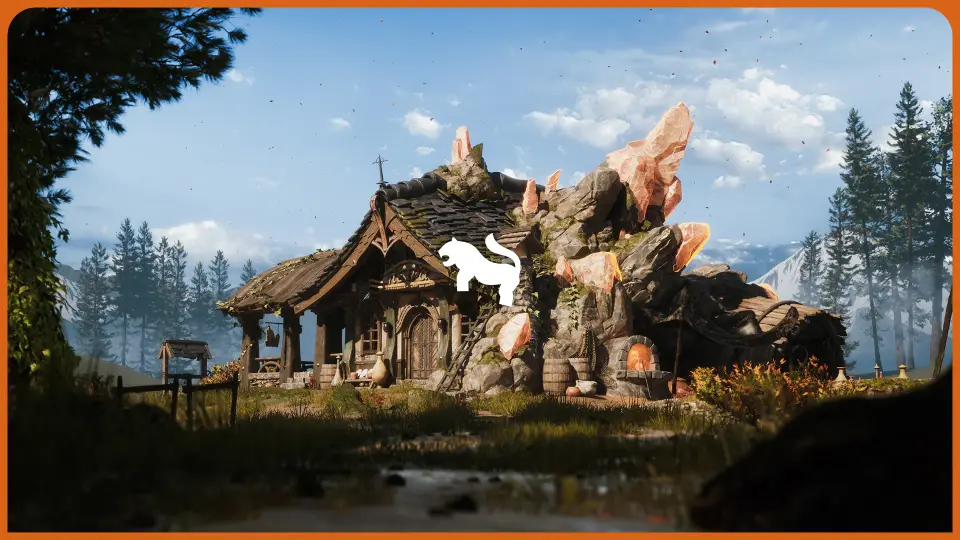
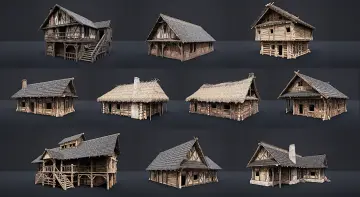
Crystals and Crafting Environment centers on a sizable set of environment pieces: 161 unique meshes, all showcased assets, and a showcased preassembled scene. The pack is framed around a medieval crafting setting with old houses, workshops, and fantasy production spaces, aiming for high-quality visuals with a good level of detail while staying optimized for game-ready projects.
161 Unique Meshes and the Preassembled Scene
The most concrete part of the package is its mesh count. With 161 unique meshes included, it offers a broad enough set of pieces to support more than a single static backdrop. The inclusion of all showcased assets matters here because it means the visual identity presented for the environment is part of the package itself rather than a separate demonstration setup. That gives the collection a clearer practical shape: it is not just a group of disconnected props, but a full environment set assembled around a specific look.
The showcased preassembled scene pushes that further. In a production workflow, a preassembled scene can act as both a starting point and a reference point. It gives artists, level builders, and virtual production teams a ready-made arrangement that shows how the meshes relate to each other spatially and stylistically. Instead of beginning from an empty level, teams can start from an already composed medieval crafting space, then adjust density, layout, and emphasis to suit their own sequence or gameplay area.
That makes the pack useful in two distinct ways. It can function as a drop-in environment when a project needs a complete themed space quickly, and it can also serve as a parts library for more tailored construction. The available details emphasizes both the included scene and the unique mesh set, which suggests a package meant to support immediate use as well as recomposition.
Crystals and Crafting Environment as a medieval fantasy setting
The theme is unusually specific. This is not a broad medieval environment without a center of gravity; it leans directly into crafting, workshop, and mystical production imagery. The tags point toward alchemy, smithing, blacksmith work, potions, herbalism, runes, spellcraft, artisan spaces, ancient village structures, and market-adjacent handmade production. That places the environment somewhere between a practical workshop district and a more magical fantasy crafting space.
Crystals are part of that identity as well, connecting the environment to mystical and enchanted craft motifs rather than a purely historical village treatment. The setting can be read as a place where physical making and magical practice overlap: forge work, apothecary functions, candle-lit workshop interiors, crystal-inflected craft, and village-scale medieval architecture all sit within the same visual range. The pack’s naming and tags also suggest spaces such as a potion shop, magical workshop, old market, merchant stall, armory, smithy, and alchemy lab.
For production teams, that specificity is often more useful than a generic medieval set. It gives a level or background a clearer narrative role. Instead of merely filling a village, the environment can support scenes about trade, handmade goods, magical preparation, artisan work, enchantment, or resource gathering. It also fits projects that need an old stone-and-wood atmosphere without losing the fantasy edge signaled by crystals, mystic arts, and witchcraft-related tags.
The package then offers a pack that appears best suited to locations where craft is visible and central. Workshops, maker spaces, trading corners, forge areas, and magical production rooms all fit the named identity of the environment. Even when used more selectively, the assets point toward a world where tools, materials, and crafted objects are part of the storytelling.
Game Ready Projects, Virtual Production levels, and optimized use
The package is explicitly presented as optimized for game-ready projects. That wording carries practical weight because it places the pack in active production rather than purely presentation-oriented use. The emphasis is not only on visual quality but also on assets being well optimized. For environment art teams, that combination is often the deciding factor between a set that looks good in isolation and one that can actually be placed into a working level.
The same description extends the use case beyond games to virtual production levels. That is an important distinction. A medieval crafting environment can serve very different needs depending on whether it is being used for player navigation, cinematic staging, previs, or background worldbuilding. By calling out virtual production directly, the pack positions itself as suitable for scene population in workflows where a level may need to read clearly on camera, support fast iteration, or provide a ready thematic backdrop for shots.
In that context, the preassembled scene becomes especially practical. It gives teams a prepared environment for blocking shots or establishing the mood of a workshop or village craft area without assembling every piece by hand from the start. At the same time, the larger mesh library allows the level to be changed or expanded once the basic structure is in place.
Lumen is enabled, which connects the pack to lighting workflows that benefit from responsive environmental illumination. The material also references documentation for both Lumen and Nanite. Without adding claims beyond that, it is fair to say the pack is presented with modern rendering and environment workflow considerations in mind. For users already building scenes that rely on these systems, the package is positioned to sit within that conversation rather than outside it.
Ultimate Level Art Tool (ULAT) inside the pack
A major part of the package is the inclusion of ULAT, the Ultimate Level Art Tool. This is not framed as an unrelated extra. It is tied directly to how the environment can be built and extended. ULAT allows fast creation of custom modular buildings, and it is also described as offering a seamless and distinctive way to populate scenes naturally.
That changes how Crystals and Crafting Environment can function in a pipeline. On one level, it is a themed environment pack with a substantial asset count. On another, it is also connected to a modular building workflow through the included tool. The environment pack is stated to be compatible with ULAT, which reinforces the idea that the set is not limited to one fixed arrangement. Artists can start with the preassembled scene, pull from the unique meshes, and then use ULAT to build out additional structures or adjust the environment into a more project-specific layout.
For medieval and fantasy settings, modularity is particularly useful because settlement spaces often need variation without breaking the visual language. Houses, workshop fronts, market-adjacent structures, and craft buildings benefit from repeated materials and forms, but they still need enough difference to avoid looking copied. A tool that supports custom modular building fits that need well, especially when the pack itself already leans into houses, traditional workshops, and old village architecture.
The mention of scene population is equally relevant. A crafting environment rarely succeeds through major structures alone. Its identity comes from the sense that tools, objects, work areas, and themed spaces are placed in a natural way. ULAT is presented as helping with that broader placement task, not only with the construction of buildings. That makes it part of the environment workflow rather than a separate technical add-on.
Where Crystals and Crafting Environment fits in a production workflow
This pack fits most clearly where a team needs a medieval fantasy craft space that can move quickly from setup to usable scene. The included preassembled level supports fast staging. The 161 unique meshes support rearrangement and extension. The optimization focus keeps it aligned with game-ready work, while the mention of virtual production makes it relevant for real-time cinematic environments as well.
Its best fit is not a neutral medieval backdrop. It is a more characterful environment with a clear craft identity: blacksmithing, alchemy, mystical making, old workshops, and village production spaces. That focus gives environment artists a stronger narrative signal to work with. A scene can read as a place of labor, trade, enchantment, or artisanal production without needing much extra framing.
ULAT expands the role of the pack from a static asset collection into something closer to an environment-building system. Fast modular building and natural scene population make sense alongside a medieval house-and-workshop theme, especially when layouts need to be adapted for gameplay routes, shot composition, or worldbuilding needs. Lumen support adds another practical layer for teams that want the environment to hold up as a lit real-time space rather than only as a raw model set.
Inside a project, Crystals and Crafting Environment is set up to handle medieval crafting scenes that need ready-made structure, reusable environment pieces, and room for modular expansion inside a game or virtual production pipeline.
 Towns & Villages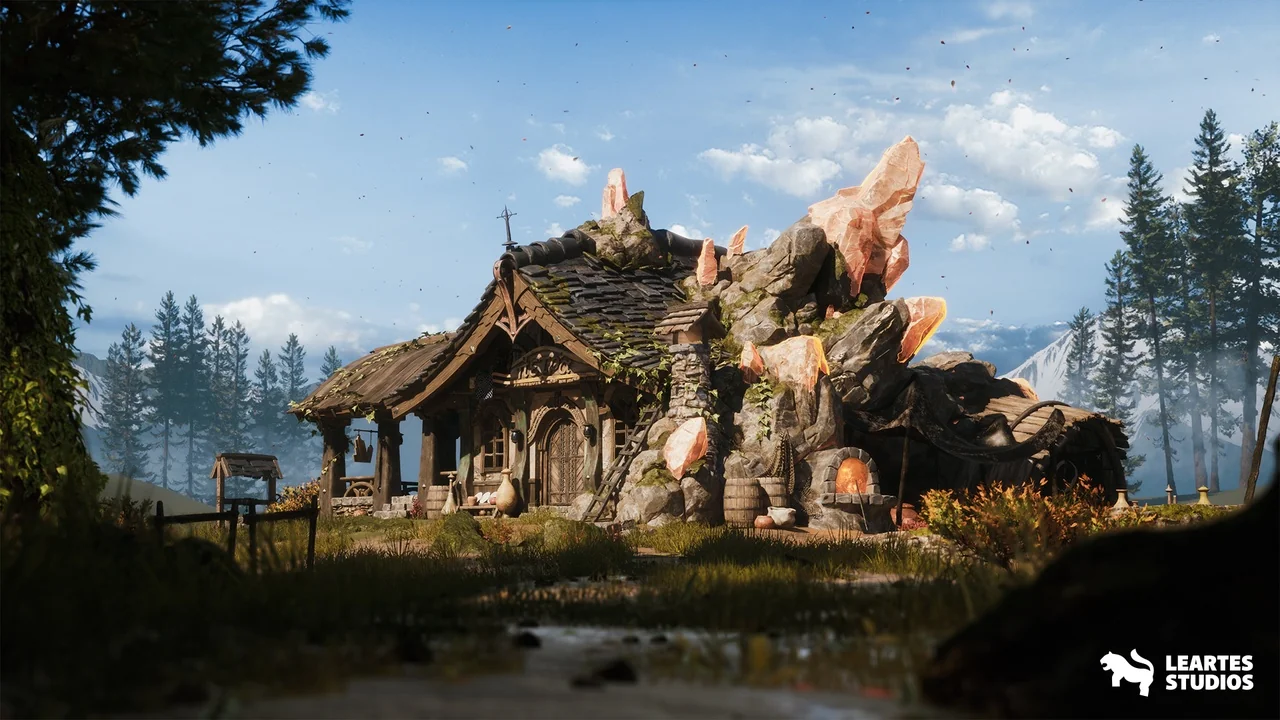
 Towns & Villages
 Towns & Villages
 Towns & Villages