A Non-Physics Approach to Precision Movement
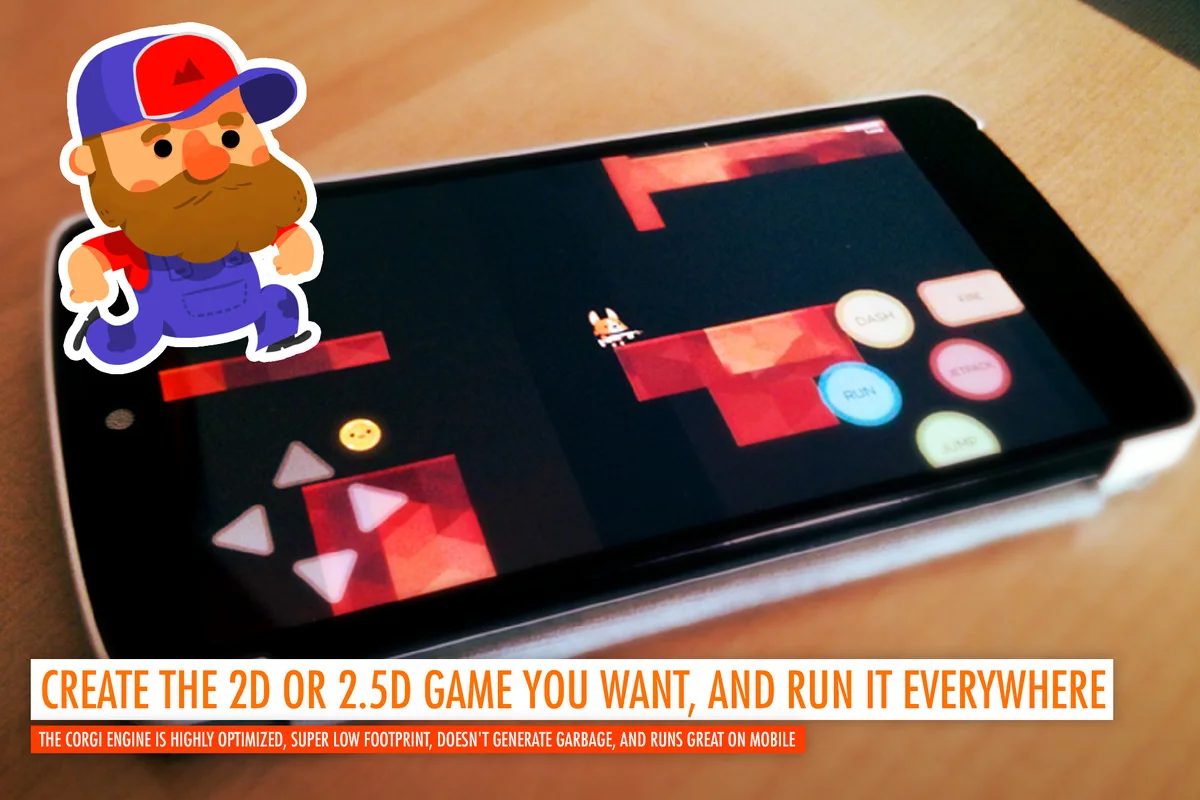
The core of the Corgi Engine is a dedicated 2D character controller that bypasses standard physics-based controls in favor of a tighter, more responsive feel. This architecture is specifically designed to handle the high-precision requirements of 2D and 2.5D platformers, where predictable movement and frame-perfect responsiveness are critical. Built for Unity 6, the system is optimized to run across various hardware environments, including desktop, mobile, and web-based platforms like HTML5.
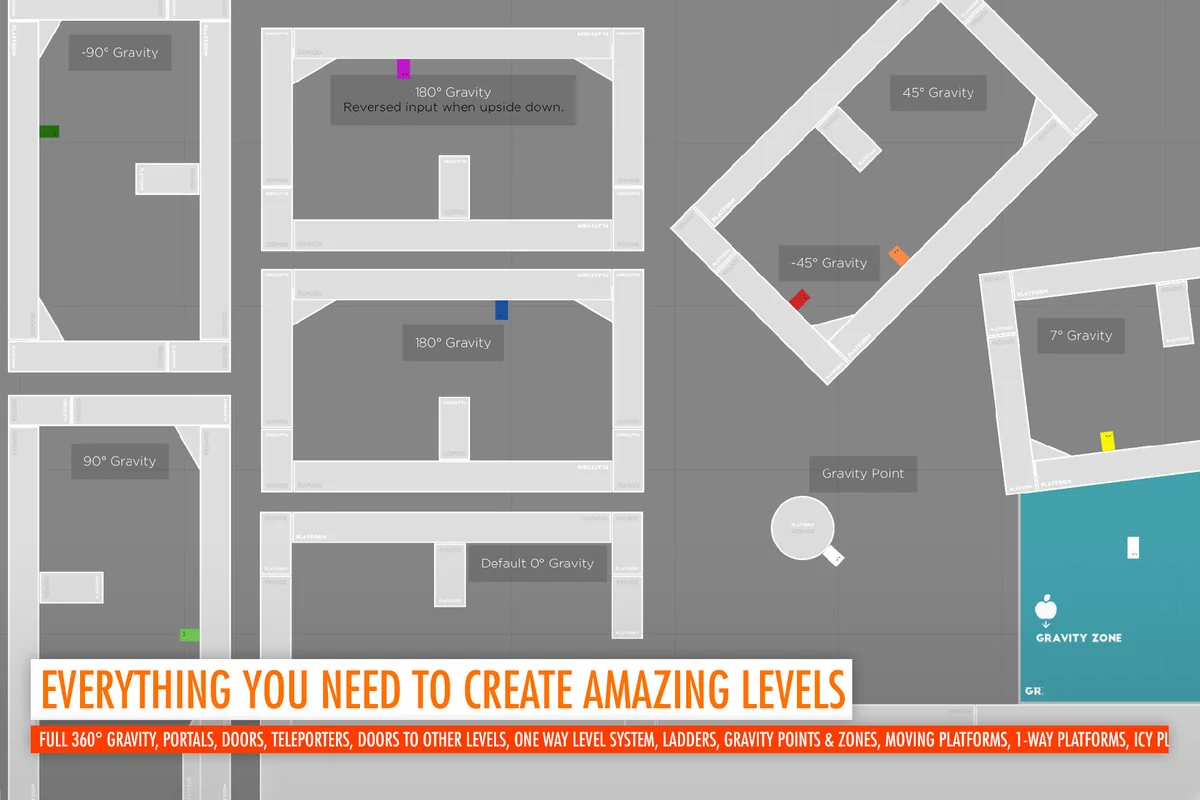
Because the controller is not reliant on the default physics engine for its primary movement, it avoids common issues such as jitter on slopes or unpredictable friction. Instead, it utilizes a system that handles collision detection, slope normal adjustments, and surface feedbacks internally. This allows developers to tweak speed data and gravity settings directly through the inspector to create specific movement profiles, whether for a slow-paced puzzle platformer or a high-velocity run-and-gun title.
Extensive Player Ability and Interaction Systems
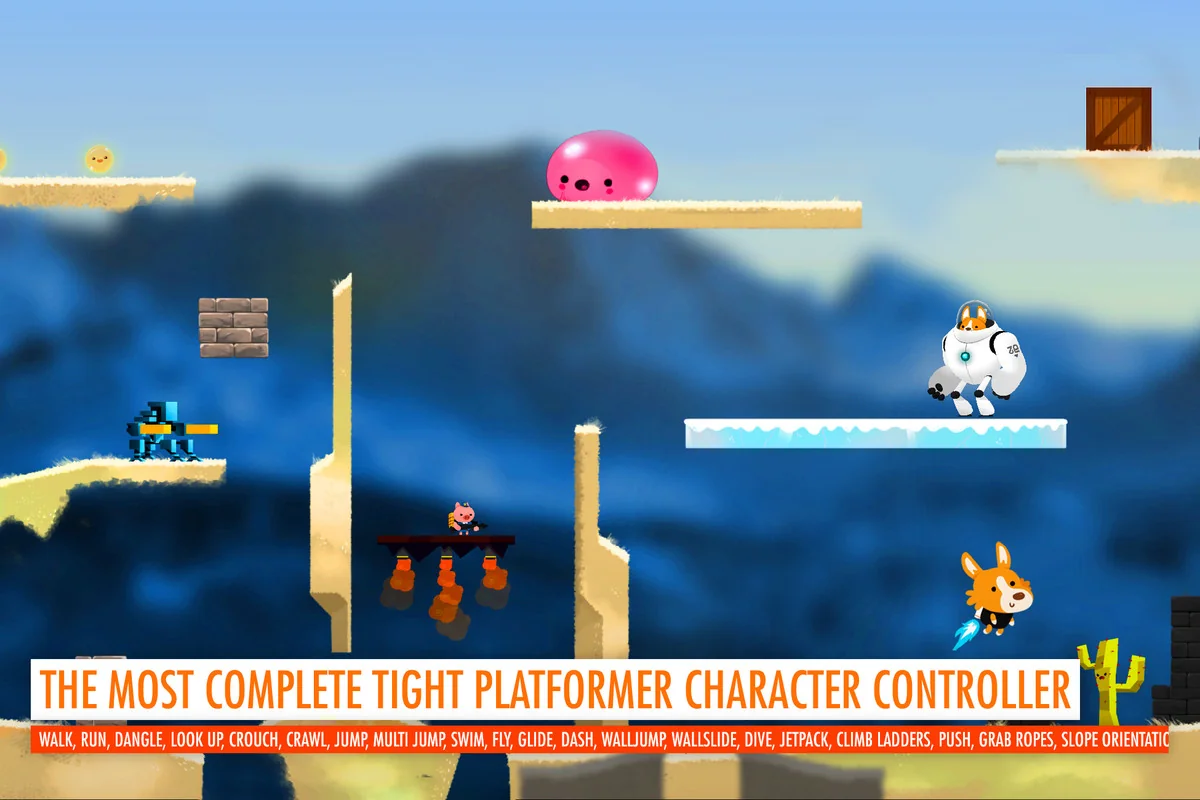
The engine is built around a modular ability system that covers a wide spectrum of traditional and modern platformer mechanics. Standard traversal options include walking, running, crouching, and looking up or down, but the system extends significantly into specialized movement. For verticality, the engine supports ladders, ledge hanging, ledge pulling, and dangling. It also includes complex jump mechanics, such as wall jumps in the style of Super Mario Run, double jumps, and the ability to configure an infinite number of additional jumps.
Beyond basic movement, the engine includes built-in support for advanced traversal tools and environmental interactions. This includes jetpacks, ziplines, and diving mechanics for swimming sections. The controller also handles character state changes such as dashing (both horizontal and vertical), rolling along slopes, and taking fall damage. For games requiring physical interaction with the environment, the engine provides dedicated logic for pushing and pulling objects, as well as carrying and throwing items.
Combat Mechanics and the Kills Manager
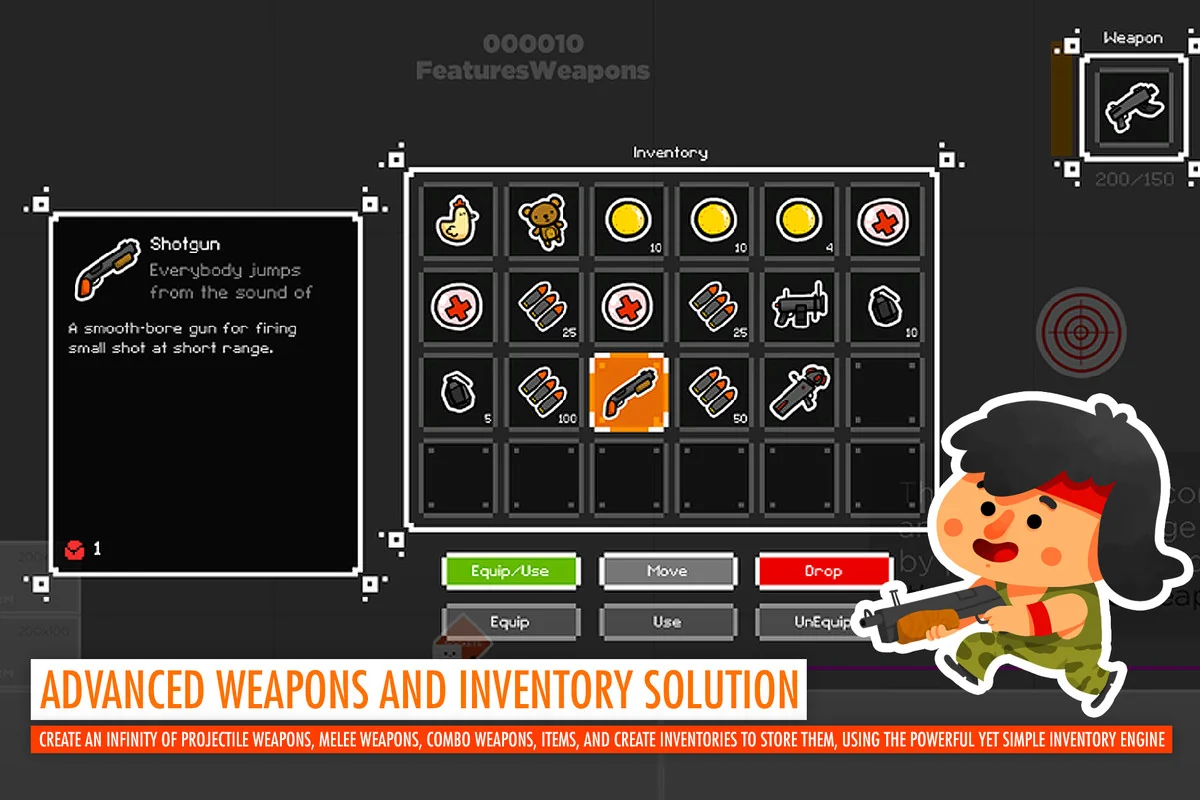
For action-oriented projects, the Corgi Engine features a robust weaponry system. This includes support for melee attacks, hitscan weapons, and projectile-based firearms. Developers can implement burst fire, combo systems, and charge-up weapons to add depth to combat encounters. To assist with gameplay on different input devices, an auto-aim system is included, alongside flight and time control mechanics.
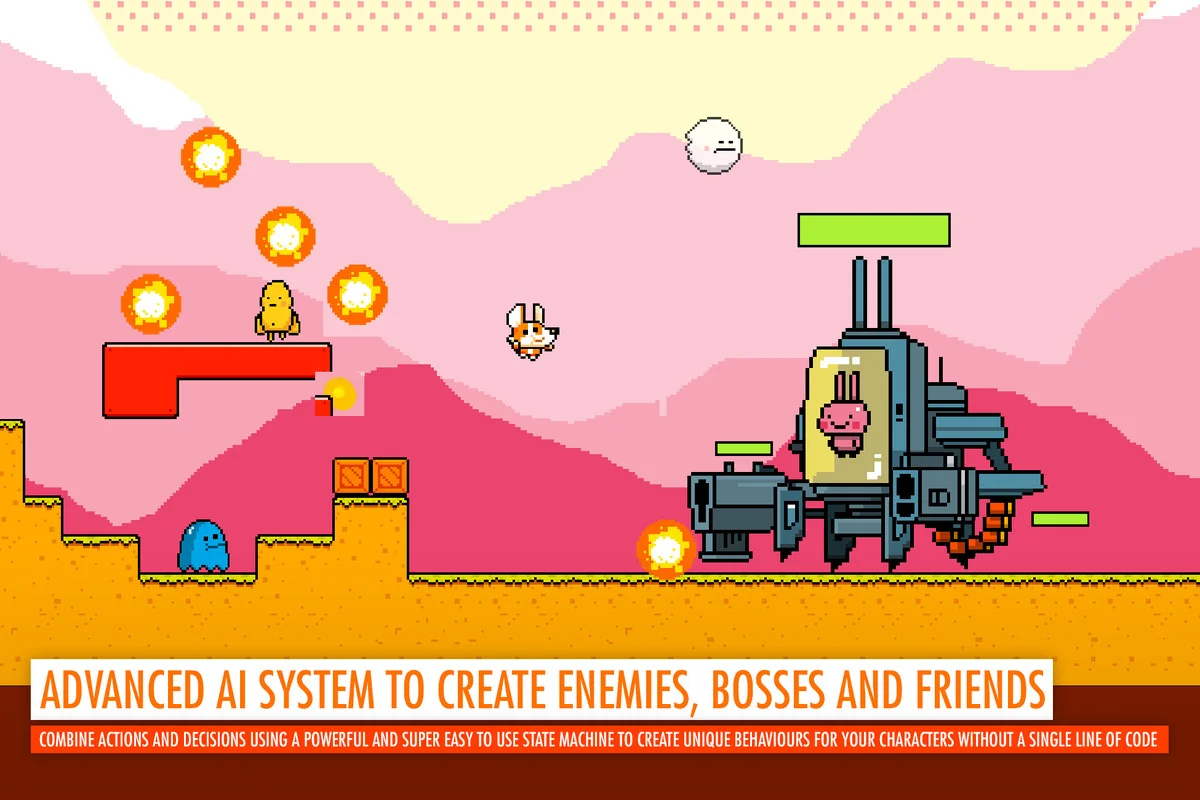
The v8.6 update introduced the Kills Manager, a tool designed to streamline level progression and event triggering. This manager allows developers to trigger specific game events once a certain number of enemies—or all enemies in a designated area—have been defeated. This integrates with the broader damage system, which handles various damage types, armor calculations, resistances, and specialized states like getting stunned or being crushed by moving geometry.
Production-Ready Content and Visual Assets
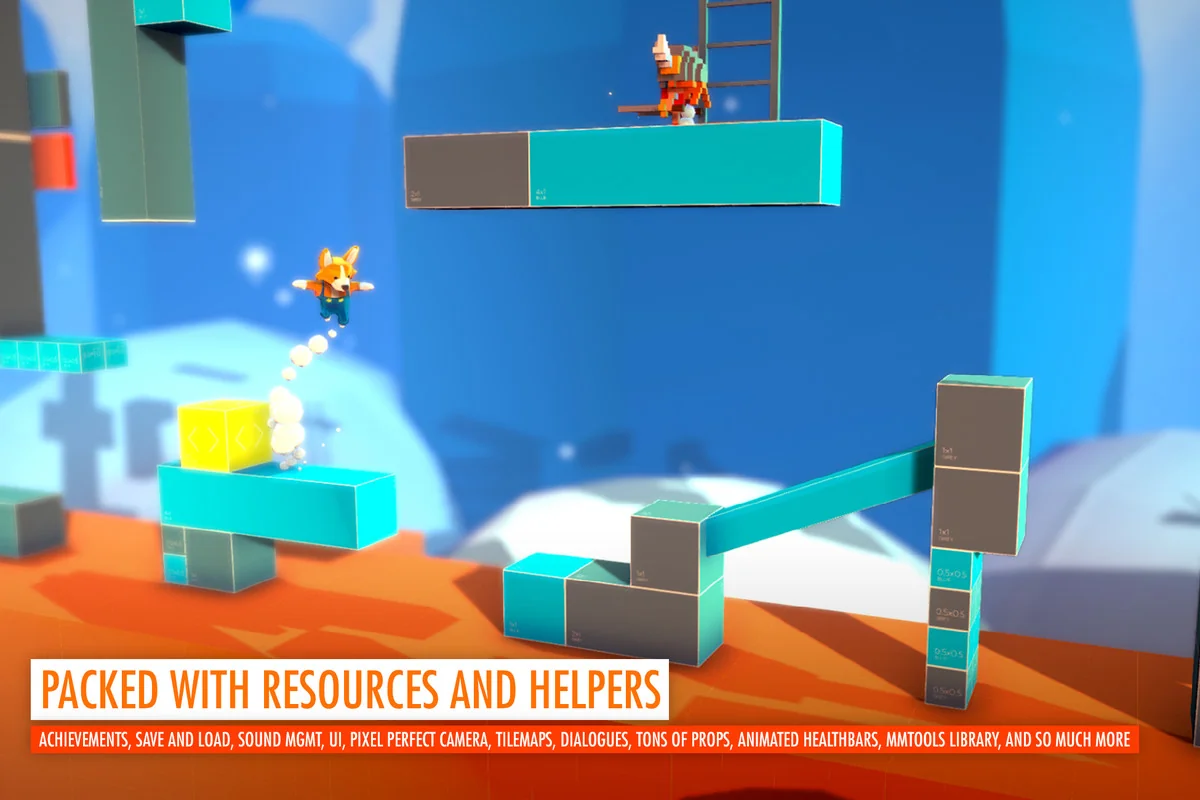
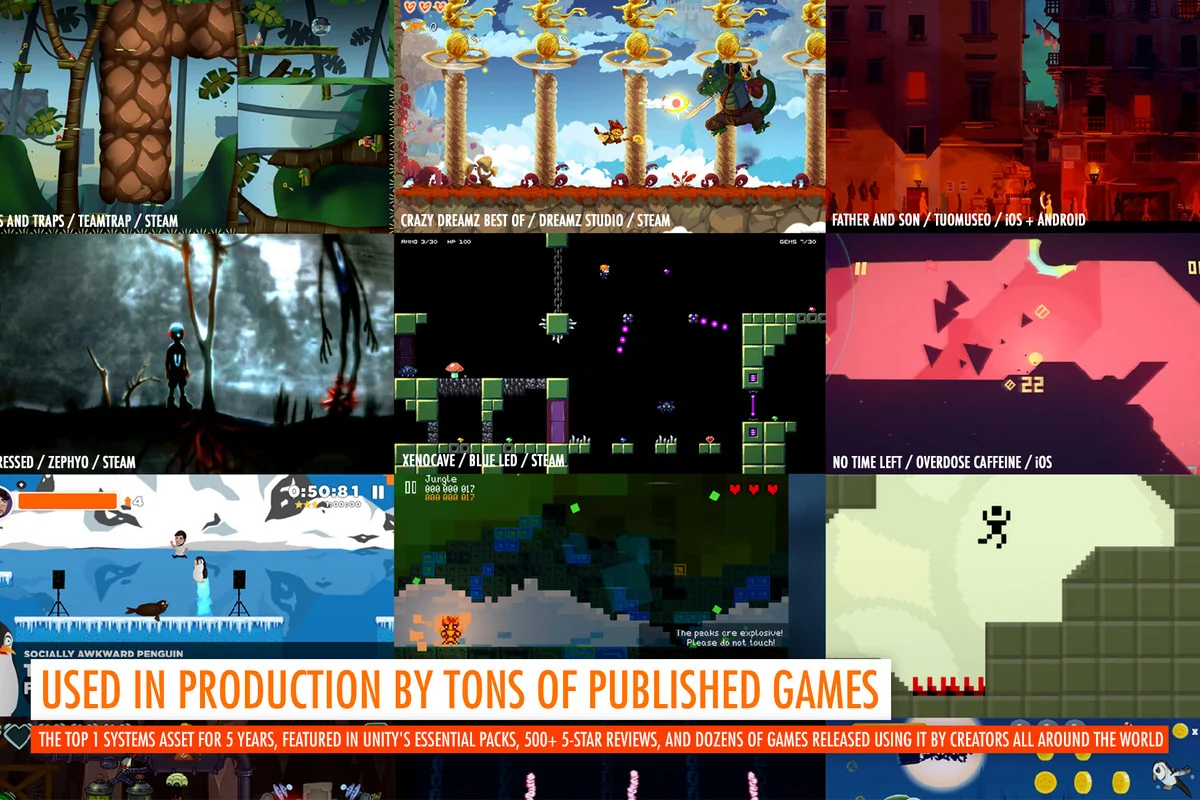
The package is not merely a collection of scripts but a full production environment. It includes over 50 handcrafted demo levels that showcase different genres and configurations of the engine. These levels serve as both functional templates and educational resources for understanding how to structure complex 2D environments. To facilitate rapid prototyping and final production, the asset includes more than 300 visual assets that are ready for use in commercial projects, rather than being simple placeholder graphics.
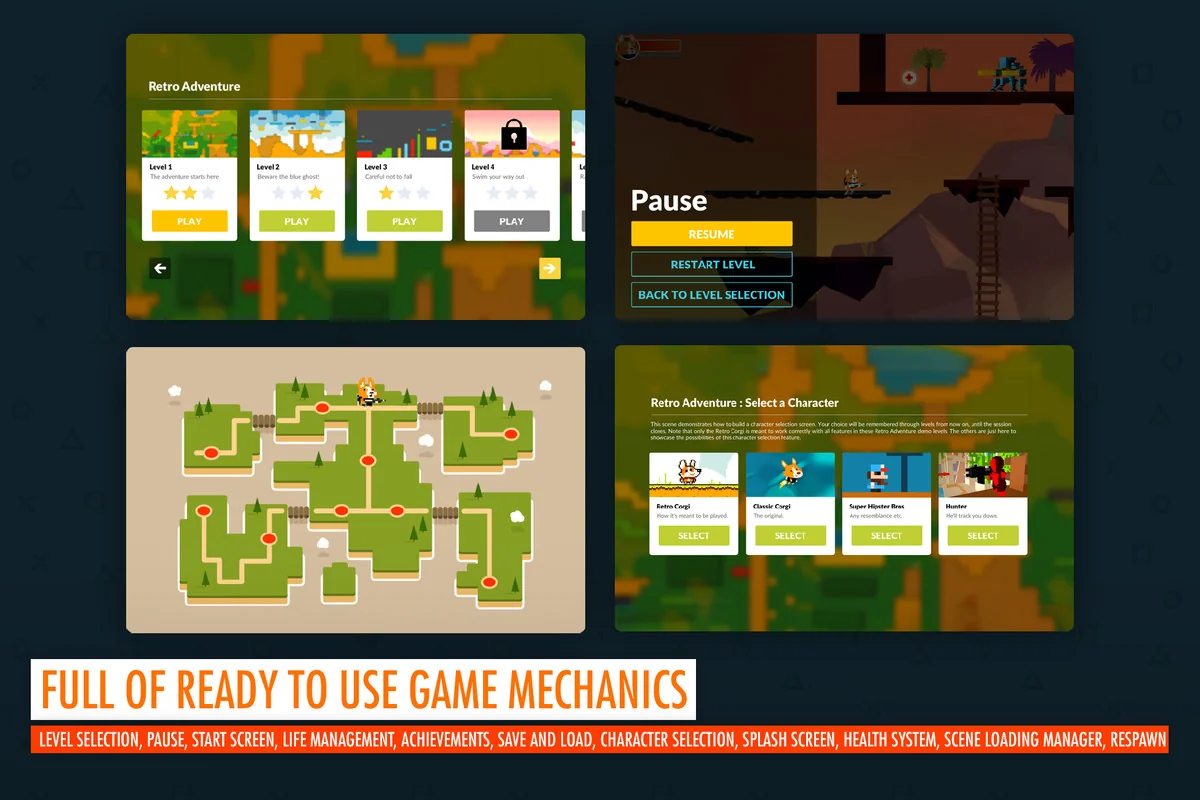
The technical foundation is supported by over 200 optimized scripts and a library of production-ready prefabs. This includes a character swapping system, which allows players to cycle through different heroes within a single scene. The engine also ensures that data persists between scenes, making it easier to manage player progress and state across a multi-level campaign.
Integrated Game Feel and Polish Tools
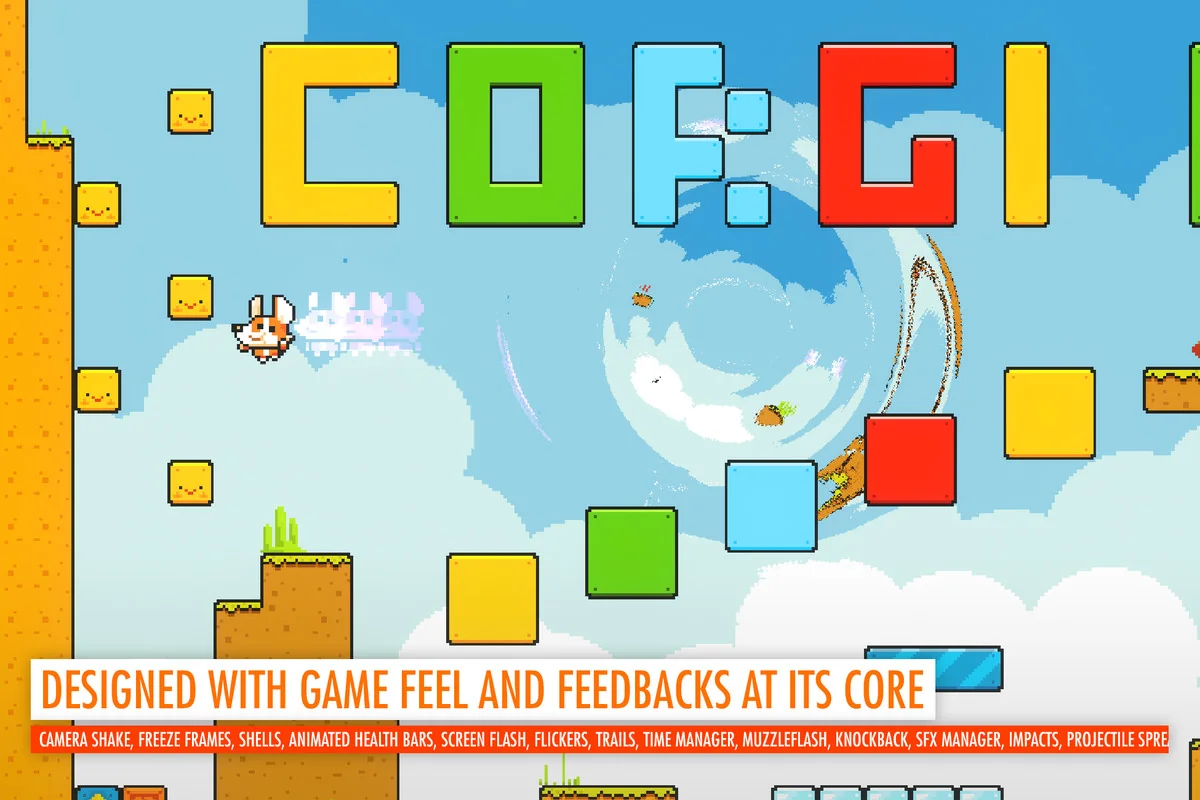
To address the nuances of game feel, the engine has MMFeedbacks built-in. This native integration allows for the rapid addition of surface feedbacks and visual cues without requiring external tools. These feedbacks can be triggered by nearly any action, from landing a jump to taking damage, helping to ground the character in the world and provide immediate response to player input.
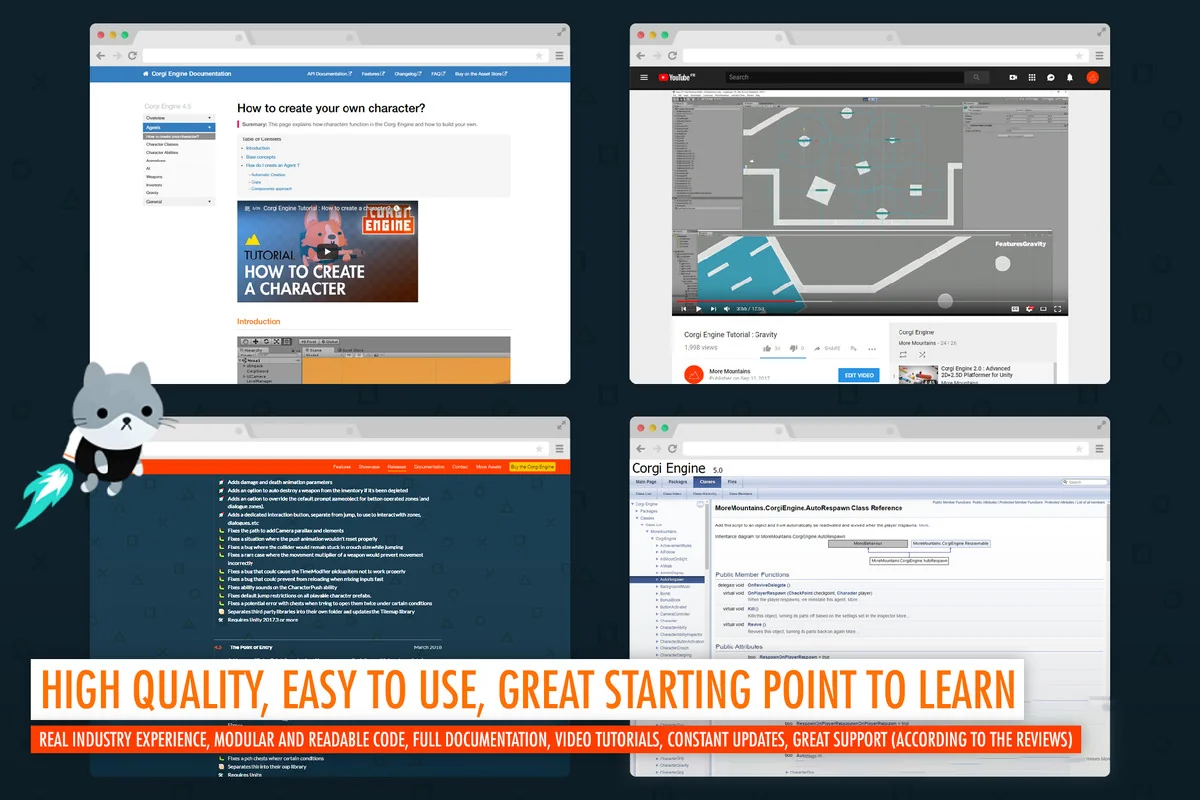
The engine is designed to be accessible to various skill levels. For those new to the environment, it provides video tutorials and extensive documentation, while seasoned developers can leverage the extensions repository to further customize the controller’s behavior. The flexibility of the inspector-based tweaking system means that the feel of the game can be altered significantly without necessarily rewriting the core movement logic, making it a versatile choice for studios targeting diverse platformer sub-genres.
Visual Breakdown
Protected download
Access this resource
All resources are 100% manually reviewed to eliminate all risks.