"1c2c8b66743036b4"{"id":"1001682","slug":"castles-spells-and-secrets-await","title":"Castles, Spells, and Secrets Await","category":"Interior","engine":"4.26+,5.0+","assetVersion":"","engineVersion":"Engine Version: 4.26+,5.0+","tag":"Interior","accent":"blue","visual":"mech","summary":"Explore the Enchanted Interiors asset library featuring 296 models, 80 PBR materials, Nanite support, and environments from wizard studies to armories.","platform":"Unreal Engine","publishedAt":"2026-10-14T07:31:01.410Z","updatedAt":"2026-10-14T07:31:01.410Z","sourceNotes":[],"fileContents":[],"compatibility":["Unreal Engine","Engine Version: 4.26+,5.0+"],"featuredImage":{"alt":"Castles, Spells, and Secrets Await","src":"/wp-content/uploads/published/2026/10/fc93a0aeea24-eci-web-gallery-01-a821c46c5e.webp"},"hasDownloadLink":true,"downloads":0,"terms":[{"taxonomy":"category","slug":"interior","name":"Interior"}],"galleryImages":[{"src":"/wp-content/uploads/published/2026/10/fe3d7983ddfa-eci-web-gallery-02-22d02e62a3.webp","alt":"Castles, Spells, and Secrets Await"},{"src":"/wp-content/uploads/published/2026/10/4c32813ff430-eci-web-gallery-03-5d26a2e19f.webp","alt":"Castles, Spells, and Secrets Await"},{"src":"/wp-content/uploads/published/2026/10/8261f89346f6-eci-web-gallery-04-6e9b3148f3.webp","alt":"Castles, Spells, and Secrets Await"},{"src":"/wp-content/uploads/published/2026/10/a0318395e48d-eci-web-gallery-05-56625f39ff.webp","alt":"Castles, Spells, and Secrets Await"},{"src":"/wp-content/uploads/published/2026/10/f96e3bfc1f11-eci-web-gallery-06-b81c626977.webp","alt":"Castles, Spells, and Secrets Await"},{"src":"/wp-content/uploads/published/2026/10/084fc65f7f0c-eci-web-gallery-07-dc4ed79ca8.webp","alt":"Castles, Spells, and Secrets Await"},{"src":"/wp-content/uploads/published/2026/10/8b8ce3d8ec53-eci-web-gallery-08-051f743dfb.webp","alt":"Castles, Spells, and Secrets Await"},{"src":"/wp-content/uploads/published/2026/10/fe5f224f2bf6-eci-web-gallery-09-d523044225.webp","alt":"Castles, Spells, and Secrets Await"}],"accessPanel":{"kind":"resource","title":"Download this resource","eyebrow":"Free Download","message":"Log in or create a free account to start your download.","fileName":"Kitbash3D - Enchanted Interiors.7z","safetyNote":"Resources are manually reviewed before listing to improve quality and reduce obvious risks.","actionLabel":"Download Free","resourceType":"Resource archive"},"contentHtml":"\u003ch2\u003eCastles, Spells, and Secrets Await Across Five Archetypes\u003c/h2\u003e\u003cp\u003eConstructing interior environments for medieval and high-fantasy settings often requires balancing architectural weight with dense, narrative prop placement. Enchanted Interiors provides the building blocks to stage several distinct environments: a wizard’s study lined with arcane instruments, a darkened necromancer’s lair, a grand king’s hall, an organized paladin’s armory, and a functional medieval tavern. Rather than offering isolated set pieces, the collection supplies the specific props, structural elements, and ambient clutter required to build cohesive rooms where spells, intrigue, and physical confrontation take place.\u003c/p\u003e\u003cp\u003eEach environment leans into concrete storytelling elements. A scholar’s office relies on instruments of study and astronomical observation, whereas a dark ritual space requires relics of decay, cages, and cursed monuments. The paladin’s quarters and the royal hall demand heavy steel, heraldry, and sturdy timber construction. Because these environments share an interconnected medieval aesthetic, assets can cross over between rooms to form expansive castle compounds, subterranean dungeon complexes, or multi-level academic keeps.\u003c/p\u003e\u003ch2\u003eArmory Gear and Arcane Relics in the Prop Roster\u003c/h2\u003e\u003cp\u003eWith 296 models included, the collection spans small dressings up to large structural components. The martial selections furnish functional armories, training yards, and guard posts. Weaponry includes claymores, flamberges, crossbows, broadswords, daggers, axes, warhammers, and spears. Defensive equipment appears as full suits of knight armor, freestanding armor stands, gauntlets, helmets, greaves, pauldrons, and distinct paladin shields. Training apparatus such as target dummies, training pillars, balance beams, and wooden practice swords make it possible to block out active barracks and combat preparation areas.\u003c/p\u003e\u003cp\u003eFor mystical and scholarly settings, the kit supplies extensive dressings for laboratories and libraries:\u003c/p\u003e\u003cul\u003e\u003cli\u003e\u003cstrong\u003eAstronomical and Study Tools:\u003c/strong\u003e Armillary spheres, brass telescopes, inkwells, quill stations, maps, open tomes, and closed book stacks across numerous variations.\u003c/li\u003e\u003cli\u003e\u003cstrong\u003eMagical Dressing:\u003c/strong\u003e Soul smokers, a cursed fountain, a demon skeleton, wizard cloaks, pointed wizard hats, and carved wooden staves.\u003c/li\u003e\u003cli\u003e\u003cstrong\u003eAlchemical Glassware:\u003c/strong\u003e Multiple distinct potion bottles (ranging from styles C through Q), cauldrons, jugs, pitchers, and ceramic chalices.\u003c/li\u003e\u003cli\u003e\u003cstrong\u003eDisplay and Storage:\u003c/strong\u003e Dedicated book stands, wall shelving, high book shelves, and specialized scroll crates holding individual and clustered parchment rolls.\u003c/li\u003e\u003c/ul\u003e\u003ch2\u003eStructural Props and Medieval Tavern Furnishings\u003c/h2\u003e\u003cp\u003eBeyond specialized martial and magical props, general environmental construction relies on modular architecture and domestic dressing. Architectural assets include functional wooden and iron-studded doors spanning styles A through G, gated entrances, staircases, wooden scaffolding, ladders, wall panels, and large masonry hearths. These backdrops accommodate both modest common rooms and regal throne rooms.\u003c/p\u003e\u003cp\u003eSeating and tables cover multiple social tiers, from a formal royal throne and ornate medieval stands down to rustic benches, acolyte chairs, rocking chairs, sofas, and circular tavern tables. Ambient clutter turns empty floors into lived-in working spaces. Food and supply distribution is handled through fruit crates, apple baskets, bread crates, individual grain sacks, hay bundles, hanging cookware, pots, and stacked firewood. Beverage service relies on small kegs, massive storage barrels, keg racks, mugs, and jugs. Suspension hardware—such as hanging gibbets, iron cages, birdcages, and mount points—allows level designers to draw player eyes upward and vary vertical density.\u003c/p\u003e\u003cp\u003eIllumination assets form a critical component of scene tone. The pack features hanging chandeliers, candelabras, standalone candlesticks in half a dozen arrangements, oil lanterns, standing metal torches, and wall-mounted sconces. Placing these light fixtures alongside fabric assets—such as heavy drapes, hanging banners, pelts, and area rugs—allows creators to control light bounce, shadow falloff, and color temperature throughout stone interiors.\u003c/p\u003e\u003ch2\u003eTechnical Delivery: Nanite, PBR Materials, and Instancing\u003c/h2\u003e\u003cp\u003eThe kit features a combined poly count of 20.7 million polygons across its 296 models, paired with 80 PBR materials. Assets are built to take advantage of modern real-time rendering pipelines, specifically within Unreal Engine. Key implementation features include:\u003c/p\u003e\u003cul\u003e\u003cli\u003e\u003cstrong\u003eFull Nanite Support:\u003c/strong\u003e High-density geometry renders efficiently without requiring aggressive manual level-of-detail (LOD) chain authoring, preserving intricate sculpted bevels and metalwork.\u003c/li\u003e\u003cli\u003e\u003cstrong\u003eCustom Collisions:\u003c/strong\u003e Physics and player navigation boundaries are pre-authored for game deployment, preventing camera clipping and movement snagging on irregular props.\u003c/li\u003e\u003cli\u003e\u003cstrong\u003ePacked Level Instancing:\u003c/strong\u003e Pre-assembled prop groupings and architectural sections can be instanced across large maps to keep draw calls manageable and scene organization clean.\u003c/li\u003e\u003cli\u003e\u003cstrong\u003eModular, Runtime-Ready Assets:\u003c/strong\u003e Components feature clean pivots and standardized measurements, allowing rapid snapping and configuration directly within gameplay levels.\u003c/li\u003e\u003c/ul\u003e\u003cp\u003eFor asset organization and project staging, the entire catalog integrates with Cargo, enabling one-click import into connected digital content creation tools and game engines. Artists can search, filter, and extract specific assets or materials individually rather than loading entire master scenes into working projects.\u003c/p\u003e\u003cp\u003eHardware targets reflect the scale and fidelity of the geometry. Recommended production baselines include a 6-core processor, an 8GB VRAM graphics processing unit, 32GB of system RAM, and 15GB of free disk storage per kit installation.\u003c/p\u003e\u003ch2\u003eProduction Team and Environmental Staging\u003c/h2\u003e\u003cp\u003eThe visual identity of the pack was established by a focused team of environment artists and designers. Vladislav Shlenov led the asset design, while Joseph Sylvester and Mohammad Afshari handled 3D modeling duties. Surface finishes and PBR material workflows were authored by texture artists Alexey Druzhkov and Alex Luna Garvin. Cover illustration was created by Liosha Shyp, supported by graphic design from Emily Amick.\u003c/p\u003e\u003cp\u003eWhen laying out scenes with these assets, establish the broad architectural enclosure first using the wall panels, doors, fireplaces, and timber scaffolding. Once structural bounds and primary light sources—such as hearths and chandeliers—are situated, populate key character interaction zones with heavy furniture like thrones, armory racks, or study desks. Secondary dressing should follow: scatter scroll clusters, potion vials, gaming miniatures, and kitchen crates along tables and floor edges to break up repetitive floor geometry and anchor the scene in a believable fantasy reality.\u003c/p\u003e\n\n\u003ch2\u003eExplore Similar Assets\u003c/h2\u003e\n\u003cul\u003e\n\u003cli\u003e\u003ca href=\"https://3dcghub.com/medieval-castle-interior-medieval-castle-interior-medieval-throne-realistic/\" title=\"Medieval Castle Interior ( Medieval Castle Interior Medieval Throne Realistic )\"\u003eMedieval Castle Interior ( Medieval Castle Interior Medieval Throne Realistic )\u003c/a\u003e\u003c/li\u003e\n\u003cli\u003e\u003ca href=\"https://3dcghub.com/stylized-dungeon-castle/\" title=\"Stylized Dungeon Castle\"\u003eStylized Dungeon Castle\u003c/a\u003e\u003c/li\u003e\n\u003cli\u003e\u003ca href=\"https://3dcghub.com/medieval-castle-village-environment-medieval-castle-village-medieval-castle/\" title=\"Medieval Castle Village Environment ( Medieval Castle Village Medieval Castle )\"\u003eMedieval Castle Village Environment ( Medieval Castle Village Medieval Castle )\u003c/a\u003e\u003c/li\u003e\n\u003cli\u003e\u003ca href=\"https://3dcghub.com/castle-modular-pack/\" title=\"Castle Modular Pack\"\u003eCastle Modular Pack\u003c/a\u003e\u003c/li\u003e\n\u003cli\u003e\u003ca href=\"https://3dcghub.com/castle-windows-pack/\" title=\"Castle Windows Pack\"\u003eCastle Windows Pack\u003c/a\u003e\u003c/li\u003e\n\u003c/ul\u003e","contentTextLength":7073,"navigation":{"current":33,"total":3651,"previous":{"id":"1001683","slug":"abandoned-hong-kong","title":"Abandoned Hong-Kong","category":"Apocalyptic / Post-apocalyptic","platform":"Unreal Engine","updatedAt":"2026-10-14T08:56:07.329Z"},"next":{"id":"1001681","slug":"stylized-town-assets-pack","title":"Stylized Town Assets Pack","category":"Cities","platform":"Unreal Engine","updatedAt":"2026-10-13T15:32:30.683Z"}},"relatedResources":[{"id":"1001002","slug":"medieval-castle-interior-medieval-castle-interior-medieval-throne-realistic","title":"Medieval Castle Interior ( Medieval Castle Interior Medieval Throne Realistic )","category":"Interior","engine":"4.26+,5.0+","assetVersion":"","engineVersion":"Engine Version: 4.26+,5.0+","tag":"Interior","accent":"blue","visual":"mech","summary":"Game-ready medieval castle interior pack for Unreal Engine with preassembled scene and the Ultimate Level Art Tool for modular building.","platform":"Unreal Engine","publishedAt":"2026-08-20T10:12:02.696Z","updatedAt":"2026-08-20T10:12:02.696Z","sourceNotes":[],"fileContents":[],"compatibility":["Unreal Engine","Engine Version: 4.26+,5.0+"],"featuredImage":{"alt":"Medieval Castle Interior ( Medieval Castle Interior Medieval Throne Realistic )","src":"/wp-content/uploads/published/2026/08/aad3e3c7dd8c-d585878a-a6bf-4012-937a-71c0005817a0-7752b6256c.webp"},"hasDownloadLink":true,"downloads":1},{"id":"1001559","slug":"stylized-dungeon-castle","title":"Stylized Dungeon Castle","category":"Fantasy","engine":"4.26+,5.0+","assetVersion":"","engineVersion":"Engine Version: 4.26+,5.0+","tag":"Fantasy","accent":"blue","visual":"mech","summary":"Stylized Dungeon Castle provides a modular low-poly kit with PBR materials, custom material instances, and dozens of architectural parts and props.","platform":"Unreal Engine","publishedAt":"2026-10-10T03:50:13.480Z","updatedAt":"2026-10-10T03:50:13.480Z","sourceNotes":[],"fileContents":[],"compatibility":["Unreal Engine","Engine Version: 4.26+,5.0+"],"featuredImage":{"alt":"Stylized Dungeon Castle","src":"/wp-content/uploads/published/2026/10/d8153114fcbb-7ff92175-07be-40dc-92b8-59d8ec741b37-2e7c7e175f.webp"},"hasDownloadLink":true,"downloads":0},{"id":"1001100","slug":"medieval-castle-village-environment-medieval-castle-village-medieval-castle","title":"Medieval Castle Village Environment ( Medieval Castle Village Medieval Castle )","category":"Medieval","engine":"4.26+,5.0+","assetVersion":"","engineVersion":"Engine Version: 4.26+,5.0+","tag":"Medieval","accent":"blue","visual":"city","summary":"Medieval Castle Village Environment: 300 static meshes, tileable wall materials, enterable interiors, ULAT tool, and preassembled medieval village scene.","platform":"Unreal Engine","publishedAt":"2026-09-07T04:09:55.311Z","updatedAt":"2026-09-07T04:09:55.311Z","sourceNotes":[],"fileContents":[],"compatibility":["Unreal Engine","Engine Version: 4.26+,5.0+"],"featuredImage":{"alt":"Medieval Castle Village Environment ( Medieval Castle Village Medieval Castle )","src":"/wp-content/uploads/published/2026/09/8d366b969d67-8d13f5db-3842-444b-9dc8-8d45f3739306-9f3c6e8151.webp"},"hasDownloadLink":true,"downloads":1}]}
Interior
Castles, Spells, and Secrets Await
Explore the Enchanted Interiors asset library featuring 296 models, 80 PBR materials, Nanite support, and environments from wizard studies to armories.
Category:Unreal Engine,InteriorPlatform: Unreal EngineEngine Version: 4.26+,5.0+Published: Oct 14, 2026
Interior
Resource overview
Castles, Spells, and Secrets Await Across Five Archetypes
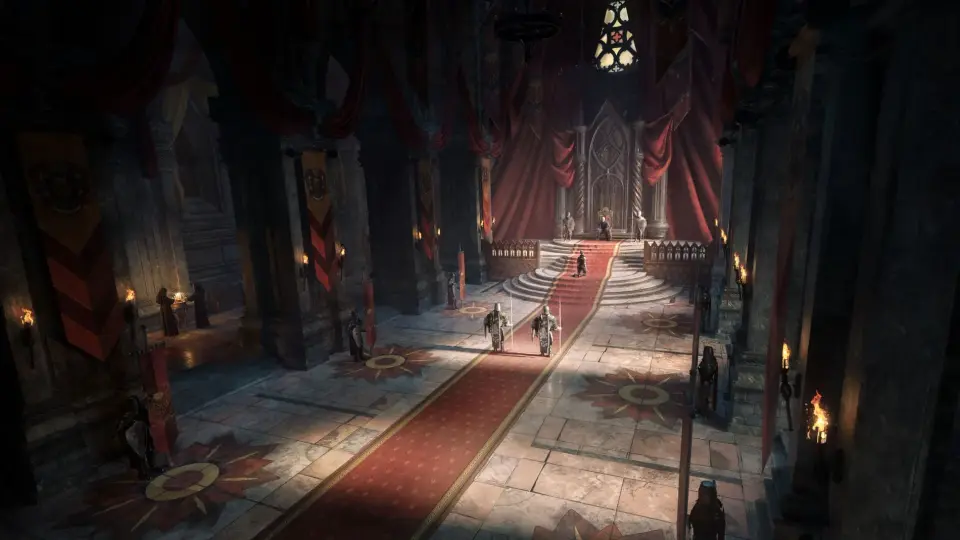
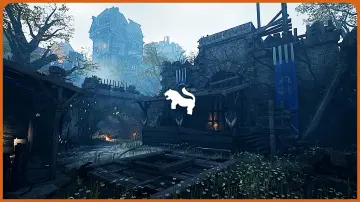
Constructing interior environments for medieval and high-fantasy settings often requires balancing architectural weight with dense, narrative prop placement. Enchanted Interiors provides the building blocks to stage several distinct environments: a wizard’s study lined with arcane instruments, a darkened necromancer’s lair, a grand king’s hall, an organized paladin’s armory, and a functional medieval tavern. Rather than offering isolated set pieces, the collection supplies the specific props, structural elements, and ambient clutter required to build cohesive rooms where spells, intrigue, and physical confrontation take place.
Each environment leans into concrete storytelling elements. A scholar’s office relies on instruments of study and astronomical observation, whereas a dark ritual space requires relics of decay, cages, and cursed monuments. The paladin’s quarters and the royal hall demand heavy steel, heraldry, and sturdy timber construction. Because these environments share an interconnected medieval aesthetic, assets can cross over between rooms to form expansive castle compounds, subterranean dungeon complexes, or multi-level academic keeps.
Armory Gear and Arcane Relics in the Prop Roster
With 296 models included, the collection spans small dressings up to large structural components. The martial selections furnish functional armories, training yards, and guard posts. Weaponry includes claymores, flamberges, crossbows, broadswords, daggers, axes, warhammers, and spears. Defensive equipment appears as full suits of knight armor, freestanding armor stands, gauntlets, helmets, greaves, pauldrons, and distinct paladin shields. Training apparatus such as target dummies, training pillars, balance beams, and wooden practice swords make it possible to block out active barracks and combat preparation areas.
For mystical and scholarly settings, the kit supplies extensive dressings for laboratories and libraries:
Astronomical and Study Tools: Armillary spheres, brass telescopes, inkwells, quill stations, maps, open tomes, and closed book stacks across numerous variations.
Magical Dressing: Soul smokers, a cursed fountain, a demon skeleton, wizard cloaks, pointed wizard hats, and carved wooden staves.
Alchemical Glassware: Multiple distinct potion bottles (ranging from styles C through Q), cauldrons, jugs, pitchers, and ceramic chalices.
Display and Storage: Dedicated book stands, wall shelving, high book shelves, and specialized scroll crates holding individual and clustered parchment rolls.
Structural Props and Medieval Tavern Furnishings
Beyond specialized martial and magical props, general environmental construction relies on modular architecture and domestic dressing. Architectural assets include functional wooden and iron-studded doors spanning styles A through G, gated entrances, staircases, wooden scaffolding, ladders, wall panels, and large masonry hearths. These backdrops accommodate both modest common rooms and regal throne rooms.
Seating and tables cover multiple social tiers, from a formal royal throne and ornate medieval stands down to rustic benches, acolyte chairs, rocking chairs, sofas, and circular tavern tables. Ambient clutter turns empty floors into lived-in working spaces. Food and supply distribution is handled through fruit crates, apple baskets, bread crates, individual grain sacks, hay bundles, hanging cookware, pots, and stacked firewood. Beverage service relies on small kegs, massive storage barrels, keg racks, mugs, and jugs. Suspension hardware—such as hanging gibbets, iron cages, birdcages, and mount points—allows level designers to draw player eyes upward and vary vertical density.
Illumination assets form a critical component of scene tone. The pack features hanging chandeliers, candelabras, standalone candlesticks in half a dozen arrangements, oil lanterns, standing metal torches, and wall-mounted sconces. Placing these light fixtures alongside fabric assets—such as heavy drapes, hanging banners, pelts, and area rugs—allows creators to control light bounce, shadow falloff, and color temperature throughout stone interiors.
Technical Delivery: Nanite, PBR Materials, and Instancing
The kit features a combined poly count of 20.7 million polygons across its 296 models, paired with 80 PBR materials. Assets are built to take advantage of modern real-time rendering pipelines, specifically within Unreal Engine. Key implementation features include:
Full Nanite Support: High-density geometry renders efficiently without requiring aggressive manual level-of-detail (LOD) chain authoring, preserving intricate sculpted bevels and metalwork.
Custom Collisions: Physics and player navigation boundaries are pre-authored for game deployment, preventing camera clipping and movement snagging on irregular props.
Packed Level Instancing: Pre-assembled prop groupings and architectural sections can be instanced across large maps to keep draw calls manageable and scene organization clean.
Modular, Runtime-Ready Assets: Components feature clean pivots and standardized measurements, allowing rapid snapping and configuration directly within gameplay levels.
For asset organization and project staging, the entire catalog integrates with Cargo, enabling one-click import into connected digital content creation tools and game engines. Artists can search, filter, and extract specific assets or materials individually rather than loading entire master scenes into working projects.
Hardware targets reflect the scale and fidelity of the geometry. Recommended production baselines include a 6-core processor, an 8GB VRAM graphics processing unit, 32GB of system RAM, and 15GB of free disk storage per kit installation.
Production Team and Environmental Staging
The visual identity of the pack was established by a focused team of environment artists and designers. Vladislav Shlenov led the asset design, while Joseph Sylvester and Mohammad Afshari handled 3D modeling duties. Surface finishes and PBR material workflows were authored by texture artists Alexey Druzhkov and Alex Luna Garvin. Cover illustration was created by Liosha Shyp, supported by graphic design from Emily Amick.
When laying out scenes with these assets, establish the broad architectural enclosure first using the wall panels, doors, fireplaces, and timber scaffolding. Once structural bounds and primary light sources—such as hearths and chandeliers—are situated, populate key character interaction zones with heavy furniture like thrones, armory racks, or study desks. Secondary dressing should follow: scatter scroll clusters, potion vials, gaming miniatures, and kitchen crates along tables and floor edges to break up repetitive floor geometry and anchor the scene in a believable fantasy reality.
 Interior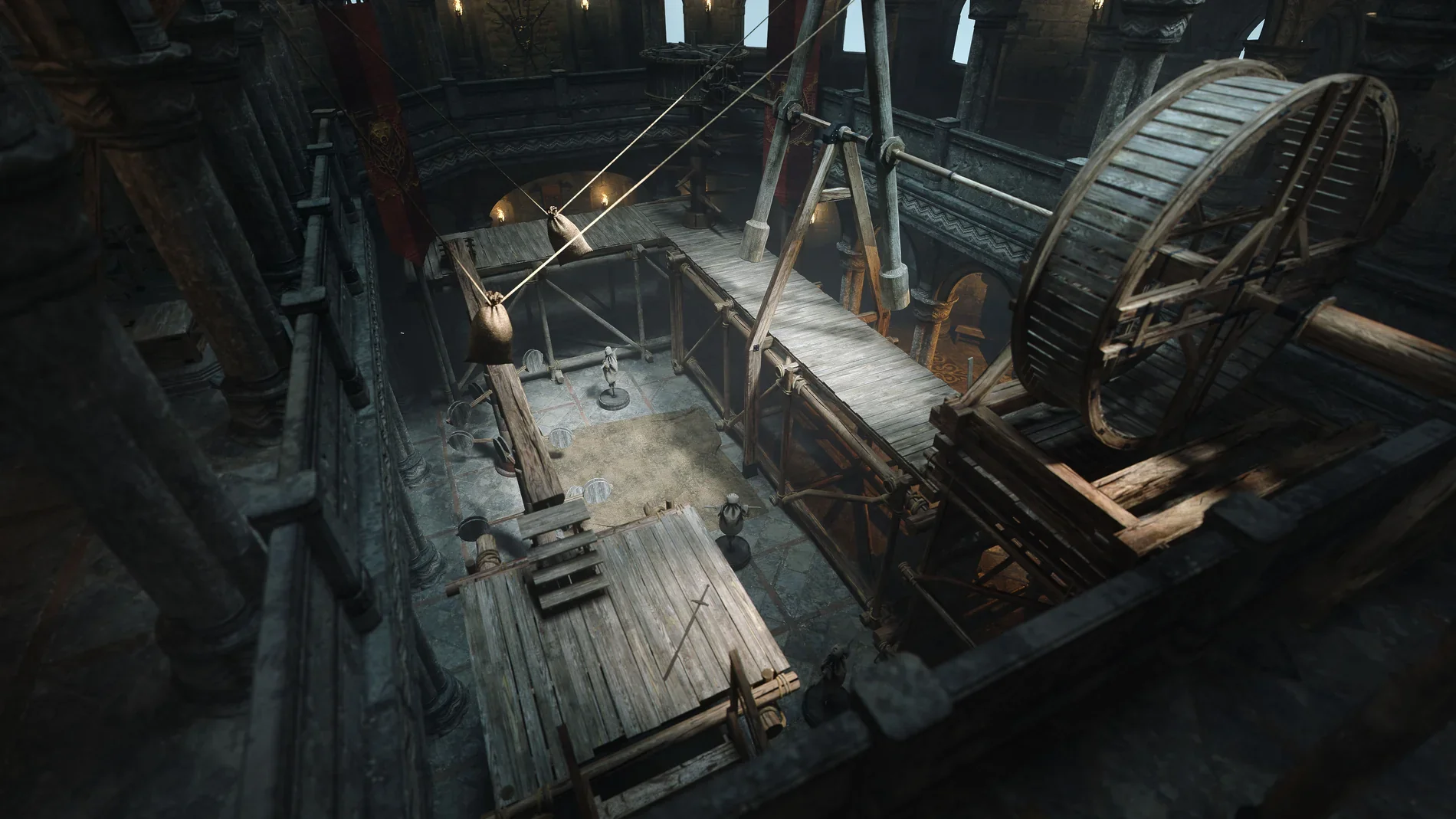
 Interior
 Fantasy
 Medieval