"ee989f9ed9d4794c"{"id":"1001720","slug":"bike-shop-environment-stores-bike-shop","title":"Bike Shop Environment ( Stores Bike Shop )","category":"Interior","engine":"4.25+,5.0+","assetVersion":"","engineVersion":"Engine Version: 4.25+,5.0+","tag":"Interior","accent":"blue","visual":"city","summary":"Deploy the Bike Shop Environment featuring 259 unique meshes, an example scene, and copyright-free assets ready for realistic games and virtual production.","platform":"Unreal Engine","publishedAt":"2026-10-19T15:54:09.701Z","updatedAt":"2026-10-19T15:54:09.701Z","sourceNotes":[],"fileContents":[],"compatibility":["Unreal Engine","Engine Version: 4.25+,5.0+"],"featuredImage":{"alt":"Bike Shop Environment ( Stores Bike Shop )","src":"/wp-content/uploads/published/2026/10/75d36860b54c-98acb0a2-65ae-4766-b09e-17b94452ff5e-99180237b8.webp"},"hasDownloadLink":true,"downloads":0,"terms":[{"taxonomy":"category","slug":"interior","name":"Interior"}],"galleryImages":[{"src":"/wp-content/uploads/published/2026/10/1b4b3cfe0414-e20a06c1-f896-4e2f-825d-75dc053df321-146df15bec.webp","alt":"Bike Shop Environment ( Stores Bike Shop )"},{"src":"/wp-content/uploads/published/2026/10/6d28b0224c42-60eab727-ee83-46dd-af1b-2b699a1a5d5b-5acc3022da.webp","alt":"Bike Shop Environment ( Stores Bike Shop )"},{"src":"/wp-content/uploads/published/2026/10/2cf320879888-e34a1908-d68d-48da-9c9c-07f36be3c064-bb04efb3c1.webp","alt":"Bike Shop Environment ( Stores Bike Shop )"},{"src":"/wp-content/uploads/published/2026/10/2d2d0a80029b-352215e8-311e-4d96-b995-95cca4e0b2e6-377e28e48b.webp","alt":"Bike Shop Environment ( Stores Bike Shop )"},{"src":"/wp-content/uploads/published/2026/10/d85aafd407e7-b377440b-2008-471a-99f0-f970498034a9-5462db185e.webp","alt":"Bike Shop Environment ( Stores Bike Shop )"},{"src":"/wp-content/uploads/published/2026/10/f2e0dbbfea2a-40c2be59-d15c-47db-9e14-f9688f29a01f-723361970c.webp","alt":"Bike Shop Environment ( Stores Bike Shop )"},{"src":"/wp-content/uploads/published/2026/10/8d848126e6dd-12e4a64a-bafe-44a1-ab52-36da4c402b16-6f40213ce2.webp","alt":"Bike Shop Environment ( Stores Bike Shop )"},{"src":"/wp-content/uploads/published/2026/10/c532de948f1d-9a6212a8-a8e2-4054-9337-7163847b767a-e3fcec0087.webp","alt":"Bike Shop Environment ( Stores Bike Shop )"},{"src":"/wp-content/uploads/published/2026/10/a431f140d9aa-3bd68457-df1b-4ec2-a5a8-0f3f9fc960ae-703d92c2da.webp","alt":"Bike Shop Environment ( Stores Bike Shop )"},{"src":"/wp-content/uploads/published/2026/10/94f89979dd17-a42929ca-047b-49ce-8daa-6f51a3114320-75f7197aef.webp","alt":"Bike Shop Environment ( Stores Bike Shop )"}],"accessPanel":{"kind":"resource","title":"Download this resource","eyebrow":"Free Download","message":"Log in or create a free account to start your download.","fileName":"Content.7z","safetyNote":"Resources are manually reviewed before listing to improve quality and reduce obvious risks.","actionLabel":"Download Free","resourceType":"Resource archive"},"contentHtml":"\u003ch2\u003eDeploying the Example Scene in Production Pipelines\u003c/h2\u003e\n\u003cp\u003eStarting production with a complex interior often requires balancing immediate layout needs against long-term level design goals. Incorporating the Bike Shop Environment begins directly inside the included example scene. This preconfigured level demonstrates how artist Julian Rabe assembled structural elements, lighting setups, workshop zones, and retail displays into a unified, believable interior. Teams building realistic games or virtual production sets can walk the camera through this prebuilt floor plan immediately, checking sightlines, scale reference, and light bounce without spending days on white-boxing.\u003c/p\u003e\n\u003cp\u003eFor virtual production workflows, having a completely realized example level simplifies live-action background staging. The layout offers natural depth cues, featuring retail storefront glass, sales counters, repair stations, and organized merchandise rows that provide rich parallax as cameras move across a virtual volume. Lighting artists can evaluate the space as an integrated system, adjusting exposure and volumetric parameters directly against practical props and architectural boundaries that reflect real-world store design.\u003c/p\u003e \u003ch2\u003ePopulating Custom Levels with 259 Unique Meshes\u003c/h2\u003e\n\u003cp\u003eBeyond the pre-assembled store layout, the core utility for environment artists rests in the library of 259 unique meshes. Rather than forcing designers to reuse an identical floor plan, the mesh catalog can be stripped down, sorted, and redistributed across custom project levels. If a project demands a small roadside bicycle repair garage rather than a comprehensive retail outlet, the component meshes migrate seamlessly into smaller architectural footprints.\u003c/p\u003e\n\u003cp\u003eThe mesh distribution covers the full spectrum of retail interior dressing. Workshop benches, tools, commercial shelving, display racks, and individual bicycle components allow level dressers to vary visual density across different zones. Cluttered service counters can be contrasted against cleaner retail sales floors, breaking up repetitive layouts across larger open-world maps. Level designers can also pull specific props outward into alleyways, loading docks, or suburban garages to imply lived-in utility without generating new asset batches from scratch.\u003c/p\u003e \u003ch2\u003eModular Bike Demonstration and Assembly Mechanics\u003c/h2\u003e\n\u003cp\u003eBicycles present unique modeling challenges due to their exposed mechanical parts, structural geometry, and intricate cabling lines. The collection addresses this through a dedicated modular bike workflow, supported by a modular bike demonstration system. Breaking the vehicle down into component elements gives technical designers and animators flexibility that a static, single-piece mesh cannot offer.\u003c/p\u003e\n\u003cp\u003eBecause the bicycle assets are constructed with modularity in mind, they serve multiple distinct functions across gameplay and cinematics:\u003c/p\u003e\n\u003cul\u003e \u003cli\u003eInteractive prop staging where bikes can appear partially disassembled on repair stands or display mounts.\u003c/li\u003e \u003cli\u003eCustom retail customization arrays where frames, wheels, and finishing components are displayed on wall brackets or floor stands.\u003c/li\u003e \u003cli\u003eEnvironmental scatter across indoor service bays, commercial delivery nooks, and sidewalk display racks.\u003c/li\u003e\n\u003c/ul\u003e\n\u003cp\u003eThis structural versatility prevents every bike in a showroom or street scene from looking identical. Technical artists can swap modular parts to yield distinct bicycle variants, maintaining visual diversity across broad commercial retail levels.\u003c/p\u003e \u003ch2\u003eVisual Fidelity for Virtual Production and Realistic Games\u003c/h2\u003e\n\u003cp\u003eHigh visual fidelity is necessary when an asset pack targets both interactive real-time titles and film-style virtual production. Realism in the Bike Shop Environment relies on convincing surface definition, accurate physical scales, and believable wear patterns across retail and mechanical surfaces. Retail environments are defined by a mix of clean consumer goods and gritty industrial maintenance tools, a balance visible across the workshop benches, hardware racks, and display floor pieces.\u003c/p\u003e\n\u003cp\u003eIn virtual production scenarios where real actors are composited against LED volumes or green screens, background props must withstand scrutiny at varying focal lengths. The detailed geometry across the 259 unique meshes ensures that close-up shots near service benches or mid-ground pans across the sales floor maintain edge definition without breaking immersion. Game directors working on realistic narrative experiences can position character dialogue sequences directly inside the shop, using detailed background dressing to reinforce contemporary world-building.\u003c/p\u003e \u003ch2\u003eTexture Adjustments and Copyright-Free Asset Readiness\u003c/h2\u003e\n\u003cp\u003eReal-world retail spaces are saturated with logos, brand badges, and registered commercial graphics, which frequently pose legal challenges for commercial releases. The asset package resolves this issue through targeted texture hygiene. All branded content shown in early demonstrations has been systematically removed from the project assets. To ensure full project safety, construction textures were replaced with visually equivalent, copyright-free alternatives.\u003c/p\u003e\n\u003cp\u003eThis deliberate cleanup guarantees that independent game studios, commercial virtual production houses, and agency developers can deploy the entire environment into shipping products without clearance reviews. The replaced construction materials preserve the tactile realism of the original build—maintaining appropriate roughness, industrial patterning, and believable wear—while ensuring strict compliance across broadcast, cinematic, and distributed video game platforms.\u003c/p\u003e \u003ch2\u003eEcosystem Integration and Production Maintenance\u003c/h2\u003e\n\u003cp\u003eLarge projects rarely consist of an isolated storefront. Scene designers building continuous urban districts often require adjoining hospitality and commercial spaces. The Bike Shop Environment shares stylistic alignment and spatial compatibility with companion spaces such as the Hotel Lobby Environment (Motel Lobby Lounge Reception). Integrating both environments enables technical artists to stage contiguous indoor transitions, shifting players or virtual cameras from a relaxed motel lounge directly into adjacent commercial streetfronts without visual discordance.\u003c/p\u003e\n\u003cp\u003eLong-term project integration is backed by standard technical support infrastructure. Teams encountering asset pipeline questions, promotional setup requests, or integration queries can submit direct technical support tickets. Active community coordination through the Leartes Asset Platform Discord community (Cosmos) provides additional access for troubleshooting, pipeline tips, and ecosystem updates as production demands evolve.\u003c/p\u003e\n\n\u003ch2\u003eExplore Similar Assets\u003c/h2\u003e\n\u003cul\u003e\n\u003cli\u003e\u003ca href=\"https://3dcghub.com/stores-vol-1-shop-and-grocery-displays-nanite-and-low-poly/\" title=\"Stores VOL.1 - Shop and Grocery Displays (Nanite \u0026amp; Low Poly)\"\u003eStores VOL.1 - Shop and Grocery Displays (Nanite \u0026amp; Low Poly)\u003c/a\u003e\u003c/li\u003e\n\u003cli\u003e\u003ca href=\"https://3dcghub.com/tire-repair-shop-environment-with-4-driveable-cars/\" title=\"Tire Repair Shop Environment with 4 Driveable Cars\"\u003eTire Repair Shop Environment with 4 Driveable Cars\u003c/a\u003e\u003c/li\u003e\n\u003cli\u003e\u003ca href=\"https://3dcghub.com/pharmacy-drugstore-environment-pharmacy-medicine-chemistry-medicines-shop/\" title=\"Pharmacy / Drugstore Environment ( Pharmacy Medicine Chemistry Medicines Shop )\"\u003ePharmacy / Drugstore Environment ( Pharmacy Medicine Chemistry Medicines Shop )\u003c/a\u003e\u003c/li\u003e\n\u003cli\u003e\u003ca href=\"https://3dcghub.com/woodworking-workshop-environment-woodworking-craftman-craft-interior-carpenter/\" title=\"Woodworking Workshop Environment / Woodworking Craftman Craft Interior Carpenter\"\u003eWoodworking Workshop Environment / Woodworking Craftman Craft Interior Carpenter\u003c/a\u003e\u003c/li\u003e\n\u003cli\u003e\u003ca href=\"https://3dcghub.com/bicycle-repair-shop/\" title=\"Bicycle Repair Shop\"\u003eBicycle Repair Shop\u003c/a\u003e\u003c/li\u003e\n\u003c/ul\u003e","contentTextLength":6961,"navigation":{"current":5,"total":3660,"previous":{"id":"1001721","slug":"biotech-toxic","title":"Biotech - Toxic","category":"Characters \u0026 Creatures","platform":"Unreal Engine","updatedAt":"2026-10-19T16:18:32.190Z"},"next":{"id":"1001719","slug":"asteroids-planet","title":"Asteroids Planet","category":"Sky \u0026 Space","platform":"Unreal Engine","updatedAt":"2026-10-19T15:51:58.447Z"}},"relatedResources":[{"id":"1001705","slug":"stores-vol-1-shop-and-grocery-displays-nanite-and-low-poly","title":"Stores VOL.1 - Shop and Grocery Displays (Nanite \u0026 Low Poly)","category":"Game Development Resource","engine":"5.1+","assetVersion":"","engineVersion":"Engine Version: 5.1+","tag":"Game Development R","accent":"blue","visual":"mech","summary":"Explore 45 detailed shop and grocery display props with dual Nanite and low-poly meshes, 4K textures, master materials, and Unreal Engine Lumen support.","platform":"Unreal Engine","publishedAt":"2026-10-14T17:11:03.976Z","updatedAt":"2026-10-14T17:11:03.976Z","sourceNotes":[],"fileContents":[],"compatibility":["Unreal Engine","Engine Version: 5.1+"],"featuredImage":{"alt":"Stores VOL.1 - Shop and Grocery Displays (Nanite \u0026 Low Poly)","src":"/wp-content/uploads/published/2026/10/eb6779cba49a-918c1789-57bc-4201-a203-b189a2d5e5bc-842fc34abd.webp"},"hasDownloadLink":true,"downloads":0},{"id":"1000442","slug":"tire-repair-shop-environment-with-4-driveable-cars","title":"Tire Repair Shop Environment with 4 Driveable Cars","category":"Interior","engine":"5.0+","assetVersion":"","engineVersion":"Engine Version: 5.0+","tag":"Interior","accent":"blue","visual":"city","summary":"A realistic tire repair shop environment pack featuring modular interiors, clutter props, and four fully driveable customizable SUVs with PBR textures and Nanit","platform":"Unreal Engine","publishedAt":"2026-07-10T23:00:09.421Z","updatedAt":"2026-07-10T23:00:09.421Z","sourceNotes":[],"fileContents":[],"compatibility":["Unreal Engine","Engine Version: 5.0+"],"featuredImage":{"alt":"Tire Repair Shop Environment with 4 Driveable Cars","src":"/wp-content/uploads/published/2026/07/27b126118a4d-467ebe77-f300-460b-b8b2-83052a0e253e-3a3a7d5159.webp"},"hasDownloadLink":true,"downloads":0},{"id":"8965","slug":"pharmacy-drugstore-environment-pharmacy-medicine-chemistry-medicines-shop","title":"Pharmacy / Drugstore Environment ( Pharmacy Medicine Chemistry Medicines Shop )","category":"Interior","engine":"5.0+","assetVersion":"Engine version: 5.0+","engineVersion":"5.0","tag":"Interior","accent":"blue","visual":"city","summary":"Build realistic medical interiors with this massive pack featuring 285 unique meshes. Optimized for Unreal Engine 5, it includes full support for Nanite and Lumen to ensure cinematic quality.","platform":"Unreal Engine","publishedAt":"2026-02-25T17:45:50.000Z","updatedAt":"2026-04-19T15:55:18.000Z","sourceNotes":[],"fileContents":[],"compatibility":["Unreal Engine","Engine version: 5.0+"],"featuredImage":{"alt":"Pharmacy / Drugstore Environment ( Pharmacy Medicine Chemistry Medicines Shop )","src":"https://3dcghub.com/wp-content/uploads/2026/02/91d0e8a6-7e2a-4bb0-bbf1-1174b417d0fc.webp"},"hasDownloadLink":true,"downloads":1}]}
Interior
Bike Shop Environment ( Stores Bike Shop )
Deploy the Bike Shop Environment featuring 259 unique meshes, an example scene, and copyright-free assets ready for realistic games and virtual production.
Category:Unreal Engine,InteriorPlatform: Unreal EngineEngine Version: 4.25+,5.0+Published: Oct 19, 2026
Interior
Resource overview
Deploying the Example Scene in Production Pipelines
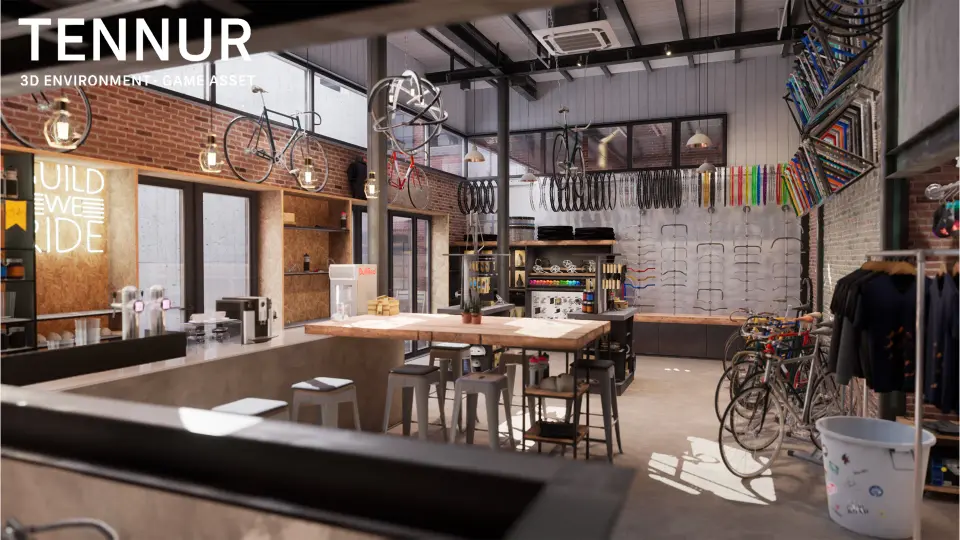
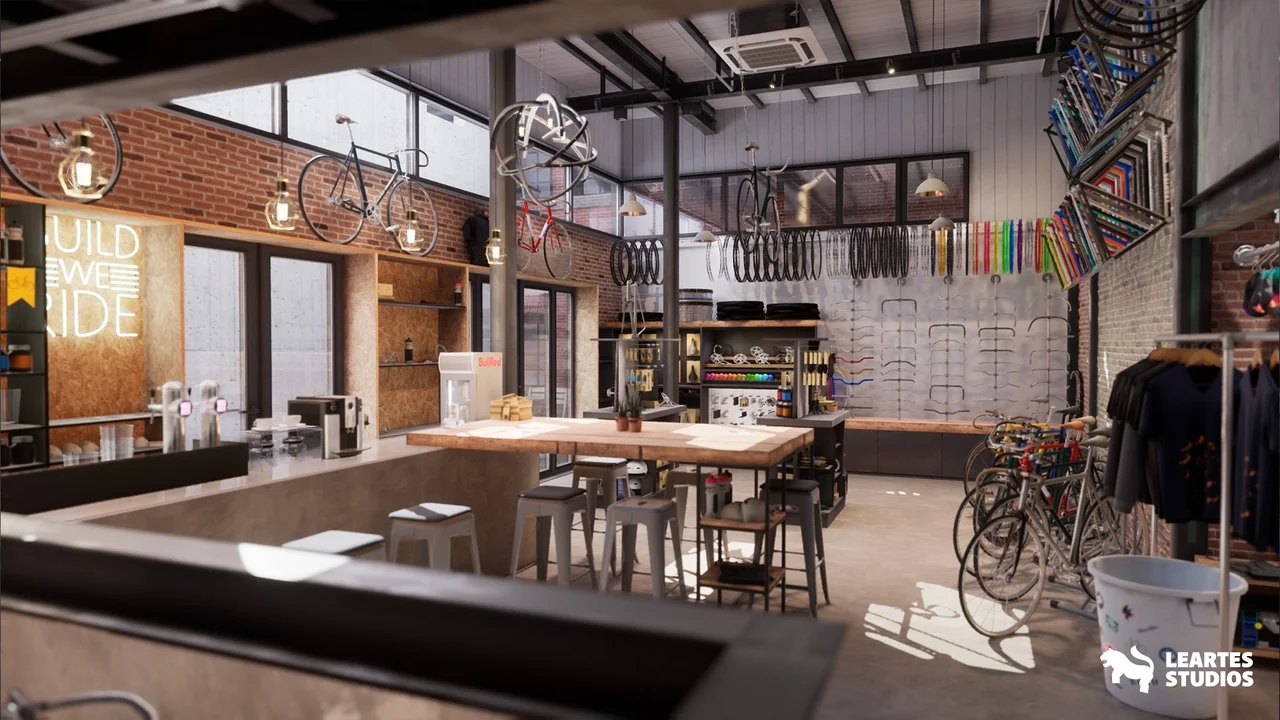
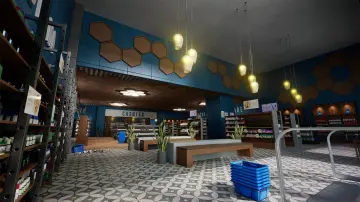
Starting production with a complex interior often requires balancing immediate layout needs against long-term level design goals. Incorporating the Bike Shop Environment begins directly inside the included example scene. This preconfigured level demonstrates how artist Julian Rabe assembled structural elements, lighting setups, workshop zones, and retail displays into a unified, believable interior. Teams building realistic games or virtual production sets can walk the camera through this prebuilt floor plan immediately, checking sightlines, scale reference, and light bounce without spending days on white-boxing.
For virtual production workflows, having a completely realized example level simplifies live-action background staging. The layout offers natural depth cues, featuring retail storefront glass, sales counters, repair stations, and organized merchandise rows that provide rich parallax as cameras move across a virtual volume. Lighting artists can evaluate the space as an integrated system, adjusting exposure and volumetric parameters directly against practical props and architectural boundaries that reflect real-world store design.
Populating Custom Levels with 259 Unique Meshes
Beyond the pre-assembled store layout, the core utility for environment artists rests in the library of 259 unique meshes. Rather than forcing designers to reuse an identical floor plan, the mesh catalog can be stripped down, sorted, and redistributed across custom project levels. If a project demands a small roadside bicycle repair garage rather than a comprehensive retail outlet, the component meshes migrate seamlessly into smaller architectural footprints.
The mesh distribution covers the full spectrum of retail interior dressing. Workshop benches, tools, commercial shelving, display racks, and individual bicycle components allow level dressers to vary visual density across different zones. Cluttered service counters can be contrasted against cleaner retail sales floors, breaking up repetitive layouts across larger open-world maps. Level designers can also pull specific props outward into alleyways, loading docks, or suburban garages to imply lived-in utility without generating new asset batches from scratch.
Modular Bike Demonstration and Assembly Mechanics
Bicycles present unique modeling challenges due to their exposed mechanical parts, structural geometry, and intricate cabling lines. The collection addresses this through a dedicated modular bike workflow, supported by a modular bike demonstration system. Breaking the vehicle down into component elements gives technical designers and animators flexibility that a static, single-piece mesh cannot offer.
Because the bicycle assets are constructed with modularity in mind, they serve multiple distinct functions across gameplay and cinematics:
Interactive prop staging where bikes can appear partially disassembled on repair stands or display mounts.
Custom retail customization arrays where frames, wheels, and finishing components are displayed on wall brackets or floor stands.
Environmental scatter across indoor service bays, commercial delivery nooks, and sidewalk display racks.
This structural versatility prevents every bike in a showroom or street scene from looking identical. Technical artists can swap modular parts to yield distinct bicycle variants, maintaining visual diversity across broad commercial retail levels.
Visual Fidelity for Virtual Production and Realistic Games
High visual fidelity is necessary when an asset pack targets both interactive real-time titles and film-style virtual production. Realism in the Bike Shop Environment relies on convincing surface definition, accurate physical scales, and believable wear patterns across retail and mechanical surfaces. Retail environments are defined by a mix of clean consumer goods and gritty industrial maintenance tools, a balance visible across the workshop benches, hardware racks, and display floor pieces.
In virtual production scenarios where real actors are composited against LED volumes or green screens, background props must withstand scrutiny at varying focal lengths. The detailed geometry across the 259 unique meshes ensures that close-up shots near service benches or mid-ground pans across the sales floor maintain edge definition without breaking immersion. Game directors working on realistic narrative experiences can position character dialogue sequences directly inside the shop, using detailed background dressing to reinforce contemporary world-building.
Texture Adjustments and Copyright-Free Asset Readiness
Real-world retail spaces are saturated with logos, brand badges, and registered commercial graphics, which frequently pose legal challenges for commercial releases. The asset package resolves this issue through targeted texture hygiene. All branded content shown in early demonstrations has been systematically removed from the project assets. To ensure full project safety, construction textures were replaced with visually equivalent, copyright-free alternatives.
This deliberate cleanup guarantees that independent game studios, commercial virtual production houses, and agency developers can deploy the entire environment into shipping products without clearance reviews. The replaced construction materials preserve the tactile realism of the original build—maintaining appropriate roughness, industrial patterning, and believable wear—while ensuring strict compliance across broadcast, cinematic, and distributed video game platforms.
Ecosystem Integration and Production Maintenance
Large projects rarely consist of an isolated storefront. Scene designers building continuous urban districts often require adjoining hospitality and commercial spaces. The Bike Shop Environment shares stylistic alignment and spatial compatibility with companion spaces such as the Hotel Lobby Environment (Motel Lobby Lounge Reception). Integrating both environments enables technical artists to stage contiguous indoor transitions, shifting players or virtual cameras from a relaxed motel lounge directly into adjacent commercial streetfronts without visual discordance.
Long-term project integration is backed by standard technical support infrastructure. Teams encountering asset pipeline questions, promotional setup requests, or integration queries can submit direct technical support tickets. Active community coordination through the Leartes Asset Platform Discord community (Cosmos) provides additional access for troubleshooting, pipeline tips, and ecosystem updates as production demands evolve.
 Interior
 Game Development R
 Interior
 Interior