"4481da9c895ef786"{"id":"1000278","slug":"baby-in-capsule","title":"Baby In Capsule","category":"Characters \u0026 Creatures","engine":"4.26+,5.0+","assetVersion":"","engineVersion":"Engine Version: 4.26+,5.0+","tag":"Characters","accent":"blue","visual":"character","summary":"A detailed 3D capsule asset featuring a baby in a respirator, designed for sci-fi laboratories and horror environments with 4K PBR textures and custom animation","platform":"Unreal Engine","publishedAt":"2026-07-02T18:20:15.884Z","updatedAt":"2026-07-02T18:20:15.884Z","sourceNotes":[],"fileContents":[],"compatibility":["Unreal Engine","Engine Version: 4.26+,5.0+"],"featuredImage":{"alt":"Baby In Capsule","src":"/wp-content/uploads/published/2026/07/6f60d1e22dbc-e8a825e6-6950-4f44-920f-03b14d877362-1d0588667e.webp"},"hasDownloadLink":true,"downloads":0,"terms":[{"taxonomy":"category","slug":"characters-and-creatures","name":"Characters \u0026 Creatures"}],"galleryImages":[{"src":"/wp-content/uploads/published/2026/07/c5c68e0c63cc-ce7014a6-ff3f-4cca-be03-fbbf0d337687-b1e7dac967.webp","alt":"Baby In Capsule"},{"src":"/wp-content/uploads/published/2026/07/79593ad89004-6066696e-f9d2-4f6b-aaa9-f915b4257f67-1e3a4b39eb.webp","alt":"Baby In Capsule"},{"src":"/wp-content/uploads/published/2026/07/338b08c195e4-25b7a468-0821-4057-9864-64fe78d1b259-7d4afaff79.webp","alt":"Baby In Capsule"},{"src":"/wp-content/uploads/published/2026/07/d39358b96c1f-d51c2348-e138-401b-9a0b-acdf64882e6d-8a3540da65.webp","alt":"Baby In Capsule"},{"src":"/wp-content/uploads/published/2026/07/56583aed4092-7a2fa197-f349-429b-85cb-d24d95110514-0cae1103f7.webp","alt":"Baby In Capsule"},{"src":"/wp-content/uploads/published/2026/07/66dd1001b7c9-ba504c6e-935a-4cb2-a695-2e2c24390d99-b06c6d3321.webp","alt":"Baby In Capsule"},{"src":"/wp-content/uploads/published/2026/07/dd77ff69a2a7-19cc2e7f-ef7d-46bf-99f4-c72adda798fb-8b274491c9.webp","alt":"Baby In Capsule"},{"src":"/wp-content/uploads/published/2026/07/e7724123a03a-90f959a0-7207-42bb-a28d-d07eeac7066a-805a7b451f.webp","alt":"Baby In Capsule"},{"src":"/wp-content/uploads/published/2026/07/da1a45cd91c9-48d4d9b2-d3fd-44d2-8e75-b78dc8bc4190-7428f7ef2f.webp","alt":"Baby In Capsule"},{"src":"/wp-content/uploads/published/2026/07/76ed96bbd69f-8bc825cc-c7d8-420e-b10f-34e41a06c021-7e1ac0b18e.webp","alt":"Baby In Capsule"}],"accessPanel":{"kind":"resource","title":"Download this resource","eyebrow":"Free Download","message":"Log in or create a free account to start your download.","fileName":"Content.7z","safetyNote":"Resources are manually reviewed before listing to improve quality and reduce obvious risks.","actionLabel":"Download Free","resourceType":"Resource archive"},"contentHtml":"\u003cp\u003eThe Baby In Capsule 3D asset provides a highly specific, narrative-driven focal point for environment artists building sci-fi laboratories, horror settings, or space adventure games. Centered around a technological incubator, the set includes a mechanical capsule equipped with a monitor screen and a baby fitted with a respirator. This combination of clinical hard-surface machinery and a vulnerable organic subject establishes a strong atmosphere, making it a natural fit for medical bays, cloning facilities, or derelict research stations.\u003c/p\u003e \u003ch2\u003eDesigning Sci-Fi Laboratories and Horror Environments\u003c/h2\u003e\n\u003cp\u003eThe core visual identity of the asset leans heavily into environmental storytelling. In a space adventure game, encountering a baby in a respirator housed within a life-support capsule can serve as a major plot device or an interactive objective. The presence of the monitor screen allows developers to project vital signs, system warnings, or narrative clues directly onto the asset. In horror titles, the sterile nature of the capsule can be utilized to build tension. A dimly lit laboratory filled with these units creates a classic sci-fi horror aesthetic. The respirator apparatus adds an immediate element of unease, suggesting a toxic environment or experimental life-support systems.\u003c/p\u003e \u003ch2\u003eGeometry and Hard-Surface Detailing\u003c/h2\u003e\n\u003cp\u003eThe structural complexity of the set is reflected in its vertex distribution. The complete package contains one character and one capsule mesh. The baby is modeled with 8,321 vertices, a density that provides enough detail for the organic curves of the face and the integration of the respirator without overwhelming the rendering pipeline. In contrast, the capsule mesh is significantly heavier, utilizing 48,148 vertices.\u003c/p\u003e\n\u003cp\u003eThis high vertex count is dedicated to the complex hard-surface engineering of the incubator. The framework supporting the glass, the mechanical joints of the enclosure, the respirator tubes, and the built-in monitor screen require this level of geometry to maintain a smooth, industrial appearance. When players inspect the capsule up close, the dense geometry ensures that the mechanical components retain their sharp, realistic silhouettes.\u003c/p\u003e \u003ch2\u003eMaterial Modularity for Mass Cloning Facilities\u003c/h2\u003e\n\u003cp\u003eTo prevent visual repetition in larger environments, the asset includes a flexible material system. The package contains nine materials and material instances in total. These are divided strategically, offering three distinct materials for the capsule and three distinct materials for the baby.\u003c/p\u003e\n\u003cp\u003eThis modularity is crucial for level designers who need to populate expansive sci-fi laboratories. Rather than placing identical clones in a row, developers can mix and match the three capsule variations with the three organic variations. This allows for the creation of massive cloning facilities, medical wards, or automated nurseries where each unit feels slightly different from the next, breaking up the visual monotony of a large-scale industrial environment.\u003c/p\u003e \u003ch2\u003e4K Textures and Conveyor Line Integration\u003c/h2\u003e\n\u003cp\u003eThe texturing pipeline is based on 15 individual maps, all delivered at a high 4096x4096 resolution. These 4K maps cover the full spectrum of standard physically based rendering requirements, including Normals, Ambient Occlusion (AO), Albedo, Metallic, and Emissive maps. The texture sets are categorized into two primary groups: Characters and Conveyor lines.\u003c/p\u003e\n\u003cp\u003eThe 4096x4096 resolution ensures that even in first-person games where the camera is pressed directly against the capsule glass, the surface details hold up perfectly. The Albedo maps provide the baseline color and wear, while the Ambient Occlusion maps are critical for grounding the complex mechanics. The AO maps naturally darken the deep recesses of the respirator tubes, the corners of the monitor screen housing, and the mechanical seams of the capsule, adding depth without requiring expensive real-time shadow calculations.\u003c/p\u003e\n\u003cp\u003eThe inclusion of 4K textures specifically dedicated to conveyor lines heavily expands the environmental potential of the asset. Developers are not limited to static placements; they can design automated assembly lines moving the capsules through a manufacturing plant or laboratory pipeline. The high-resolution normal and metallic maps ensure that the steel, glass, and synthetic materials of both the capsule and the conveyor system react accurately to dynamic engine lighting. Emissive maps play a vital role in establishing mood. The monitor screen and the operational lights on the respirator can be powered by these emissive textures, turning the capsule into a diegetic light source that casts an eerie, technological glow across the surrounding laboratory.\u003c/p\u003e \u003ch2\u003eCustom Rigging and In-Place Animation\u003c/h2\u003e\n\u003cp\u003eBringing movement to the asset relies on a specific technical setup. The set is fully rigged, though developers should be aware that it is not rigged to the Epic skeleton. The custom rig is tailored specifically to the unique constraints of the baby confined within the capsule environment. The package includes one dedicated animation sequence, titled Anim Baby In Capsule.\u003c/p\u003e\n\u003cp\u003eThis animation is an in-place sequence rather than a root motion animation. For an environmental prop of this nature, an in-place animation is the ideal approach. The capsule and the conveyor lines remain firmly anchored in their designated location within the scene, while the internal animation loop plays seamlessly. By keeping the animation in-place, level designers can safely duplicate the capsule along the conveyor lines without worrying about the collision boundaries shifting during gameplay.\u003c/p\u003e\n\u003cp\u003eThe breathing or slight shifting provided by this sequence adds just enough kinetic energy to the room to make the environment feel actively operational. This is especially effective in horror games, where the subtle movement of an otherwise static environmental prop can heighten player anticipation. The entire setup is confirmed to be compatible with development environments on both Windows and Mac platforms, ensuring seamless integration across operating systems.\u003c/p\u003e\n\n\u003ch2\u003eExplore Similar Assets\u003c/h2\u003e\n\u003cul\u003e\n\u003cli\u003e\u003ca href=\"https://3dcghub.com/sci-fi-robot/\" title=\"Sci Fi Robot\"\u003eSci Fi Robot\u003c/a\u003e\u003c/li\u003e\n\u003cli\u003e\u003ca href=\"https://3dcghub.com/sci-fi-armors-full-pack/\" title=\"Sci-Fi Armors Full Pack\"\u003eSci-Fi Armors Full Pack\u003c/a\u003e\u003c/li\u003e\n\u003cli\u003e\u003ca href=\"https://3dcghub.com/big-zombie/\" title=\"Big Zombie\"\u003eBig Zombie\u003c/a\u003e\u003c/li\u003e\n\u003cli\u003e\u003ca href=\"https://3dcghub.com/bloodthirsty-beetle/\" title=\"Bloodthirsty Beetle\"\u003eBloodthirsty Beetle\u003c/a\u003e\u003c/li\u003e\n\u003cli\u003e\u003ca href=\"https://3dcghub.com/sci-fi-character-05-crow/\" title=\"Sci-Fi Character 05 (Crow)\"\u003eSci-Fi Character 05 (Crow)\u003c/a\u003e\u003c/li\u003e\n\u003c/ul\u003e","contentTextLength":6205,"navigation":{"current":1126,"total":3269,"previous":{"id":"1000279","slug":"baby-vampire","title":"Baby Vampire","category":"Creatures \u0026 Monsters","platform":"Unreal Engine","updatedAt":"2026-07-02T18:23:20.451Z"},"next":{"id":"1000277","slug":"abandoned-industrial-tunnel","title":"Abandoned Industrial Tunnel","category":"Abandoned","platform":"Unreal Engine","updatedAt":"2026-07-02T18:13:30.323Z"}},"relatedResources":[{"id":"1000887","slug":"special-forces-ski-fi-soldier","title":"Special forces ski-fi soldier","category":"Characters \u0026 Creatures","engine":"4.26+,5.0+","assetVersion":"","engineVersion":"Engine Version: 4.26+,5.0+","tag":"Characters","accent":"blue","visual":"character","summary":"Low-poly sci-fi special forces soldier with respirator, rigged and skinned for Mannequin, includes auto rifle and baton, scalable 4K–1K textures.","platform":"Unreal Engine","publishedAt":"2026-08-05T18:03:28.977Z","updatedAt":"2026-08-05T18:03:28.977Z","sourceNotes":[],"fileContents":[],"compatibility":["Unreal Engine","Engine Version: 4.26+,5.0+"],"featuredImage":{"alt":"Special forces ski-fi soldier","src":"/wp-content/uploads/published/2026/08/8c9441f8d0d4-6bc53af4-1679-467b-8856-52c5905a0e67-9459541a09.webp"},"hasDownloadLink":true,"downloads":5},{"id":"1000954","slug":"military-drone","title":"Military Drone","category":"Characters \u0026 Creatures","engine":"4.26+,5.0+","assetVersion":"","engineVersion":"Engine Version: 4.26+,5.0+","tag":"Characters","accent":"blue","visual":"character","summary":"A rigged military drone with 4096px PBR material and six basic animations for sci-fi and near-future scenes. Seen in Aliens: Dark Descent and more.","platform":"Unreal Engine","publishedAt":"2026-08-14T05:42:15.189Z","updatedAt":"2026-08-14T05:42:15.189Z","sourceNotes":[],"fileContents":[],"compatibility":["Unreal Engine","Engine Version: 4.26+,5.0+"],"featuredImage":{"alt":"Military Drone","src":"/wp-content/uploads/published/2026/08/977e0c2a89c8-f992d788-b6ce-4f82-bf59-1a8a840f75a9-1005abbefc.webp"},"hasDownloadLink":true,"downloads":0},{"id":"1000995","slug":"horse-herd","title":"Horse Herd","category":"Characters \u0026 Creatures","engine":"4.27,5.0+","assetVersion":"","engineVersion":"Engine Version: 4.27,5.0+","tag":"Characters","accent":"blue","visual":"character","summary":"Animated horse pack with 54 animations, a 136-bone skeleton, 4K PBR textures, and full tack. Updated with control rigs, sockets, and rider animations.","platform":"Unreal Engine","publishedAt":"2026-08-19T04:39:26.862Z","updatedAt":"2026-08-19T04:39:26.862Z","sourceNotes":[],"fileContents":[],"compatibility":["Unreal Engine","Engine Version: 4.27,5.0+"],"featuredImage":{"alt":"Horse Herd","src":"/wp-content/uploads/published/2026/08/3f72f99fd17c-395abe75-d784-4571-b041-e1333a632f41-5af8040525.webp"},"hasDownloadLink":true,"downloads":4}]}
Characters
Baby In Capsule
A detailed 3D capsule asset featuring a baby in a respirator, designed for sci-fi laboratories and horror environments with 4K PBR textures and custom animation
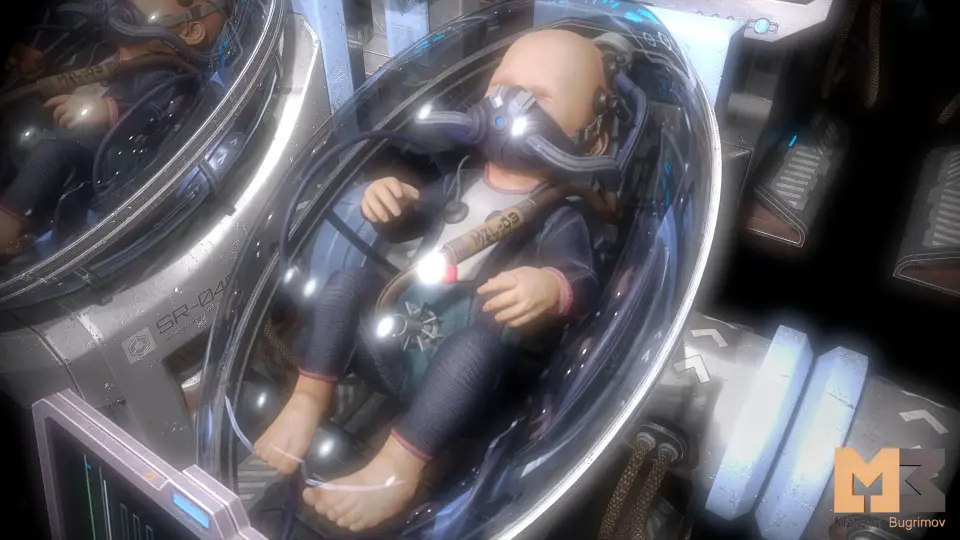
The Baby In Capsule 3D asset provides a highly specific, narrative-driven focal point for environment artists building sci-fi laboratories, horror settings, or space adventure games. Centered around a technological incubator, the set includes a mechanical capsule equipped with a monitor screen and a baby fitted with a respirator. This combination of clinical hard-surface machinery and a vulnerable organic subject establishes a strong atmosphere, making it a natural fit for medical bays, cloning facilities, or derelict research stations.
Designing Sci-Fi Laboratories and Horror Environments
The core visual identity of the asset leans heavily into environmental storytelling. In a space adventure game, encountering a baby in a respirator housed within a life-support capsule can serve as a major plot device or an interactive objective. The presence of the monitor screen allows developers to project vital signs, system warnings, or narrative clues directly onto the asset. In horror titles, the sterile nature of the capsule can be utilized to build tension. A dimly lit laboratory filled with these units creates a classic sci-fi horror aesthetic. The respirator apparatus adds an immediate element of unease, suggesting a toxic environment or experimental life-support systems.
Geometry and Hard-Surface Detailing
The structural complexity of the set is reflected in its vertex distribution. The complete package contains one character and one capsule mesh. The baby is modeled with 8,321 vertices, a density that provides enough detail for the organic curves of the face and the integration of the respirator without overwhelming the rendering pipeline. In contrast, the capsule mesh is significantly heavier, utilizing 48,148 vertices.
This high vertex count is dedicated to the complex hard-surface engineering of the incubator. The framework supporting the glass, the mechanical joints of the enclosure, the respirator tubes, and the built-in monitor screen require this level of geometry to maintain a smooth, industrial appearance. When players inspect the capsule up close, the dense geometry ensures that the mechanical components retain their sharp, realistic silhouettes.
Material Modularity for Mass Cloning Facilities
To prevent visual repetition in larger environments, the asset includes a flexible material system. The package contains nine materials and material instances in total. These are divided strategically, offering three distinct materials for the capsule and three distinct materials for the baby.
This modularity is crucial for level designers who need to populate expansive sci-fi laboratories. Rather than placing identical clones in a row, developers can mix and match the three capsule variations with the three organic variations. This allows for the creation of massive cloning facilities, medical wards, or automated nurseries where each unit feels slightly different from the next, breaking up the visual monotony of a large-scale industrial environment.
4K Textures and Conveyor Line Integration
The texturing pipeline is based on 15 individual maps, all delivered at a high 4096x4096 resolution. These 4K maps cover the full spectrum of standard physically based rendering requirements, including Normals, Ambient Occlusion (AO), Albedo, Metallic, and Emissive maps. The texture sets are categorized into two primary groups: Characters and Conveyor lines.
The 4096x4096 resolution ensures that even in first-person games where the camera is pressed directly against the capsule glass, the surface details hold up perfectly. The Albedo maps provide the baseline color and wear, while the Ambient Occlusion maps are critical for grounding the complex mechanics. The AO maps naturally darken the deep recesses of the respirator tubes, the corners of the monitor screen housing, and the mechanical seams of the capsule, adding depth without requiring expensive real-time shadow calculations.
The inclusion of 4K textures specifically dedicated to conveyor lines heavily expands the environmental potential of the asset. Developers are not limited to static placements; they can design automated assembly lines moving the capsules through a manufacturing plant or laboratory pipeline. The high-resolution normal and metallic maps ensure that the steel, glass, and synthetic materials of both the capsule and the conveyor system react accurately to dynamic engine lighting. Emissive maps play a vital role in establishing mood. The monitor screen and the operational lights on the respirator can be powered by these emissive textures, turning the capsule into a diegetic light source that casts an eerie, technological glow across the surrounding laboratory.
Custom Rigging and In-Place Animation
Bringing movement to the asset relies on a specific technical setup. The set is fully rigged, though developers should be aware that it is not rigged to the Epic skeleton. The custom rig is tailored specifically to the unique constraints of the baby confined within the capsule environment. The package includes one dedicated animation sequence, titled Anim Baby In Capsule.
This animation is an in-place sequence rather than a root motion animation. For an environmental prop of this nature, an in-place animation is the ideal approach. The capsule and the conveyor lines remain firmly anchored in their designated location within the scene, while the internal animation loop plays seamlessly. By keeping the animation in-place, level designers can safely duplicate the capsule along the conveyor lines without worrying about the collision boundaries shifting during gameplay.
The breathing or slight shifting provided by this sequence adds just enough kinetic energy to the room to make the environment feel actively operational. This is especially effective in horror games, where the subtle movement of an otherwise static environmental prop can heighten player anticipation. The entire setup is confirmed to be compatible with development environments on both Windows and Mac platforms, ensuring seamless integration across operating systems.
 Characters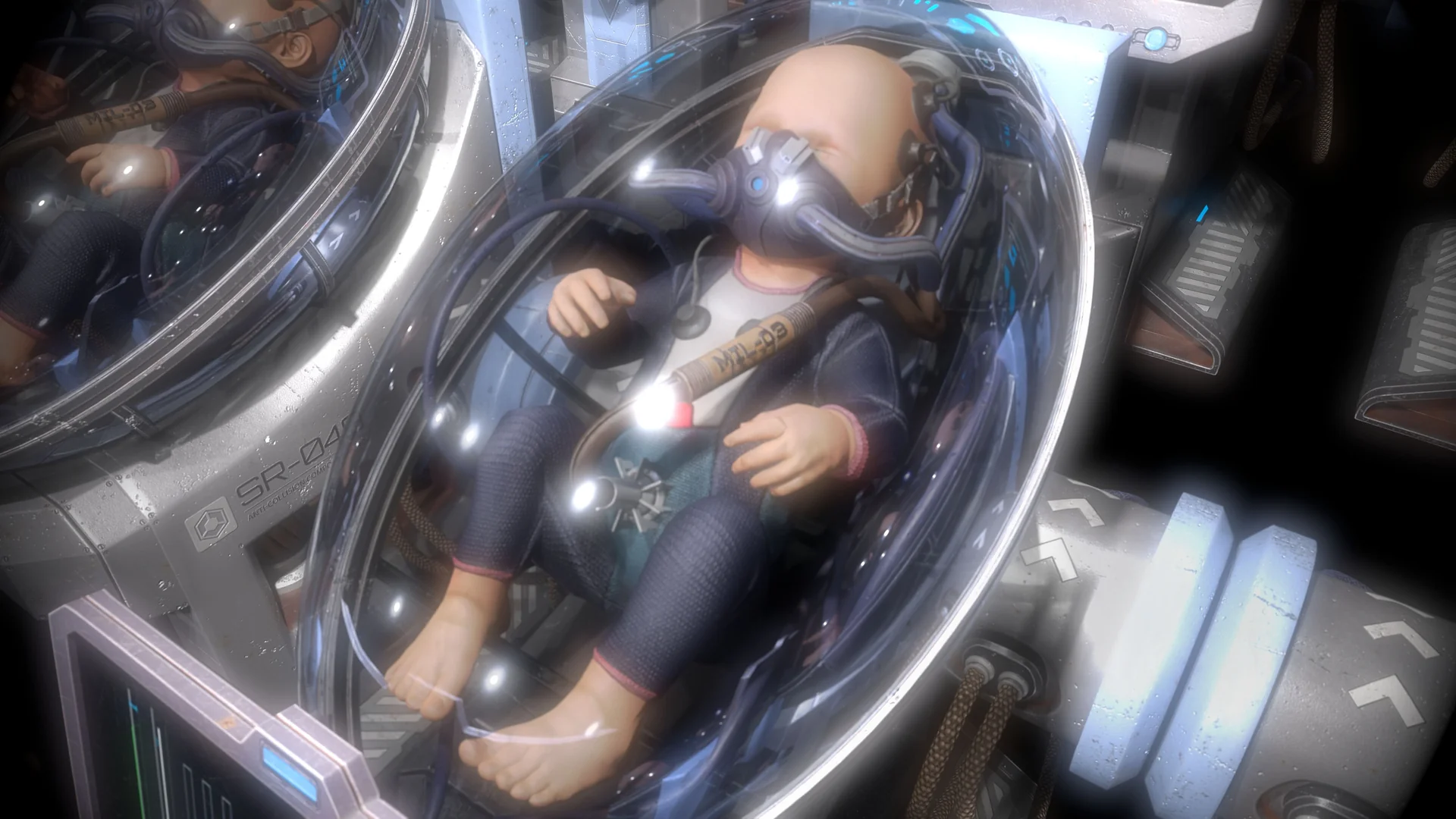
 Characters
 Characters
 Characters