"177e4e4394b9ce1f"{"id":"1001587","slug":"94-wizard-mocap-animations","title":"94 Wizard Mocap Animations","category":"Combat","engine":"5.4+","assetVersion":"","engineVersion":"Engine Version: 5.4+","tag":"Combat","accent":"blue","visual":"animation","summary":"Explore the 94 Wizard Mocap Animations package featuring root motion and in-place spellcasting setups tailored for UE4 and UE5 skeleton systems.","platform":"Unreal Engine","publishedAt":"2026-10-10T16:04:43.680Z","updatedAt":"2026-10-10T16:04:43.680Z","sourceNotes":[],"fileContents":[],"compatibility":["Unreal Engine","Engine Version: 5.4+"],"featuredImage":{"alt":"94 Wizard Mocap Animations","src":"/wp-content/uploads/published/2026/10/92cc3de2751c-9d08fea1-7498-4971-9a44-e1806fa7b304-275e13e181.webp"},"hasDownloadLink":true,"downloads":0,"terms":[{"taxonomy":"category","slug":"combat","name":"Combat"}],"galleryImages":[{"src":"/wp-content/uploads/published/2026/10/d788470d6a8b-b580862d-f463-4fff-b8d1-1a03a849d52f-c1a6367941.webp","alt":"94 Wizard Mocap Animations"},{"src":"/wp-content/uploads/published/2026/10/94a2911a8776-84056dd3-0361-4b31-b2f3-31a541e5659f-6da025ca3d.webp","alt":"94 Wizard Mocap Animations"},{"src":"/wp-content/uploads/published/2026/10/0739e19bb1a0-ec04a88f-253c-47e5-bd67-8218375fa5ba-fd577f3faa.webp","alt":"94 Wizard Mocap Animations"},{"src":"/wp-content/uploads/published/2026/10/7c6e7eb7f15c-cc80a196-2ce8-4d84-a45a-37b2729d3e1a-397b2148dc.webp","alt":"94 Wizard Mocap Animations"},{"src":"/wp-content/uploads/published/2026/10/834146018f9d-695b9f3c-001f-46ac-9165-d88d997432e5-70a6abd744.webp","alt":"94 Wizard Mocap Animations"},{"src":"/wp-content/uploads/published/2026/10/56ff019327f4-95799b84-b2cd-4498-bacf-dcc58256689b-a0bb19a121.webp","alt":"94 Wizard Mocap Animations"},{"src":"/wp-content/uploads/published/2026/10/1d82c10a6339-af4f02ab-7256-44a3-9282-fec4e81b36b3-3426faa849.webp","alt":"94 Wizard Mocap Animations"},{"src":"/wp-content/uploads/published/2026/10/2a42399047a5-9bcfc9c6-7578-4c26-8ece-2184b1cb641e-0588c90149.webp","alt":"94 Wizard Mocap Animations"},{"src":"/wp-content/uploads/published/2026/10/bf37e06eaf23-10242aa9-bb2c-4fff-893e-7baa0c31aa07-4072878462.webp","alt":"94 Wizard Mocap Animations"}],"accessPanel":{"kind":"resource","title":"Download this resource","eyebrow":"Free Download","message":"Log in or create a free account to start your download.","fileName":"Content.7z","safetyNote":"Resources are manually reviewed before listing to improve quality and reduce obvious risks.","actionLabel":"Download Free","resourceType":"Resource archive"},"contentHtml":"\u003ch2\u003eSpellcasting Mechanics Across Third-Person and First-Person Perspectives\u003c/h2\u003e\u003cp\u003eMagical combat encounters depend heavily on the physical delivery of casting gestures, stance shifts, and incantation routines. In fantasy role-playing games and action titles, a spellcaster must convey weight, timing, and intent whenever energy is gathered or released. The collection of 94 Wizard Mocap Animations directly targets these gameplay requirements by offering motion-captured performances tailored to arcane character archetypes. Whether configured for an archmage, an apprentice wizard, or a witch character, the motion data captures authentic human performance dynamics that ground spellcasting within believable kinetic rules.\u003c/p\u003e\u003cp\u003eCamera framing strongly dictates how animation assets function inside an interactive project. In a third-person role-playing setup, players observe full-body silhouette changes, hip shifts, and foot placement as a character executes defensive or offensive magic. The broad bodily mechanics provided in these motion capture files help third-person viewports register spell preparation clearly from a distance. Simultaneously, the dataset accounts for first-person project structures. In first-person setups, arm trajectories, casting arcs, and torso adjustments must align closely with central camera vectors to maintain readability on screen. Having mocap data suitable for both FPS and third-person perspectives allows gameplay programmers and animators to establish consistent casting mechanics without splitting visual logic across disconnected sets of movement files.\u003c/p\u003e\u003ch2\u003eRoot Motion and In-Place Variants in the 94 Wizard Mocap Animations\u003c/h2\u003e\u003cp\u003eCharacter locomotion architectures frequently demand distinct approaches depending on how collisions, physics, and input vectors are handled. To meet diverse programming patterns, the 94 Wizard Mocap Animations package provides every action in dual delivery formats: root motion and in-place variants. Each variation supports specific implementation philosophies within modern real-time character state machines.\u003c/p\u003e\u003cp\u003eRoot motion variations embed positional and rotational movement directly into the root bone of the skeletal hierarchy. When a wizard steps forward into a heavy spell launch, pivots to evade an incoming strike, or lunges during an aggressive enchantment, root motion ensures that the capsule collision precisely matches the performer's authentic stride. This configuration avoids the visual sliding often seen when high-displacement mocap clips run against decoupled collision volumes. Root motion proves especially useful during extended spellcasting sequences, complex ritual steps, or scripted theatrical maneuvers where the character controller must defer velocity directly to the animation asset.\u003c/p\u003e\u003cp\u003eIn-place variants strip horizontal displacement from the root joint, holding the character's baseline origin stationary while preserving relative limb, torso, and head dynamics. This setup is indispensable for standard character movement components that compute velocity via code, pathfinding algorithms, or analog stick input. When developing responsive action systems or fast-paced RPG encounters, blending in-place spell loops with directional blend spaces ensures that player input instantly shifts character trajectory without waiting on full-body root transitions.\u003c/p\u003e\u003ch2\u003eTargeting UE4 and UE5 Skeletons for Magic and Witch Characters\u003c/h2\u003e\u003cp\u003eTechnical integration across modern versions of Unreal Engine requires clean skeletal asset alignment. The animation data in this library is specifically prepared across both UE4 and UE5 skeletons, mitigating common rigging translation hurdles when switching between legacy and next-generation production pipelines.\u003c/p\u003e\u003cp\u003eThe standard UE4 skeleton format serves as a stable foundation for countless existing project structures, third-party character assets, and established gameplay frameworks. Maintaining native compatibility with this layout ensures that teams operating within ongoing Unreal Engine 4 codebases can import the mocap clips directly without manual joint retargeting or structural alterations. The bone hierarchy matches standard conventions, preserving natural twisting across forearms, shoulders, and spine segments during intricate casting gestures.\u003c/p\u003e\u003cp\u003eFor projects running inside Unreal Engine 5, the included UE5 skeleton integration facilitates direct utilization alongside current mannequin conventions and modular control rigs. Differences in base poses, joint names, and hierarchy structures between UE4 and UE5 can often introduce unwanted deformation artifacts if motion is converted haphazardly. By supplying files tailored to both engine standards, the package preserves natural joint alignment, clavicle movement, and finger articulation. This clean structure is equally effective whether assigned to traditional cloaked wizard models or stylized witch characters requiring expressive somatic casting motions.\u003c/p\u003e\u003ch2\u003eIntegrating Magical Encounters with Zombie Animation Systems\u003c/h2\u003e\u003cp\u003eCombat design in fantasy and horror role-playing games regularly pits arcane spellcasters against unrelenting undead hordes. The library maintains technical compatibility alongside the 105 Zombie Animations Mocap set and its paired 281 Bonus Zombie Audio components. This direct pipeline synergy gives technical designers a cohesive foundation for staging magical survival encounters, wave-based dungeon challenges, or dark fantasy scenarios.\u003c/p\u003e\u003cp\u003eBalancing spell delivery timings against the relentless pursuit behavior of zombie mobs requires precise kinematic tuning. Because the wizard motions and the zombie assets share complementary production and skeletal specifications, blending between player spell outputs and opposing enemy hit reactions functions smoothly. An animator can match the apex of a wizard's casting release directly to an incoming zombie's reactive physics or stagger frame, creating synchronized combat beats. Backed by dedicated audio resources from the complementary zombie collection, developers can construct fully realized combat prototypes where audio cues, creature lunges, and wizard defense spells trigger in close harmony.\u003c/p\u003e\u003ch2\u003eDevelopment Roles and Project Scenarios Benefiting Most\u003c/h2\u003e\u003cp\u003eSolo technical animators, indie studios, and gameplay designers assembling magic-centric games stand to gain significant utility from this collection. Developing 94 distinct motion-captured assets from scratch demands access to motion capture stages, specialized talent, and clean-up workflows that are often beyond the scope of agile production timelines. Utilizing a unified pack of wizard animations allows small teams to establish functional combat loops, ritual sequences, and movement mechanics early in development.\u003c/p\u003e\u003cp\u003ePrototypers seeking to validate spellcasting responsiveness will find the dual-skeleton, root-motion, and in-place offerings straightforward to implement across third-person action games, first-person spell-slingers, or isometric role-playing titles. By pairing verified capture data with flexible engine compatibility, the collection delivers a dependable framework for any project anchored in dynamic magical combat.\u003c/p\u003e\n\n\u003ch2\u003eMore From The Same Workflow\u003c/h2\u003e\n\u003cul\u003e\n\u003cli\u003e\u003ca href=\"https://3dcghub.com/assault-rifle-animations/\" title=\"Assault Rifle Animations\"\u003eAssault Rifle Animations\u003c/a\u003e\u003c/li\u003e\n\u003cli\u003e\u003ca href=\"https://3dcghub.com/pistol-starter-mocap-pack/\" title=\"Pistol Starter - MoCap Pack\"\u003ePistol Starter - MoCap Pack\u003c/a\u003e\u003c/li\u003e\n\u003cli\u003e\u003ca href=\"https://3dcghub.com/ninja-starter-mocap-pack/\" title=\"Ninja Starter - MoCap Pack\"\u003eNinja Starter - MoCap Pack\u003c/a\u003e\u003c/li\u003e\n\u003cli\u003e\u003ca href=\"https://3dcghub.com/punch-pro-mocap-pack/\" title=\"Punch Pro - MoCap Pack\"\u003ePunch Pro - MoCap Pack\u003c/a\u003e\u003c/li\u003e\n\u003cli\u003e\u003ca href=\"https://3dcghub.com/260-sword-and-shield-mocap-animations/\" title=\"260 Sword and Shield Mocap Animations\"\u003e260 Sword and Shield Mocap Animations\u003c/a\u003e\u003c/li\u003e\n\u003c/ul\u003e","contentTextLength":7317,"navigation":{"current":27,"total":3551,"previous":{"id":"1001588","slug":"animated-humpback-whale","title":"Animated Humpback Whale","category":"Characters \u0026 Creatures","platform":"Unreal Engine","updatedAt":"2026-10-10T16:05:44.835Z"},"next":{"id":"1001586","slug":"the-grand-egyptian-temple-egyptian-temple-ancient-exterior-interior-temple","title":"The Grand Egyptian Temple ( Egyptian Temple Ancient Exterior Interior Temple )","category":"Historical","platform":"Unreal Engine","updatedAt":"2026-10-10T11:15:22.183Z"}},"relatedResources":[{"id":"1001078","slug":"assault-rifle-animations","title":"Assault Rifle Animations","category":"Combat","engine":"5.2+","assetVersion":"","engineVersion":"Engine Version: 5.2+","tag":"Combat","accent":"blue","visual":"animation","summary":"25 Mocap assault rifle clips with reload, shots, crouch, prone, walk and shooting rack. Shots and reloads trigger sounds via notify events.","platform":"Unreal Engine","publishedAt":"2026-09-04T15:56:17.751Z","updatedAt":"2026-09-04T15:56:17.751Z","sourceNotes":[],"fileContents":[],"compatibility":["Unreal Engine","Engine Version: 5.2+"],"featuredImage":{"alt":"Assault Rifle Animations","src":"/wp-content/uploads/published/2026/09/e38384de8b24-66e3c82f-6c26-4635-a590-a0ab32731608-177f9044ed.webp"},"hasDownloadLink":true,"downloads":5},{"id":"1001173","slug":"pistol-starter-mocap-pack","title":"Pistol Starter - MoCap Pack","category":"Combat","engine":"5.0+","assetVersion":"","engineVersion":"Engine Version: 5.0+","tag":"Combat","accent":"blue","visual":"mech","summary":"A tactical motion-capture animation set featuring military pistol locomotion, aim offsets, split jumps, and UE5 Manny IK retargeting.","platform":"Unreal Engine","publishedAt":"2026-09-17T03:39:51.564Z","updatedAt":"2026-09-17T03:39:51.564Z","sourceNotes":[],"fileContents":[],"compatibility":["Unreal Engine","Engine Version: 5.0+"],"featuredImage":{"alt":"Pistol Starter - MoCap Pack","src":"/wp-content/uploads/published/2026/09/bc412458d5f0-d902fb1a-2161-48f5-b1c5-a7ff441f5d61-18aff54e86.webp"},"hasDownloadLink":true,"downloads":1},{"id":"1001172","slug":"ninja-starter-mocap-pack","title":"Ninja Starter - MoCap Pack","category":"Combat","engine":"5.0+","assetVersion":"","engineVersion":"Engine Version: 5.0+","tag":"Combat","accent":"blue","visual":"mech","summary":"Explore the Ninja Starter MoCap Pack, featuring 50 motion capture animation files, root motion, IPC curves, aim offsets, and shuriken combat integration.","platform":"Unreal Engine","publishedAt":"2026-09-17T03:37:38.633Z","updatedAt":"2026-09-17T03:37:38.633Z","sourceNotes":[],"fileContents":[],"compatibility":["Unreal Engine","Engine Version: 5.0+"],"featuredImage":{"alt":"Ninja Starter - MoCap Pack","src":"/wp-content/uploads/published/2026/09/b18b68fd7e2f-a3c81fa4-afc6-4f58-b2f8-c9a9003dc322-3b167c2ab3.webp"},"hasDownloadLink":true,"downloads":1}]}
Combat
94 Wizard Mocap Animations
Explore the 94 Wizard Mocap Animations package featuring root motion and in-place spellcasting setups tailored for UE4 and UE5 skeleton systems.
Category:Unreal Engine,CombatPlatform: Unreal EngineEngine Version: 5.4+Published: Oct 10, 2026
Combat
Resource overview
Spellcasting Mechanics Across Third-Person and First-Person Perspectives
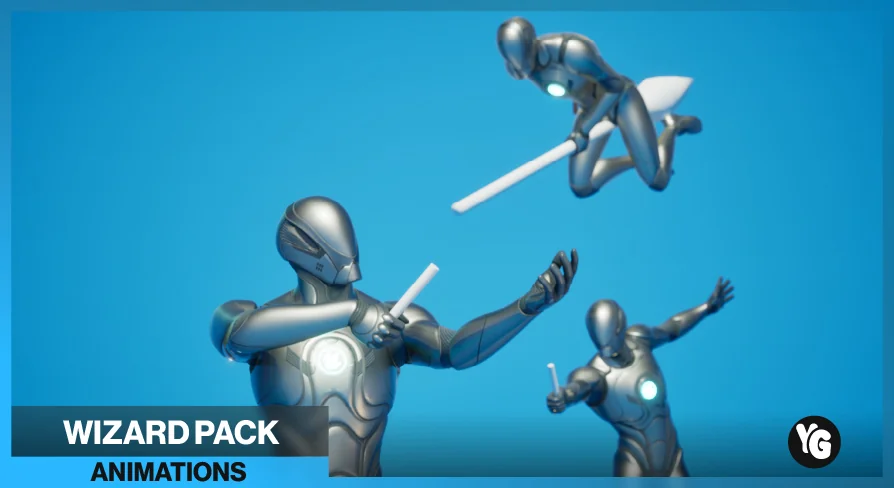
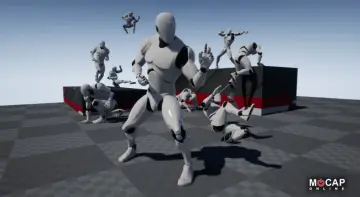
Magical combat encounters depend heavily on the physical delivery of casting gestures, stance shifts, and incantation routines. In fantasy role-playing games and action titles, a spellcaster must convey weight, timing, and intent whenever energy is gathered or released. The collection of 94 Wizard Mocap Animations directly targets these gameplay requirements by offering motion-captured performances tailored to arcane character archetypes. Whether configured for an archmage, an apprentice wizard, or a witch character, the motion data captures authentic human performance dynamics that ground spellcasting within believable kinetic rules.
Camera framing strongly dictates how animation assets function inside an interactive project. In a third-person role-playing setup, players observe full-body silhouette changes, hip shifts, and foot placement as a character executes defensive or offensive magic. The broad bodily mechanics provided in these motion capture files help third-person viewports register spell preparation clearly from a distance. Simultaneously, the dataset accounts for first-person project structures. In first-person setups, arm trajectories, casting arcs, and torso adjustments must align closely with central camera vectors to maintain readability on screen. Having mocap data suitable for both FPS and third-person perspectives allows gameplay programmers and animators to establish consistent casting mechanics without splitting visual logic across disconnected sets of movement files.
Root Motion and In-Place Variants in the 94 Wizard Mocap Animations
Character locomotion architectures frequently demand distinct approaches depending on how collisions, physics, and input vectors are handled. To meet diverse programming patterns, the 94 Wizard Mocap Animations package provides every action in dual delivery formats: root motion and in-place variants. Each variation supports specific implementation philosophies within modern real-time character state machines.
Root motion variations embed positional and rotational movement directly into the root bone of the skeletal hierarchy. When a wizard steps forward into a heavy spell launch, pivots to evade an incoming strike, or lunges during an aggressive enchantment, root motion ensures that the capsule collision precisely matches the performer's authentic stride. This configuration avoids the visual sliding often seen when high-displacement mocap clips run against decoupled collision volumes. Root motion proves especially useful during extended spellcasting sequences, complex ritual steps, or scripted theatrical maneuvers where the character controller must defer velocity directly to the animation asset.
In-place variants strip horizontal displacement from the root joint, holding the character's baseline origin stationary while preserving relative limb, torso, and head dynamics. This setup is indispensable for standard character movement components that compute velocity via code, pathfinding algorithms, or analog stick input. When developing responsive action systems or fast-paced RPG encounters, blending in-place spell loops with directional blend spaces ensures that player input instantly shifts character trajectory without waiting on full-body root transitions.
Targeting UE4 and UE5 Skeletons for Magic and Witch Characters
Technical integration across modern versions of Unreal Engine requires clean skeletal asset alignment. The animation data in this library is specifically prepared across both UE4 and UE5 skeletons, mitigating common rigging translation hurdles when switching between legacy and next-generation production pipelines.
The standard UE4 skeleton format serves as a stable foundation for countless existing project structures, third-party character assets, and established gameplay frameworks. Maintaining native compatibility with this layout ensures that teams operating within ongoing Unreal Engine 4 codebases can import the mocap clips directly without manual joint retargeting or structural alterations. The bone hierarchy matches standard conventions, preserving natural twisting across forearms, shoulders, and spine segments during intricate casting gestures.
For projects running inside Unreal Engine 5, the included UE5 skeleton integration facilitates direct utilization alongside current mannequin conventions and modular control rigs. Differences in base poses, joint names, and hierarchy structures between UE4 and UE5 can often introduce unwanted deformation artifacts if motion is converted haphazardly. By supplying files tailored to both engine standards, the package preserves natural joint alignment, clavicle movement, and finger articulation. This clean structure is equally effective whether assigned to traditional cloaked wizard models or stylized witch characters requiring expressive somatic casting motions.
Integrating Magical Encounters with Zombie Animation Systems
Combat design in fantasy and horror role-playing games regularly pits arcane spellcasters against unrelenting undead hordes. The library maintains technical compatibility alongside the 105 Zombie Animations Mocap set and its paired 281 Bonus Zombie Audio components. This direct pipeline synergy gives technical designers a cohesive foundation for staging magical survival encounters, wave-based dungeon challenges, or dark fantasy scenarios.
Balancing spell delivery timings against the relentless pursuit behavior of zombie mobs requires precise kinematic tuning. Because the wizard motions and the zombie assets share complementary production and skeletal specifications, blending between player spell outputs and opposing enemy hit reactions functions smoothly. An animator can match the apex of a wizard's casting release directly to an incoming zombie's reactive physics or stagger frame, creating synchronized combat beats. Backed by dedicated audio resources from the complementary zombie collection, developers can construct fully realized combat prototypes where audio cues, creature lunges, and wizard defense spells trigger in close harmony.
Development Roles and Project Scenarios Benefiting Most
Solo technical animators, indie studios, and gameplay designers assembling magic-centric games stand to gain significant utility from this collection. Developing 94 distinct motion-captured assets from scratch demands access to motion capture stages, specialized talent, and clean-up workflows that are often beyond the scope of agile production timelines. Utilizing a unified pack of wizard animations allows small teams to establish functional combat loops, ritual sequences, and movement mechanics early in development.
Prototypers seeking to validate spellcasting responsiveness will find the dual-skeleton, root-motion, and in-place offerings straightforward to implement across third-person action games, first-person spell-slingers, or isometric role-playing titles. By pairing verified capture data with flexible engine compatibility, the collection delivers a dependable framework for any project anchored in dynamic magical combat.
 Combat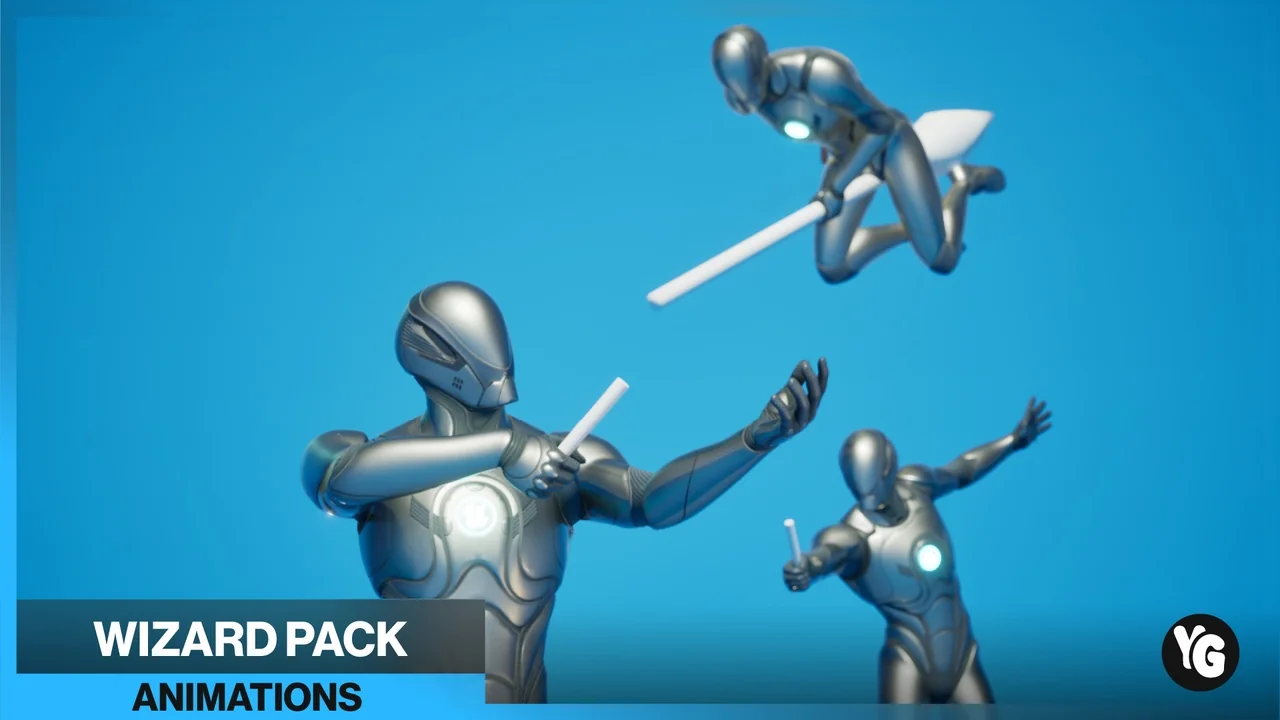
 Combat
 Combat
 Combat