"efaa631e936fd3ee"{"id":"1002258","slug":"vfx-impacts","title":"VFX Impacts","category":"Variety","engine":"4.26+,5.0+","assetVersion":"","engineVersion":"Engine Version: 4.26+,5.0+","tag":"Variety","accent":"blue","visual":"mech","summary":"VFX Impacts delivers 18 surface impact effects with large and small variations, physical material controls, Niagara updates, muzzle flash, and bullet tracers.","platform":"Unreal Engine","publishedAt":"2026-10-29T16:17:47.297Z","updatedAt":"2026-10-29T16:17:47.297Z","sourceNotes":[],"fileContents":[],"compatibility":["Unreal Engine","Engine Version: 4.26+,5.0+"],"featuredImage":{"alt":"VFX Impacts","src":"/wp-content/uploads/published/2026/10/02c0c5ed4c4a-b83babab-98dc-4341-9b51-5002afcc482a-1b70a67735.webp"},"hasDownloadLink":true,"downloads":0,"terms":[{"taxonomy":"category","slug":"variety-vfx","name":"Variety"}],"galleryImages":[{"src":"/wp-content/uploads/published/2026/10/a6d445197bfb-f50735f6-0202-4781-b586-4a3b7deae616-6f4a173d5b.webp","alt":"VFX Impacts"},{"src":"/wp-content/uploads/published/2026/10/f6bd0967d24e-40f41e27-2e05-49e4-b72e-99a3e4fec31b-e65e5c90b5.webp","alt":"VFX Impacts"},{"src":"/wp-content/uploads/published/2026/10/1cbc9a4be306-efe3de6e-a190-4039-b207-700e81e2cf74-0aaf93550a.webp","alt":"VFX Impacts"}],"accessPanel":{"kind":"resource","title":"Download this resource","eyebrow":"Free Download","message":"Log in or create a free account to start your download.","fileName":"VFX Impacts.7z","safetyNote":"Resources are manually reviewed before listing to improve quality and reduce obvious risks.","actionLabel":"Download Free","resourceType":"Resource archive"},"contentHtml":"\u003ch2\u003eDynamic Surface Reactions in Weapon Combat\u003c/h2\u003e\u003cp\u003eCombat encounters in real-time environments depend heavily on clear, tactile visual feedback when projectiles strike the surroundings. VFX Impacts provides targeted particle reactions across a broad range of environment types, allowing firefights to register distinctly whether rounds collide with hard architectural masonry, shifting organic terrain, liquids, or layered body protection. By covering eighteen distinct collision profiles, the collection ensures that weapon fire produces contextually appropriate debris, bursts, and dispersal patterns across varied gameplay spaces.\u003c/p\u003e\u003cp\u003eThe included particle systems respond to weapon fire with material-specific behaviors rather than a one-size-fits-all particle puff. Strikes against solid construction materials like concrete, brick, and stone generate fractured fragmentation, fine dust kick-up, and chipping debris. When projectiles encounter structural framing materials such as wood or metal, the feedback shifts to splintering fibers, structural deformation particles, or high-intensity friction sparks. These immediate environmental disturbances give players rapid confirmation of where their shots land during intense engagements.\u003c/p\u003e\u003ch2\u003eThe 18 Surface Impact Effects and Scale Variations\u003c/h2\u003e\u003cp\u003eEvery combat sequence features different scales of incoming ordnance, from light sidearm discharge to heavy rifle fire. VFX Impacts accounts for projectile disparity by supplying both large and small variations for every single one of its eighteen covered surfaces. This dual-scale implementation prevents small-caliber handguns from kicking up disproportionate debris clouds while ensuring heavier fire carries the visual force required for convincing hit confirmation.\u003c/p\u003e\u003cp\u003eThe full library of eighteen surfaces spans architectural, environmental, and organic materials:\u003c/p\u003e\u003cul\u003e\u003cli\u003eMetal\u003c/li\u003e\u003cli\u003eConcrete\u003c/li\u003e\u003cli\u003eWood\u003c/li\u003e\u003cli\u003eWater\u003c/li\u003e\u003cli\u003eGlass\u003c/li\u003e\u003cli\u003eBrick\u003c/li\u003e\u003cli\u003eCloth\u003c/li\u003e\u003cli\u003eDirt\u003c/li\u003e\u003cli\u003eElectrical\u003c/li\u003e\u003cli\u003eGrass\u003c/li\u003e\u003cli\u003eIce\u003c/li\u003e\u003cli\u003eLeaves\u003c/li\u003e\u003cli\u003ePaper\u003c/li\u003e\u003cli\u003eSand\u003c/li\u003e\u003cli\u003eSnow\u003c/li\u003e\u003cli\u003eStone\u003c/li\u003e\u003cli\u003eBlood\u003c/li\u003e\u003cli\u003eArmour\u003c/li\u003e\u003c/ul\u003e\u003cp\u003eEach material type reflects distinct physical properties during collisions. Liquid environments utilize dedicated water splash effects, while soft natural surfaces such as sand, snow, dirt, and grass yield localized earth displacement and particulate spray. Fragile assets respond through specialized glass shattering effects, drifting paper shreds, severed leaf particles, or tearing cloth fibers. For mechanized or infrastructural fixtures, the electrical impact effect introduces sudden arcing and spark bursts, providing immediate readouts for damaged electrical panels or industrial wiring.\u003c/p\u003e\u003cp\u003eOrganic targets are split into separate functional reactions. Incoming hits against unprotected living targets trigger directional blood effects, communicating lethal damage. When rounds strike defensive gear or armored opponents, the dedicated armour effect produces rigid deflection sparks and composite particulate, distinguishing armored plating from unarmored flesh without ambiguity.\u003c/p\u003e\u003ch2\u003ePhysical Material Integration for Bullet Impacts\u003c/h2\u003e\u003cp\u003eVisual fidelity in impact systems requires reliable collision detection, ensuring that the correct particle effect activates against the exact material struck. VFX Impacts resolves this by setting up all surfaces with dedicated physical materials. This infrastructure bridges geometry collisions directly to visual responses, allowing project trace channels and collision queries to identify surface properties automatically.\u003c/p\u003e\u003cp\u003eBy utilizing physical materials, hit scan systems and physical projectile traces can query the surface hit result and instantly call the corresponding impact variation. Whether a bullet glances off a sheet metal barricade, shatters a storefront pane of glass, or digs into loose outdoor sand, the assigned physical material directs the visual pipeline to load the correct particle asset. This setup reduces manual scripting requirements across complex maps containing dozens of disparate material assignments.\u003c/p\u003e\u003ch2\u003eWeapon Feedback from Muzzle Flash to Bullet Tracer\u003c/h2\u003e\u003cp\u003eImpact events represent only the terminal half of a ballistic interaction. To present a complete projectile sequence, VFX Impacts also includes a simple muzzle flash and a bullet tracer effect. These companion elements connect the origin point of weapon discharge directly to the final impact strike.\u003c/p\u003e\u003cp\u003eThe muzzle flash supplies the immediate ignition event at the weapon barrel, providing the bright, instantaneous focal point required when a trigger is pulled. Originating from that ignition point, the bullet tracer draws a visible line of travel through the air, highlighting bullet velocity and trajectory toward the intended mark. When the tracer finishes its path at the target location, the matching surface impact effect resolves the hit. Having the muzzle flash, the linear tracer, and the final impact visual constructed together ensures consistent visual language across the entire firing cycle.\u003c/p\u003e\u003ch2\u003eNiagara Particle Pipeline in 4.26\u003c/h2\u003e\u003cp\u003eModern visual effect workflows require modularity and scalable real-time performance. VFX Impacts includes fully updated Niagara versions of its particle systems for Unreal Engine 4.26. The shift to the Niagara VFX framework unlocks refined parameter handling, granular particle lifecycle management, and scalable emitter logic for modern rendering pipelines.\u003c/p\u003e\u003cp\u003eWith Niagara versions available across the complete suite of impact effects, developers working within Unreal Engine 4.26 can inspect, adjust, and optimize emitter behaviors directly within the Niagara editor. Modifying particle velocity, gravity influence, burst counts, or lifetime durations allows the pack to blend seamlessly into stylistically varied projects or tighter performance budgets without rebuilding emitters from scratch.\u003c/p\u003e\u003ch2\u003eProject Suitability and Production Fit\u003c/h2\u003e\u003cp\u003eVFX Impacts is particularly advantageous for developers building tactical shooters, action games, and military simulations that rely on extensive physical cover, destructible environments, and layered character armor. Projects requiring rapid prototyping of firearm mechanics benefit directly from the integrated physical material system, as the groundwork for surface-based line traces is already organized across eighteen comprehensive material categories.\u003c/p\u003e\u003cp\u003eTechnical artists and visual effects creators building custom interaction pipelines will find value in the combination of the Niagara 4.26 architecture, dual-scale impact variants, and ballistic support components. By supplying the entire sequence from weapon muzzle flash and tracer paths to specialized physical material impacts across materials ranging from blood and ice to brick and electrical nodes, the package functions as an all-in-one collision feedback toolkit.\u003c/p\u003e\n\n\u003ch2\u003eContinue Browsing Similar Packs\u003c/h2\u003e\n\u003cul\u003e\n\u003cli\u003e\u003ca href=\"https://3dcghub.com/cartoony-impact-fx-second-edition/\" title=\"Cartoony Impact FX - Second Edition\"\u003eCartoony Impact FX - Second Edition\u003c/a\u003e\u003c/li\u003e\n\u003cli\u003e\u003ca href=\"https://3dcghub.com/niagara-realistic-starter-vfx-pack-2/\" title=\"Niagara Realistic Starter VFX Pack 2\"\u003eNiagara Realistic Starter VFX Pack 2\u003c/a\u003e\u003c/li\u003e\n\u003cli\u003e\u003ca href=\"https://3dcghub.com/concrete-debris-vfx-pack/\" title=\"Concrete Debris VFX Pack\"\u003eConcrete Debris VFX Pack\u003c/a\u003e\u003c/li\u003e\n\u003cli\u003e\u003ca href=\"https://3dcghub.com/stylized-mobile-effects/\" title=\"Stylized Mobile Effects\"\u003eStylized Mobile Effects\u003c/a\u003e\u003c/li\u003e\n\u003cli\u003e\u003ca href=\"https://3dcghub.com/plane-crash-vfx/\" title=\"Plane Crash VFX\"\u003ePlane Crash VFX\u003c/a\u003e\u003c/li\u003e\n\u003c/ul\u003e","contentTextLength":6861,"navigation":{"current":27,"total":4209,"previous":{"id":"1002259","slug":"vintage-scifi-pack-vol-13-collumn","title":"Vintage SciFi Pack VOL 13 Collumn","category":"Tools, Objects \u0026 Decor","platform":"Unreal Engine","updatedAt":"2026-10-29T16:19:57.954Z"},"next":{"id":"1002257","slug":"vfx-backgrounds","title":"VFX Backgrounds","category":"Variety","platform":"Unreal Engine","updatedAt":"2026-10-29T16:17:30.206Z"}},"relatedResources":[{"id":"1001724","slug":"cartoony-impact-fx-second-edition","title":"Cartoony Impact FX - Second Edition","category":"Variety","engine":"4.16+,5.0+","assetVersion":"","engineVersion":"Engine Version: 4.16+,5.0+","tag":"Variety","accent":"blue","visual":"mech","summary":"A breakdown of Cartoony Impact FX - Second Edition, focusing on its multi-layer modular explosion architecture, specialized stylized shaders, and Blueprint work","platform":"Unreal Engine","publishedAt":"2026-10-20T02:31:01.294Z","updatedAt":"2026-10-20T02:31:01.294Z","sourceNotes":[],"fileContents":[],"compatibility":["Unreal Engine","Engine Version: 4.16+,5.0+"],"featuredImage":{"alt":"Cartoony Impact FX - Second Edition","src":"/wp-content/uploads/published/2026/10/162fa84c565f-430f11b7-58a2-46fe-94f8-0db994923997-9610786aa4.webp"},"hasDownloadLink":true,"downloads":1},{"id":"1002283","slug":"stylized-vfx-minipack","title":"Stylized Vfx Minipack","category":"Variety","engine":"4.26+,5.0+","assetVersion":"","engineVersion":"Engine Version: 4.26+,5.0+","tag":"Variety","accent":"blue","visual":"mech","summary":"A close look at the Stylized Vfx Minipack, detailing its 25 Niagara systems, pickup effects, burst states, hit impacts, and torch Blueprints.","platform":"Unreal Engine","publishedAt":"2026-10-29T17:02:34.482Z","updatedAt":"2026-10-29T17:02:34.482Z","sourceNotes":[],"fileContents":[],"compatibility":["Unreal Engine","Engine Version: 4.26+,5.0+"],"featuredImage":{"alt":"Stylized Vfx Minipack","src":"/wp-content/uploads/published/2026/10/cdc6833df901-6ea2efd6-0434-49a6-b72f-3df5190b595a-062781cfcc.webp"},"hasDownloadLink":true,"downloads":0},{"id":"24895","slug":"niagara-realistic-starter-vfx-pack-2","title":"Niagara Realistic Starter VFX Pack 2","category":"Variety","engine":"4.26+,5.0+","assetVersion":"Engine version: 4.26+,5.0+","engineVersion":"5.0","tag":"Variety","accent":"blue","visual":"animation","summary":"Niagara Realistic Starter VFX Pack 2 gathers a broad starter set for early project work, with effects aimed at development and prototyping. It covers fire, smoke, destruction, impact, water, lightning, dust, acid, and more, along with supporting materials,...","platform":"Unreal Engine","publishedAt":"2026-04-17T11:51:15.000Z","updatedAt":"2026-04-20T06:12:36.000Z","sourceNotes":[],"fileContents":[],"compatibility":["Unreal Engine","Engine version: 4.26+,5.0+"],"featuredImage":{"alt":"Niagara Realistic Starter VFX Pack 2","src":"https://3dcghub.com/wp-content/uploads/2026/04/d156aa4cf6b6_838c5c1e-48e5-4440-991f-9af45009efe4.webp"},"hasDownloadLink":true,"downloads":4}]}
Variety
VFX Impacts
VFX Impacts delivers 18 surface impact effects with large and small variations, physical material controls, Niagara updates, muzzle flash, and bullet tracers.
Category:Unreal Engine,VarietyPlatform: Unreal EngineEngine Version: 4.26+,5.0+Published: Oct 29, 2026
Variety
Resource overview
Dynamic Surface Reactions in Weapon Combat
Combat encounters in real-time environments depend heavily on clear, tactile visual feedback when projectiles strike the surroundings. VFX Impacts provides targeted particle reactions across a broad range of environment types, allowing firefights to register distinctly whether rounds collide with hard architectural masonry, shifting organic terrain, liquids, or layered body protection. By covering eighteen distinct collision profiles, the collection ensures that weapon fire produces contextually appropriate debris, bursts, and dispersal patterns across varied gameplay spaces.
The included particle systems respond to weapon fire with material-specific behaviors rather than a one-size-fits-all particle puff. Strikes against solid construction materials like concrete, brick, and stone generate fractured fragmentation, fine dust kick-up, and chipping debris. When projectiles encounter structural framing materials such as wood or metal, the feedback shifts to splintering fibers, structural deformation particles, or high-intensity friction sparks. These immediate environmental disturbances give players rapid confirmation of where their shots land during intense engagements.
The 18 Surface Impact Effects and Scale Variations
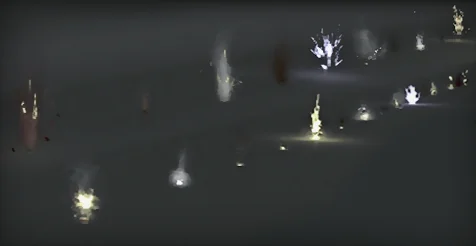
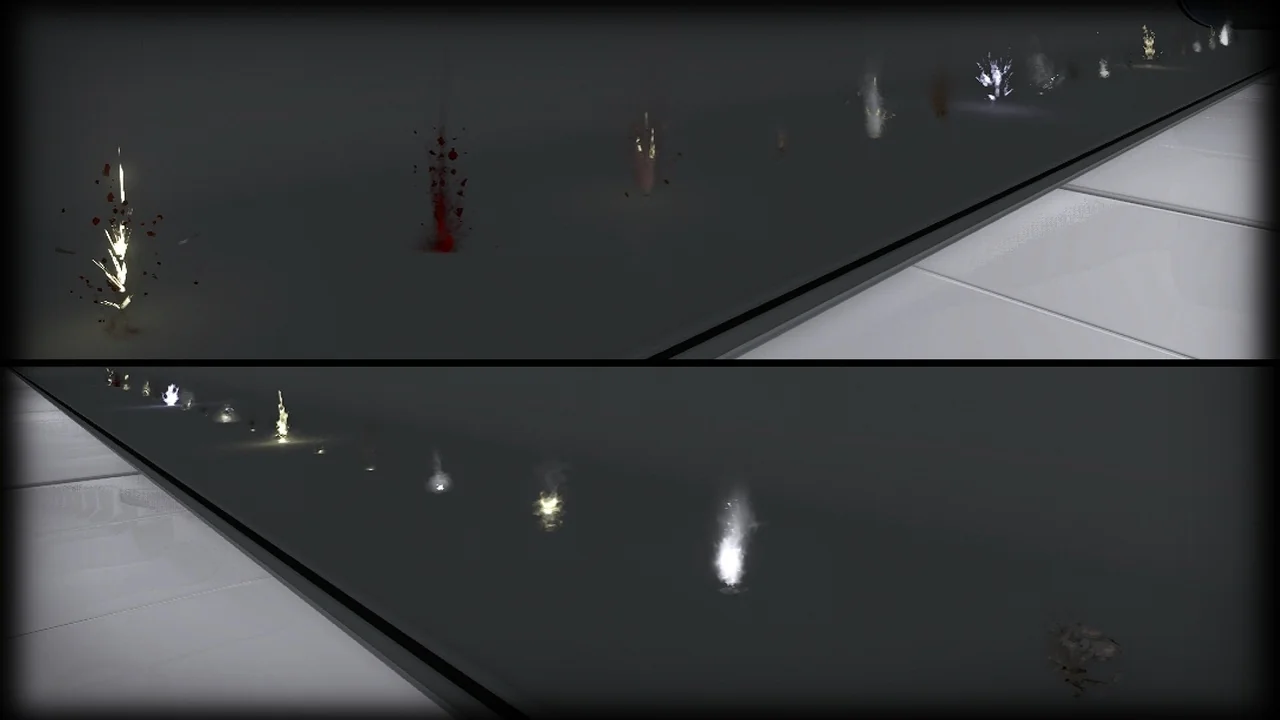
Every combat sequence features different scales of incoming ordnance, from light sidearm discharge to heavy rifle fire. VFX Impacts accounts for projectile disparity by supplying both large and small variations for every single one of its eighteen covered surfaces. This dual-scale implementation prevents small-caliber handguns from kicking up disproportionate debris clouds while ensuring heavier fire carries the visual force required for convincing hit confirmation.
The full library of eighteen surfaces spans architectural, environmental, and organic materials:
Metal
Concrete
Wood
Water
Glass
Brick
Cloth
Dirt
Electrical
Grass
Ice
Leaves
Paper
Sand
Snow
Stone
Blood
Armour
Each material type reflects distinct physical properties during collisions. Liquid environments utilize dedicated water splash effects, while soft natural surfaces such as sand, snow, dirt, and grass yield localized earth displacement and particulate spray. Fragile assets respond through specialized glass shattering effects, drifting paper shreds, severed leaf particles, or tearing cloth fibers. For mechanized or infrastructural fixtures, the electrical impact effect introduces sudden arcing and spark bursts, providing immediate readouts for damaged electrical panels or industrial wiring.
Organic targets are split into separate functional reactions. Incoming hits against unprotected living targets trigger directional blood effects, communicating lethal damage. When rounds strike defensive gear or armored opponents, the dedicated armour effect produces rigid deflection sparks and composite particulate, distinguishing armored plating from unarmored flesh without ambiguity.
Physical Material Integration for Bullet Impacts
Visual fidelity in impact systems requires reliable collision detection, ensuring that the correct particle effect activates against the exact material struck. VFX Impacts resolves this by setting up all surfaces with dedicated physical materials. This infrastructure bridges geometry collisions directly to visual responses, allowing project trace channels and collision queries to identify surface properties automatically.
By utilizing physical materials, hit scan systems and physical projectile traces can query the surface hit result and instantly call the corresponding impact variation. Whether a bullet glances off a sheet metal barricade, shatters a storefront pane of glass, or digs into loose outdoor sand, the assigned physical material directs the visual pipeline to load the correct particle asset. This setup reduces manual scripting requirements across complex maps containing dozens of disparate material assignments.
Weapon Feedback from Muzzle Flash to Bullet Tracer
Impact events represent only the terminal half of a ballistic interaction. To present a complete projectile sequence, VFX Impacts also includes a simple muzzle flash and a bullet tracer effect. These companion elements connect the origin point of weapon discharge directly to the final impact strike.
The muzzle flash supplies the immediate ignition event at the weapon barrel, providing the bright, instantaneous focal point required when a trigger is pulled. Originating from that ignition point, the bullet tracer draws a visible line of travel through the air, highlighting bullet velocity and trajectory toward the intended mark. When the tracer finishes its path at the target location, the matching surface impact effect resolves the hit. Having the muzzle flash, the linear tracer, and the final impact visual constructed together ensures consistent visual language across the entire firing cycle.
Niagara Particle Pipeline in 4.26
Modern visual effect workflows require modularity and scalable real-time performance. VFX Impacts includes fully updated Niagara versions of its particle systems for Unreal Engine 4.26. The shift to the Niagara VFX framework unlocks refined parameter handling, granular particle lifecycle management, and scalable emitter logic for modern rendering pipelines.
With Niagara versions available across the complete suite of impact effects, developers working within Unreal Engine 4.26 can inspect, adjust, and optimize emitter behaviors directly within the Niagara editor. Modifying particle velocity, gravity influence, burst counts, or lifetime durations allows the pack to blend seamlessly into stylistically varied projects or tighter performance budgets without rebuilding emitters from scratch.
Project Suitability and Production Fit
VFX Impacts is particularly advantageous for developers building tactical shooters, action games, and military simulations that rely on extensive physical cover, destructible environments, and layered character armor. Projects requiring rapid prototyping of firearm mechanics benefit directly from the integrated physical material system, as the groundwork for surface-based line traces is already organized across eighteen comprehensive material categories.
Technical artists and visual effects creators building custom interaction pipelines will find value in the combination of the Niagara 4.26 architecture, dual-scale impact variants, and ballistic support components. By supplying the entire sequence from weapon muzzle flash and tracer paths to specialized physical material impacts across materials ranging from blood and ice to brick and electrical nodes, the package functions as an all-in-one collision feedback toolkit.
 Variety
 Variety
 Variety
 Variety