"c68a05d5e51405b3"{"id":"1000103","slug":"stylized-lowpoly-cyberpunk-city-stylized-stylised-cyber-cyberpunk-scifi-3d","title":"Stylized Lowpoly Cyberpunk City ( Stylized Stylised Cyber Cyberpunk Scifi 3D )","category":"Cities","engine":"Engine Version: 4.27,5.0+","assetVersion":"Engine Version: 4.27,5.0+","engineVersion":"","tag":"Cities","accent":"blue","visual":"city","summary":"A low poly cyberpunk city environment with props, vehicles, characters, and buildings, optimized for game-ready projects and compatible with ULAT.","platform":"Unreal Engine","publishedAt":"2026-06-07T15:58:50.126Z","updatedAt":"2026-06-07T15:58:50.126Z","sourceNotes":[],"fileContents":[],"compatibility":["Unreal Engine","Engine Version: 4.27,5.0+"],"featuredImage":{"alt":"Stylized Lowpoly Cyberpunk City ( Stylized Stylised Cyber Cyberpunk Scifi 3D )","src":"/wp-content/uploads/published/2026/06/2332b6a7469b-3ed0854a-db36-4a8a-b80c-b053ee8e1197-67c66d6338.webp"},"hasDownloadLink":true,"downloads":0,"terms":[{"taxonomy":"category","slug":"cities","name":"Cities"}],"galleryImages":[{"src":"/wp-content/uploads/published/2026/06/e922f6d46357-ef8f70b9-3e77-4303-9e73-82e1ba11a5fb-3c5b381e3a.webp","alt":"Stylized Lowpoly Cyberpunk City ( Stylized Stylised Cyber Cyberpunk Scifi 3D )"},{"src":"/wp-content/uploads/published/2026/06/c45477684692-b3a68843-bd52-4dea-a41c-d3e511b9f182-2d2ee8b3b5.webp","alt":"Stylized Lowpoly Cyberpunk City ( Stylized Stylised Cyber Cyberpunk Scifi 3D )"},{"src":"/wp-content/uploads/published/2026/06/e052ddbc4666-42cc1418-b979-46c2-8019-ced556615357-a25f1f7834.webp","alt":"Stylized Lowpoly Cyberpunk City ( Stylized Stylised Cyber Cyberpunk Scifi 3D )"},{"src":"/wp-content/uploads/published/2026/06/d487784e681c-22cac561-9774-4d6a-87d3-7d9ecbe27577-44e9401ad9.webp","alt":"Stylized Lowpoly Cyberpunk City ( Stylized Stylised Cyber Cyberpunk Scifi 3D )"},{"src":"/wp-content/uploads/published/2026/06/a9ed03979be4-14108d98-89f7-4b1d-bd66-a847aeaaac23-f8ab1b966d.webp","alt":"Stylized Lowpoly Cyberpunk City ( Stylized Stylised Cyber Cyberpunk Scifi 3D )"},{"src":"/wp-content/uploads/published/2026/06/482b20a4fcdd-07c3c123-823e-43c6-806e-74e3014b4332-5dca71e7c7.webp","alt":"Stylized Lowpoly Cyberpunk City ( Stylized Stylised Cyber Cyberpunk Scifi 3D )"},{"src":"/wp-content/uploads/published/2026/06/06ac1fc3ecef-81d0b25e-e72f-4bf0-a333-d04ba1d88ed7-53ac4beb71.webp","alt":"Stylized Lowpoly Cyberpunk City ( Stylized Stylised Cyber Cyberpunk Scifi 3D )"},{"src":"/wp-content/uploads/published/2026/06/f736d52f21ec-cfb83ffb-12df-4b1a-b574-2f14fc5ced8c-43178339cf.webp","alt":"Stylized Lowpoly Cyberpunk City ( Stylized Stylised Cyber Cyberpunk Scifi 3D )"},{"src":"/wp-content/uploads/published/2026/06/44bd99c01db0-5a2926cd-cc25-4ed4-9d80-c6642d9af99b-92c74d40a3.webp","alt":"Stylized Lowpoly Cyberpunk City ( Stylized Stylised Cyber Cyberpunk Scifi 3D )"},{"src":"/wp-content/uploads/published/2026/06/5d94dae3b587-dfaa5385-88df-456e-8bf7-53280b563323-be242258f4.webp","alt":"Stylized Lowpoly Cyberpunk City ( Stylized Stylised Cyber Cyberpunk Scifi 3D )"}],"accessPanel":{"kind":"resource","title":"Access this resource","eyebrow":"Free Download","message":"Log in or create a free account to start your download.","fileName":"Content.7z","safetyNote":"Resources are manually reviewed before listing to improve quality and reduce obvious risks.","actionLabel":"Download Free","resourceType":"Resource archive"},"contentHtml":"\u003cp\u003eGetting this pack into a scene starts with a clear production use case: it is a stylized low poly cyberpunk city environment that already combines the major pieces needed to block out and populate an urban sci-fi setting. Props, vehicles, characters, and buildings are all part of the package, so it fits the stage of development where an environment team needs a cohesive set rather than isolated pieces. The pack includes all showcased assets and presents them as high-quality assets with a good level of detail, while staying optimized for game-ready projects.\u003c/p\u003e \u003cp\u003eThat combination places it in a practical middle ground for environment work. It is not just a building set and not only a prop collection. It covers structural pieces and scene dressing elements together, which makes it easier to assemble a district, street section, or broader city space with a consistent stylized low poly look.\u003c/p\u003e \u003ch2\u003eSetting up Stylized Lowpoly Cyberpunk City in production\u003c/h2\u003e\n\u003cp\u003eThe immediate strength of Stylized Lowpoly Cyberpunk City is how directly it maps to environment assembly. Buildings establish the city framework, props help define smaller locations within that framework, and vehicles and characters add activity and scale. In a real production workflow, that means the pack can serve both early scene construction and later scene population without changing visual direction midway through.\u003c/p\u003e \u003cp\u003eThe resource is framed as a low poly environment, but it is also described as having a good level of detail. That balance matters for teams working on game-ready scenes. The art direction stays stylized and low poly, while the included assets still carry enough detail to support a finished presentation rather than only rough prototyping. For developers building cyberpunk streets, markets, rooftops, alleyways, or larger city blocks, the pack sits comfortably in the phase where layout and atmosphere need to come together at the same time.\u003c/p\u003e \u003cp\u003eBecause the pack includes all showcased assets, the intended experience is not limited to a small sample. It is meant to provide the visible environment pieces as part of a complete set. That makes it easier to maintain visual continuity across a scene instead of mixing unrelated assets from different packs.\u003c/p\u003e \u003ch2\u003eProps, vehicles, characters, and buildings in one cyberpunk environment\u003c/h2\u003e\n\u003cp\u003eThe asset mix is broad but still focused on a single theme. Props handle the smaller environmental details that make a cyberpunk city feel inhabited. Vehicles extend the setting beyond static architecture and help reinforce the futuristic tone. Characters push that further by introducing human scale into the environment, and the buildings provide the modular backbone of the city itself.\u003c/p\u003e \u003cp\u003eThis matters when the goal is to produce a stylized cyberpunk environment that reads clearly from multiple distances. Buildings shape the skyline and streets. Vehicles punctuate roads, platforms, or urban set pieces. Props support the lived-in quality associated with dense sci-fi environments. Characters bring a recognizable sense of proportion that can help a team judge lane widths, doorway heights, plaza scale, and general composition.\u003c/p\u003e \u003cp\u003eThe inclusion of characters also comes with a practical note: they are made according to the Unreal Engine Mannequin Skeleton. No animations are included in the pack. In workflow terms, that makes the character portion easier to place within Unreal Engine character pipelines that already rely on the mannequin standard, while keeping animation work as a separate step. For teams that already have animation systems or motion libraries in place, this can simplify integration. For teams expecting ready-made animated actors, it sets a clear limit on what is and is not part of the package.\u003c/p\u003e \u003ch2\u003eUltimate Level Art Tool and modular building speed\u003c/h2\u003e\n\u003cp\u003eOne of the more production-specific details attached to this environment pack is its compatibility with Ultimate Level Art Tool, shortened to ULAT. The tool is described as a way to create fast, custom modular buildings and to populate scenes in a seamless and distinctive way. That compatibility gives the pack a stronger workflow angle than a static environment set on its own.\u003c/p\u003e \u003cp\u003eFor city production, modular building speed can affect everything from blockout timing to final world density. A cyberpunk setting usually depends on repetition with variation: many structures need to feel connected as part of one urban fabric, but they cannot all read as duplicates. ULAT compatibility suggests a workflow where this environment pack can be used not only as a library of finished pieces, but as part of a system for assembling custom modular buildings more quickly.\u003c/p\u003e \u003cp\u003eThe scene population side is just as important. A city environment only begins to feel convincing when the empty spaces between major structures are handled well. The tool is described as offering a seamless and distinctive way to populate scenes naturally, which aligns closely with the kind of dense visual layering expected from stylized cyberpunk spaces. In practice, that places the pack within a pipeline that values both modular construction and natural scene fill, rather than treating those as separate tasks.\u003c/p\u003e \u003cp\u003eULAT is identified as the short name for Ultimate Level Art Tool, and its original name is given as a modular design development tool for mobile and web-based systems. Even without expanding beyond that, the key production point remains the same: this environment pack is not isolated from a larger modular workflow. It is intended to work alongside a dedicated level art tool.\u003c/p\u003e \u003ch2\u003eUnreal Engine character setup and game-ready optimization\u003c/h2\u003e\n\u003cp\u003eThe pack is explicitly optimized for game-ready projects, which places it in a practical development context rather than a purely illustrative one. That wording points to active use in playable scenes, whether as a contained district, a street network, or a broader stylized city environment. It also helps explain the pack’s combination of low poly structure and maintained detail level. The visual style supports efficiency, while the asset set remains substantial enough for presentable production scenes.\u003c/p\u003e \u003cp\u003eThe Unreal Engine link is also concrete rather than implied. Characters are built according to the Unreal Engine Mannequin Skeleton, making Unreal-based character setup part of the asset’s practical identity. This does not mean the pack includes animations, and it is important not to treat the characters as ready-made animated gameplay units. Instead, they are prepared around a skeleton standard familiar to Unreal Engine workflows.\u003c/p\u003e \u003cp\u003eThat distinction affects planning. Environment artists can use the character assets for placement and visual storytelling, technical artists can align them with mannequin-based setups, and animation work can be added later from a separate source. It is a straightforward arrangement that supports production readiness without overstating what the character portion does out of the box.\u003c/p\u003e \u003ch2\u003eWhere Stylized Lowpoly Cyberpunk City fits best\u003c/h2\u003e\n\u003cp\u003eThe strongest fit for Stylized Lowpoly Cyberpunk City is a project that needs a consistent stylized sci-fi city language across buildings, streets, and set dressing. The tags associated with the pack point toward modular sci-fi city scenes, cyberpunk streets, alleyways, rooftops, nightlife spaces, markets, industrial areas, highways, train stations, underground zones, and city blocks. Taken together, they sketch the kind of world this pack is meant to support: a broad cyberpunk metropolis assembled from repeated structural logic and varied urban details.\u003c/p\u003e \u003cp\u003eThat does not mean every named city feature is separately guaranteed as a unique deliverable, but it does show the thematic range the pack is meant to cover within its stylized low poly direction. In workflow terms, the resource is a strong fit when a team wants one environment foundation that can stretch across multiple urban scene types without losing cohesion.\u003c/p\u003e \u003cp\u003eThe practical takeaway is simple. This pack works best when you need a game-ready stylized cyberpunk city environment that already includes buildings, props, vehicles, and characters, with characters set up to the Unreal Engine Mannequin Skeleton and a clear path into modular building workflows through ULAT compatibility. Support and follow-up are structured through a ticket-based contact route, which keeps the production side focused on implementation rather than guesswork.\u003c/p\u003e\n\n\u003ch2\u003eExplore Similar Assets\u003c/h2\u003e\n\u003cul\u003e\n\u003cli\u003e\u003ca href=\"https://3dcghub.com/poly-town-city-modular/\" title=\"POLY - Town City Modular\"\u003ePOLY - Town City Modular\u003c/a\u003e\u003c/li\u003e\n\u003cli\u003e\u003ca href=\"https://3dcghub.com/lisbon-streets/\" title=\"Lisbon Streets\"\u003eLisbon Streets\u003c/a\u003e\u003c/li\u003e\n\u003cli\u003e\u003ca href=\"https://3dcghub.com/tokyo-stylized-environment/\" title=\"Tokyo Stylized Environment\"\u003eTokyo Stylized Environment\u003c/a\u003e\u003c/li\u003e\n\u003cli\u003e\u003ca href=\"https://3dcghub.com/future-slums-2/\" title=\"Future Slums 2\"\u003eFuture Slums 2\u003c/a\u003e\u003c/li\u003e\n\u003cli\u003e\u003ca href=\"https://3dcghub.com/stylized-solarpunk-city-stylized-solar-city-solarpunk-city-solar-3d-stylised/\" title=\"Stylized Solarpunk City ( Stylized Solar City Solarpunk City Solar 3D Stylised )\"\u003eStylized Solarpunk City ( Stylized Solar City Solarpunk City Solar 3D Stylised )\u003c/a\u003e\u003c/li\u003e\n\u003c/ul\u003e","contentTextLength":8567,"navigation":{"current":1901,"total":3860,"previous":{"id":"1000104","slug":"stylized-male-and-female-characters-with-assets-and-ui","title":"Stylized Male and Female characters, with assets and UI","category":"Characters \u0026 Creatures","platform":"Unreal Engine","updatedAt":"2026-06-07T16:04:14.141Z"},"next":{"id":"1000102","slug":"stylized-countryside-stylized-stylised-country-country-side-road-lowpoly-3d","title":"Stylized Countryside ( Stylized Stylised Country Country Side Road Lowpoly 3d )","category":"Towns \u0026 Villages","platform":"Unreal Engine","updatedAt":"2026-06-07T15:53:08.005Z"}},"relatedResources":[{"id":"7299","slug":"poly-town-city-modular","title":"POLY - Town City Modular","category":"Cities","engine":"4.26+,5.0+","assetVersion":"Engine version: 4.26+,5.0+","engineVersion":"4.24","tag":"Cities","accent":"blue","visual":"city","summary":"Build expansive and visually striking urban environments with the POLY - Town City Modular asset pack. This collection offers nearly 600 modular pieces, ranging from buildings to vehicles, perfect for stylized game projects.","platform":"Unreal Engine","publishedAt":"2026-02-21T12:24:18.000Z","updatedAt":"2026-04-19T15:56:01.000Z","sourceNotes":[],"fileContents":[],"compatibility":["Unreal Engine","Engine version: 4.26+,5.0+"],"featuredImage":{"alt":"POLY - Town City Modular","src":"https://3dcghub.com/wp-content/uploads/2026/02/36816de8-f25b-4ab2-b475-4aafa559f5d0.webp"},"hasDownloadLink":true,"downloads":1},{"id":"7207","slug":"lisbon-streets","title":"Lisbon Streets","category":"Cities","engine":"4.27,5.0+","assetVersion":"Engine version: 4.27,5.0+","engineVersion":"4.25","tag":"Cities","accent":"blue","visual":"city","summary":"Explore a beautiful yet battle-worn vision of Portugal's capital with this Lisbon Streets environment pack. This handcrafted set combines stylized art with futuristic sci-fi elements to create a unique game world.","platform":"Unreal Engine","publishedAt":"2026-02-20T18:15:18.000Z","updatedAt":"2026-04-19T15:56:02.000Z","sourceNotes":[],"fileContents":[],"compatibility":["Unreal Engine","Engine version: 4.27,5.0+"],"featuredImage":{"alt":"Lisbon Streets","src":"https://3dcghub.com/wp-content/uploads/2026/02/7c1ec5b5-f337-46ee-9e09-5c4586fa16bf.webp"},"hasDownloadLink":true,"downloads":0},{"id":"1000454","slug":"city-street-stylized-pack","title":"City Street Stylized Pack","category":"Cities","engine":"5.1+","assetVersion":"","engineVersion":"Engine Version: 5.1+","tag":"Cities","accent":"blue","visual":"city","summary":"A stylized New York City environment pack with a modular building kit for assembling and decorating urban scenes in Unreal Engine 5.1 through 5.3.","platform":"Unreal Engine","publishedAt":"2026-07-11T01:56:32.857Z","updatedAt":"2026-07-11T01:56:32.857Z","sourceNotes":[],"fileContents":[],"compatibility":["Unreal Engine","Engine Version: 5.1+"],"featuredImage":{"alt":"City Street Stylized Pack","src":"/wp-content/uploads/published/2026/07/d23b78357781-bbeed1b4-038b-46de-ab1f-6db1387886ba-cd2a1937f1.webp"},"hasDownloadLink":true,"downloads":2}]}
Cities
Stylized Lowpoly Cyberpunk City ( Stylized Stylised Cyber Cyberpunk Scifi 3D )
A low poly cyberpunk city environment with props, vehicles, characters, and buildings, optimized for game-ready projects and compatible with ULAT.
Category:Unreal Engine,CitiesPlatform: Unreal EngineEngine Version: 4.27,5.0+Published: Jun 7, 2026
Cities
Resource overview
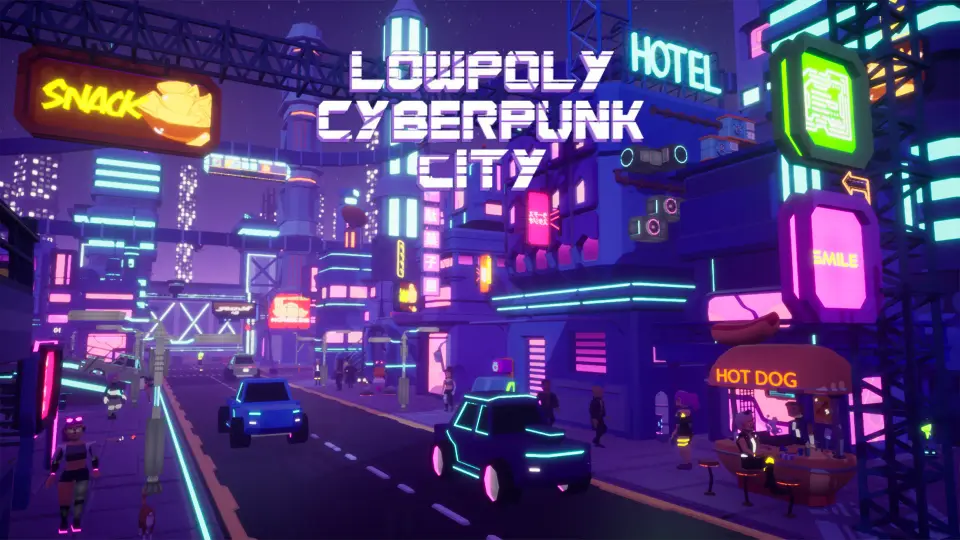
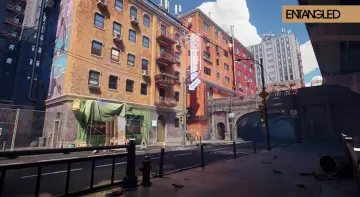
Getting this pack into a scene starts with a clear production use case: it is a stylized low poly cyberpunk city environment that already combines the major pieces needed to block out and populate an urban sci-fi setting. Props, vehicles, characters, and buildings are all part of the package, so it fits the stage of development where an environment team needs a cohesive set rather than isolated pieces. The pack includes all showcased assets and presents them as high-quality assets with a good level of detail, while staying optimized for game-ready projects.
That combination places it in a practical middle ground for environment work. It is not just a building set and not only a prop collection. It covers structural pieces and scene dressing elements together, which makes it easier to assemble a district, street section, or broader city space with a consistent stylized low poly look.
Setting up Stylized Lowpoly Cyberpunk City in production
The immediate strength of Stylized Lowpoly Cyberpunk City is how directly it maps to environment assembly. Buildings establish the city framework, props help define smaller locations within that framework, and vehicles and characters add activity and scale. In a real production workflow, that means the pack can serve both early scene construction and later scene population without changing visual direction midway through.
The resource is framed as a low poly environment, but it is also described as having a good level of detail. That balance matters for teams working on game-ready scenes. The art direction stays stylized and low poly, while the included assets still carry enough detail to support a finished presentation rather than only rough prototyping. For developers building cyberpunk streets, markets, rooftops, alleyways, or larger city blocks, the pack sits comfortably in the phase where layout and atmosphere need to come together at the same time.
Because the pack includes all showcased assets, the intended experience is not limited to a small sample. It is meant to provide the visible environment pieces as part of a complete set. That makes it easier to maintain visual continuity across a scene instead of mixing unrelated assets from different packs.
Props, vehicles, characters, and buildings in one cyberpunk environment
The asset mix is broad but still focused on a single theme. Props handle the smaller environmental details that make a cyberpunk city feel inhabited. Vehicles extend the setting beyond static architecture and help reinforce the futuristic tone. Characters push that further by introducing human scale into the environment, and the buildings provide the modular backbone of the city itself.
This matters when the goal is to produce a stylized cyberpunk environment that reads clearly from multiple distances. Buildings shape the skyline and streets. Vehicles punctuate roads, platforms, or urban set pieces. Props support the lived-in quality associated with dense sci-fi environments. Characters bring a recognizable sense of proportion that can help a team judge lane widths, doorway heights, plaza scale, and general composition.
The inclusion of characters also comes with a practical note: they are made according to the Unreal Engine Mannequin Skeleton. No animations are included in the pack. In workflow terms, that makes the character portion easier to place within Unreal Engine character pipelines that already rely on the mannequin standard, while keeping animation work as a separate step. For teams that already have animation systems or motion libraries in place, this can simplify integration. For teams expecting ready-made animated actors, it sets a clear limit on what is and is not part of the package.
Ultimate Level Art Tool and modular building speed
One of the more production-specific details attached to this environment pack is its compatibility with Ultimate Level Art Tool, shortened to ULAT. The tool is described as a way to create fast, custom modular buildings and to populate scenes in a seamless and distinctive way. That compatibility gives the pack a stronger workflow angle than a static environment set on its own.
For city production, modular building speed can affect everything from blockout timing to final world density. A cyberpunk setting usually depends on repetition with variation: many structures need to feel connected as part of one urban fabric, but they cannot all read as duplicates. ULAT compatibility suggests a workflow where this environment pack can be used not only as a library of finished pieces, but as part of a system for assembling custom modular buildings more quickly.
The scene population side is just as important. A city environment only begins to feel convincing when the empty spaces between major structures are handled well. The tool is described as offering a seamless and distinctive way to populate scenes naturally, which aligns closely with the kind of dense visual layering expected from stylized cyberpunk spaces. In practice, that places the pack within a pipeline that values both modular construction and natural scene fill, rather than treating those as separate tasks.
ULAT is identified as the short name for Ultimate Level Art Tool, and its original name is given as a modular design development tool for mobile and web-based systems. Even without expanding beyond that, the key production point remains the same: this environment pack is not isolated from a larger modular workflow. It is intended to work alongside a dedicated level art tool.
Unreal Engine character setup and game-ready optimization
The pack is explicitly optimized for game-ready projects, which places it in a practical development context rather than a purely illustrative one. That wording points to active use in playable scenes, whether as a contained district, a street network, or a broader stylized city environment. It also helps explain the pack’s combination of low poly structure and maintained detail level. The visual style supports efficiency, while the asset set remains substantial enough for presentable production scenes.
The Unreal Engine link is also concrete rather than implied. Characters are built according to the Unreal Engine Mannequin Skeleton, making Unreal-based character setup part of the asset’s practical identity. This does not mean the pack includes animations, and it is important not to treat the characters as ready-made animated gameplay units. Instead, they are prepared around a skeleton standard familiar to Unreal Engine workflows.
That distinction affects planning. Environment artists can use the character assets for placement and visual storytelling, technical artists can align them with mannequin-based setups, and animation work can be added later from a separate source. It is a straightforward arrangement that supports production readiness without overstating what the character portion does out of the box.
Where Stylized Lowpoly Cyberpunk City fits best
The strongest fit for Stylized Lowpoly Cyberpunk City is a project that needs a consistent stylized sci-fi city language across buildings, streets, and set dressing. The tags associated with the pack point toward modular sci-fi city scenes, cyberpunk streets, alleyways, rooftops, nightlife spaces, markets, industrial areas, highways, train stations, underground zones, and city blocks. Taken together, they sketch the kind of world this pack is meant to support: a broad cyberpunk metropolis assembled from repeated structural logic and varied urban details.
That does not mean every named city feature is separately guaranteed as a unique deliverable, but it does show the thematic range the pack is meant to cover within its stylized low poly direction. In workflow terms, the resource is a strong fit when a team wants one environment foundation that can stretch across multiple urban scene types without losing cohesion.
The practical takeaway is simple. This pack works best when you need a game-ready stylized cyberpunk city environment that already includes buildings, props, vehicles, and characters, with characters set up to the Unreal Engine Mannequin Skeleton and a clear path into modular building workflows through ULAT compatibility. Support and follow-up are structured through a ticket-based contact route, which keeps the production side focused on implementation rather than guesswork.
 Cities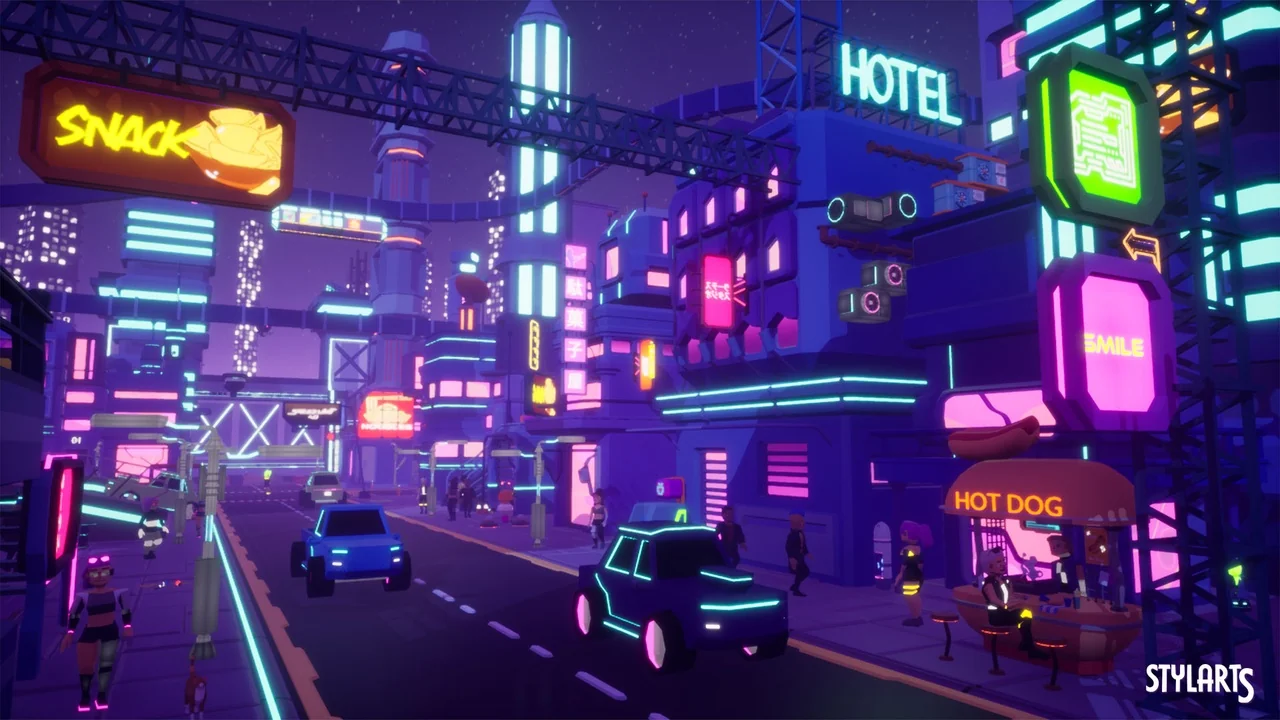
 Cities
 Cities
 Cities